Newsletter Subscribe
Enter your email address below and subscribe to our newsletter

HVAC made simple

By Jake Lawson — The HVAC Specialist
Mini splits have developed a reputation for being flexible HVAC systems. They can condition a single bedroom, provide heating and cooling for an addition, serve several rooms through a multi-zone configuration, or become part of a larger whole-home comfort strategy. That flexibility is one of their biggest advantages, but it also makes answering a seemingly simple question surprisingly difficult: How much does a mini split cost in 2026?
The short answer is that there is no single meaningful mini-split price.
Current consumer cost data illustrates just how wide the range can be. HomeAdvisor’s June 2026 update reports a broad mini-split installation range extending from roughly $700 to $14,500, with an average around $3,000. That spread is useful primarily because it demonstrates how dramatically project scope can change the final price. A straightforward small single-zone project and a professionally designed multi-zone installation are simply not the same purchase.
For homeowners, I think the better question is not, “What does a mini split cost?” It is, “What should my complete mini-split project cost for the comfort problem I am trying to solve?” Once you approach pricing that way, the numbers become much easier to understand.
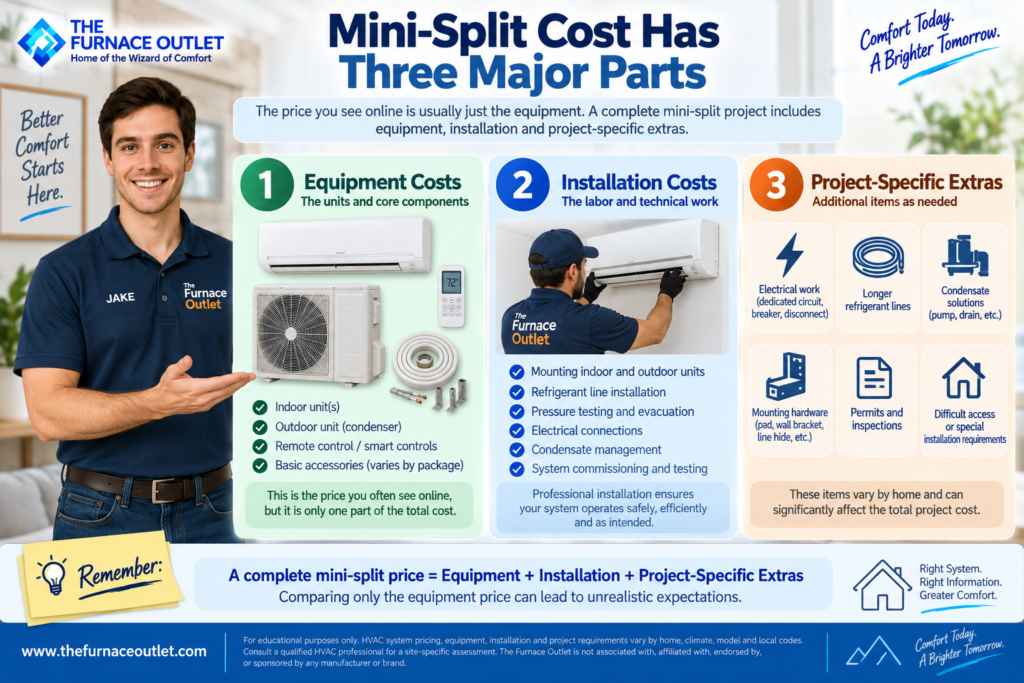
When you see a mini split advertised online, the number beside the product is usually an equipment price, not necessarily the price of a finished HVAC system. That distinction matters because the complete project may involve substantially more than an indoor air handler and an outdoor condenser.
I like to divide a mini-split budget into three broad categories: equipment, installation and project-specific extras. Equipment includes the indoor and outdoor units and whatever accessories the particular package contains. Installation includes the labor and technical procedures necessary to turn those components into a functioning HVAC system. Project-specific extras can include electrical work, longer refrigerant lines, condensate solutions, mounting hardware, permits, difficult access and other site-dependent work.
Multi-zone systems introduce another layer because the homeowner is purchasing additional indoor units, more refrigerant piping and a more complicated installation. Some configurations may also require branch boxes or other manufacturer-specific components.
This is why comparing only online equipment prices can produce unrealistic expectations.
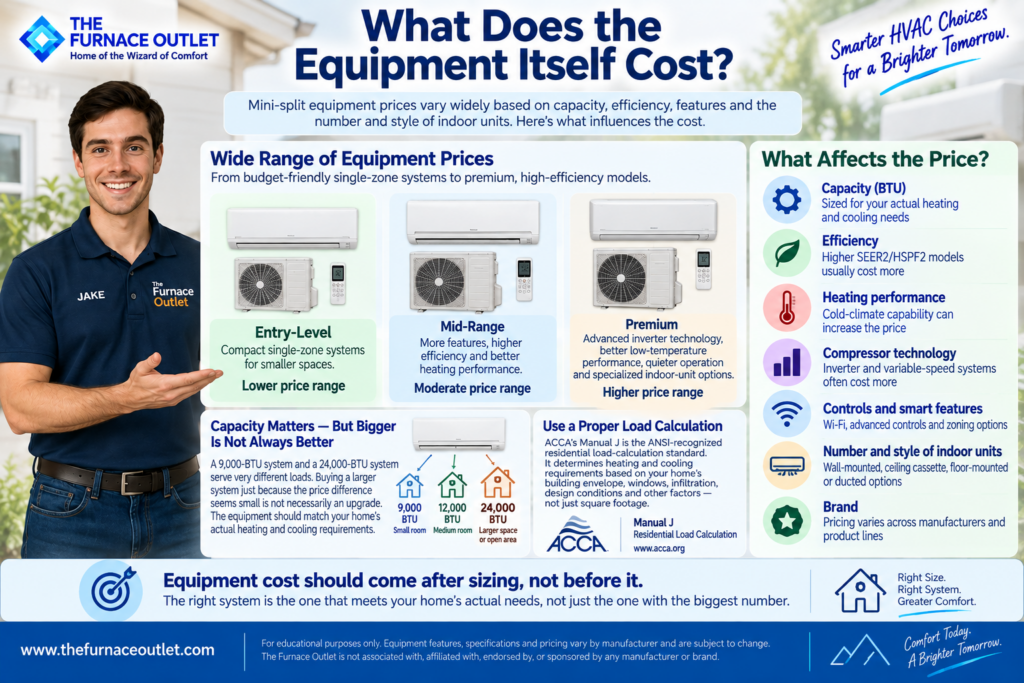
Mini-split equipment prices vary considerably according to capacity, efficiency, heating performance, compressor technology, brand, controls and the number and style of indoor units. At the lower end of the market, homeowners may encounter compact single-zone systems designed for relatively small spaces. Premium equipment can cost substantially more because it may provide advanced inverter operation, better low-temperature heating capability, higher efficiency, sophisticated controls, quieter operation or specialized indoor-unit options.
Capacity also matters, but it should not be treated as a shopping target by itself. A 9,000-BTU system and a 24,000-BTU system serve very different loads. Buying the larger system because the price difference seems small is not necessarily an upgrade. HVAC equipment should be sized to the building’s actual heating and cooling requirements.
ACCA’s Manual J is the ANSI-recognized residential load-calculation standard used to determine those requirements. It accounts for characteristics such as the building envelope, windows, infiltration and design conditions rather than relying simply on square footage.
ACCA — Manual J Residential Load Calculation
In other words, equipment cost should come after sizing, not before it.
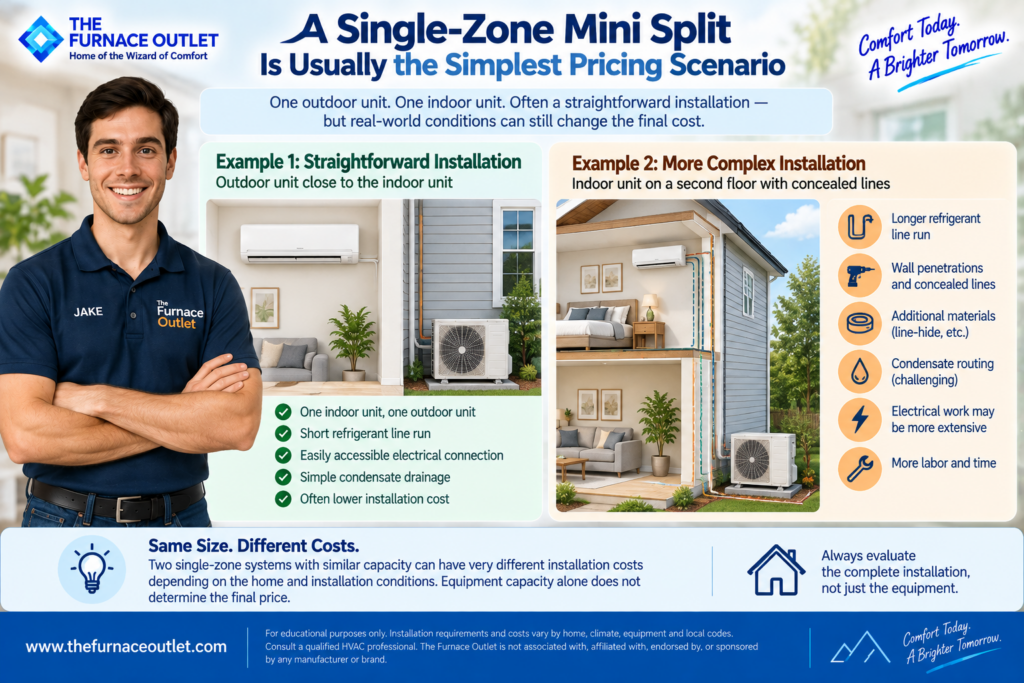
A single-zone mini split consists essentially of one outdoor unit serving one indoor unit. If the equipment location is straightforward, the refrigerant-line run is relatively short, electrical access is reasonable and condensate can be managed easily, this can be one of the least complicated mini-split installations.
But even two single-zone quotes can differ considerably. Imagine one homeowner installing an indoor unit on an exterior bedroom wall with the condenser immediately outside. Another homeowner wants an indoor unit on an interior second-floor wall, with the refrigerant lines concealed and routed across a difficult section of the house.
Both homeowners may be purchasing systems with similar capacity. Their labor costs do not have to be similar. The second project can involve additional line-set length, wall penetrations, line-hide materials, condensate routing, electrical work and significantly more labor. Equipment capacity alone therefore tells you very little about the final installed price.
Professional installation is sometimes described simply as “labor,” but a properly scoped HVAC installation involves much more. Depending on the equipment and project, the contractor may perform or coordinate load calculations, equipment selection, equipment mounting, wall penetrations, refrigerant-line installation, pressure testing, evacuation, electrical connections, condensate management, controls setup, system commissioning, permits and final cleanup. Some of those items may be included in one contractor’s quote and excluded from another.
That makes it risky to compare proposals using only the bottom-line number. One quote could appear several hundred dollars cheaper while excluding electrical work, permitting or an extended line-set installation that another contractor has already included. Ask for a written scope.
A strong proposal should make it reasonably clear what equipment is being installed, what labor is included, which electrical work is included or excluded, what accessories are being supplied, whether permits are included and what warranty applies to the contractor’s workmanship.
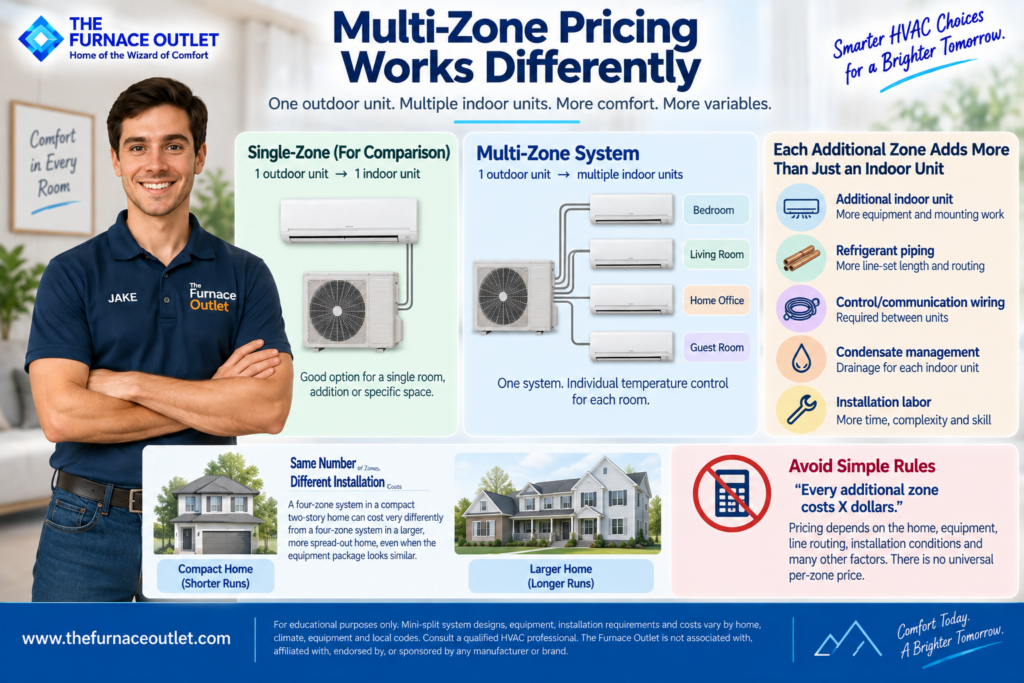
Multi-zone mini splits are where pricing becomes considerably more complicated. Instead of one outdoor condenser serving one indoor unit, a multi-zone outdoor unit can serve multiple indoor units. This can make zoning very attractive because bedrooms, living areas, offices and other spaces can have individual indoor units and separate temperature control.
However, adding another zone does not simply mean adding the retail price of another wall-mounted air handler. Every additional zone can require another indoor unit, refrigerant piping, control/communication wiring, condensate management, mounting work and installation labor. The physical route between each indoor unit and the outdoor equipment can substantially influence project complexity.
A four-zone installation in a compact two-story house can therefore cost differently from a four-zone installation in a sprawling home even when the equipment package looks similar. This is one reason I would avoid publishing a simplistic rule such as “every additional zone costs X dollars.” The equipment and installation conditions matter too much for that number to be universally useful.
There is another pricing issue homeowners sometimes overlook. If you need four conditioned rooms, it may seem obvious that you should purchase one four-zone condenser. That configuration can make sense, but it should not be assumed automatically.
In some homes, two separate single-zone systems or another combination may provide advantages in equipment selection, redundancy, line routing or performance. The appropriate answer depends on the building and the available equipment. This is where good HVAC design matters more than the number of heads you want on the walls.
ACCA explains that Manual J determines residential heating and cooling loads, while Manual S uses those loads together with manufacturer performance data to select appropriate equipment.
ACCA — HVAC Technical Manuals and System Design Standards
Before comparing multi-zone prices, make sure you are comparing systems designed to solve the same load and comfort requirements.
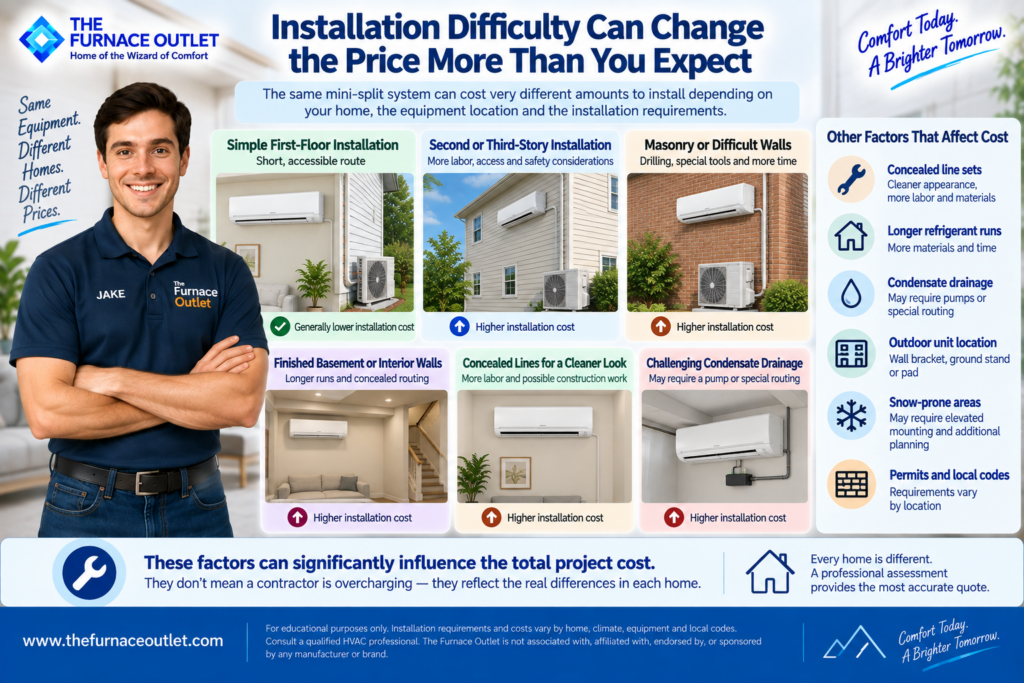
One of the biggest variables in mini-split pricing is the house itself. A simple first-floor installation with indoor and outdoor units separated by a short, accessible route is very different from a project involving second- or third-story work, masonry walls, finished basements, long refrigerant runs or difficult condensate drainage.
A homeowner may also want refrigerant lines concealed for appearance rather than routed externally inside line-hide covers. That aesthetic choice can add labor and sometimes construction work. Outdoor equipment location matters too. The condenser may need an appropriate wall bracket, ground stand or pad, and snow-prone areas can require installation planning that keeps equipment appropriately positioned for winter operation.
None of those issues necessarily indicates that a contractor is overcharging. They illustrate why the same equipment can produce different installed prices in different homes.
Mini splits also have specific electrical requirements, and the cost of satisfying them should be included in the project budget. Depending on the exact model, the system may require a 115V-class or 208/230V supply, a dedicated branch circuit, appropriate overcurrent protection and an outdoor disconnect. Larger equipment commonly uses higher-voltage circuits, although the equipment nameplate and manufacturer documentation should always determine the actual requirements.
If the home’s electrical panel has appropriate capacity and the wiring route is short and accessible, the electrical portion may be relatively straightforward. If the panel is full, the equipment is far from the electrical service or other upgrades are necessary, the electrical cost can increase. This is particularly important when comparing DIY and professional-installation prices. An attractive online equipment price may not include any electrical work.
I would therefore obtain the electrical specifications for the exact model before ordering equipment rather than discovering after delivery that the house needs additional work.

Homeowners using a mini split primarily for air conditioning may have different equipment requirements from homeowners expecting the system to provide substantial winter heating. Cold-climate performance can affect price because equipment designed to maintain useful heating output at low outdoor temperatures may incorporate different engineering, controls and performance characteristics.
Do not evaluate those systems from nominal BTU capacity alone. If a mini split will be the home’s primary heat source, the contractor should consider the building’s heating load at local winter design conditions and compare it with the manufacturer’s capacity data at relevant outdoor temperatures.
A cheaper heat pump that cannot adequately support the home’s winter heating requirements is not necessarily a bargain. Conversely, buying the most expensive cold-climate model available makes little sense when the home’s climate and design requirements do not call for it. The right equipment is the equipment matched to the application.
The familiar high-wall air handler is usually what people picture when they hear “mini split,” but ductless and ducted mini-split families can offer other indoor-unit styles. Depending on the manufacturer, options may include ceiling cassettes, floor-mounted units and compact ducted air handlers. These alternatives can help solve architectural or comfort challenges, but they can also affect both equipment and installation costs.
A ceiling cassette, for example, may involve ceiling access and condensate considerations that differ from a straightforward wall-mounted unit. A compact ducted unit introduces ductwork and airflow design into the project. For multi-zone quotes, check which indoor-unit types are included. Two proposals for the same number of zones are not necessarily equivalent if their indoor equipment and installation requirements differ.
Homeowners naturally compare prices, and they should. But HVAC proposals should be compared on scope as well as cost. Suppose Contractor A quotes a substantially lower price than Contractor B. Before concluding that Contractor B is expensive, determine whether both proposals include the same work.
Does each contractor include electrical work? Permits? Equipment stands or pads? Line-set covers? Condensate pumps where needed? Refrigerant procedures? Startup and commissioning? Disposal of old equipment? Labor warranty? Also ask how the contractor selected equipment capacity. ACCA advises homeowners to ask about Manual J when replacing residential HVAC equipment rather than relying on square-footage rules of thumb.
A low price loses some of its appeal if the equipment was never properly selected for the building.

Permit requirements vary by state and local jurisdiction, so I would never insert one universal permit allowance into a national mini-split budget. Depending on the location and scope of work, HVAC, mechanical or electrical permits and inspections may apply. Some jurisdictions may have additional requirements affecting equipment location or electrical installation.
Ask the contractor whether permitting is included in the proposal or billed separately. If you are considering DIY equipment, investigate those requirements before buying. The fact that equipment is marketed directly to homeowners does not eliminate local building, mechanical or electrical rules. Permit costs may be a relatively small portion of an HVAC project, but discovering them late creates unnecessary budget surprises.
Some mini-split products are specifically designed to simplify homeowner installation, including systems using factory-engineered pre-charged connection approaches. For a technically capable homeowner with an appropriate installation and equipment genuinely intended for DIY use, this can reduce professional labor expense.
However, DIY should not be evaluated as equipment price versus contractor price. Include mounting materials, electrical work, line-set accessories, condensate materials, tools, permits and any professional services that are still necessary. Also review the exact manufacturer’s warranty before assuming DIY installation provides identical coverage to a professionally installed system.
If something goes wrong, troubleshooting or correcting an incomplete installation can reduce or eliminate the savings. DIY can be financially attractive in the right application. It simply needs to be compared using the complete project cost.
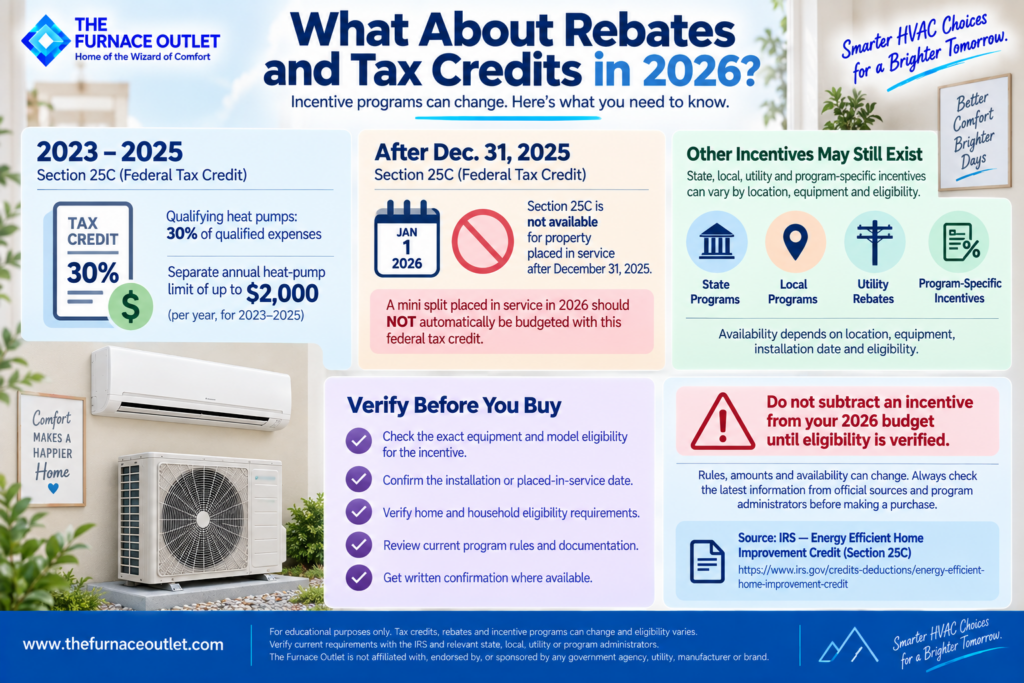
This is an area where homeowners need to be particularly careful with older articles.The federal Energy Efficient Home Improvement Credit under Section 25C previously provided a credit for qualifying heat pumps, with the IRS describing a 30% credit and a separate annual heat-pump limit of up to $2,000. However, the IRS currently states that this credit applied to qualifying improvements made through December 31, 2025. It should therefore not be automatically included when calculating the cost of a mini split placed in service in 2026.
IRS — Energy Efficient Home Improvement Credit
That does not mean a 2026 buyer has no incentive opportunities. State, local, utility and program-specific incentives can vary by location, equipment and eligibility, and those should be checked using current information when you are ready to purchase. The key lesson is simple: never subtract an incentive from your budget until you have verified that your specific equipment, installation date, home and household qualify.

The installation invoice is not the last dollar you will ever spend on a mini split. Indoor filters require regular attention. Outdoor coils need to remain clean and unobstructed. Depending on the equipment and environment, professional maintenance may be appropriate. Condensate systems also need to remain clear and functional.
Multi-zone systems naturally have more indoor components to maintain. You should also understand the warranty structure. Manufacturer parts coverage and contractor labor coverage are not necessarily the same thing. A replacement component might qualify under a parts warranty while the labor required to diagnose the failure, recover refrigerant, replace the component and recommission the system may be treated differently. Ask those questions before purchase rather than after the first service call.
Before comparing prices, I would establish the home’s actual heating and cooling requirements and decide which rooms or zones need conditioning. From there, I would compare equipment capable of satisfying those loads rather than shopping from BTU labels or online prices alone.
For every serious proposal, I would then account for the outdoor unit, all indoor units, controls, refrigerant-line materials, mounting hardware, line-hide materials where desired, condensate management, electrical work, permits and installation labor. For a multi-zone project, I would verify the exact approved indoor/outdoor combination and understand how each additional zone affects both equipment and installation scope. Finally, I would ask what commissioning is included, what manufacturer warranty applies, what labor warranty the installer provides and whether any currently available incentive has actually been verified for the specific project. That produces a much more meaningful number than simply comparing the advertised prices of mini-split boxes.
Mini-split pricing in 2026 can range from relatively modest single-room projects to substantial multi-zone HVAC installations. Current consumer pricing data showing a very broad market range reflects that diversity rather than providing a universal price for every homeowner. The most important distinction is between equipment cost and installed-system cost.
A $1,500 equipment package is not necessarily a $1,500 HVAC project. A multi-zone system should not be priced simply by multiplying the cost of one indoor unit by the number of rooms. And the cheapest contractor proposal is not necessarily the best value if important design, electrical, commissioning or warranty elements are missing.
Start with the load. Select appropriate equipment. Then price the complete installation required to make that equipment work properly in your particular home. When you compare mini splits that way, you are no longer asking which box has the lowest price. You are comparing the actual cost of creating a heating and cooling system that is properly sized, properly installed and capable of delivering the comfort you expected when you made the investment.
https://thefurnaceoutlet.com/best-mini-split-systems-of-2026-complete-brand-model-comparison/
Pricing discussed in this article is for general educational and budgeting purposes. Mini-split equipment and installation costs vary substantially by location, home, capacity, number of zones, equipment, contractor, electrical requirements, permits, installation complexity and other project conditions. Obtain current written quotes for your specific home before making a purchasing decision.
The Furnace Outlet is not associated with, affiliated with, endorsed by or sponsored by any manufacturer, contractor or organization referenced in this article, and does not receive manufacturer compensation for inclusion or rankings. Pricing, specifications, tax rules and incentive programs can change; homeowners should verify current information with manufacturers, contractors, utilities, program administrators and relevant government agencies before purchasing equipment.