Newsletter Subscribe
Enter your email address below and subscribe to our newsletter

HVAC made simple
By Tony Marino | HVAC Technician & Heating Specialist | The Furnace Outlet | Updated November 2026
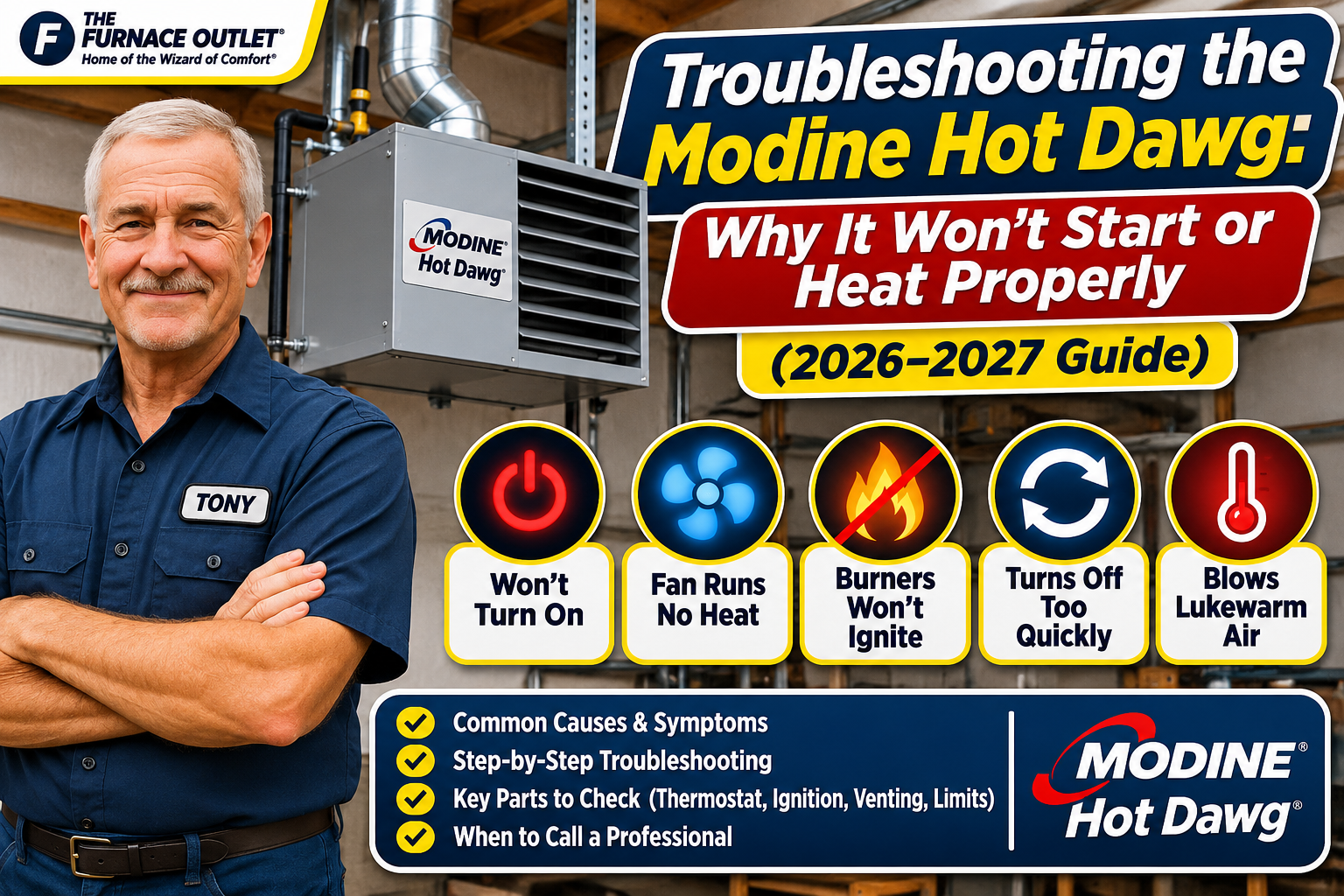
There’s nothing more frustrating than walking into a freezing garage or workshop, turning up the thermostat, and discovering that your Modine Hot Dawg heater refuses to start. Sometimes the heater does absolutely nothing, while other times the fan runs without producing warm air. You might hear clicking, notice the burners shutting off unexpectedly, or find that the unit runs continuously without bringing the space up to temperature.
Modine Hot Dawg unit heaters are popular in residential garages, workshops, warehouses, and smaller commercial spaces because they provide substantial heating capacity without occupying valuable floor space. However, like any gas-fired heating appliance, they depend on several electrical, mechanical, and combustion components working together correctly. A problem with the thermostat, ignition system, airflow, venting, or safety controls can interrupt normal operation.
After years of servicing gas unit heaters, I’ve found that many apparent equipment failures begin with relatively simple problems, such as an incorrect thermostat setting or an interrupted power supply. Other symptoms can indicate serious combustion or venting hazards that require professional attention. This guide explains how to recognize common Modine Hot Dawg problems, what homeowners can safely check, and when to call a qualified heating technician.
Understanding the basic operating sequence makes troubleshooting considerably easier. When the room temperature falls below the thermostat setting, the thermostat sends a heating request to the unit’s control system. Depending on the model, the heater may activate an inducer motor, verify required safety conditions, energize the ignition system, and open the gas valve to establish burner operation.
Once the heat exchanger reaches the appropriate operating condition, the circulation fan moves room air across its heated surfaces and distributes warm air throughout the space. When the thermostat is satisfied, the burners shut down, while the fan may continue operating briefly to remove residual heat from the exchanger. This sequence helps protect the equipment and maintain consistent heating.
The exact operating sequence varies between Hot Dawg models. Power-vented HD and separated-combustion HDS units have different combustion-air and venting arrangements, so homeowners should consult the instructions for their particular heater. Modine provides product literature and technical information through its official website, where model-specific documentation can be located.
When a Hot Dawg heater shows no signs of operation, begin by checking whether the thermostat is requesting heat. Confirm that the thermostat is set to heating mode and that the selected temperature is higher than the current room temperature. If the thermostat uses batteries, weak or exhausted batteries may prevent it from communicating correctly with the heater.
Next, check whether the heater has electrical power. A tripped circuit breaker, disconnected service switch, or interrupted power supply can prevent the control system from operating. If the breaker has tripped, don’t repeatedly reset it, because recurring electrical faults may indicate damaged wiring, a failing motor, or another condition requiring professional diagnosis.
If the thermostat settings and electrical supply appear normal but the heater remains unresponsive, the problem may involve thermostat wiring, a transformer, a control board, or an internal safety circuit. These components require electrical testing, and troubleshooting should be performed by a qualified technician rather than attempting to bypass the controls.
One of the most common Hot Dawg complaints involves a heater that begins its startup sequence but never establishes a flame. You may hear a motor running or notice repeated ignition attempts before the system shuts down. This behavior can occur when the control board detects that the required ignition or flame-proving conditions haven’t been satisfied.
Possible causes include a malfunctioning igniter, inadequate gas supply, a defective gas valve, a blocked vent, or a problem with the flame-sensing system. The control board may also prevent ignition when a pressure-switch circuit or another safety requirement isn’t satisfied. These components work together to prevent unsafe burner operation, so an interrupted startup sequence shouldn’t automatically be treated as a minor inconvenience.
Homeowners can confirm that the building’s gas service hasn’t been intentionally shut off, but gas-pressure adjustments, ignition testing, and internal component repairs should be handled professionally. If you smell gas, leave the area immediately, avoid operating electrical switches or ignition sources, and contact the gas utility or emergency services from a safe location.
A circulation fan that operates without producing warm air can indicate several different conditions. The heater may be responding to a thermostat fan setting, completing a normal post-heating cooldown, or operating because a safety control has interrupted burner operation. In some cases, the control board may run the fan continuously after detecting an overheating condition.
If the thermostat has a fan setting, verify that it isn’t configured for continuous fan operation when you expect automatic operation. Allow the heater to complete any normal cooldown period before concluding that the fan is malfunctioning. If the fan continues indefinitely or the burners never ignite, professional diagnosis is appropriate.
Potential internal causes include a high-temperature limit condition, ignition failure, defective control circuitry, or inadequate airflow. Because some of these conditions involve combustion safety, homeowners shouldn’t disconnect the fan or bypass a limit switch to force the heater to produce heat.
Short cycling occurs when a heater repeatedly starts and stops without maintaining a normal heating cycle. In a garage or workshop, this can result in uneven temperatures, unnecessary component wear, and increased fuel consumption. The underlying cause may be related to thermostat placement, equipment sizing, airflow restrictions, or safety-control operation.
A thermostat positioned directly in the path of warm discharge air may detect the set temperature before the rest of the room has warmed adequately. Similarly, an oversized heater can raise the temperature near the thermostat rapidly, causing frequent shutdowns. In other cases, a restricted heat exchanger airflow path or a malfunctioning fan can contribute to overheating and limit-switch activation.
A technician should determine whether the heater is cycling because the thermostat is satisfied or because an internal safety control is interrupting operation. Those are very different situations, and replacing components without identifying the shutdown cause can lead to unnecessary expense.
Many Modine Hot Dawg models use a control-board diagnostic indicator to communicate operating status and certain fault conditions. Depending on the model and control generation, the indicator may flash in a pattern that corresponds to ignition failure, pressure-switch problems, limit-switch conditions, or other faults.
However, there isn’t one universal Hot Dawg flash-code chart that applies to every model and production year. The meaning of a flashing indicator must be confirmed using the diagnostic information printed on the unit or included in its specific installation and service manual. A code that appears similar across two different control boards may not necessarily have the same interpretation.
If the heater displays a fault indication, record the exact flash pattern and model number before contacting a technician. Avoid repeatedly resetting the system without understanding the fault, since doing so can erase useful diagnostic information or repeatedly initiate an unsafe operating condition.
Gas-fired heaters use ignition and flame-proving systems to ensure that fuel is burned safely. When the ignition system fails, the heater may attempt to light but shut down after a short period. A flame-sensing problem can produce similar symptoms if the control board doesn’t receive the required confirmation that a stable flame has been established.
A dirty or damaged flame sensor, faulty igniter, poor grounding, or combustion problem may contribute to ignition-related faults. However, the presence of clicking or repeated startup attempts doesn’t identify one specific failed component. A technician should inspect the ignition sequence and perform the appropriate electrical and combustion tests before recommending replacement parts.
I don’t recommend that homeowners remove burners, clean internal flame-sensing components, or adjust gas valves without appropriate training. These systems operate with combustible fuel, and incorrect servicing can create fire, carbon monoxide, or equipment-damage hazards.
Power-vented Hot Dawg heaters use a combustion-air and exhaust arrangement designed to support safe burner operation. Certain models incorporate a pressure switch that helps verify required operating conditions before ignition is permitted. If the control system cannot establish those conditions, the heater may refuse to light or may interrupt its startup sequence.
Potential causes include a blocked vent termination, a malfunctioning inducer motor, damaged pressure tubing, or another problem affecting the combustion or venting system. Snow, ice, leaves, and other outdoor obstructions can interfere with vent termination openings, particularly during severe winter weather.
Homeowners may visually inspect accessible outdoor vent terminations from a safe location, without dismantling the system, to identify obvious external obstructions. Internal pressure-switch testing, vent modifications, and combustion adjustments should be left to a qualified technician. Never bypass a pressure switch to make the heater run, because the switch is part of the appliance’s safety system.
A Modine Hot Dawg that produces some heat but doesn’t adequately warm the space may be operating normally while struggling against excessive heat loss. Garages often have poorly insulated doors, uninsulated ceilings, concrete floors, and frequent air exchange when overhead doors open. These conditions can make even a properly functioning heater appear undersized.
Other possible explanations include incorrect thermostat settings, insufficient heating capacity, improper fan operation, or a combustion-related problem that prevents the heater from delivering its intended output. In larger workshops, poor air distribution can also create cold areas even when the heater itself is producing adequate heat.
I recommend evaluating the building’s insulation, door usage, heater location, and airflow before assuming that the unit needs replacement. If the heater previously performed well but has recently begun delivering noticeably less heat, a professional inspection is warranted to determine whether its heating performance has changed.
Gas unit heaters incorporate temperature-limit protection to prevent unsafe heat-exchanger temperatures. If the heater becomes excessively hot, a limit control may interrupt burner operation. Depending on the control system, the circulation fan may continue running to help remove accumulated heat.
Overheating can occur when airflow is restricted, the fan malfunctions, the unit has inadequate clearances, or the equipment is operating outside its intended conditions. Repeated limit trips may also indicate a problem with the control system or heating components.
A heater that repeatedly overheats should be inspected before further operation. Resetting a safety device without identifying the cause doesn’t correct the underlying problem. Never bypass or permanently disconnect a temperature-limit control, even if doing so temporarily restores burner operation.
Some sounds are normal during heater operation. You may hear an ignition sequence, a fan starting, or metal components expanding as the heat exchanger warms. However, repeated loud banging, persistent rattling, grinding, or unusual vibration can indicate a developing mechanical or combustion problem.
Rattling may result from loose panels or mounting hardware, while grinding sounds can suggest worn fan-motor bearings or other rotating-component problems. A loud ignition-related bang is particularly concerning because delayed ignition or improper combustion can create unsafe operating conditions.
If the heater produces unusually loud ignition noises, shut it down and arrange professional service. A technician should inspect the combustion system and verify that ignition occurs correctly. Homeowners shouldn’t attempt to adjust burner settings or gas pressure to eliminate these sounds.
A heater that operates for long periods without reaching the thermostat setting may be undersized for the space or working against unusually high heat loss. This is especially common in detached garages with little insulation, large overhead doors, or high ceilings. Cold outdoor temperatures can increase heating demand substantially, particularly when the garage is used as a workshop and doors are opened frequently.
Poor thermostat placement and uneven air distribution can make the problem worse. Warm air naturally rises, so a ceiling-mounted heater may leave the occupied lower portion of a tall garage cooler than expected. Proper discharge direction and, where appropriate, professionally selected air-circulation measures can help improve comfort.
If the heater has always struggled during extremely cold weather, a heating-load calculation may reveal that the equipment is too small. If performance has deteriorated recently, however, a technician should check whether the heater is delivering its intended heating output before recommending a larger replacement.
A malfunctioning thermostat can create symptoms that resemble heater failure. Loose connections, incorrect programming, incompatible controls, or inaccurate temperature sensing may prevent the unit from receiving a reliable heating request. In garages, thermostats may also be exposed to temperature extremes, dust, moisture, or physical damage.
For basic troubleshooting, confirm that the thermostat is configured for the correct heating system and that its schedule isn’t overriding the desired temperature. If the thermostat uses batteries, replace them according to the manufacturer’s instructions. You can also compare the displayed room temperature with a separate thermometer to identify an obvious sensing discrepancy.
Thermostat wiring should be inspected by a qualified professional if the basic settings appear correct. Jumping terminals or connecting wires without understanding the heater’s control voltage and wiring diagram can damage equipment or create unsafe operating conditions.
Some Hot Dawg operating faults may clear after the underlying condition has been corrected, but the appropriate reset procedure depends on the specific model and control system. Certain ignition controls may reset automatically after a waiting period, while others require a prescribed power interruption or service procedure.
Before attempting any reset, check the manufacturer’s instructions and determine whether the heater has displayed a fault indication. Record the diagnostic information first, because resetting the control may remove evidence that helps identify the problem. If the fault involves overheating, repeated ignition failure, or suspected venting trouble, resetting the heater without professional inspection may be inappropriate.
I recommend avoiding repeated reset attempts. If the unit fails to start again after the manufacturer-approved procedure, arrange professional service rather than continuing to cycle power or manipulate the controls.
Repair expenses vary by model, component availability, labor rates, and the complexity of diagnosis. A basic thermostat or minor electrical repair may cost approximately $150–$350, while certain ignition components, fan motors, or control-board repairs can cost several hundred dollars or more. Major heat-exchanger or combustion-system problems may involve substantially greater expense and could make replacement worth considering.
These figures are broad U.S. budgeting estimates rather than verified current service quotations. Commercial service calls, emergency appointments, difficult access, and specialized components can increase the total cost.
I recommend obtaining a written diagnosis and repair estimate before authorizing major work. The contractor should explain which component failed, why it failed, and whether other operating conditions contributed to the problem. Replacing a damaged part without correcting an underlying venting, airflow, or electrical issue may lead to another failure.
A properly installed and maintained gas unit heater may provide approximately 15–20 years of service, although actual lifespan varies with operating hours, environmental conditions, and maintenance. Some units remain reliable beyond that planning range, while others experience major failures much earlier.
Replacement becomes more attractive when the heater has significant heat-exchanger damage, repeated combustion-related faults, extensive corrosion, or recurring repair expenses. An older heater that no longer meets the building’s heating requirements may also be a candidate for replacement, especially if insulation or building usage has changed.
For expensive repairs, I recommend comparing the repair estimate with the installed cost of a suitable replacement and the expected remaining service life. Safety-related heat-exchanger or venting defects require particular attention because continued operation may be unacceptable even if the heater can still produce heat.
Regular maintenance is one of the most effective ways to reduce unexpected heater failures. A qualified technician should inspect burners, ignition components, heat exchangers, venting, electrical connections, fans, and safety controls according to the manufacturer’s maintenance requirements. Combustion performance and gas supply conditions should also be verified when appropriate.
Garages and workshops often contain dust, sawdust, automotive contaminants, and other airborne materials that can accumulate around heating equipment. Keeping the surrounding area clean and maintaining manufacturer-required clearances can help protect airflow and reduce fire hazards. However, gas-fired heaters should never be operated in locations or conditions prohibited by their installation instructions.
The U.S. Department of Energy’s heating maintenance guidance explains why regular heating-system inspection and maintenance matter. For Hot Dawg equipment specifically, homeowners should follow the service instructions for their model and arrange professional maintenance before the heating season.
Why won’t my Modine Hot Dawg heater ignite? Ignition failure may involve the thermostat, electrical supply, gas supply, igniter, flame-sensing system, venting, or safety controls. The exact cause cannot be determined from the symptom alone, and repeated ignition failures should be diagnosed by a qualified technician.
Why does my Hot Dawg fan run but produce no heat? The fan may be completing a normal cooldown cycle, responding to a thermostat setting, or operating because a safety control has interrupted burner operation. If the condition persists, the heater requires professional evaluation rather than bypassing internal controls.
Can I reset my Modine Hot Dawg heater? Some models provide manufacturer-approved reset procedures, but these vary by control system. Record any diagnostic code before resetting, and avoid repeated attempts when the heater has an unresolved ignition, overheating, or venting fault.
Why does my Hot Dawg heater shut off after a few minutes? Short cycling can result from thermostat placement, overheating, restricted airflow, ignition problems, or safety-control operation. A technician should determine whether the shutdown is a normal thermostat response or an abnormal safety interruption.
How long should a Modine Hot Dawg heater last? Approximately 15–20 years can be used as a general planning range, although actual longevity depends on installation quality, maintenance, operating hours, and environmental conditions. Age alone doesn’t establish whether a heater requires replacement.
When a Modine Hot Dawg heater stops working, it’s tempting to assume that the ignition control, thermostat, or gas valve has failed. However, the same symptoms can result from several different problems, and replacing components without understanding the operating sequence often wastes money.
My recommendation is to begin with the safe, straightforward checks: confirm the thermostat settings, verify that electrical power is available, and observe whether the heater displays a diagnostic fault. If the unit repeatedly fails to ignite, overheats, produces unusual combustion noises, or shows signs of venting trouble, stop troubleshooting and contact a qualified heating technician.
A properly diagnosed repair can restore dependable operation and extend the useful life of the equipment. More importantly, it helps ensure that your garage or workshop heater operates safely throughout the heating season.
This article provides general educational information for U.S. homeowners and commercial property operators. Troubleshooting procedures, diagnostic codes, electrical requirements, and safety controls vary by Modine Hot Dawg model and production year. Gas-fired heating equipment can present fire, electrical shock, carbon monoxide, and combustion hazards. Homeowners should limit their checks to safe external observations and manufacturer-approved user procedures. Internal electrical testing, gas-system adjustments, vent repairs, safety-control servicing, and combustion work should be performed by qualified heating professionals.