Newsletter Subscribe
Enter your email address below and subscribe to our newsletter

HVAC made simple
By Jake Lawson | HVAC Specialist | The Furnace Outlet
Updated October 2026 | Indoor Air Quality & Fall Allergy Prevention
Ragweed allergy season can turn an otherwise enjoyable autumn into weeks of sneezing, itchy eyes, nasal congestion, and uncomfortable nights. Many homeowners assume that closing their windows and spending more time indoors should provide immediate relief, but outdoor pollen has several ways of entering a house. Once inside, it can settle on furniture, carpeting, bedding, and other surfaces, creating opportunities for continued exposure even after outdoor pollen levels begin declining.
As an HVAC specialist with more than 10 years of residential and commercial experience, I frequently explain that improving indoor air quality involves more than installing a better furnace filter. Ragweed pollen can enter through open doors, building air leaks, ventilation pathways, and everyday activities. Family members and pets can also carry pollen indoors after spending time outside. Effective prevention therefore requires a combination of exposure management, household cleaning, compatible HVAC filtration, and appropriate ventilation.
In this guide, I will explain when ragweed allergy season typically occurs, why pollen enters homes, how heating and cooling equipment influences airborne particles, and which practical steps can help reduce indoor exposure. My goal is to help homeowners develop a realistic fall allergy prevention strategy without investing in unnecessary equipment or compromising HVAC performance.
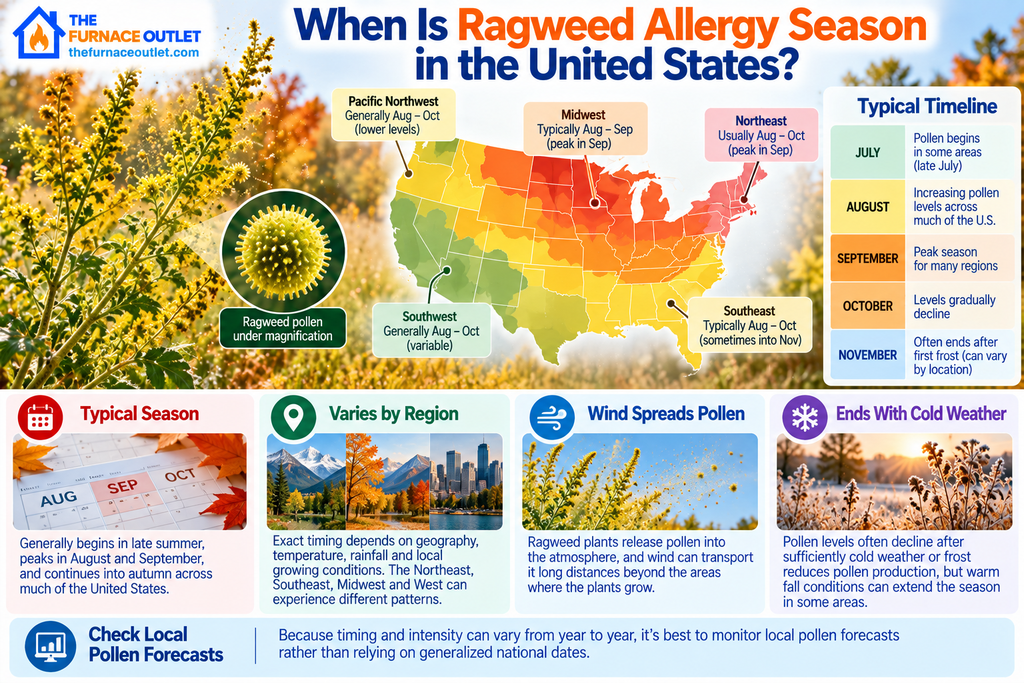
Ragweed allergy season generally begins during late summer and continues into autumn across much of the United States. In many regions, pollen becomes noticeable during August and September, although the exact timing varies with geography, temperature, rainfall, and local growing conditions. Ragweed plants release pollen into the atmosphere, where wind can transport it considerable distances beyond the locations where the plants grow.
The season often declines after sufficiently cold weather or frost reduces pollen production, but homeowners should not assume that every region follows the same calendar. Warmer autumn conditions may extend exposure, while rainfall and changing wind patterns can influence daily airborne pollen concentrations. Someone living in the Northeast may experience a different seasonal pattern from a homeowner in the Southeast or Midwest.
The American College of Allergy, Asthma & Immunology provides useful background on seasonal allergies and common environmental triggers. I recommend monitoring local pollen forecasts rather than relying entirely on generalized national dates, especially when planning outdoor activities or deciding when to ventilate naturally.
Ragweed is particularly troublesome because it relies on wind pollination. Its lightweight pollen grains can become airborne and travel well beyond the plants that produce them. Homeowners may therefore experience symptoms even when there is no visible ragweed growing in their yards or neighborhoods.
Outdoor pollen enters homes through several pathways. Windows and exterior doors are obvious entry points, but small gaps around building materials, uncontrolled air infiltration, and certain ventilation arrangements can also introduce outdoor particles. Clothing, shoes, hair, and pets provide additional transportation routes, especially after gardening, walking, or spending time in grassy areas.
Once pollen enters, some particles remain suspended temporarily while others settle onto indoor surfaces. Ordinary activities such as walking across carpeting, changing bedding, and moving upholstered cushions may disturb deposited material. This explains why pollen management requires both reducing new entry and removing material that has already accumulated.
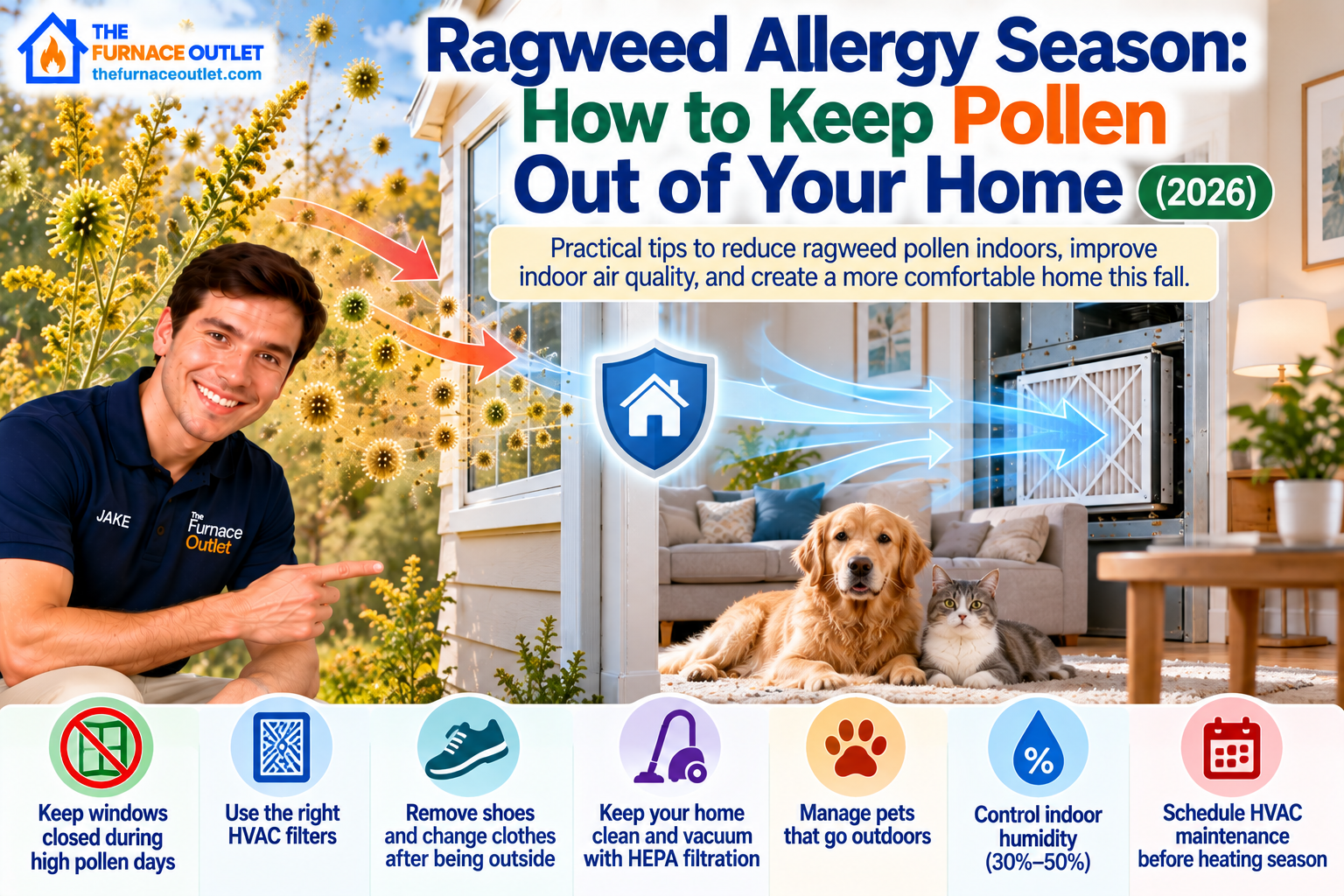
Closing windows during elevated ragweed pollen conditions is one of the simplest ways to reduce direct outdoor pollen entry. Although opening windows may provide pleasant ventilation during mild fall weather, it can also allow pollen-laden air to enter bedrooms, living areas, and other occupied spaces.
I recommend checking local pollen forecasts before opening windows for extended periods. Windy weather can increase pollen movement, while daily concentrations vary with local conditions. Keeping windows closed may be particularly worthwhile in bedrooms where allergy-sensitive occupants spend several consecutive hours sleeping.
However, closing windows should not mean eliminating necessary ventilation. Homes generate pollutants internally through cooking, cleaning, moisture-producing activities, and normal occupancy. The objective is to reduce unnecessary pollen entry while maintaining appropriate ventilation through suitable building systems and operating practices.
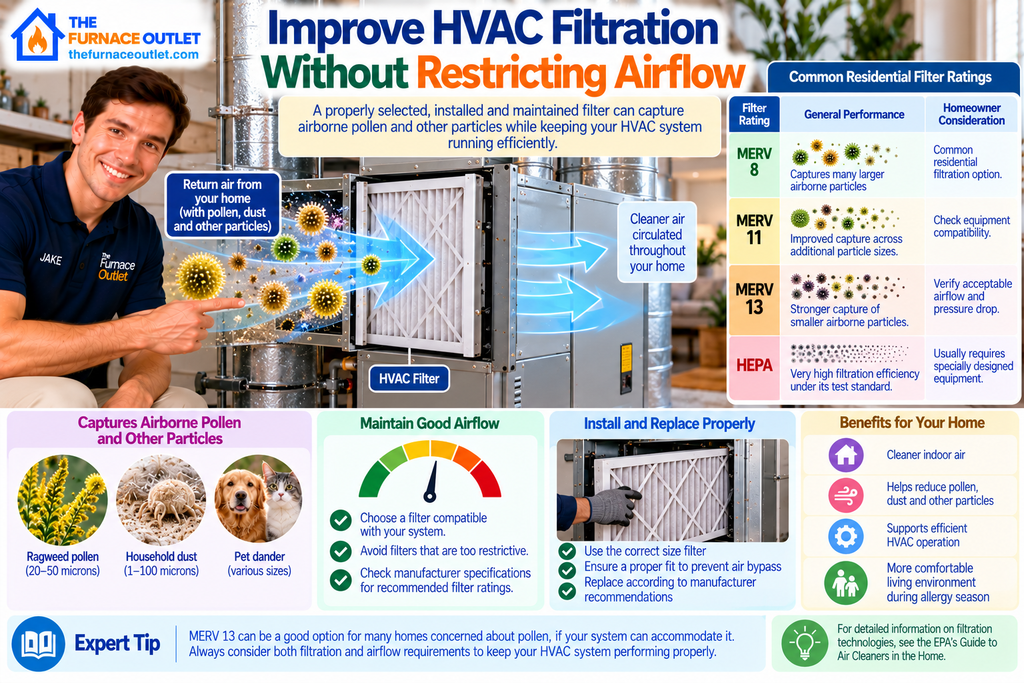
Your HVAC system can help capture airborne pollen when the filter is properly selected, installed, and maintained. In a typical ducted system, return air passes through a filter before being conditioned and distributed throughout the home. This provides an opportunity to remove some airborne particles that reach the filtration system.
Residential filters are commonly evaluated using the Minimum Efficiency Reporting Value, or MERV. Higher ratings generally indicate improved capture of smaller particles under standardized testing conditions, although filter construction and airflow resistance vary between products.
| Filter rating | General performance | Homeowner consideration |
|---|---|---|
| MERV 8 | Captures many larger airborne particles | Common residential filtration option |
| MERV 11 | Improved capture across additional particle sizes | Check equipment compatibility |
| MERV 13 | Stronger capture of smaller airborne particles | Verify acceptable airflow and pressure drop |
| HEPA | Very high filtration efficiency under its test standard | Usually requires specially designed equipment |
For households concerned about pollen and other airborne particles, MERV 13 may be worth considering when the system can accommodate it. However, I would never recommend installing a restrictive filter simply because its advertised rating is higher. Excessive pressure drop can interfere with airflow and heating or cooling performance.
The EPA’s Guide to Air Cleaners in the Home provides useful information about filtration technologies. Before upgrading, consult the equipment manufacturer’s specifications or ask a qualified HVAC technician to evaluate compatibility.
A filter that has accumulated substantial dust and debris may restrict airflow, even if it originally provided suitable filtration. During fall, homeowners should inspect accessible filters according to manufacturer instructions and replace or clean them when necessary.
Replacement frequency depends on the filter’s design, household conditions, pets, dust levels, and equipment runtime. A large media filter may have a different maintenance interval from a thin disposable filter. Following a universal monthly replacement schedule without considering these factors can lead to unnecessary expense or inadequate maintenance.
I also recommend checking filter fit. Air bypass around an improperly seated filter can allow particles to enter the system without passing through the filtration material. Correct installation and adequate airflow are just as important as the filtration rating printed on the packaging.
A practical pollen prevention strategy begins before outdoor particles reach the main living areas. Shoes, jackets, clothing, and personal belongings can carry pollen indoors after time spent outside, especially during peak ragweed season.
Consider establishing a simple entry routine that includes removing outdoor shoes, placing frequently worn jackets in a designated area, and changing clothing after prolonged outdoor exposure. These measures are particularly useful after gardening, yard maintenance, or activities in grassy environments.
For allergy-sensitive households, showering and washing hair before bedtime may also help reduce the transfer of outdoor pollen onto pillows and bedding. These habits do not eliminate every airborne allergen, but they can reduce the amount of outdoor material introduced into frequently occupied spaces.
Bedrooms deserve special attention because people spend many consecutive hours sleeping in them. Pollen carried indoors can accumulate on bedding, curtains, carpets, and upholstered furniture, potentially contributing to ongoing exposure.
I recommend washing bedding regularly according to fabric care instructions and cleaning nearby surfaces with methods that minimize unnecessary dust disturbance. Damp dusting can be preferable to dry dusting because it helps collect particles rather than simply redistributing them.
A vacuum cleaner equipped with effective HEPA filtration may be useful for carpets, rugs, and upholstery. However, cleaning frequency should reflect actual household conditions, and aggressive cleaning methods that generate substantial airborne dust may temporarily increase exposure.
Where practical, reducing unnecessary fabric clutter can also simplify cleaning. The goal is not to create a completely sterile bedroom, but to reduce accumulated particles and maintain a comfortable sleeping environment.
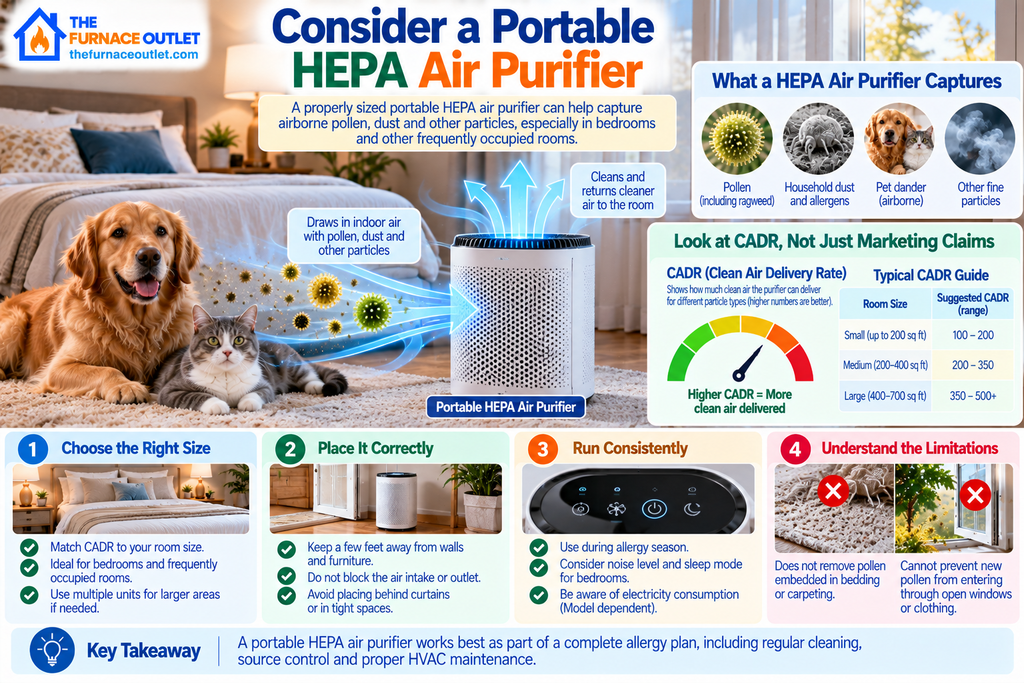
Portable air purifiers can supplement central HVAC filtration, particularly in bedrooms and other frequently occupied rooms. A properly sized purifier with a genuine HEPA filter can capture many airborne particles passing through the device, including pollen and dust-associated material.
When comparing equipment, I recommend evaluating Clean Air Delivery Rate, or CADR, rather than relying exclusively on marketing claims about filtration stages. CADR helps indicate how much cleaned air a purifier can deliver for particular particle categories.
A purifier should be sized appropriately for the room and positioned where airflow is not obstructed by furniture or curtains. Consistent operation can be useful during allergy season, although electricity consumption and noise levels should also be considered.
Portable filtration cannot remove pollen embedded in bedding or carpeting, nor can it prevent new pollen from entering through open windows or clothing. It works best alongside cleaning, source control, and appropriate HVAC maintenance.
Dogs and cats can bring pollen indoors on their coats and paws after spending time outside. This is separate from allergens produced by the animals themselves, which may be associated with skin flakes, saliva, and other biological material.
During ragweed season, consider gently wiping pets’ paws after outdoor activities and maintaining appropriate grooming routines. Cleaning pet bedding and frequently occupied furniture can also help reduce accumulated material.
For households with significant allergy sensitivity, it may be useful to evaluate whether pets should sleep in bedrooms. However, it is important to identify whether symptoms are associated with pollen, pet allergens, or both before making major household changes.
Filtration and cleaning can reduce some airborne and deposited particles, but they do not eliminate the underlying sources completely.
Even when windows are closed, outdoor air may enter through gaps around frames, exterior doors, attic penetrations, and other building connections. Wind and pressure differences influence these pathways, potentially introducing pollen and other outdoor particles.
Weatherstripping and appropriate air sealing can reduce uncontrolled infiltration while improving heating and cooling efficiency. However, building sealing should be considered alongside ventilation requirements to avoid creating inadequate indoor air exchange.
The ENERGY STAR guidance on sealing and insulating provides useful information about reducing unwanted air leakage. I recommend addressing obvious building defects before assuming that a more expensive air purifier will solve persistent outdoor particle entry.
If significant air leakage is suspected, a qualified home-performance contractor can evaluate the building envelope and recommend appropriate improvements.
Humidity management is important for overall indoor air quality, although it does not directly prevent ragweed pollen from entering a home. Excessive indoor moisture can encourage mold growth and create conditions favorable to dust mites, potentially adding other allergens to the household environment.
Maintaining relative humidity around 30% to 50% is a commonly recommended general target, with adjustments based on outdoor conditions and condensation risk. A simple hygrometer can help homeowners identify whether indoor moisture levels are consistently elevated or excessively low.
During humid early-fall weather, dehumidification and moisture control may be necessary in basements and poorly ventilated spaces. As winter approaches, some homes experience drier indoor conditions, but humidification should be approached carefully because excessive moisture can create additional problems.
I recommend correcting water leaks, monitoring condensation, and maintaining drainage systems before purchasing equipment marketed as a universal allergy solution.
Seasonal HVAC maintenance supports reliable heating and cooling performance while helping ensure that filtration and airflow systems operate as intended. Before regular heating begins, inspect accessible filters and registers, and consider professional servicing according to equipment requirements.
A qualified technician may evaluate blower performance, heat exchanger condition, duct leakage, controls, drainage, and other relevant components. The inspection should be tailored to the system rather than based on a generic assumption that every component requires cleaning or replacement.
The ENERGY STAR HVAC maintenance checklist offers useful guidance on seasonal equipment care.
I also recommend investigating persistent musty odors or visible moisture problems. These symptoms may require attention to drainage, building conditions, or equipment components rather than simply installing a stronger filter.
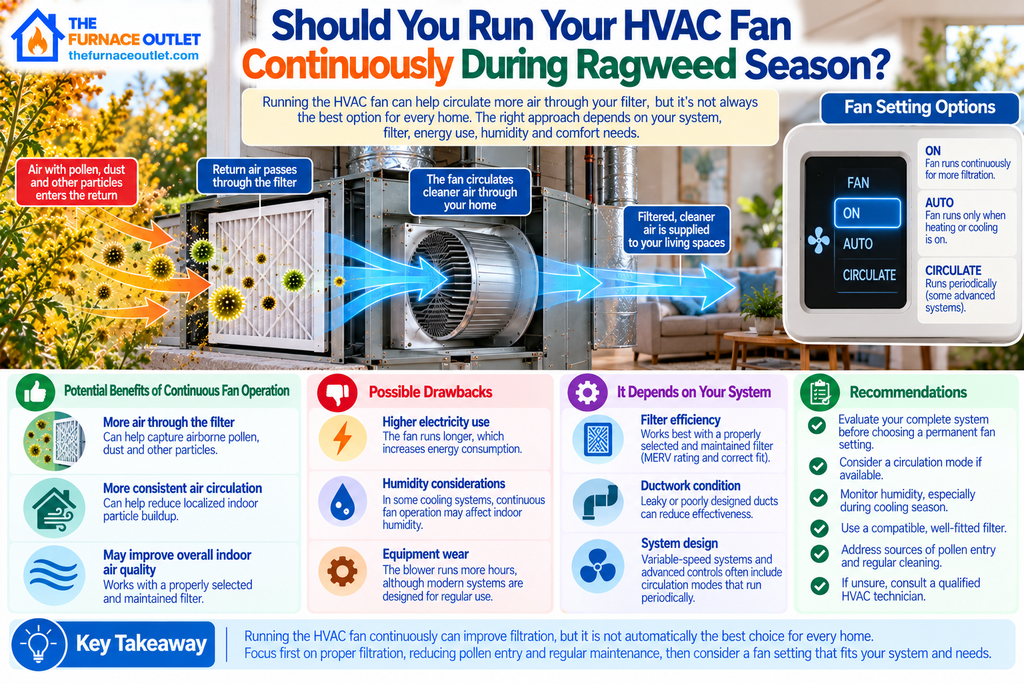
Running the central HVAC fan can increase the amount of indoor air passing through a properly installed filter, potentially improving particle removal. However, whether continuous operation is beneficial depends on filter efficiency, ductwork condition, blower energy consumption, humidity behavior, and the system’s design.
In some installations, continuous fan operation may increase electricity use or create comfort concerns. Certain cooling systems can also experience humidity-related effects when the fan continues operating after cooling stops.
I recommend evaluating the complete system before selecting a permanent fan setting. Some variable-speed systems and advanced controls offer circulation modes intended to provide periodic filtration without operating continuously at full airflow.
For many homeowners, ensuring proper filtration and addressing sources of pollen entry are more useful first steps than automatically switching the fan to ON throughout the season.
Air duct cleaning is often marketed as a way to improve allergy symptoms, but routine cleaning is not universally necessary. Although dust may accumulate in ducts, that does not automatically mean significant quantities are being released into living areas.
The EPA’s guidance on residential air duct cleaning explains circumstances in which cleaning may be appropriate, including certain contamination or excessive debris problems.
My preferred approach is to evaluate filtration, duct leakage, moisture conditions, and visible contamination before recommending duct cleaning. If outdoor air is entering through damaged return ducts, repairing the leakage may be more important than cleaning accumulated dust.
Homeowners should be cautious about contractors promising complete pollen elimination through routine duct cleaning. Any cleaning that is justified should follow appropriate procedures and avoid damaging duct materials.
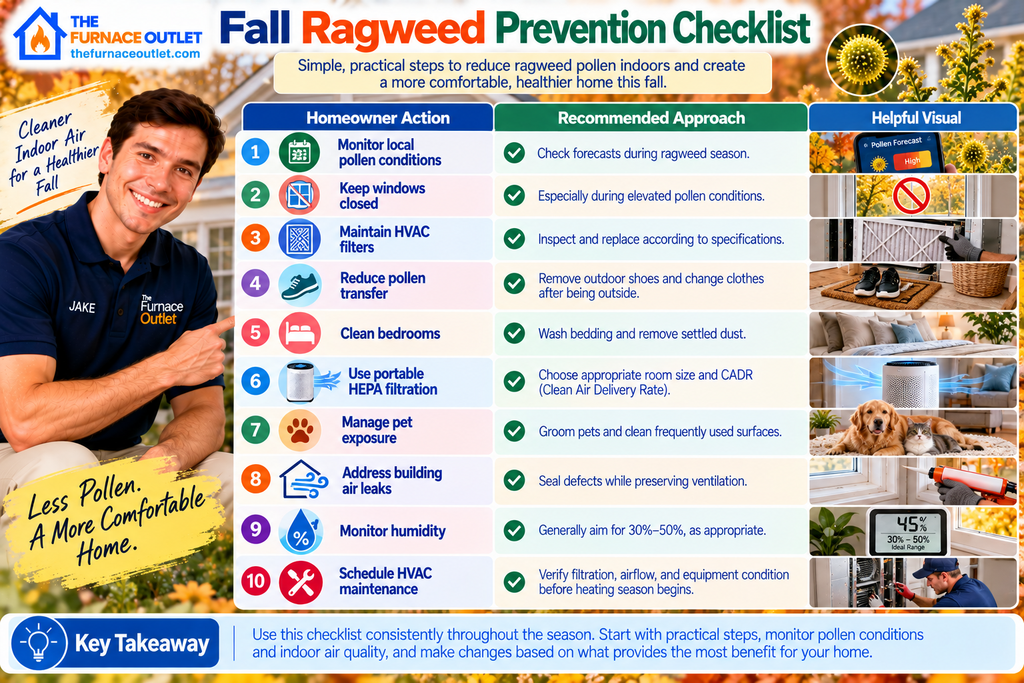
| Homeowner action | Recommended approach |
|---|---|
| Monitor local pollen conditions | Check forecasts during ragweed season |
| Keep windows closed | Especially during elevated pollen conditions |
| Maintain HVAC filters | Inspect and replace according to specifications |
| Reduce pollen transfer | Remove outdoor shoes and change clothes |
| Clean bedrooms | Wash bedding and remove settled dust |
| Use portable HEPA filtration | Choose appropriate room size and CADR |
| Manage pet exposure | Groom pets and clean frequently used surfaces |
| Address building air leaks | Seal defects while preserving ventilation |
| Monitor humidity | Generally aim for 30%–50%, as appropriate |
| Schedule HVAC maintenance | Verify filtration, airflow, and equipment condition |
I recommend using this checklist consistently throughout the season rather than making several expensive changes at once. Monitoring symptoms, pollen conditions, and indoor environmental factors may help identify which improvements provide the greatest practical benefit.
One common mistake is assuming that remaining indoors automatically eliminates pollen exposure. Outdoor pollen can enter through clothing, pets, air leakage, and ventilation, while previously deposited material may remain on indoor surfaces. Closing windows can reduce direct entry, but it does not replace cleaning or filtration.
Another mistake is selecting the highest-rated HVAC filter without checking compatibility. More efficient filtration can be useful, but excessive airflow resistance may interfere with system performance. Homeowners should also avoid purchasing ozone-producing air cleaners, since ozone is a respiratory irritant rather than a desirable indoor air treatment.
Finally, avoid overlooking other potential triggers. Dust mites, mold, pet allergens, and indoor irritants may contribute to symptoms that appear similar to ragweed allergies. If symptoms remain significant despite reasonable environmental improvements, professional allergy evaluation can help identify the actual causes.
Ragweed season often declines after sufficiently cold weather or frost reduces pollen production, but the timing varies by region and year. Warm autumn conditions may extend exposure, so local pollen information is more reliable than a fixed national end date.
Yes. Outdoor particles can enter through building air leaks, ventilation pathways, doors opened during daily activities, and pollen carried indoors on clothing or pets. Closing windows reduces one important entry pathway but does not make a home completely pollen-free.
MERV 13 can provide strong particle capture when compatible with the HVAC system, but it is not automatically appropriate for every installation. Filter fit, airflow resistance, and equipment requirements should guide the selection.
A properly sized HEPA air purifier can capture airborne pollen that passes through the device. However, it cannot remove all pollen from household surfaces or prevent new pollen from entering. Cleaning and exposure management remain important.
Rain can temporarily affect airborne pollen concentrations, but conditions vary with location, wind, and weather patterns. Rather than assuming outdoor air is pollen-free after rainfall, check local pollen and air quality conditions before opening windows.
Allergy-related nasal congestion, sneezing, and other symptoms may interfere with sleep for some individuals. Reducing bedroom exposure may help manage environmental triggers, but persistent sleep disruption or respiratory symptoms should be discussed with a qualified healthcare professional.
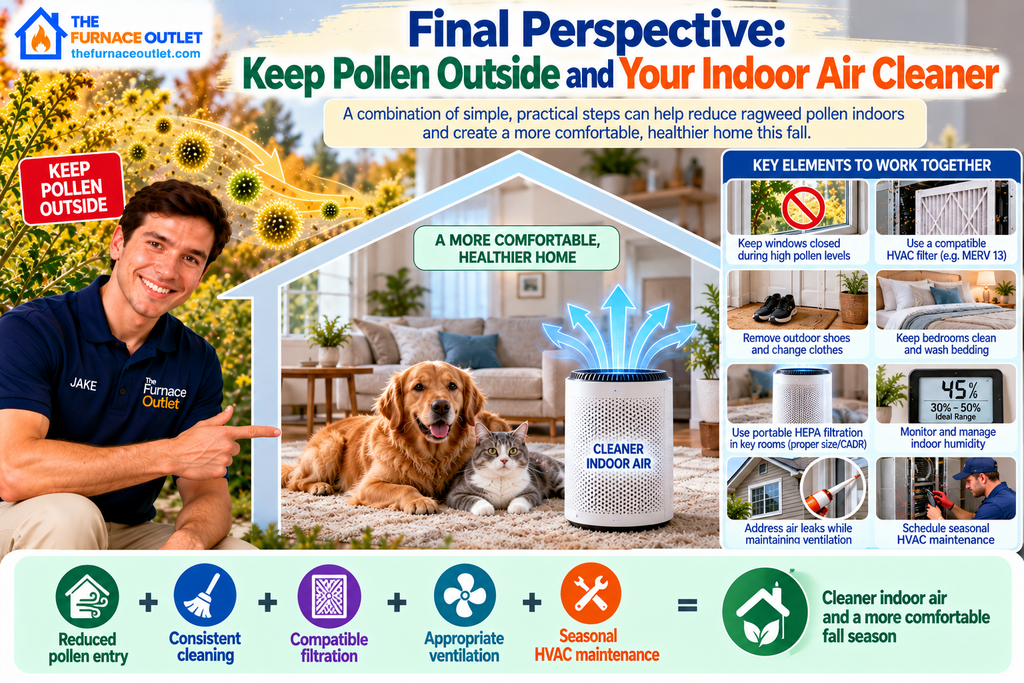
When homeowners ask me how to manage ragweed allergy season, I recommend focusing first on the pathways that allow pollen to enter the home. Keeping windows closed during elevated pollen conditions, reducing pollen carried indoors on clothing and pets, and maintaining clean bedrooms can all contribute to lower exposure. These practical measures are often more useful than immediately purchasing complicated indoor air treatment equipment.
I also emphasize that HVAC filtration must be appropriate for the equipment. A well-fitted, compatible filter can capture airborne particles circulating through the system, while portable HEPA filtration may provide additional benefits in frequently occupied rooms. However, neither approach replaces proper ventilation, moisture control, household cleaning, or attention to building air leaks.
The most effective ragweed prevention strategy combines reduced pollen entry, consistent cleaning, compatible filtration, appropriate ventilation, and seasonal HVAC maintenance. By following these principles throughout autumn, homeowners can create a more comfortable indoor environment while supporting reliable heating and cooling performance.
This article is provided by The Furnace Outlet for general educational purposes and does not constitute medical advice. Environmental improvements may reduce exposure to airborne allergens, but they do not diagnose, treat, or cure allergies, asthma, or other medical conditions. Individuals experiencing persistent, severe, or worsening symptoms should consult an appropriately qualified healthcare professional.
HVAC filter changes, ventilation modifications, duct repairs, and equipment servicing should follow manufacturer instructions and applicable safety requirements. Electrical work, refrigerant servicing, and internal HVAC repairs should be performed by qualified professionals.
The Furnace Outlet publishes independent educational content. References to government agencies and other external resources are included for informational purposes and do not imply sponsorship, affiliation, or endorsement.
© 2026 The Furnace Outlet. All rights reserved.