Newsletter Subscribe
Enter your email address below and subscribe to our newsletter

HVAC made simple
By Tony Marino — Tony the Trusted Tech
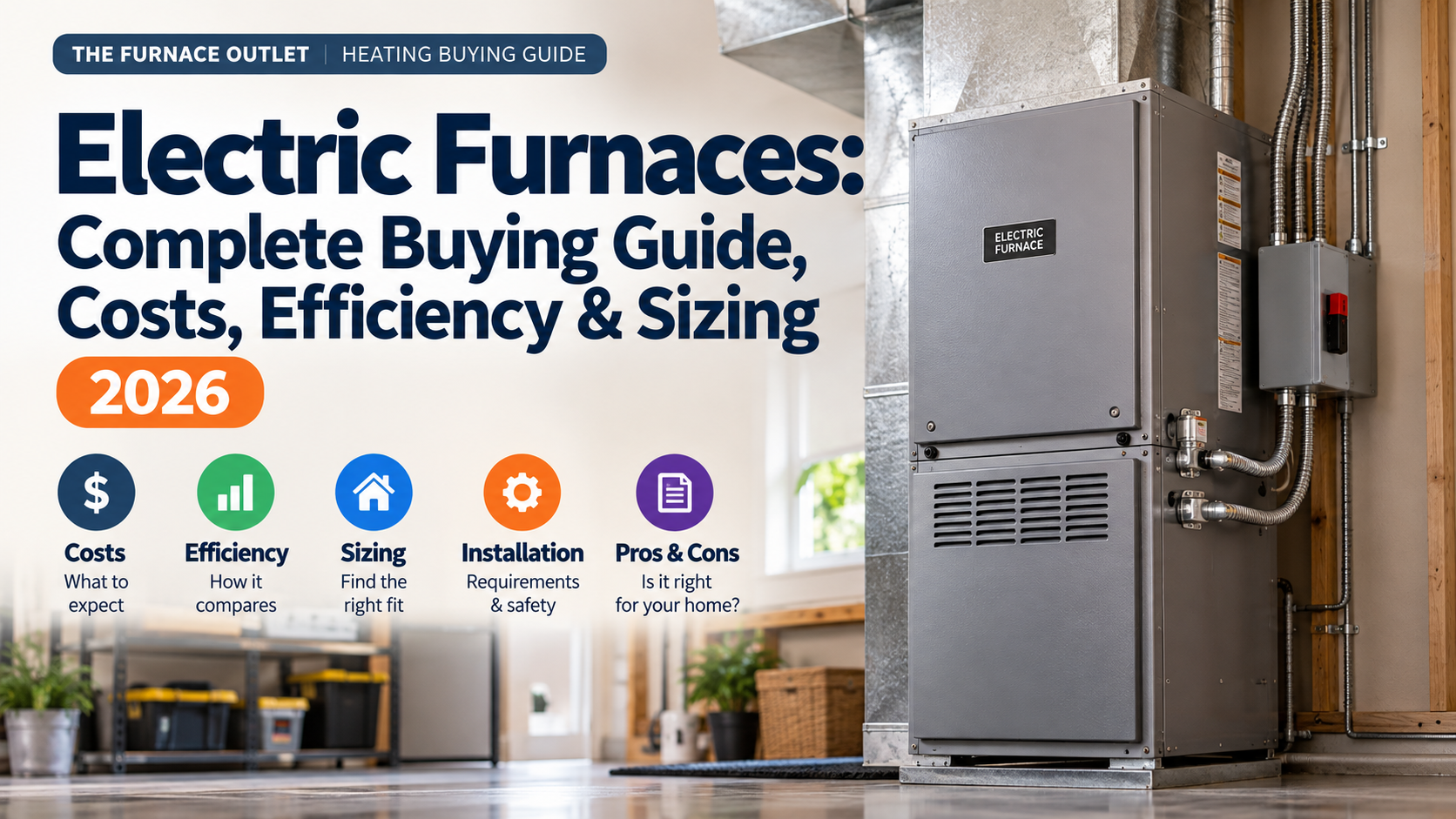
Electric furnaces may not receive as much attention as gas furnaces or heat pumps, but they remain a practical heating option for certain homes. They are relatively straightforward to install when adequate electrical capacity is available, do not require a fuel-burning vent or chimney, and can provide dependable heating without on-site combustion. However, the real question for homeowners is not simply whether an electric furnace can heat a house. It is whether it can do so comfortably and affordably throughout the winter.
After decades of working with residential heating equipment, I’ve learned that the best heating system is not necessarily the one with the lowest purchase price. Proper sizing, local electricity rates, winter temperatures, ductwork, electrical capacity, and long-term operating costs all matter. An electric furnace can be a sensible choice in one home and an expensive mistake in another.
In this 2026 buying guide, I’ll explain how electric furnaces work, what they cost, how to choose the correct size, and when an electric furnace makes more sense than a gas furnace or heat pump.
An electric furnace is a forced-air heating system that uses electrical resistance elements to generate heat. When the thermostat calls for heating, electricity passes through the heating elements, which become hot. A blower then moves household air across these elements and distributes the warmed air through the home’s ductwork.
Unlike a gas furnace, an electric furnace does not burn natural gas or propane. There is no combustion chamber, burner assembly, flue pipe, or combustion-related carbon monoxide production within the electric furnace itself. This simplifies certain installation and maintenance requirements, although electrical safety and adequate airflow remain essential.
Most electric furnaces include multiple heating elements, high-temperature limit switches, electrical contactors or relays, a blower motor, and a control board. Some systems activate their heating elements in stages to manage electrical demand and improve temperature control.
One important distinction is that an electric furnace is not the same as a heat pump. An electric furnace creates heat through electrical resistance, while a heat pump transfers heat from outdoor air into the home. That difference has a major effect on operating efficiency.
Although electric furnaces share the same basic heating principle, they are available in several configurations.
These are conventional resistance-heating systems designed to distribute warm air through existing ductwork. They are commonly used in homes without natural gas service, smaller residences, and certain replacement installations.
Standard electric furnaces are generally simpler than combustion-based systems, but they may require substantial electrical capacity, especially at higher heating outputs.
Multi-stage electric furnaces use separate heating elements that can operate in different combinations. For example, a 15 kW system might activate 5 kW initially and engage additional elements as heating demand increases.
Staging can improve temperature control and reduce unnecessary full-capacity operation during mild weather. However, it does not fundamentally improve the efficiency of electrical resistance heating.
Some manufacturers offer electric heating kits integrated into compatible air handlers. These systems can serve as primary resistance heating or provide supplemental and emergency heat for a heat pump.
When considering this configuration, confirm compatibility between the air handler, heating kit, blower, electrical supply, and thermostat. Not every electric heat kit is designed to function as a standalone primary furnace.
One of the biggest selling points of electric furnaces is their high point-of-use efficiency. Nearly all the electricity consumed by resistance heating elements becomes heat inside the equipment, and electric resistance heating is effectively 100% efficient at converting electricity into heat at the point of use.
However, 100% conversion efficiency does not automatically mean low heating bills.
A conventional electric furnace generally delivers approximately one unit of heat for each unit of electrical energy consumed. A heat pump, by comparison, may deliver two to four units of heat per unit of electricity under suitable operating conditions because it transfers heat rather than generating all of it through resistance.
Electric furnaces also differ from gas furnaces in how efficiency is described. Gas furnaces commonly use Annual Fuel Utilization Efficiency (AFUE) ratings to describe how much fuel energy becomes useful heat. Electric resistance furnaces are often described as effectively 100% efficient at the equipment level, although distribution losses and auxiliary electrical consumption can affect overall system performance.
Homeowners should therefore compare annual operating costs, not efficiency percentages alone.
The installed cost of an electric furnace depends on heating capacity, equipment configuration, electrical requirements, local labor rates, and whether existing ductwork can be reused.
The following are broad planning estimates for residential installations in the United States, not verified contractor quotations.
| Cost component | Estimated 2026 cost |
|---|---|
| Electric furnace equipment | $800–$2,500 |
| Standard installation labor | $800–$2,000 |
| Electrical upgrades, if needed | $500–$3,000+ |
| Typical straightforward installed project | $1,800–$4,500 |
| Complex installations with major electrical work | $5,000–$8,000+ |
These ranges are illustrative and can vary substantially by location and project scope. A panel replacement, new electrical circuits, ductwork modifications, permits, or other work may increase the total.
One of the most common budgeting mistakes is assuming that an electric furnace can simply replace a gas furnace without electrical modifications. A larger electric furnace may require multiple high-amperage circuits and significant available service capacity.
Before purchasing equipment, ask a licensed electrician or qualified HVAC contractor to evaluate the home’s electrical service and applicable code requirements.
Correct sizing is essential for comfort, safety, and long-term performance. An undersized furnace may struggle during extreme cold, while an oversized unit can increase installation costs and create unnecessary electrical demand.
Electric furnace capacity is commonly expressed in kilowatts (kW), while heating loads are often expressed in British thermal units per hour (BTU/hr).
The conversion is straightforward:
1 kW = approximately 3,412 BTU/hr
For example, a 10 kW electric furnace has a nominal resistance-heating output of approximately 34,120 BTU/hr.
| Electric heating capacity | Approximate output |
|---|---|
| 5 kW | 17,060 BTU/hr |
| 7.5 kW | 25,590 BTU/hr |
| 10 kW | 34,120 BTU/hr |
| 15 kW | 51,180 BTU/hr |
| 20 kW | 68,240 BTU/hr |
| 25 kW | 85,300 BTU/hr |
These are nominal resistance-heating conversions, not recommended furnace sizes for specific home square footages.
A home’s heating requirement depends on insulation, air leakage, windows, ceiling height, climate, and indoor design temperature. Two houses with identical floor areas may require very different heating capacities.
For reliable sizing, I recommend a professional ACCA Manual J heating-load calculation. It evaluates the home’s actual heat loss instead of relying on a broad square-footage rule.
You can also use The Furnace Outlet’s HVAC calculators to explore heating-load and capacity calculations before discussing the final equipment selection with a contractor.
Operating cost is where homeowners need to pay particular attention.
Consider a 15 kW electric furnace operating at full heating capacity for six equivalent hours per day.
Its daily electrical consumption would be:
15 kW × 6 hours = 90 kWh
At an illustrative electricity price of $0.16 per kWh, the daily cost would be $14.40. Over 30 days, that becomes approximately $432.
The best heating technology depends on local energy prices, climate, available utilities, and installation conditions.
| Feature | Electric furnace | Gas furnace | Heat pump |
|---|---|---|---|
| Heating method | Electrical resistance | Fuel combustion | Heat transfer |
| On-site combustion | No | Yes | No |
| Heating efficiency | Nearly 100% at point of use | Typically 80–98.5% AFUE | Often COP above 1 |
| Upfront cost | Often relatively low | Moderate | Moderate to high |
| Operating cost | Can be high | Depends on gas prices | Often lower than resistance heat |
| Cooling capability | No | No | Yes, with reversible systems |
Electric furnaces may make sense where gas is unavailable, heating demand is modest, or installation simplicity is especially important. Gas furnaces can be attractive where natural gas is affordable and winters are severe.
For many electrically heated homes, a properly designed heat pump deserves serious consideration because it can substantially reduce electricity consumption compared with resistance heating. In very cold climates, equipment selection should account for low-temperature capacity and supplemental heating requirements.
Electric furnaces eliminate combustion venting requirements, but that does not make them simple do-it-yourself installations.
High-capacity electric heating equipment can place substantial demand on a home’s electrical system. Correct circuit sizing, conductor selection, disconnects, overcurrent protection, grounding, and equipment clearances are essential.
Ductwork must also provide sufficient airflow across the heating elements. Restricted airflow caused by dirty filters, undersized ducts, or blower problems can trigger high-temperature safety limits and potentially damage equipment.
I recommend verifying the following before installation:
Installation should be performed by appropriately qualified professionals, with electrical work handled according to local licensing requirements.
Electric furnaces have fewer combustion-related components than gas furnaces, but they still require regular maintenance.
A properly installed and maintained electric furnace may last approximately 15–25 years, although actual service life varies with usage, installation quality, environmental conditions, and maintenance.
Homeowners should replace or clean air filters according to manufacturer recommendations, keep supply and return vents unobstructed, and pay attention to unusual noises, electrical odors, or repeated breaker trips.
Professional inspections should include heating elements, electrical connections, contactors, safety limits, blower operation, and airflow. Electrical panels and heating-element compartments should not be opened by unqualified homeowners.
If the furnace repeatedly trips a breaker, produces a burning electrical smell, or shows signs of overheating, stop using it and arrange professional service.
Electric furnaces remain a reasonable choice for certain applications, particularly smaller homes, properties without gas service, and installations where upfront equipment simplicity matters more than long-term electricity consumption.
However, I would hesitate to recommend resistance heating as the default solution for a large home in a cold climate without first comparing its lifetime operating costs against a suitable heat pump.
For a homeowner replacing an existing electric furnace, this is also an opportunity to investigate whether a heat pump with properly designed supplemental electric heat could provide better long-term value.
The decision should account for the complete installed system, not just the furnace’s purchase price.
Electric furnace equipment can be less expensive, and installations may be simpler when the home’s electrical system is already suitable. However, electric resistance heating may cost considerably more to operate than natural gas heating in areas with high electricity prices. Compare local energy rates and full installation costs before deciding.
Yes. A properly sized electric furnace can heat an entire house through suitable ductwork. Its ability to maintain comfort depends on matching heating output to the home’s design heating load.
Electric resistance furnaces do not require combustion-air intake or exhaust venting. They still require adequate return airflow, supply-air distribution, and manufacturer-specified equipment clearances.
Properly installed electric furnaces include protective controls and do not produce combustion-related carbon monoxide themselves. However, electrical faults, overheating, and inadequate airflow can create hazards. Professional installation and maintenance remain essential.
Solar electricity can offset some of an electric furnace’s energy consumption, but winter heating demand often occurs when solar production is limited. System sizing, utility arrangements, and storage capacity determine how much electricity solar can realistically supply.

When homeowners ask whether they should install an electric furnace, my first question is about the house, not the equipment. I want to know the winter climate, insulation quality, existing ductwork, electrical service, and local electricity prices. Those details tell us far more about whether resistance heating makes financial sense than a product brochure ever will.
For 2026, my recommendation is to start with a proper heating-load calculation, confirm electrical capacity, and obtain detailed installation quotations. Then compare the estimated annual operating costs of an electric furnace, a gas furnace where available, and an appropriately sized heat pump.
An electric furnace can provide reliable, straightforward heating for many years. The key is choosing it for the right reasons, installing it correctly, and understanding what it will cost to operate long after the initial purchase.