Newsletter Subscribe
Enter your email address below and subscribe to our newsletter

HVAC made simple
By Jake Lawson | HVAC Specialist | The Furnace Outlet
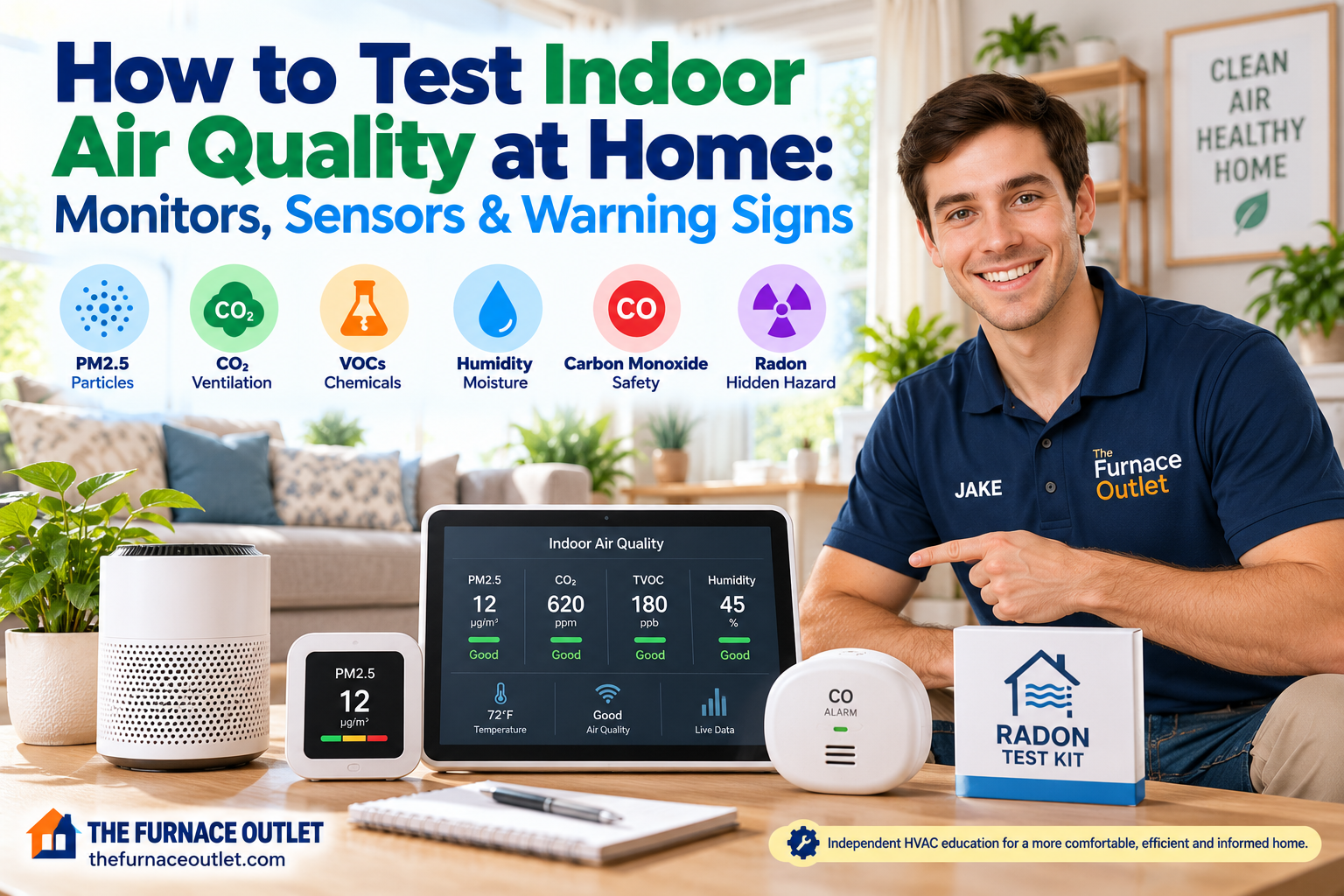
Most homeowners can recognize when a room feels too warm, too cold, or excessively humid. Identifying poor indoor air quality is considerably more complicated because many pollutants are invisible, some produce no noticeable odor, and others fluctuate throughout the day. A home may appear clean and comfortable while still experiencing elevated airborne particles, inadequate ventilation, excessive moisture, or pollutants released by everyday activities.
Fortunately, modern indoor air quality monitors have made it easier to observe certain environmental conditions without arranging an expensive professional assessment. Depending on the equipment, homeowners can track fine particulate matter, carbon dioxide, temperature, humidity, and estimated concentrations of certain chemical pollutants. These measurements can help identify recurring problems and evaluate whether practical improvements are making a difference.
However, testing indoor air quality requires understanding what a particular device can and cannot measure. The U.S. Environmental Protection Agency (EPA) explains that low-cost monitors provide information about selected pollutants but cannot deliver a complete assessment of every contaminant in a home. A device displaying a favorable air-quality score may still be unable to detect carbon monoxide, radon, or other important hazards.
As an HVAC specialist with more than 10 years of experience, I recommend treating indoor air quality testing as a process of investigation rather than searching for one perfect number. The most useful approach combines observation, appropriate sensors, specialized testing where necessary, and practical changes to pollution sources, ventilation, and filtration. This guide explains how to test indoor air quality at home, what common sensors measure, which warning signs deserve attention, and when professional testing may be appropriate.
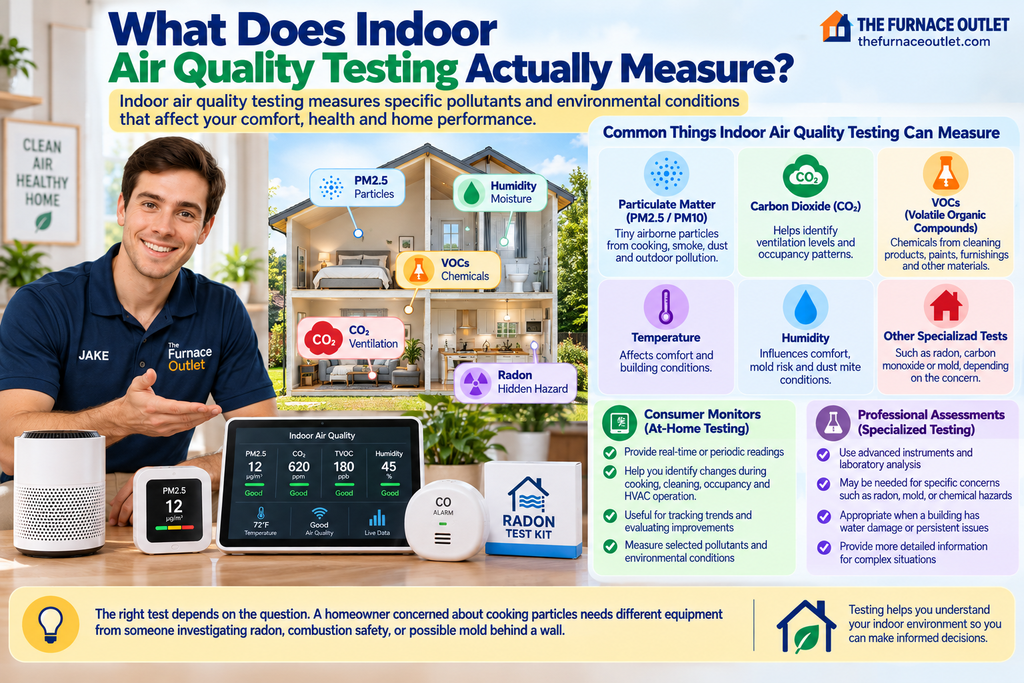
Indoor air quality testing involves measuring specific pollutants or environmental conditions that may affect comfort, health, or building performance. The term covers several different activities, ranging from checking room humidity with a simple hygrometer to using laboratory analysis for specialized chemical or building-related hazards.
Consumer monitors generally provide real-time or periodically updated readings. They are useful for identifying changes associated with cooking, cleaning, occupancy, outdoor pollution, and HVAC operation. For example, a particulate matter sensor may show an increase during frying, while a carbon dioxide monitor may indicate that concentrations rise when several people occupy a closed bedroom.
Professional assessments can involve more specialized instruments, sampling procedures, building inspections, and laboratory analysis. These methods may be appropriate when a specific contaminant is suspected, a building has experienced water damage, or ordinary household measurements cannot explain a persistent problem. The key is to identify the question before selecting the test. A homeowner concerned about cooking particles needs different equipment from someone investigating radon, combustion safety, or possible mold behind a wall.
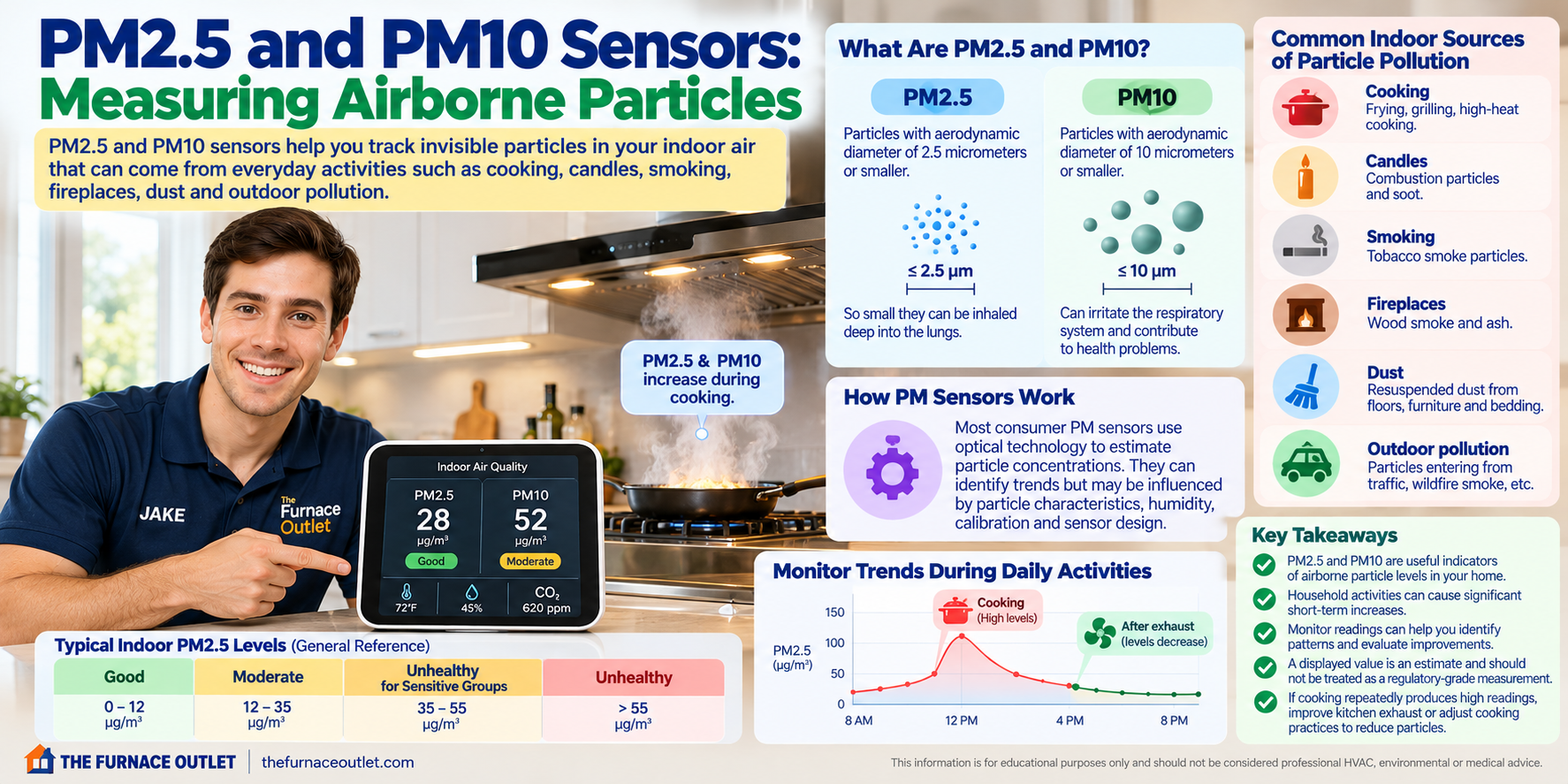
Particulate matter is among the most useful pollutants to monitor in residential environments because household activities can generate significant short-term changes. PM2.5 refers to particles with aerodynamic diameters of 2.5 micrometers or smaller, while PM10 includes particles measuring 10 micrometers or smaller. Common indoor particle sources include cooking, candles, smoking, fireplaces, resuspended dust, and outdoor pollution entering the building. Fine particles deserve attention because exposure to particle pollution is associated with respiratory and cardiovascular health effects, although risk depends on exposure concentration, duration, and individual susceptibility.
Many consumer PM sensors use optical technology to estimate particle concentrations. These instruments can help identify trends, but readings may be influenced by particle characteristics, humidity, calibration, and sensor design. A displayed PM2.5 value should not automatically be treated as equivalent to a regulatory-grade measurement. I recommend observing how particle readings change before, during, and after common household activities. If cooking repeatedly produces elevated readings, improving kitchen exhaust or changing cooking practices may be more useful than simply purchasing another monitor.
Carbon dioxide, or CO2, is naturally produced by human respiration. Its concentration can increase when people occupy a room with limited outdoor-air exchange, making it a useful indicator of certain ventilation patterns. For example, a bedroom occupied overnight with closed doors and windows may experience increasing CO2 concentrations. Comparing readings under different ventilation conditions can help homeowners understand whether additional outdoor-air exchange is occurring.
However, carbon dioxide is not a complete indicator of indoor air quality. A room may have relatively low CO2 concentrations while containing cooking particles, chemical vapors, or other contaminants. Likewise, a particular CO2 reading does not establish an individual’s health risk or determine whether every aspect of ventilation is adequate.
For homeowners purchasing a CO2 monitor, I recommend looking for a device that clearly identifies its measurement technology, such as a nondispersive infrared (NDIR) sensor, rather than relying on products that estimate CO2 indirectly from other gases. CO2 monitoring is most useful when interpreted alongside occupancy, ventilation conditions, and the home’s actual activities.

Volatile organic compounds, commonly called VOCs, include numerous chemicals that can enter indoor air from cleaning products, paints, adhesives, furnishings, fragrances, and other materials. Some consumer monitors display total volatile organic compounds, or TVOC, while others provide an air-quality index derived from sensor responses. These readings may indicate that chemical emissions have changed, but they generally cannot identify every individual compound or establish its specific health implications.
For example, a sensor may respond after cleaning or using a fragranced product without revealing precisely which chemicals are present. Different VOCs have different toxicological properties, and a single combined reading cannot reliably distinguish among them.
Humidity, temperature, sensor aging, and interference from other substances can also affect performance. I recommend using consumer VOC readings to identify repeatable changes rather than treating them as definitive chemical exposure assessments. When formaldehyde or another specific chemical is suspected, a targeted measurement or professionally designed sampling method may be more appropriate than a general-purpose TVOC monitor.
Temperature and relative humidity are among the easiest indoor environmental conditions to measure. Although they do not directly identify every air pollutant, they provide useful information about comfort, moisture control, and conditions that may encourage biological growth. Excessive humidity can contribute to condensation, mold growth, and dust-mite activity. Very low humidity may contribute to discomfort, although appropriate humidity targets depend on climate, building construction, and surface temperatures.
The EPA generally recommends keeping indoor relative humidity around 30%–50%. In colder climates, some homes may require lower humidity to prevent condensation on windows and other cold surfaces. I recommend placing a reliable digital hygrometer in frequently occupied rooms and observing readings over time. Persistent humidity problems should prompt an inspection for moisture sources, inadequate ventilation, or equipment issues. A humidity reading alone cannot diagnose mold contamination, but it can help identify conditions that deserve investigation.
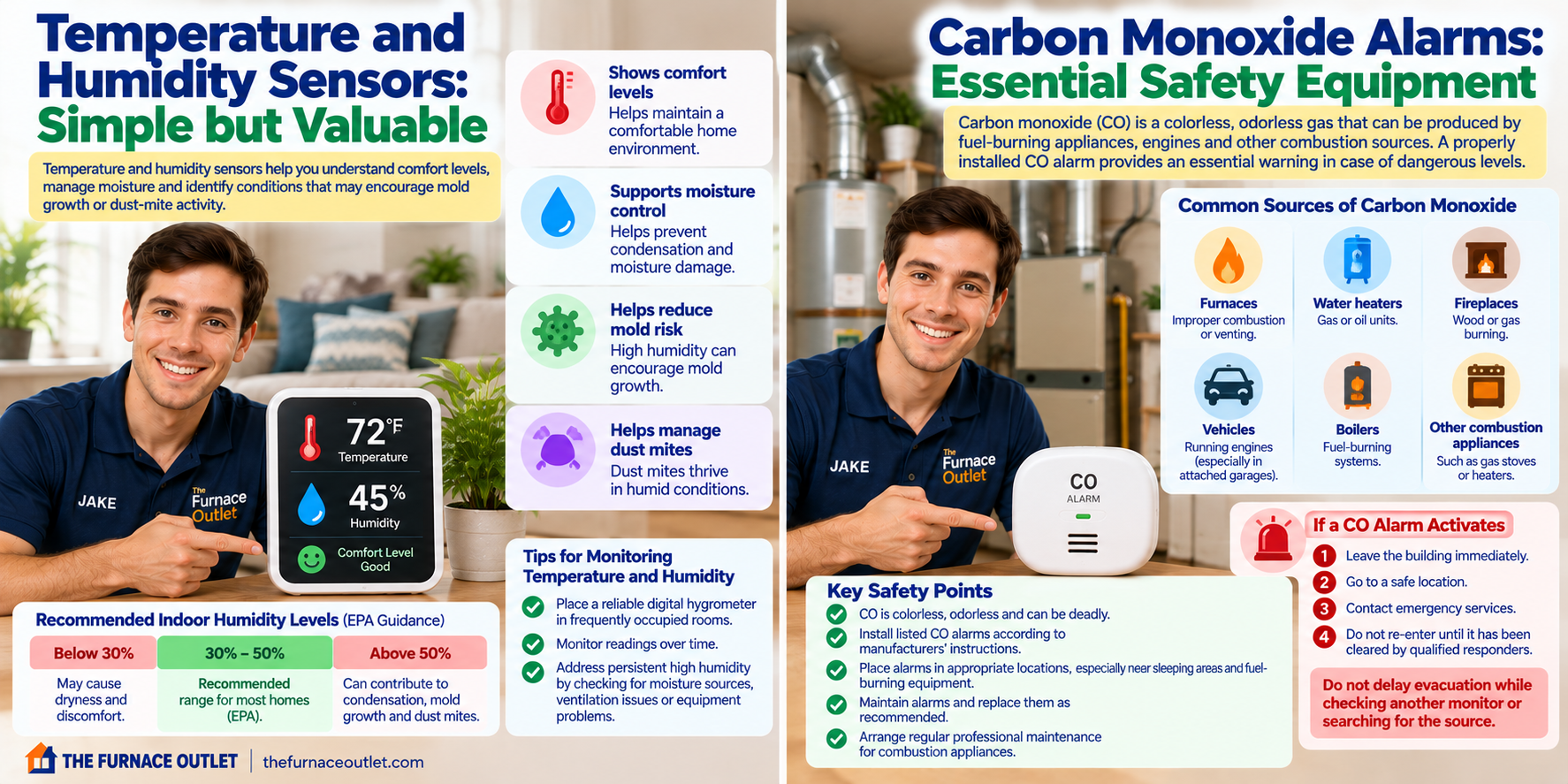
Carbon monoxide is a colorless, odorless gas that can be produced by fuel-burning appliances, engines, and other combustion sources. Exposure can cause serious poisoning, making carbon monoxide protection fundamentally different from ordinary air quality monitoring. Homes with fuel-burning furnaces, boilers, fireplaces, water heaters, or attached garages should pay particular attention to appropriate carbon monoxide safety measures.
Listed residential carbon monoxide alarms are designed to provide warnings according to applicable safety standards. A general-purpose air quality monitor should never be assumed to provide equivalent protection unless it is specifically certified for that purpose. I recommend installing and maintaining carbon monoxide alarms according to applicable requirements and manufacturer instructions, along with arranging appropriate professional maintenance for combustion equipment.
If an alarm activates or carbon monoxide exposure is suspected, occupants should leave the building immediately and contact emergency services from a safe location. Do not delay evacuation while checking another monitor or searching for the source.
Radon is a naturally occurring radioactive gas that can enter homes from the ground. It cannot be detected reliably through smell, appearance, or ordinary household air quality measurements. Long-term radon exposure increases lung cancer risk, making appropriate testing an important consideration for U.S. homeowners. Radon concentrations vary among buildings, and neighboring homes may have substantially different results. Testing options include recognized short-term test kits, long-term measurement devices, and professional radon testing services. Homeowners should follow test instructions carefully because placement, ventilation conditions, and test duration can affect interpretation.
The EPA recommends correcting homes with confirmed radon concentrations of 4 picocuries per liter or higher and considering mitigation when concentrations fall between 2 and 4 picocuries per liter. I recommend testing according to applicable local guidance and obtaining qualified mitigation advice when results indicate a problem. Ordinary HEPA air purifiers are not substitutes for properly designed radon mitigation.
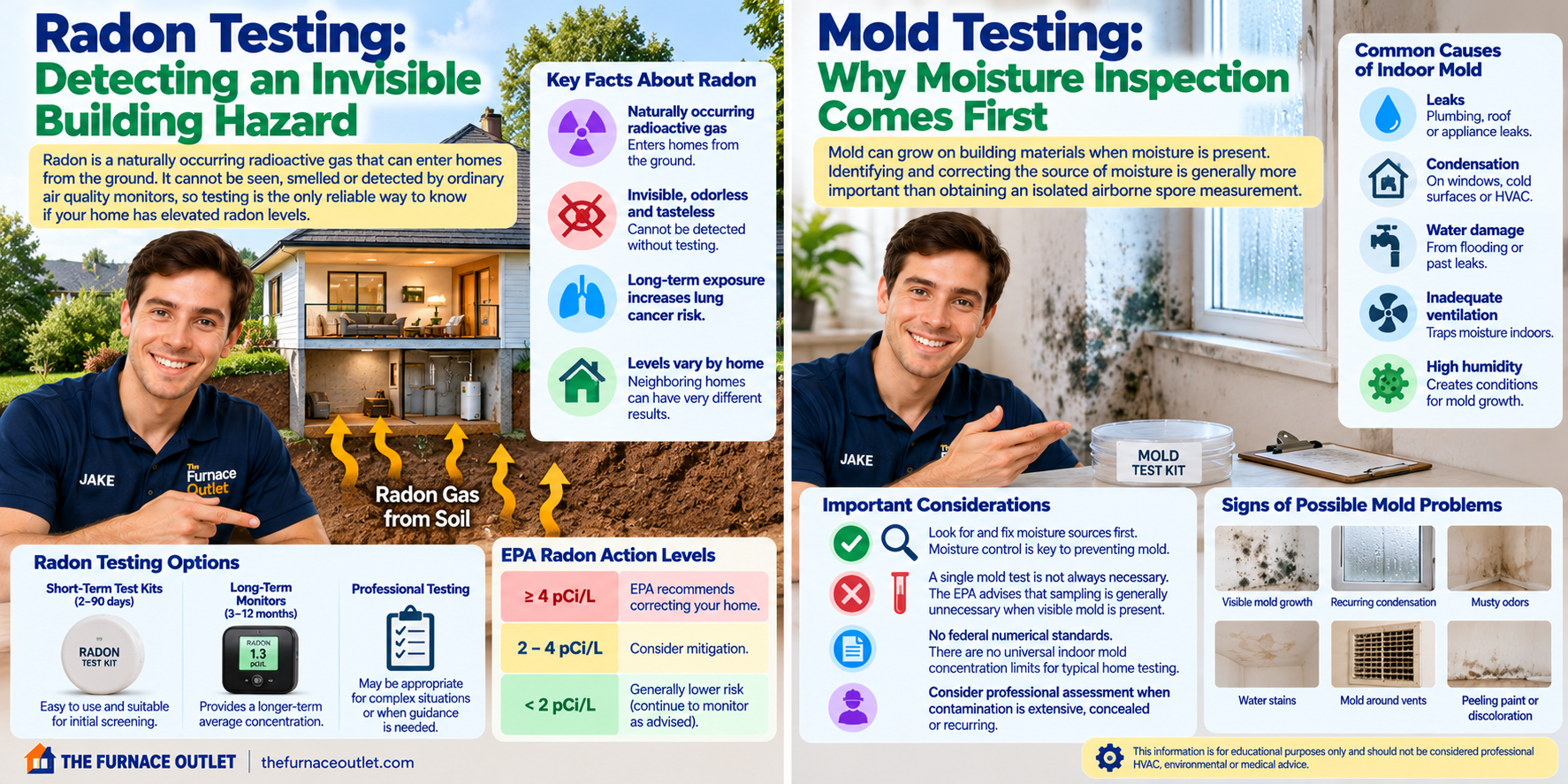
Homeowners often consider purchasing mold test kits when they notice musty odors, visible discoloration, or recurring dampness. However, identifying and correcting moisture problems is generally more important than obtaining an isolated airborne spore measurement. Mold can grow on susceptible materials when moisture remains available. Plumbing leaks, roof damage, condensation, flooding, and inadequate ventilation may all contribute.
The EPA explains that when visible mold growth is present, sampling is generally unnecessary. There are no federal numerical standards for acceptable airborne mold concentrations that would allow a typical test result to establish whether a home is compliant with a universal safety limit. I recommend investigating the source of moisture, evaluating the extent of affected materials, and arranging appropriate remediation when needed.
Professional assessment may be appropriate when contamination is extensive, concealed, recurring, or associated with significant water damage. Homeowners should not disturb suspected hidden mold without considering the possibility of releasing additional contaminants.
Not every indoor air quality problem produces obvious symptoms, but certain observations can help homeowners identify areas that deserve investigation. Persistent musty odors may indicate moisture problems, while recurring window condensation can suggest excessive humidity or cold surfaces. Visible dust accumulation may indicate cleaning or filtration concerns, although it does not establish the concentration of invisible pollutants.
Strong chemical odors after renovation, painting, or cleaning may point toward recent emissions. Repeated cooking smoke spreading beyond the kitchen suggests that source capture or ventilation may be inadequate. Occupants may also notice eye irritation, headaches, coughing, or other symptoms that seem to vary by location or activity. These observations can be useful when discussing concerns with healthcare professionals, but symptoms alone cannot establish a particular environmental cause. I recommend documenting when concerns occur, which rooms are affected, and whether the pattern changes with cooking, cleaning, HVAC operation, weather, or occupancy.
The best monitor depends on the problem being investigated. A homeowner concerned about fine particles should prioritize a device with suitable PM2.5 measurement capability, while someone examining ventilation patterns may benefit more from a dedicated CO2 sensor. Accuracy information, independent evaluations, calibration requirements, data history, and manufacturer transparency are important considerations. A device with numerous advertised measurements is not necessarily more useful than a simpler instrument with better-documented performance.
Some monitors include smartphone applications, automated alerts, or historical graphs. These features can make it easier to identify recurring patterns, but they do not compensate for poor measurement quality. I recommend reviewing exactly which pollutants the instrument measures and whether any displayed values are estimated rather than directly measured. Homeowners should also consider replacement requirements, power supply, data privacy, and whether the device can operate continuously without frequent intervention.
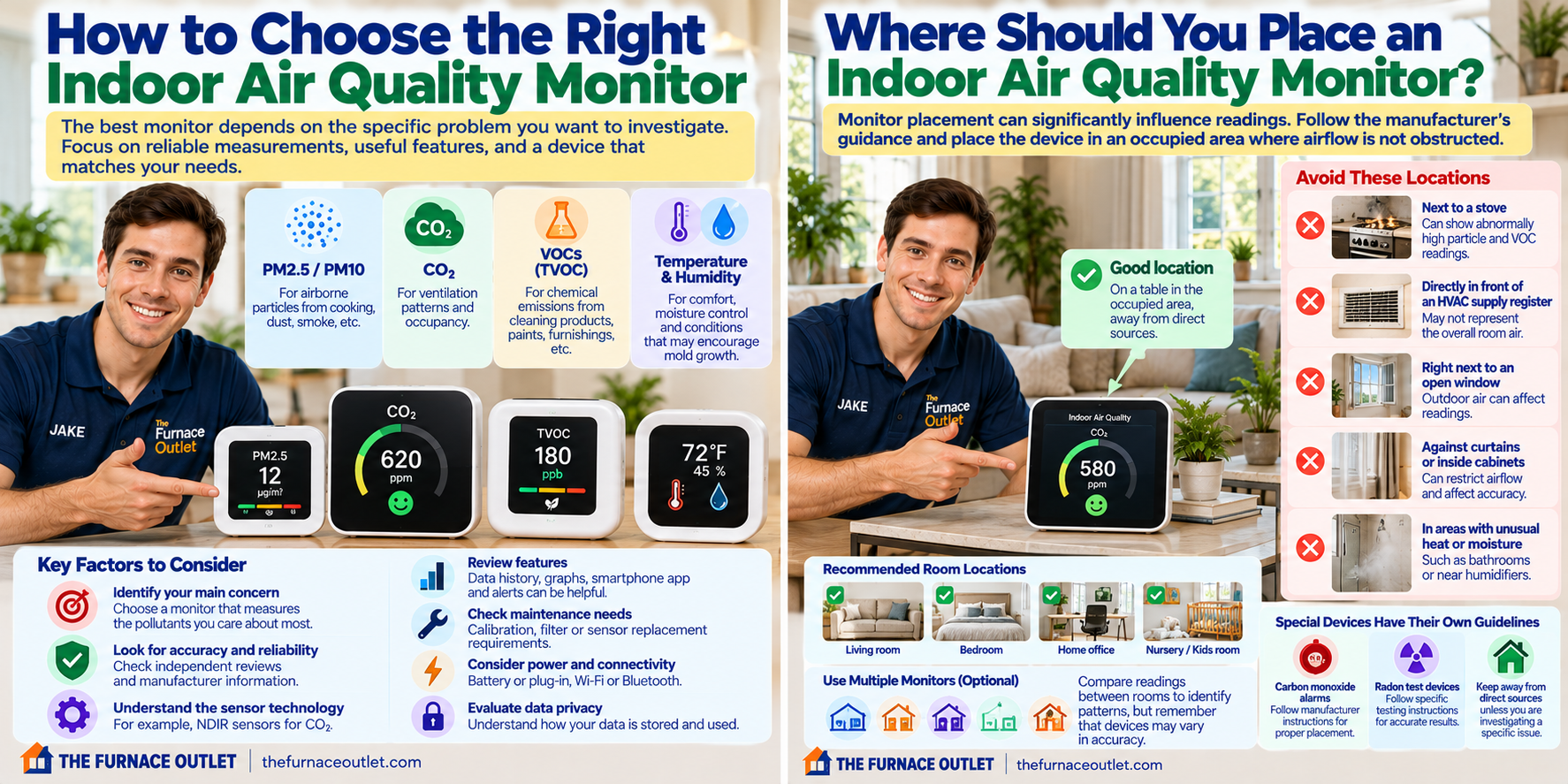
Monitor placement can significantly influence readings. A device located directly beside a stove, air purifier outlet, open window, or HVAC supply register may report conditions that do not represent the rest of the room. For general room monitoring, I recommend following the manufacturer’s placement instructions and selecting a location within the occupied area where airflow is not obstructed. Avoid placing the device against curtains, inside cabinets, or immediately next to unusual heat or moisture sources unless the purpose is specifically to investigate those locations.
For whole-home comparisons, homeowners may move a monitor between rooms while allowing adequate time for readings to stabilize. Using multiple monitors can be useful, but differences between devices should be interpreted cautiously because sensor accuracy and calibration may vary. Dedicated carbon monoxide alarms and radon test devices have their own placement requirements, which should always take precedence over general air-monitor positioning advice.
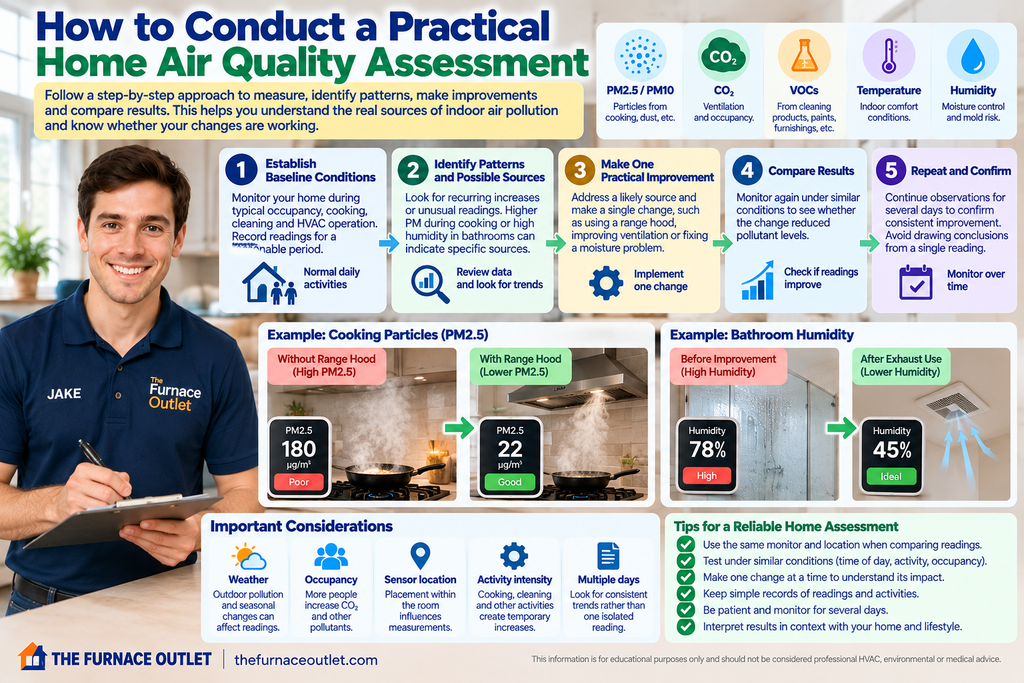
A useful household assessment begins by establishing ordinary conditions before changing equipment or ventilation settings. Observe the home during typical occupancy, cooking, cleaning, and HVAC operation, recording measurements where appropriate. Next, identify recurring increases or unusual patterns. A particulate matter spike during frying may suggest a cooking-related source, while consistently elevated humidity in a bathroom may indicate insufficient moisture removal.
After identifying a likely cause, make one practical improvement and compare conditions under reasonably similar circumstances. For example, operate an outdoor-vented range hood during comparable cooking activities and observe whether particle concentrations decline more quickly. Avoid assuming that every change is caused by the intervention. Weather, outdoor pollution, occupancy, sensor location, and activity intensity can influence measurements.
I recommend repeating observations over several days when possible rather than relying on one isolated reading. The objective is to determine whether an intervention meaningfully addresses the suspected problem.
Many consumer monitors display colored indicators or simplified labels such as good, moderate, or poor. These can be convenient, but the thresholds may be chosen by the manufacturer rather than based on universally accepted indoor health standards. Different pollutants also require different interpretations. A short-term particle increase during cooking is not equivalent to a confirmed long-term radon exposure problem, and neither can be evaluated simply by comparing two arbitrary device scores.
The EPA cautions that low-cost monitors do not provide a complete assessment of indoor air quality and that there are no widely accepted indoor concentration thresholds for many pollutants. I recommend focusing on repeated trends, source identification, exposure reduction, and appropriate specialized testing. A monitor should help homeowners make better decisions rather than create unnecessary anxiety over every momentary fluctuation.

Professional assistance becomes more important when the suspected problem cannot be identified using ordinary observations, when specialized hazards are involved, or when building conditions require technical investigation. Examples include recurring moisture damage, suspected concealed mold, persistent chemical concerns following renovations, unexplained ventilation problems, or suspected combustion-related defects.
A qualified professional should explain the purpose of each proposed test, the methods used, how results will be interpreted, and which corrective actions might follow. I recommend avoiding broad testing packages that collect numerous samples without a clear investigative purpose. Testing is most valuable when it answers a specific question and informs an appropriate decision. For combustion safety, use qualified HVAC or relevant appliance professionals. For radon, follow recognized testing and mitigation procedures. Suspected asbestos or lead-containing materials require appropriately qualified assessment before disturbance.
Indoor air quality changes with the seasons, household activities, and building conditions. A useful monitoring routine should therefore combine periodic observations with ordinary maintenance rather than require constant attention to numerical readings. Homeowners can review humidity regularly, inspect accessible HVAC filters, check kitchen and bathroom exhaust operation, and investigate recurring moisture problems. Where particle or CO2 monitoring is useful, reviewing trends can help identify changes associated with cooking, occupancy, or ventilation.
Safety equipment deserves separate attention. Carbon monoxide alarms should be maintained and replaced according to their instructions, while radon testing should follow applicable guidance, particularly after significant building changes or changes in occupancy of lower levels. I recommend keeping simple records of important measurements, maintenance, inspections, and corrective work. These records can help distinguish temporary changes from recurring problems and provide useful information to qualified professionals.
Yes. Homeowners can measure selected conditions using appropriate particulate matter monitors, CO2 sensors, hygrometers, and other consumer devices. However, no single device measures every contaminant. Specialized hazards such as radon and carbon monoxide require appropriate dedicated testing or safety equipment.
There is no universal best sensor because different instruments measure different pollutants. PM2.5 sensors can help investigate airborne particles, CO2 sensors can provide ventilation-related information, and humidity sensors can identify moisture conditions. Choose equipment based on the question you need to answer and its documented performance.
Performance varies considerably. Some lower-cost sensors can identify useful trends, while others may provide inaccurate or inconsistent readings. Temperature, humidity, calibration, sensor aging, and pollutant characteristics can influence performance. Independent evaluations and transparent manufacturer information are valuable when comparing devices.
Most general-purpose monitors cannot reliably identify mold contamination. Humidity measurements may indicate conditions favorable to mold growth, but they cannot establish whether mold is present. Visible growth, moisture damage, and musty odors should prompt investigation of the building and its moisture sources.
No single CO2 concentration establishes whether every aspect of residential ventilation is adequate. Readings depend on occupancy, outdoor concentrations, air mixing, and ventilation conditions. Trends are often more useful than treating one number as a universal safety threshold.
No. A low particle reading indicates only what that particular sensor reports about particles under the conditions measured. It does not rule out carbon monoxide, radon, chemical gases, moisture problems, or other hazards that require different methods of assessment.
The appropriate frequency depends on the concern. Continuous or periodic monitoring can help identify changing particle, CO2, or humidity patterns. Radon testing and carbon monoxide alarm maintenance should follow their specific guidance. New odors, water damage, renovations, or unusual building conditions may justify additional investigation.
Professional assistance is useful when specialized contaminants are suspected, the source of a persistent problem is unclear, or building systems require technical evaluation. A good assessment should begin with a defined concern and explain how testing will support a practical corrective decision.
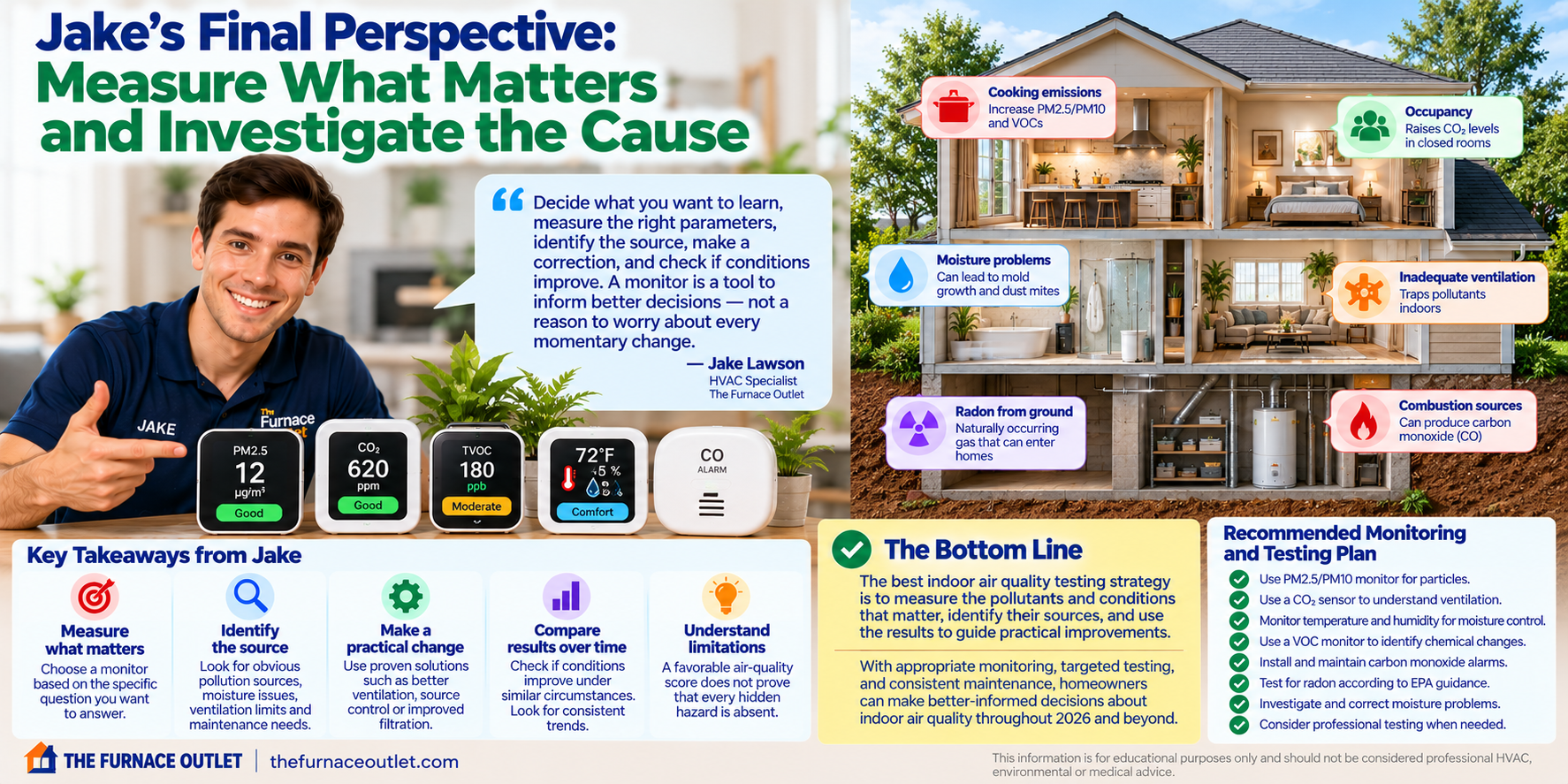
When homeowners ask me whether they should buy an indoor air quality monitor, I recommend first deciding what they want to learn. A particulate matter monitor may be valuable for understanding cooking emissions or outdoor smoke infiltration, while a CO2 sensor can help reveal ventilation patterns. A hygrometer is useful for monitoring moisture conditions, but none of these devices can replace dedicated carbon monoxide protection or appropriate radon testing.
My preferred approach is to combine measurements with a careful inspection of the home. I look for obvious pollution sources, moisture damage, ventilation limitations, filtration problems, and maintenance concerns before recommending additional equipment. Once a likely source is identified, the next step is to make a suitable correction and evaluate whether conditions improve. I also encourage homeowners to understand the limitations of consumer technology. A sophisticated display cannot compensate for a sensor that does not measure the pollutant of concern, and a favorable air-quality score should never be interpreted as proof that every hidden hazard is absent.
The best indoor air quality testing strategy is to measure the pollutants and conditions that matter, identify their sources, and use the results to guide practical improvements. With appropriate monitoring, targeted testing, and consistent maintenance, homeowners can make better-informed decisions about indoor air quality throughout 2026 and beyond.
This article provides general educational information about indoor air quality monitoring, sensors, and residential environmental conditions. It is not a substitute for professional environmental assessment, medical advice, combustion-safety inspection, or applicable building and safety requirements. Consumer indoor air quality monitors may have significant measurement limitations and should not be relied upon to identify every hazardous pollutant. Carbon monoxide alarms, radon testing, and specialized evaluations must follow applicable standards and manufacturer instructions.
If a carbon monoxide alarm activates or carbon monoxide exposure is suspected, evacuate immediately and contact emergency services from a safe location. Suspected asbestos, lead, extensive mold contamination, or hazardous combustion conditions should be evaluated by appropriately qualified professionals. The Furnace Outlet publishes independent HVAC educational content. References to government agencies and research organizations do not imply affiliation or endorsement.
U.S. Environmental Protection Agency — Low-Cost Air Pollution Monitors and Indoor Air Quality. Explains what consumer monitors measure, their limitations, and how homeowners can use readings to investigate indoor conditions.
https://www.epa.gov/indoor-air-quality-iaq/low-cost-air-pollution-monitors-and-indoor-air-quality
U.S. Environmental Protection Agency — Air Sensor Technology and Indoor Air Quality. Background on sensor technologies and their use in indoor environmental monitoring.
https://www.epa.gov/indoor-air-quality-iaq/air-sensor-technology-and-indoor-air-quality
U.S. Environmental Protection Agency — Frequent Questions About Air Sensors. Technical discussion of sensor accuracy, calibration, interference, and performance limitations.
https://www.epa.gov/air-sensor-toolbox/frequent-questions-about-air-sensors
U.S. Environmental Protection Agency — A Guide to Siting and Installing Air Sensors. Guidance on sensor placement and factors that affect measurements.
https://www.epa.gov/air-sensor-toolbox/guide-siting-and-installing-air-sensors
Centers for Disease Control and Prevention / NIOSH — Ventilation Frequently Asked Questions. Explains the role and limitations of CO2 monitoring when evaluating ventilation.
https://www.cdc.gov/niosh/ventilation/faq/index.html
U.S. Environmental Protection Agency — What Is EPA’s Action Level for Radon? Official guidance concerning radon test results and mitigation decisions.
https://www.epa.gov/radon/what-epas-action-level-radon-and-what-does-it-mean
U.S. Environmental Protection Agency — Is Sampling or Testing for Mold Necessary? Explains why visible mold and moisture problems often require corrective action rather than routine sampling.
https://www.epa.gov/mold/samplingtesting-mold-necessary
U.S. Environmental Protection Agency — Improving Indoor Air Quality. General recommendations covering source control, ventilation, and filtration.
https://www.epa.gov/indoor-air-quality-iaq/improving-indoor-air-quality
© 2026 The Furnace Outlet | https://thefurnaceoutlet.com
Independent HVAC education for a more comfortable, efficient, and informed home.