Newsletter Subscribe
Enter your email address below and subscribe to our newsletter

HVAC made simple
By Jake Lawson | HVAC Specialist | The Furnace Outlet
Updated October 2026 | Heat Pump Maintenance & Winter Heating Guide
Winter can be demanding on a heat pump, especially when outdoor temperatures fall, humidity increases, and frost begins forming on the outdoor coil. Unlike a conventional furnace, an air-source heat pump extracts thermal energy from outdoor air and transfers it indoors. This means that its performance depends on several interconnected components, including airflow, heat exchangers, refrigerant circulation, thermostat controls, and automatic defrost operation.
As an HVAC specialist with more than 10 years of experience, I recommend preparing heat pumps before sustained cold weather arrives rather than waiting for a heating failure. Preventive maintenance cannot eliminate every mechanical problem, but it can help identify developing faults, maintain efficiency, and reduce unexpected interruptions.
The most effective maintenance strategy combines simple homeowner inspections with professional servicing. Tasks such as replacing accessible air filters and keeping outdoor equipment clear are generally manageable without specialized tools. Electrical testing, refrigerant diagnostics, internal coil cleaning, and control adjustments require qualified technicians.
In this guide, I will explain 12 essential heat pump winter maintenance steps, including what homeowners can safely do, what professionals should inspect, and how to recognize warning signs before they become expensive repairs.
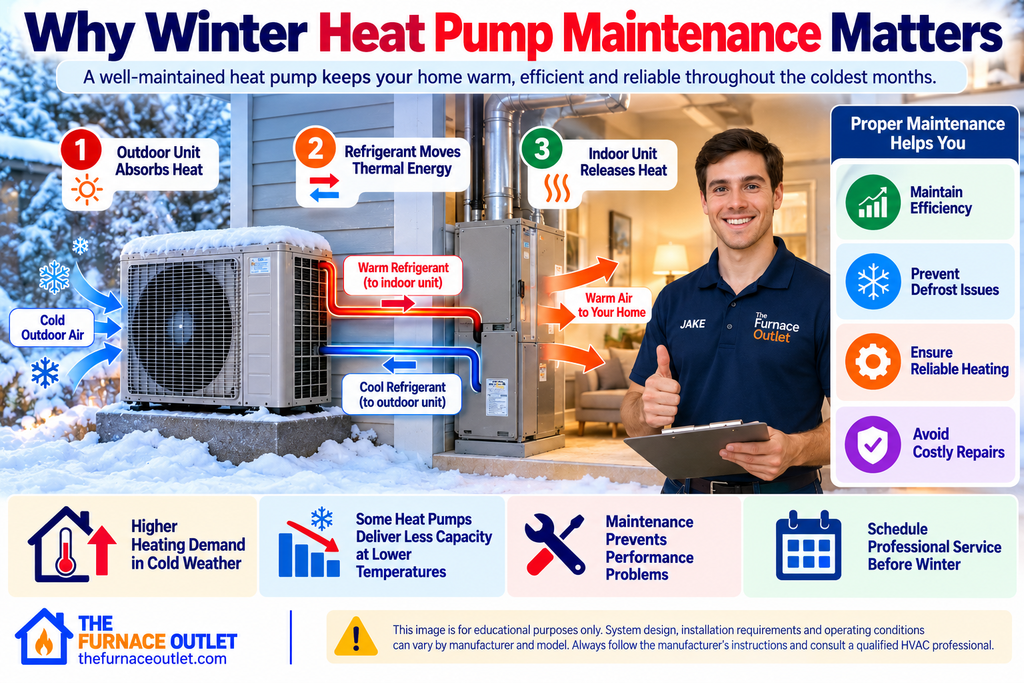
A heat pump operates differently from a traditional combustion furnace because it moves thermal energy through a refrigeration cycle. During heating, the outdoor coil absorbs heat while the indoor coil releases that energy into the living space.
As outdoor temperatures decline, the building’s heating demand generally increases. Some heat pumps also deliver less heating capacity under colder conditions, although modern cold-climate systems are designed to maintain stronger performance at low temperatures.
Maintenance becomes particularly important because restricted airflow, dirty coils, faulty controls, and defrost problems can reduce the equipment’s ability to meet winter heating demand.
The U.S. Department of Energy’s heat pump systems guide explains how heat pumps operate and why proper system design and maintenance support efficient heating.
I recommend scheduling professional maintenance before the heating season whenever practical. That provides an opportunity to identify problems while outdoor conditions are still relatively manageable.
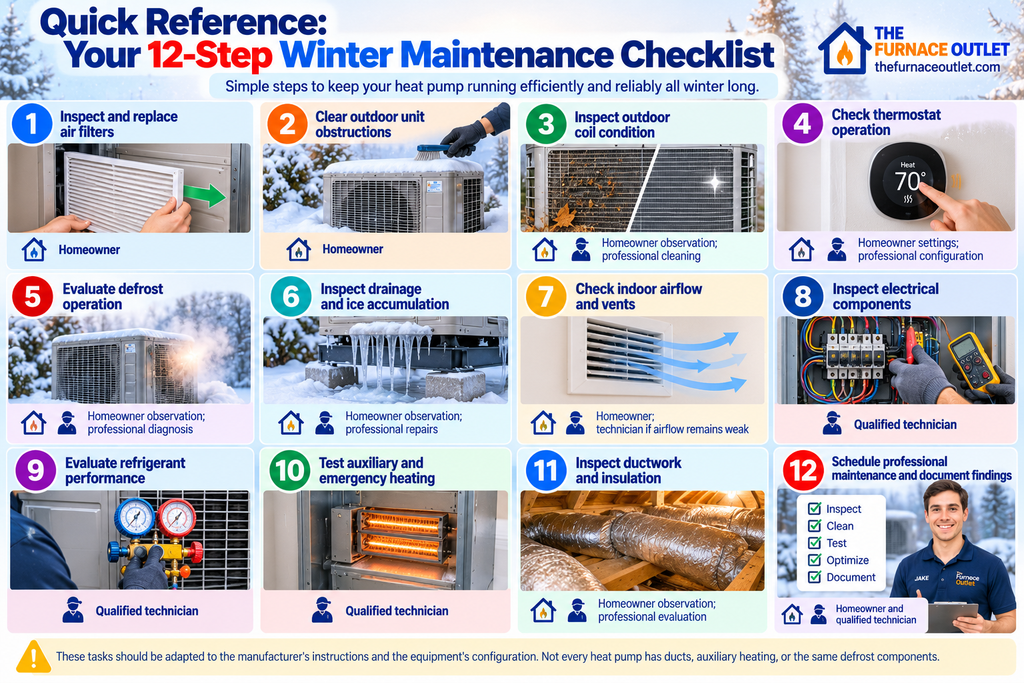
| Step | Maintenance task | Who should handle it? |
|---|---|---|
| 1 | Inspect and replace air filters | Homeowner |
| 2 | Clear outdoor unit obstructions | Homeowner |
| 3 | Inspect outdoor coil condition | Homeowner observation; professional cleaning |
| 4 | Check thermostat operation | Homeowner settings; professional configuration |
| 5 | Evaluate defrost operation | Homeowner observation; professional diagnosis |
| 6 | Inspect drainage and ice accumulation | Homeowner observation; professional repairs |
| 7 | Check indoor airflow and vents | Homeowner; technician if airflow remains weak |
| 8 | Inspect electrical components | Qualified technician |
| 9 | Evaluate refrigerant performance | Qualified technician |
| 10 | Test auxiliary and emergency heating | Qualified technician |
| 11 | Inspect ductwork and insulation | Homeowner observation; professional evaluation |
| 12 | Schedule professional maintenance and document findings | Homeowner and qualified technician |
These tasks should be adapted to the manufacturer’s instructions and the equipment’s configuration. Not every heat pump has ducts, auxiliary heating, or the same defrost components.
Air filter maintenance is one of the simplest ways to support reliable heat pump operation. The indoor blower must move an appropriate volume of air across the heat exchanger to distribute heating energy throughout the home.
I also recommend checking that the filter access panel closes correctly and that air is not bypassing the filter through obvious gaps.
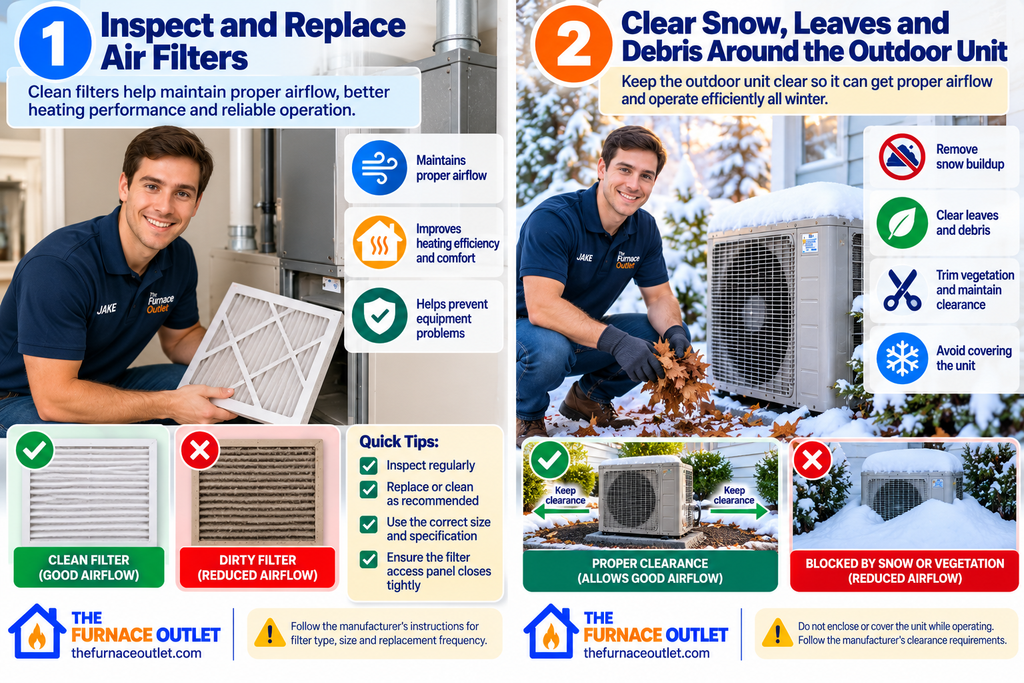
The outdoor heat exchanger needs unobstructed airflow to absorb thermal energy from surrounding air. Snowdrifts, fallen leaves, vegetation, and objects placed too close to the cabinet can interfere with normal operation. Before winter begins, inspect the area surrounding the unit and remove loose debris from accessible ground surfaces. Trim vegetation where necessary while maintaining the manufacturer’s required clearances.
During snowy weather, monitor whether snow is accumulating around the cabinet or blocking airflow openings. Avoid enclosing the heat pump tightly or covering it while operating. Roof runoff and drifting snow deserve attention because they can introduce moisture that repeatedly freezes around the equipment.
Do not reach through protective grilles, touch moving components, or attempt to remove ice with sharp tools. If snow or ice has entered the fan compartment, professional assistance may be necessary.
The outdoor coil transfers heat between refrigerant and surrounding air. Dirt, leaves, pollen, and other deposits can accumulate on coil surfaces and interfere with airflow or heat transfer. Homeowners can visually inspect the exterior for obvious contamination or debris. However, avoid bending delicate coil fins or spraying cleaning chemicals onto equipment without manufacturer approval.
More extensive cleaning may require specialized procedures because coil materials, protective coatings, and cabinet construction vary. A technician should determine whether cleaning is necessary and use methods compatible with the specific equipment.
I recommend including outdoor coil inspection in pre-winter servicing, particularly if the heat pump operates near trees, dusty areas, or locations exposed to substantial airborne debris.
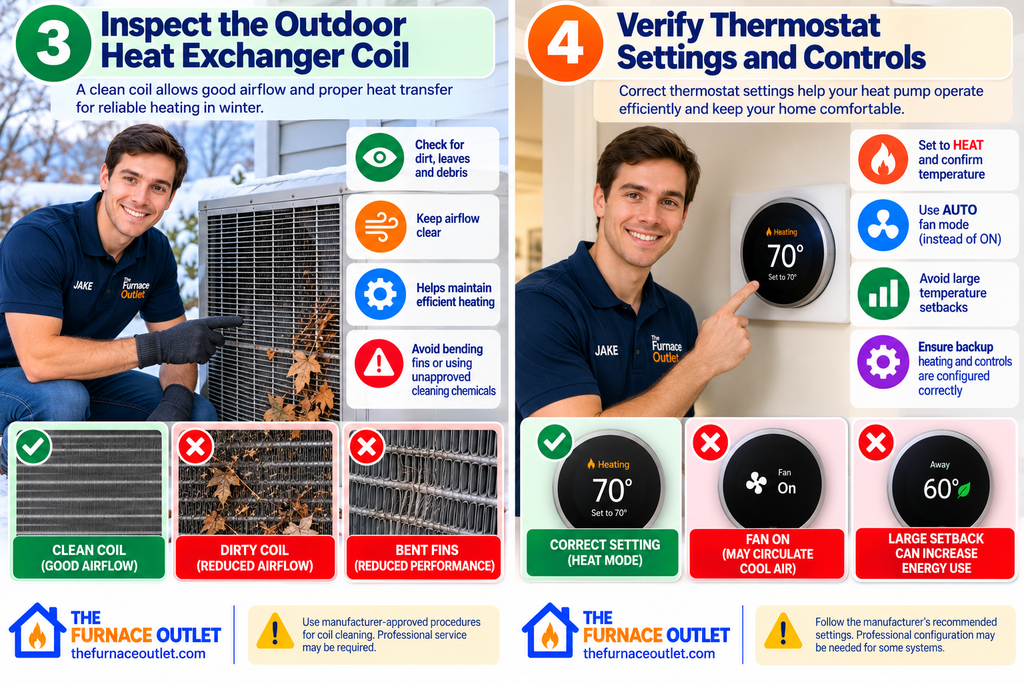
Thermostat settings influence heating operation, compressor staging, blower behavior, and supplemental heating where installed. Begin by confirming that the thermostat is set to HEAT and that the displayed indoor temperature appears reasonable. Review the manufacturer’s recommended operating settings rather than repeatedly making large temperature adjustments.
If the indoor fan is set to ON instead of AUTO, it may continue circulating room-temperature air between active heating cycles. This can make the system appear to be blowing cool air even when the heat pump is not actively heating. Large temperature setbacks can also affect efficiency. Certain thermostats activate electric auxiliary heating during rapid recovery, potentially increasing electricity consumption.
Professional configuration may be necessary when thermostats have recently been replaced or when reversing-valve and backup heating controls are not operating correctly.
During heating operation, the outdoor coil can become cold enough for moisture to freeze on its surface. Light frost is often normal during cold, humid weather. Most conventional air-source heat pumps manage frost through automatic defrost cycles. During defrost, the system temporarily warms the outdoor coil to melt accumulated ice.
Homeowners may notice steam, dripping water, temporary fan shutdowns, or changes in operating noise. These observations are not necessarily signs of malfunction. However, heavy ice that never clears, repeated defrost interruptions, or declining indoor heating performance can indicate a problem. Potential causes include faulty sensors, control problems, drainage issues, or abnormal refrigeration conditions.
I recommend observing whether frost clears automatically and normal heating resumes. Do not bypass sensors or attempt to force the equipment into defrost mode. For additional information, read Heat Pump Defrost Cycle Explained: What’s Normal and What’s Not? (2026).
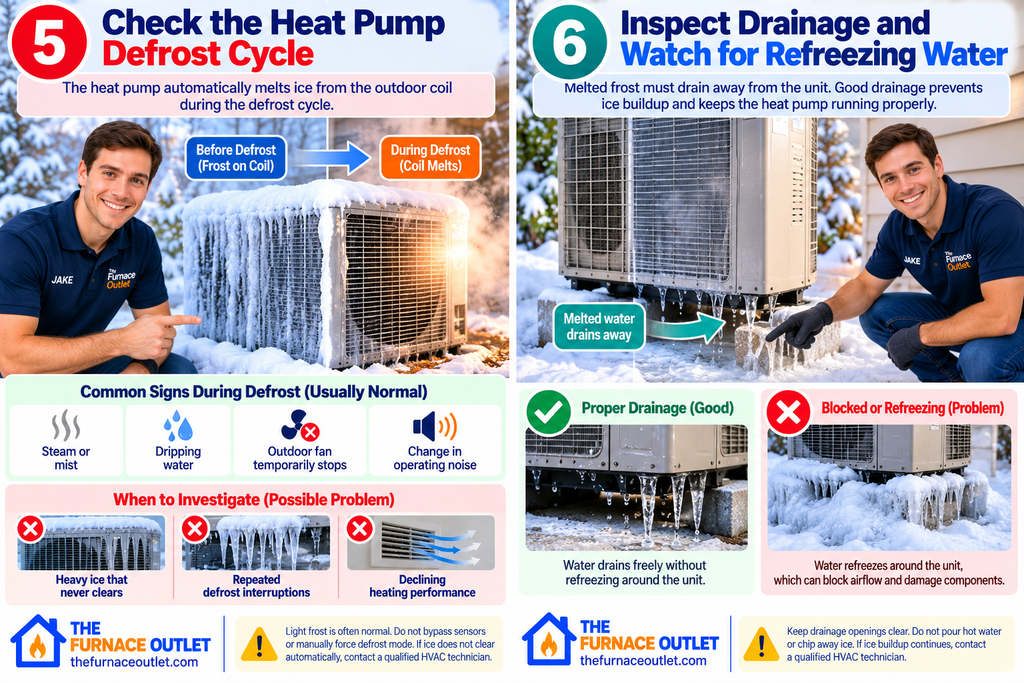
During defrost, melted frost must drain away from the outdoor unit. If drainage openings become obstructed or water repeatedly refreezes, ice may accumulate around the cabinet and moving components. Check whether the equipment appears to have adequate drainage clearance and whether roof runoff or snowmelt is entering the unit.
Some cold-climate heat pumps use base-pan heaters or other features to reduce freezing around drainage pathways. These components should be evaluated according to manufacturer requirements. Do not pour boiling water onto frozen equipment or chip away ice with tools. Such actions can damage refrigerant tubing, coil fins, plastic components, or electrical parts.
If thick ice repeatedly forms beneath the unit or interferes with the fan, arrange professional inspection. The underlying drainage or installation problem must be corrected rather than repeatedly removing visible ice.
Even when the outdoor unit operates correctly, inadequate indoor airflow can reduce comfort and heating performance. Walk through the home and check that accessible supply and return openings are unobstructed. Furniture, rugs, curtains, and stored belongings can interfere with air movement.
Uneven room temperatures may indicate duct leakage, restricted branches, poor balancing, or insulation problems. Homeowners should avoid closing large numbers of supply registers without professional guidance because this can alter duct pressure and airflow.
If airflow remains weak after replacing the filter and clearing accessible openings, a technician should evaluate blower operation, duct restrictions, and system airflow. The ENERGY STAR heating and cooling guidance provides additional recommendations for improving heating performance and home comfort.
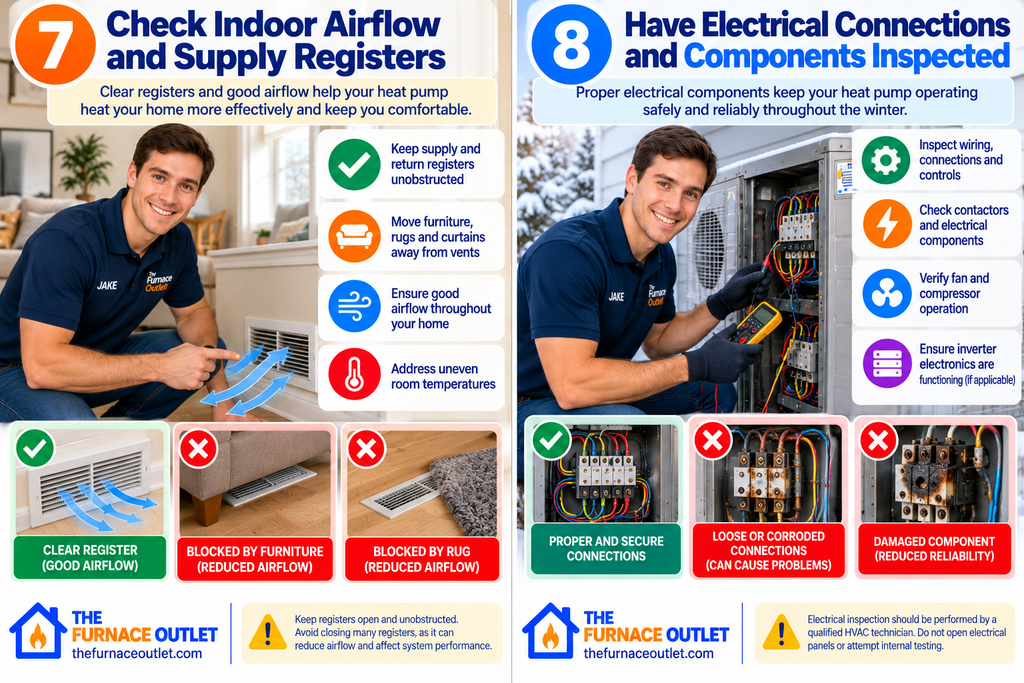
Heat pumps contain electrical components that control compressors, fans, reversing valves, supplemental heating, and electronic operating sequences. Over time, connections may loosen, contacts may deteriorate, or electronic components may develop faults. Electrical problems can cause intermittent operation, unexpected shutdowns, or reduced heating performance.
A qualified technician should inspect applicable wiring, connections, controls, contactors, and other electrical components according to manufacturer procedures. Modern variable-speed heat pumps may also contain inverter electronics that require specialized diagnostic methods.
Homeowners should not open electrical cabinets or attempt internal testing. Even when equipment is switched off, certain components can retain hazardous electrical energy. Repeated breaker trips, burning smells, or abnormal electrical noises warrant prompt professional attention. Do not repeatedly reset protective devices without identifying the cause.
Refrigerant circulates through the heat pump’s sealed refrigeration system, allowing thermal energy to be absorbed outdoors and released indoors. The equipment requires an appropriate refrigerant charge and correctly functioning refrigeration components to deliver its intended heating capacity. A refrigerant leak, restriction, expansion-device problem, or compressor fault can reduce performance. However, symptoms such as long runtime, poor heating, or outdoor icing do not independently establish that refrigerant is low.
Professional evaluation should consider operating temperatures, pressures where appropriate, airflow, equipment capacity, and manufacturer specifications. Refrigerant should not require routine topping up in a properly sealed system. If a leak is suspected, the cause should be investigated and repaired using approved procedures.
The EPA’s Section 608 technician certification guidance explains U.S. certification requirements associated with regulated refrigerant servicing.
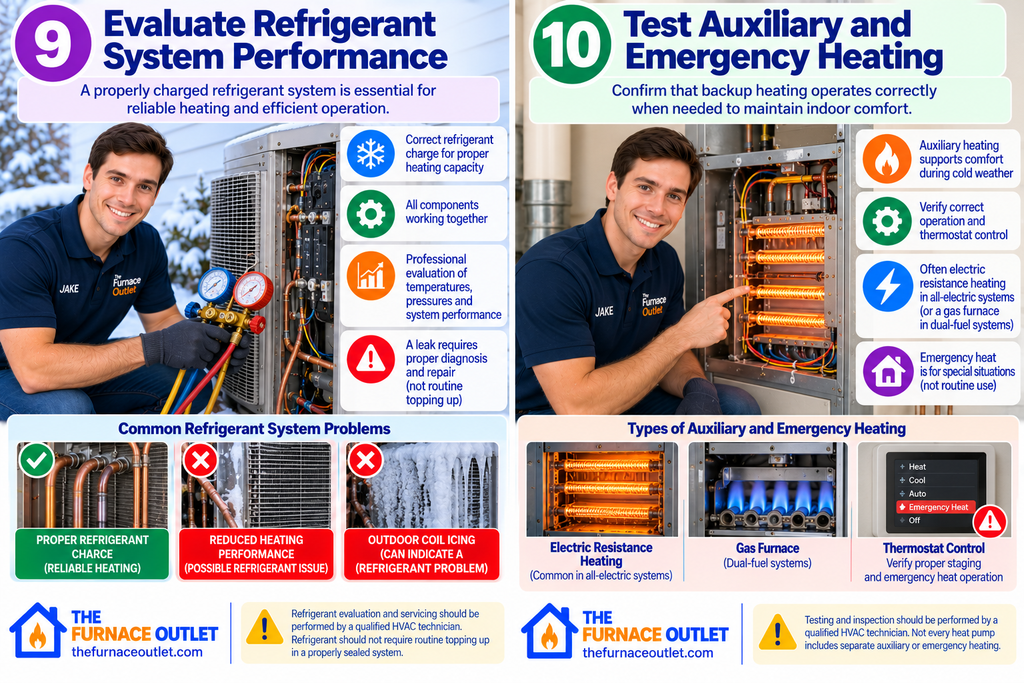
Many ducted heat pumps include supplemental heating equipment to maintain indoor comfort when the primary heat pump cannot meet the building’s heating demand. In all-electric installations, supplemental heating commonly uses electric resistance elements. Dual-fuel systems may use a gas furnace instead. A technician should verify that backup heating operates correctly when required and that thermostat controls activate the appropriate heating stages.
Emergency heat is generally intended for situations where the primary heat pump cannot be used. It should not be selected routinely simply because outdoor temperatures are low. Not every heat pump requires auxiliary heating during freezing conditions, and some installations do not include separate backup equipment. For a detailed explanation, see Heat Pump Auxiliary Heat vs. Emergency Heat: What’s the Difference? (2026).
A heat pump may operate efficiently while the building loses substantial heating energy through leaking ducts, inadequate insulation, or uncontrolled air infiltration. Leaking supply ducts can release heated air into attics, crawl spaces, or other unconditioned locations. Poorly insulated ductwork may also lose heat before conditioned air reaches occupied rooms.
Homeowners can look for obvious disconnected duct sections in safely accessible areas and note rooms that remain consistently colder than others. Building insulation deserves equal attention. Drafty windows, poorly sealed doors, and inadequate attic insulation increase winter heating demand.
A qualified contractor can evaluate duct leakage, insulation, airflow distribution, and the building envelope before recommending expensive equipment replacement. The ENERGY STAR home sealing guidance provides information about reducing unwanted air leakage and improving insulation.
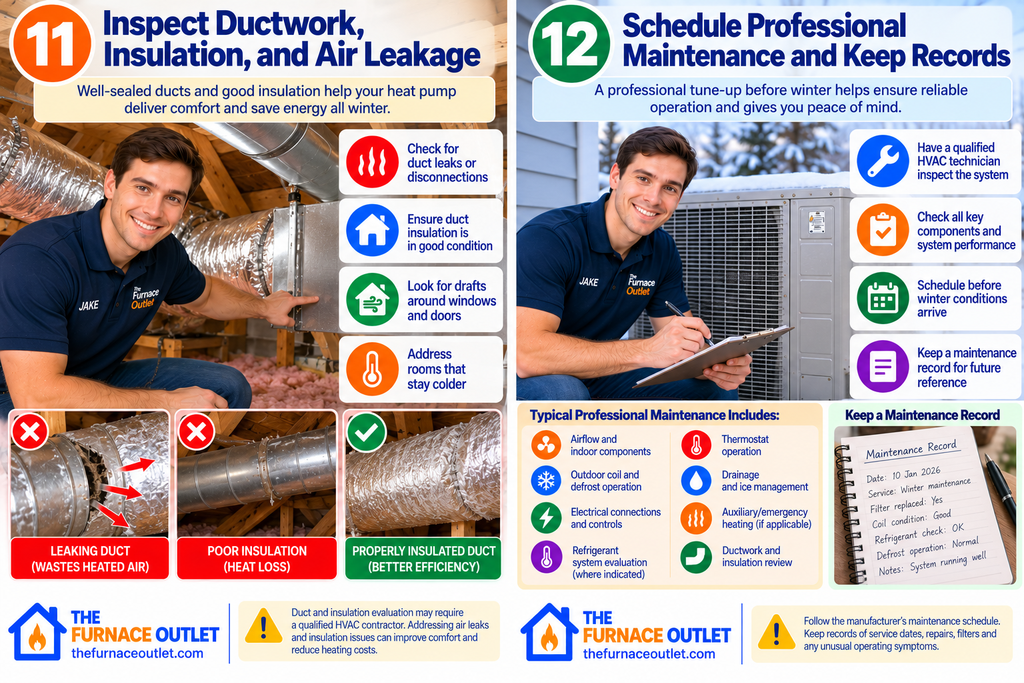
The final step is arranging professional maintenance before sustained winter conditions arrive. A qualified HVAC technician can evaluate system performance, inspect components that homeowners should not access, and identify developing faults. A comprehensive visit may include checking heat exchanger condition, airflow, thermostat operation, electrical components, defrost controls, drainage, supplemental heating, and refrigeration performance where indicated.
The ENERGY STAR HVAC maintenance checklist provides practical guidance on routine servicing and seasonal inspections. I recommend keeping a maintenance record that includes service dates, filter replacements, repairs, unusual operating symptoms, and observations about winter performance. Photographs of recurring outdoor icing, recorded thermostat temperatures, and notes about weather conditions can also help technicians investigate intermittent problems.
Not every unusual operating pattern requires an immediate service call. Extended heat pump runtime, mild supply-air temperatures, temporary outdoor frost, and occasional defrost steam can all occur during normal winter operation. However, certain symptoms deserve prompt attention. These include heavy ice that does not clear, a fan striking ice, repeated electrical shutdowns, unusual mechanical noises, persistent cold airflow, or a home that continues losing temperature despite the system operating.
Burning electrical odors, visible smoke, or other signs of an immediate hazard require stopping operation when safe and seeking appropriate emergency or professional assistance. I recommend describing the symptoms clearly rather than suggesting a specific replacement part. Accurate observations can help the technician identify the actual problem and avoid unnecessary repairs.
Professional servicing is commonly recommended at least annually, with some manufacturers and installations calling for more frequent inspections. Because heat pumps provide both heating and cooling, a pre-winter inspection can be especially useful. Follow the maintenance schedule specified for your equipment.
No. An operating heat pump requires adequate outdoor airflow. Covering or tightly enclosing the unit can interfere with performance. Any protective arrangement must comply with manufacturer clearance and installation requirements.
Yes. Light frost during cold, humid weather can be normal. The equipment should remove accumulated frost through its automatic defrost sequence. Heavy persistent ice is a warning sign.
Homeowners can generally remove loose debris from accessible surrounding areas. Direct coil cleaning should follow manufacturer instructions, and extensive cleaning may require professional service to avoid damaging delicate components.
No. Refrigerant circulates through a sealed system and is not normally consumed during operation. Repeated additions may indicate a leak or another issue requiring professional investigation.
There is no universal setting for every household. Choose a comfortable temperature and use a control strategy appropriate for your heat pump. Avoid unnecessary large setbacks if they cause frequent electric auxiliary heating.
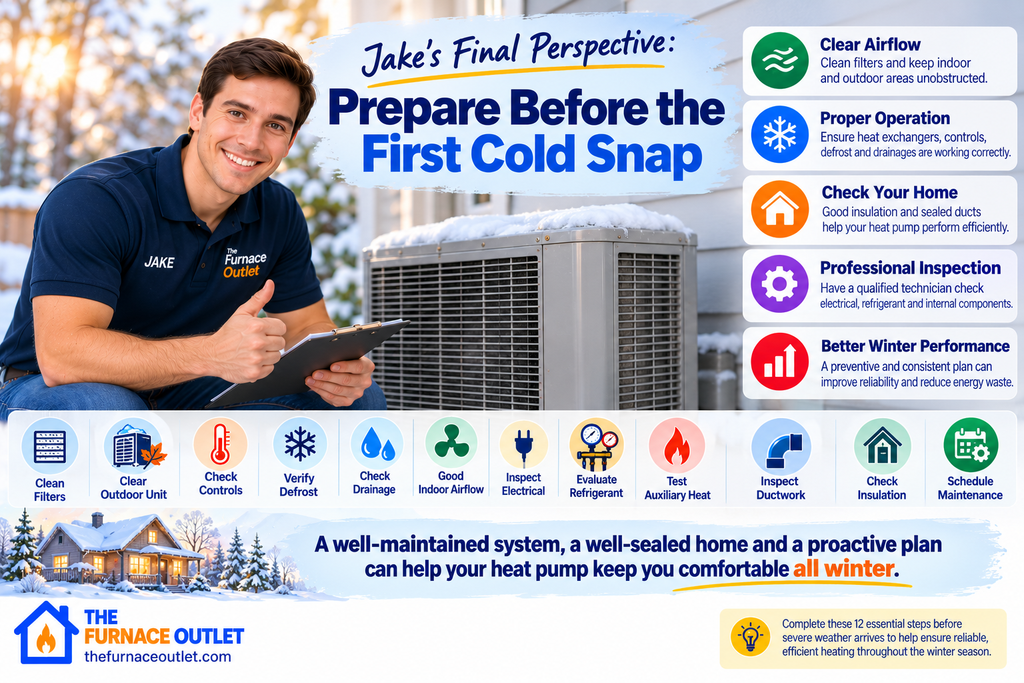
When I evaluate a heat pump before winter, I focus on the complete heating system rather than checking only whether the outdoor unit starts. Reliable winter performance depends on clear airflow, clean heat exchangers, properly functioning controls, effective defrost operation, adequate drainage, and correct heating capacity. My preferred maintenance strategy combines regular homeowner observations with professional inspections. Replacing filters, clearing accessible debris, and monitoring frost accumulation can help prevent avoidable problems, while qualified technicians should handle electrical testing, refrigeration diagnostics, and internal repairs.
I also encourage homeowners to pay attention to their building’s insulation and ductwork. Even a well-maintained heat pump can struggle when heated air escapes through leaking ducts or the home loses heat faster than expected.
The best winter maintenance plan is preventive, consistent, and tailored to the equipment. By completing these 12 essential steps before severe weather arrives, homeowners can improve heating reliability, reduce avoidable energy waste, and help their heat pumps perform effectively throughout the winter season.
This article is published by The Furnace Outlet for general educational purposes only. It does not replace manufacturer instructions, professional HVAC diagnosis, or applicable safety requirements. Electrical testing, refrigerant servicing, internal equipment repairs, and control modifications should be performed by appropriately qualified professionals. Maintenance requirements vary by equipment design, installation conditions, and climate. The Furnace Outlet publishes independent educational content; references to external organizations do not imply affiliation or endorsement.
© 2026 The Furnace Outlet. All rights reserved.