Newsletter Subscribe
Enter your email address below and subscribe to our newsletter

HVAC made simple
By Jake Lawson | HVAC Specialist | The Furnace Outlet
Updated October 2026 | Fall Allergies, HVAC Filtration & Indoor Air Quality
As summer transitions into fall, homeowners across the United States begin preparing their homes for cooler temperatures, shorter days, and the approaching heating season. While many people focus on furnace maintenance and energy efficiency, indoor air quality deserves equal attention, particularly in households where family members experience seasonal allergies, asthma, or sensitivity to airborne particles. Autumn introduces a combination of environmental challenges, including ragweed pollen, outdoor mold spores, accumulated household dust, pet allergens, and changing indoor humidity conditions.
The transition to fall also changes how homes are ventilated and heated. Windows that remained open during mild summer evenings may stay closed for longer periods, heating equipment begins operating more frequently, and household members often spend additional time indoors. These changes can affect how airborne particles circulate, where allergens accumulate, and how moisture behaves within the building. Although a properly functioning HVAC system can contribute to cleaner indoor air, filtration alone cannot eliminate allergens embedded in bedding, furniture, carpeting, or other household materials.
As an HVAC specialist with more than 10 years of experience working with residential and commercial heating and cooling systems, I recommend treating fall indoor air quality preparation as a coordinated household maintenance project rather than a single equipment upgrade. Selecting an appropriate HVAC filter is important, but it should be combined with moisture management, regular cleaning, appropriate ventilation, and practical steps to reduce outdoor allergens entering the home.
My preferred approach is to begin with the most frequently occupied rooms, inspect existing HVAC filtration, identify moisture problems, and reduce allergen sources before investing in additional air-cleaning equipment. This guide provides a comprehensive fall indoor air quality checklist, explains which improvements deserve priority, and outlines a realistic seven-day action plan for allergy-sensitive households.
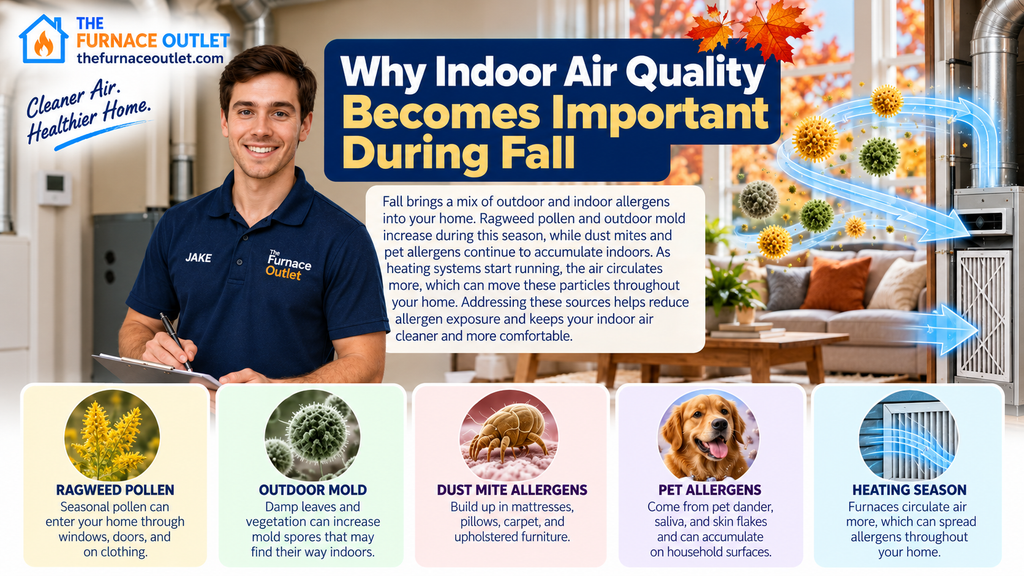
Fall can create a challenging combination of outdoor and indoor allergen exposure. In many parts of the United States, ragweed pollen remains an important seasonal trigger during late summer and autumn, while damp leaves, decaying vegetation, compost, and moist soil can support outdoor mold activity. These airborne particles may enter homes through windows, doors, ventilation openings, and uncontrolled air leakage. They can also be carried indoors on clothing, footwear, pets, and other household items.
At the same time, indoor allergens remain present regardless of the season. Dust mite allergens can accumulate in mattresses, pillows, carpeting, and upholstered furniture, while pet allergens continue to originate from animal skin flakes, saliva, and other secretions. Ordinary household activities, including vacuuming, walking across carpets, changing bedding, and moving furniture, may temporarily redistribute some settled particles into the air. The concentration and movement of these particles depend on ventilation, airflow, cleaning practices, and the characteristics of the materials involved.
Another important consideration is the operation of heating equipment. During fall, many households begin using their furnaces after months of limited operation. If filters are heavily loaded, return-air pathways are obstructed, or ductwork has significant leakage, the system may not circulate and filter air as effectively as intended. However, it is important not to assume that every dusty room or allergy symptom indicates a defective HVAC system. Indoor air quality is influenced by multiple sources, and the most effective improvements generally require attention to both airborne particles and the surfaces where allergens accumulate.
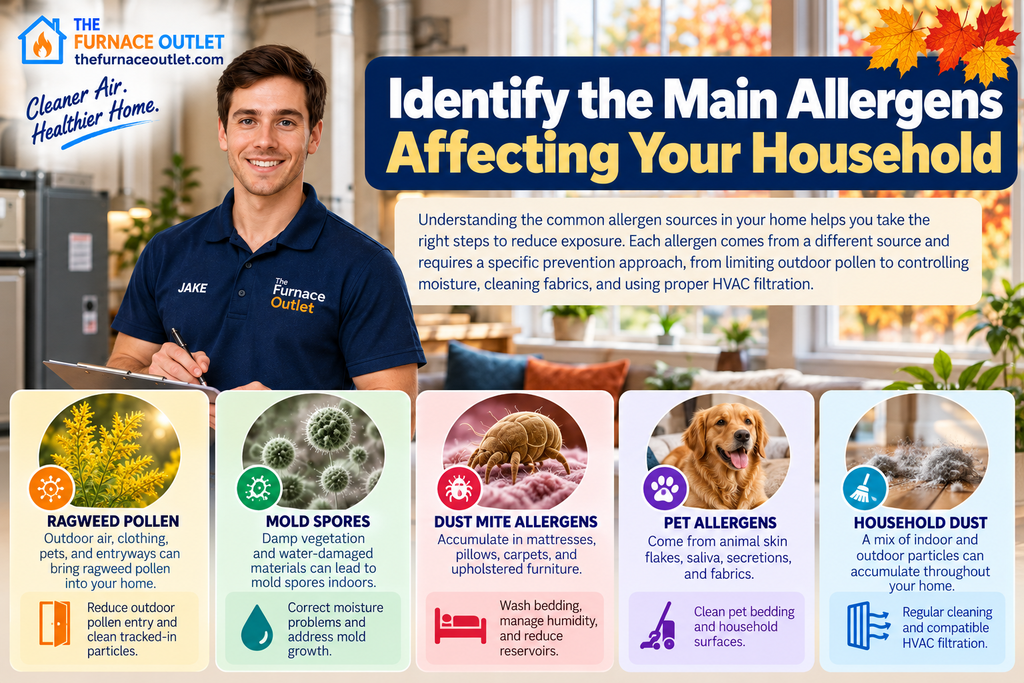
Before purchasing a new HVAC filter or portable air purifier, I recommend identifying the most likely allergen sources within the home. Different allergens require different prevention strategies, and understanding these distinctions helps homeowners avoid unnecessary expenses. For example, controlling ragweed pollen primarily involves limiting outdoor particle entry, while reducing dust mite exposure requires consistent attention to bedding, upholstered furniture, and humidity. Mold prevention is fundamentally a moisture-control problem, whereas pet allergen management requires cleaning the surfaces and fabrics where allergenic material accumulates.
| Common allergen | Typical household source | Primary prevention approach |
|---|---|---|
| Ragweed pollen | Outdoor air, clothing, pets, entryways | Reduce outdoor pollen entry and clean tracked-in particles |
| Mold spores | Damp vegetation, water-damaged materials | Correct moisture problems and address mold growth |
| Dust mite allergens | Mattresses, pillows, carpets, upholstery | Wash bedding, manage humidity, and reduce reservoirs |
| Pet allergens | Skin flakes, saliva, secretions, fabrics | Clean pet bedding and household surfaces |
| Household dust | Mixed indoor and outdoor particles | Regular cleaning and compatible HVAC filtration |
Allergy symptoms may overlap considerably, and some individuals react to multiple environmental triggers. Sneezing, nasal congestion, coughing, and itchy eyes do not reliably distinguish ragweed exposure from mold, dust mites, or pet allergens. Consequently, homeowners should avoid assuming that a particular HVAC product will solve every problem. If symptoms remain persistent, worsen, or interfere with normal activities, evaluation by a qualified healthcare professional or allergist may help identify the relevant triggers and guide more targeted exposure-reduction measures.
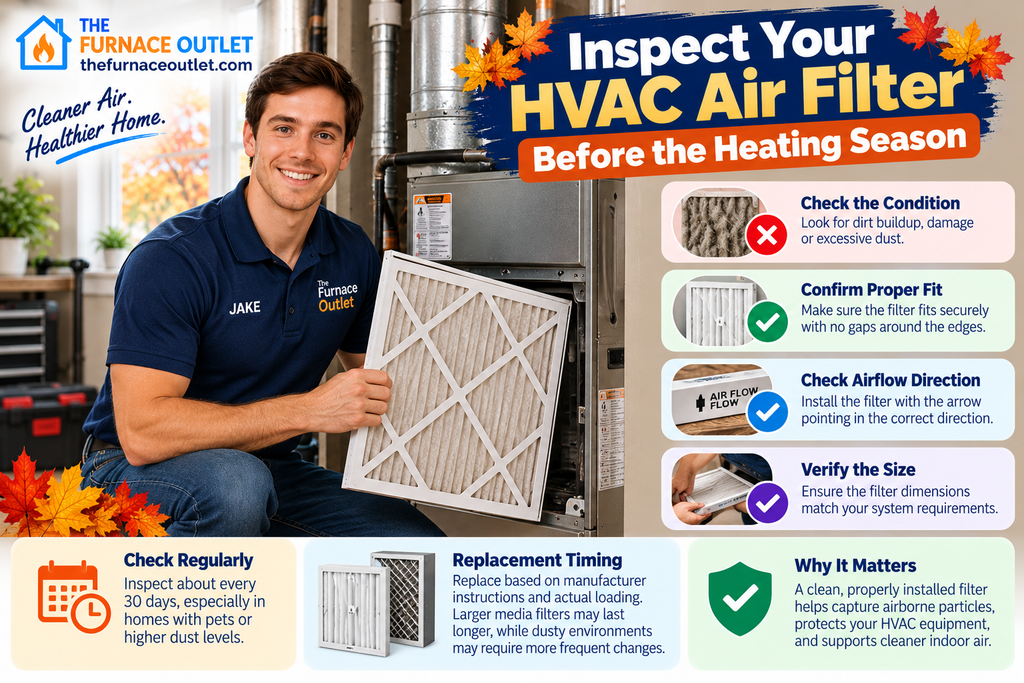
One of the most practical steps in preparing a home for fall is inspecting the HVAC air filter. During normal operation, the filter captures a portion of the airborne particles moving through the return-air system, helping protect equipment and potentially reducing particle concentrations in occupied spaces. However, filtration effectiveness depends on the filter’s efficiency, installation quality, system airflow, and the amount of air passing through the equipment. A filter that is damaged, incorrectly installed, poorly fitted, or excessively loaded may not perform as intended.
I recommend beginning with a visual inspection of the existing filter and its installation. Check whether the filter fits securely within its designated slot or housing, whether there are obvious gaps around its edges, and whether the filter media shows signs of damage or excessive debris accumulation. Confirm that the filter dimensions match the equipment requirements and that the airflow direction is correct. If the filter has been neglected throughout summer, fall is an appropriate time to review its condition before heating demand increases.
For standard one-inch residential filters, inspecting approximately every 30 days is a useful starting point, particularly in homes with shedding pets, substantial dust, or frequent HVAC operation. However, inspection frequency and replacement frequency are not necessarily the same. A filter should be replaced according to manufacturer instructions, actual loading, and equipment requirements rather than an arbitrary universal schedule. Larger media filters may have substantially longer service intervals, while certain operating environments may require more frequent attention.
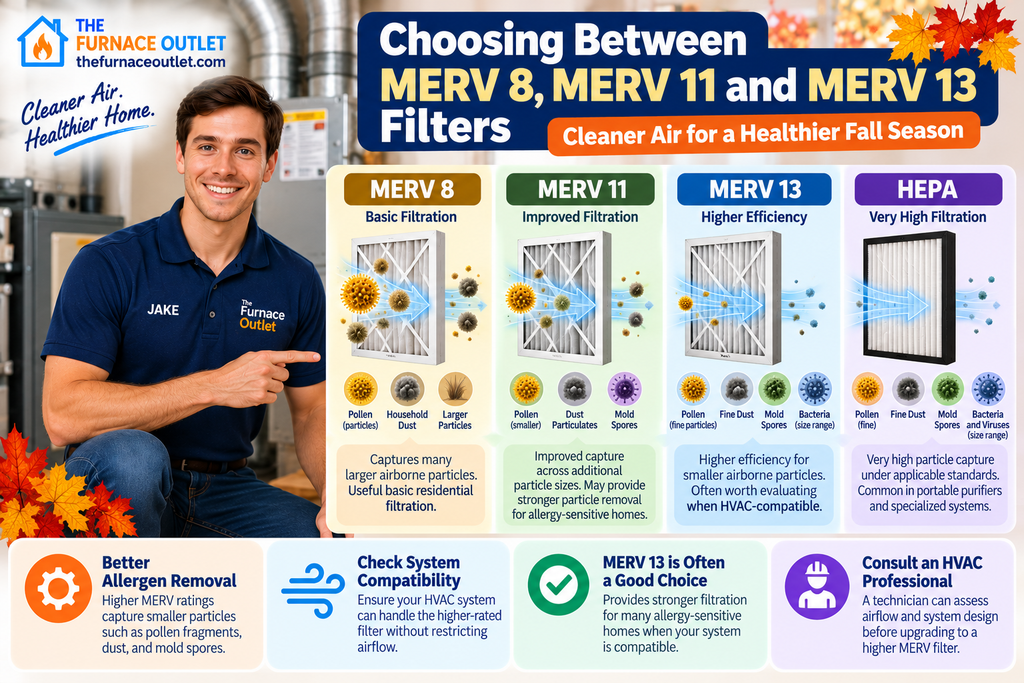
The Minimum Efficiency Reporting Value, commonly called MERV, describes how effectively an air filter captures particles across standardized particle-size ranges. For allergy-sensitive households, selecting an appropriate filtration efficiency can improve airborne particle removal, but the decision should account for the design and operating characteristics of the HVAC system. A higher MERV rating generally indicates stronger capture of smaller particles, although actual performance also depends on airflow, filter construction, and the amount of air passing through the filtration system.
| Filter rating | General filtration performance | Fall allergy consideration |
|---|---|---|
| MERV 8 | Captures many larger airborne particles | Useful basic residential filtration |
| MERV 11 | Improved capture across additional particle sizes | May provide stronger particle removal |
| MERV 13 | Higher efficiency for smaller airborne particles | Often worth evaluating when HVAC-compatible |
| HEPA | Very high particle capture under applicable standards | Common in portable purifiers and specialized systems |
For homeowners seeking improved filtration, I generally recommend evaluating MERV 13 when the equipment can accommodate it without unacceptable airflow restriction. MERV 13 filtration can capture a greater proportion of certain smaller airborne particles than lower-efficiency alternatives, making it a useful consideration for households concerned about pollen fragments, dust-associated allergens, and other fine particles. However, installing a higher-rated filter without considering its pressure drop can interfere with airflow and equipment performance. Filter thickness, media surface area, blower capability, duct conditions, and manufacturer specifications all influence whether an upgrade is appropriate.
A qualified HVAC technician can help assess compatibility when there is uncertainty about airflow or static pressure. I would rather see a homeowner use a properly installed, compatible filter consistently than install a highly restrictive product that compromises system operation. The EPA’s guidance on MERV ratings provides additional information about filtration efficiency and standardized particle capture.
Fall HVAC maintenance should involve more than simply replacing an air filter. As heating demand increases, the system should be capable of operating safely, efficiently, and with adequate airflow. A professional seasonal inspection may include reviewing equipment operation, electrical connections, controls, blower performance, accessible duct conditions, and manufacturer-specified maintenance requirements. For fuel-burning heating systems, combustion-related components, exhaust venting, and other safety systems deserve particular attention because improper operation can create hazards beyond ordinary indoor allergen concerns.
From an indoor air quality perspective, I recommend asking the technician to evaluate filtration installation, return-air pathways, unusual dust accumulation, and any evidence of moisture or contamination around the equipment. Airflow problems may arise from restrictive filters, obstructed returns, duct leakage, or equipment issues, and correcting the underlying cause is more useful than simply installing a stronger filter. If homeowners notice persistent musty odors, visible water damage, or unusual deposits near HVAC components, these observations should be discussed during the service visit.
Professional maintenance does not guarantee allergy relief, and homeowners should be cautious about services marketed as complete indoor air purification solutions. Nevertheless, properly maintained heating and cooling equipment provides a more reliable foundation for ventilation, filtration, temperature control, and moisture management throughout the colder months.
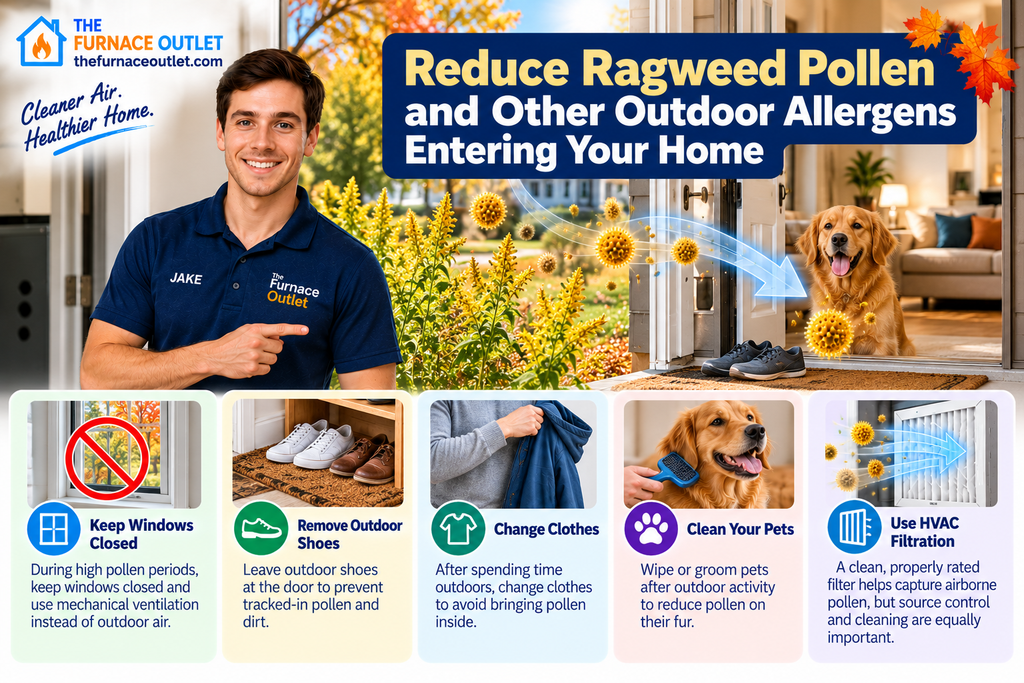
Ragweed pollen is an important fall allergen across many regions of the United States, although the timing and intensity of exposure vary with geography, weather, and local vegetation. Outdoor pollen can enter homes through open windows, doors, ventilation openings, and air leakage pathways. It may also accumulate on clothing, shoes, pets, and personal belongings before being transferred indoors. Once inside, pollen can settle on floors, furniture, and bedding, where household activity may redistribute some particles into the air.
During periods of elevated pollen exposure, I recommend keeping windows closed when practical and relying on appropriate mechanical ventilation rather than unrestricted outdoor-air entry. Homeowners can also reduce tracked-in material by removing outdoor shoes near entrances, cleaning entryway floors, and changing clothing after prolonged outdoor activities when symptoms are troublesome. For households with pets, appropriate coat cleaning after outdoor activity may help reduce material carried indoors, although grooming practices should remain consistent with veterinary recommendations.
These measures are valuable because they reduce the amount of allergenic material entering the home in the first place. HVAC filtration can capture some airborne pollen that reaches the filter, but it cannot prevent pollen from being deposited directly onto bedding, furniture, or other surfaces. For that reason, I consider source control and household cleaning essential companions to central filtration.
Fall rainfall, clogged gutters, damaged roofing, plumbing leaks, and inadequate drainage can introduce moisture into building materials and create conditions favorable for mold growth. Outdoor mold exposure may also increase under suitable conditions around damp leaves, soil, compost, and decaying vegetation. However, outdoor mold spores entering a building should be distinguished from an active indoor mold problem. Mold spores are commonly present in the environment, while sustained indoor growth generally requires suitable moisture conditions and materials.
I recommend inspecting accessible basements, crawlspaces, bathrooms, laundry rooms, attics, and plumbing areas for water stains, recurring condensation, musty odors, or visible growth. Homeowners should also examine gutters and downspouts to confirm that rainwater is directed away from the building foundation. If water enters the home, affected materials should be dried promptly and safely. The EPA generally recommends drying water-damaged materials within 24–48 hours, where possible, to reduce the likelihood of mold growth.
A portable air purifier or upgraded HVAC filter may capture some airborne mold particles, but neither can eliminate mold growing on damp drywall, insulation, wood, or carpeting. Correcting leaks, improving drainage, removing contaminated materials when necessary, and maintaining appropriate moisture conditions are more important than relying on air-cleaning equipment. Extensive or recurring contamination, sewage-related damage, and suspected contamination inside HVAC equipment should be evaluated by qualified professionals. Additional information is available through the EPA’s mold and moisture guidance.
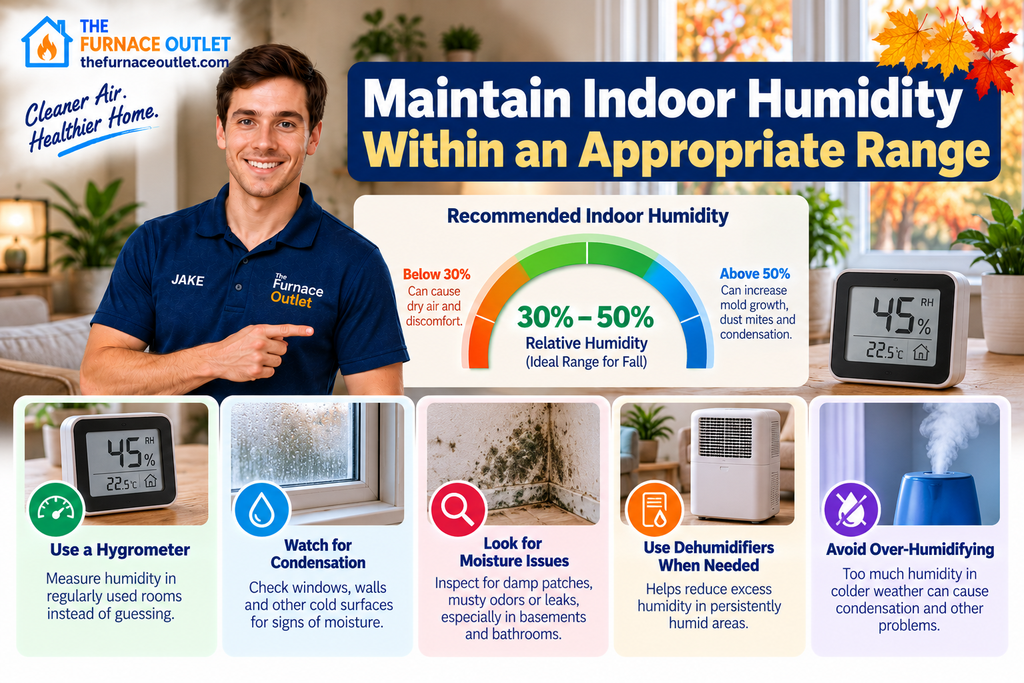
Indoor humidity deserves attention throughout fall because it affects condensation, dust mite populations, mold growth, and overall comfort. For many homes, a relative humidity range of approximately 30%–50% is a useful general target, although the appropriate level depends on outdoor climate, indoor temperature, building construction, and condensation risk. Maintaining a suitable average humidity level does not automatically eliminate localized moisture problems, particularly around cold surfaces, concealed leaks, or poorly insulated building components.
I recommend using a reliable hygrometer rather than estimating humidity based on how the air feels. Measurements should be taken in frequently occupied areas and, where relevant, in moisture-prone spaces such as basements or bathrooms. Homeowners should also watch for condensation on windows, damp patches on walls, or recurring musty odors. These observations may indicate problems that are not fully represented by a single humidity reading.
Air-conditioning systems can remove moisture during cooling operation, while appropriately sized dehumidifiers may help in persistently humid spaces. During colder weather, however, excessive humidification can create condensation on windows or other cold surfaces. The objective is to maintain appropriate conditions without creating new moisture problems. Where humidity remains elevated because of plumbing leaks, groundwater intrusion, or drainage failures, the underlying moisture source should be corrected rather than relying exclusively on mechanical dehumidification.
Bedrooms are among the most important areas to address in allergy-sensitive homes because people spend several hours sleeping in close contact with bedding, pillows, mattresses, and surrounding fabrics. Dust mite allergens can accumulate in these materials, while pollen and pet allergens may be introduced through clothing, animals, and ordinary household activity. Although airborne filtration can help remove some particles circulating through the room, it cannot directly clean allergen reservoirs embedded within mattresses, carpets, or upholstered furniture.
I recommend washing suitable sheets, pillowcases, and blankets regularly according to their care instructions. For washable materials that tolerate it, laundering at approximately 130°F (54°C) can help kill dust mites, while thorough washing also removes accumulated allergens. Allergen-impermeable mattress and pillow encasements may provide additional benefits for people with confirmed dust mite sensitivity, particularly when used alongside consistent cleaning and humidity management.
Reducing unnecessary fabric clutter can make maintenance easier, especially in smaller bedrooms. Vacuuming with effective particle filtration, damp dusting hard surfaces, and cleaning frequently used furnishings can further reduce accumulated material. Rather than relying on occasional intensive cleaning, I recommend establishing a manageable routine that keeps the sleeping environment consistently maintained.
Pet allergens can remain an important indoor air quality concern throughout the year, but they may become more noticeable when household members and animals spend additional time indoors during cooler weather. Cats and dogs produce allergenic proteins associated with skin flakes, saliva, and other secretions. These materials can accumulate on furniture, bedding, carpeting, clothing, and other household surfaces. Some allergen-containing particles become airborne and circulate through rooms, while others remain embedded in fabrics until disturbed.
I recommend cleaning suitable pet bedding regularly, vacuuming areas where animals spend substantial time, and using washable furniture covers where practical. For individuals with significant pet allergies, limiting animal access to bedrooms may help reduce direct exposure during sleeping hours. Appropriate HVAC filtration and portable HEPA purification can supplement these measures by capturing some airborne particles, but neither approach removes every allergen already present on household surfaces.
Homeowners should also understand that low shedding does not guarantee low allergen exposure, and no dog or cat breed can reliably be considered completely hypoallergenic. Allergen production and individual sensitivity vary, making practical household management more useful than relying on breed-related marketing claims.
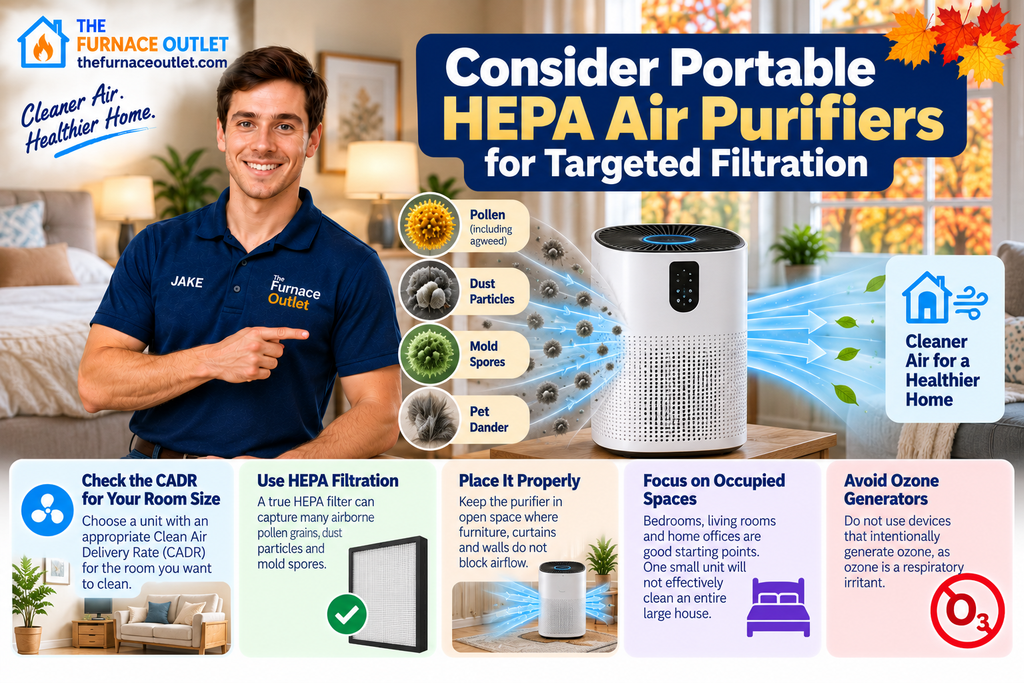
Portable HEPA air purifiers can provide supplemental airborne particle removal in bedrooms, living rooms, and home offices, particularly when central HVAC filtration operates intermittently during mild fall weather. A properly functioning HEPA filter can capture many airborne pollen grains, dust-associated allergen particles, and mold spores that pass through the device. However, overall performance depends on airflow, room size, operating time, filter maintenance, and the amount of air that actually moves through the purifier.
Clean Air Delivery Rate, or CADR, is one of the most useful specifications when comparing portable air cleaners because it describes the amount of cleaned air delivered under standardized testing conditions. A purifier with highly efficient filter media but insufficient airflow may provide limited particle reduction in a large room. I recommend selecting a unit with an appropriate CADR for the intended space and placing it where furniture, curtains, and walls do not obstruct the air intake or outlet.
Bedrooms are often practical starting points because occupants spend several consecutive hours there. However, homeowners should not assume that one small purifier placed in a hallway will effectively clean every room in a large house. Portable purification is most useful when matched to a specific occupied space and combined with cleaning and source control. I also discourage using ozone-generating devices in occupied areas, because ozone is a respiratory irritant and should not be intentionally introduced as an air-cleaning method.
The EPA’s Guide to Air Cleaners in the Home provides additional information about portable filtration, central air cleaners, and their limitations.
Continuous HVAC blower operation can increase the amount of indoor air passing through a compatible filter, potentially improving airborne particle removal when heating or cooling demand is limited. However, the benefits depend on the system’s design, blower efficiency, ductwork, filtration resistance, and operating conditions. Running the fan continuously is not automatically the most effective or economical strategy for every household.
Some systems consume substantially more electricity during continuous circulation, while certain cooling installations may experience unwanted humidity effects when the blower continues operating after active cooling ends. Duct leakage can also influence how air circulates and where particles enter the system. Modern thermostats may provide intermittent circulation settings that offer additional filtration without requiring constant full-speed operation.
I recommend evaluating filter compatibility, airflow, and system operating characteristics before changing fan settings. Homeowners should also recognize that circulating more air through a filter does not eliminate allergens embedded in bedding or prevent outdoor pollen from entering the building. Continuous fan operation should therefore be considered a possible supporting measure rather than the central solution to fall allergies.
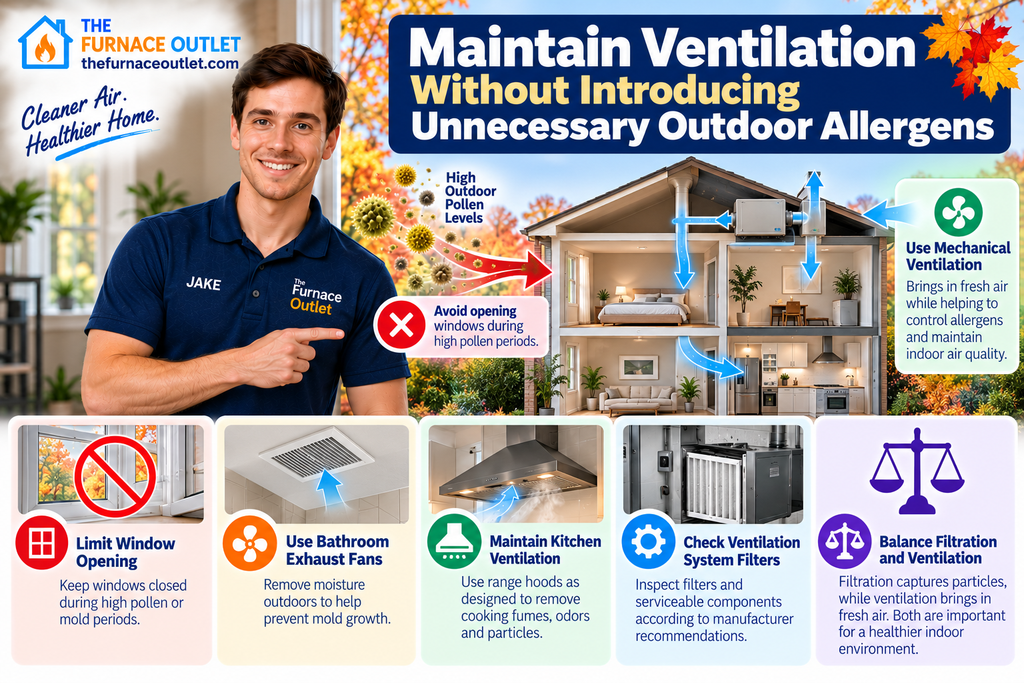
Ventilation plays an important role in managing indoor-generated pollutants, moisture, and odors, but it must be coordinated with outdoor air conditions. During periods of elevated ragweed pollen or mold exposure, opening windows for extended periods may introduce additional airborne allergens. Conversely, keeping a home tightly closed without adequate ventilation may allow indoor pollutants and moisture to accumulate. The appropriate balance depends on climate, building design, occupancy, and the ventilation equipment installed.
Bathroom exhaust fans should remove moisture outdoors, while kitchen ventilation should be maintained according to equipment design and manufacturer instructions. Where whole-house mechanical ventilation systems are installed, filters and other serviceable components should be inspected as recommended. In humid climates, introducing large amounts of untreated outdoor air can sometimes increase indoor moisture levels, making humidity management an important part of ventilation planning.
I recommend distinguishing between filtration and ventilation when evaluating indoor air quality improvements. Filtration captures particles from air passing through a filter, while ventilation exchanges indoor and outdoor air. Both can contribute to a healthier indoor environment when appropriately designed and operated, but neither replaces cleaning, moisture control, or pollutant source reduction.
Uncontrolled air leakage can introduce outdoor particles and moisture into a home through gaps around windows, doors, utility penetrations, and other building-envelope openings. Duct leakage may create additional concerns when return-air systems draw air from attics, crawlspaces, or other unintended locations. Depending on the conditions in those spaces, leakage can contribute to dust entry, humidity problems, or reduced HVAC performance.
I recommend checking accessible weatherstripping, door seals, and obvious exterior gaps as part of fall preparation. Homeowners should also observe whether certain rooms experience unusual dust accumulation, inconsistent airflow, or persistent comfort problems. These symptoms do not automatically prove that duct leakage is present, but they may justify professional investigation.
Any sealing work should preserve designed ventilation and combustion-air requirements. The objective is not to eliminate necessary outdoor-air exchange but to reduce uncontrolled leakage while maintaining appropriate ventilation and safe equipment operation.
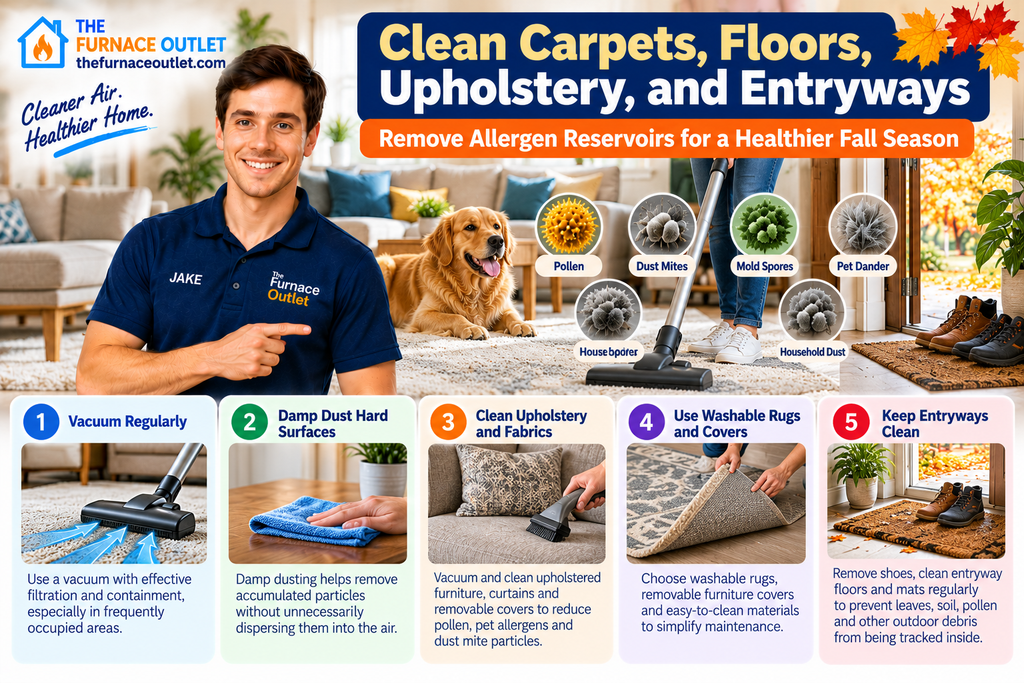
Even when HVAC filtration is operating effectively, household surfaces can continue accumulating allergens. Carpets, rugs, upholstered furniture, curtains, and flooring may collect pollen, pet allergens, dust mite particles, and ordinary household dust. Walking, sitting, cleaning, and moving objects can disturb some of these materials and temporarily redistribute particles into the air.
I recommend vacuuming regularly with equipment that has effective particle filtration and containment, particularly in frequently occupied areas. Damp dusting hard surfaces can help remove accumulated particles without unnecessarily dispersing them. Washable rugs, removable furniture covers, and easily cleaned entryway surfaces may simplify maintenance, especially in homes with children or pets.
During fall, entryways deserve additional attention because leaves, soil, pollen, and other outdoor debris can be carried inside. A consistent cleaning routine reduces the buildup of allergen reservoirs and complements airborne filtration. For most households, maintaining these habits provides greater practical value than repeatedly purchasing specialized cleaning products without addressing the underlying sources.
Although carbon monoxide is not an allergen, combustion safety belongs in a comprehensive fall indoor air quality checklist. Homes with fuel-burning furnaces, fireplaces, gas appliances, or attached garages may face carbon monoxide risks if equipment malfunctions or exhaust gases enter occupied spaces. Because carbon monoxide is colorless and odorless, homeowners cannot rely on smell or visible signs to identify dangerous exposure.
I recommend testing and maintaining carbon monoxide alarms according to manufacturer instructions and replacing them at the end of their specified service life. Smoke alarms should also be inspected, and fuel-burning heating equipment should receive appropriate professional maintenance before heavy seasonal use. Homeowners should never operate outdoor grills, generators, or other fuel-burning equipment not designed for indoor operation inside homes or attached garages.
If a carbon monoxide alarm sounds, follow the alarm manufacturer’s emergency instructions, move occupants to fresh air, and contact emergency services. Combustion safety should be treated separately from routine allergen management because the potential consequences can be immediate and serious.
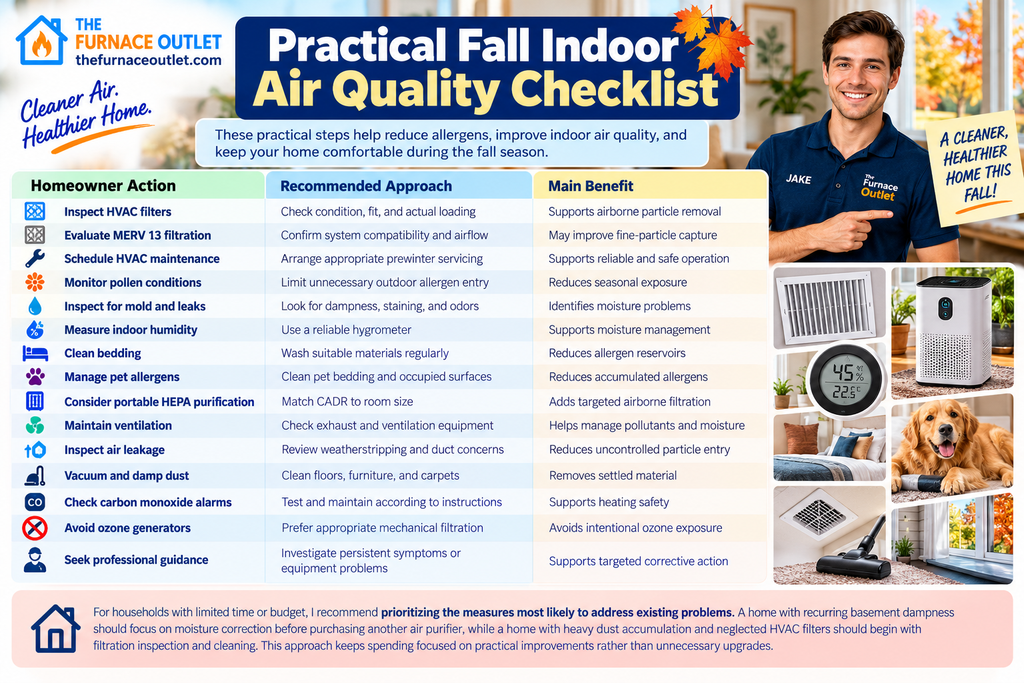
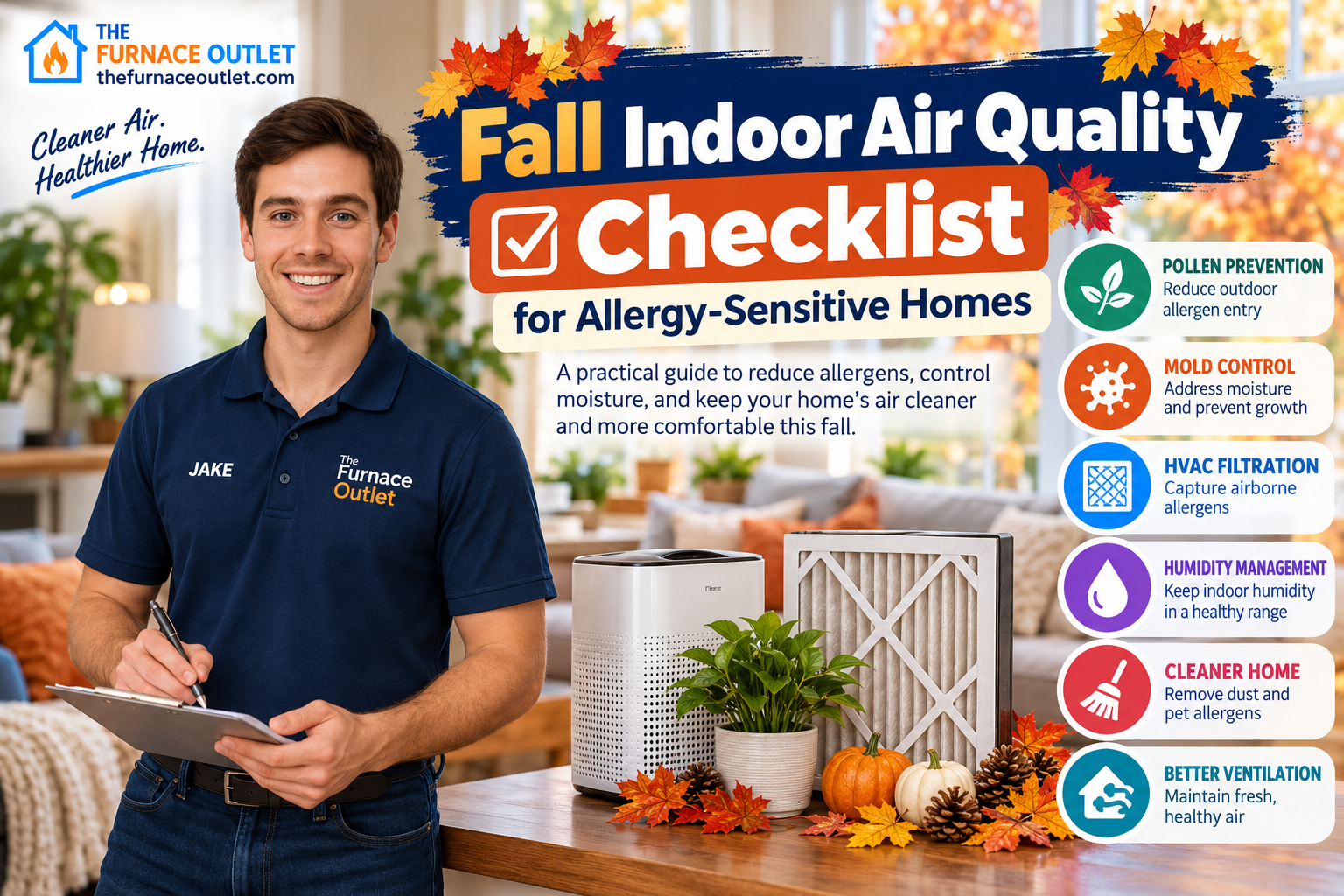
The following checklist brings together the most useful fall preparation tasks for allergy-sensitive households. I recommend using it as a seasonal maintenance reference rather than treating every item as a requirement to purchase new equipment. Many improvements begin with inspecting existing systems, maintaining clean household surfaces, and correcting moisture or airflow problems.
| Homeowner action | Recommended approach | Main benefit |
|---|---|---|
| Inspect HVAC filters | Check condition, fit, and actual loading | Supports airborne particle removal |
| Evaluate MERV 13 filtration | Confirm system compatibility and airflow | May improve fine-particle capture |
| Schedule HVAC maintenance | Arrange appropriate prewinter servicing | Supports reliable and safe operation |
| Monitor pollen conditions | Limit unnecessary outdoor allergen entry | Reduces seasonal exposure |
| Inspect for mold and leaks | Look for dampness, staining, and odors | Identifies moisture problems |
| Measure indoor humidity | Use a reliable hygrometer | Supports moisture management |
| Clean bedding | Wash suitable materials regularly | Reduces allergen reservoirs |
| Manage pet allergens | Clean pet bedding and occupied surfaces | Reduces accumulated allergens |
| Consider portable HEPA purification | Match CADR to room size | Adds targeted airborne filtration |
| Maintain ventilation | Check exhaust and ventilation equipment | Helps manage pollutants and moisture |
| Inspect air leakage | Review weatherstripping and duct concerns | Reduces uncontrolled particle entry |
| Vacuum and damp dust | Clean floors, furniture, and carpets | Removes settled material |
| Check carbon monoxide alarms | Test and maintain according to instructions | Supports heating safety |
| Avoid ozone generators | Prefer appropriate mechanical filtration | Avoids intentional ozone exposure |
| Seek professional guidance | Investigate persistent symptoms or equipment problems | Supports targeted corrective action |
For households with limited time or budgets, I recommend prioritizing the measures most likely to address existing problems. A home with recurring basement dampness should focus on moisture correction before purchasing another air purifier, while a home with heavy dust accumulation and neglected HVAC filters should begin with filtration inspection and cleaning. This approach keeps spending focused on practical improvements rather than unnecessary upgrades.
Homeowners do not need to complete every improvement immediately. A manageable seven-day plan provides a structured way to identify existing problems, improve the most frequently occupied rooms, and establish a maintenance routine before winter.
| Day | Action | What to accomplish |
|---|---|---|
| Day 1 | Inspect HVAC filtration | Check filter condition, fit, and replacement requirements |
| Day 2 | Evaluate moisture | Measure humidity and inspect for leaks or condensation |
| Day 3 | Deep-clean bedrooms | Wash bedding, vacuum, and damp dust |
| Day 4 | Reduce allergen entry | Review weatherstripping, entryways, and pollen habits |
| Day 5 | Check ventilation | Inspect bathroom exhaust and accessible ventilation equipment |
| Day 6 | Review heating safety | Check alarms and arrange appropriate HVAC servicing |
| Day 7 | Establish maintenance | Schedule recurring cleaning, inspections, and filter checks |
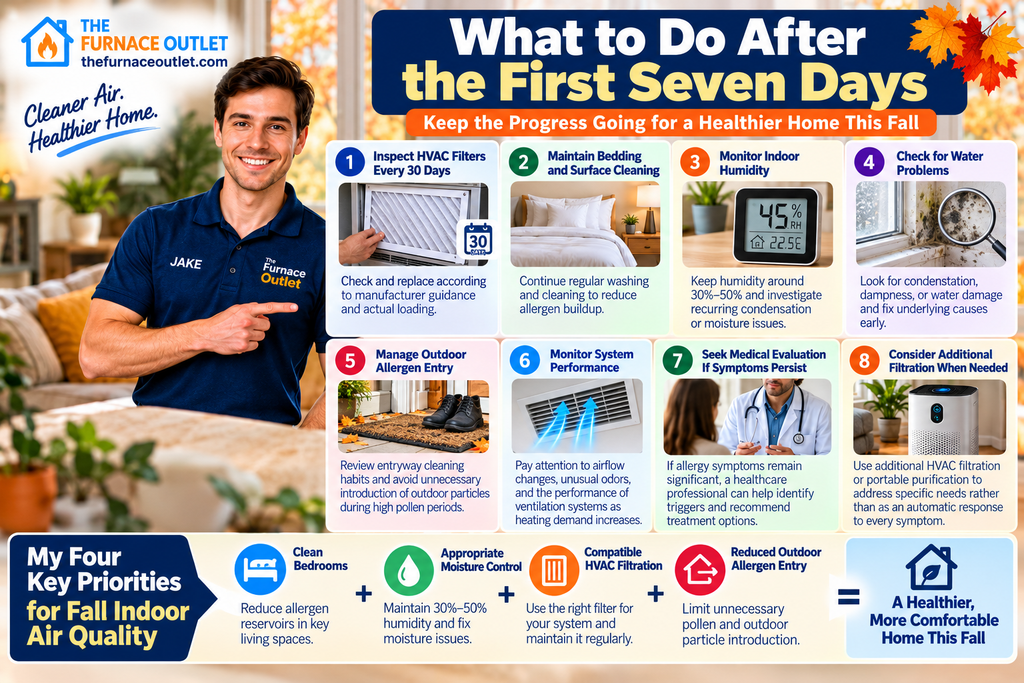
Once the initial improvements are complete, the next priority is consistency. Continue inspecting standard one-inch HVAC filters approximately every 30 days, replacing them according to manufacturer guidance and actual loading. Maintain regular bedding and surface cleaning, monitor indoor humidity, and investigate recurring condensation or water damage before it becomes a larger problem. During periods of elevated outdoor pollen exposure, review entryway cleaning habits and avoid unnecessary introduction of outdoor particles.
As heating demand increases, pay attention to airflow changes, unusual equipment odors, and the performance of ventilation systems. If allergy symptoms remain significant despite reasonable exposure-reduction measures, professional medical evaluation may help identify triggers that are not obvious from household conditions alone. Additional HVAC filtration or portable purification should be considered when it addresses a specific need rather than as an automatic response to every symptom.
My recommendation is to begin with clean bedrooms, appropriate moisture control, compatible HVAC filtration, and reduced outdoor allergen entry. These four priorities provide a practical foundation for managing fall indoor air quality without unnecessary spending.
Indoor allergy symptoms during fall may be associated with ragweed pollen entering the home, outdoor mold particles, dust mite allergens, pet allergens, or accumulated household dust. Seasonal changes in ventilation and time spent indoors can also influence exposure. Because symptoms overlap, professional allergy evaluation may be useful when the responsible trigger remains uncertain.
MERV 13 can provide stronger capture of smaller airborne particles than lower-efficiency filters, making it worth considering for allergy-sensitive households. However, the HVAC system must be able to accommodate the filter’s airflow resistance, and compatibility should be verified before upgrading.
Keeping windows closed during periods of elevated outdoor pollen or mold exposure may reduce allergen entry. However, homes still require appropriate ventilation to manage indoor-generated pollutants and moisture, so the best approach depends on outdoor conditions and the ventilation system.
Portable HEPA purifiers can capture many airborne particles passing through the device, but they cannot eliminate all allergens from a room or remove material embedded in mattresses, carpets, and furniture. Their effectiveness depends on CADR, room size, placement, operating time, and maintenance.
For many homes, approximately 30%–50% relative humidity is a useful general target. However, local climate, indoor temperature, condensation risk, and building construction should be considered when determining the appropriate level.
Standard one-inch filters can be inspected approximately every 30 days, with replacement based on manufacturer instructions and actual loading. Larger media filters may have longer service intervals, while homes with substantial dust or pet shedding may require more frequent attention.
Continuous fan operation may increase airborne particle removal in certain systems by circulating more air through the filter. However, electricity consumption, duct leakage, equipment design, and humidity behavior can influence the outcome, so continuous operation is not necessarily the best setting for every home.
No. HVAC filtration can capture some airborne mold particles, but it cannot prevent or eliminate mold growing on damp materials. Moisture control, prompt leak repairs, appropriate ventilation, and safe cleanup remain the primary prevention measures.
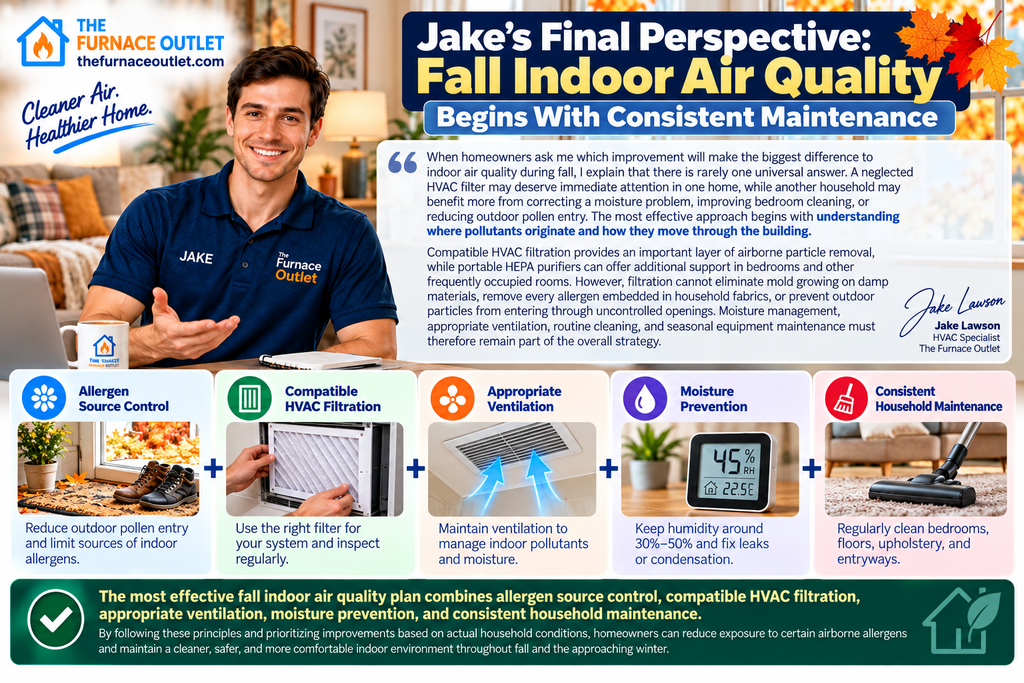
When homeowners ask me which improvement will make the biggest difference to indoor air quality during fall, I explain that there is rarely one universal answer. A neglected HVAC filter may deserve immediate attention in one home, while another household may benefit more from correcting a moisture problem, improving bedroom cleaning, or reducing outdoor pollen entry. The most effective approach begins with understanding where pollutants originate and how they move through the building.
Compatible HVAC filtration provides an important layer of airborne particle removal, while portable HEPA purifiers can offer additional support in bedrooms and other frequently occupied rooms. However, filtration cannot eliminate mold growing on damp materials, remove every allergen embedded in household fabrics, or prevent outdoor particles from entering through uncontrolled openings. Moisture management, appropriate ventilation, routine cleaning, and seasonal equipment maintenance must therefore remain part of the overall strategy.
The most effective fall indoor air quality plan combines allergen source control, compatible HVAC filtration, appropriate ventilation, moisture prevention, and consistent household maintenance. By following these principles and prioritizing improvements based on actual household conditions, homeowners can reduce exposure to certain airborne allergens and maintain a cleaner, safer, and more comfortable indoor environment throughout fall and the approaching winter.
This article is published by The Furnace Outlet for general educational purposes and does not constitute medical advice, professional indoor air quality testing, mold remediation guidance, or HVAC engineering advice. Filtration, cleaning, ventilation, and source-control measures may reduce exposure to certain airborne contaminants but cannot guarantee relief from allergies, asthma, or other respiratory conditions. Persistent or severe symptoms should be evaluated by a qualified healthcare professional.
HVAC filter upgrades, duct modifications, combustion-equipment servicing, ventilation adjustments, and other technical work should follow manufacturer instructions, applicable building codes, and appropriate safety procedures. Homeowners should consult qualified HVAC professionals when equipment compatibility, airflow, or system safety is uncertain. Significant mold contamination, recurring water damage, and suspected contamination within HVAC equipment should be evaluated by appropriately qualified professionals.
The Furnace Outlet publishes independent educational content. References to external organizations are provided for informational purposes and do not imply sponsorship, affiliation, or endorsement.
© 2026 The Furnace Outlet. All rights reserved.