Newsletter Subscribe
Enter your email address below and subscribe to our newsletter

HVAC made simple
By Jake Lawson | HVAC Specialist | The Furnace Outlet
Updated October 2026 | HVAC Maintenance & Seasonal Heating Preparation
As summer fades and outdoor temperatures begin dropping, fall provides homeowners with an important opportunity to prepare their heating and cooling systems for the months ahead. Across much of the United States, furnaces and heat pumps experience relatively light heating demand during early autumn, making this an ideal time to identify maintenance issues before prolonged cold weather arrives. Unfortunately, many homeowners overlook seasonal HVAC maintenance until their heating system fails to start, produces unusual noises, or struggles to maintain comfortable indoor temperatures.
A dependable heating system requires more than a clean air filter and a functioning thermostat. Airflow restrictions, dirty equipment components, damaged ductwork, blocked exhaust vents, malfunctioning safety controls, and inadequate outdoor unit clearance can all interfere with heating performance. Heat pumps also require attention to defrost operation and supplemental heating, while gas furnaces depend on proper combustion, safe venting, and functioning protective controls. Identifying potential problems during fall can reduce the likelihood of unexpected heating interruptions and help homeowners make informed decisions about servicing or repairs.
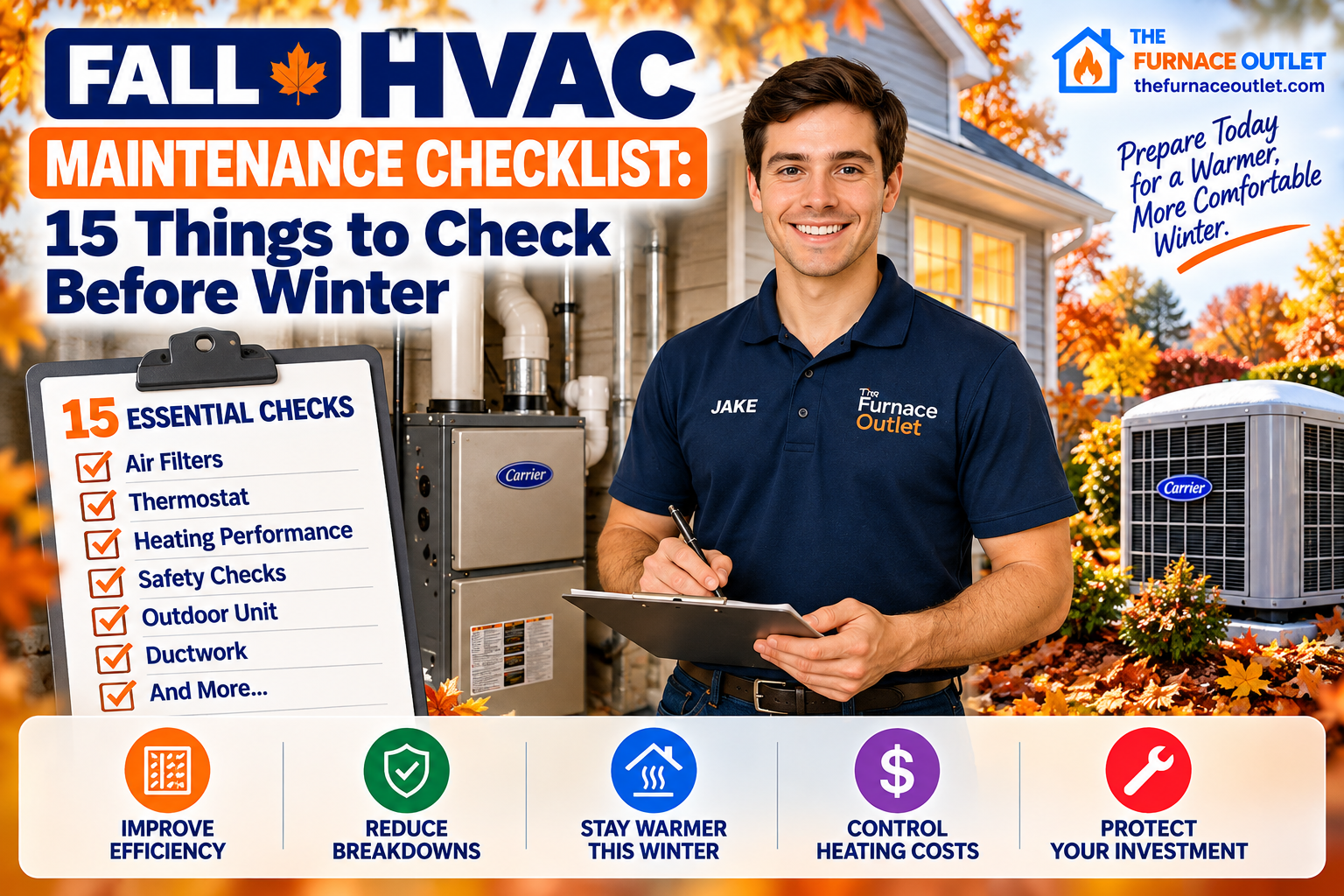
As an HVAC specialist with more than 10 years of experience, I recommend treating fall maintenance as a systematic review of equipment condition, airflow, safety, and building performance. Some tasks, such as inspecting filters, clearing accessible vents, and reviewing thermostat settings, are appropriate for most homeowners. Other procedures, including combustion testing, refrigerant diagnostics, electrical repairs, and internal safety-control inspections, should be performed by qualified HVAC professionals.
In this guide, I will walk through 15 important HVAC maintenance checks to complete before winter, explain why each task matters, identify warning signs that deserve professional attention, and provide a practical seven-day preparation plan. My objective is to help homeowners prioritize necessary maintenance without spending money on unnecessary equipment upgrades or services.
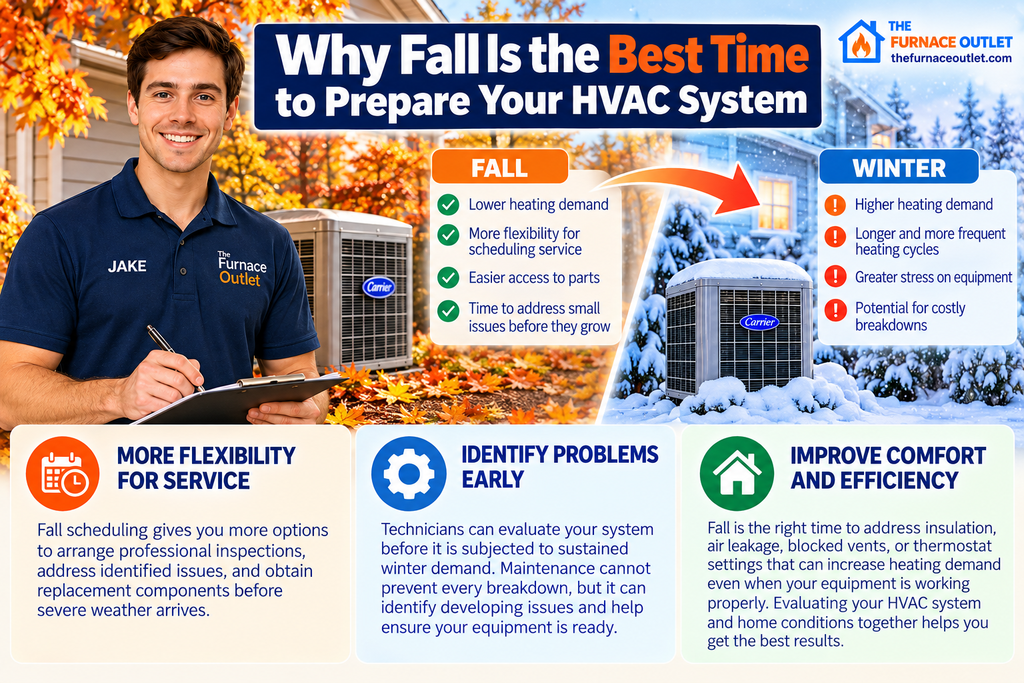
Fall is particularly useful for HVAC maintenance because heating demand is often lower than it will be during winter. A furnace that operates normally during a short test in October may experience significantly longer heating cycles during freezing January weather. Similarly, an air-source heat pump may perform adequately during mild conditions but encounter greater operating demands when outdoor temperatures fall and frost begins accumulating on its outdoor coil.
Scheduling maintenance before severe weather gives homeowners more flexibility to arrange professional inspections, address identified defects, and obtain replacement components when necessary. It also allows technicians to evaluate heating performance before the equipment is subjected to sustained seasonal demand. Although maintenance cannot prevent every breakdown, it can identify certain developing problems and improve the likelihood that equipment operates as intended.
Another benefit of fall maintenance is the opportunity to address household comfort and energy-efficiency problems before heating costs increase. Poor insulation, excessive air leakage, blocked return vents, or incorrect thermostat settings can increase heating demand even when the equipment itself is functioning properly. For that reason, I recommend evaluating the HVAC system and the surrounding building conditions together rather than assuming every heating problem requires mechanical repairs.
The first task on my fall HVAC checklist is inspecting the air filter. A properly installed filter captures a portion of the airborne particles passing through the return-air system, helping protect internal equipment components and supporting indoor particle removal. However, as dust, lint, pet hair, and other debris accumulate, airflow resistance may increase. Excessive filter loading can interfere with system performance, particularly during periods of prolonged heating operation.
Before winter, remove and inspect the existing filter according to the equipment manufacturer’s instructions. Check for excessive debris accumulation, visible damage, incorrect installation, or significant gaps around the filter housing. Confirm that the replacement filter has the correct dimensions and that its airflow direction matches the equipment requirements. A filter that does not fit securely may allow air to bypass the filtration media, reducing its effectiveness.
For standard one-inch residential filters, I recommend inspecting approximately every 30 days during periods of frequent HVAC operation. Replacement frequency should depend on actual loading, manufacturer guidance, household conditions, and equipment requirements rather than a universal schedule. Larger media filters may have substantially longer service intervals, while homes with shedding pets or heavy dust accumulation may require more frequent attention.
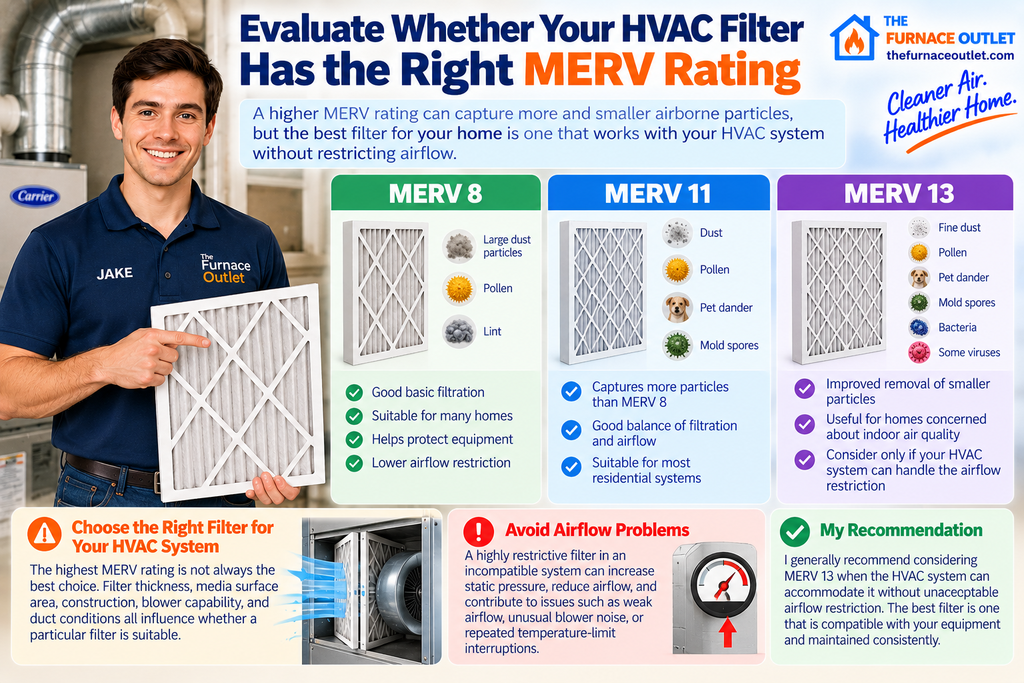
The Minimum Efficiency Reporting Value, commonly known as MERV, describes how effectively an HVAC filter captures particles across standardized particle-size ranges. Higher MERV ratings generally indicate stronger capture of smaller airborne particles, but the highest available rating is not automatically the best choice for every residential system.
MERV 8 filters provide useful basic filtration for many homes, while MERV 11 filters can capture additional particles across certain size ranges. MERV 13 filtration may provide improved removal of smaller airborne particles, making it worth evaluating for households concerned about dust, pollen, and other airborne contaminants. However, filter thickness, media surface area, construction, blower capability, and duct conditions all influence whether a particular filter is suitable.
I generally recommend considering MERV 13 when the HVAC system can accommodate it without unacceptable airflow restriction. Installing a highly restrictive filter in an incompatible system can increase static pressure and contribute to airflow problems. If the equipment already experiences weak airflow, unusual blower noise, or repeated temperature-limit interruptions, I would recommend professional evaluation before upgrading filtration efficiency.
The EPA’s explanation of MERV ratings provides additional information about filtration classifications and particle-capture performance. My preference is always a compatible, correctly installed filter that can be maintained consistently.
A thermostat controls when heating equipment operates and, depending on the system, may also manage fan operation, supplemental heating, and programmed temperature schedules. Before winter, homeowners should confirm that the thermostat responds correctly to heating demand and that its settings match the installed equipment.
Begin by reviewing the thermostat’s operating mode and programmed schedule. If the system has been operating in cooling mode throughout summer, verify that heating mode is available and correctly configured. During a safe functional test, adjust the requested temperature above the current indoor temperature and observe whether the heating system starts and operates normally. Do not continue testing if unusual odors, repeated shutdowns, or other safety concerns appear.
For conventional furnaces, moderate temperature setbacks during sleeping hours or periods when the home is unoccupied may reduce energy consumption, depending on household conditions. Heat pumps require additional consideration because large temperature recoveries can sometimes activate supplemental electric resistance heating. I recommend using thermostat schedules and recovery settings appropriate for the equipment rather than applying the same strategy to every heating system.
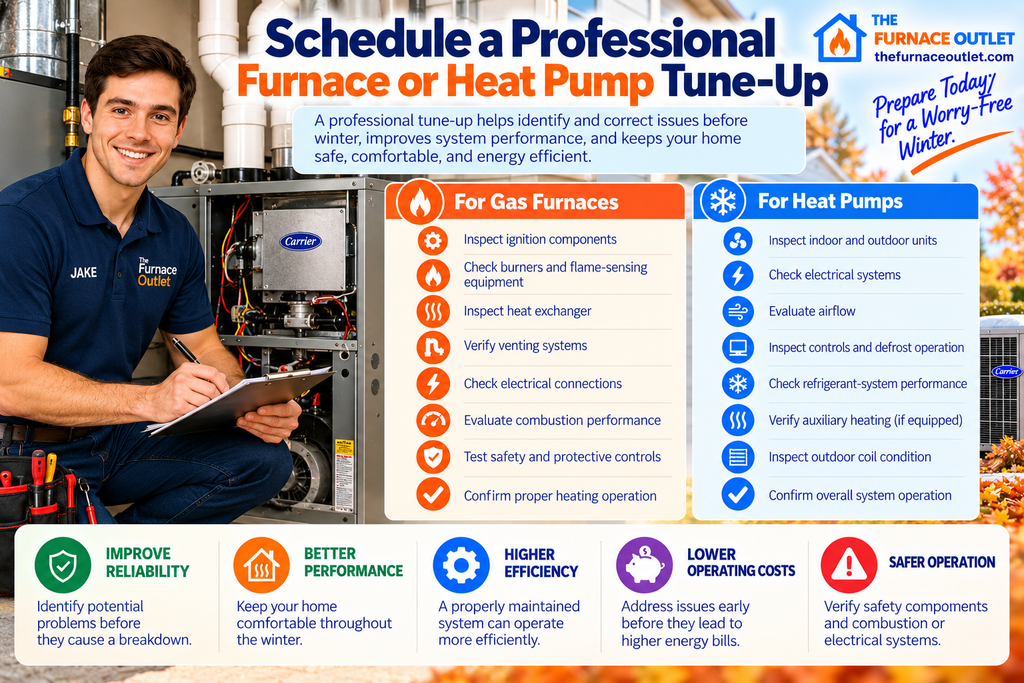
One of the most important fall maintenance tasks is arranging professional servicing according to the equipment manufacturer’s recommendations. Although homeowners can complete basic inspections, many components require specialized training, instruments, and safety procedures to evaluate properly.
For gas furnaces, professional maintenance may include inspection of ignition components, burners, flame-sensing equipment, heat exchangers, venting systems, electrical connections, and protective controls. The technician may also evaluate combustion performance and verify that the equipment operates through its intended heating sequence. Electric furnaces require different procedures, including attention to heating elements, electrical components, and airflow-related controls.
Heat pump maintenance generally involves inspection of indoor and outdoor components, electrical systems, airflow, controls, refrigerant-system performance, and defrost operation. The appropriate procedures depend on equipment design and manufacturer specifications. I recommend requesting a clear explanation of inspection findings and distinguishing routine maintenance from repairs that are necessary for safety or reliable operation.
A furnace that starts during a brief test is not necessarily operating correctly under all conditions. Modern gas furnaces commonly use electronic ignition systems, and their heating sequence depends on properly functioning controls, ignition components, fuel delivery, and safety devices. Problems within these systems may produce intermittent heating, repeated ignition attempts, or unexpected shutdowns.
During a basic homeowner observation, pay attention to whether the furnace responds to the thermostat, begins producing warm air, and completes its heating cycle without obvious abnormalities. Unusual clicking, repeated startup attempts, persistent fault indications, or a blower that runs without delivering heat may justify professional attention. These symptoms can have several causes, and diagnosing them requires an understanding of the specific equipment.
I strongly discourage homeowners from attempting burner adjustments, gas-pressure changes, flame-sensor repairs, or safety-switch bypasses without appropriate qualifications. Repeatedly resetting a malfunctioning furnace can conceal a developing problem rather than correct it. The objective of fall maintenance is to confirm dependable and safe heating operation, not merely to force the equipment to start.
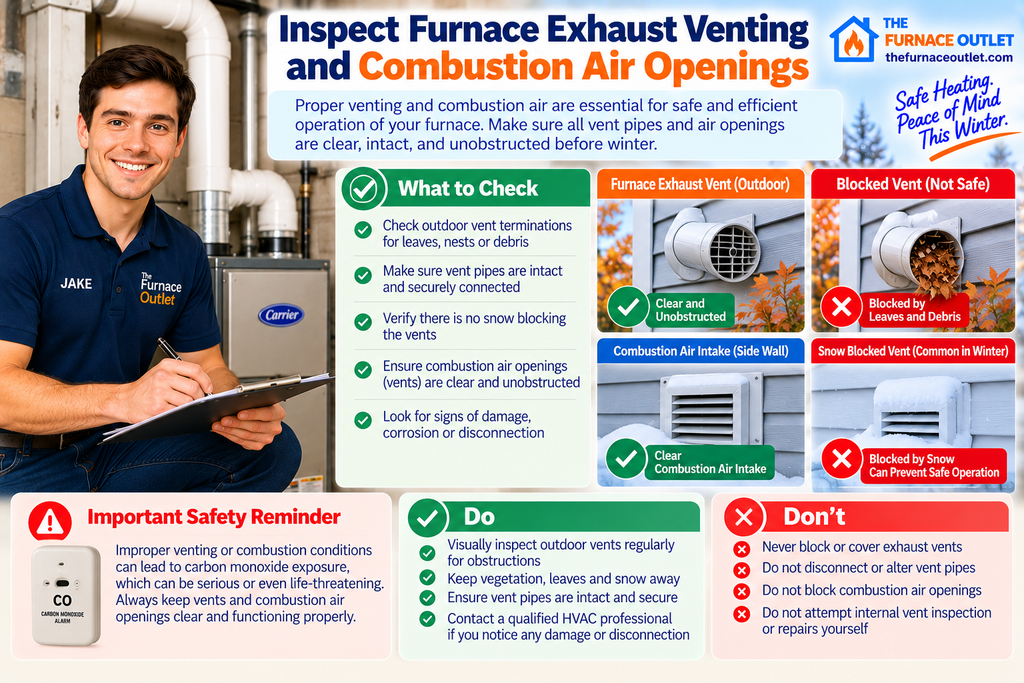
Fuel-burning heating equipment requires appropriate combustion air and safe removal of exhaust gases. Depending on the furnace design, venting may use metal flue components, manufacturer-approved plastic piping, or other listed venting arrangements. These pathways must remain correctly installed and unobstructed throughout the heating season.
Before winter, homeowners can visually inspect accessible outdoor vent terminations for obvious obstructions such as leaves, vegetation, nests, or accumulated debris. In areas that experience significant snowfall, vent locations should also be reviewed for potential snow blockage. However, internal vent inspection, combustion-air evaluation, and repairs to exhaust systems should be handled by qualified professionals.
Improper venting or combustion conditions can create serious hazards, including carbon monoxide exposure. Homeowners should never disconnect exhaust components, alter vent arrangements, or block combustion-air openings in an attempt to improve heating performance. If a vent appears damaged, disconnected, or obstructed, the system should not be forced to operate until the problem is safely evaluated.
Adequate airflow is essential for both furnaces and heat pumps. Supply registers distribute conditioned air into occupied spaces, while return-air openings allow air to circulate back toward the equipment. When these pathways are obstructed, the system may struggle to distribute heat evenly or maintain intended operating conditions.
I recommend walking through the home and checking that furniture, rugs, curtains, storage boxes, and other household items do not block accessible supply or return openings. Pay particular attention to rooms that were rearranged during summer, because furniture placement can unintentionally interfere with airflow. Homeowners should also avoid closing large numbers of supply registers without understanding how the duct system was designed.
If certain rooms remain consistently colder than others, the cause may involve duct leakage, inadequate insulation, airflow balancing, equipment capacity, or other building conditions. Increasing the thermostat setting does not necessarily correct these problems. I recommend identifying the underlying issue before purchasing additional heating equipment or making major changes to the duct system.
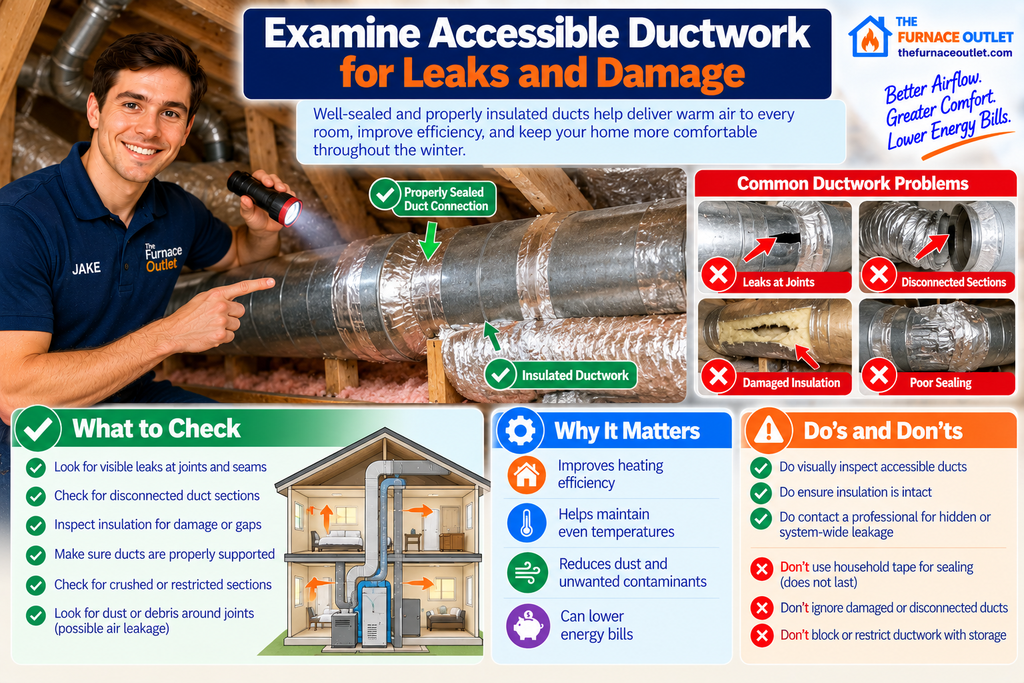
Ductwork transports heated air from the furnace or indoor heat pump unit to different rooms. Leaks, disconnected sections, damaged insulation, and poorly sealed connections can reduce distribution efficiency and contribute to uneven temperatures. In some installations, return-air leakage may also draw dust and other contaminants from attics, crawlspaces, or unintended spaces.
Homeowners can visually inspect accessible duct sections for obvious damage, loose connections, or deteriorated insulation without dismantling equipment. However, concealed ductwork and system-wide leakage may require professional evaluation. Proper sealing methods depend on duct materials and installation conditions, and unsuitable household tapes or improvised repairs may not provide a durable solution.
The U.S. Department of Energy’s guidance on minimizing energy losses in ducts explains why duct sealing and insulation matter. I recommend considering duct condition alongside equipment maintenance, particularly when rooms experience persistent temperature differences or unusually high heating demand.
Air-source heat pumps rely on outdoor airflow to transfer heat into the home during winter. Fallen leaves, vegetation, branches, and stored objects can interfere with this process when they obstruct the outdoor coil or fan discharge. Fall is therefore an important time to inspect the area surrounding the outdoor unit.
I recommend removing loose leaves and accessible debris from around the equipment while maintaining the clearances specified by the manufacturer. Avoid placing decorative enclosures, storage items, or conventional air-conditioner covers around an operating heat pump. Unlike a cooling-only outdoor unit that may remain inactive during winter, a heat pump often continues operating throughout the heating season.
Homeowners should not use sharp tools, excessive water pressure, or aggressive cleaning methods on delicate coil surfaces. If the outdoor coil is heavily contaminated or damaged, professional cleaning may be appropriate. The objective is to preserve unobstructed airflow without introducing additional equipment damage.
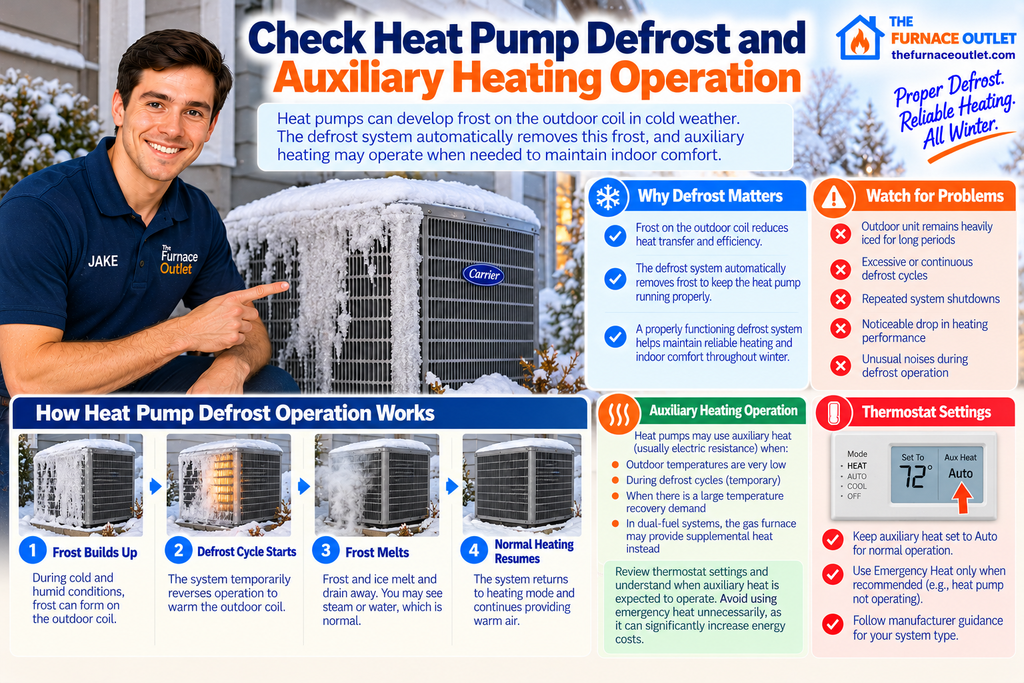
Heat pumps can develop frost on their outdoor coils during certain combinations of temperature and humidity. Because frost reduces heat transfer, these systems use defrost controls to periodically remove accumulation. Normal defrost operation may produce visible steam or water near the outdoor unit, which homeowners sometimes mistake for equipment failure.
During fall servicing, a qualified technician can evaluate defrost controls and other components according to manufacturer procedures. Homeowners should monitor the equipment during winter for persistent heavy icing, repeated abnormal shutdowns, or substantial deterioration in heating performance. A brief defrost cycle may be normal, but an outdoor unit that remains heavily frozen warrants professional attention.
Heat pumps may also use auxiliary heating during certain operating conditions. I recommend reviewing thermostat settings and understanding when supplemental heat is expected to operate. Selecting emergency heat unnecessarily can increase operating costs in systems using electric resistance backup. Proper control configuration is particularly important for dual-fuel systems that combine a heat pump with a gas furnace.
Condensate drainage is not exclusively a summer air-conditioning concern. High-efficiency condensing furnaces produce water during normal heating operation, while outdoor heat pumps release water during defrost cycles. These systems require appropriate drainage to prevent blockages, equipment interruptions, and unwanted water accumulation.
Before winter, homeowners should look for visible moisture around accessible equipment and report recurring water accumulation to a qualified technician. Condensing furnace drains, traps, and associated components should be inspected according to manufacturer requirements. In cold climates, exposed condensate lines may be vulnerable to freezing when installation conditions are unsuitable.
For outdoor heat pumps, defrost water can freeze on nearby surfaces and create slippery conditions. Proper installation, drainage, and equipment support help reduce these problems. I recommend investigating recurring drainage issues rather than assuming that standing water or persistent ice accumulation is an unavoidable part of winter heating.
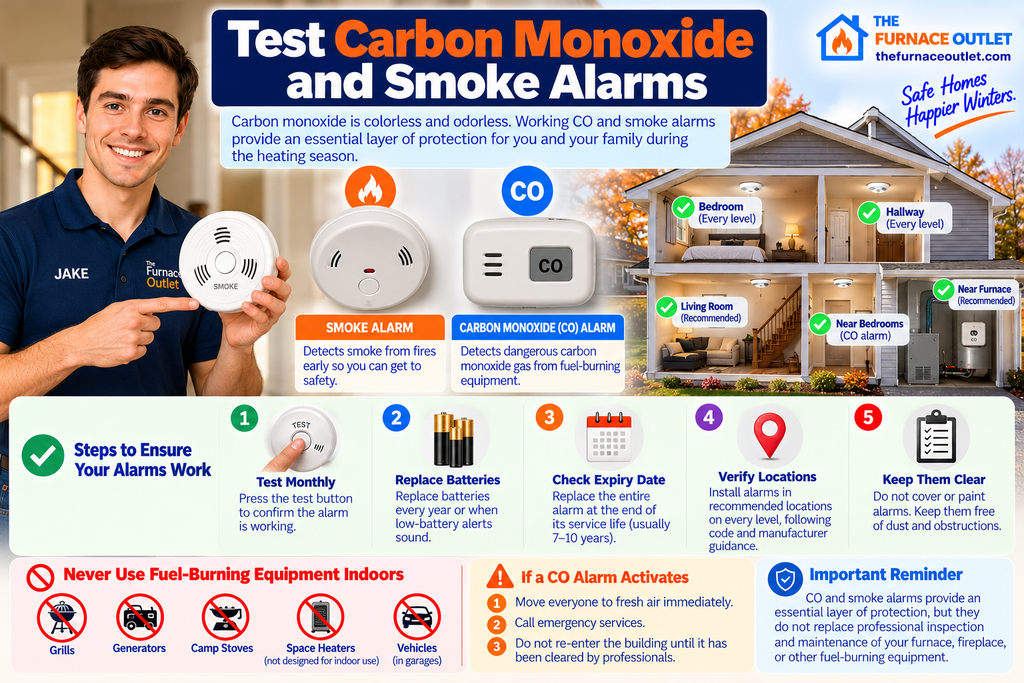
Carbon monoxide safety deserves particular attention before the heating season, especially in homes with fuel-burning furnaces, fireplaces, attached garages, or other combustion sources. Carbon monoxide is colorless and odorless, making properly installed and maintained alarms an essential protective measure.
Homeowners should verify that carbon monoxide alarms and smoke alarms are installed in appropriate locations according to applicable codes and manufacturer instructions. Test alarms as directed, replace batteries where applicable, and replace entire alarm units when they reach the end of their specified service life. A functioning alarm does not replace professional inspection of fuel-burning equipment, but it provides an important additional layer of protection.
Never operate outdoor grills, portable generators, camp stoves, or other equipment not designed for indoor use inside a home or attached garage. If a carbon monoxide alarm activates, follow emergency instructions, move occupants to fresh air, and contact emergency services. The CDC’s carbon monoxide prevention guidance provides additional household safety information.
Heating performance depends not only on the HVAC equipment but also on how effectively the building retains warmth. Damaged weatherstripping, poorly sealed windows, insufficient insulation, and uncontrolled air leakage can increase heating demand and create uncomfortable drafts.
During fall, I recommend checking accessible door seals, window weatherstripping, and obvious gaps around utility penetrations. Appropriate air sealing can help reduce unwanted infiltration, while insulation improvements may contribute to more consistent indoor temperatures. However, homeowners should avoid altering combustion-air pathways or sealing spaces containing fuel-burning equipment without considering ventilation and safety requirements.
A home with significant heat loss may experience long heating cycles even when the furnace or heat pump is operating correctly. For this reason, I prefer evaluating building-envelope conditions before recommending a larger heating system. The Department of Energy’s Energy Saver resources provide additional information about insulation, air sealing, and residential energy performance.
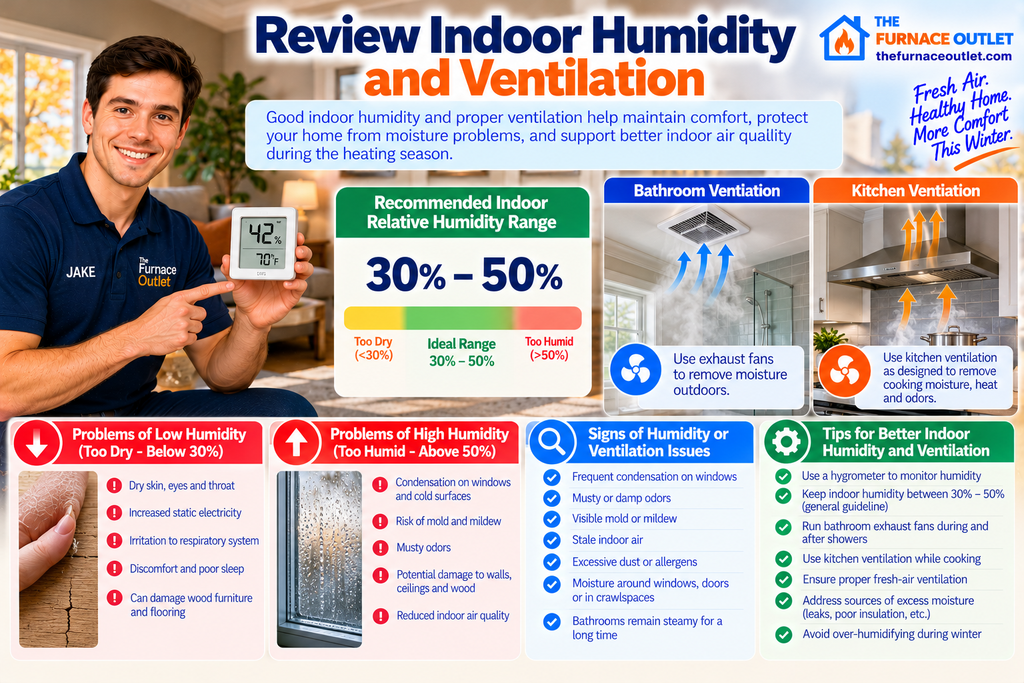
Fall often brings changing outdoor humidity, cooler surfaces, and longer periods when windows remain closed. These conditions can influence indoor moisture levels, condensation, and indoor air quality. Maintaining appropriate ventilation and moisture control is therefore an important part of seasonal HVAC preparation.
For many homes, an indoor relative humidity range of approximately 30%–50% is a useful general target, although the appropriate level depends on climate, building construction, temperature, and condensation risk. I recommend using a reliable hygrometer rather than assuming that indoor air is appropriately humidified or dehumidified simply because it feels comfortable.
Bathroom exhaust fans should remove moisture outdoors, while kitchen ventilation should operate according to its design. If condensation repeatedly develops on windows or cold surfaces, homeowners should investigate humidity levels, insulation, ventilation, and potential moisture sources. Excessive humidification during winter can contribute to condensation and building damage, making careful control more important than maintaining a fixed humidity number in every climate.
The final item on my fall HVAC checklist is reviewing the system’s overall operating history. Homeowners should consider whether heating costs increased unexpectedly during the previous winter, whether the equipment required repeated repairs, and whether certain rooms experienced persistent comfort problems. These observations can help identify issues that deserve attention before another heating season begins.
Equipment age is relevant, but it should not be the only factor determining whether a furnace or heat pump needs replacement. A properly maintained older system may remain serviceable, while newer equipment can experience problems because of installation defects, inadequate airflow, or component failures. I recommend evaluating repair costs, safety, reliability, efficiency, available parts, and expected remaining service life together.
If the system has a history of frequent shutdowns, expensive repairs, or significant performance deterioration, a professional assessment may help determine whether maintenance, targeted repair, or replacement provides the best long-term value. I would rather see homeowners make this decision based on documented equipment condition than replace a functioning heating system solely because it has reached a particular age.
The following table summarizes the 15 checks and identifies which activities are generally suitable for homeowners and which should involve qualified professionals. Actual maintenance requirements depend on equipment design, manufacturer instructions, and local regulations.
| No. | Maintenance task | Recommended responsibility |
|---|---|---|
| 1 | Inspect and replace HVAC filters | Homeowner |
| 2 | Evaluate MERV filter compatibility | Homeowner / HVAC professional |
| 3 | Test thermostat operation | Homeowner |
| 4 | Schedule professional HVAC servicing | Qualified HVAC professional |
| 5 | Check furnace ignition and heating performance | Professional diagnosis; homeowner observation |
| 6 | Inspect furnace venting and combustion air | Professional inspection; accessible visual checks |
| 7 | Clear supply and return vents | Homeowner |
| 8 | Inspect accessible ductwork | Homeowner / HVAC professional |
| 9 | Clear outdoor heat pump surroundings | Homeowner |
| 10 | Evaluate defrost and auxiliary heating | Qualified HVAC professional |
| 11 | Inspect condensate drainage | Homeowner / HVAC professional |
| 12 | Test carbon monoxide and smoke alarms | Homeowner |
| 13 | Review insulation and air leakage | Homeowner / qualified contractor |
| 14 | Monitor humidity and ventilation | Homeowner |
| 15 | Review equipment performance and repair history | Homeowner / HVAC professional |
I recommend treating this checklist as a seasonal maintenance reference rather than a requirement to purchase additional products. Many useful improvements begin with simple inspections, proper cleaning, and correcting existing problems. Professional servicing should focus on equipment-specific maintenance, safety verification, and identified defects rather than unnecessary upgrades.
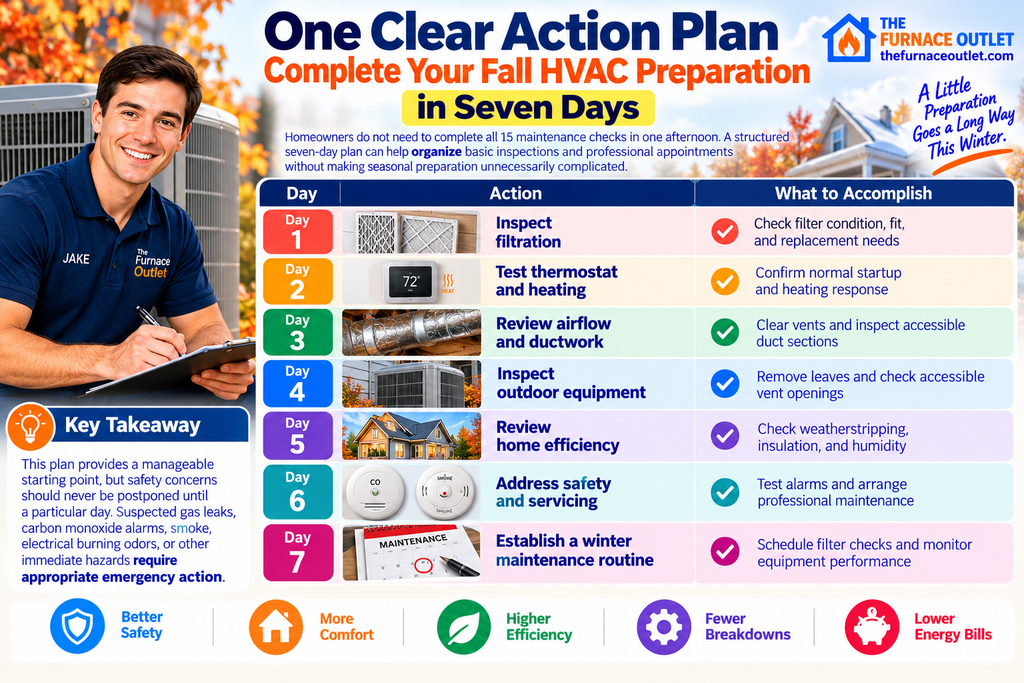
Homeowners do not need to complete all 15 maintenance checks in one afternoon. A structured seven-day plan can help organize basic inspections and professional appointments without making seasonal preparation unnecessarily complicated.
| Day | Action | What to accomplish |
|---|---|---|
| Day 1 | Inspect filtration | Check filter condition, fit, and replacement needs |
| Day 2 | Test thermostat and heating | Confirm normal startup and heating response |
| Day 3 | Review airflow and ductwork | Clear vents and inspect accessible duct sections |
| Day 4 | Inspect outdoor equipment | Remove leaves and check accessible vent openings |
| Day 5 | Review home efficiency | Check weatherstripping, insulation, and humidity |
| Day 6 | Address safety and servicing | Test alarms and arrange professional maintenance |
| Day 7 | Establish a winter maintenance routine | Schedule filter checks and monitor equipment performance |
This plan provides a manageable starting point, but safety concerns should never be postponed until a particular day. Suspected gas leaks, carbon monoxide alarms, smoke, electrical burning odors, or other immediate hazards require appropriate emergency action. Technical repairs and internal equipment adjustments should be performed by qualified professionals.
Once the initial inspections are complete, consistency becomes the most important part of winter readiness. Continue checking standard one-inch filters approximately every 30 days during periods of heavy heating use, replacing them according to actual loading and manufacturer guidance. Keep accessible supply and return openings unobstructed, monitor thermostat operation, and pay attention to unusual changes in heating performance.
For heat pumps, maintain outdoor clearance and observe the equipment for persistent icing or abnormal defrost behavior. For fuel-burning furnaces, keep accessible vent terminations unobstructed and maintain carbon monoxide alarms. If recurring water accumulation, weak airflow, repeated shutdowns, or unusual noises develop, arrange professional evaluation before the problem becomes more severe.
My recommendation is to begin with filtration, airflow, thermostat operation, safety, and professional servicing before spending money on additional heating equipment or unnecessary upgrades. These priorities provide a practical foundation for dependable winter heating.
Early fall is often a practical time to arrange maintenance because heating demand may still be relatively low. However, the appropriate timing depends on local climate and equipment usage. The important objective is to complete recommended servicing before sustained winter heating demand begins.
Many furnace manufacturers recommend professional inspection and maintenance annually, although specific requirements vary by equipment model and installation. Regular servicing provides an opportunity to inspect combustion-related components, controls, airflow, and other systems that affect safe operation and reliability.
Heat pumps provide both heating and cooling, so some maintenance procedures overlap. However, winter preparation may require attention to heating-specific functions, including defrost operation, reversing-valve controls, and supplemental heating. Follow the manufacturer’s maintenance recommendations and consult a qualified technician when necessary.
For standard one-inch filters, inspecting approximately every 30 days is a reasonable starting point during frequent HVAC operation. Replacement frequency depends on actual loading, filter construction, household conditions, and manufacturer instructions. Larger media filters may have longer service intervals.
MERV 13 filtration may improve airborne particle capture, but compatibility with the HVAC system is essential. A qualified technician can help evaluate airflow and static pressure when there is uncertainty about whether a higher-efficiency filter is appropriate.
Heating equipment generally operates for longer periods as outdoor temperatures decline and building heat loss increases. Longer operation can be normal, but persistent inability to maintain indoor temperature, repeated shutdowns, or substantial changes from previous performance may indicate a problem requiring evaluation.
Maintenance can help identify problems that contribute to unnecessary energy use, including certain airflow restrictions, control faults, and equipment defects. However, actual savings depend on equipment condition, weather, thermostat settings, building insulation, and operating patterns. No universal percentage reduction should be assumed.
Routine duct cleaning is not universally required for residential HVAC systems. Significant contamination, pest infestation, substantial debris accumulation, or other specific conditions may justify professional evaluation. The EPA recommends assessing duct-cleaning claims carefully rather than treating the service as an automatic seasonal requirement.
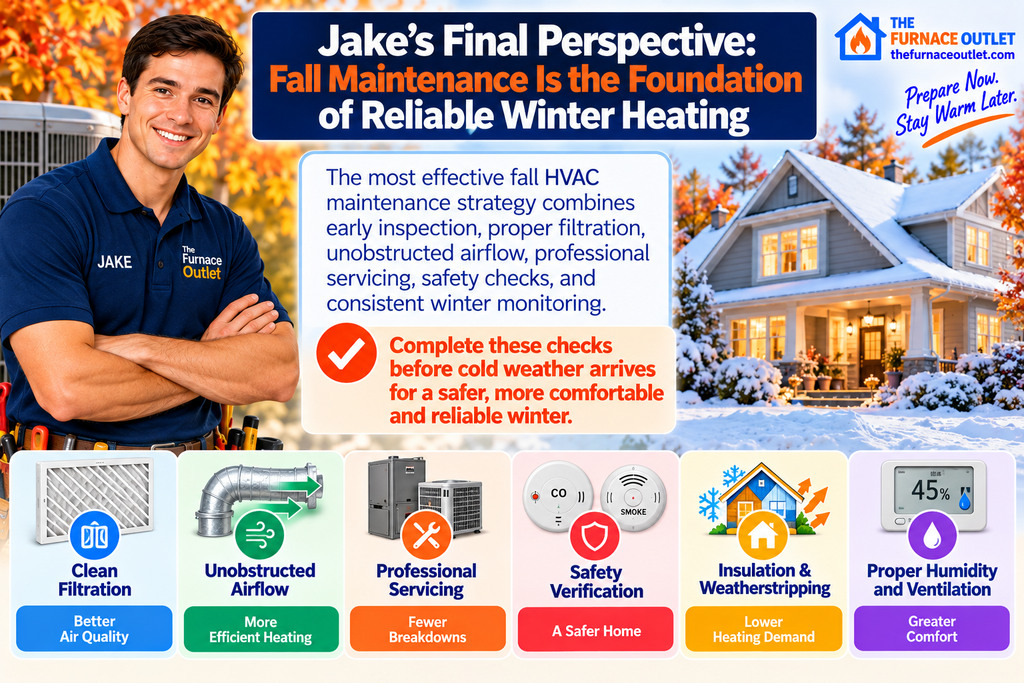
When homeowners ask me which fall HVAC maintenance task matters most, I explain that the answer depends on the condition of their equipment and the problems already present. A heavily loaded filter may require immediate attention in one home, while another system may need professional inspection of combustion safety, heat pump defrost operation, or duct leakage. The most useful approach is to identify actual maintenance needs rather than assume that every home requires the same repairs or upgrades.
I recommend beginning with a practical inspection of filtration, airflow, thermostat operation, and accessible equipment conditions. Professional servicing should address the technical components that homeowners cannot safely evaluate, including combustion systems, electrical controls, refrigerant circuits, and protective devices. At the same time, insulation, weatherstripping, ventilation, and moisture management deserve attention because they influence heating demand and overall comfort.
The most effective fall HVAC maintenance strategy combines early equipment inspection, compatible filtration, unobstructed airflow, professional servicing, safety verification, and consistent winter monitoring. By completing these checks before sustained cold weather arrives, homeowners can reduce avoidable heating problems, make better maintenance decisions, and support a safer, more comfortable home throughout the 2026–2027 heating season.
The following authoritative resources provide additional information about heating equipment maintenance, filtration, energy efficiency, and household safety. Homeowners should also consult the installation and maintenance manuals supplied with their specific HVAC equipment.
U.S. Department of Energy — Energy Saver: https://www.energy.gov/energysaver.
This resource provides guidance on residential heating, insulation, air sealing, and household energy efficiency.
U.S. Department of Energy — Air-Source Heat Pumps: https://www.energy.gov/energysaver/air-source-heat-pumps.
This guide explains heat pump operation, efficiency considerations, and heating applications.
U.S. Environmental Protection Agency — What Is a MERV Rating?: https://www.epa.gov/indoor-air-quality-iaq/what-merv-rating.
The EPA explains how MERV classifications relate to airborne particle capture.
U.S. Environmental Protection Agency — Should You Have the Air Ducts in Your Home Cleaned?: https://www.epa.gov/indoor-air-quality-iaq/should-you-have-air-ducts-your-home-cleaned.
This resource discusses duct-cleaning considerations and situations where professional evaluation may be appropriate.
Centers for Disease Control and Prevention — Carbon Monoxide Prevention: https://www.cdc.gov/carbon-monoxide/prevention/.
The CDC provides information about carbon monoxide hazards and household prevention measures.
ENERGY STAR — Heating and Cooling: https://www.energystar.gov/products/heating_cooling.
ENERGY STAR provides educational information about efficient residential heating and cooling equipment.
This article is provided by The Furnace Outlet for general educational purposes and does not replace manufacturer instructions, professional HVAC inspection, electrical or combustion-system diagnosis, or applicable building and safety codes. Maintenance requirements vary by equipment model, installation, operating conditions, and local regulations. Homeowners should not attempt gas-pressure adjustments, refrigerant handling, electrical repairs, combustion-system modifications, or safety-control bypasses without appropriate qualifications.
Suspected gas leaks, carbon monoxide alarms, smoke, or other immediate safety hazards require prompt action and appropriate emergency assistance. Energy savings, equipment reliability, and heating performance depend on numerous factors, and following this checklist does not guarantee that breakdowns or other problems will be prevented.
The Furnace Outlet publishes independent educational HVAC content. References to external organizations are provided for informational purposes and do not imply sponsorship, affiliation, or endorsement.
© 2026 The Furnace Outlet | thefurnaceoutlet.com