Newsletter Subscribe
Enter your email address below and subscribe to our newsletter

HVAC made simple
By Tony Marino (Tony the Trusted Tech) | The Furnace Outlet | Updated October 2026
When a heat pump trips its circuit breaker during winter, the problem can quickly become more serious than an uncomfortable house. You may notice that the outdoor unit suddenly stops running, the thermostat continues calling for heat, or the breaker trips immediately after the equipment attempts to start. In some homes, the system operates for several minutes before shutting down. In others, the problem appears only during extremely cold weather or when auxiliary electric heating becomes necessary.
After decades of working with residential heating and cooling equipment, I’ve learned that repeated breaker trips should never be treated as a minor inconvenience. A circuit breaker is an electrical protective device designed to interrupt current under certain abnormal conditions. When it trips, the system may be experiencing an overload, short circuit, ground fault, damaged component, or another electrical problem that requires investigation. Although a breaker itself can occasionally be defective, assuming that the breaker is the problem without checking the equipment can overlook a potentially dangerous fault.
Winter adds complications because heat pumps operate for longer periods, compressors may experience demanding startup conditions, and electric auxiliary heaters can introduce substantial additional electrical loads. Moisture, snow, freezing rain, and temperature changes can also expose weaknesses in outdoor wiring and electrical connections. A problem that remained unnoticed during mild autumn weather may become obvious when the equipment is working harder to maintain indoor comfort.
In this guide, I’ll explain why heat pumps trip breakers during cold weather, how to distinguish compressor and auxiliary heating problems, which warning signs require immediate attention, and what homeowners can safely check without opening electrical equipment. I’ll also cover professional diagnostic procedures, repair considerations, and preventive maintenance for the 2026–2027 winter heating season.
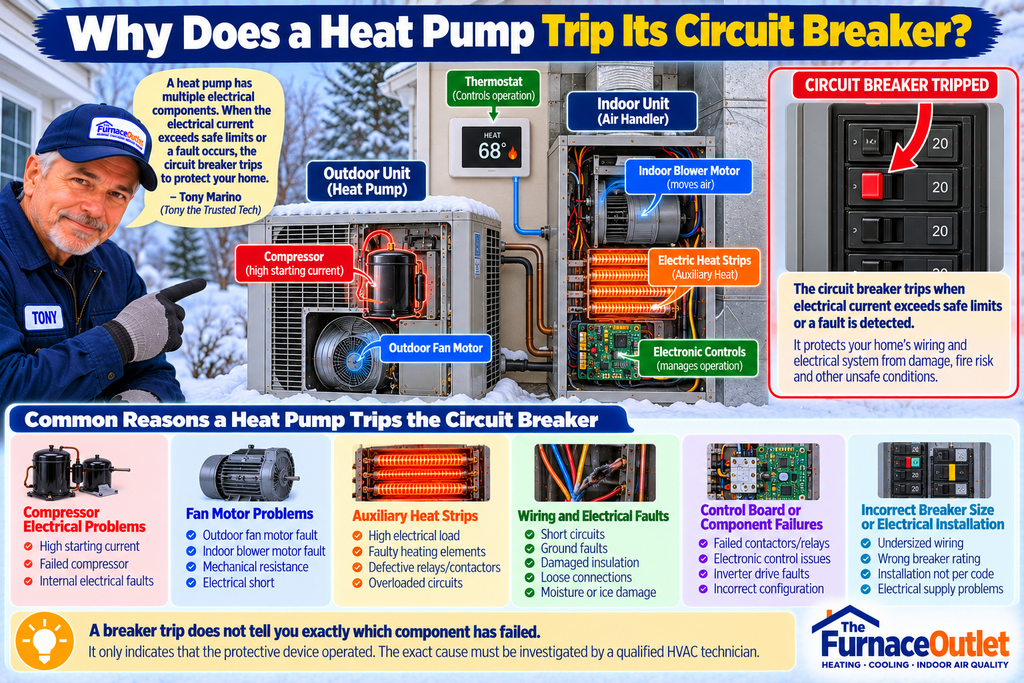
A heat pump uses electricity to operate its compressor, outdoor fan, indoor blower, electronic controls, and any installed electric auxiliary heating equipment. These components must operate within the electrical limits established by the equipment manufacturer and the building’s electrical installation. Circuit breakers help protect wiring and electrical systems against certain excessive-current conditions, including overloads and short circuits.
During normal operation, electrical current varies as equipment starts, stops, and changes operating capacity. Conventional compressors may draw a brief starting current substantially higher than their normal running current, while inverter-driven compressors use electronic controls that manage motor operation differently. Properly selected electrical protection accommodates the equipment’s expected operating characteristics without tripping unnecessarily.
Problems develop when electrical current exceeds the protective device’s operating limits or when a fault creates an abnormal current path. Damaged insulation, deteriorated motor windings, defective electrical components, loose connections, or incorrectly sized protection can all contribute to breaker operation. Some electrical faults may also involve ground-fault protection, depending on the circuit and installed devices. A breaker trip does not identify which component failed. It only indicates that the protective device operated, and the reason must be established through proper investigation. Repeatedly restoring power without identifying the cause can expose equipment and wiring to further damage.
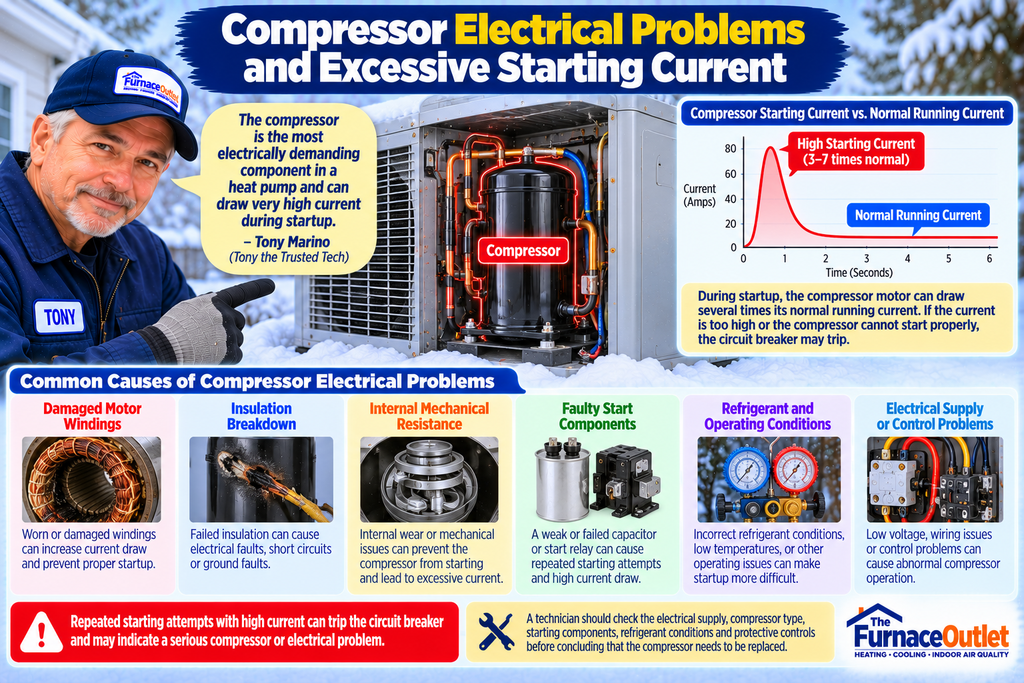
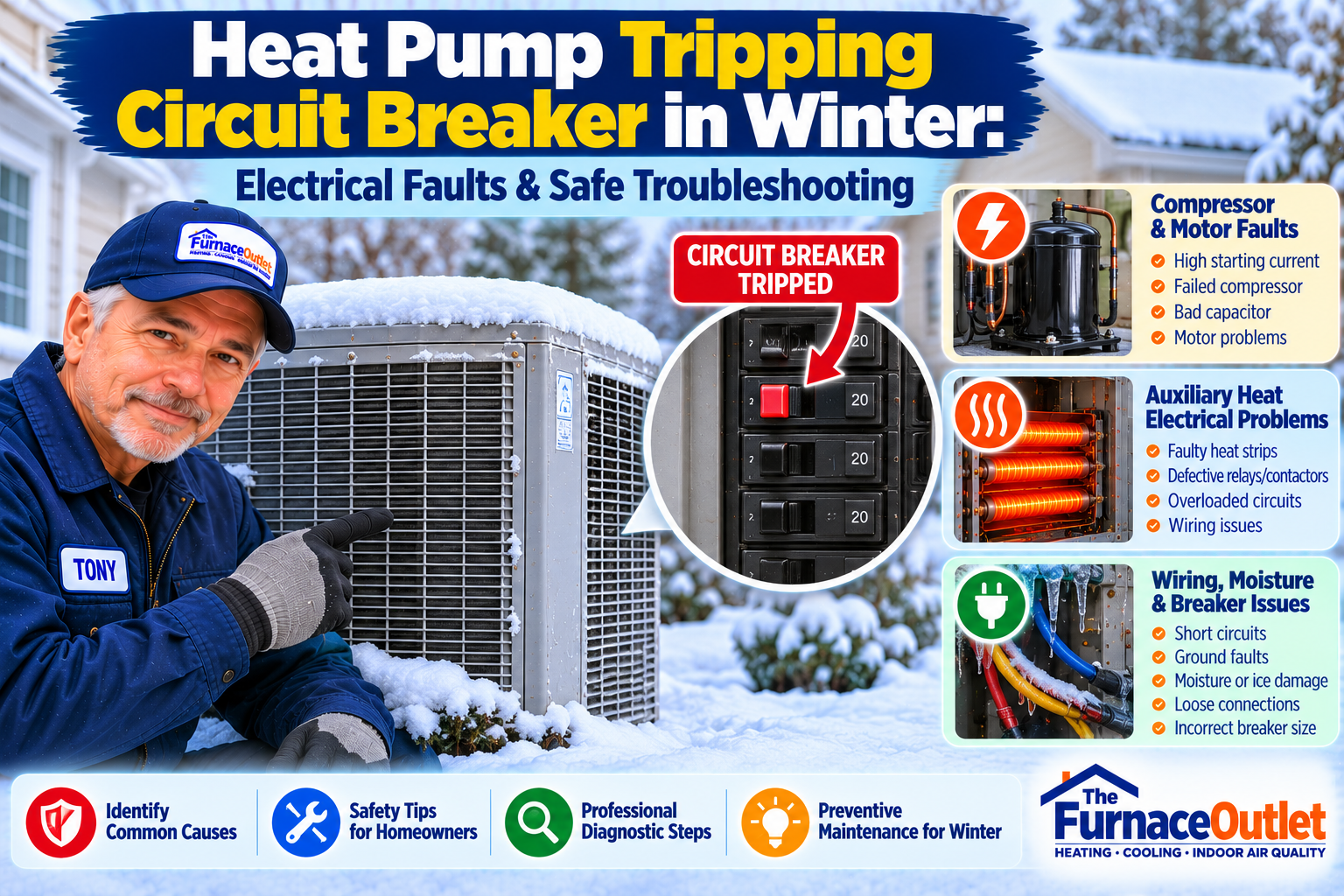
The compressor is one of the most electrically demanding components in a heat pump. In conventional single-stage systems, the motor may draw substantial current during startup before settling into normal operation. If the compressor has an electrical or mechanical problem, its starting behavior may become abnormal and cause protective devices to operate.
Possible causes include damaged motor windings, insulation breakdown, internal mechanical resistance, or conditions that prevent the compressor from starting successfully. A compressor that repeatedly attempts to start but cannot accelerate properly may draw excessive current and trigger protective shutdowns or a breaker trip. Cold weather can make an existing weakness more noticeable, but freezing outdoor temperatures do not automatically mean that the compressor is defective. Refrigerant conditions, startup controls, electrical supply quality, and manufacturer-specific compressor protection strategies all influence operation.
A technician should verify the electrical supply, compressor type, starting components, and applicable protective controls before concluding that the compressor requires replacement. Replacing an expensive compressor without confirming the underlying electrical fault is an avoidable mistake.
Certain conventional heat pumps use capacitors to support compressor and outdoor fan motor operation. A deteriorated capacitor can prevent a motor from starting properly, causing repeated unsuccessful starting attempts or abnormal current conditions. Depending on the equipment and fault, the result may be a protective shutdown or a tripped circuit breaker.
However, a failed capacitor does not always cause breaker trips, and not every compressor uses a conventional capacitor-based starting arrangement. Many modern variable-speed heat pumps rely on inverter electronics rather than the starting components found in older single-stage equipment. A qualified technician should identify the exact electrical design and test the relevant components according to manufacturer specifications. Capacitor measurements, motor condition, electrical supply, and control signals must be considered together.
Homeowners should never open electrical compartments or attempt to replace capacitors. These components can retain dangerous electrical energy even after power has been disconnected, and improper handling can cause serious injury.
Auxiliary electric heating is particularly important when investigating breaker trips that occur only during very cold weather. Many ducted heat pump systems contain electric resistance heating elements inside the air handler. These heaters may activate when the heat pump cannot meet the heating demand independently or during certain defrost sequences.
Electric heat strips can draw substantial current, and larger heater assemblies may use multiple dedicated circuits. A defective heating element, damaged wiring connection, failed contactor, or electrical short can cause the relevant protective device to trip. The timing of the problem can provide useful clues. If the heat pump operates normally during mild weather but trips a breaker when auxiliary heating activates, the technician should investigate the heater circuits and associated controls. However, this pattern does not prove that the heating elements themselves are defective.
A heat pump installation may have separate breakers for the outdoor unit, indoor air handler, and auxiliary heater stages. Identifying which breaker trips can help narrow the diagnosis, but homeowners should not open equipment panels or manipulate internal electrical connections.
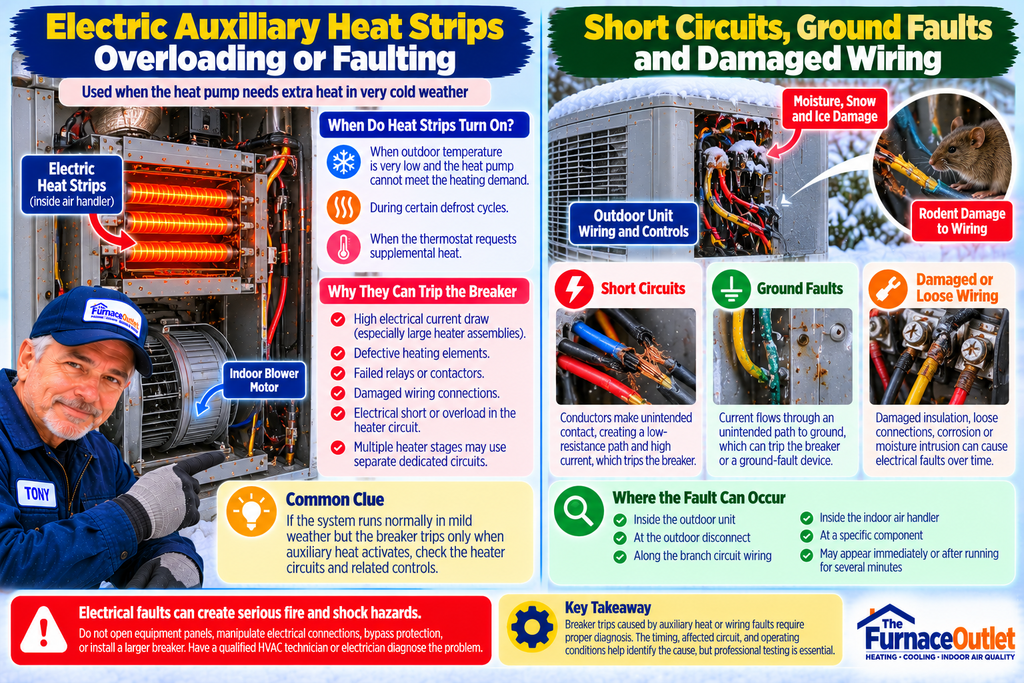
Electrical wiring problems are among the more serious causes of repeated breaker trips. A short circuit can occur when conductors that should remain electrically separated make unintended contact, creating a low-resistance current path. Ground faults occur when current flows through an unintended path to ground. Outdoor heat pump equipment is exposed to weather, vibration, and temperature changes throughout the year. Damaged insulation, loose conductors, deteriorated terminals, or moisture intrusion can contribute to electrical faults. Rodents and other animals may also damage wiring in outdoor equipment or accessible building spaces.
The location of the fault matters. A problem may exist inside the outdoor cabinet, in the electrical disconnect, along the branch circuit, or within the indoor equipment. In some cases, the fault appears only when a particular component becomes energized. A breaker that trips immediately when equipment power is applied may suggest a different fault pattern from one that trips after the compressor or electric heat strips have operated for several minutes. Neither pattern is sufficient for a homeowner to diagnose safely.
Electrical faults require appropriate testing by qualified personnel. Bypassing protection, installing a larger breaker without an approved design assessment, or continuing to energize damaged wiring can create significant fire and shock hazards.
Winter weather can expose outdoor electrical problems that remain hidden during dry conditions. Heat pump cabinets are designed for outdoor installation, but damaged seals, deteriorated conduit fittings, improperly routed wiring, or compromised electrical enclosures may allow moisture to reach sensitive components. Freezing rain, melting snow, and repeated freeze-thaw cycles can contribute to corrosion or insulation deterioration when electrical components are not adequately protected. Moisture-related faults may appear intermittently, particularly when outdoor conditions change.
A homeowner may notice that the breaker trips after heavy precipitation or when temperatures rise enough for accumulated snow to melt. This pattern is useful information for the technician, although it does not establish that water intrusion is the confirmed cause. Professional inspection may include checking the condition of outdoor electrical enclosures, disconnects, wiring, and connections. Any damaged weather protection should be corrected using components and procedures appropriate for the equipment and installation.
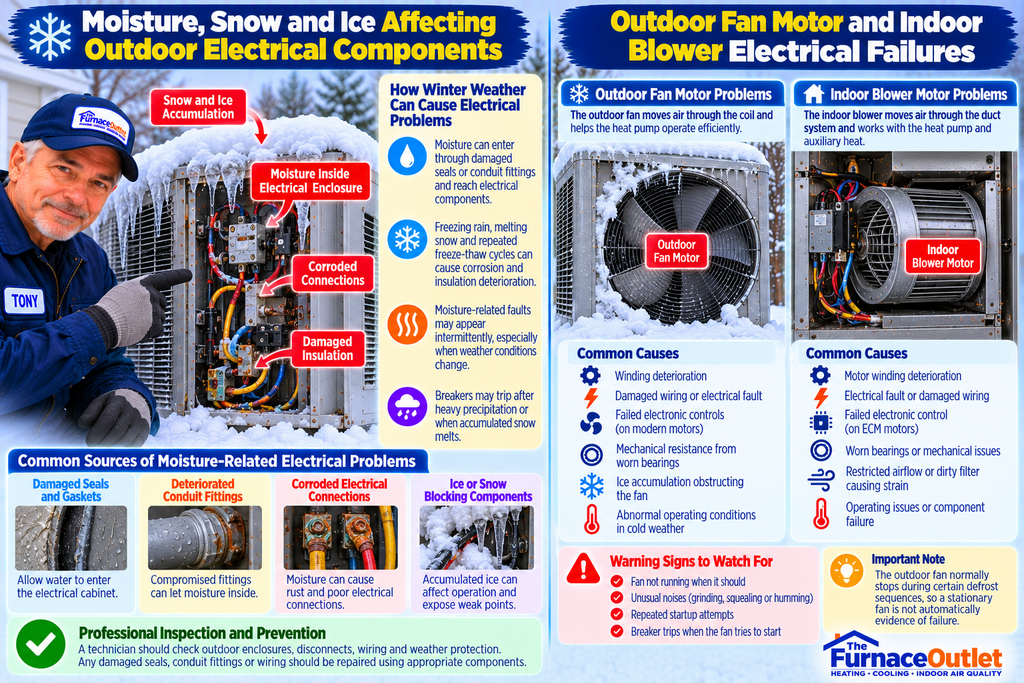
Heat pumps depend on motors to move air through the outdoor coil and indoor duct system. An electrical fault in either motor can interfere with operation and, under certain conditions, cause a protective device to trip. Outdoor fan motors may experience winding deterioration, damaged wiring, failed electronic controls, or mechanical resistance from deteriorated bearings. Winter ice accumulation can also obstruct fan movement, potentially creating abnormal operating conditions.
Indoor blower motors may develop similar electrical or mechanical problems. Some systems use electronically commutated motors with integrated electronic controls, while others use conventional motor arrangements. Their diagnostic procedures differ substantially.
A fan that stops unexpectedly, makes unusual mechanical noises, or repeatedly attempts to start should be investigated. However, the outdoor fan normally stops during certain heat pump defrost sequences, so a stationary fan is not automatically evidence of failure. A technician must determine whether the motor is receiving the correct operating command and whether its electrical and mechanical conditions are within the manufacturer’s requirements.
Contactors and relays allow heat pump controls to switch electrical loads on and off. Over time, their contacts may deteriorate, wiring terminals may loosen, or internal components may fail. Depending on the nature of the failure, the equipment may experience abnormal operation, overheating, or an electrical fault.
Electronic control boards can also develop problems, particularly when exposed to electrical surges, moisture intrusion, or component deterioration. Inverter-driven heat pumps contain power electronics that require specialized diagnostic procedures. A control-board fault does not necessarily produce a breaker trip, and a tripped breaker does not automatically indicate a defective board. The technician must verify whether the fault originates in the control electronics, connected wiring, motor loads, or another component.
Replacing an expensive board without confirming the actual failure can result in unnecessary costs and may expose the replacement to the same unresolved electrical problem.
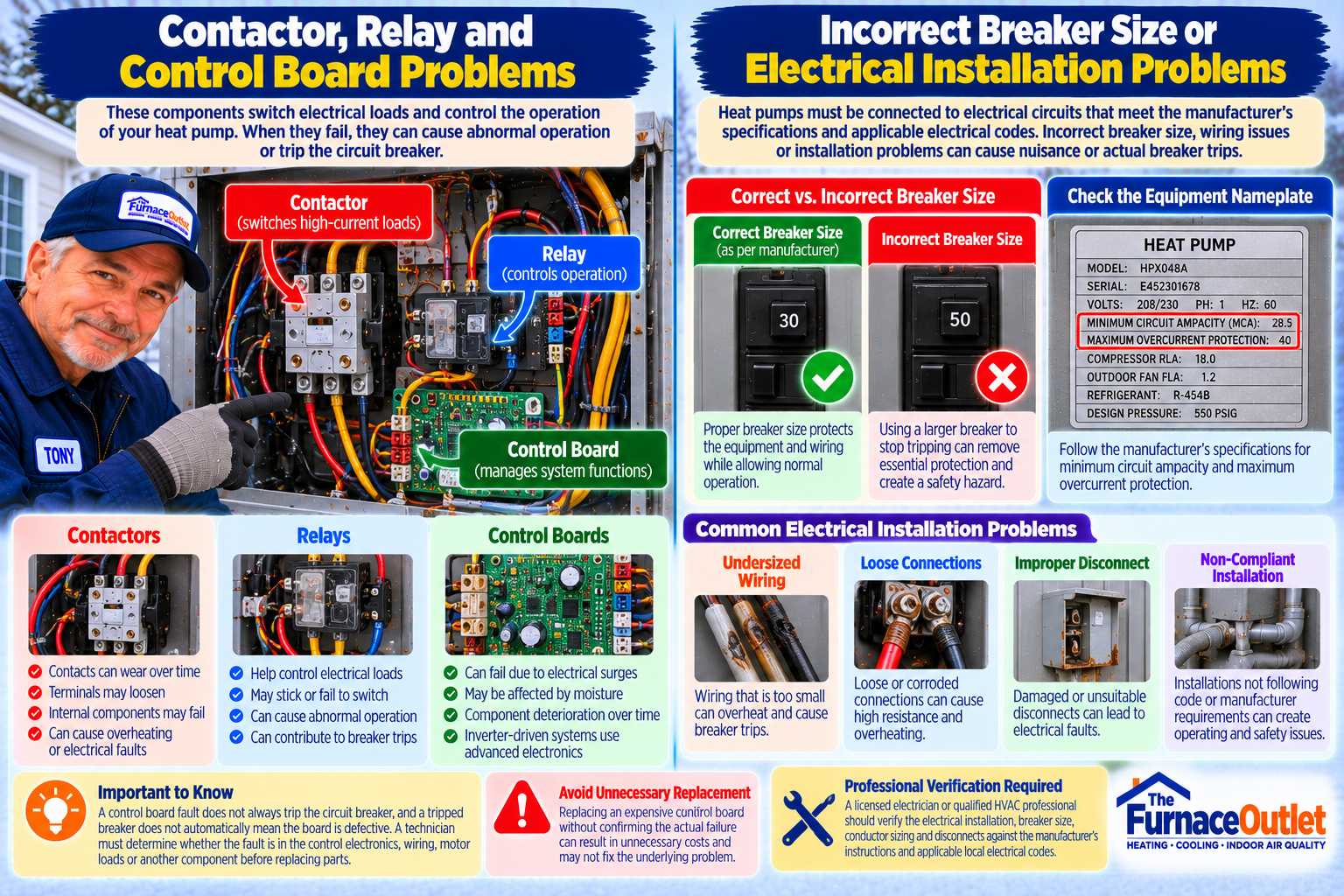
Heat pumps must be connected to electrical circuits that meet the manufacturer’s specifications and applicable electrical codes. Equipment nameplates commonly identify electrical requirements such as minimum circuit ampacity and maximum permitted overcurrent protection.
These values are important because HVAC equipment may have operating characteristics that differ from ordinary household electrical loads. The correct protective device cannot always be selected by looking only at normal running current.
A breaker that is improperly selected, an undersized conductor, an unsuitable disconnect, or an installation that does not follow equipment requirements can create operating and safety problems. Existing electrical installations may also need reassessment when equipment is replaced with a model having different electrical requirements. Homeowners should never increase breaker amperage to stop nuisance tripping. Doing so without a qualified evaluation can remove essential protection from the wiring or equipment. A licensed electrician or appropriately qualified HVAC professional should verify the electrical installation against the manufacturer’s instructions and applicable local requirements.
Modern variable-speed heat pumps use inverter electronics to control compressor speed and respond efficiently to changing heating demand. These electronic assemblies manage substantial electrical power and may include rectifiers, power transistors, capacitors, filtering components, and protective circuits. When an inverter module develops an internal electrical fault, the equipment may shut down, display diagnostic codes, or trip a protective device. However, some inverter faults result only in an electronic shutdown without tripping the building’s circuit breaker. The exact response depends on the failure and equipment design.
A technician investigating an inverter-related problem should follow the manufacturer’s diagnostic procedures and determine whether the fault originates in the inverter, compressor, wiring, or electrical supply. High-voltage capacitors within inverter equipment can remain hazardous after power is disconnected, making specialized training and approved safety procedures essential.
A breaker that trips repeatedly deserves professional attention, particularly when the equipment stops immediately after power is restored. Other concerning symptoms include burning odors, visible smoke, sparking, unusual buzzing from electrical equipment, or discoloration around accessible electrical components.
A heat pump that makes repeated unsuccessful startup attempts, produces severe mechanical noises, or stops whenever auxiliary heating activates may also have an underlying electrical or mechanical problem. These observations can help a technician identify the affected operating stage.
Some faults occur intermittently rather than continuously. The breaker may trip only after the compressor has operated for an extended period, when the outdoor temperature falls sharply, or after heavy precipitation. Recording these circumstances can be valuable because the technician may not encounter the fault during an initial service visit. If you notice smoke, sparking, a strong burning smell, or other signs of immediate danger, stop using the equipment and seek appropriate emergency assistance. Do not touch damaged electrical components or attempt to restore power.
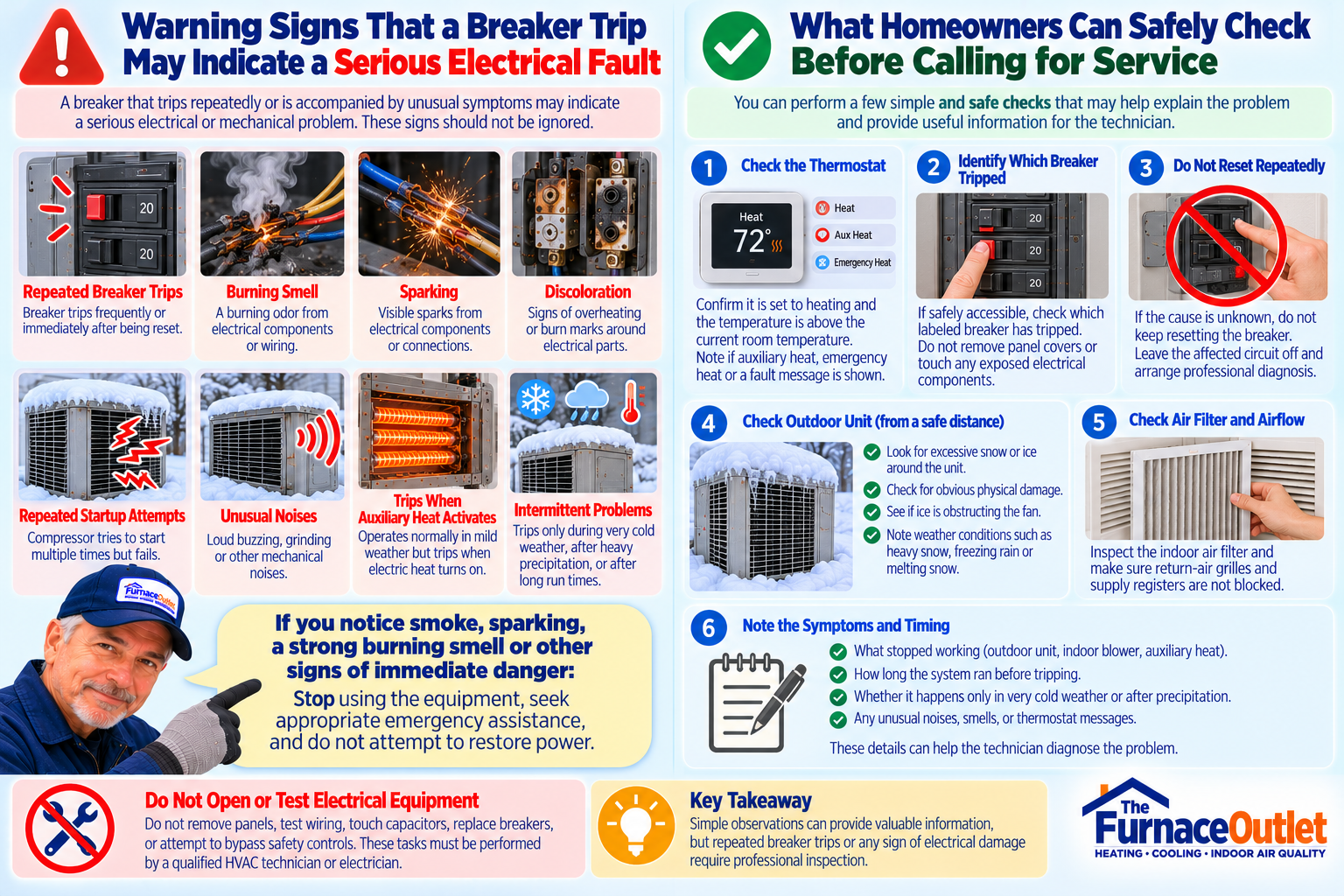
When a heat pump trips a breaker, begin by identifying what stopped working. Check the thermostat display and note whether the outdoor unit, indoor blower, or auxiliary heating system appears to have lost operation. If the electrical panel is safely accessible, you may visually identify which labeled breaker has tripped without removing covers or touching exposed electrical components. Do not repeatedly reset the breaker. If the cause is unknown, leave the affected circuit off and arrange professional diagnosis. A breaker that trips again after being reset should not be treated as a nuisance.
You can also inspect the outdoor equipment from a safe distance for excessive snow accumulation, obvious physical damage, or signs of ice obstructing the fan. Check the indoor air filter and accessible airflow openings only when it is safe to do so. These observations may help explain operating difficulties, although they do not establish the cause of an electrical trip. Record the outdoor weather conditions, whether auxiliary heat was displayed, and how long the system operated before the breaker opened. Do not remove electrical panels, test wiring, touch capacitors, replace breakers, or attempt to bypass protective controls.
A reliable diagnosis begins by identifying the exact equipment model, electrical requirements, affected circuit, and circumstances surrounding the trip. The technician should establish whether the breaker serves the outdoor heat pump, indoor air handler, auxiliary heating stages, or another connected load. After following appropriate electrical safety procedures, the technician may evaluate circuit protection, supply voltage, conductor condition, wiring connections, and the electrical characteristics of individual components. Depending on the system, the investigation may include compressor starting behavior, motor current, insulation integrity, heater circuits, contactors, relays, and electronic controls.
For variable-speed equipment, manufacturer-specific inverter diagnostics are essential. Conventional compressor testing methods should not be applied indiscriminately to electronically controlled systems.
The technician should also investigate mechanical or refrigeration problems when operating evidence suggests they are contributing to abnormal electrical demand. A complete diagnosis should explain why the protective device operated and demonstrate that the recommended repair addresses the underlying fault.
Some ducted heat pump installations include electric resistance backup heating or another independent heating source. If the outdoor compressor circuit has a confirmed fault, a properly configured emergency heating mode may provide temporary warmth without operating the outdoor heat pump.
However, emergency heat is not automatically safe or available in every situation. Electric backup heaters may have separate circuits, but some installations share electrical equipment or have faults affecting more than one component. If the breaker serving the indoor air handler or heat strips is tripping, selecting emergency heat could involve the same faulty circuit.
Before using backup heating after an electrical trip, have the affected circuits and equipment arrangement evaluated by a qualified professional. Never assume that switching thermostat modes eliminates an electrical hazard.
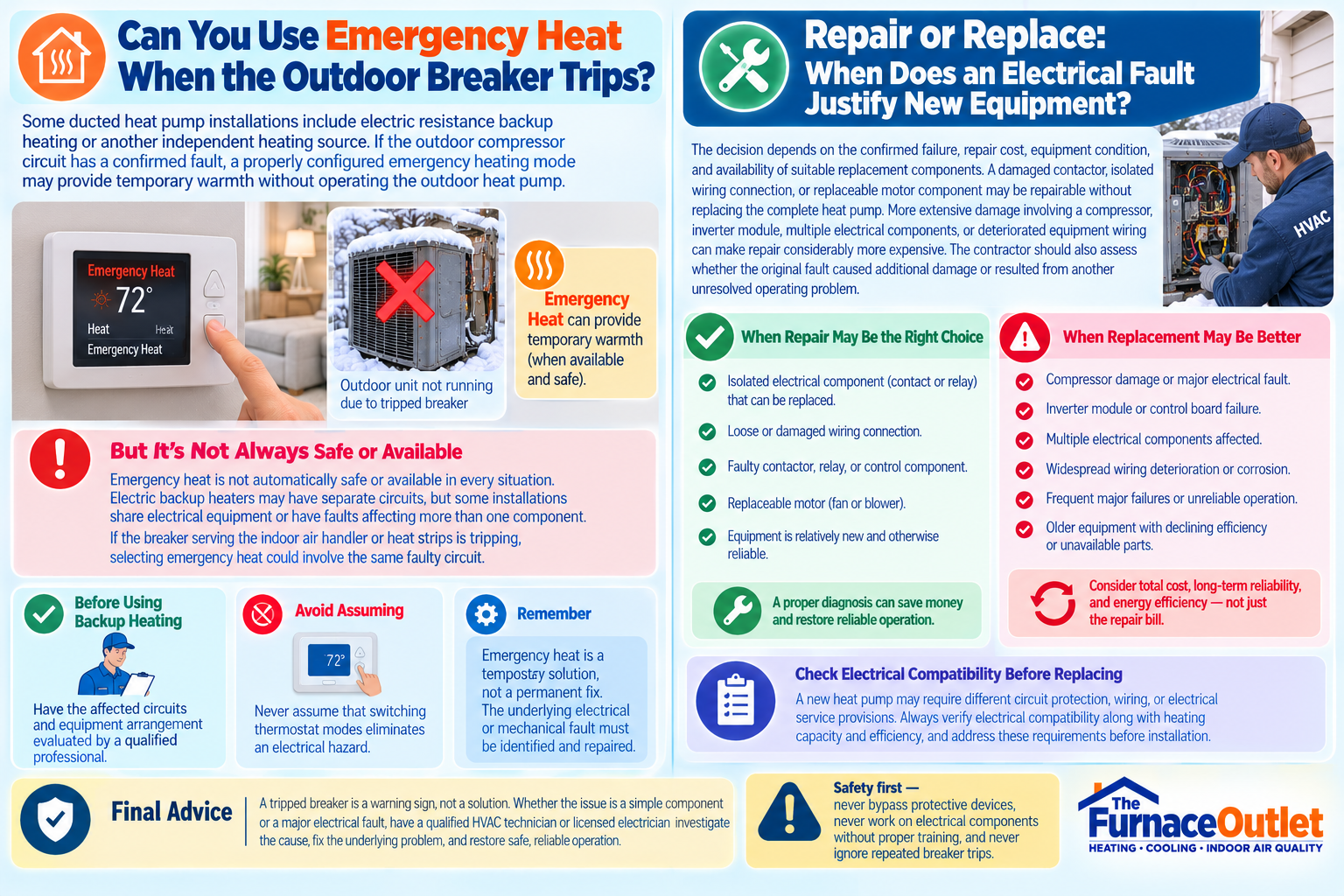
The decision depends on the confirmed failure, repair cost, equipment condition, and availability of suitable replacement components. A damaged contactor, isolated wiring connection, or replaceable motor component may be repairable without replacing the complete heat pump. More extensive damage involving a compressor, inverter module, multiple electrical components, or deteriorated equipment wiring can make repair considerably more expensive. The contractor should also assess whether the original fault caused additional damage or resulted from another unresolved operating problem.
For relatively new equipment with otherwise reliable performance, a properly diagnosed repair may be worthwhile. For older systems with repeated major failures, extensive corrosion, unavailable parts, or declining efficiency, replacement may deserve consideration. When selecting replacement equipment, electrical compatibility must be evaluated alongside heating capacity and efficiency. A new heat pump may require different circuit protection, wiring, or electrical service provisions, and those requirements should be addressed before installation.
Preventive maintenance cannot eliminate every electrical failure, but it can help identify developing problems before they interrupt heating. A professional preseason inspection should include equipment operation, accessible electrical connections, motor performance, control sequences, and relevant protective devices. Outdoor equipment should remain free of excessive snow, leaves, and debris. Proper drainage is also important because repeated accumulation and refreezing of defrost water can create mechanical obstructions and contribute to unfavorable operating conditions.
Indoor filters and airflow openings should be maintained according to manufacturer instructions. On systems equipped with electric auxiliary heat, the technician should verify that backup heating stages and their protective controls operate correctly. I also recommend addressing intermittent electrical trips promptly rather than waiting for a complete failure. An occasional trip may be the first visible symptom of a problem that becomes more severe under sustained winter demand.
Cold weather can increase heating demand and may cause auxiliary electric heating to operate more frequently. Longer compressor runtimes, additional heating stages, and weather-related electrical problems can expose existing faults. The temperature alone does not establish the cause, so the affected circuit and operating sequence should be professionally evaluated.
Yes. Certain compressor electrical or mechanical failures can produce abnormal current conditions that cause protective devices to operate. However, failed starting components, wiring faults, inverter problems, and other electrical issues can produce similar symptoms. Compressor replacement should follow a confirmed diagnosis.
Yes. Electric resistance heaters draw substantial current, and damaged elements, wiring faults, failed switching components, or circuit problems can cause a breaker to operate. The technician should determine which heating stage and electrical circuit are affected.
No. Repeated breaker trips may indicate a potentially dangerous electrical fault. Continually restoring power without identifying the cause can expose equipment and wiring to additional damage. Leave the affected circuit off and seek qualified service.
No. Breaker selection must follow the equipment’s electrical specifications and applicable codes. Increasing breaker size without evaluating the wiring, equipment, and installation can create serious safety hazards.
Moisture intrusion or damaged outdoor electrical components can contribute to certain electrical faults. Snow and ice may also interfere with mechanical components. However, the cause must be confirmed through professional inspection rather than assumed from weather conditions alone.
Not necessarily. Some electrical faults involve replaceable components or repairable wiring problems. Complete replacement should be considered only after the cause, repair requirements, equipment condition, and costs have been evaluated.
When a homeowner tells me their heat pump keeps tripping the breaker during winter, I do not begin by recommending a larger breaker or replacing the compressor. I first want to know which circuit is affected, when the trip occurs, and what the equipment was doing immediately beforehand. A breaker that trips during compressor startup may require a different investigation from one that operates when auxiliary heating activates.
I also want the technician to consider the complete electrical system rather than focusing on a single component. Damaged wiring, failed motor components, defective switching devices, inverter faults, and installation problems can produce overlapping symptoms. A proper diagnosis should identify the abnormal electrical condition and explain how the recommended repair will restore safe, reliable operation.
My recommendation is to stop repeatedly resetting a tripped breaker and have a qualified HVAC technician or licensed electrician investigate the fault before restoring normal operation. Electrical protection is there for a reason, and bypassing it can turn a repairable equipment problem into a much more serious hazard.
For the 2026–2027 winter season, arrange professional maintenance before prolonged cold weather, keep outdoor equipment clear, and investigate unusual electrical behavior early. A properly maintained heat pump should operate within its designed electrical limits while delivering dependable heating throughout winter.
This article provides general educational information and is not a substitute for professional electrical or HVAC service. Heat pump equipment may contain high-voltage circuits, capacitors, inverter electronics, pressurized refrigerants, and moving mechanical components. Electrical faults can create shock, fire, and equipment-damage hazards. Homeowners should not remove electrical covers, touch internal wiring, replace protective devices, bypass safety controls, or repeatedly reset tripping breakers. Electrical repairs should be performed by appropriately qualified professionals following manufacturer instructions and applicable codes.
The U.S. Department of Energy’s Air-Source Heat Pumps resource explains heat pump heating operation and cold-weather performance. Its guidance helps homeowners understand why operating demand changes during winter and how modern heat pumps differ from conventional heating equipment.
The Department of Energy also provides information about Electric Resistance Heating, which is relevant to understanding the additional electrical demand created by auxiliary heat strips.
The ENERGY STAR Heating and Cooling Maintenance Checklist describes professional maintenance considerations, including electrical connections, system controls, and airflow. These recommendations support preventive maintenance but do not replace electrical fault diagnosis.
For electrical installation requirements, consult the National Fire Protection Association and the applicable edition of NFPA 70, the National Electrical Code, as adopted by the local jurisdiction. Equipment nameplate information and manufacturer installation instructions must also be followed.
The U.S. Consumer Product Safety Commission provides general electrical safety information relevant to household electrical hazards and fire prevention. For equipment-specific testing, always use the current service documentation supplied by the heat pump manufacturer.
These references provide general technical and safety guidance. Exact breaker ratings, circuit requirements, electrical diagnostic procedures, and protective-device specifications depend on the installed equipment and applicable local codes.