Newsletter Subscribe
Enter your email address below and subscribe to our newsletter

HVAC made simple
By Tony Marino | HVAC Technician & Home Comfort Specialist | The Furnace Outlet | Updated November 2026
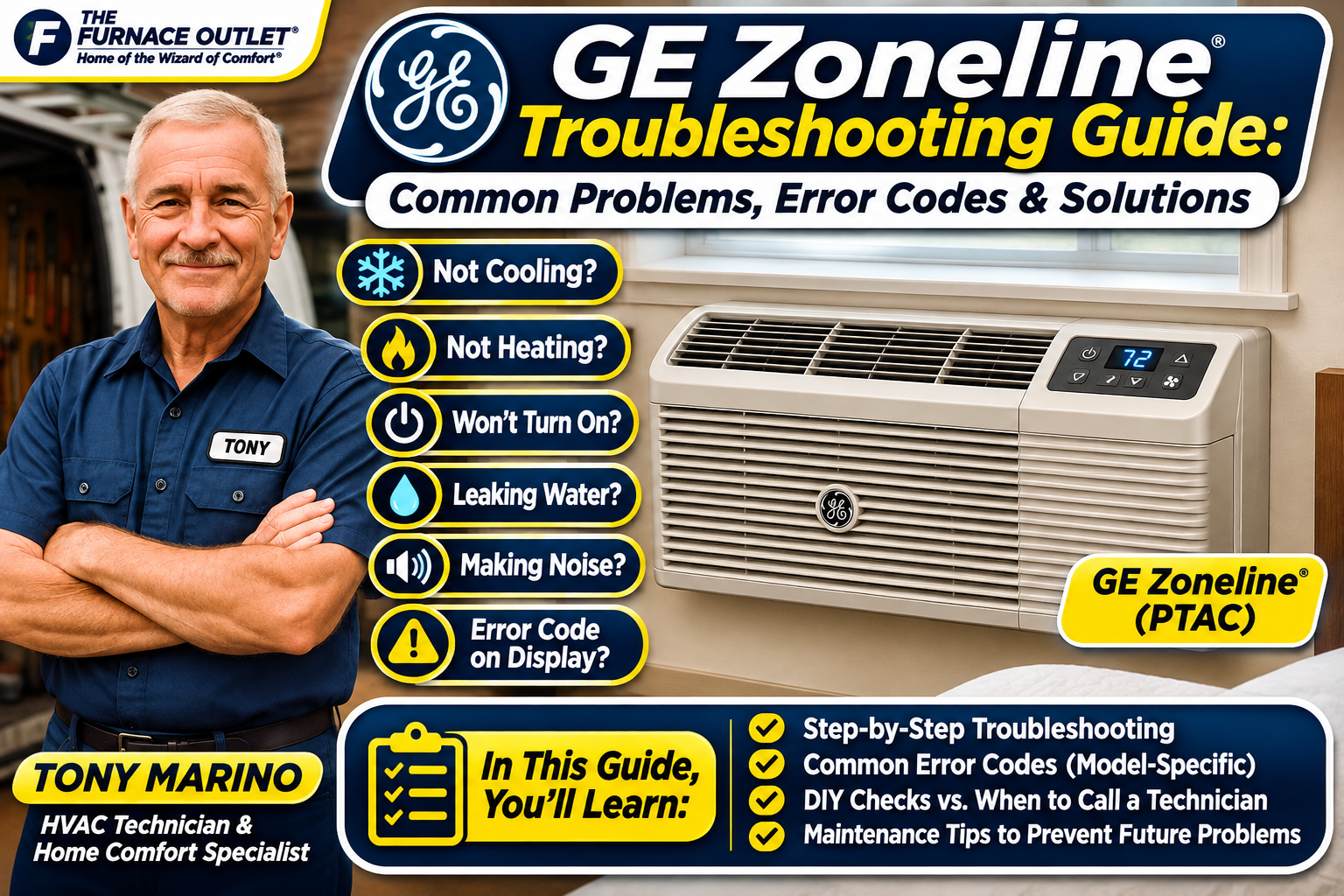
GE Zoneline packaged terminal air conditioners and heat pumps, commonly called PTAC units, are widely used in hotels, apartments, assisted-living facilities, and other buildings where individual room temperature control is important. They’re designed to deliver reliable heating and cooling from a compact, through-the-wall system, but like any HVAC equipment, they can develop problems over time.
If your GE Zoneline isn’t cooling, refuses to heat, makes unusual noises, leaks water, or displays an unfamiliar error code, the cause isn’t necessarily a major mechanical failure. Many problems involve dirty filters, incorrect thermostat settings, restricted airflow, electrical interruptions, or maintenance issues. After decades of servicing heating and cooling equipment, I’ve learned that the best troubleshooting approach starts with the simplest possible explanation. There’s no reason to assume a compressor has failed when the problem might be a disconnected thermostat or blocked outdoor grille.
In this guide, I’ll explain the most common GE Zoneline problems, what homeowners and maintenance personnel can safely check, and when professional service is necessary.
When a GE Zoneline shows no signs of operation, start by checking whether the unit is receiving electrical power. Some Zoneline models use a dedicated power connection, while others may be connected through a building’s electrical distribution system. Verify that the circuit breaker hasn’t tripped and that the unit’s power connection is secure. If the breaker has tripped, avoid repeatedly resetting it. A recurring electrical fault may indicate damaged wiring, a failing component, or an overloaded circuit.
Next, examine the thermostat or room controls. Some GE Zoneline systems use built-in controls, while others operate through wall-mounted thermostats or building-management systems. In hotels and commercial properties, occupancy controls, front-desk settings, or centralized energy-management systems may prevent operation even when the equipment itself is functioning.
If power is available but the unit remains completely unresponsive, a technician may need to inspect the control board, wiring, and internal electrical components.
One of the most common complaints is a Zoneline that operates but doesn’t deliver sufficiently cool air. Begin by confirming that the system is set to cooling mode and that the selected temperature is below the current room temperature. Allow several minutes for the equipment to respond because some models incorporate compressor protection delays. Next, inspect the return-air filter. A heavily clogged filter can restrict airflow, reduce cooling performance, and contribute to evaporator-coil icing.
The outdoor grille must also remain unobstructed. Furniture, debris, vegetation, or improperly installed exterior components can interfere with heat rejection. If the indoor fan operates but the compressor never starts, the problem could involve a control fault, compressor protection circuit, or another electrical component. A system that runs continuously without cooling adequately may also have a refrigerant-system problem. Refrigerant diagnosis and repair should be performed by qualified HVAC technicians rather than attempting to add refrigerant without identifying the underlying fault.
Heating problems require identifying whether the equipment is a heat pump model or a cooling unit equipped with electric resistance heating. GE Zoneline heat pump models transfer heat from outdoor air into the room. Depending on the model and operating conditions, supplemental electric resistance heating may assist when outdoor temperatures are low. If the unit isn’t heating, first confirm that heating mode is selected and the thermostat setting is above room temperature.
Check whether airflow is restricted by a dirty filter or blocked discharge grille. For heat pump models, temporary changes in airflow or heating output may occur during normal defrost operation. However, prolonged loss of heating, repeated shutdowns, or persistent cold-air delivery may indicate a control, sensor, reversing-valve, or heating-component problem. Electric resistance heating elements and their associated safety controls involve potentially hazardous electrical components and should be inspected by trained personnel.
A functioning indoor fan doesn’t necessarily mean the compressor is operating. Some Zoneline models allow continuous fan operation, while the compressor cycles according to room temperature and control settings. First, verify that the thermostat is actually calling for cooling or heat pump operation. Allow sufficient time for any built-in compressor restart delay to expire.
If the compressor still doesn’t operate, potential causes include electrical faults, control-board problems, compressor overload protection, or failed internal components. A technician can determine whether the compressor is receiving the appropriate control signals and electrical supply. Avoid opening electrical compartments or attempting to bypass compressor protection devices.
Frequent starting and stopping, commonly called short cycling, can reduce comfort and may increase equipment wear. Start by examining the thermostat settings and checking whether the room temperature is close to the selected setpoint. A dirty filter or restricted airflow may cause abnormal operating conditions.
Temperature sensors can also influence cycling behavior. If a sensor is damaged, incorrectly positioned, or exposed to unusual airflow, the equipment may receive inaccurate temperature information. In commercial installations, occupancy-based controls or centralized temperature restrictions can also affect operating cycles. Some cycling is normal, particularly when the room is close to the desired temperature. However, repeated brief compressor operation deserves professional investigation.
Water leakage is a common PTAC maintenance complaint, particularly during humid weather. When a Zoneline operates in cooling mode, moisture condenses on the indoor evaporator coil. The equipment is designed to manage this condensate through its internal drainage arrangement. If water appears inside the room, inspect the unit’s installation condition and look for obvious drainage obstructions. A dirty evaporator coil, restricted airflow, improper chassis positioning, or damaged condensate-management components may contribute to leakage.
GE Zoneline models can use condensate-management arrangements that differ from conventional split-system air conditioners. Some systems intentionally retain or distribute condensate to improve outdoor heat rejection. Therefore, water behavior should be evaluated according to the specific model’s installation instructions. Don’t drill additional drain holes or alter the base pan without manufacturer guidance. Doing so can interfere with the equipment’s intended operation. Persistent indoor leakage should be addressed promptly to prevent damage to flooring, walls, and nearby electrical components.
PTAC units produce normal operating sounds from their indoor blower, outdoor fan, compressor, and refrigerant movement. However, new rattling, grinding, scraping, or repeated clicking noises may indicate a developing problem. A rattling sound can result from loose panels, improperly secured mounting components, or vibration against the wall sleeve. Grinding or scraping may indicate a fan or motor problem.
A brief click during a normal operating transition isn’t necessarily concerning, but repeated clicking without successful startup may point to a control or electrical issue. If the unit produces a loud metallic sound, burning odor, or severe vibration, shut it off and arrange professional inspection. Continuing to operate equipment with a damaged fan or motor can lead to additional component failures.
GE Zoneline models use electronic controls and diagnostic features that vary by product series and manufacturing generation. Depending on the model, the unit may display diagnostic information through control-panel indicators, coded displays, or service-mode functions. Possible fault categories include temperature-sensor problems, control communication faults, compressor protection conditions, and equipment configuration issues. However, there isn’t one universal error-code list that applies to every GE Zoneline model.
A code shown on an older AZ-series unit may not have the same meaning as a diagnostic indication on a newer electronic-control model. For this reason, I don’t recommend interpreting an unfamiliar code without first identifying the complete model number. GE Appliances provides model-specific documentation through its Owner’s Manuals and Installation Instructions resource. If a diagnostic code returns after a safe restart, record the code and contact an authorized service provider.
Thermostat problems can resemble major equipment failures because the unit may not receive the correct heating or cooling commands. Some Zoneline systems use integrated controls, while others rely on external wall thermostats or compatible building-control interfaces. If a wall thermostat is unresponsive, check its display, power source, and selected operating mode.
For battery-powered controls, replacing depleted batteries may resolve the problem. However, external thermostat compatibility is important. PTAC units may require specific control configurations that differ from ordinary residential central HVAC equipment. Incorrect thermostat wiring or configuration can prevent operation or damage equipment controls. If a replacement thermostat was recently installed, verify that it is approved for the specific Zoneline model and control arrangement.
A continuously operating indoor fan isn’t always a malfunction.
Some Zoneline configurations support continuous fan operation to circulate room air, while others allow the fan to cycle with heating or cooling demand. Check the available fan settings and determine whether continuous operation has been selected. In commercial properties, building-management settings may override local controls.
If the fan continues operating despite the selected configuration, a technician may need to inspect the control board, fan relay, or associated circuitry. Before assuming a fault, consult the model-specific operating instructions to understand the intended fan behavior.
Ice formation on the indoor cooling coil usually indicates that the evaporator temperature has dropped below freezing while moisture is present. Potential causes include restricted airflow, dirty filters, blower problems, or refrigerant-system faults. If you notice reduced airflow and visible ice, stop cooling operation and allow the equipment to thaw safely.
Don’t chip ice from the coil or apply direct heat to accelerate defrosting. Once thawed, inspect the accessible filter and confirm that the room’s airflow openings are unobstructed. If icing returns, professional diagnosis is necessary. For heat pump models, temporary frost on the outdoor coil during cold-weather operation may be normal, but persistent excessive frost or failed defrost operation requires attention.
A musty smell may indicate accumulated moisture, dirt, or microbial growth on surfaces exposed to condensate. Start by checking the air filter and accessible return-air area. If the odor persists, the indoor coil, blower assembly, and condensate-management components may require professional cleaning.
A dusty smell during the first heating cycle of the season can sometimes result from accumulated dust on electric heating components. However, a strong burning odor, visible smoke, or electrical smell should be treated as a safety concern. Turn the unit off and have it inspected before further operation. Avoid spraying household cleaning chemicals directly into electrical compartments or internal components.
A reset may help after a temporary control interruption, but the correct procedure depends on the model. First, use the normal controls to turn the unit off. If the manufacturer’s instructions permit a power reset, disconnect power using the approved method and allow the equipment to remain off briefly before restoring power.
Do not disconnect or reconnect energized hardwired equipment or access internal electrical connections. After restoring power, select the desired operating mode and allow time for compressor protection delays. If the same problem returns immediately, repeated resets are unlikely to solve the underlying issue. The safest approach is to consult the model-specific manual rather than relying on a universal button sequence.
Preventive maintenance is especially important for PTAC equipment because these units often operate for long periods in hotels, apartments, and other high-use environments. Air filters should be inspected regularly and cleaned or replaced according to the manufacturer’s instructions. The indoor return-air opening and discharge grille must remain unobstructed. Outdoor grilles should be inspected for debris and airflow restrictions.
Periodic professional servicing should include checking the indoor and outdoor coils, fan assemblies, electrical connections, condensate-management components, and overall equipment operation. GE Appliances provides additional product information through its Zoneline PTAC and Heat Pump product resources.
For properties with numerous units, a scheduled maintenance program can help identify developing problems before they cause room outages or guest complaints.
A GE Zoneline with a dirty filter, minor control problem, or replaceable fan component may be worth repairing, particularly if the equipment is otherwise in good condition. However, major compressor failures, extensive corrosion, repeated refrigerant leaks, or recurring electrical problems can make replacement more attractive. Age is another consideration, although there is no single replacement age that applies to every Zoneline model. For budgeting purposes, PTAC systems are often evaluated around a 10–15-year service-life horizon, but actual longevity varies substantially with maintenance, climate, and operating hours.
When a major repair approaches 40–50% of the installed cost of a comparable replacement, I recommend obtaining a complete replacement quotation. That percentage is a practical decision-making guideline rather than a manufacturer requirement. Replacement decisions should also account for electrical compatibility, wall-sleeve dimensions, exterior grille requirements, heating capacity, and energy efficiency.
Newer PTAC and heat pump models may offer improved efficiency and control features compared with older equipment, although actual savings depend on the models being compared. Energy efficiency is particularly important in hotels and multifamily properties where many units operate throughout the year. A heat pump Zoneline may use less electricity for heating than a resistance-only electric heating system under suitable operating conditions. However, cold-weather performance, supplemental heating, and equipment sizing must be considered.
The U.S. Department of Energy’s guidance on air-source heat pumps explains how heat pumps transfer heat and why they can offer efficiency advantages over electric resistance heating. For large properties, even modest per-room efficiency improvements can contribute to meaningful operating-cost reductions.
Why is my GE Zoneline running but not cooling? Common possibilities include incorrect thermostat settings, dirty filters, restricted airflow, compressor protection delays, or mechanical faults. If basic checks don’t resolve the problem, professional diagnosis is recommended.
How do I reset my GE Zoneline? Reset procedures vary by model. Use the normal controls and consult the specific owner’s manual before attempting a power reset.
Why does my GE Zoneline keep shutting off? Possible causes include normal thermostat cycling, control settings, restricted airflow, electrical problems, or equipment protection functions. Repeated abnormal shutdowns should be investigated.
Why is my GE Zoneline leaking water? Indoor leakage may result from condensate-management problems, improper installation, airflow restrictions, or damaged components. The correct drainage arrangement depends on the model.
Can I replace a GE Zoneline thermostat with a smart thermostat? Only if the replacement thermostat and any required interface are compatible with the specific Zoneline model and control system. Professional verification is recommended.
When a GE Zoneline stops heating or cooling properly, my first recommendation is to check the basics before assuming the equipment needs replacement. Confirm the operating mode, inspect the filter, check airflow, and determine whether the unit is receiving the correct control commands. Many comfort problems originate from routine maintenance issues rather than expensive component failures. However, repeated breaker trips, burning odors, compressor problems, persistent refrigerant leaks, and recurring diagnostic faults require qualified service. For hotel operators and property managers, I strongly recommend keeping accurate maintenance records for every unit. Tracking repeated failures can help identify equipment that is becoming more expensive to maintain than replace. A properly maintained GE Zoneline can provide dependable room comfort for years, but safe troubleshooting and timely repairs are essential to protecting that investment.
This article provides general educational information for U.S. homeowners, hotel operators, and property managers. GE Zoneline equipment varies by model, generation, electrical configuration, and control system. Diagnostic codes and reset procedures are not universal. Electrical repairs, refrigerant-system servicing, and internal component diagnostics should be performed by qualified professionals. Always consult the manufacturer’s model-specific instructions before performing maintenance or troubleshooting.