Newsletter Subscribe
Enter your email address below and subscribe to our newsletter

HVAC made simple
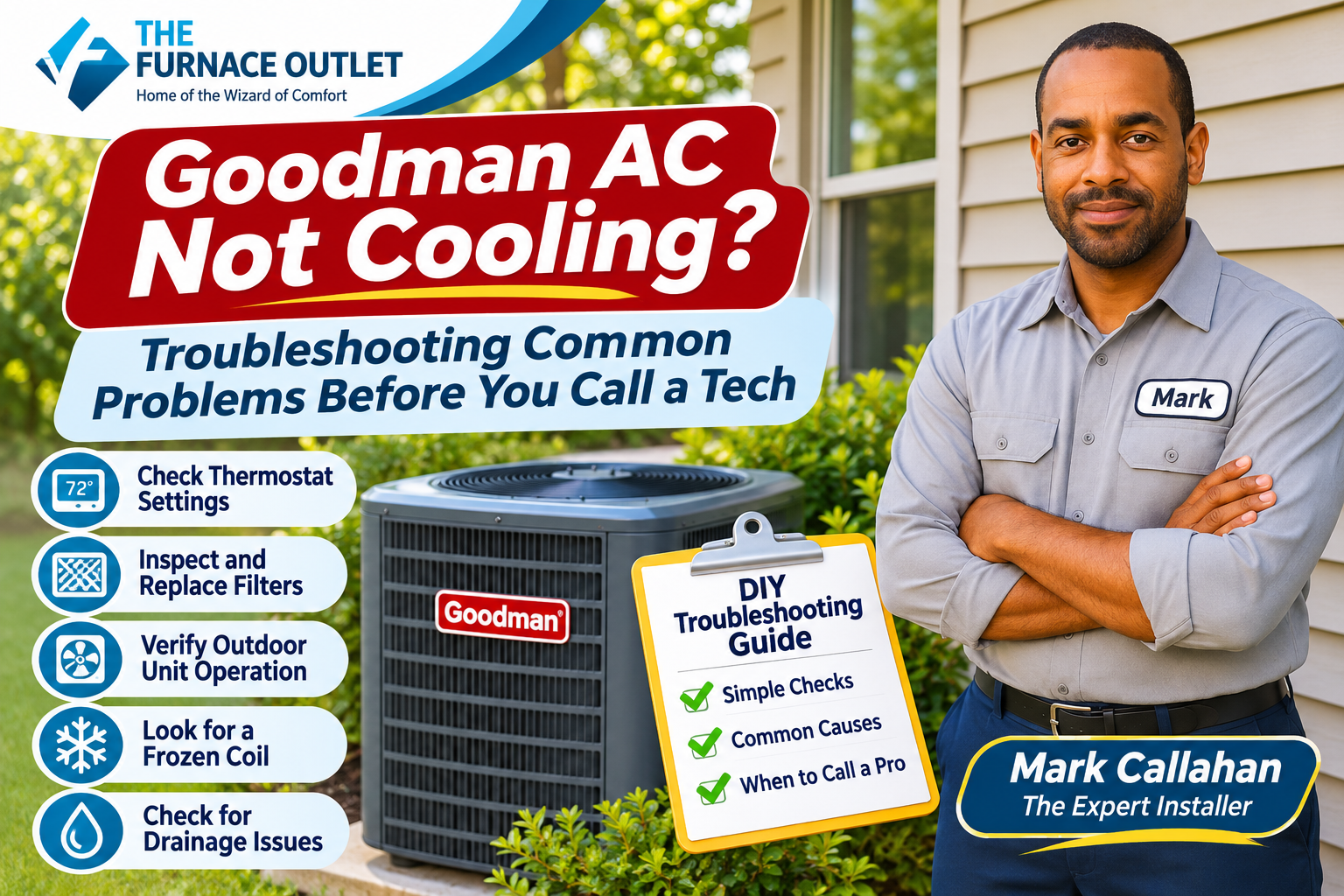
By Mark Callahan — Mark the Expert Installer | The Furnace Outlet
When your Goodman air conditioner is running but your home still feels warm, it’s easy to assume something expensive has gone wrong. Fortunately, that isn’t always the case. Some cooling problems are caused by relatively simple issues, such as an incorrect thermostat setting, restricted airflow, a dirty outdoor condenser, or a clogged condensate drain. Other problems involve electrical components, refrigerant leaks, or compressor failures that require professional diagnosis.
After more than 15 years working with HVAC installations, I’ve learned that troubleshooting should always begin with the basics. An air conditioning system depends on several components working together, including the thermostat, indoor blower, evaporator coil, refrigerant circuit, outdoor condenser, and electrical controls. When one part isn’t operating correctly, the entire cooling process can suffer.
In this guide, I’ll explain the most common reasons a Goodman AC may stop cooling, the warning signs homeowners should recognize, and the safe checks you can perform before scheduling service. I’ll also explain when further troubleshooting should stop and a qualified HVAC technician should take over.
The thermostat is the first place I recommend checking because an incorrect setting can make a properly functioning air conditioner appear defective. Confirm that the system is set to COOL and that the selected temperature is several degrees below the current indoor temperature. If the thermostat is set to FAN rather than AUTO, the indoor blower may continue circulating room-temperature air even when the compressor isn’t operating.
A thermostat with weak batteries, incorrect programming, or a faulty temperature sensor can also interfere with cooling operation. If your thermostat uses batteries, replace them when appropriate and confirm that the display responds normally. For programmable or smart thermostats, review the schedule and make sure an energy-saving setting hasn’t unexpectedly raised the cooling temperature.
If the thermostat appears to be operating correctly but the air conditioner still doesn’t respond, the problem may involve control wiring, a safety switch, or the equipment itself. Avoid opening thermostat wiring terminals or bypassing safety controls, since incorrect connections can damage the system’s low-voltage electronics.
A clogged air filter is one of the most common maintenance problems affecting residential air conditioning systems. When dust and debris accumulate in the filter, airflow through the indoor equipment becomes restricted. This reduces the amount of warm indoor air passing over the evaporator coil and can cause poor cooling performance, excessive operating time, or even coil freezing.
Start by locating the air filter in the return grille or indoor air handler. If it is visibly dirty or clogged, replace it with the correct size and type recommended for your equipment. A filter with an excessively restrictive design can sometimes create airflow problems even when it looks clean, particularly if the ductwork wasn’t designed to accommodate it.
After replacing the filter, make sure supply registers and return air grilles aren’t blocked by furniture, rugs, or curtains. If the system has already developed ice on the indoor coil or refrigerant lines, don’t continue operating it in cooling mode. The underlying cause should be identified before normal cooling resumes.
Your Goodman’s outdoor unit plays an essential role in removing heat from your home. During normal cooling operation, the compressor circulates refrigerant while the outdoor condenser fan helps release heat into the surrounding air. If the outdoor unit isn’t operating, the indoor blower may continue running without delivering meaningful cooling.
With the thermostat calling for cooling, observe the outdoor equipment from a safe distance. Listen for normal operating sounds and check whether the condenser fan is rotating. Some systems have built-in delays that prevent immediate restarting, so allow several minutes before concluding that the outdoor unit has failed.
If the outdoor unit remains completely silent, the problem could involve the electrical supply, contactor, control circuit, or a protective shutdown. If the unit hums but the fan doesn’t rotate, a failed fan motor or capacitor may be involved. These components operate with hazardous electrical energy, and capacitors can retain a dangerous charge even after power has been disconnected. Homeowners should never attempt to test or replace them without appropriate training.
The outdoor condenser coil releases heat collected from inside your home. Over time, dirt, grass clippings, leaves, and airborne debris can accumulate around the coil and restrict airflow. When this happens, the air conditioner may operate longer than necessary, struggle during hot afternoons, or shut down through protective controls.
Inspect the outdoor cabinet for visible debris and make sure shrubs, stored materials, and landscaping aren’t obstructing airflow. You can remove loose leaves and grass from the surrounding area without opening the equipment. If the coil itself is heavily contaminated, arrange for appropriate cleaning rather than directing a high-pressure water jet into the delicate fins or electrical components.
Goodman emphasizes that outdoor coil condition, airflow, and proper installation all influence cooling performance. Its official cooling performance guidance explains why these factors should be included in routine maintenance. Heat Pumps
An evaporator coil should become cold during normal operation, but it shouldn’t become covered in ice. When the coil freezes, airflow through the indoor system can become severely restricted, causing weak cooling or little airflow from the registers. Homeowners sometimes mistake this condition for a failed compressor because the equipment may continue running while indoor temperatures rise.
Common causes include dirty filters, restricted return airflow, blower problems, and insufficient refrigerant flow. If you notice ice on accessible refrigerant piping or around the indoor equipment, turn the cooling function off and contact a qualified technician. You may use the thermostat’s fan-only setting to assist thawing if the blower operates normally and there is no electrical or water-related safety concern.
Don’t scrape ice from the coil, apply heat directly, or restart cooling while the system remains frozen. Once thawed, the technician should identify the original cause rather than simply restoring operation and hoping the problem doesn’t return.
Refrigerant is responsible for transferring heat between the indoor and outdoor sections of your air conditioning system. When the refrigerant charge is incorrect, the system may lose cooling capacity, develop abnormal operating pressures, or experience coil freezing. However, these symptoms can also result from airflow restrictions or other mechanical problems, so refrigerant loss should never be assumed without testing.
A properly installed, sealed air conditioner doesn’t routinely consume refrigerant. If the charge is low because of leakage, adding more refrigerant without locating the problem may provide only temporary relief. A qualified technician should inspect the system, identify the cause, make appropriate repairs, and verify the correct charge using the manufacturer’s procedures.
The U.S. Environmental Protection Agency requires appropriate certification for technicians performing work that may release refrigerant. Its Section 608 guidance for homeowners also recommends using properly qualified professionals. US EPA
Electrical component failures can produce several different symptoms. A faulty contactor may prevent the outdoor unit from receiving power when cooling is requested, while a failed capacitor can interfere with motor starting or operation. Compressor problems may cause unusual noises, protective shutdowns, or a complete loss of cooling capacity.
One important warning sign is repeated clicking or humming from the outdoor equipment without normal operation. Another is a system that starts briefly and shuts down repeatedly. These symptoms don’t identify a specific failed component, but they indicate that electrical and mechanical testing is needed.
I strongly discourage homeowners from removing electrical panels or attempting capacitor replacement. Professional diagnosis involves checking voltage, control signals, electrical connections, motor condition, and compressor operation using appropriate instruments and safety procedures. Replacing parts based only on symptoms can waste money and potentially damage otherwise functional equipment.
As your Goodman air conditioner cools indoor air, moisture condenses on the evaporator coil and drains away through the condensate system. Over time, algae, dust, and sediment can restrict drainage. Some installations include a float switch or other safety control that shuts down cooling when water reaches an unsafe level.
If your air conditioner stops unexpectedly, look for visible water around the indoor unit or secondary drain pan. Water accumulation can indicate a blocked drain, damaged condensate piping, or another moisture-management problem. Avoid operating equipment when water is near electrical components, and arrange professional assistance if leakage is active or extensive.
The ENERGY STAR maintenance checklist identifies condensate drainage inspection as an important part of HVAC servicing. Keeping the drainage system clear helps prevent water damage and unnecessary cooling interruptions. ENERGY STAR
Sometimes the air conditioner itself is functioning correctly, but the cooled air isn’t reaching the rooms where it’s needed. Leaky duct connections, crushed flexible ducts, poorly insulated attic ductwork, and restricted supply branches can all reduce delivered cooling. These problems are especially noticeable in rooms located far from the indoor air handler.
If certain rooms remain warm while others cool normally, compare airflow at the supply registers and check whether any accessible registers are closed or blocked. You can also look for obvious damage to visible ductwork without entering unsafe attic spaces or disturbing insulation. A professional airflow assessment may be necessary to identify hidden leakage or pressure imbalances.
Duct performance is particularly important after equipment replacement. Installing a new Goodman condenser and air handler doesn’t automatically correct an existing duct design problem, and incorrect airflow can prevent even a high-efficiency system from performing as intended.
When a Goodman air conditioner has struggled since the day it was installed, I pay close attention to the original installation. Incorrect equipment sizing, poor refrigerant line installation, improper airflow adjustment, inadequate duct capacity, and mismatched indoor and outdoor components can all affect cooling performance.
An oversized air conditioner may satisfy the thermostat quickly without removing enough indoor humidity, while an undersized system may struggle during design-temperature conditions. Incorrect refrigerant charging or airflow settings can create additional problems that become more noticeable during extreme heat.
A qualified contractor should evaluate the equipment as a complete system rather than inspecting only the outdoor condenser. That includes verifying the installed equipment combination, reviewing the building’s cooling load, checking airflow, and confirming that the installation follows the applicable Goodman documentation.
If your Goodman air conditioner runs continuously but delivers room-temperature air, begin by distinguishing between indoor fan operation and actual cooling operation. The indoor blower can operate independently of the outdoor compressor, particularly when the thermostat fan setting is ON. This can create the impression that the entire cooling system is running even when only air circulation is occurring.
After confirming the thermostat settings and checking the filter, observe whether the outdoor equipment operates normally. If the condenser isn’t running, the problem may involve power, controls, or an electrical component. If both indoor and outdoor sections appear to operate but cooling remains poor, refrigerant, coil condition, airflow, or compressor performance may need professional evaluation.
The manufacturer’s Goodman HVAC maintenance resource identifies thermostat controls, refrigerant issues, electrical components, drainage, filters, and ductwork as important diagnostic areas. Goodman
Basic homeowner troubleshooting should focus on thermostat settings, air filters, accessible airflow obstructions, and obvious outdoor debris. These checks can help eliminate common maintenance issues without exposing you to electrical or refrigerant hazards. If cooling returns after correcting a simple problem, continue monitoring the system for unusual noises, leakage, or repeated interruptions.
Professional service is appropriate when the outdoor unit fails to start, circuit breakers repeatedly trip, refrigerant piping freezes, water leaks persist, or cooling remains inadequate after basic checks. Turn the equipment off and seek prompt assistance if you notice burning smells, smoke, sparking, or unusual electrical noises. Repeatedly resetting a tripped breaker is not a safe troubleshooting method.
Before the appointment, record your Goodman model number, approximate equipment age, thermostat settings, and observed symptoms. These details help the technician prepare for the visit and may reduce unnecessary diagnostic time.
Why is my Goodman AC blowing warm air? Warm air can result from incorrect thermostat settings, an outdoor unit that isn’t operating, restricted airflow, refrigerant problems, or electrical component failures. Begin with the thermostat and filter, then observe the outdoor unit without opening its cabinet. If the problem continues, professional testing is needed to determine which component or operating condition is responsible.
Why does my Goodman AC run continuously without cooling the house? Continuous operation can indicate insufficient cooling capacity, dirty coils, airflow restrictions, duct leakage, or unusually high indoor heat gain. Extremely hot weather may also cause longer operating cycles, particularly when the outdoor temperature approaches the conditions used to size the system. A technician can compare actual performance with the equipment’s rated capacity and installation requirements.
Can a dirty filter cause my Goodman AC to stop cooling? Yes, a severely restricted filter can reduce indoor airflow and contribute to poor heat transfer or evaporator coil freezing. Replacing a dirty filter is an appropriate first step, but it won’t resolve every cooling problem. If ice has formed or airflow remains weak after the filter is replaced, the system should be inspected before normal cooling operation resumes.
Should I reset my Goodman air conditioner if it stops cooling? You can confirm that the thermostat is operating and check whether a breaker has tripped, but repeatedly resetting electrical protection devices is unsafe. A breaker that trips again indicates a condition requiring professional diagnosis. Never bypass safety switches or force the equipment to restart when unusual sounds, odors, or electrical symptoms are present.
When a Goodman air conditioner stops cooling, the best approach is to work from simple observations toward a proper technical diagnosis. Thermostat settings, dirty filters, blocked registers, and outdoor debris are reasonable homeowner checks, while electrical failures, refrigerant problems, and mechanical faults belong in the hands of qualified professionals. Understanding that distinction can save money while preventing avoidable equipment damage.
I also recommend avoiding unnecessary component replacement until the technician has confirmed the actual failure. A Goodman system that isn’t cooling properly doesn’t automatically need a new compressor or condenser. Accurate diagnosis, correct installation practices, and routine maintenance are the foundations of reliable long-term performance.
Educational disclaimer: This article provides general HVAC troubleshooting information and is not a substitute for manufacturer service instructions or professional diagnosis. Electrical equipment, refrigerant circuits, and moving components can present serious hazards. Contact a qualified HVAC professional for testing, repairs, and any work involving electrical or refrigerant components.