Newsletter Subscribe
Enter your email address below and subscribe to our newsletter

HVAC made simple
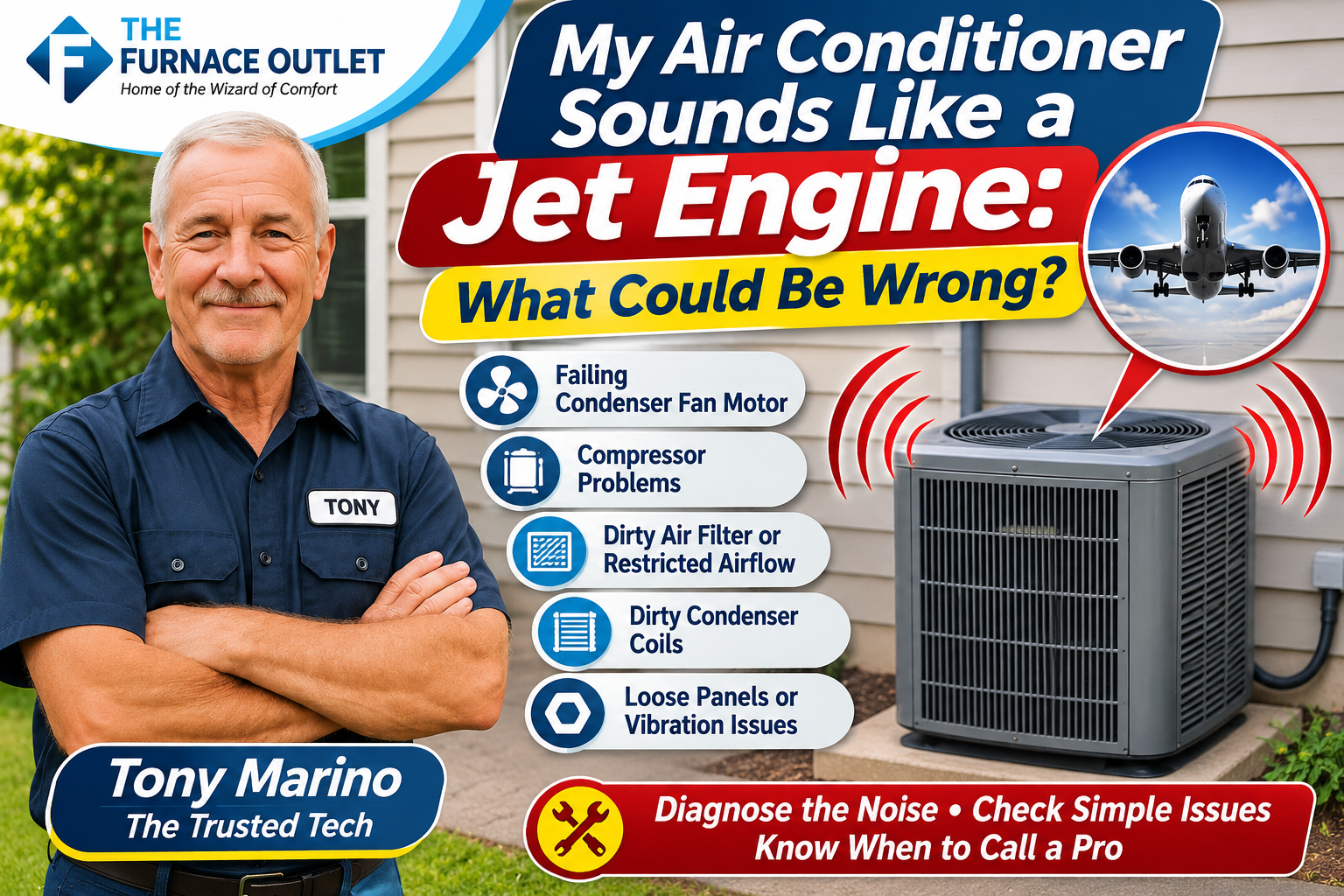
By Tony Marino — Tony the Trusted Tech | The Furnace Outlet
An air conditioner should make some noise when it’s running, but there’s a big difference between the normal hum of a cooling system and a roaring sound that makes you wonder whether an airplane is preparing for takeoff outside your house. If your AC suddenly sounds like a jet engine, something may be interfering with normal airflow, a fan or motor may be wearing out, or the compressor could be experiencing a mechanical problem. The important thing is to recognize whether you’re hearing ordinary operating noise or a warning sign that needs attention.
After more than 25 years working with heating and cooling equipment, I’ve learned that unusual noises often provide useful clues about what’s happening inside a system. A loud whooshing sound may point toward an airflow restriction, while a deep mechanical roar can suggest trouble with a fan motor, compressor, or vibrating component. The location of the noise, when it occurs, and whether cooling performance has changed can help narrow down the possibilities.
In this guide, I’ll explain why an air conditioner might sound like a jet engine, how to distinguish common noises, which checks homeowners can safely perform, and when it’s time to call an HVAC professional. I’ll also cover what repairs might cost and how to prevent small problems from developing into expensive failures.
Air conditioners contain several moving components, including fans, motors, and compressors, so some operating noise is unavoidable. Outdoor condenser units typically produce a steady fan sound and compressor hum, while indoor air handlers create airflow noise as conditioned air travels through the ductwork. The exact sound depends on equipment size, design, installation, operating speed, and surrounding surfaces.
A variable-speed air conditioner may become noticeably louder when it increases output during extremely hot weather. Likewise, a conventional single-stage system can produce a brief increase in noise when the compressor and outdoor fan start. These changes aren’t automatically signs of failure, particularly when the system continues cooling normally and the sound matches its usual operating pattern.
However, a sudden increase in noise deserves attention. If your AC previously operated quietly but now produces a powerful roar, grinding sound, metallic vibration, or high-pitched whine, don’t assume it’s normal aging. Mechanical wear, airflow problems, and loose components can become more serious when the equipment continues operating under abnormal conditions.
One of the simplest explanations for excessive indoor air conditioner noise is restricted airflow. When an air filter becomes clogged with dust, pet hair, or other debris, the blower must operate against increased resistance. Depending on the blower design, this can create louder rushing air, whistling, or unusual airflow sounds near return grilles and duct openings.
Restricted airflow can also reduce cooling performance and contribute to evaporator coil freezing. In some variable-speed systems, the blower may increase its effort to maintain airflow, making an existing duct restriction more noticeable. However, not every blower behaves this way, so a loud noise alone doesn’t prove the filter is responsible.
Start by inspecting the air filter and replacing it if necessary. Make sure return grilles and supply registers aren’t blocked by furniture, curtains, or stored belongings. If the noise continues after these basic checks, the system may have a duct restriction, blower issue, or another problem requiring professional airflow testing.
The outdoor condenser fan moves air through the condenser coil to help release heat collected from inside your home. When its motor begins wearing out, bearings may develop excessive friction or internal components may produce unusual mechanical sounds. Depending on the failure, you might hear a deep rumble, high-pitched whine, grinding noise, or increasingly loud fan operation.
Fan blades can also become damaged, unbalanced, or obstructed by debris. An unbalanced blade may create vibration that travels through the condenser cabinet, making the entire outdoor unit sound louder than the fan itself. In severe cases, loose or damaged components can strike surrounding metal surfaces.
If you hear grinding, scraping, or a rapidly worsening roar from the outdoor unit, turn the cooling system off and arrange professional inspection. Don’t reach through the condenser grille or attempt to stop the fan manually. A technician should inspect the motor, bearings, fan blade, mounting hardware, and electrical components before determining whether repair or replacement is necessary.
The compressor is one of the most important components in your air conditioning system. It circulates refrigerant through the cooling circuit, allowing heat to be absorbed indoors and released outdoors. During normal operation, compressors produce mechanical sound, but a new or unusually loud rumbling, growling, or rattling noise may indicate a problem.
Possible causes include internal mechanical wear, damaged compressor mounting components, abnormal operating conditions, or vibration being transmitted through the refrigerant piping. A compressor that struggles during startup may also produce unusual humming or repeated attempts to start. However, similar sounds can come from other electrical or mechanical components, so compressor failure shouldn’t be diagnosed by sound alone.
If the compressor area produces severe grinding, banging, or repeated hard-start noises, shut the equipment down and call a qualified technician. Compressor diagnosis requires electrical measurements, operating-condition checks, and evaluation of the refrigerant system. Replacing a compressor without confirming the cause can lead to unnecessary expense or repeat failures.
Sometimes an air conditioner sounds much worse than the underlying problem actually is. Loose cabinet panels, mounting brackets, fan guards, and vibration-isolation components can amplify ordinary equipment movement. A small vibration from a motor may resonate through a large metal panel, producing a surprisingly powerful buzzing or roaring sound.
Outdoor units installed on uneven pads or poorly supported brackets may transfer vibration into nearby walls and structures. Indoor air handlers can produce similar problems when duct connections or equipment panels aren’t properly secured. These issues are especially noticeable when the equipment starts or changes operating speed.
You can visually inspect the equipment from outside the cabinet for obvious damage or loose exterior components, but don’t remove panels while the system is energized. If the noise changes when the compressor starts or stops, mention that detail to your technician. Proper mounting, cabinet repairs, and vibration isolation can sometimes resolve substantial noise without replacing major equipment.
An outdoor condenser needs adequate airflow to reject heat effectively. When dirt, leaves, grass clippings, or other debris accumulate around the coil, heat transfer becomes less effective. This can increase operating temperatures and pressures, reduce cooling performance, and place additional stress on the system.
A dirty condenser doesn’t necessarily create a jet-engine sound by itself. However, reduced performance may cause variable-speed equipment to operate at higher output for longer periods, while existing fan or compressor problems may become more noticeable under demanding conditions. In fixed-speed equipment, a dirty coil may affect operating conditions without increasing fan speed.
Keep the area surrounding the condenser clear of leaves, vegetation, and stored materials. If the coil is heavily contaminated, arrange proper cleaning rather than using a pressure washer or spraying electrical components. Maintaining a clean condenser helps protect efficiency and equipment reliability, even when the original noise has another cause.
Not every loud air conditioner sounds like a deep mechanical roar. Some systems develop a sharp whistle, squeal, or high-pitched screaming noise that homeowners describe as a jet engine. These sounds may originate from restricted ductwork, blower components, motor bearings, or abnormal refrigerant-system conditions.
A whistle near an indoor return grille often suggests high air velocity or a restriction, while squealing from the blower compartment may indicate a mechanical issue. A sudden, severe high-pitched sound from outdoor equipment, particularly when accompanied by poor cooling or protective shutdowns, warrants prompt professional attention.
Don’t attempt to diagnose refrigerant pressure by loosening fittings or opening service valves. Refrigerant circuits operate under pressure, and improper handling can cause injury or equipment damage. When the sound is intense, unfamiliar, or accompanied by other abnormal symptoms, turning the system off is the safest choice.
The timing of an unusual sound can help identify where a problem might be developing. A brief mechanical sound during compressor startup can be normal for some systems, but repeated hard bangs, prolonged humming, or unusually violent vibration should be investigated. These symptoms may involve starting components, compressor operation, or equipment mounting.
A loud bang when the indoor blower starts or stops may come from sheet-metal ductwork flexing as air pressure changes. This phenomenon is sometimes called duct popping or oil-canning. It can result from duct construction, inadequate reinforcement, or airflow conditions that create excessive pressure changes.
If the sound occurs only during startup or shutdown, record when it happens and whether the equipment continues operating normally afterward. A technician can use this information to investigate electrical starting performance, duct static pressure, and mechanical vibration without relying on guesswork.
Air conditioner noise often seems more noticeable at night because background sounds from traffic, household activity, and outdoor environments are reduced. A condenser that seems reasonably quiet during the afternoon may become much more noticeable when the surrounding neighborhood is silent. Sound can also reflect from nearby walls, fences, and building surfaces.
However, don’t dismiss a genuine change in noise simply because it happens after sunset. Some systems change operating speed according to cooling demand, while others may develop mechanical noises that become more obvious during extended operation. A failing bearing, loose panel, or vibrating refrigerant line can produce sounds that vary with temperature and equipment operation.
If nighttime noise has become disruptive, compare it with the system’s normal behavior and check whether cooling performance has changed. A professional can assess the source and recommend appropriate repairs or vibration-control measures rather than relying on makeshift sound barriers that might restrict condenser airflow.
Before arranging service, try to identify whether the noise comes from the indoor air handler, ductwork, or outdoor condenser. You don’t need to open the equipment to make this observation. Listen from a safe distance and note whether the sound begins immediately, develops after several minutes, or appears only when the system changes speed.
Check the air filter, inspect accessible supply and return grilles, and look for visible debris around the outdoor condenser. Make sure nothing is obstructing airflow and that the thermostat is operating normally. These simple checks may reveal an obvious maintenance problem, but they should never involve removing electrical panels, reaching into fan openings, or handling refrigerant connections.
If the noise is severe, suddenly worsening, or accompanied by grinding, banging, smoke, burning odors, or repeated breaker trips, switch off the system and arrange professional service. Trane also recommends shutting down normally quiet equipment when it suddenly develops unusually loud sounds. Its HVAC noise troubleshooting guide explains several common warning signs. Trane®
Repair costs depend on the actual failure, equipment age, local labor rates, accessibility, and whether replacement components are readily available. A loose panel or minor vibration problem may be relatively inexpensive to correct, while replacing a condenser fan motor, blower assembly, or compressor can involve substantially higher expenses.
For preliminary budgeting in the United States, a minor adjustment or basic service visit might cost approximately $100–$300, while fan motor repairs may fall around $250–$900. Compressor replacement can sometimes exceed $1,500–$3,000, particularly when refrigerant recovery, additional parts, and substantial labor are required. These are broad illustrative allowances, not verified current quotations, and actual costs can fall outside these ranges.
I recommend requesting a written diagnosis and itemized estimate before authorizing expensive work. If a technician recommends compressor replacement, ask what testing confirmed the failure and whether the underlying operating conditions have been checked. An accurate diagnosis is more valuable than replacing components simply because they might be responsible for the noise.
Preventive maintenance won’t eliminate every mechanical failure, but it can reduce the conditions that contribute to premature wear. Keeping air filters clean, maintaining adequate airflow, and removing debris around the outdoor condenser help the system operate under more favorable conditions. These tasks also make it easier to notice when equipment begins behaving differently.
Professional maintenance should include inspection of fan assemblies, motors, electrical connections, coils, condensate drainage, and equipment operation. The ENERGY STAR maintenance checklist recommends annual pre-season inspections and identifies airflow, motor condition, electrical connections, and coil cleanliness as important service considerations. ENERGY STAR
It’s also worth paying attention to your system’s normal sound. If you notice a gradual increase in vibration, buzzing, or fan noise over several weeks, don’t wait until it becomes unbearable. Catching a loose component or deteriorating motor early may help prevent additional damage.
A noisy air conditioner doesn’t automatically need replacement. If the equipment is relatively new and the problem involves a fan motor, mounting bracket, or another serviceable component, repairing it may be the most economical option. The decision becomes more complicated when an older system develops major compressor problems or requires several expensive repairs within a short period.
I generally recommend comparing the repair estimate with the cost of a properly sized replacement system, while considering equipment age, efficiency, warranty coverage, and overall condition. A system that has been maintained well and otherwise performs reliably may still have useful life remaining after a repair.
The Carrier air conditioner repair guide explains why unusual noises, cooling problems, and electrical symptoms should be evaluated professionally before choosing a repair strategy. Carrier
Why does my outdoor AC suddenly sound like a jet engine? A sudden roaring sound may involve the condenser fan, compressor, vibration, or an obstruction affecting airflow. If the equipment previously operated quietly, the change deserves investigation rather than being dismissed as normal operation. Shut the system off if the sound is severe, mechanical, or accompanied by reduced cooling, and arrange a professional inspection.
Can a dirty air filter make my AC extremely loud? A clogged filter can create airflow restrictions that produce whistling, rushing air, or increased blower noise. However, a deep grinding or metallic roar is less likely to be explained by the filter alone. Replacing a dirty filter is a sensible first step, but persistent abnormal sounds require further diagnosis.
Is it safe to run an air conditioner that’s making a roaring noise? A familiar increase in fan noise during high-demand operation may be normal for certain systems, but a new, unusually loud roar should be treated cautiously. Continuing to operate equipment with damaged fan components, failing bearings, or compressor problems can potentially cause additional damage. When you’re unsure whether the noise is normal, turn off the cooling system and consult a qualified technician.
Why does my AC make a loud noise only when it starts? Startup noises can involve compressor operation, electrical starting components, vibration, or ductwork movement. Some brief startup sounds are normal, but repeated banging, grinding, or prolonged humming can indicate a developing problem. Recording the timing and character of the sound can help a technician identify the cause more efficiently.
When an air conditioner starts sounding like a jet engine, the first thing I want homeowners to understand is that noise is a symptom, not a diagnosis. The cause might be something relatively simple, such as restricted airflow or loose mounting hardware, or it could involve a failing fan motor or compressor. The best approach is to observe where the sound comes from, perform only safe maintenance checks, and avoid guessing which component needs replacement.
If the noise is new, severe, or getting worse, don’t keep running the system in the hope that it will settle down. A professional inspection can help identify the problem before it causes further damage. With proper maintenance, timely repairs, and attention to unusual operating sounds, many air conditioning systems can continue providing dependable comfort without becoming the loudest piece of equipment in the neighborhood.
Educational disclaimer: This article provides general information about air conditioner noises and maintenance. It is not a substitute for professional diagnosis or manufacturer service instructions. Electrical components, rotating fans, and pressurized refrigerant systems can cause serious injury if handled improperly. Contact a qualified HVAC technician for mechanical, electrical, or refrigerant-related repairs.