Newsletter Subscribe
Enter your email address below and subscribe to our newsletter

HVAC made simple
By Jake Lawson | Jake the HVAC Specialist, The Furnace Outlet
Updated: November 2026
MRCOOL mini-splits have become popular among American homeowners because they offer efficient heating and cooling, flexible installation options, and dedicated DIY product lines. However, even a well-installed mini-split can occasionally stop cooling, struggle to heat a room, display an unfamiliar error code, or begin leaking water.
When something goes wrong, it’s tempting to assume the compressor has failed or the system needs expensive repairs. In my experience working with residential HVAC equipment, many service calls begin with much simpler problems, including dirty filters, incorrect thermostat settings, blocked airflow, or interrupted electrical power.
The challenge is knowing which problems you can safely investigate yourself and which require professional attention. MRCOOL offers several mini-split families, including DIY, Easy Pro, Advantage, and Olympus systems, and their troubleshooting procedures aren’t always identical.
This guide explains the most common MRCOOL mini-split problems, how to identify their likely causes, and the safest ways to restore heating or cooling without making the situation worse.
One of the most common complaints is that the indoor unit runs normally but the room never reaches the desired temperature. You may notice weak cooling, longer operating cycles, or air that feels only slightly cooler than the surrounding room.
Start with the remote control. Make sure the system is in cooling mode rather than fan-only or automatic mode, and confirm that the selected temperature is below the actual room temperature. If the settings are correct, inspect the indoor air filters. Dust buildup can restrict airflow and reduce the amount of heat the system removes.
Next, look at the outdoor condenser from a safe distance. Leaves, dirt, vegetation, and stored objects can obstruct airflow around the unit. Remove loose debris around the equipment without opening electrical panels or touching moving components.
If the mini-split still doesn’t cool, the problem could involve a refrigerant leak, sensor malfunction, outdoor fan failure, or compressor-related issue. MRCOOL’s official mini-split cooling troubleshooting guide recommends checking power, settings, filters, and outdoor airflow before requesting technical assistance.
When a MRCOOL heat pump stops producing warm air, the cause may be a genuine malfunction or simply normal cold-weather operation. Heat pumps behave differently from traditional gas furnaces, particularly during freezing conditions.
First, confirm that the remote is set to heating mode and that the desired temperature is above the current room temperature. Allow the system sufficient time to respond, because some mini-splits delay indoor fan operation until the indoor coil becomes warm.
During cold or humid weather, the outdoor coil can accumulate frost. The system may temporarily enter defrost mode to remove that buildup. During defrost, indoor heating can pause, and you may notice steam or water around the outdoor unit.
However, a system that repeatedly fails to resume heating, develops persistent heavy ice, or cannot maintain room temperature may have an airflow restriction, refrigerant problem, or component fault. Low-temperature heating performance also varies significantly between MRCOOL models.
If heating remains inadequate after checking settings and airflow, contact a qualified technician rather than attempting refrigerant or electrical adjustments.
A completely unresponsive indoor unit can make homeowners fear an expensive electrical failure. Fortunately, some power-related problems are relatively straightforward to identify.
Check whether other electrical devices in the home are operating normally. Inspect the mini-split’s dedicated circuit breaker and confirm that the remote control has working batteries. If the system uses a wall controller, verify that its display is functioning.
A breaker that has tripped once may indicate a temporary problem, but repeated tripping is a warning sign. Do not repeatedly reset a breaker that continues to trip, and never install a larger breaker to prevent shutdowns.
If the breaker is on but the system remains completely unresponsive, the issue could involve the disconnect, incoming power, wiring, control board, or another electrical component.
MRCOOL’s unit-not-powering-on troubleshooting guidance identifies power-supply and connection problems as potential causes. Electrical measurements and internal repairs should be left to a qualified professional.
Modern MRCOOL mini-splits use electronic diagnostics to identify abnormal operating conditions. When the system detects a problem, it may display a combination of letters and numbers on the indoor unit, outdoor unit, or compatible controller.
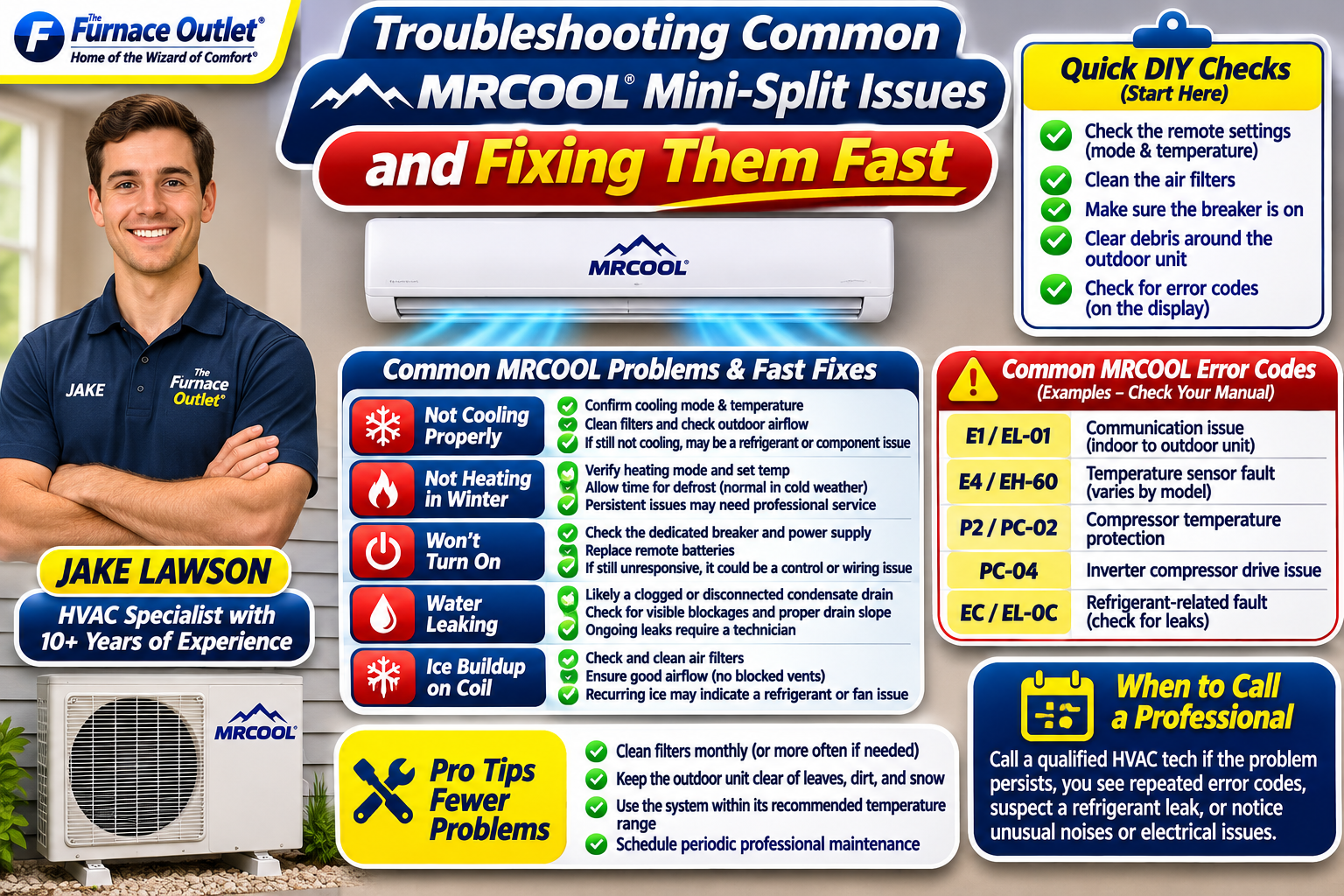
For example, E1 or EL-01 commonly indicates an indoor-to-outdoor communication malfunction on applicable MRCOOL models. This may involve wiring, electronic control boards, or communication problems rather than a failed compressor.
Codes such as E4, EH-60, or EH-61 may indicate temperature-sensor faults on particular generations. E0 or EH-00 can indicate an electronic control or memory-related malfunction.
Other codes require more caution. P2 or PC-02 can indicate compressor temperature or related protection conditions, while PC-04 may point toward an inverter compressor drive fault. Refrigerant-related warnings may appear as EC, EL-0C, or other codes depending on the system generation.
Importantly, MRCOOL’s error-code definitions vary between generations and equipment families. A code used on an older DIY unit may not mean exactly the same thing on a fifth-generation or multi-zone system.
Always consult the exact model’s documentation and MRCOOL’s official mini-split error-code reference before interpreting a warning. Never replace components based solely on a generic online error-code description.
A temporary electronic fault can sometimes be resolved by restarting the system. However, resetting should be a troubleshooting step, not a way to repeatedly override a persistent warning.
Begin by switching the unit off using the remote control. If the manufacturer’s instructions permit a power reset, switch off the dedicated breaker and leave the system disconnected for approximately 15 minutes before restoring power.
Once power returns, allow the mini-split to complete its normal startup sequence. Some systems intentionally delay compressor operation to protect internal components.
If the unit resumes normal heating or cooling and the error does not return, the problem may have been temporary. If the same warning reappears, record the error code and contact MRCOOL support or a qualified technician.
Do not attempt a reset when there is smoke, burning insulation odor, visible electrical damage, or a refrigerant-leak alarm. Those conditions require stopping operation and professional evaluation.
Water dripping from the indoor air handler is another common complaint, especially during humid summer weather. In cooling mode, moisture naturally condenses on the indoor coil and should drain through the system’s condensate piping.
If the drain becomes blocked, disconnected, kinked, or improperly sloped, water may accumulate and escape from the indoor unit. An incorrectly mounted air handler can also interfere with proper drainage.
Start by turning off the system if water is dripping near electrical equipment or damaging the wall. Check for visible water around the unit and inspect accessible drain outlets without dismantling the equipment.
If the drain termination is visibly obstructed by loose debris, clearing the obstruction may help. However, persistent leakage, hidden drain blockages, damaged condensate pumps, or internal drain-pan problems require proper servicing.
I recommend addressing indoor water leaks promptly. Repeated moisture exposure can damage drywall, flooring, and surrounding materials, creating a much larger repair problem than the original drainage issue.
Ice buildup is not normal during summer cooling operation. If you notice frost on the indoor coil, refrigerant tubing, or surrounding components, the system may have an airflow or refrigerant-related problem.
Dirty filters are one possible cause because restricted airflow can allow the evaporator coil to become excessively cold. A failing indoor fan, blocked coil, or refrigerant leak can produce similar symptoms.
Switch off cooling and allow the system to thaw naturally. Check the accessible filters and remove ordinary airflow obstructions. Avoid scraping ice from the coil or using heat guns, sharp tools, or improvised defrosting methods.
If icing returns after normal airflow has been restored, professional diagnosis is necessary. A technician may need to evaluate refrigerant pressures, temperatures, airflow, sensors, and system operation.
Refrigerant should never be added simply because a line is frozen. The actual cause must be identified, and any leak must be repaired using the correct procedures.
Mini-split outdoor units produce normal operating sounds, including fan noise, compressor modulation, refrigerant movement, and occasional changes in pitch. However, new grinding, rattling, screeching, or repeated loud knocking deserves attention.
A rattling sound may come from loose exterior panels, debris near the condenser, or vibration transmitted through mounting brackets. A grinding noise could indicate a fan motor or mechanical component problem.
Before investigating, switch off the equipment and inspect only areas that are safely accessible. Remove loose leaves or objects around the outdoor unit, but do not reach through the grille or attempt to touch the fan.
If the sound persists or appears to originate inside the equipment, arrange professional service. Continuing to operate a system with a failing fan or compressor component can lead to additional damage.
Sometimes the mini-split itself is operating correctly, but the homeowner cannot control it through the remote or mobile application.
For an infrared remote, replace the batteries and ensure there is a clear path between the remote and the indoor unit’s receiver. Confirm that the remote is compatible with the specific MRCOOL model.
For Wi-Fi-connected systems, check the home internet connection and follow the pairing procedure for the installed smart-control module. Router changes, network-password updates, or connectivity interruptions may require the device to be paired again.
A failed Wi-Fi connection does not necessarily indicate an HVAC equipment failure. If the system responds to its normal remote or wall controller, the problem may be limited to network communication.
Avoid resetting the entire HVAC system repeatedly when only the mobile application is malfunctioning.
Many homeowners assume that a mini-split should turn on and off like an older central air conditioner. In reality, inverter-driven systems are designed to adjust compressor output and may operate for extended periods at reduced capacity.
Long operating cycles are not automatically a sign of trouble. Continuous operation can be normal during very hot or cold weather when the system is maintaining the desired indoor temperature.
However, if the room remains uncomfortable despite continuous operation, investigate possible airflow restrictions, incorrect settings, excessive heat gain, poor insulation, or inadequate equipment capacity.
A mini-split that is too small for the room’s actual heating or cooling load may struggle during extreme temperatures. An oversized unit can also create comfort and humidity-control problems, depending on its modulation range.
If performance remains poor after basic maintenance, have a technician evaluate the equipment and compare its capacity with the home’s heating and cooling requirements.
Multi-zone systems introduce additional troubleshooting considerations because several indoor units share one outdoor condenser.
One issue that can confuse homeowners is operating-mode conflict. On many multi-zone heat-pump systems, connected indoor units cannot provide heating and cooling simultaneously.
For example, one room may be set to cooling while another is requesting heating. Depending on the model, this conflict may cause a unit to pause or display a warning.
Check that the connected indoor units are requesting compatible operating modes. If one zone continues to malfunction while the others operate normally, the issue may involve that indoor unit, its controls, wiring, or refrigerant circuit.
A multi-zone system with several affected rooms may require broader diagnosis of the outdoor unit and shared components.
A refrigerant-related error requires particular care because its meaning depends on the model and generation.
Older MRCOOL systems may display codes associated with refrigerant leakage detection or abnormal refrigerant conditions. Some newer systems using A2L refrigerants also include dedicated refrigerant-detection functions with specific safety responses.
If the unit displays a refrigerant-leak alarm, follow the exact model’s safety instructions. Do not bypass sensors, defeat protective controls, or repeatedly restart the system to force operation.
If a leak is suspected, avoid ignition sources, ventilate or evacuate as directed by the manufacturer, and contact qualified service personnel. Do not disconnect precharged line sets or attempt to tighten refrigerant fittings on an operating system.
MRCOOL’s refrigerant-related troubleshooting guidance explains why installation condition and refrigerant-system integrity matter. Any work involving refrigerant containment should follow the exact equipment instructions and applicable certification requirements.
Repair expenses depend on the model, age, warranty status, location, and failed component. Simple service visits may involve filter cleaning, drainage maintenance, or basic diagnostics, while electronic control boards, fan motors, refrigerant leaks, and compressor problems can require more extensive labor.
For general U.S. budgeting, an HVAC diagnostic visit may cost roughly $100–$250, while relatively minor repairs can sometimes total $150–$500. More complicated electronic or refrigerant-system repairs may cost several hundred dollars to well over $1,000.
These are broad planning estimates, not verified MRCOOL-specific repair quotations. Actual costs may be substantially different, especially when specialized parts, refrigerant recovery, or major component replacement is necessary.
Before approving an expensive repair, verify the equipment’s warranty coverage and whether the proposed work is eligible for manufacturer support.
Regular maintenance is one of the most effective ways to reduce unexpected mini-split problems. Cleaning filters, keeping outdoor airflow unobstructed, checking accessible drainage, and responding promptly to unusual sounds can help preserve performance.
Filter-cleaning frequency depends on operating conditions, but checking them monthly during heavy use is a sensible starting point. Homes with pets, construction dust, or high indoor particle levels may require more frequent attention.
I also recommend periodic professional inspection, especially for systems used year-round for both heating and cooling. A technician can evaluate electrical connections, coil condition, drainage, operating temperatures, and overall equipment performance.
MRCOOL’s existing-system troubleshooting guidance emphasizes clean filters, professional refrigerant evaluation, and regular maintenance.
Why is my MRCOOL mini-split running but not cooling?
Incorrect remote settings, dirty filters, blocked outdoor airflow, and refrigerant-system faults are possible causes. Begin by confirming cooling mode and cleaning accessible filters. If the outdoor unit is operating but the room still does not cool, professional diagnosis may be needed to identify refrigerant, sensor, fan, or compressor problems.
What does the E1 error code mean on a MRCOOL mini-split?
On many MRCOOL mini-split models, E1 or EL-01 indicates a communication problem between the indoor and outdoor units. Possible causes include wiring faults, control-board problems, or electrical interference. Because error definitions vary by model and generation, confirm the meaning using the exact equipment manual before arranging repairs.
Can I reset my MRCOOL mini-split by turning off the breaker?
Some MRCOOL troubleshooting procedures recommend switching off the dedicated breaker for approximately 15 minutes before restarting the equipment. However, this should only be done when appropriate for the specific fault and manufacturer’s instructions. Repeated errors, burning odors, or refrigerant alarms require professional attention rather than repeated resets.
Why does my MRCOOL mini-split stop heating during cold weather?
The system may temporarily stop delivering warm air while performing a normal defrost cycle. However, prolonged shutdowns, persistent heavy ice, or inadequate heating may indicate airflow restrictions, equipment faults, or insufficient cold-weather heating capacity. Check the operating mode and filters, then arrange professional evaluation if the problem continues.
When a MRCOOL mini-split starts acting up, my first recommendation is to identify exactly what the system is doing. A unit that won’t turn on requires a different approach from one that runs continuously without cooling, and an error code can provide important clues.
Start with the safe, simple checks: remote settings, power supply, accessible filters, and outdoor airflow. Record any error codes and observe whether the problem affects one room or the entire system.
If those checks don’t resolve the issue, avoid guessing at refrigerant levels, replacing electronic components, or repeatedly restarting equipment that is displaying safety warnings.
A methodical diagnosis usually saves more time and money than replacing parts without identifying the underlying cause. With proper installation, routine maintenance, and timely professional service, a MRCOOL mini-split can continue providing dependable heating and cooling for years.
This article provides general educational information about MRCOOL mini-split troubleshooting. Error codes, reset procedures, refrigerants, electrical configurations, and service requirements vary by model and generation. Homeowners should not open energized electrical compartments, bypass safety devices, disconnect refrigerant lines, or perform repairs requiring specialized qualifications. Always follow the exact manufacturer’s instructions and consult a qualified HVAC professional when safety or technical concerns arise.
These five official MRCOOL resources support the troubleshooting procedures and technical explanations in the article.
1. MRCOOL — Troubleshooting Mini-Split Not Cooling — Covers power checks, remote settings, filter cleaning, airflow restrictions, and cooling-performance problems.
2. MRCOOL — Mini-Split Systems Error Codes — Provides error-code definitions for different MRCOOL generations, including communication, sensor, refrigerant, and compressor faults.
3. MRCOOL — How to Find an Error Code — Explains where diagnostic codes appear and how to identify them on compatible systems.
4. MRCOOL — Troubleshooting EC and EL0C Errors — Addresses refrigerant-related faults and troubleshooting considerations.
5. MRCOOL — Troubleshooting a Mini-Split That Stopped Heating or Cooling — Discusses airflow, refrigerant concerns, and maintenance