Newsletter Subscribe
Enter your email address below and subscribe to our newsletter

HVAC made simple
By Tony Marino | Tony the Trusted Tech, The Furnace Outlet
Updated: November 2026
If you’re replacing an older gas furnace with a modern 90% or higher AFUE model, one of the biggest changes you’ll notice is the venting system. Instead of the traditional metal flue that carries hot exhaust gases through a chimney or roof, many high-efficiency furnaces use plastic vent piping that exits through an exterior wall or roof.
That might look like a simple installation difference, but there’s more to it than swapping metal for PVC. High-efficiency furnaces have specific requirements for combustion air, exhaust venting, condensate drainage, pipe sizing, and termination locations. Getting any of those details wrong can affect heating performance and create serious safety hazards.
I’ve worked with gas-fired heating equipment for decades, and one thing I’ve learned is that furnace venting deserves the same attention as the furnace itself. A premium furnace with an improperly designed vent system can be less dependable than an ordinary model installed correctly.
In this guide, I’ll explain how combustion air and venting work in 90%+ AFUE furnaces, when PVC piping is permitted, why two-pipe systems are often preferred, and which installation mistakes homeowners should avoid.
Traditional noncondensing gas furnaces generally release relatively hot combustion gases through a listed metal venting system or suitable chimney. The exhaust contains enough heat to help establish the draft required by the vent design.
A condensing furnace works differently. It uses additional heat-exchanger surfaces to recover more energy from combustion gases, cooling the exhaust enough for some water vapor to condense into liquid.
This heat recovery helps modern condensing furnaces achieve AFUE ratings of 90% or higher. However, the lower exhaust temperature and resulting acidic condensate require a venting arrangement specifically approved for the equipment.
Many condensing furnaces use an induced-draft combustion system and manufacturer-approved plastic vent materials. Others may require different materials or specialized vent components.
The important point is that the furnace manufacturer determines which venting arrangements are permitted. You cannot safely assume that every high-efficiency furnace accepts the same pipe materials, sizes, or termination configurations.
A gas furnace needs oxygen to burn fuel properly. Combustion air supplies that oxygen, while the exhaust system carries combustion products away from the building.
When combustion air is insufficient, combustion can become unstable or incomplete. Depending on the equipment and circumstances, this may contribute to ignition problems, nuisance shutdowns, or dangerous combustion conditions.
Modern furnaces include safety controls, but those controls are not substitutes for properly designed combustion-air and venting systems.
Combustion air can come from the surrounding indoor space when the installation is specifically designed and approved for that arrangement. Alternatively, an approved dedicated intake pipe can bring outdoor air directly to the furnace.
Which arrangement is acceptable depends on the furnace’s listing, installation instructions, available combustion-air volume, building conditions, and applicable codes.
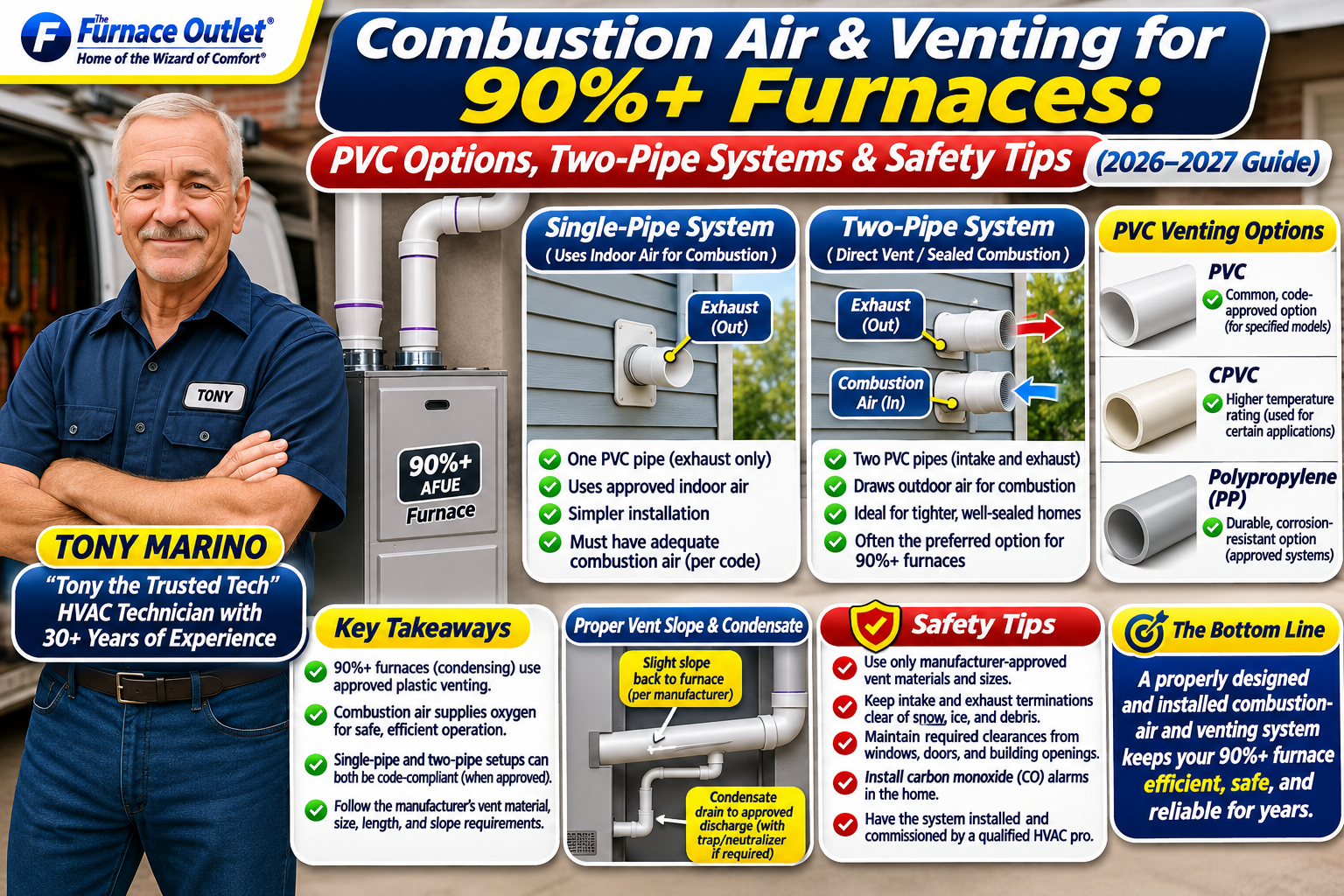
One of the most common questions I hear is whether a high-efficiency furnace needs one plastic pipe or two. The answer depends on how the equipment obtains combustion air.
In a single-pipe arrangement, the furnace exhausts combustion gases outdoors through a dedicated vent pipe while obtaining combustion air from an approved indoor source. The indoor space must have adequate combustion-air provisions under the applicable code and manufacturer instructions.
In a two-pipe direct-vent arrangement, one pipe supplies outdoor combustion air and the other carries exhaust gases outside. This reduces the furnace’s dependence on indoor air for combustion.
Both arrangements can be acceptable when the exact furnace is listed for them and the installation meets all applicable requirements. However, a two-pipe configuration can offer practical advantages in tightly constructed homes.
I generally favor an approved two-pipe arrangement when it suits the equipment and building because it provides a dedicated outdoor combustion-air source. That doesn’t mean every single-pipe installation is unsafe or that a two-pipe system is universally required.
Today’s homes are often built or renovated to reduce unwanted air leakage. Improved insulation, tighter windows, and better weather sealing can lower heating costs, but they can also reduce the amount of outdoor air entering the building naturally.
A furnace that relies on indoor combustion air must have an adequate, code-compliant air supply. Exhaust fans, clothes dryers, and other appliances can affect building pressure and should be considered during installation design.
A properly designed direct-vent furnace obtains combustion air through its dedicated intake, reducing dependence on the surrounding indoor space.
This can be particularly useful when the furnace is installed in a small mechanical room or a relatively airtight home. However, the outdoor intake must remain unobstructed, and the intake and exhaust terminals must be positioned to prevent exhaust recirculation.
The system must be installed exactly as approved for the furnace model. Adding a second pipe to equipment that is not listed for direct venting is not an acceptable modification.
PVC is commonly associated with high-efficiency furnace venting, but homeowners should never assume that ordinary plumbing PVC is automatically approved for every installation.
The furnace manufacturer’s instructions must specifically permit the proposed vent material. Depending on the equipment, acceptable materials may include specified types of PVC, CPVC, polypropylene, or other listed venting systems.
Material approval can also depend on vent-gas temperature, installation location, applicable code requirements, and the furnace’s operating characteristics.
Some jurisdictions require particular vent-pipe listings or certifications. For example, Canadian installations may be subject to requirements for certified plastic venting systems that differ from those commonly encountered in parts of the United States.
The safe approach is to use the exact vent material, fittings, joining method, and installation procedure permitted by the equipment manufacturer and local authority having jurisdiction.
PVC, CPVC, and polypropylene are different plastic materials with different temperature limits, chemical characteristics, and approved applications.
PVC may be permitted for certain condensing furnace installations when specified by the manufacturer and allowed by the applicable code. CPVC has different temperature characteristics and may be specified for certain equipment or operating conditions.
Polypropylene is also used in specialized venting systems designed for condensing heating equipment. These systems typically include purpose-built fittings, seals, supports, and termination components.
The materials should not be treated as interchangeable simply because they are all plastics. Each venting system has its own installation instructions, approved components, and operating limitations.
I recommend asking the installer to identify the exact vent material and explain how it complies with the furnace installation manual.
Venting design involves more than selecting a pipe that fits the furnace connection. Pipe diameter, total developed length, elbows, fittings, and termination components all affect airflow resistance.
A vent system that exceeds the manufacturer’s permitted equivalent length can interfere with combustion airflow and cause pressure-switch faults or furnace shutdowns.
Likewise, using an incorrect pipe diameter can create excessive resistance or other operating problems. Larger pipe is not automatically better because the manufacturer may specify different sizing rules for different capacities and configurations.
A 60,000 BTU furnace and a 100,000 BTU furnace may have different venting requirements even when they belong to the same product family.
The installer should calculate the permitted vent and intake lengths using the exact model’s instructions, accounting for elbows and approved termination fittings.
Condensing furnaces produce liquid condensate during operation. The furnace is designed to collect and drain this moisture through an approved condensate system.
The vent piping may also accumulate condensation, so its slope must follow the manufacturer’s requirements. Many condensing furnace installations require horizontal exhaust piping to slope back toward the furnace, allowing condensate to return to the intended collection and drainage system.
However, the exact slope, support spacing, and drainage arrangement are model-specific. Improper vent pitch can allow water to collect in low spots, restricting exhaust flow or causing nuisance shutdowns.
The furnace’s condensate trap, drain tubing, and any required neutralizer must also be installed correctly. In freezing locations, exposed drain components may need an approved protective arrangement.
I regularly remind homeowners that condensate drainage isn’t an optional accessory. It’s a fundamental part of the furnace’s operation and safety.
The exterior termination is one of the most important parts of the venting installation. It determines where combustion products are discharged and where outdoor combustion air enters the system.
Terminations must meet the manufacturer’s specified clearances from windows, doors, air intakes, building openings, grade level, and other features. Local codes may impose additional requirements.
In cold climates, snow accumulation and ice formation deserve special attention. An exhaust or intake opening that becomes blocked can cause the furnace to shut down or create hazardous operating conditions.
Exhaust gases must also be prevented from recirculating into the combustion-air intake. This is why intake and exhaust separation distances and approved termination arrangements matter.
I would never recommend relocating a vent termination or shortening an exterior pipe without confirming that the modified arrangement complies with the furnace instructions.
Yes. Because condensing furnace exhaust contains moisture, water vapor can condense and freeze near an outdoor termination under certain conditions.
Cold temperatures, improper vent slope, poorly positioned terminals, and exposure to drifting snow can contribute to icing problems.
A properly designed vent system accounts for local climate and the manufacturer’s cold-weather installation requirements. Some equipment uses specific termination configurations intended to reduce recirculation or weather-related problems.
Homeowners can visually inspect outdoor terminations from a safe location, but they should not chip ice aggressively, insert tools into vent openings, or modify piping.
If a furnace repeatedly shuts down during freezing weather, a qualified HVAC technician should inspect the venting, condensate drainage, and combustion system.
Carbon monoxide is a colorless, odorless gas that can be produced when fuel-burning appliances operate improperly. Defective venting, inadequate combustion air, or other equipment problems can increase the risk of dangerous exposure.
Every home with fuel-burning appliances should have carbon monoxide alarms installed according to applicable codes and the alarm manufacturer’s instructions. Homeowners should also arrange regular professional inspection and maintenance of their heating equipment.
Symptoms of possible carbon monoxide exposure can include headache, dizziness, nausea, weakness, and confusion. If a carbon monoxide alarm sounds or exposure is suspected, leave the building immediately, move to fresh air, and contact emergency services from outside.
Never ignore recurring furnace shutdowns, unusual combustion odors, visible vent damage, or signs of exhaust leakage. Safety controls are important, but they cannot replace proper installation and professional evaluation.
One mistake I encounter is using unapproved vent materials or fittings. A pipe may look suitable but still fail to meet the manufacturer’s requirements for the particular furnace.
Another problem is exceeding allowable vent length or installing too many elbows. Excessive airflow resistance can interfere with combustion-system operation and produce repeated fault codes.
Poor vent slope, inadequate support, incorrect condensate drainage, and improperly positioned exterior terminations can also cause problems.
I have also seen homeowners assume that a furnace’s combustion-air intake can simply be capped or redirected to solve a noise or installation issue. Such modifications can create unsafe conditions and should never be attempted without manufacturer approval and qualified professional evaluation.
A properly installed vent system should be inspected and tested as part of the furnace commissioning process, not treated as an afterthought.
A qualified furnace installer should verify that the selected venting configuration is approved for the exact model and that all materials meet the manufacturer’s requirements.
The installation should include correct pipe sizing, equivalent-length calculations, proper slope and support, approved joints, suitable exterior terminations, and functional condensate drainage.
The technician should also verify gas input, combustion performance, safety-control operation, and any manufacturer-required pressure or vent-system checks.
I recommend asking for documentation of the installation and commissioning results. A professional contractor should be able to explain why the chosen venting arrangement is appropriate for the home.
Does every 90% furnace need two PVC pipes?
No. Some high-efficiency furnaces are approved for single-pipe installations that use indoor combustion air, while others support two-pipe direct venting. The correct arrangement depends on the manufacturer’s instructions and applicable codes. Two-pipe systems are often attractive in tighter homes because they provide a dedicated outdoor combustion-air supply.
Can I replace a metal furnace flue with PVC?
Only when the furnace is specifically approved for the proposed plastic venting system and the installation meets all applicable requirements. Conventional noncondensing furnaces generally cannot use ordinary plastic vent piping. A qualified installer must evaluate the furnace and its approved venting options before making changes.
Why does my furnace have water inside the exhaust pipe?
High-efficiency condensing furnaces intentionally cool exhaust gases enough to produce condensation. Their venting and drainage systems are designed to manage this moisture. However, standing water caused by improper slope, blockage, or drainage failure can interfere with operation and should be evaluated by a qualified technician.
Can I install furnace PVC vent pipes myself?
Furnace venting is a combustion-safety system, not simply a plumbing project. Incorrect materials, connections, sizing, or termination locations can create serious hazards. Installation should be completed by qualified professionals following the manufacturer’s instructions, local codes, and permit requirements.
When homeowners invest in a 90%+ AFUE furnace, they usually focus on heating efficiency, brand reputation, and equipment cost. Those are important considerations, but I always remind them that the combustion-air and venting system is just as critical.
For many modern homes, a properly approved two-pipe direct-vent configuration can be a sensible choice. However, the correct solution depends on the exact furnace, the building, and the installation conditions.
My recommendation is to verify the approved vent material, check the pipe sizing and termination design, ensure condensate drains correctly, and insist on professional commissioning.
A high-efficiency furnace should deliver dependable comfort without compromising safety. The best installation isn’t necessarily the one with the fewest pipes or the shortest vent route. It’s the one designed and installed correctly for the equipment and the home.
This article provides general educational information about combustion air and venting for high-efficiency gas furnaces. It does not provide installation instructions or authorize modifications to fuel-burning equipment. Vent materials, pipe dimensions, slopes, termination clearances, combustion-air provisions, and condensate arrangements must follow the exact manufacturer’s installation manual and applicable codes. Gas-furnace venting, combustion testing, and safety-related repairs should be performed by qualified HVAC professionals.
These five authoritative sources support the article’s technical explanations and safety recommendations.
1. U.S. Department of Energy — HVAC Direct Vent Equipment explains sealed combustion, outdoor air intakes, and two-pipe exhaust arrangements
2. U.S. Department of Energy — High-Efficiency Natural Gas Furnaces provides technical guidance on approved vent materials, pipe sizing, elbows, condensate drainage, and installation requirements.
3. U.S. Department of Energy — HVAC Combustion Furnaces explains combustion-air arrangements, vent classifications, and the importance of correct furnace venting.
4. U.S. Department of Energy — Energy-Efficient Residential Furnaces discusses condensing technology and why sealed-combustion configurations are recommended.
5. U.S. Environmental Protection Agency — Carbon Monoxide Poisoning Prevention explains the risks associated with improperly installed or vented fuel-burning appliances and the importance of carbon monoxide alarms