Newsletter Subscribe
Enter your email address below and subscribe to our newsletter

HVAC made simple
By Tony Marino (Tony the Trusted Tech)
The Furnace Outlet | Updated October 2026
When winter temperatures drop and your heat pump’s outdoor unit becomes covered in ice, it is natural to wonder whether something has gone wrong. A little frost is perfectly normal during cold-weather heating, but an outdoor coil buried beneath thick ice that never seems to disappear is another matter. The system may continue running, the thermostat may keep calling for heat, and the indoor temperature may slowly fall even though the equipment appears to be working harder than ever.
Over the years, I’ve encountered plenty of heat pumps that homeowners believed needed an expensive reversing valve or a complete control board replacement. Sometimes those components were responsible, but quite often the actual problem was something different. A faulty temperature sensor, damaged wiring connection, abnormal refrigerant condition, or drainage restriction can produce symptoms that look remarkably similar to a failed defrost system.
The important thing to understand is that a heat pump’s defrost cycle is not controlled by a single component. It is a coordinated process involving temperature measurements, electronic decisions, refrigerant flow, and equipment operating sequences. When one part of that process fails, frost can accumulate faster than the system removes it, reducing heating capacity and potentially causing additional equipment problems.
In this guide, I’ll explain how a heat pump defrost cycle works, why it sometimes fails, how technicians distinguish sensor problems from control board and reversing valve failures, and what homeowners can safely check before arranging professional service. My objective is to help you understand the problem well enough to ask the right questions and avoid paying for repairs that your equipment may not actually need.
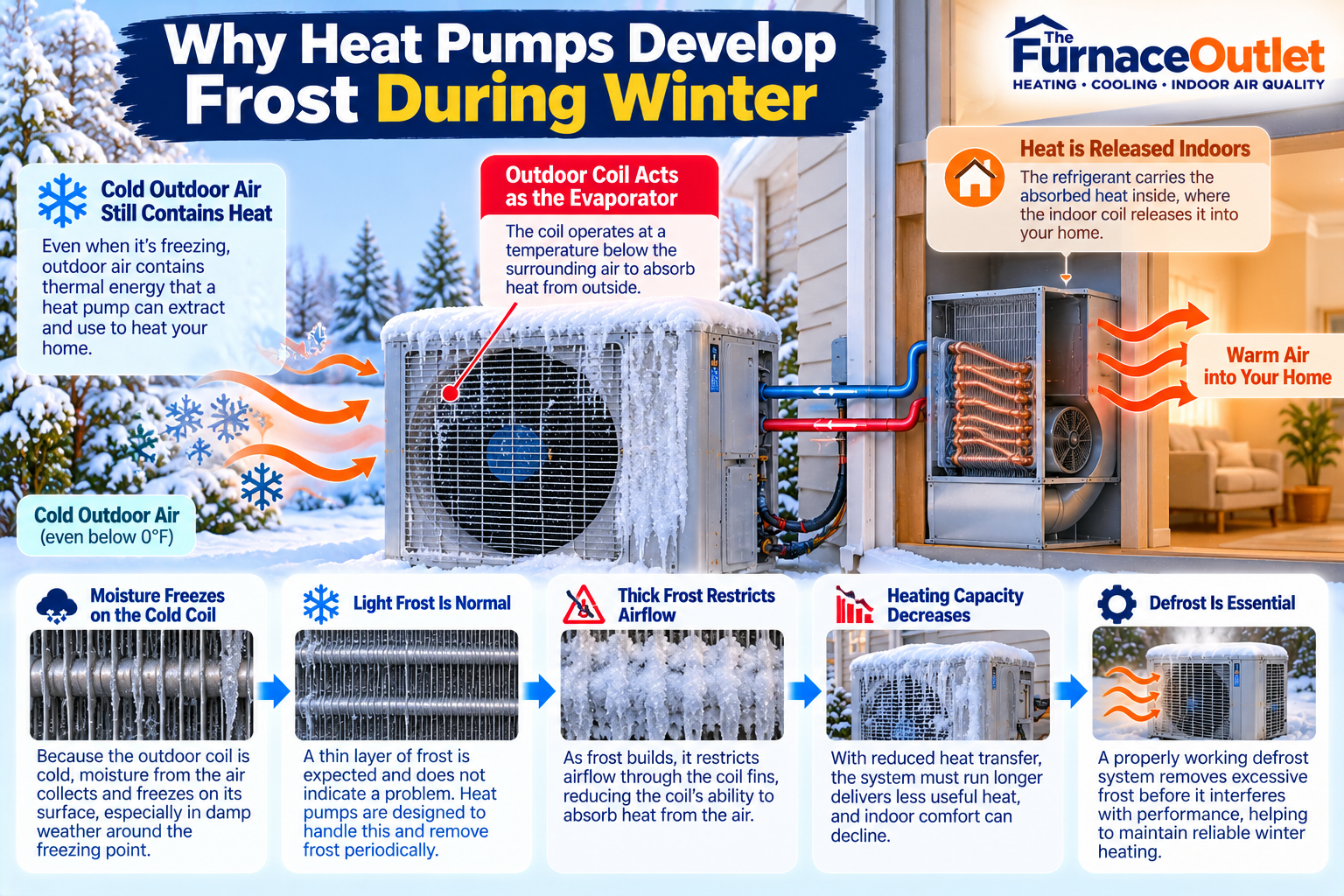
An air-source heat pump heats your home by extracting thermal energy from outdoor air and transferring that energy indoors through its refrigeration system. Even when the outdoor temperature feels extremely cold, the air still contains thermal energy that properly designed heat pump equipment can collect. During heating operation, the outdoor coil acts as the evaporator, absorbing heat from the surrounding air while the indoor coil releases heat into your living space.
Because the outdoor coil must operate at a temperature below the surrounding air to absorb heat, moisture can collect on its surface and freeze when the coil temperature is sufficiently low. This frost formation is especially common during damp weather around the freezing point, although it can occur under a wider range of conditions. The amount of frost depends on outdoor humidity, coil temperature, airflow, compressor operation, and the design of the equipment.
A light frost coating is not automatically a problem. Modern heat pumps are designed to encounter these conditions and remove frost periodically. The difficulty begins when frost becomes thick enough to restrict airflow through the coil fins. As the accumulation grows, the outdoor heat exchanger becomes less effective at absorbing heat, and the system may need to run longer to maintain indoor comfort. If the frost remains in place, heating capacity can decline significantly. The compressor may continue operating, but the system delivers less useful heat than expected. In extreme cases, ice can spread across the coil and surrounding cabinet, interfere with drainage, or create problems around the outdoor fan.
This is why a functioning defrost system is essential for reliable winter heating. The purpose of defrost is not to prevent every trace of frost from forming, but to remove excessive accumulation before it seriously interferes with equipment performance.
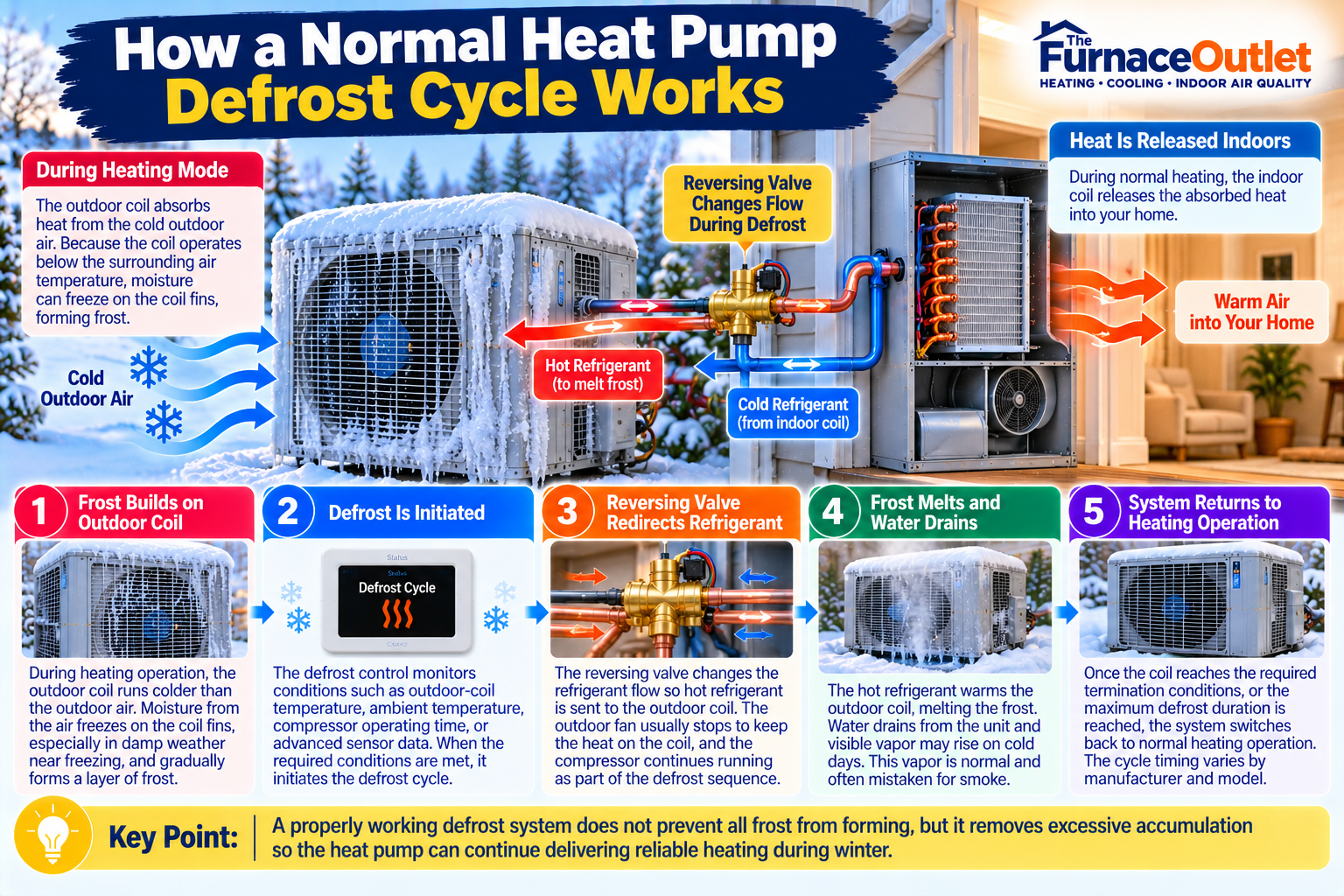
Most conventional residential air-source heat pumps remove outdoor-coil frost by temporarily reversing the refrigeration cycle. During ordinary heating operation, the outdoor coil absorbs heat while the indoor coil releases heat into the home. During reverse-cycle defrost, the controls redirect refrigerant flow so that hot refrigerant warms the outdoor coil and melts accumulated frost.
The process begins when the defrost control determines that the equipment has met the conditions for initiating defrost. Depending on the manufacturer’s design, those conditions may involve outdoor-coil temperature, ambient temperature, compressor operating time, or more sophisticated demand-based calculations. Some systems use relatively simple time-and-temperature controls, while modern variable-speed equipment may rely on multiple sensors and electronic operating algorithms. When defrost begins, the reversing valve changes the refrigerant-flow path. The outdoor fan commonly stops to prevent cold air from removing heat from the coil during the melting process. The compressor continues operating according to the manufacturer’s sequence, and the outdoor coil temperature rises as hot refrigerant circulates through it.
During this period, homeowners may notice water dripping beneath the outdoor unit, a temporary change in equipment sound, or a cloud of water vapor rising from the cabinet. These observations can be normal. The visible vapor is often mistaken for smoke, particularly on cold mornings when moisture evaporating from the warm coil becomes highly noticeable.
Some ducted heat pump systems activate auxiliary electric heating during defrost to reduce the amount of cool air delivered indoors. Other equipment uses different arrangements, particularly systems with advanced communicating controls or specialized cold-climate operating strategies. Once the coil reaches the required termination conditions, or the maximum permitted defrost duration is reached, the system returns to normal heating operation. The exact timing varies between manufacturers and models. A homeowner should not assume that every heat pump must defrost after a fixed number of minutes or that every defrost cycle should last exactly the same amount of time. What matters is whether the equipment removes frost effectively and returns to stable heating operation afterward.
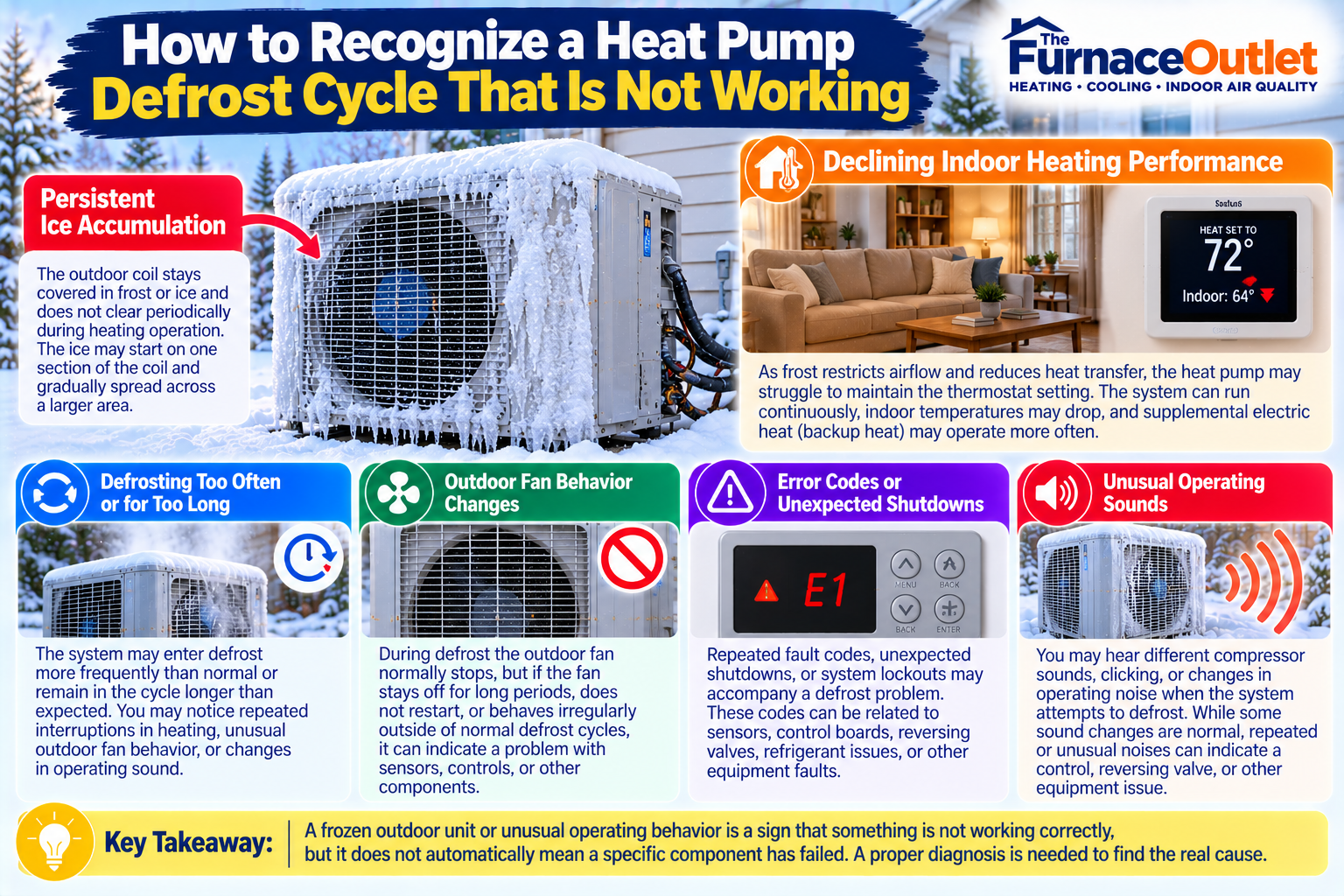
One of the most recognizable symptoms of a defrost malfunction is persistent ice accumulation across the outdoor coil. Instead of periodically clearing the frost, the equipment develops a thicker coating that remains in place through extended heating operation. The ice may begin on portions of the coil before spreading across a larger area, although the pattern depends on equipment design and operating conditions.
Another common symptom is declining indoor heating performance. As frost restricts airflow and reduces heat transfer, the heat pump may struggle to maintain the thermostat setting. Homeowners sometimes report that the equipment runs continuously while the house becomes progressively colder. In systems equipped with supplemental electric heating, backup heat may operate more frequently to compensate for reduced heat pump capacity.
Some defrost problems produce the opposite behavior. Rather than failing to defrost, the system may initiate defrost unnecessarily or remain in the sequence longer than expected. Homeowners may notice repeated interruptions in heating, unusual outdoor fan behavior, or excessive changes in operating sound. These symptoms can indicate incorrect sensor information, control problems, or other operating conditions that interfere with normal defrost decisions.
Repeated error codes, unexpected equipment shutdowns, or abnormal electrical behavior may also accompany a malfunction. However, these symptoms are not exclusive to defrost problems. Compressor faults, refrigerant restrictions, fan failures, and control wiring problems can create overlapping signs that require careful investigation. I always remind homeowners that a frozen outdoor unit is evidence of an operating problem, not proof that a particular component has failed. The purpose of troubleshooting is to determine why frost is accumulating and why the equipment is not clearing it correctly.
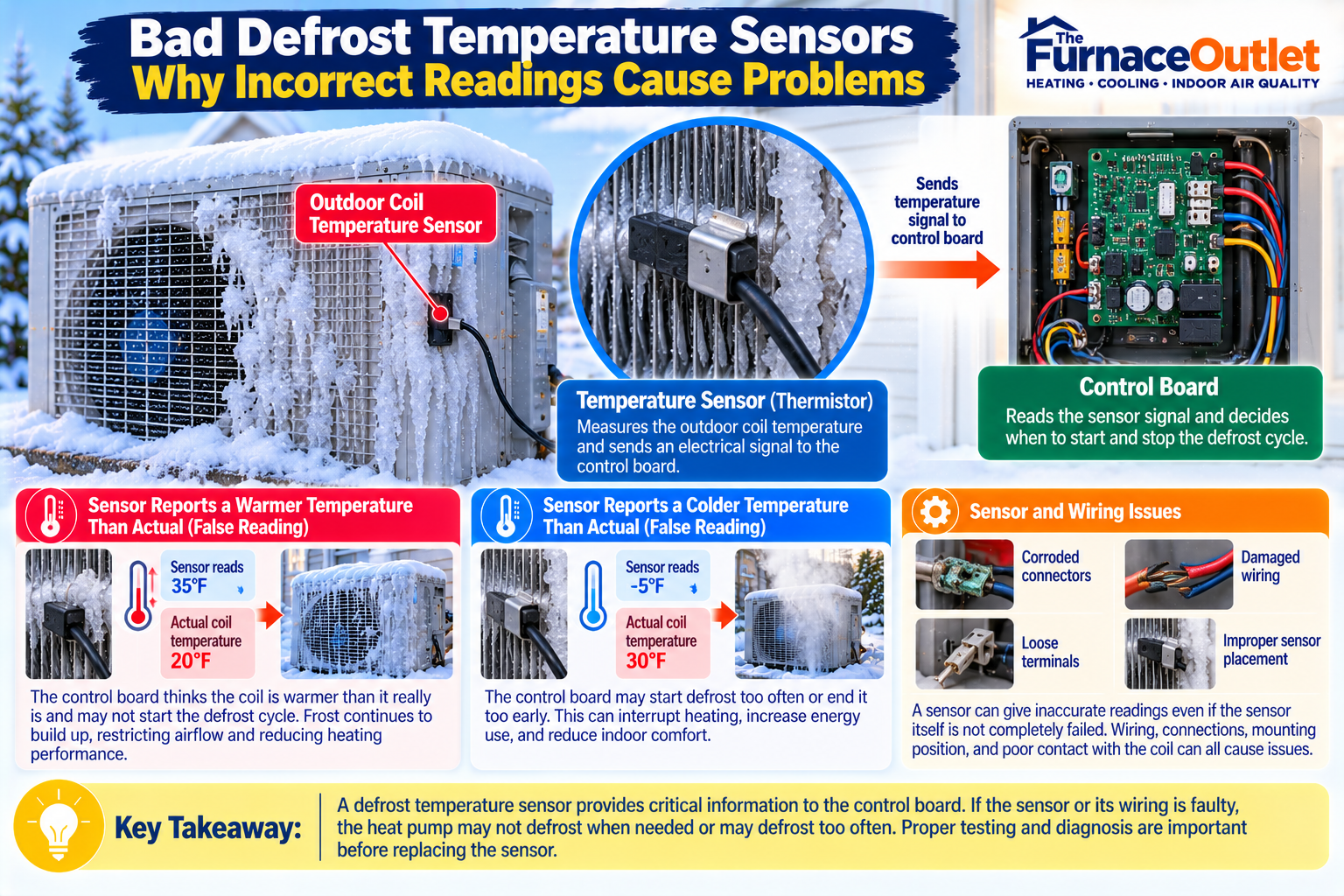
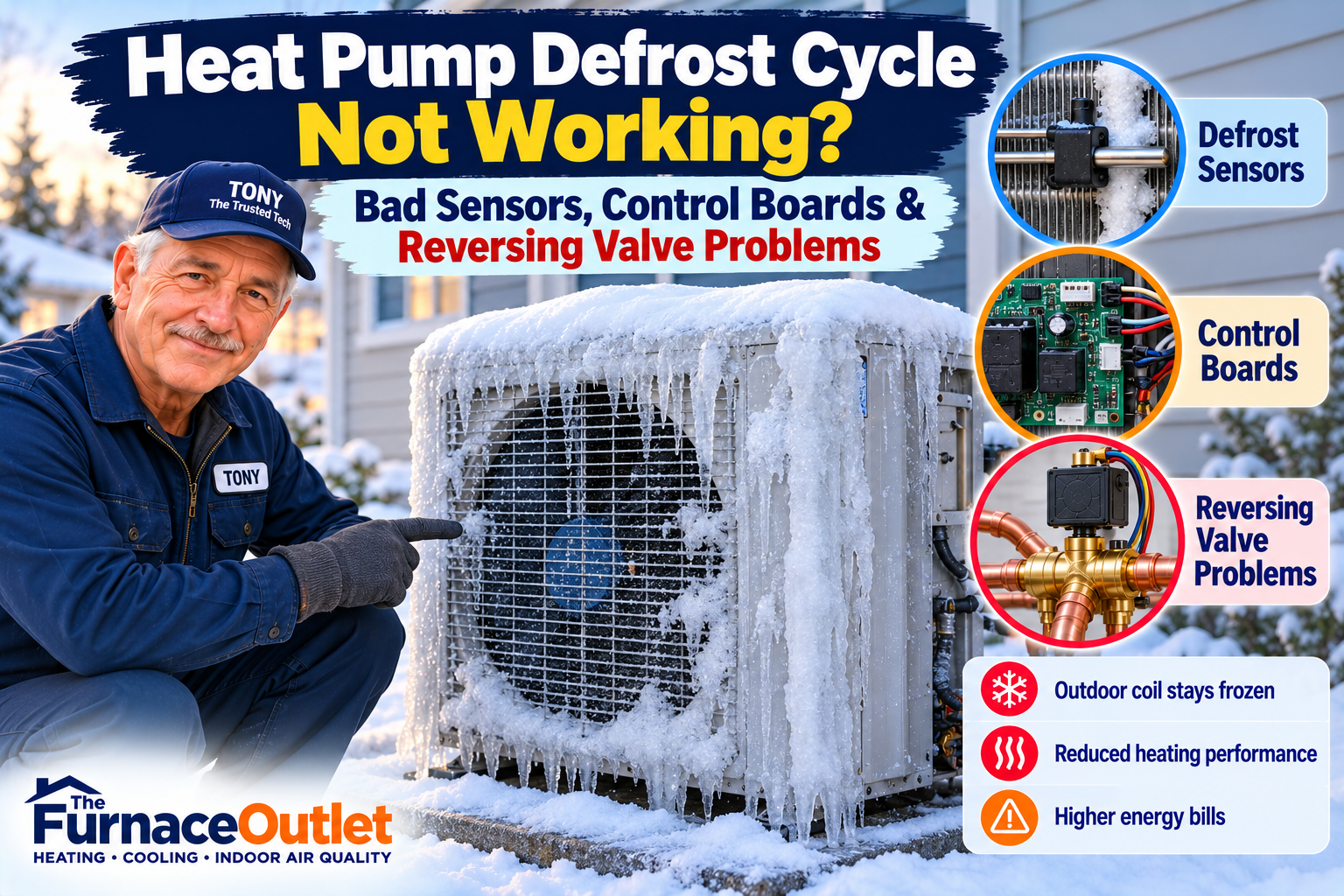
Temperature sensors are among the first components I would want checked when a heat pump appears unable to manage frost properly. Many systems use a sensor attached to the outdoor coil to help determine when defrost should begin or end. Depending on the design, additional temperature measurements may also influence the control system’s decisions.
A common sensor type is the thermistor, an electronic component whose resistance changes with temperature. The control board interprets this electrical characteristic to estimate the temperature at the sensor’s location. When the sensor operates correctly and is properly positioned, it provides useful information about outdoor-coil conditions. Problems arise when the sensor’s reported temperature no longer reflects the actual condition of the coil. If a defective sensor falsely indicates that the coil is warmer than it really is, the control system may fail to recognize the need for defrost. Frost can continue accumulating even though the board itself is functioning according to the information it receives. The opposite situation is also possible. A sensor that reports an abnormally low temperature may contribute to unnecessary defrost operation or incorrect termination behavior, depending on the manufacturer’s control logic. The system may interrupt heating more often than necessary, increasing energy consumption and reducing comfort.
Sensor problems do not always involve a completely failed electronic component. Corroded connectors, damaged wiring, loose terminals, and poor thermal contact with the coil can also produce inaccurate measurements. A sensor that has shifted away from its intended mounting location may respond to surrounding air rather than the coil temperature it is supposed to monitor. A qualified technician should verify the sensor’s physical placement, inspect its wiring, and compare electrical measurements with the manufacturer’s temperature-resistance specifications. The technician should also confirm that the control board receives the expected information. Replacing a sensor without checking these conditions can leave a wiring or connection problem unresolved.
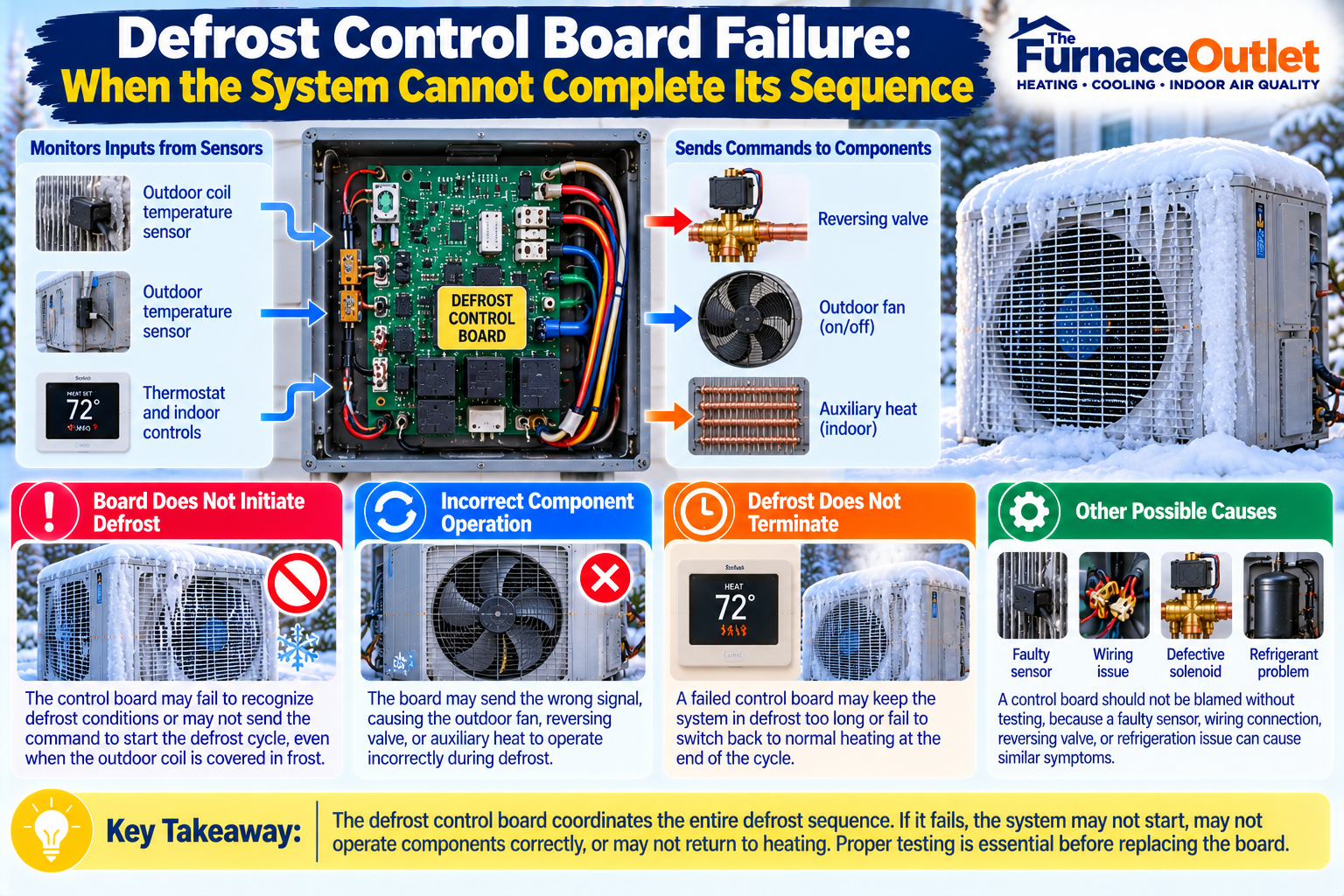
The defrost control board acts as the decision-making component for the defrost process. It receives information from sensors and other equipment controls, evaluates the manufacturer’s programmed conditions, and coordinates the operating changes required to remove frost from the outdoor coil. Depending on the heat pump design, the board may command the reversing valve, interrupt outdoor fan operation, communicate with the indoor controls, and determine when the defrost cycle should terminate. In more advanced systems, these functions may be integrated into a larger electronic control architecture rather than handled by a separate, easily identifiable defrost board.
A control board can fail because of damaged electronic components, defective relays, poor electrical connections, or internal circuit problems. The result may be a missing defrost command, incorrect component operation, or a failure to return to normal heating at the appropriate time. However, a control board should not be blamed simply because the equipment does not enter defrost. If a temperature sensor supplies incorrect information, a perfectly functional board may make an inappropriate decision based on that information. Similarly, the board may issue the correct command while a defective solenoid, wiring connection, or mechanical component fails to respond.
Professional diagnosis should establish whether the board is receiving valid inputs and producing the outputs required by the manufacturer’s service documentation. This distinction is important because electronic control boards can be expensive, particularly on communicating and variable-speed systems. Before approving a replacement, I would ask the technician to explain what testing demonstrated that the board itself was defective. A proper diagnosis should identify the failed function rather than rely on the assumption that every unexplained defrost problem originates in the electronics.
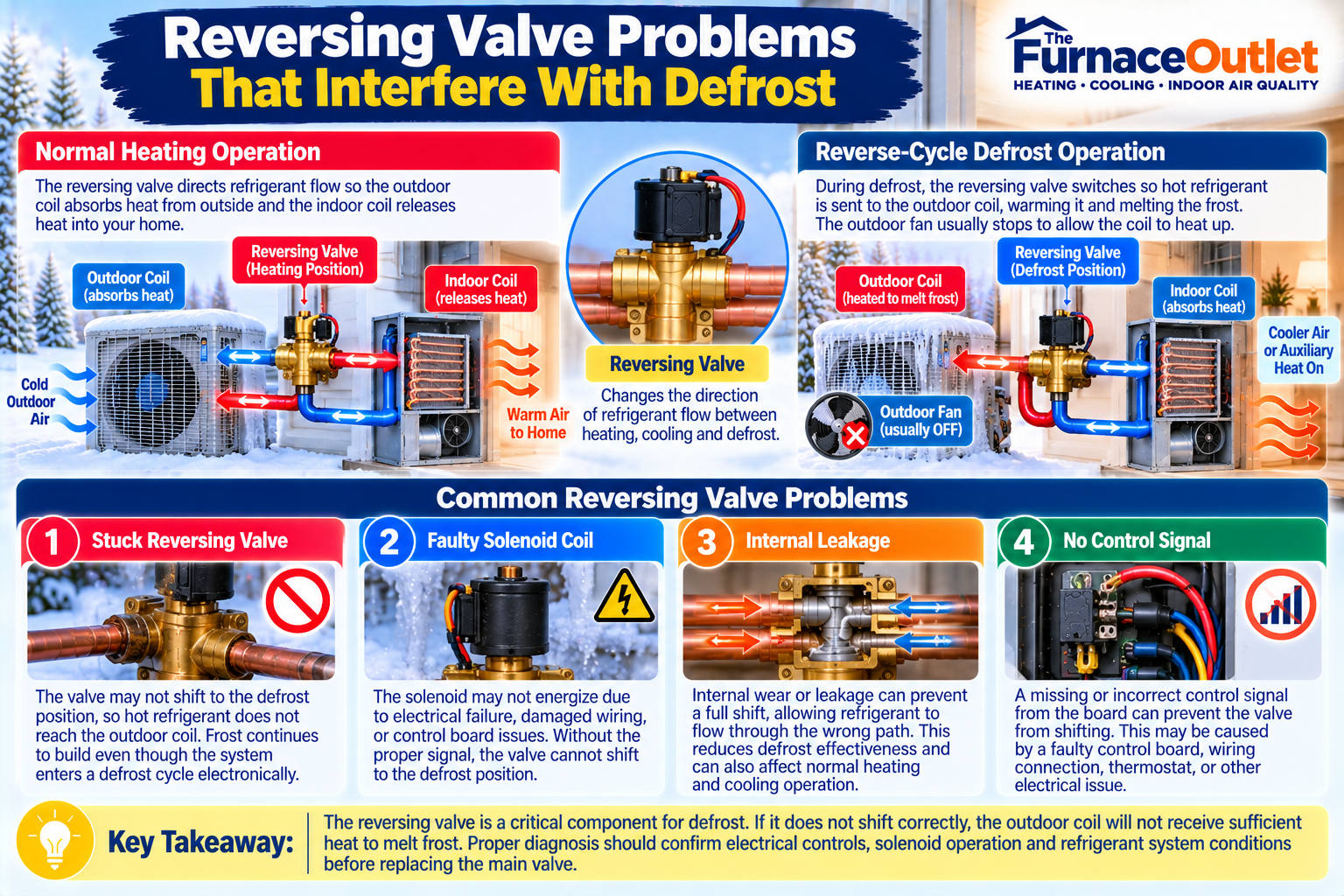
The reversing valve is essential to defrost operation on many conventional heat pumps because it changes the direction of refrigerant flow. During normal heating, refrigerant carries heat from the outdoor coil to the indoor coil. During reverse-cycle defrost, the valve redirects the refrigerant so the outdoor coil receives heat and accumulated frost can melt.
If the reversing valve fails to shift correctly, the outdoor coil may not receive sufficient heat for effective defrosting. The system might enter a defrost sequence electronically while the actual refrigerant flow remains incorrect. From the homeowner’s perspective, the outdoor fan may stop or the equipment may change sound, but the frost does not clear as expected.
A reversing valve problem can originate in the control signal, solenoid coil, pilot-valve mechanism, or internal moving components. Electrical failure may prevent the solenoid from operating, while mechanical sticking or internal leakage may interfere with the valve’s ability to redirect refrigerant properly. An important technical detail is that reversing valve solenoids are not energized in the same operating mode on every heat pump. Many systems use an O control convention, while others use a B convention. The correct operating sequence must be established from the manufacturer’s wiring diagram and service instructions. Technicians should verify that the appropriate command reaches the valve and determine whether the refrigerant circuit responds correctly. A valve that fails to shift because of a missing control signal should not be treated as though its internal mechanism has failed.
Complete reversing valve replacement can involve substantial labor because the component is installed within the sealed refrigerant circuit. That is why I recommend confirming the electrical controls, solenoid operation, and refrigerant-system conditions before authorizing replacement of the main valve.
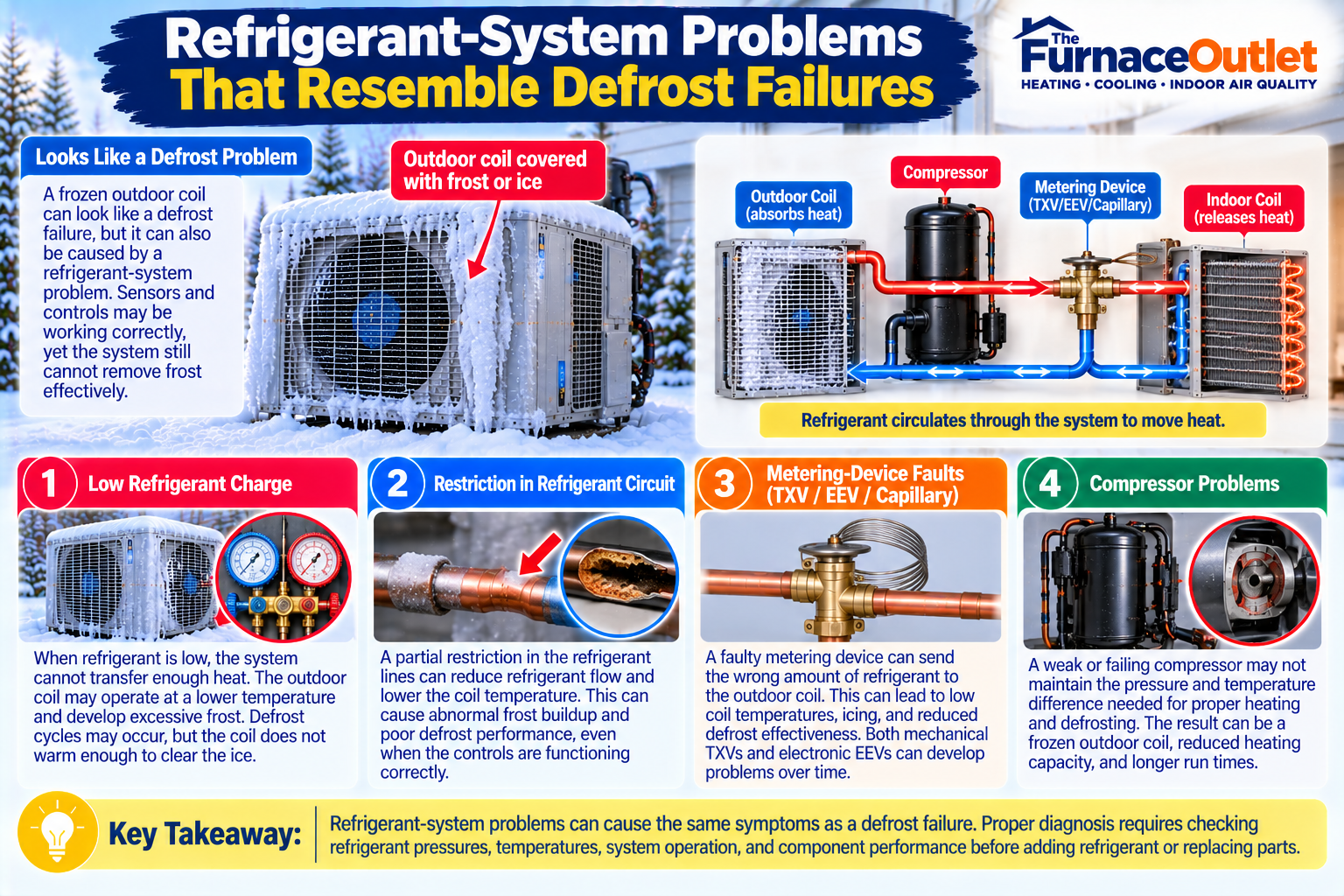
A heat pump can develop abnormal frost accumulation even when its temperature sensors and defrost controls operate correctly. Refrigerant-system problems can affect outdoor-coil temperature, heat transfer, compressor performance, and the ability to warm the coil during defrost.
Low refrigerant charge, restrictions in the refrigerant circuit, metering-device faults, and compressor deficiencies may create operating conditions that encourage abnormal icing or reduce defrost effectiveness. The exact symptoms depend on the system design, outdoor conditions, and nature of the fault. For example, a heat pump with inadequate refrigerant circulation may struggle to transfer sufficient heat to the outdoor coil during a defrost event. The controls may initiate the proper sequence, yet the ice remains because the refrigeration system cannot deliver the expected performance. A technician should evaluate relevant refrigerant pressures, line temperatures, compressor operation, and other manufacturer-specified measurements under appropriate conditions. These observations must be interpreted together because no single pressure or temperature reading reliably identifies every refrigerant problem.
I strongly discourage unnecessary refrigerant adjustments. Adding refrigerant simply because the outdoor coil is frozen can make matters worse if the charge was already correct. If a leak is suspected, it should be investigated using approved procedures rather than repeatedly adding refrigerant without addressing the underlying problem.
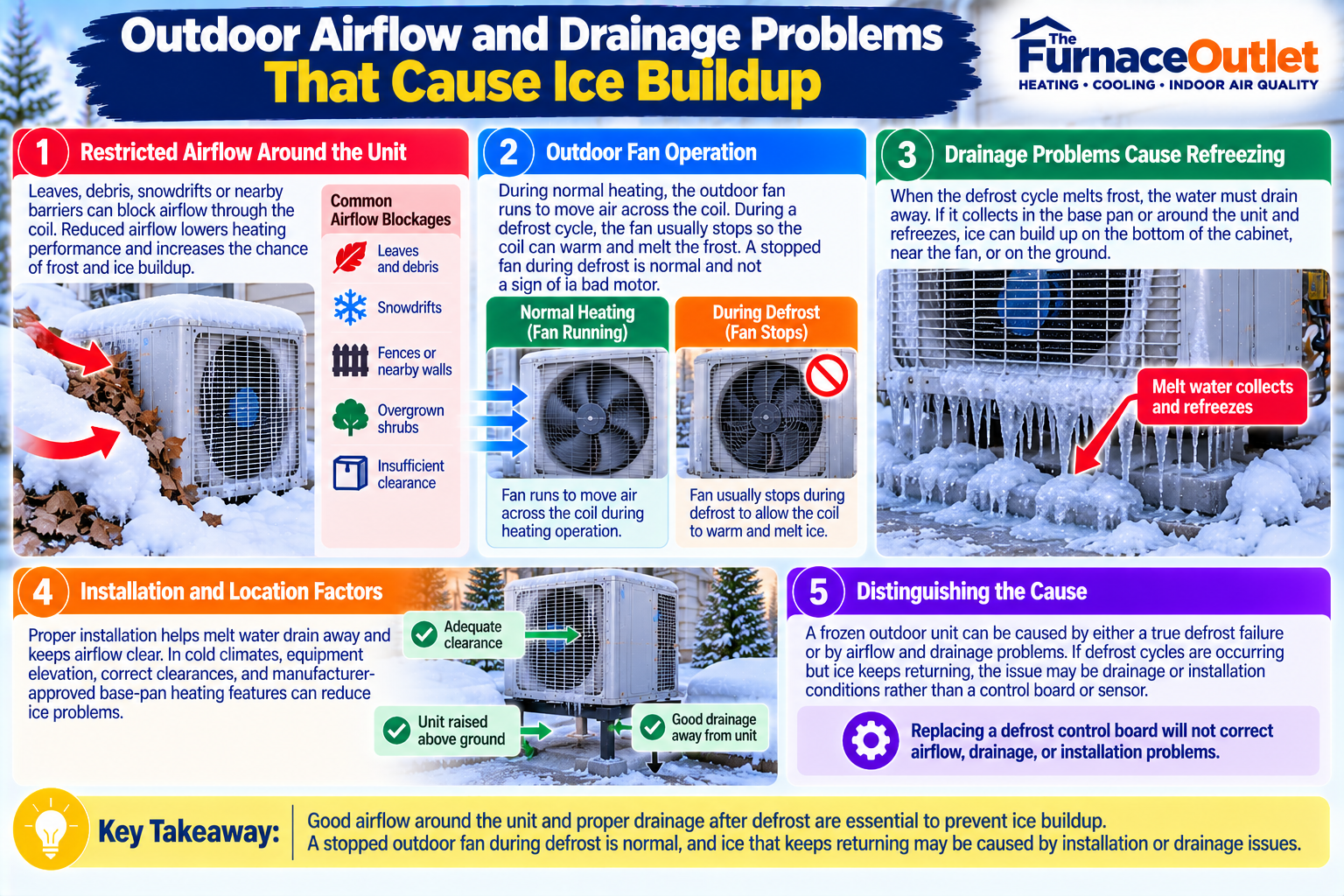
Sometimes the defrost controls are functioning properly, but the equipment’s surrounding conditions make normal frost management difficult. Outdoor airflow restrictions are a common example. Leaves, debris, snowdrifts, or nearby barriers can interfere with airflow through the coil, reducing heating performance and contributing to abnormal operating conditions.
The outdoor fan also deserves attention. During normal heating, the fan should operate according to the manufacturer’s sequence to move air across the heat exchanger. During many conventional defrost cycles, however, the fan intentionally stops to allow the coil to warm. This difference is important because a stopped outdoor fan is not automatically evidence of a defective motor. Drainage problems create another source of winter icing. When the defrost cycle melts frost, the resulting water must leave the equipment. If it collects in the base pan or beneath the coil and refreezes, ice can gradually accumulate around the lower cabinet, fan area, or supporting structure.
This problem is particularly relevant in regions where outdoor temperatures remain below freezing for extended periods. Equipment elevation, installation clearances, drainage design, and manufacturer-approved base-pan heating features can influence how effectively meltwater is managed. A technician should distinguish between ice that remains because defrost never occurs and ice that forms repeatedly because melted water cannot drain properly. Replacing a defrost control board will not correct a drainage or installation problem.
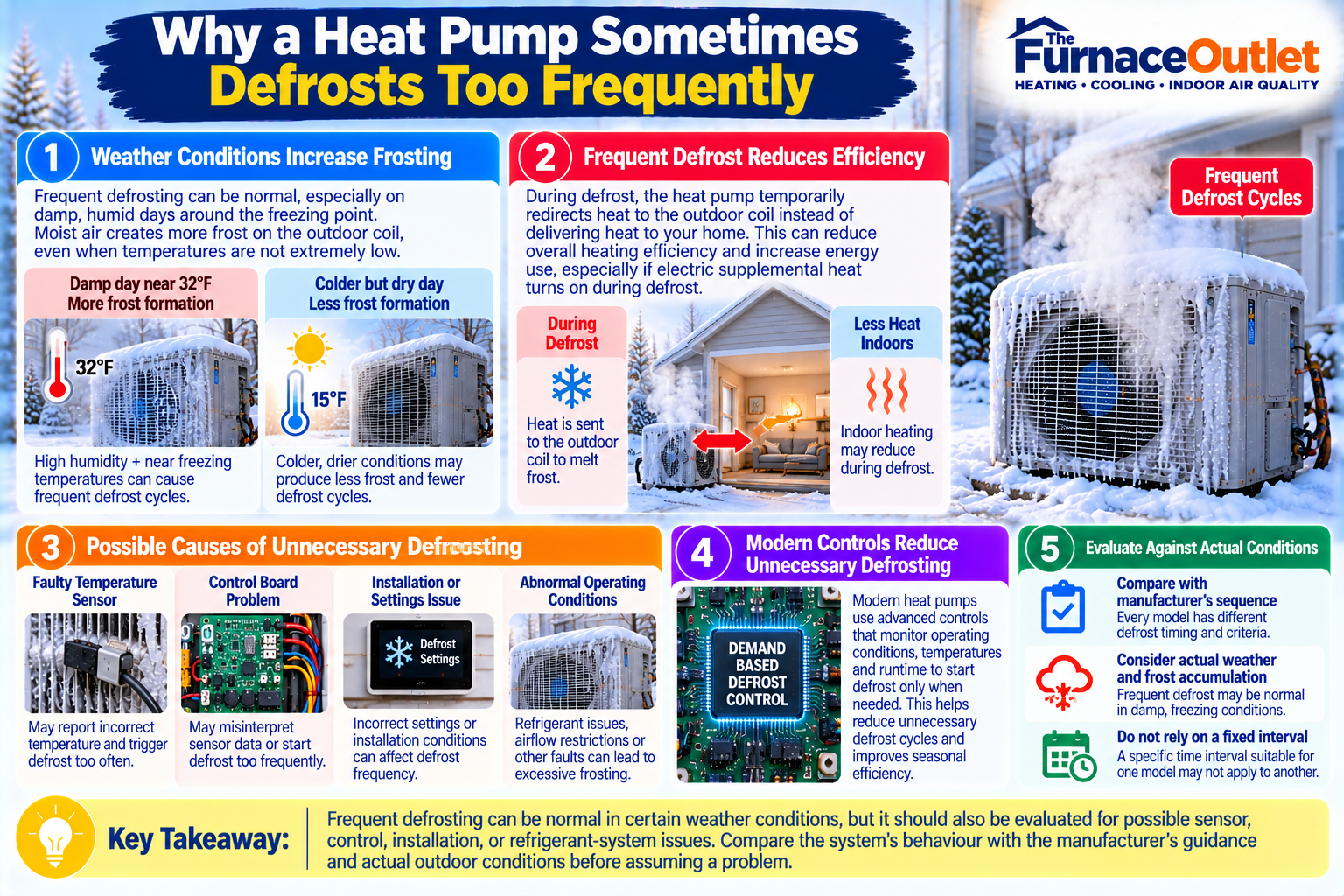
Frequent defrosting can be normal under certain weather conditions, particularly when outdoor air contains substantial moisture and the coil operates below freezing. Frost formation does not depend on outdoor temperature alone, so a damp day near 32°F can sometimes create more frosting than a colder but drier day.
However, unnecessary defrost cycles can reduce heating efficiency because the equipment temporarily redirects heat toward the outdoor coil rather than delivering it indoors. On systems using electric supplemental heating during defrost, additional electricity may also be consumed. A defective temperature sensor, control-board problem, or abnormal operating condition can cause defrost cycles to occur more often than necessary. Some systems may also have incorrect settings or installation problems that interfere with their intended defrost strategy. Modern demand-based controls attempt to reduce unnecessary defrosting by using operating measurements to estimate when frost removal is actually required. The U.S. Department of Energy has studied defrost energy consumption and opportunities to improve control strategies because these cycles affect seasonal heat pump performance.
I would evaluate defrost frequency against the manufacturer’s documented sequence, actual frost accumulation, and weather conditions before declaring it abnormal. A fixed time interval that is appropriate for one model may not apply to another.
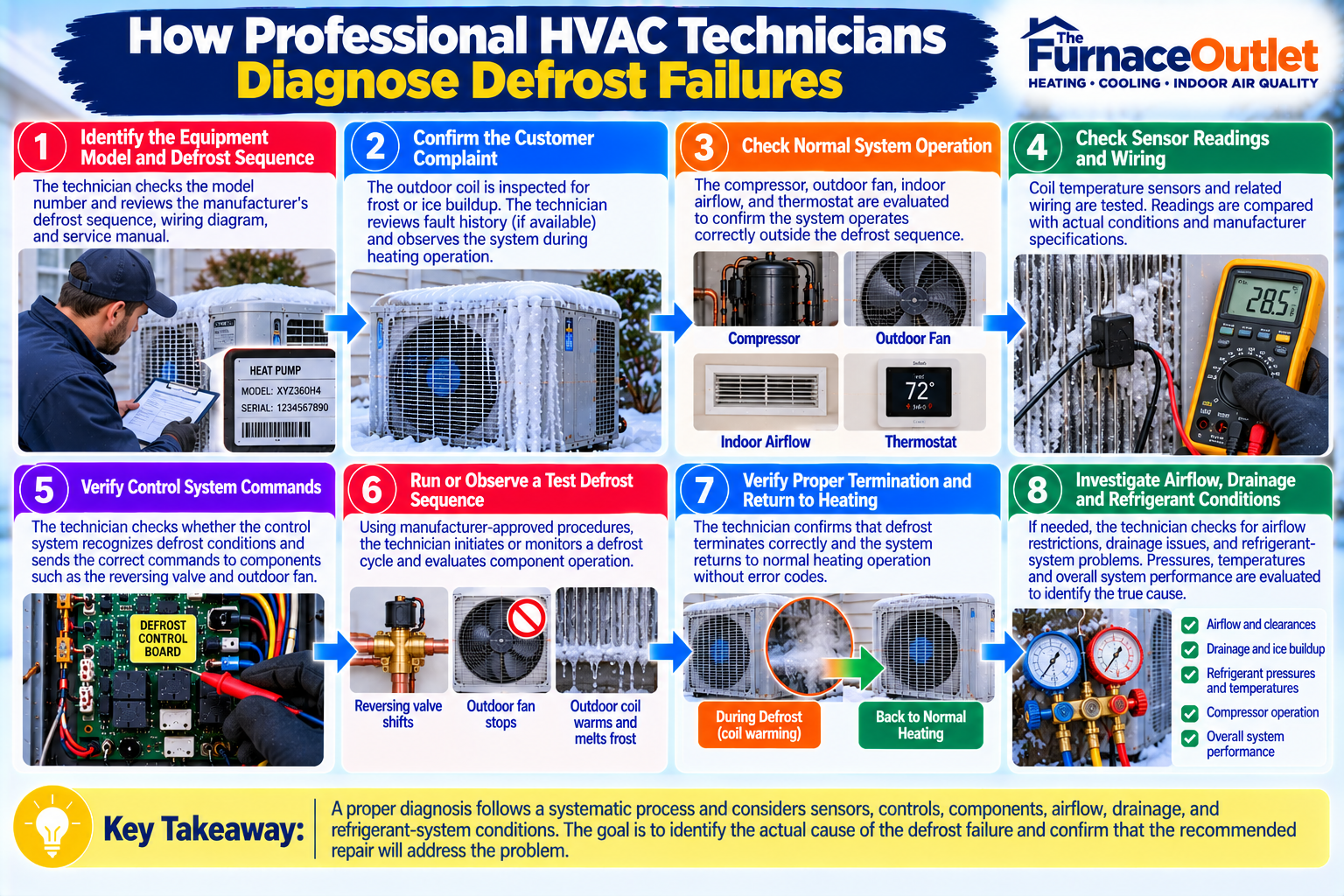
A reliable diagnosis begins with identifying the exact equipment model and understanding its intended defrost sequence. Without that information, electrical measurements and operating observations can easily be misinterpreted. The technician should first confirm the homeowner’s complaint by examining the outdoor coil, reviewing any available fault history, and observing heating operation. The compressor, outdoor fan, indoor airflow, and thermostat controls should be evaluated to establish whether the system is operating normally outside the defrost sequence. The next stage involves checking sensor readings and related wiring. Coil temperature measurements should be compared with actual conditions and manufacturer specifications. If the sensors are functioning correctly, the technician can investigate whether the control system recognizes defrost conditions and issues the required commands.
Some equipment provides manufacturer-approved diagnostic procedures that allow a qualified technician to initiate or observe a test defrost sequence. During such testing, the technician may evaluate reversing valve response, outdoor fan behavior, coil temperature changes, and refrigerant-system performance. It is also important to verify that the system terminates defrost correctly and returns to stable heating. A heat pump that enters defrost but cannot complete the sequence may have a different problem from one that never initiates defrost.
The technician should investigate airflow, drainage, and refrigeration conditions whenever the observations indicate those possibilities. A complete diagnosis explains why the equipment failed to remove frost and demonstrates that the recommended repair addresses that cause.
Homeowners can perform several useful observations without opening equipment cabinets or handling electrical and refrigerant components. The first step is to confirm that the thermostat is set to heating mode and that the selected temperature is appropriate. Any displayed error codes or unusual messages should be recorded for the technician. The indoor air filter should also be inspected and maintained according to the manufacturer’s instructions. Although a dirty indoor filter does not automatically indicate a defrost failure, restricted airflow can reduce overall system performance and complicate heating problems.
Outside, examine the heat pump visually for snow accumulation, leaves, or other objects obstructing the coil. Loose snow around the equipment can be cleared carefully while avoiding moving components, electrical connections, and refrigerant lines. Do not remove protective panels or attempt to reach through the fan grille. Observe whether the equipment occasionally clears frost and returns to normal heating. Photographs taken before and after suspected defrost cycles may help a technician understand an intermittent problem, particularly if the unit behaves normally by the time service arrives. Do not chip ice away with tools, pour boiling water over the coil, bypass control circuits, or attempt to force the reversing valve to shift. If the outdoor unit becomes heavily iced over or repeatedly trips electrical protection devices, follow the manufacturer’s instructions for stopping operation and arrange professional service.
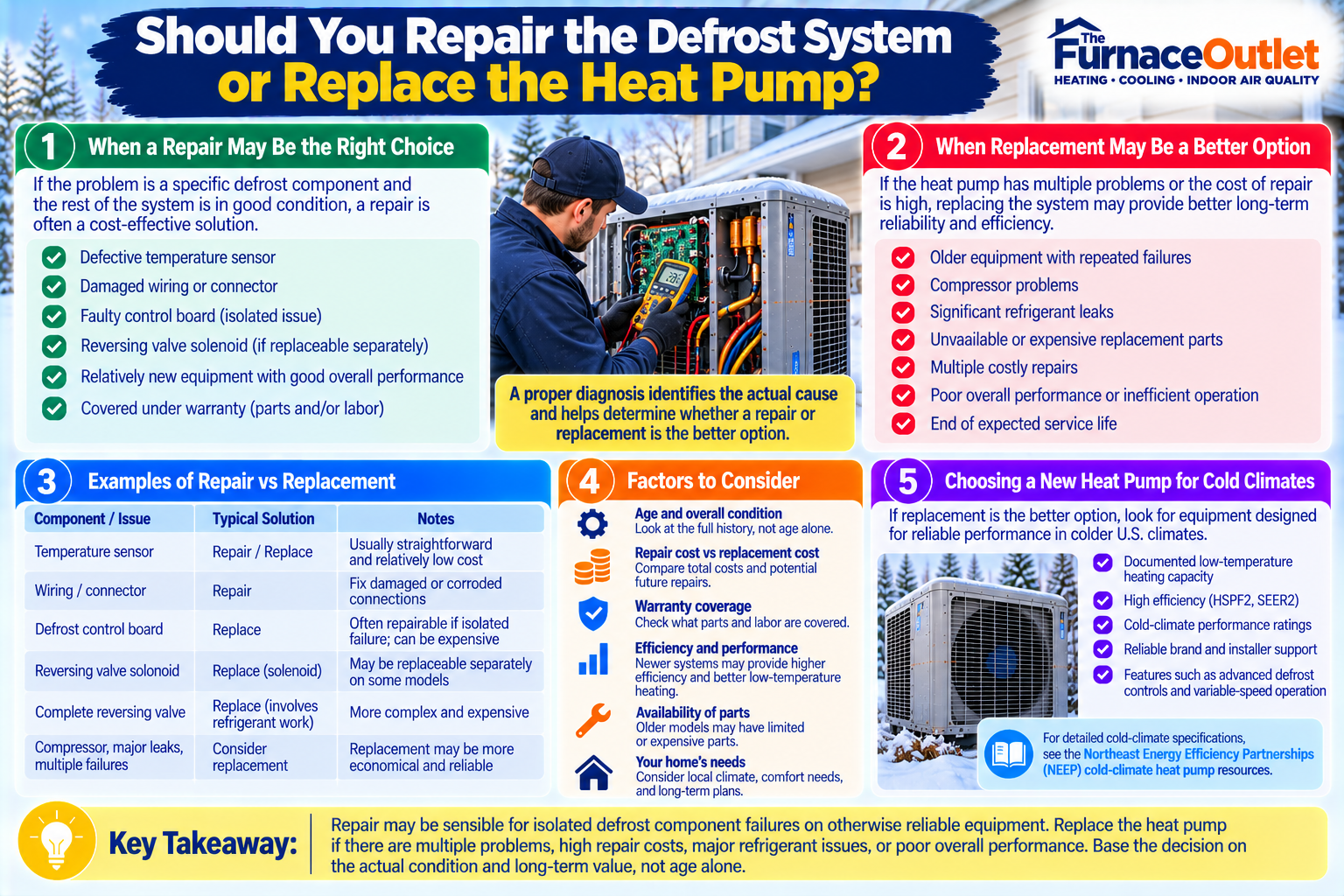
The decision to repair or replace depends on the confirmed failure, the equipment’s overall condition, and the cost of restoring reliable operation. A defective sensor, damaged connector, or isolated control-board problem may be repairable without disturbing the refrigerant circuit. A reversing valve solenoid may also be replaceable separately on certain equipment. Complete reversing valve replacement is generally more involved because it requires work on the sealed refrigeration system, including appropriate refrigerant handling, leak testing, evacuation, and charging.
For relatively new equipment that has otherwise performed reliably, repairing a confirmed defrost component may be a sensible decision. Warranty coverage can also influence the economics, although labor and related expenses may not always be included. For older equipment with repeated compressor problems, significant refrigerant leaks, unavailable replacement parts, or multiple expensive failures, complete system replacement may deserve consideration. The decision should reflect the actual condition of the heat pump rather than age alone.
When evaluating replacement equipment for colder U.S. climates, I recommend examining documented low-temperature heating capacity, efficiency, and operating characteristics. Resources such as Northeast Energy Efficiency Partnerships’ cold-climate heat pump specifications can help homeowners and contractors compare equipment intended for demanding winter conditions.
Preventive maintenance cannot eliminate every electronic or mechanical failure, but it can reduce avoidable winter operating problems. Maintaining clean indoor filters and unobstructed outdoor airflow helps the heat pump operate under the conditions intended by its manufacturer. Outdoor equipment should be installed with appropriate clearances and protection from predictable snow accumulation. Drainage should allow defrost meltwater to leave the unit without repeatedly refreezing around critical components. In colder climates, the suitability of manufacturer-approved ice-management features may also deserve attention. A professional prewinter inspection can include evaluating thermostat operation, electrical connections, sensor readings, heating performance, and defrost controls. When symptoms justify further testing, the technician should also assess refrigerant-system operation and reversing valve response.
Homeowners should pay attention to recurring ice buildup, unexplained heating interruptions, and changes in winter operating behavior. Reporting these problems early gives a technician an opportunity to diagnose them before severe weather places greater demands on the equipment. ENERGY STAR recommends regular heating and cooling maintenance, including professional preseason inspections, filter care, electrical checks, and verification of control operation. These practices support dependable equipment performance, although they cannot guarantee that individual components will never fail.
A heat pump may remain covered in ice because the defrost controls are not initiating the required sequence, the reversing valve is not responding, or the refrigeration system cannot warm the outdoor coil effectively. Faulty sensors, control-board problems, restricted airflow, and drainage issues can also contribute. The important distinction is whether the equipment is failing to recognize the need for defrost, failing to perform the sequence, or experiencing abnormal icing despite functioning controls. A qualified technician should identify the cause before replacing components.
Yes. A defective outdoor-coil temperature sensor can provide inaccurate information to the control system, potentially preventing defrost initiation or causing incorrect termination. However, a similar symptom can result from damaged sensor wiring, poor electrical connections, or incorrect sensor placement. Professional testing should establish whether the sensor’s readings agree with actual temperatures and manufacturer specifications before a replacement is recommended.
A defective control board may fail to initiate defrost, send incorrect operating commands, or terminate the cycle improperly. These symptoms are not conclusive because sensors, wiring, solenoids, and refrigeration components can produce similar results. A technician should verify that the board receives correct inputs and determine whether it produces the required outputs under the manufacturer’s specified operating conditions.
Yes. Many conventional heat pumps rely on the reversing valve to redirect hot refrigerant toward the outdoor coil during defrost. If the valve fails to shift correctly, frost may not melt as expected. However, the cause could be an electrical control problem, defective solenoid, mechanical valve failure, or abnormal refrigerant-system condition. The technician should verify the operating sequence before recommending replacement of the main valve.
Frequent defrost cycles may be normal during damp winter weather when frost forms rapidly on the outdoor coil. However, repeated cycles without meaningful frost accumulation can indicate incorrect sensor information, control problems, or abnormal operating conditions. Defrost frequency should be evaluated using the equipment’s manufacturer-specific control strategy rather than a universal time interval.
Visible water vapor can be normal during defrost because frost melts and moisture evaporates from the warming outdoor coil. This vapor may appear especially dramatic during cold weather. However, a burning odor, sparking, unusual electrical noises, or smoke associated with equipment damage should not be treated as normal defrost behavior. Those conditions require immediate attention and professional evaluation.
Some heat pumps provide manufacturer-specific diagnostic procedures for qualified technicians to initiate a test defrost sequence. Homeowners should not short electrical terminals, bypass safety controls, or manipulate refrigerant components to force defrost operation. Improper testing can damage equipment or create electrical and refrigerant-related hazards. If normal defrost is not clearing the outdoor coil, professional diagnosis is the safer approach.
Not automatically. Many defrost problems involve replaceable sensors, electrical components, or correctable installation conditions. Complete replacement becomes more relevant when the heat pump has repeated major failures, substantial refrigerant-system damage, unavailable parts, or repair costs that are difficult to justify relative to the equipment’s condition. A written diagnosis and itemized repair estimate should guide the decision.

When a homeowner tells me their heat pump is frozen solid, I do not begin by ordering a new defrost board or reversing valve. I start by understanding the operating sequence. Is the coil accumulating frost under conditions where defrost should occur? Are the sensors reporting accurate temperatures? Does the control system recognize the need for defrost, and does it send the appropriate commands when the required conditions are satisfied? If those controls are functioning correctly, I want to know whether the reversing valve responds, whether the refrigeration system can warm the outdoor coil, and whether the resulting water drains away properly. Those observations help distinguish an electronic fault from a mechanical, refrigeration, or installation problem.
I also remind homeowners that the objective is not simply to melt the ice once. A successful repair should restore dependable automatic frost removal so the heat pump can continue delivering useful heating throughout winter. Repeatedly clearing ice without correcting the underlying cause only delays the next failure. My recommendation is to have a qualified HVAC technician verify sensor accuracy, control-board inputs and outputs, reversing valve operation, refrigerant-system performance, and drainage before authorizing expensive repairs. This systematic approach reduces unnecessary component replacement and gives homeowners a better chance of restoring reliable heating before the coldest weather arrives.
For the 2026–2027 heating season, the most sensible strategy is to investigate unusual icing early, maintain proper airflow, and follow the manufacturer’s service recommendations. A heat pump that manages frost correctly and delivers its documented heating capacity is much better prepared to maintain indoor comfort through demanding winter conditions.
This article is provided by The Furnace Outlet for general educational purposes and should not be considered a substitute for professional HVAC diagnosis, manufacturer service instructions, or applicable safety requirements. Heat pump defrost troubleshooting may involve energized electrical circuits, moving fans, pressurized refrigerants, hot surfaces, and other hazards. Homeowners should not bypass controls, open refrigerant lines, or perform internal electrical testing without appropriate training and authorization.
In the United States, refrigerant-related service work must comply with applicable EPA Section 608 requirements, including technician certification where required. Equipment-specific manufacturer documentation and local codes should always take precedence over general troubleshooting information.
U.S. Department of Energy — Quantifying and Reducing Defrost Energy Use. This technical resource examines frost formation on outdoor heat pump coils, reverse-cycle defrost operation, and the energy implications of different defrost strategies. It provides useful technical background for understanding why effective frost detection and control are important to winter heating performance. Read the DOE research presentation.
ENERGY STAR — Heating and Cooling Maintenance Checklist. ENERGY STAR provides guidance on professional preseason maintenance, thermostat settings, electrical connections, system controls, filters, and airflow. These practices support reliable equipment operation and can help identify developing problems before peak heating demand arrives. Read the ENERGY STAR maintenance checklist.
U.S. Environmental Protection Agency — Section 608 Technician Certification Requirements. The EPA explains certification requirements for technicians performing covered refrigeration and air-conditioning service activities. This reference is especially relevant when defrost diagnosis leads to refrigerant pressure testing, refrigerant handling, or reversing valve replacement. Review EPA certification requirements.
Northeast Energy Efficiency Partnerships — Cold Climate Air Source Heat Pump Specification and Product List. NEEP provides technical specifications and equipment performance resources intended to support cold-climate heat pump selection. Its materials are useful when comparing the low-temperature heating capabilities of replacement equipment. Explore NEEP’s cold-climate heat pump resources.
Northeast Energy Efficiency Partnerships — Air Source Heat Pump Installer and Consumer Resources. This resource brings together practical guidance on sizing, selecting, and installing air-source heat pumps in cold climates. It is particularly relevant to equipment placement, installation quality, and the broader conditions affecting winter performance. View NEEP’s installation and consumer resources.
Northeast Energy Efficiency Partnerships — Cold Climate Heat Pump Sizing Support Tools. NEEP explains how equipment heating capacity can be compared with a home’s heating requirements across different outdoor temperatures. This information helps homeowners understand why insufficient heating capacity should not automatically be mistaken for a defrost failure. Read the cold-climate sizing guide.
These references support the general operating principles, winter performance considerations, maintenance practices, and refrigerant safety requirements discussed in this guide. For exact defrost sensor specifications, diagnostic procedures, wiring diagrams, reversing valve control signals, and fault-code interpretations, the manufacturer’s current service manual for the specific equipment model remains the primary technical reference.