Newsletter Subscribe
Enter your email address below and subscribe to our newsletter

HVAC made simple
By Jake Lawson | HVAC Specialist | The Furnace Outlet
Updated: October 2026 | Category: Indoor Air Quality
Indoor air quality has become an increasingly important consideration for homeowners, particularly as modern houses become more airtight and people spend substantial portions of their time indoors. Concerns about dust, pollen, wildfire smoke, mold, volatile organic compounds, and airborne microorganisms have encouraged interest in air purifiers, HVAC filters, ventilation systems, and humidity-control equipment. Unfortunately, the growing market for indoor air quality products has also created opportunities for misleading claims and widespread misconceptions.
Some homeowners believe that expensive air purifiers automatically guarantee healthier air, while others assume that opening windows provides sufficient ventilation under every condition. There are also persistent misunderstandings about HEPA filtration, MERV ratings, houseplants, duct cleaning, humidity, and the ability of HVAC systems to remove different types of pollutants. These beliefs can lead homeowners to purchase unnecessary equipment or overlook the actual source of an indoor air quality problem.
The challenge is that indoor air quality involves several different categories of pollutants. Airborne particles behave differently from gases, odors, moisture, and biological contaminants. A solution that works well for one category may accomplish very little for another. For example, a high-efficiency particle filter can capture fine particulate matter but generally cannot remove carbon monoxide or provide fresh outdoor air.
As an HVAC specialist, I encourage homeowners to approach indoor air quality through three complementary strategies: controlling pollution sources, providing appropriate ventilation, and using effective air cleaning where necessary. In this guide, I explain 12 common indoor air quality myths, examine the science behind each misconception, and offer practical recommendations for making better decisions about home air quality.
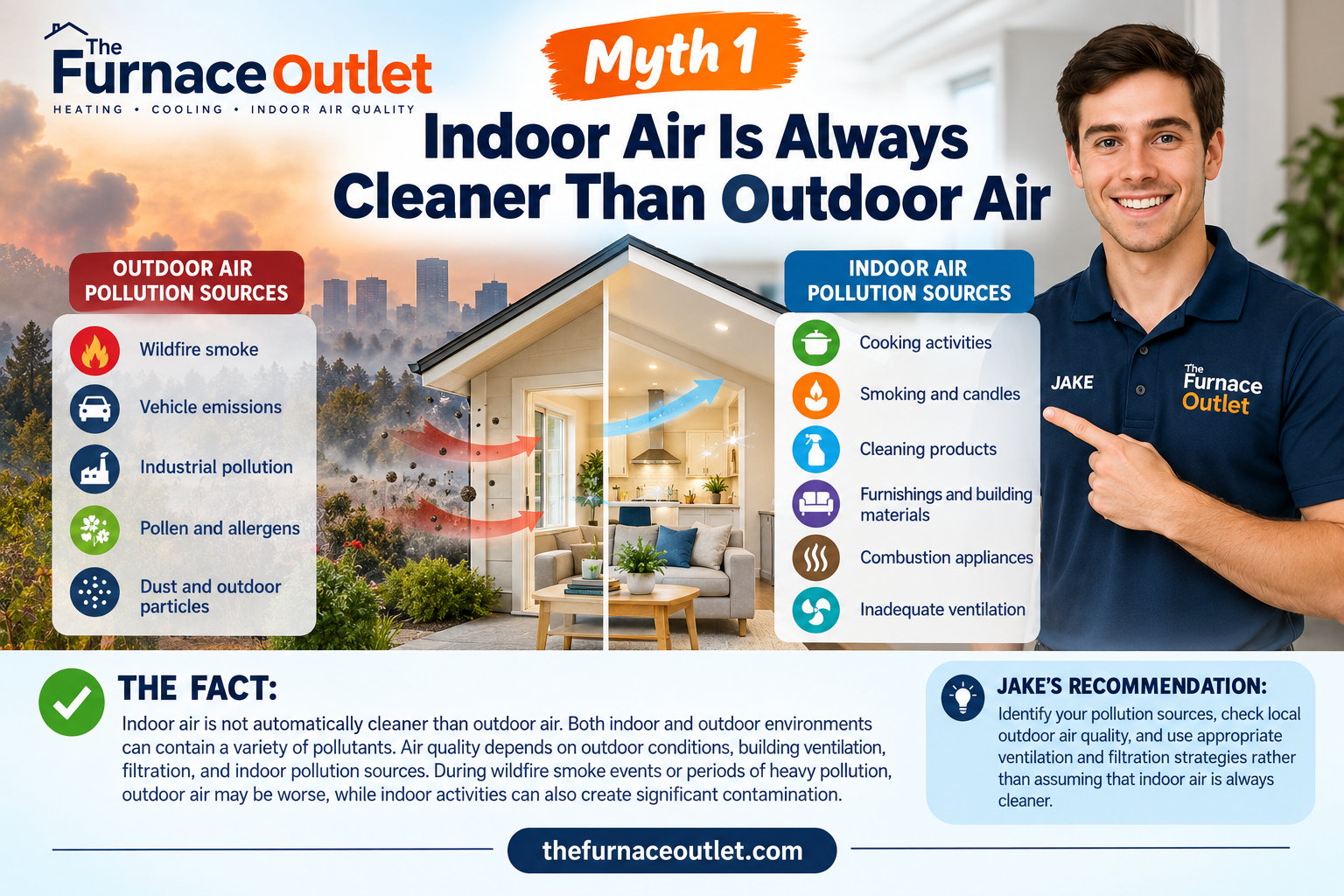
One of the most common misconceptions is that staying indoors automatically provides protection from outdoor pollution. Buildings can reduce exposure to certain outdoor contaminants, but indoor air is not necessarily cleaner than the air outside. Indoor pollution levels depend on outdoor conditions, building ventilation, filtration, and the pollutants generated inside the home.
Cooking, smoking, candles, cleaning products, furnishings, combustion appliances, and other household activities can introduce particles or gases into indoor spaces. Inadequate ventilation may allow some of these contaminants to accumulate, particularly in tightly sealed buildings.
Outdoor pollutants can also enter through ventilation systems, open windows, doors, and building-envelope leakage. During wildfire smoke events or periods of severe outdoor pollution, the effectiveness of the building envelope and filtration system becomes especially important.
I recommend avoiding assumptions about air quality based solely on whether someone is indoors or outdoors. The better approach is to identify relevant pollution sources, understand local outdoor conditions, and use suitable ventilation and filtration strategies.
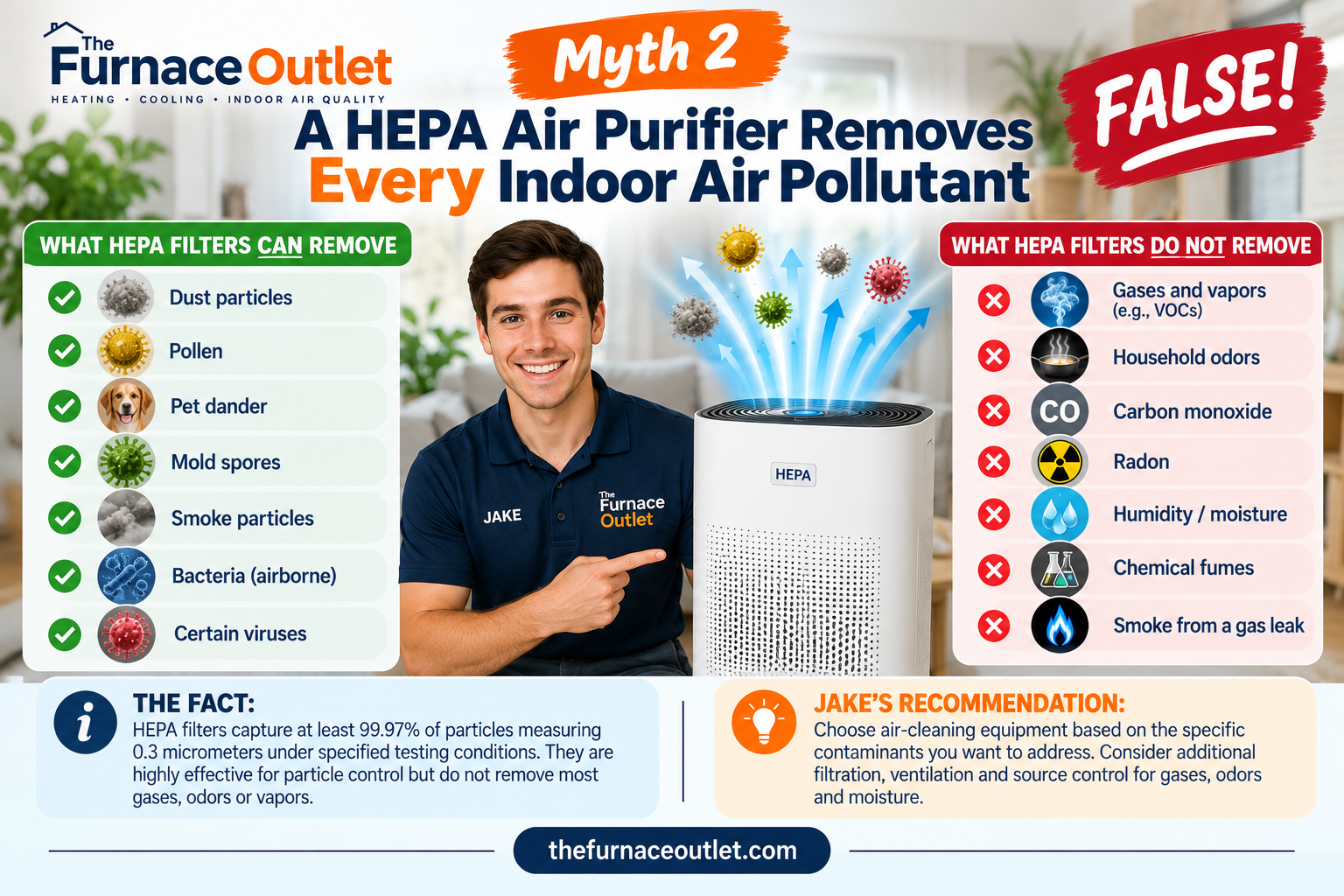
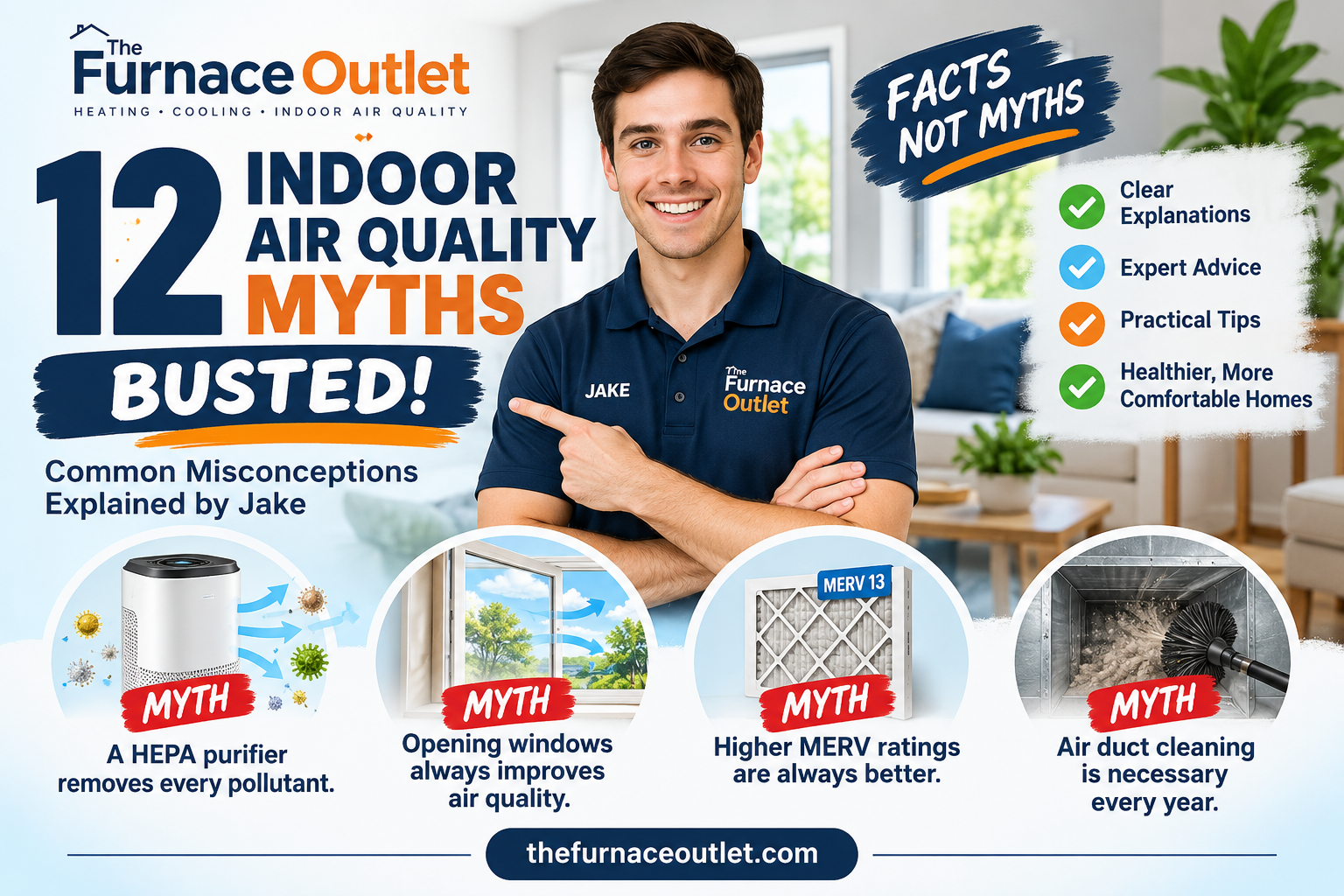
HEPA filtration is highly effective at capturing airborne particles, but it does not remove every category of indoor pollutant. Under a commonly used U.S. HEPA definition, a qualifying filter captures at least 99.97% of particles measuring 0.3 micrometers under specified testing conditions. This makes HEPA filtration valuable for particle control, including certain dust, smoke, and allergen-containing aerosols.
However, conventional HEPA media is not designed to remove most gases or vapors. Carbon monoxide, many volatile organic compounds, and certain household odors can pass through particle filtration. Specialized gas-phase filtration, such as appropriately designed activated-carbon or other sorbent systems, may help with selected gaseous contaminants, but performance depends on the pollutant, media quantity, airflow, and operating conditions.
An air purifier also cannot repair a gas leak, eliminate a moisture source, or replace required ventilation. Even an effective purifier must be appropriately sized for the room and operated at sufficient airflow to deliver meaningful particle removal.
My recommendation is to select air-cleaning equipment based on the contaminants of concern rather than assuming that the HEPA label guarantees complete indoor air purification.
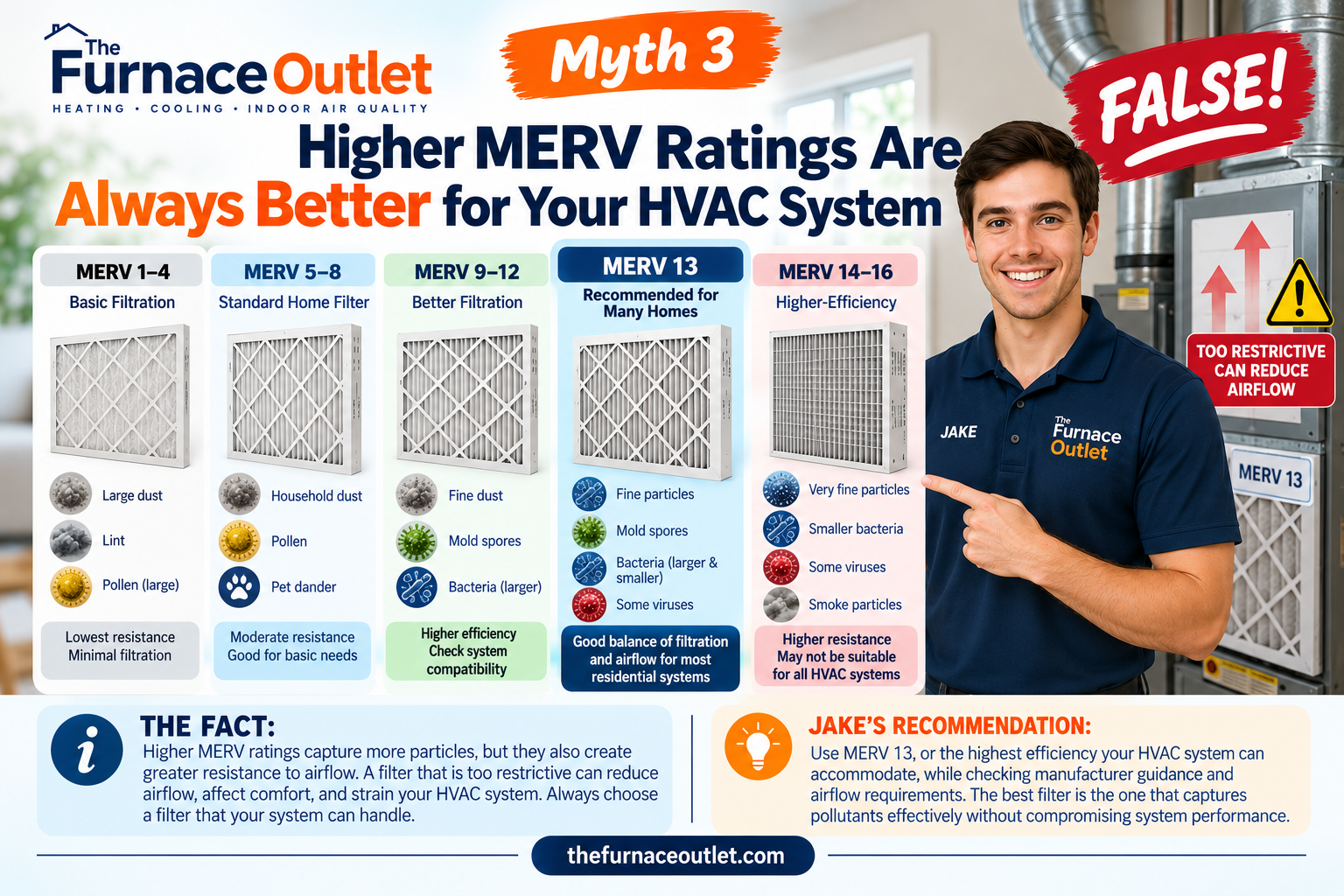
MERV ratings describe a filter’s ability to capture particles within specified size ranges under standardized testing conditions. Higher-rated filters generally provide greater particle capture efficiency, but this does not mean that installing the highest available MERV filter is appropriate for every residential HVAC system.
Air filters create resistance to airflow, and the amount of resistance depends on filter design, surface area, airflow, and accumulated loading. A filter that is too restrictive for the available blower capacity and duct system may reduce airflow, affect comfort, and contribute to equipment operating problems.
A properly designed MERV 13 filter can provide useful fine-particle filtration in many residential applications, but compatibility must be evaluated. Deep-media filter cabinets may allow higher-efficiency filtration with lower resistance than certain shallow filters because they provide more media surface area.
I recommend using MERV 13, or the highest efficiency the system can accommodate, while verifying manufacturer guidance and airflow requirements. The best filter is not simply the one with the largest number on the packaging; it is the filter that captures pollutants effectively without compromising HVAC operation.

Opening windows can provide natural ventilation and help dilute indoor-generated pollutants when outdoor conditions are favorable. However, outdoor air is not always clean, and introducing it without considering local conditions can sometimes worsen indoor exposure.
During wildfire smoke events, severe traffic pollution, high pollen periods, or other episodes of poor outdoor air quality, open windows may allow unwanted particles and gases to enter the home. Outdoor humidity and temperature can also influence comfort and moisture conditions.
Natural ventilation is affected by wind, temperature differences, building layout, and the size and placement of openings. Simply opening one window does not guarantee consistent or adequate ventilation throughout the home.
I recommend using outdoor air quality information and weather conditions to guide window-opening decisions. When outdoor conditions are unsuitable, mechanical ventilation with appropriate filtration and operating controls may be more practical, although no ventilation strategy should be assumed to eliminate all pollutants.
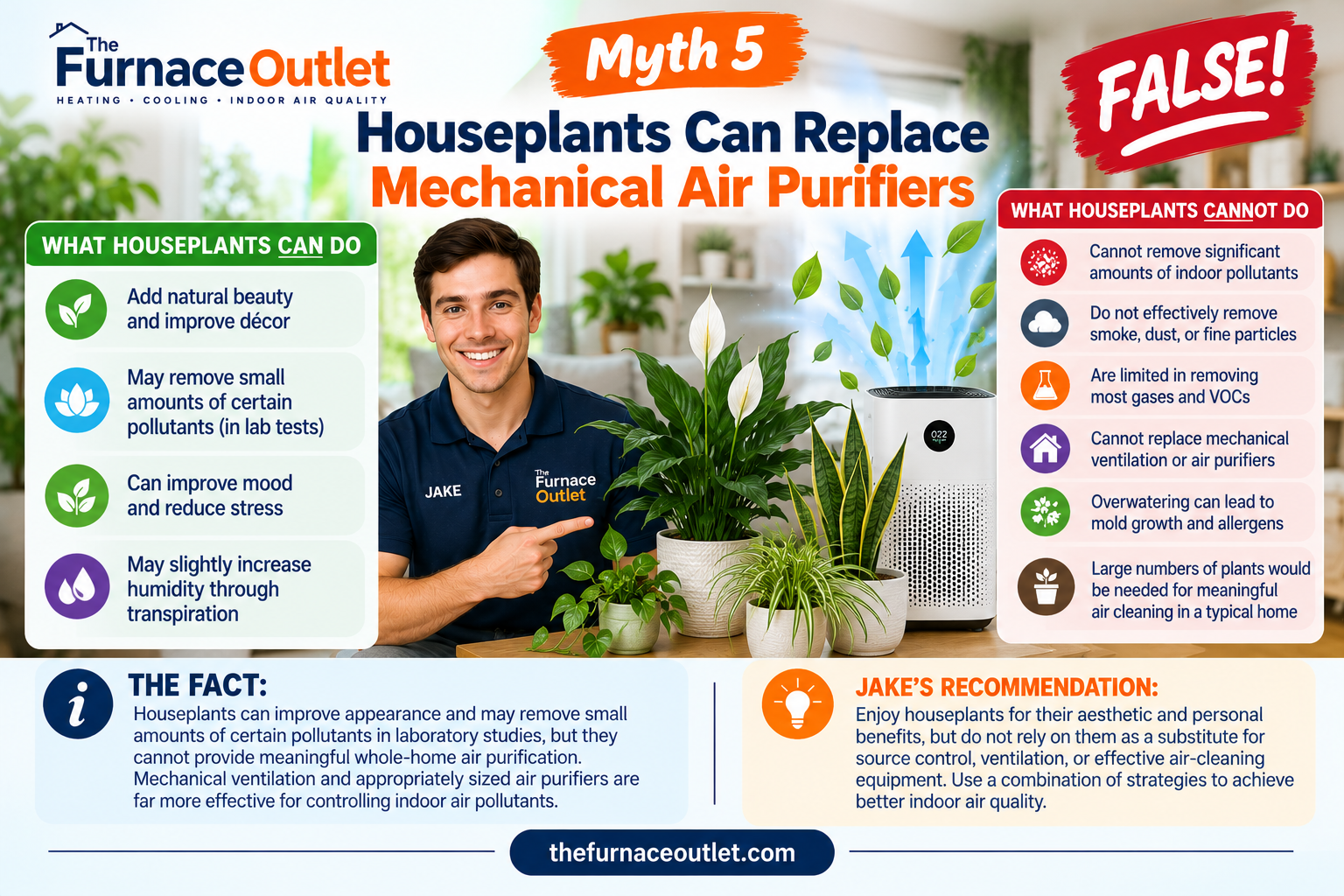
Houseplants can improve the appearance of indoor spaces, and laboratory studies have shown that certain plants or associated growing media can remove some pollutants under controlled conditions. However, these findings should not be interpreted as proof that a few houseplants can provide meaningful air purification in a normally occupied home.
The pollutant-removal rates observed in sealed experimental chambers do not necessarily translate to buildings where ventilation, ongoing emissions, room volume, and air mixing affect pollutant concentrations. The number of plants required to produce substantial whole-room removal under typical conditions may be impractical.
Plants can also introduce considerations of their own. Overwatering may create damp growing media, while some individuals may be sensitive to associated allergens or biological material.
I recommend enjoying houseplants for their aesthetic and personal benefits rather than relying on them as substitutes for source control, ventilation, or appropriately sized air-cleaning equipment.
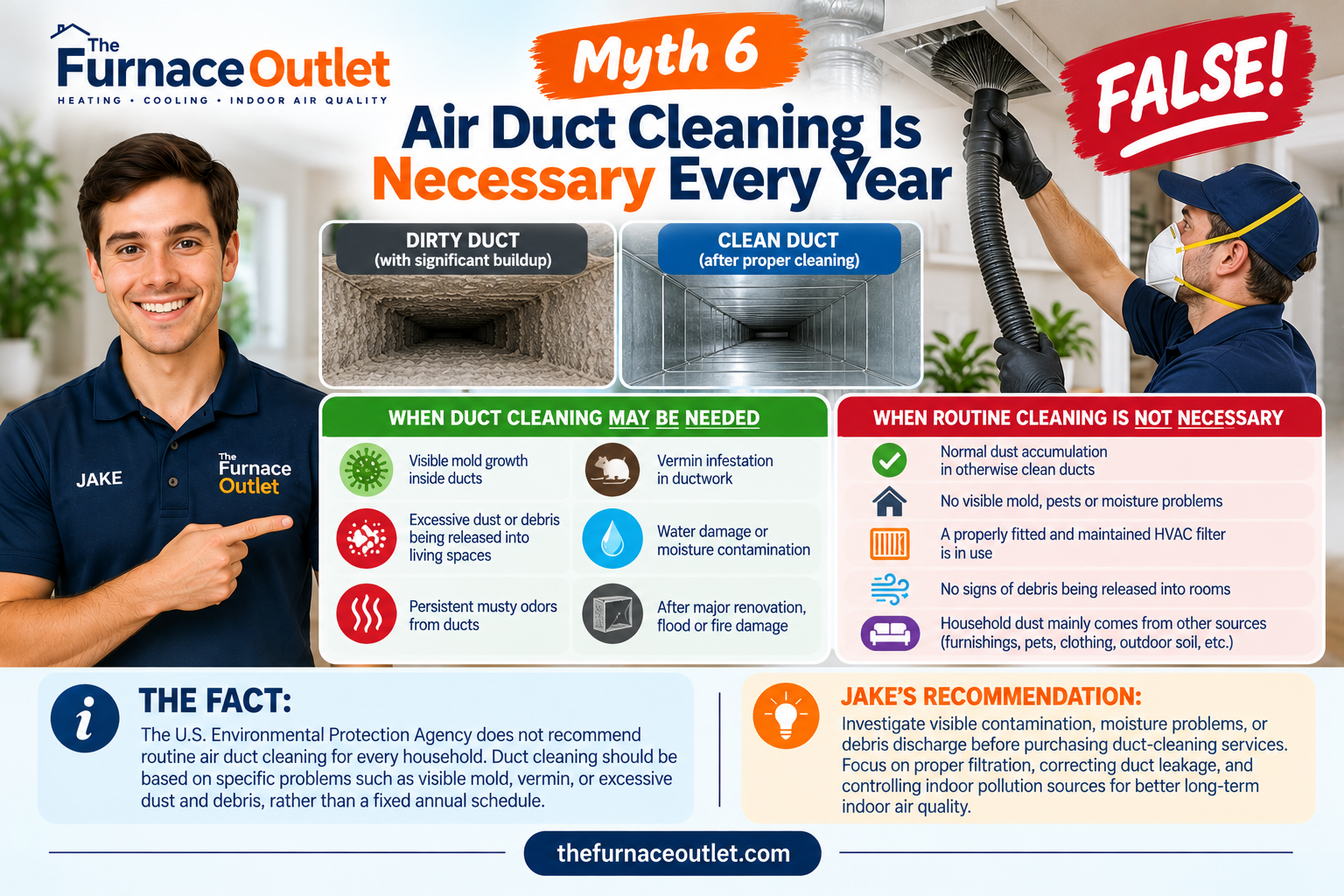
Air duct cleaning is often marketed as an essential annual maintenance service, but routine cleaning has not been conclusively demonstrated to improve indoor air quality or prevent health problems in otherwise normal homes.
The U.S. Environmental Protection Agency does not recommend routine duct cleaning for every household. Instead, it identifies circumstances in which cleaning may be appropriate, including substantial visible mold growth, vermin infestation, or ducts clogged with excessive dust and debris that is being released into occupied spaces.
Ordinary dust accumulation inside ductwork does not automatically mean that the material is entering living areas in significant quantities. Household dust also originates from numerous other sources, including clothing, furnishings, pets, outdoor soil, and everyday activities.
I recommend investigating visible contamination, moisture problems, or debris discharge before purchasing duct-cleaning services. Maintaining suitable filtration, correcting duct leakage, and controlling indoor pollution sources may provide greater ongoing benefits than cleaning otherwise normal ductwork on a fixed schedule.
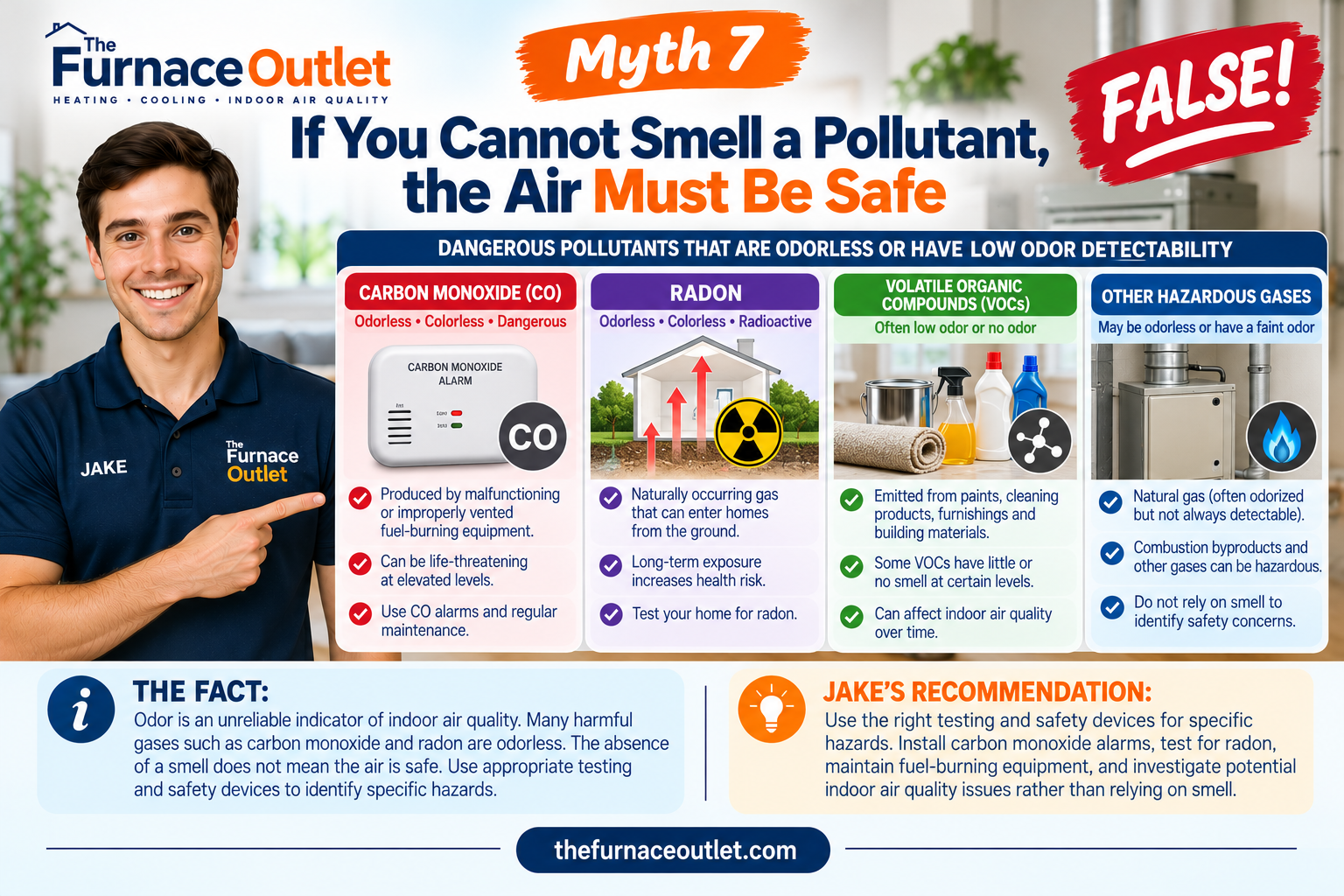
Odor is an unreliable indicator of overall indoor air quality. Some harmful gases are odorless, while certain noticeable odors may be unpleasant without necessarily indicating a dangerous concentration. The absence of a smell does not establish that indoor air is free from hazardous contaminants.
I recommend using appropriate testing and safety devices for specific hazards rather than relying on smell. Carbon monoxide alarms, radon testing, professional combustion safety assessments, and targeted investigations serve different purposes and cannot be replaced by a general-purpose air quality monitor.
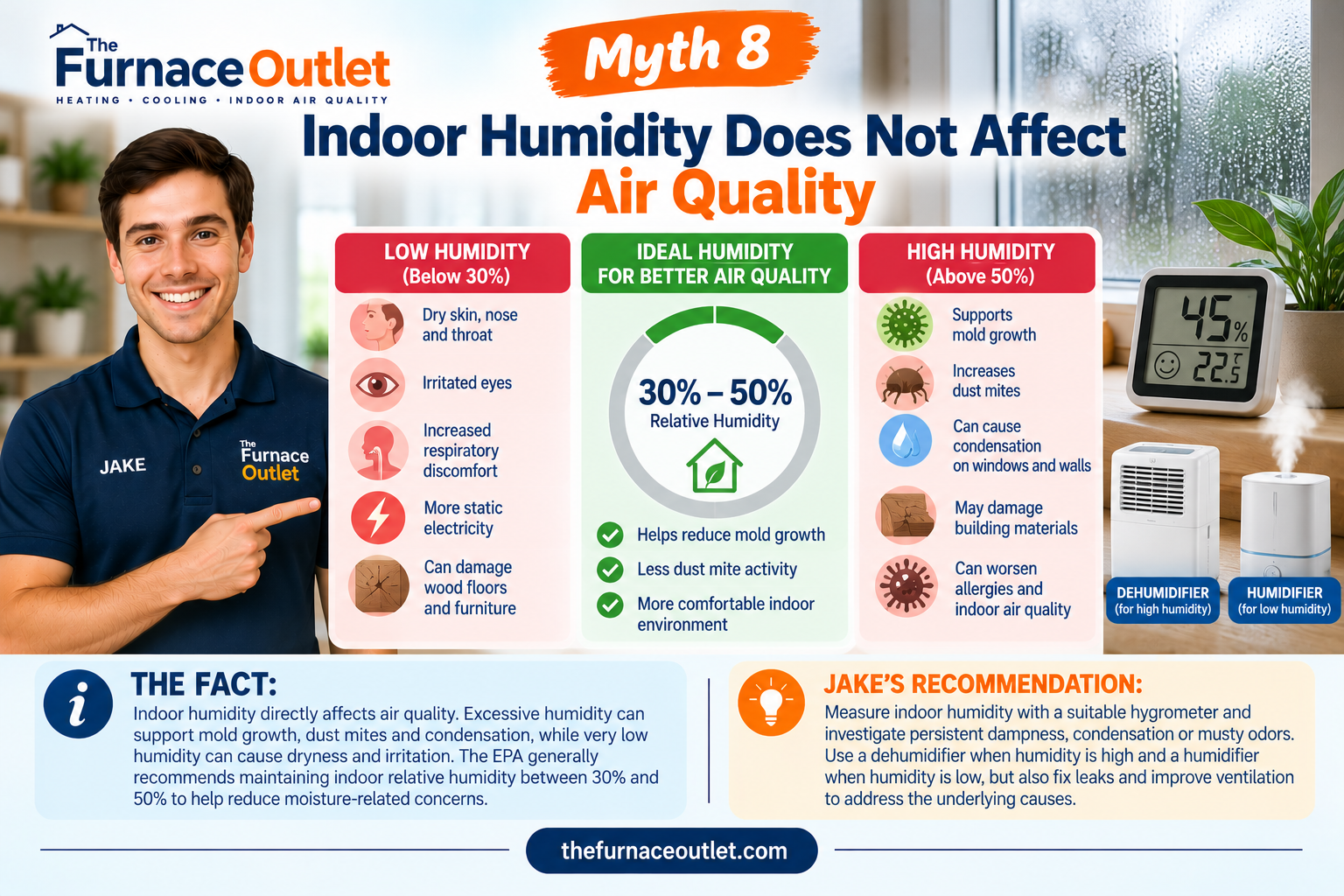
Humidity is sometimes treated only as a comfort issue, but moisture conditions influence several important aspects of the indoor environment. Excessive humidity can support mold growth, increase conditions favorable to dust mites, contribute to condensation, and damage moisture-sensitive materials.
Low humidity can also affect comfort. Some occupants experience dry skin, irritated eyes, or dryness of the nose and throat during periods of very dry indoor air, although these symptoms may have other causes.
The EPA generally recommends maintaining indoor relative humidity between approximately 30% and 50% to help reduce moisture-related concerns. However, the appropriate level depends on climate, building construction, surface temperatures, and condensation risk.
I recommend measuring humidity with a suitable hygrometer and investigating persistent dampness, condensation, or musty odors. Humidifiers and dehumidifiers may be useful in appropriate situations, but neither should substitute for repairing leaks or correcting inadequate ventilation.
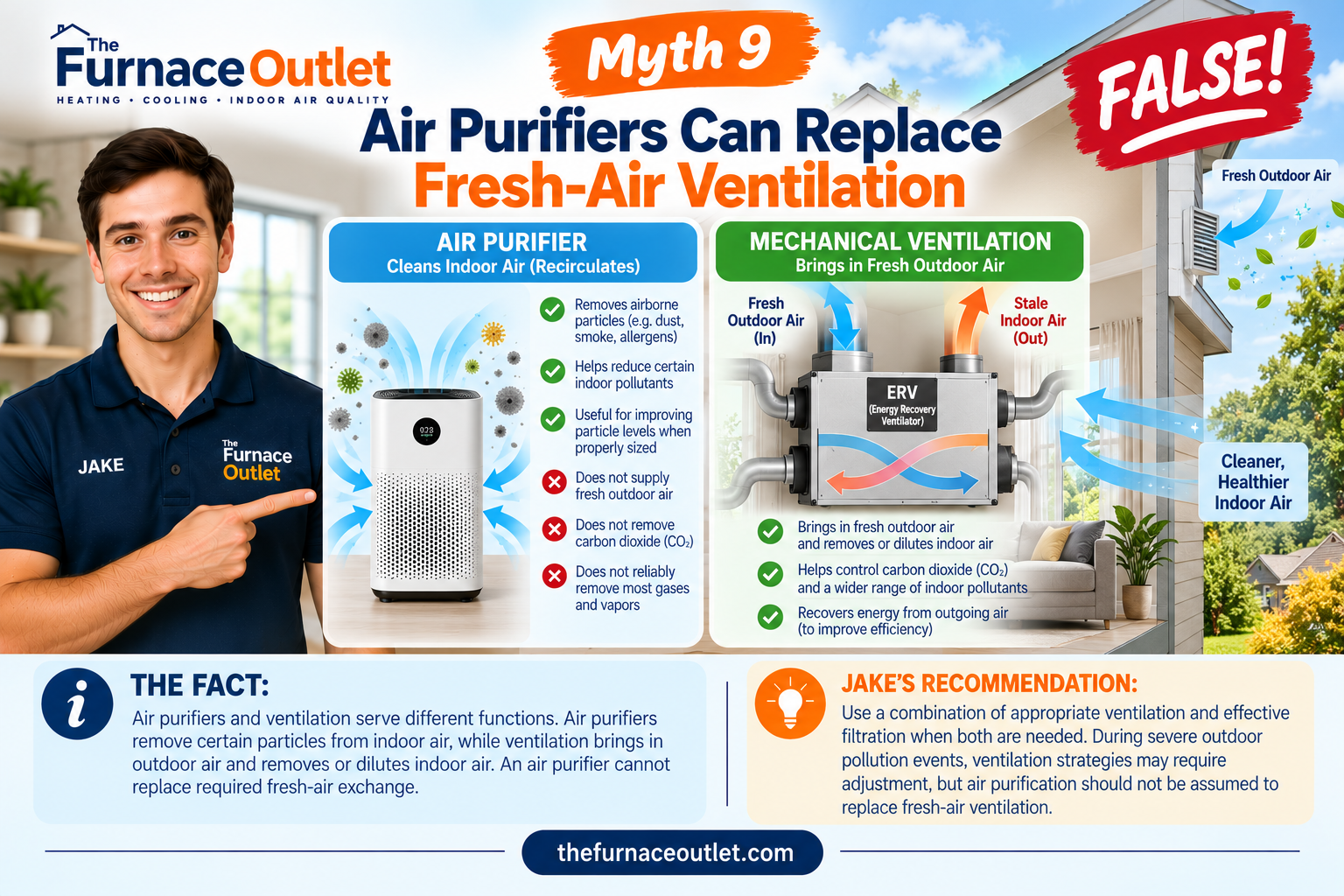
Air purification and ventilation perform different functions. Particle filters capture certain contaminants from air passing through the equipment, while ventilation introduces outdoor air and removes or dilutes indoor air. These processes can complement one another, but they are not interchangeable.
A recirculating HEPA purifier can reduce airborne particle concentrations when appropriately sized and operated. However, it generally does not remove carbon dioxide, supply oxygen-rich outdoor air, or reliably control the full range of indoor gases and vapors.
Mechanical ventilation systems, including heat recovery ventilators and energy recovery ventilators, can provide controlled outdoor-air exchange while recovering some energy from outgoing air. Their performance depends on proper sizing, installation, airflow balancing, and maintenance.
I recommend combining appropriate ventilation with effective filtration when both are needed. During severe outdoor pollution events, ventilation strategies may require adjustment, but air purification should not be presented as a universal replacement for required fresh-air exchange.
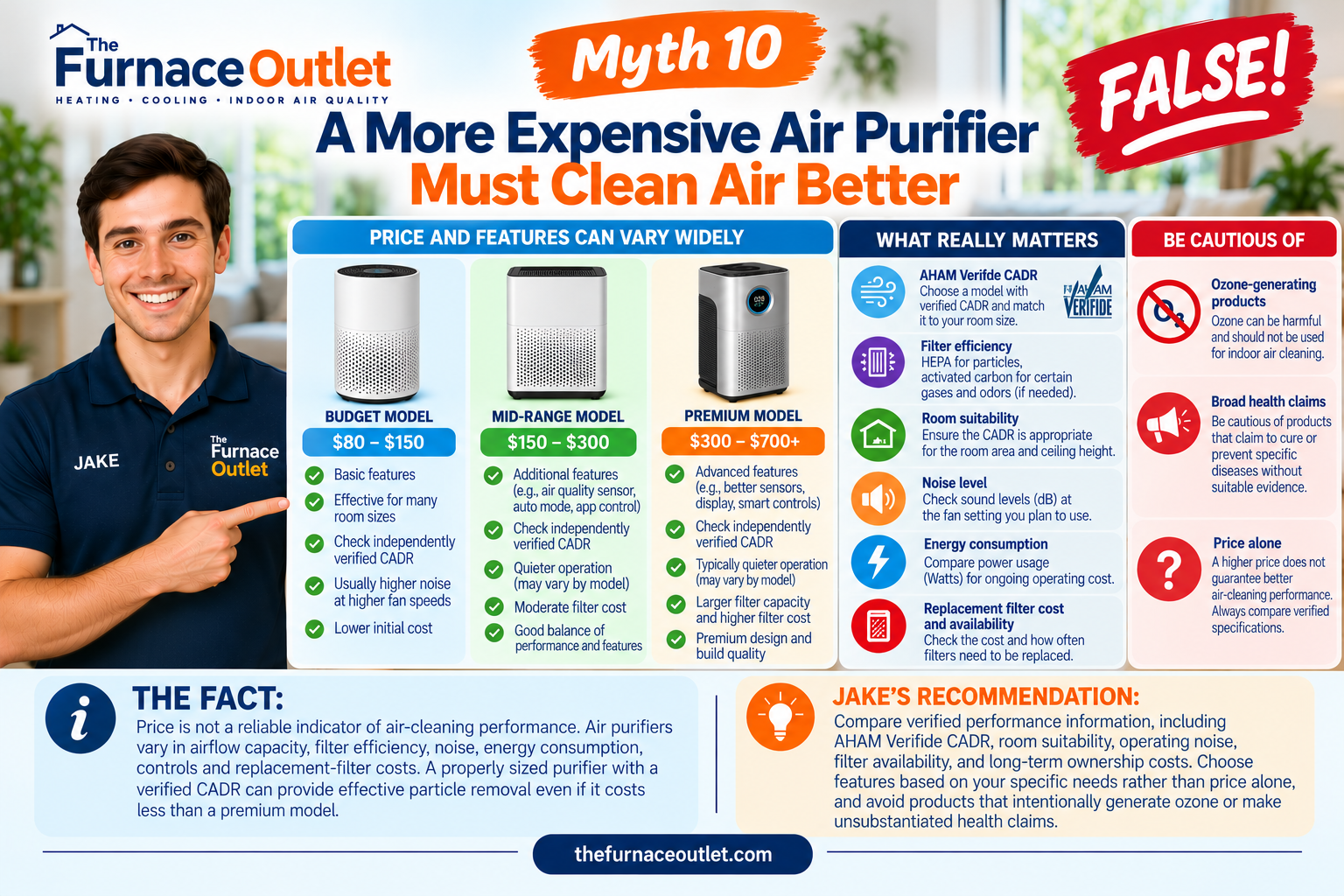
Price alone is not a reliable measure of air-cleaning performance. Air purifiers vary in airflow capacity, filter efficiency, noise, energy consumption, controls, replacement-filter costs, and the types of contaminants they are designed to address.
For particle filtration, Clean Air Delivery Rate, or CADR, is an important performance measure because it reflects the volume of cleaned air delivered for specified particle categories under defined testing conditions. A purifier with an appropriate verified CADR for the room can provide effective particle removal even if it costs less than a model with additional features.
Premium equipment may offer quieter operation, improved controls, larger filter capacity, or better construction, but those features do not automatically mean it provides superior particle removal at every operating setting.
I recommend comparing verified performance information, room suitability, operating noise, filter availability, and long-term ownership costs. Homeowners should also be cautious about products that intentionally generate ozone or make broad health claims without suitable evidence.
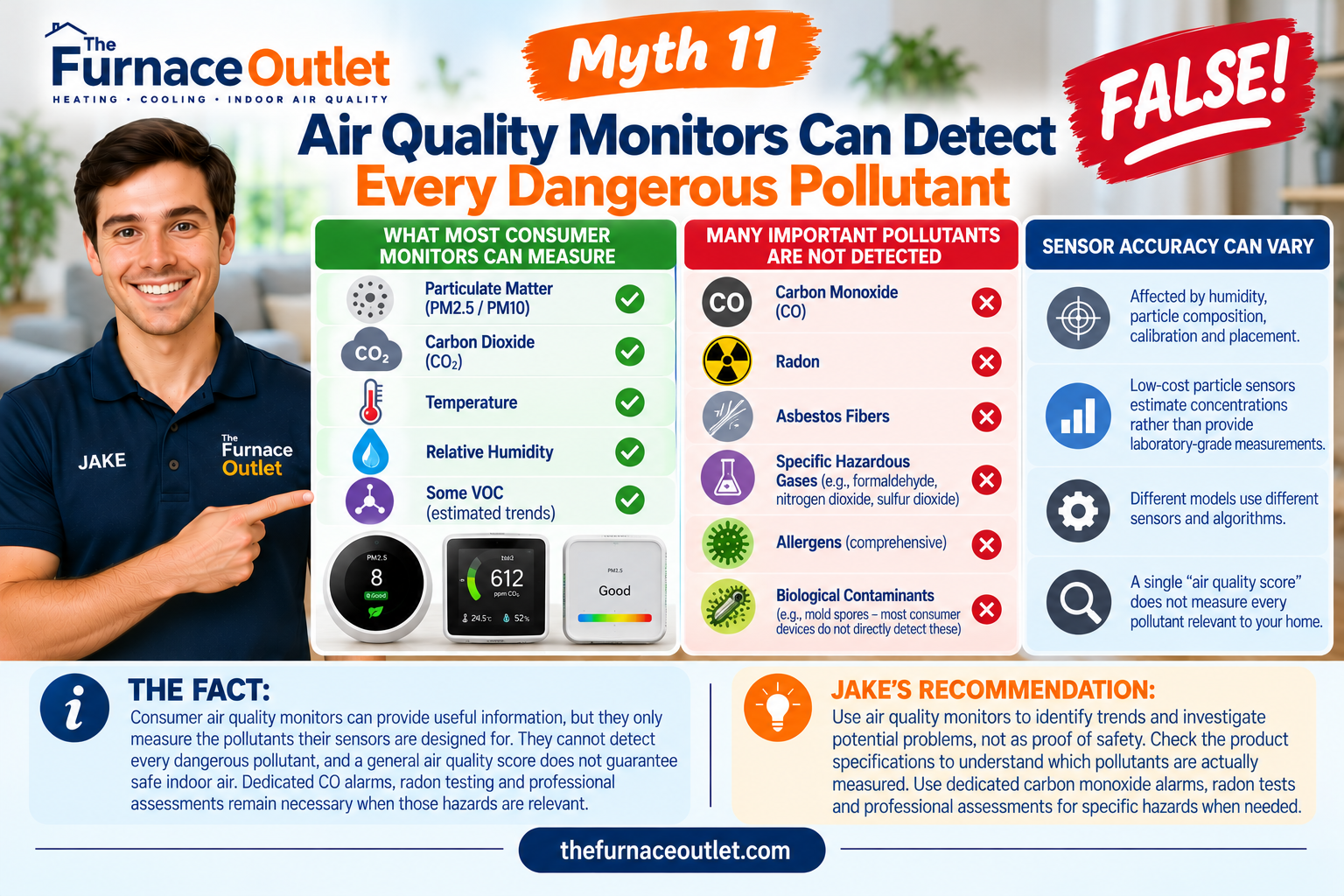
Consumer indoor air quality monitors can provide useful information, but their capabilities depend on the sensors installed. Some devices measure particulate matter, carbon dioxide, temperature, and relative humidity, while others estimate certain volatile organic compound trends.
A device that reports a general air quality score does not necessarily measure every pollutant relevant to a particular home. Many consumer monitors cannot directly detect carbon monoxide, radon, asbestos fibers, or specific hazardous gases unless they contain sensors designed and validated for those purposes.
Sensor accuracy can also vary with humidity, particle composition, calibration, placement, and operating conditions. Low-cost optical particle sensors, for example, may estimate particulate concentrations rather than provide laboratory-grade measurements.
I recommend using monitors to identify patterns and investigate potential problems rather than treating a single numerical score as proof of safety. Dedicated carbon monoxide alarms, radon tests, and professional assessments remain necessary when those hazards are relevant.
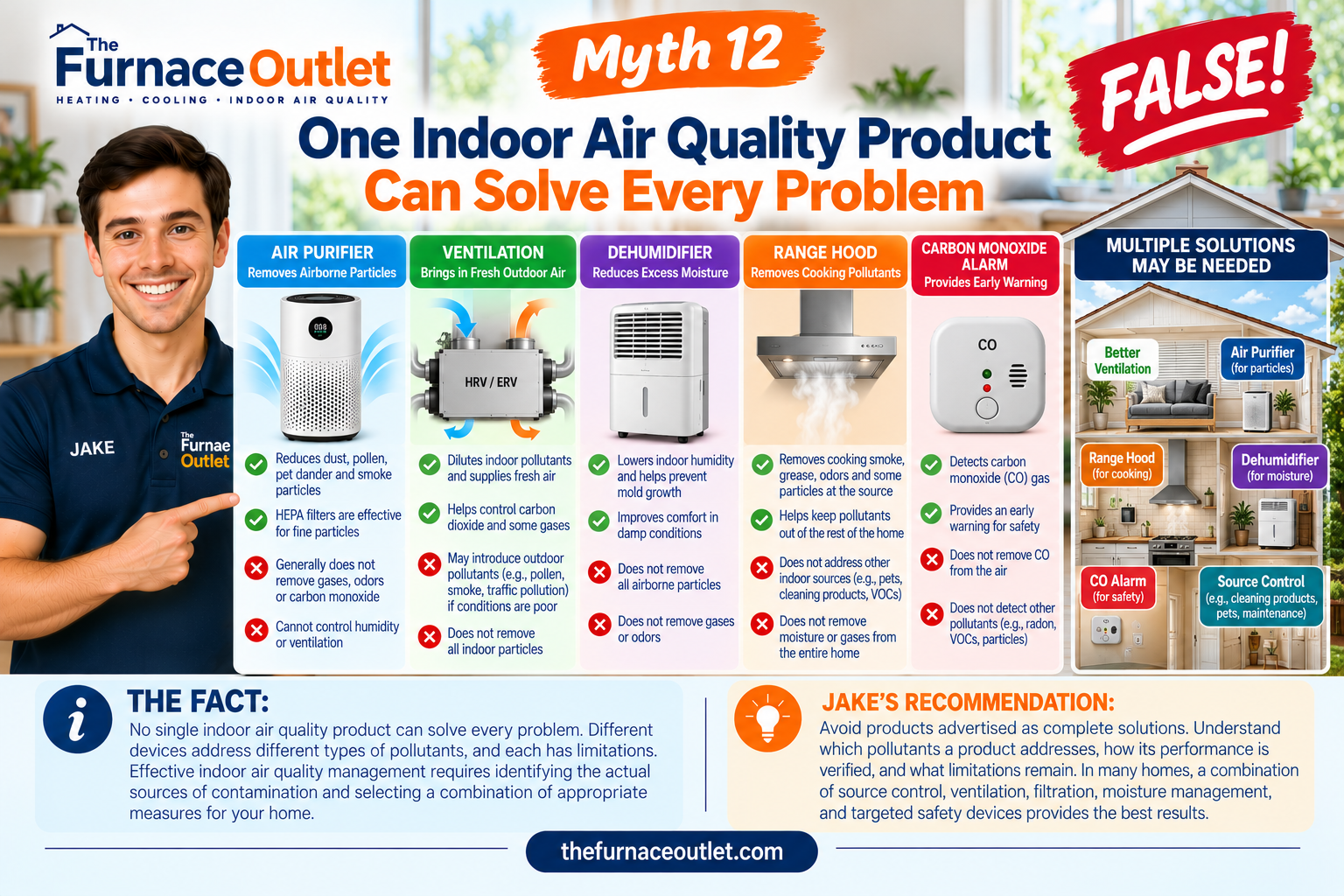
Perhaps the most misleading misconception is that a single device can address every indoor air quality concern. Indoor environments contain different pollutant categories, and no ordinary residential product can reliably eliminate all of them.
Particle filters can reduce airborne dust, pollen, and smoke particles, but they generally do not remove gases. Ventilation can dilute certain indoor pollutants but may introduce outdoor contaminants if conditions are unfavorable. Dehumidifiers reduce excess moisture but do not remove all airborne particles, while carbon monoxide alarms provide warnings rather than removing the gas.
Effective indoor air quality management requires identifying the actual sources of contamination and selecting appropriate measures. In some homes, improving kitchen exhaust ventilation may be more valuable than purchasing another air purifier. In others, correcting a moisture problem, upgrading compatible HVAC filtration, or sealing duct leakage may produce greater practical benefits.
My recommendation is to avoid products advertised as complete solutions without understanding which pollutants they address, how their performance is verified, and what limitations remain.
After examining these misconceptions, the most useful approach is to return to the fundamentals of indoor air quality management. The EPA emphasizes source control, ventilation, and air cleaning as important strategies for improving indoor conditions.
I recommend evaluating these strategies together rather than treating any one method as a universal solution.
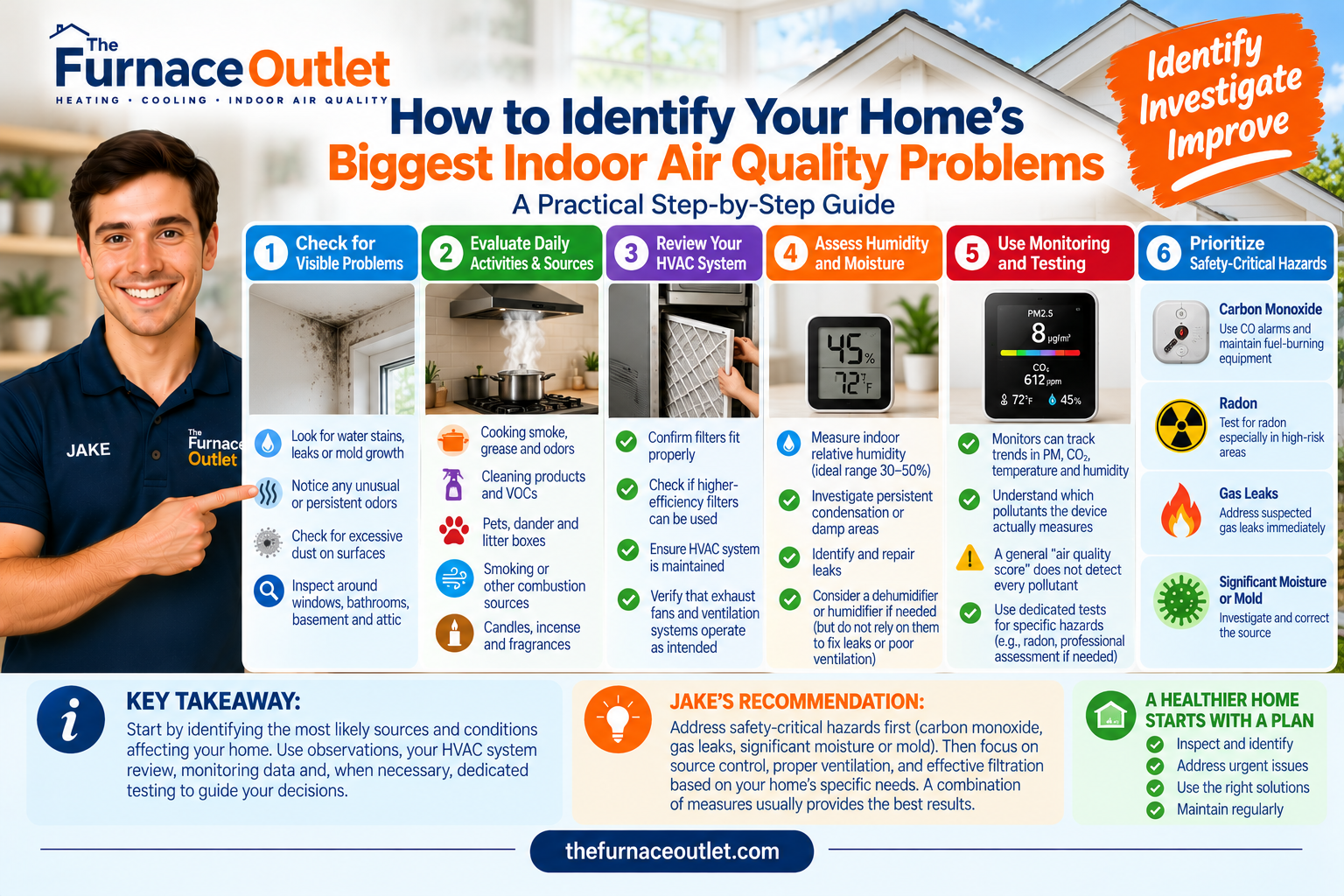
Before purchasing new equipment, homeowners should identify the most likely pollution sources and conditions affecting their home. The first step is to inspect for visible moisture problems, unusual odors, poorly ventilated activities, excessive dust, and potential combustion-related hazards.
Next, review the existing HVAC system. Check whether filters fit properly, whether the equipment can accommodate higher-efficiency filtration, and whether ventilation and exhaust systems operate as intended. Persistent condensation or unusually high humidity should be investigated separately from airborne particle concerns.
Indoor air quality monitors may help identify trends in particulate matter, carbon dioxide, temperature, and humidity, but their readings should be interpreted alongside observations and appropriate testing.
I recommend prioritizing safety-critical hazards first, including suspected carbon monoxide exposure, gas leaks, and significant moisture contamination. General comfort and filtration improvements should follow once urgent conditions have been addressed.
No. Indoor and outdoor air quality vary with pollution sources, ventilation, filtration, weather, and building conditions. Indoor air may contain elevated concentrations of certain household-generated contaminants, while outdoor air may be more polluted during wildfire smoke or severe urban pollution events.
HEPA filtration can capture airborne particles that contain or carry viruses, but an air purifier does not guarantee prevention of infection. Actual exposure reduction depends on airflow, placement, ventilation, room conditions, and other factors.
Standard particle filters generally do not remove most odor-causing gases. Outdoor-vented kitchen exhaust is an important source-control measure, while appropriately designed gas-phase filtration may help with selected odor compounds.
Not necessarily. A compatible MERV 13 central filter can provide useful particle removal while the HVAC blower operates. A portable HEPA purifier may offer additional targeted filtration in frequently occupied rooms, particularly when the central system operates intermittently.
High humidity can support conditions favorable to dust mites and mold growth, which may contribute to allergen exposure. However, individual symptoms have many possible causes, and humidity control should be combined with appropriate source management and cleaning.
Not automatically. Accuracy depends on sensor technology, calibration, pollutant type, environmental conditions, and validation. A more expensive device may offer additional features without necessarily measuring every pollutant accurately.
No. Duct cleaning may remove substantial contamination from duct surfaces when a specific problem exists, but household dust continues to originate from furnishings, fabrics, people, pets, and outdoor particles.
The best first step is identifying and controlling the relevant pollution source. Depending on the home, this may involve improving kitchen exhaust, correcting moisture problems, maintaining combustion equipment, or upgrading compatible particle filtration.
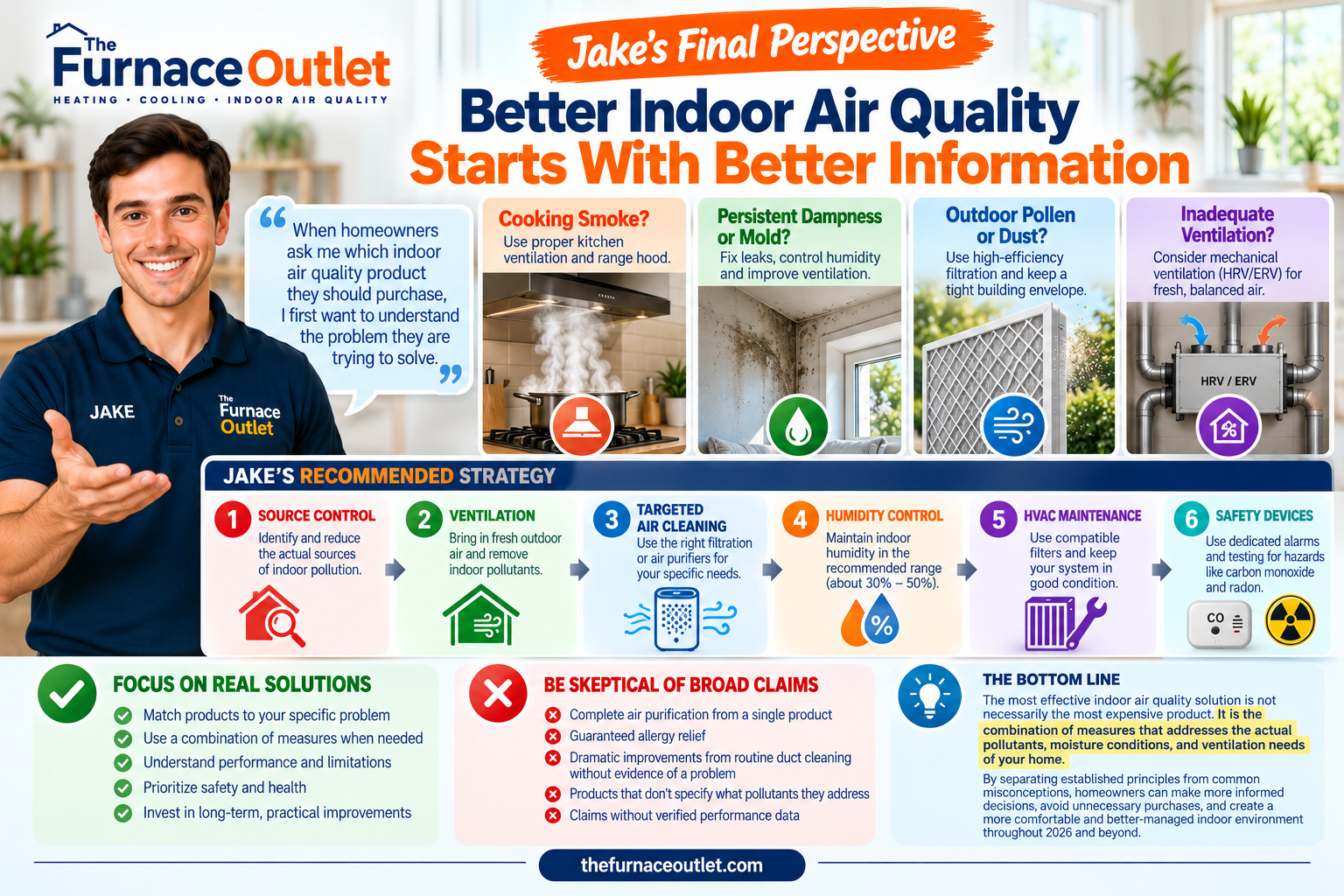
When homeowners ask me which indoor air quality product they should purchase, I first want to understand the problem they are trying to solve. A home experiencing cooking smoke requires a different strategy from one with persistent dampness, outdoor pollen infiltration, or inadequate ventilation. Buying an expensive device without identifying the source can waste money and leave the original problem unresolved.
I encourage homeowners to be skeptical of broad claims that promise complete air purification, guaranteed allergy relief, or dramatic improvements from routine services without evidence of a specific problem. High-efficiency filtration, ventilation, humidity control, and HVAC maintenance can all provide useful benefits, but each has limitations that should be understood before making a purchase.
My preferred strategy begins with source control, followed by appropriate ventilation and targeted air cleaning. I also recommend monitoring moisture conditions, maintaining compatible HVAC filters, and using dedicated safety devices for hazards such as carbon monoxide and radon.
The most effective indoor air quality solution is not necessarily the most expensive product. It is the combination of measures that addresses the actual pollutants, moisture conditions, and ventilation needs of your home.
By separating established principles from common misconceptions, homeowners can make more informed decisions, avoid unnecessary purchases, and create a more comfortable and better-managed indoor environment throughout 2026 and beyond.
This article provides general educational information about indoor air quality, HVAC filtration, ventilation, and household pollution control. It does not establish that any particular product will prevent illness or guarantee safe indoor air. Equipment selection and performance depend on building conditions, manufacturer specifications, installation quality, and maintenance.
Suspected carbon monoxide exposure, gas leaks, significant mold contamination, and other potentially hazardous conditions require appropriate professional or emergency response. Consumer air quality monitors and general-purpose air purifiers should not be used as substitutes for dedicated safety equipment or required inspections.
The Furnace Outlet publishes independent educational content and does not imply endorsement by the EPA, ASHRAE, or other organizations.
U.S. Environmental Protection Agency — Improving Indoor Air Quality, https://www.epa.gov/indoor-air-quality-iaq/improving-indoor-air-quality
U.S. Environmental Protection Agency — Guide to Air Cleaners in the Home, https://www.epa.gov/indoor-air-quality-iaq/guide-air-cleaners-home
U.S. Environmental Protection Agency — Should You Have the Air Ducts in Your Home Cleaned?, https://www.epa.gov/indoor-air-quality-iaq/should-you-have-air-ducts-your-home-cleaned
U.S. Environmental Protection Agency — Mold and Indoor Air Quality, https://www.epa.gov/mold
U.S. Environmental Protection Agency — Radon, https://www.epa.gov/radon
ASHRAE — Filtration and Disinfection, https://www.ashrae.org/technical-resources/filtration-and-disinfection-faq
© 2026 The Furnace Outlet | https://thefurnaceoutlet.com
Independent HVAC education for cleaner air, better comfort, and more informed homeowners.