
Why DIY Air Conditioning Sounds So Appealing — and What People Usually Mean
When summer heat sets in, the idea of building your own air conditioner — using a fan, maybe ice or water, or some homebrew refrigerant setup — can seem romantic. People imagine the satisfaction of a DIY project, saving money, and “doing it themselves.” Headlines like “AC unit DIY,” “how to build AC unit,” “create your own air conditioner,” or “DIY home AC” catch the eye.
At a glance, the idea seems simple: move air, make something cold, blow it indoors — and voilà: cool air, lower bills, independence from contractors. For small spaces — a garage, a shed, a workshop, maybe even a bedroom — some DIY cooling solutions can provide partial relief, especially if expectations are modest.
But there is a vast difference between a “fan + ice” box or evaporative cooler (which might help a tiny space for a few hours) and a true, whole‑house central air conditioning system. A system that cools, dehumidifies, and distributes conditioned air evenly across multiple rooms — reliably, efficiently, year after year — requires serious engineering, careful installation, and a respect for safety, code, and HVAC theory.
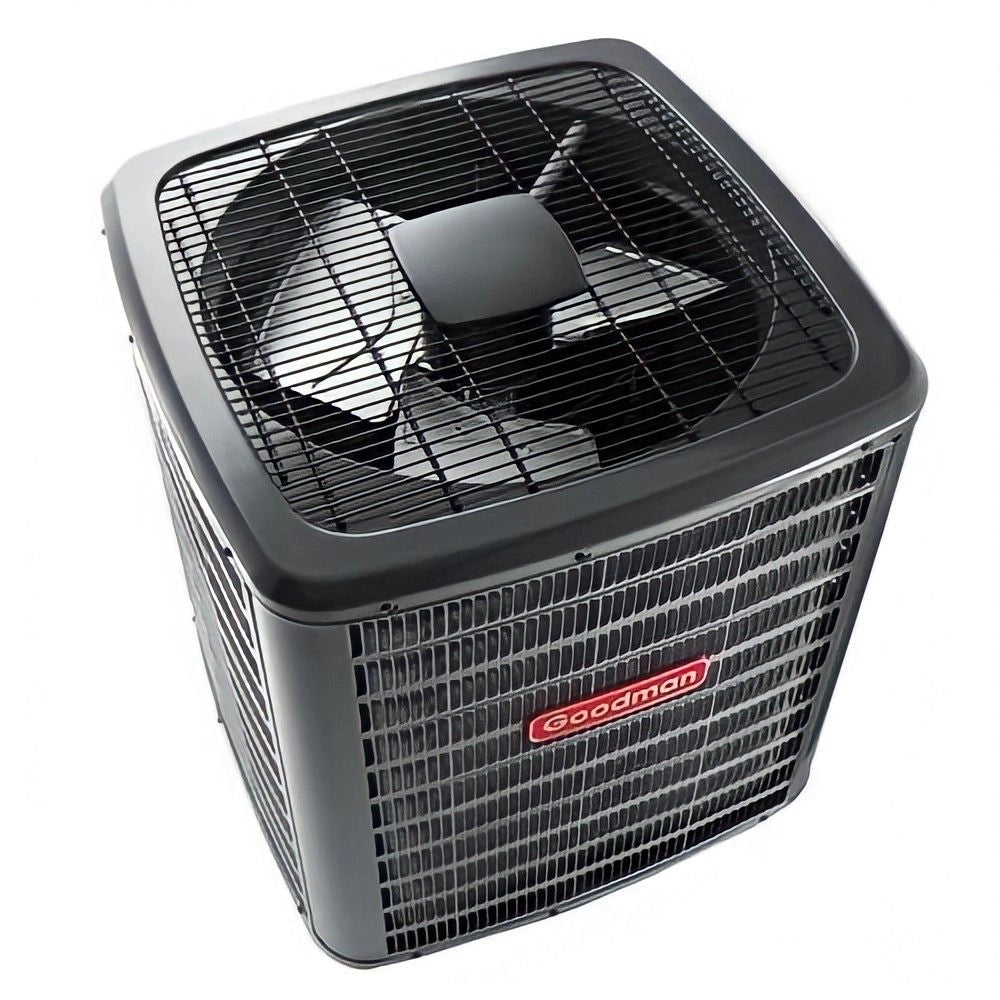
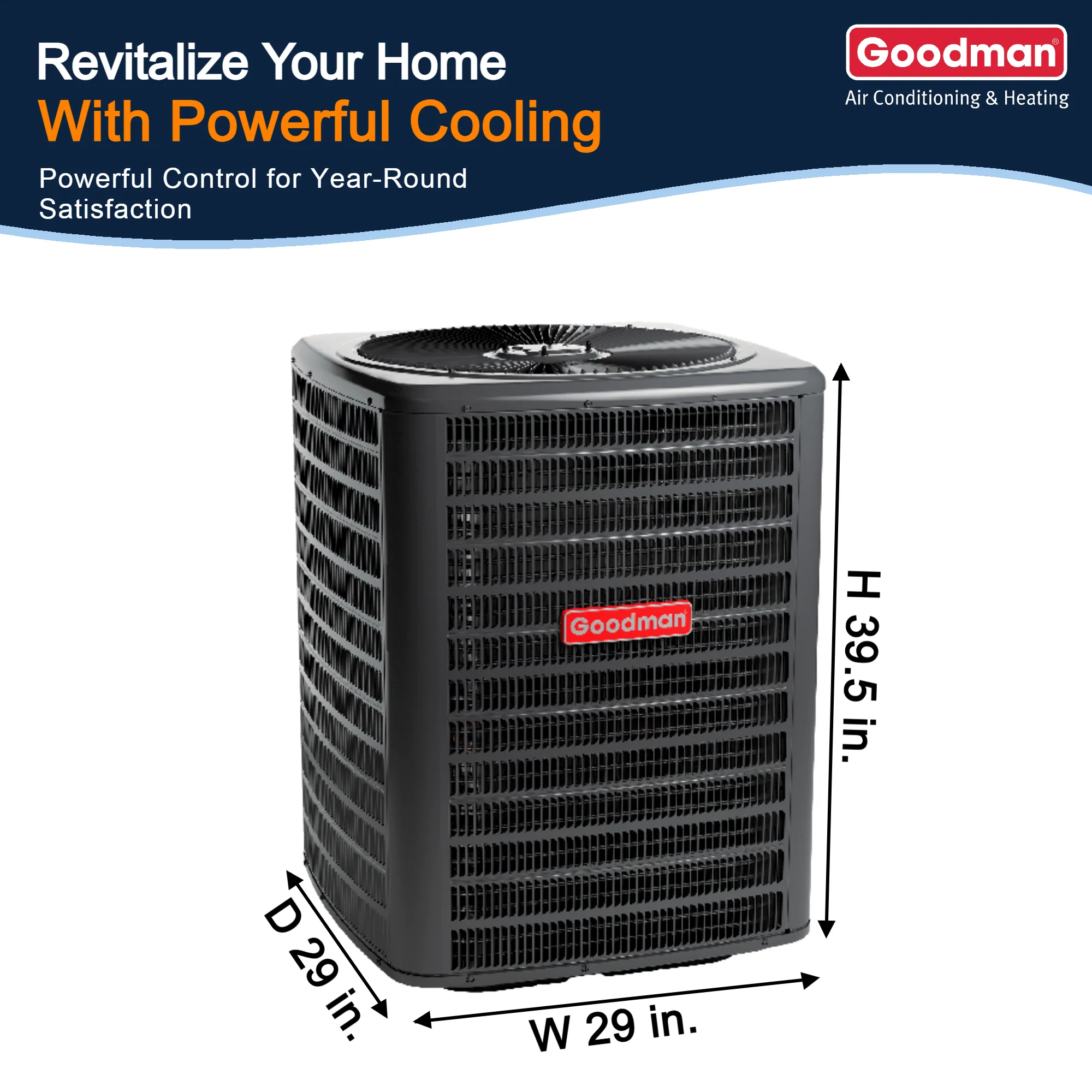
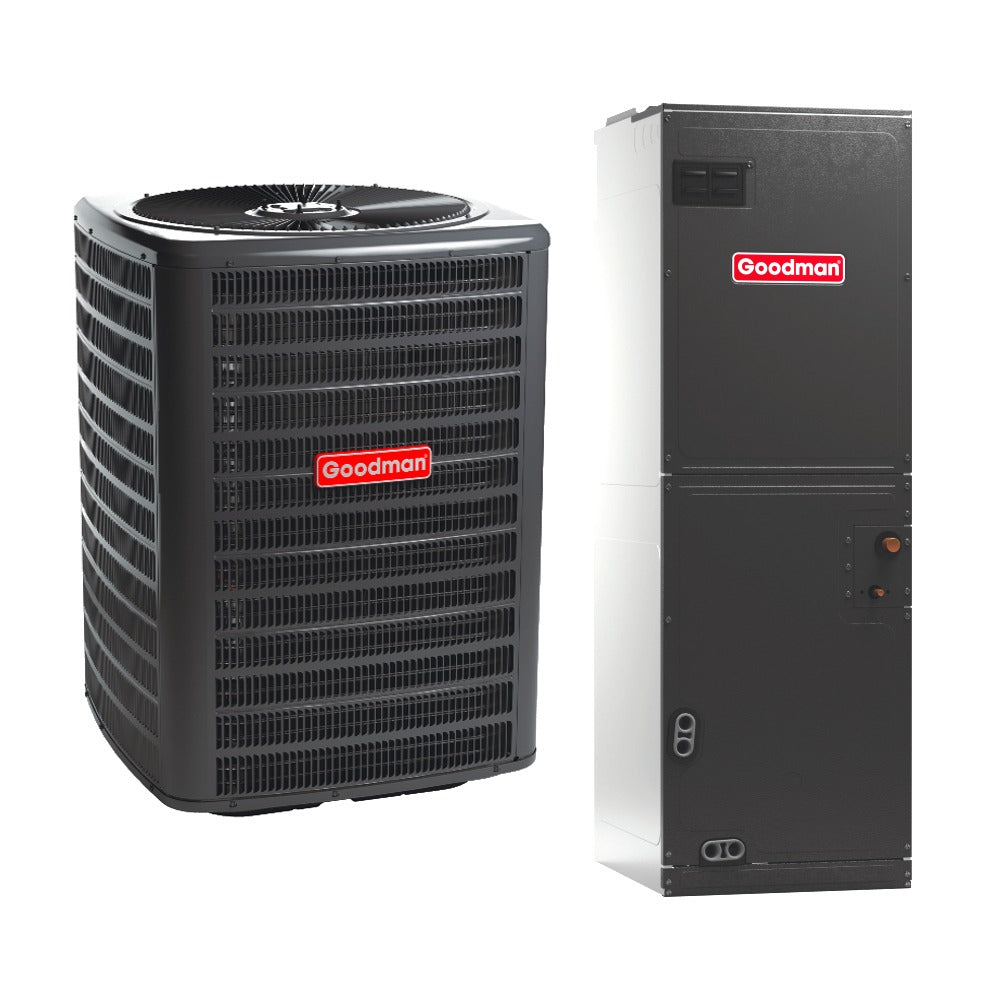
That’s where a system like the Goodman 3‑Ton 14.5 SEER2 R‑32 bundle comes in. It’s a real, factory‑matched, modern central air conditioner — but also a far cry from a weekend DIY “make‑your‑own AC unit.”
What the Goodman 3‑Ton R‑32 Bundle Actually Provides — and Why It’s Attractive
Before judging DIY vs. pro, it helps to understand what the Goodman bundle is offering:
-
The system uses modern refrigerant (R‑32), which has lower global warming potential than older refrigerants — a forward-looking, environmentally conscious choice.
-
The “bundle” format means you get matched components: the outdoor condenser (compressor + condenser coil), an indoor air handler or evaporator coil + blower, and compatibility is guaranteed. That matching helps avoid efficiency losses caused by mismatched components or poor airflow balance.
-
With 14.5 SEER2 efficiency, the system sits at a reasonable performance tier: not ultra‑premium cost, but still energy‑efficient compared to many older systems.
-
Properly installed, such a system delivers quiet operation, consistent cooling throughout the home, improved indoor comfort, and the long‑term reliability expected of a modern central AC installation.
For a homeowner evaluating “how to get central air,” an R‑32, 3‑ton bundle like this often represents a “sweet spot” — solid cooling capacity for many typical homes (depending on size, insulation, ductwork), reasonable upfront cost relative to higher‑end systems, and modern refrigerant compliance.
So from a system standpoint — yes: this is a “real” air conditioner, not a makeshift gadget. But that also means installing and operating it is a serious endeavor.
What “Build‑Your‑Own AC Unit” DIY Projects Usually Look Like — And Why They Rarely Compare
It’s useful to dissect what people mean when they talk about “DIY AC unit,” “AC make,” or “home‑built air conditioner.” Common DIY variations tend to fall into these categories:
-
A fan blowing air over ice or chilled water — a “swamp‑box” cooler. Cheap, simple, portable, but temporary, limited in power, and ineffective for humidity control or whole‑house cooling.
-
An evaporative cooling setup — works sometimes in dry climates, but dramatically loses effectiveness in humid regions; even then, it doesn’t dehumidify like a true refrigerant‑based AC.
-
Modified or repurposed window units, or older portable air conditioners — these may provide room-level cooling but are often less efficient and noisier; they rarely distribute air through existing ductwork.
-
Mini DIY “split” systems or pre‑charged DIY kits pitched for small apartments or detached rooms — occasionally promoted as “DIY‑friendly,” but often less powerful than whole‑home units, and may still require specialized installation steps.
The fundamental problem is this: none of those resemble — or perform like — a properly sized, whole‑house central AC system built around a matched, modern condenser + air‑handler + duct network + refrigerant loop + controls.
Why they fail compared to real AC:
-
They don’t remove heat and moisture properly (heat exchange with refrigerant, condensation, dehumidification), so they provide only marginal comfort at best — especially when outdoor heat/humidity is high.
-
They’re inefficient or limited in reach — covering only a small area, insufficient for whole‑house temperature regulation.
-
They don’t balance airflow through ducts (because often there are no ducts) — so rooms suffer hot/cold spots, inadequate ventilation, and uneven comfort.
-
They often lack durable, code‑compliant electrical and refrigerant infrastructure, which means safety, reliability, and longevity are compromised.
-
They offer no long‑term guarantee — especially for performance, maintenance, or environmental compliance.
In short: DIY home‑built AC tends to be a short‑term band‑aid or a toy — not a real solution for a full home.
What It Takes to Install a Real Central Air Conditioner — and Why That Means DIY Is Hard
Using a system like the Goodman 3‑Ton R‑32 bundle for whole‑house cooling carries with it a long list of requirements — and responsibilities. If you decide you want to attempt installation yourself or oversee a “DIY + pro‑assist” hybrid install, you’ll need to account for all of these:
Legal & Regulatory Compliance: Permits, Certification, and Codes
-
In the U.S., handling refrigerants (charging, evacuating, leak testing) requires certification under EPA Section 608. That means you cannot legally open, connect, or charge the refrigerant circuit unless you are properly certified. (Budget Heating)
-
Many jurisdictions also require mechanical and electrical permits, inspections, and adherence to local building and electrical codes when installing central HVAC. (horizonairsolutions.com)
-
Failing to obtain required permits or to use licensed professionals can cause major problems: fines, voided insurance coverage, warranty voidance, and issues when selling the home.
In other words — even if you’re mechanically inclined, the law requires professionals for certain parts of a central AC install.
Technical Complexity: Refrigerant, Electrical, and Airflow
A modern central air system uses a sealed refrigerant loop, coils, compressors, condensers, evaporators, and requires precise installation steps:
-
Proper brazing or flaring of refrigerant lines, leak‑testing, vacuum evacuation, and charging by weight or manufacturer specification. Even minor errors can degrade performance, cause leaks, or damage the system.
-
Correct wiring: central AC units typically require 240 V (or other high‑voltage) circuits, with proper breakers, disconnects, grounding, and weather‑proof outdoor connections. Mistakes here can be dangerous: fire, electrocution, or code violations. (HVAC.com)
-
Ductwork and airflow balancing: the system must distribute conditioned air evenly, with adequate return air and supply — otherwise you’ll get hot/cold spots, humidity problems, and inefficient operation.
-
Condensate handling / drainage — to avoid leaks, mold, or water damage inside the home.
In short: installing a real central AC isn’t plug‑and‑play. It’s a mechanical, electrical, and plumbing project — combining multiple trades.
Warranty, Maintenance, and Long-Term Performance
Even if you somehow build and install the system yourself, there are long‑term considerations:
-
Many manufacturers void warranties if installation isn’t done by a licensed professional or certified installer, or if proper commissioning and records aren’t kept. (mikesmithac.com)
-
Annual maintenance, filter changes, refrigerant checks — some tasks are DIY‑friendly (like replacing filters), but refrigerant system servicing must be done by certified technicians.
-
Insurance and liability — improper installation may cause damage or hazards, and homeowner insurance sometimes excludes coverage if work wasn’t permitted/licensed.
All told: a full DIY central AC install is rarely “free money.” The risks — legal, financial, safety, and comfort — are substantial.
What the Experts Say: DIY vs. Professional Installation — and Why Pros Usually Win
The consensus among HVAC professionals is clear: while homeowners technically might handle some parts of installation, full DIY of a central air system is strongly discouraged.
Some of the most common problems seen with DIY or semi-DIY AC installs:
-
Improper refrigerant charge or leaks — leading to inefficient cooling, system failure, or environmental/refrigerant regulation violations.
-
Incorrect electrical work — bad wiring, improper breakers/disconnects, no grounding — creating safety hazards or causing the system to fail inspection.
-
Poor airflow, unbalanced ductwork, and improper duct design — resulting in uneven cooling, humidity problems, inefficiency, and poor comfort.
-
Voiding warranty — a common outcome when installation doesn’t meet manufacturer or code requirements.
-
Legal risks — fines for unauthorized refrigerant handling, building code violations, insurance issues in case of damage.
In real-world terms: what seems like a cost-saving DIY project often ends up costing more — via reworks, repairs, compliance headaches, or complete failure.
When DIY Cooling Makes Sense — And When It’s Just a Bad Idea
Given all the complexity, is there any place for DIY in home cooling? Yes — but it depends heavily on expectations, goals, and risk tolerance.
DIY Makes Sense When…
-
You only need temporary or spot cooling — a garage, shed, workshop, small room, or detached space where a “fan + ice box,” a portable AC, or a simple evaporative cooler might suffice.
-
You’re interested in learning or experimenting, not long-term home comfort — maybe as a spare project, for a small cabin, or a workshop.
-
You’re willing to accept performance limitations, maintenance burdens, and lower efficiency — and understand you’re not replicating a central AC system.
In those cases, DIY cooling is a hobby or partial solution — not a replacement for professional HVAC.
DIY Is a Bad Idea When…
-
You want whole-house cooling, consistent comfort, humidity control, and long-term reliability.
-
You live in a jurisdiction with strict codes, permit requirements, or licensing laws — especially concerning refrigerant or high-voltage electrical work.
-
You care about warranty, resale value, insurance coverage, and safe operation — all of which can be jeopardized by an improper DIY install.
-
You lack specialized tools, HVAC knowledge, or willingness to do meticulous work — because missteps are expensive and sometimes dangerous.
For most homeowners seeking real home comfort, the “DIY home AC” idea simply doesn’t stack up when compared to professional installation.
Could a System Like the Goodman 3‑Ton R‑32 Bundle Ever Suit a Sensible “DIY‑Friendly” Plan?
Given the challenges — is there a middle path? A hybrid approach where you buy serious equipment like the Goodman bundle, but still retain some DIY involvement?
What Could Work (With Caution)
-
Pre‑purchase and preparation by homeowner: You could choose equipment (the Goodman bundle), prepare the site (clear and level the outdoor pad, arrange space for air handler, prep ductwork, clean ducts, ensure proper venting). These are “DIY‑friendly” tasks that don’t involve refrigerant or high‑voltage wiring.
-
Professional subcontracting for critical tasks: For refrigerant handling, brazing or flaring lines, vacuuming, charging, electrical hookup — you’d still hire a licensed, certified HVAC technician (with EPA 608 certification). This ensures legality, safety, and performance.
-
DIY maintenance and peripheral tasks post‑install: Once installed, many maintenance tasks (filter changes, outdoor unit clearance, condensate line check, basic cleaning) are homeowner‑friendly and help prolong system life and efficiency — while leaving core system integrity intact.
-
Blended cost‑saving strategy: By controlling equipment cost and handling non‑specialist labor yourself, you may reduce overall cost without sacrificing compliance or safety.
What Remains Unrealistic — or Risky
-
Handling refrigerant or opening the sealed system on your own — still almost always illegal without certification.
-
Doing high-voltage wiring or full system hookup without licensed electrician or contractor — too risky for safety and code compliance.
-
Expecting DIY-assembled system to deliver long-term performance, efficiency, comfort, and reliability comparable to a professionally installed system — that’s rarely achieved in practice.
In short: if you’re serious about a whole-house central AC installation, and you care about safety, durability, compliance, and long-term value — a hybrid plan (equipment purchase + pro installation) is the only realistic and responsible DIY‑compatible path.
My Verdict: The “DIY Air Conditioner” Dream Is Great — But Not for Whole‑House Central AC With a Real Bundle
I’m a big fan of DIY attitude. I’ve seen homeowners do amazing renovations, installations, upgrades. But when it comes to installing a full‑house air conditioning system — especially a modern, refrigerant‑based central air system like the Goodman 3‑Ton R‑32 bundle — the DIY dream almost always ends in a bad bargain.
Here’s how I weigh it today:
-
For small spaces or temporary cooling: Go ahead — build a fan/ice box, swamp‑cooler, or window unit. Accept limitations, use common sense, and enjoy some relief.
-
For whole‑house comfort and long‑term home value: Buy a proper, well‑matched central AC system — like the Goodman bundle — and then either hire professionals or use a hybrid approach. Even with hybrid, treat refrigerant and electrical work as professional territory.
-
For long‑term safety, efficiency, and peace of mind: Accept that a professional, code‑compliant install likely costs more upfront but saves far more over the life of the system — lower energy bills, fewer repairs, compliance with law, valid warranties, and insurance coverage.
If I were advising a homeowner today — especially if their home already has ducts, a furnace plenum, and space for an air handler — I’d say: buy the Goodman 3‑Ton R‑32 bundle, but invest in a licensed HVAC installer. DIY what you safely can (site prep, duct cleaning/sealing, filter maintenance), but don’t let enthusiasm blind you to the complexity lurking behind a “simple AC install.”