A Mike-Style System to Prevent Breakdowns Before They Start
Most AC problems don’t start as emergencies. They start as small, ignored maintenance issues that slowly snowball—until one hot afternoon, the unit quits and everyone’s uncomfortable.
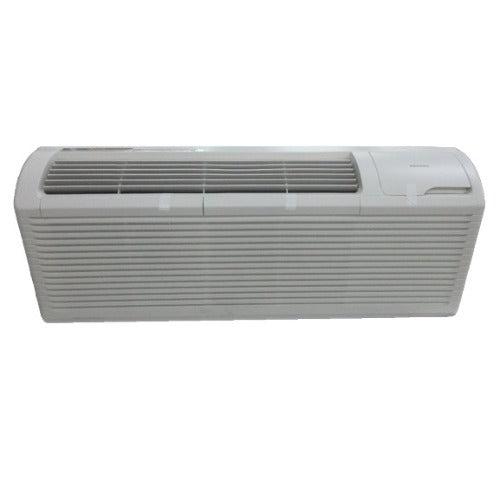
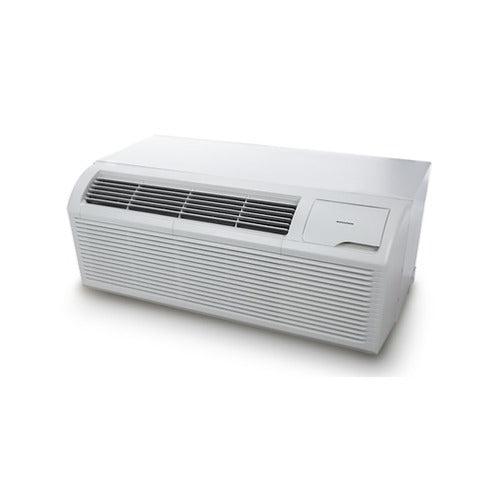
Preventive maintenance is about staying ahead of those problems. This checklist is the same kind of routine I’d recommend to a homeowner who wants reliable cooling, predictable energy bills, and a long system lifespan from their Amana through-the-wall AC.
You don’t need to be an HVAC tech. You just need consistency.
🧠 What Preventive Maintenance Actually Does (And Why It Works)
Preventive maintenance:
-
Keeps airflow unrestricted
-
Maintains proper heat transfer
-
Reduces electrical strain
-
Prevents moisture damage
-
Extends component life
In short, it keeps the unit operating the way it was designed to, instead of forcing it to work harder every season.
🧰 Before You Start: Safety & Prep
🔌 Always Power Down First
Before touching anything:
-
Unplug the unit or
-
Turn off the dedicated breaker
These units contain live electrical components and sharp edges.
🧼 Basic Tools You’ll Need
-
Soft brush or paintbrush
-
Vacuum with brush attachment
-
Mild dish soap
-
Clean cloths or towels
-
Flashlight
That’s it. No special tools required for routine prevention.
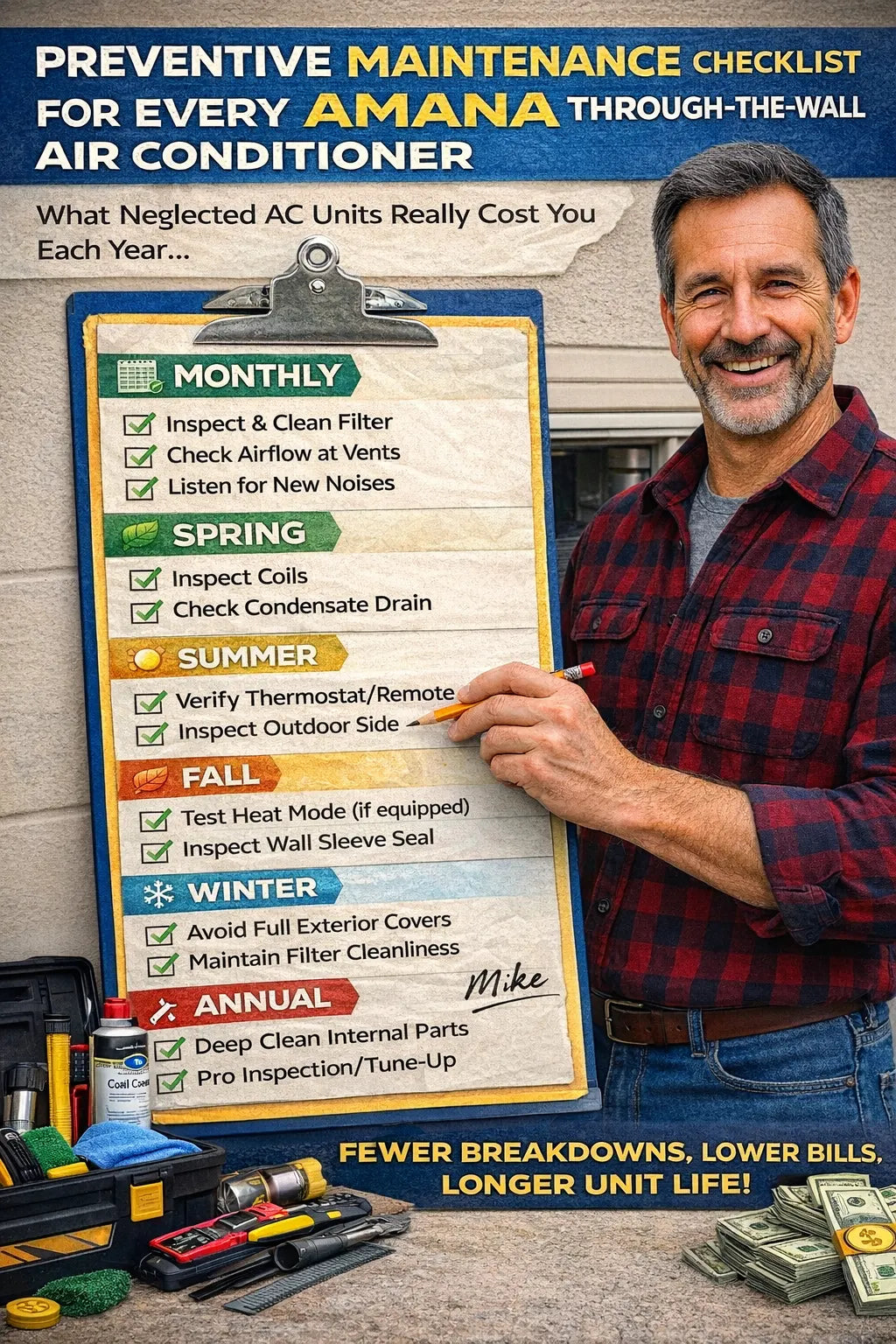
📅 Monthly Preventive Maintenance Checklist (Cooling Season)
These are the tasks that prevent most performance complaints.
🧊 1. Clean the Air Filter
Frequency: Every 30 days during heavy use
Steps:
-
Remove front grille
-
Slide filter out
-
Rinse with warm water
-
Use mild soap if greasy
-
Let dry completely
Why it matters:
A dirty filter can increase runtime by 10–25%, driving up energy costs and stressing the fan motor.
🌬️ 2. Check Airflow at the Vents
Frequency: Monthly
-
Feel for strong, even airflow
-
Make sure louvers move freely
-
Remove dust buildup
Weak airflow usually means:
-
Dirty filter
-
Dirty coil
-
Obstructed vents
🔊 3. Listen for New Noises
Frequency: Monthly
Listen during startup and operation:
-
Rattling → loose panels or debris
-
Buzzing → electrical or fan issues
-
Grinding → motor or blower problems
Catching noises early prevents bigger repairs later.
🌱 Seasonal Preventive Maintenance (4× Per Year)
These tasks keep the system balanced as conditions change.
🌸 Spring Checklist (Pre-Cooling Season)
🌀 4. Inspect the Evaporator Coil
-
Remove front panel
-
Use flashlight to inspect coil fins
-
Light dust = brush or vacuum
-
Heavy buildup = no-rinse coil cleaner
Dirty coils reduce cooling efficiency and force longer run times.
💧 5. Check the Condensate Drain
-
Look for standing water in drain pan
-
Flush gently with warm water
-
Ensure free drainage
Clogged drains cause leaks, mold smells, and corrosion.
☀️ Summer Checklist (Peak Load Season)
🌡️ 6. Verify Thermostat & Remote Operation
-
Replace remote batteries if needed
-
Confirm temperature changes respond quickly
-
Ensure nothing blocks the temperature sensor
Incorrect readings cause unnecessary runtime.
🌿 7. Inspect the Outdoor Side of the Unit
-
Clear leaves, grass, and debris
-
Maintain at least 12 inches of clearance
-
Gently vacuum exterior grille
Heat rejection is just as important as indoor airflow.
🍂 Fall Checklist (Cooling Shutdown & Heating Prep)
🔄 8. Test Heat Mode (If Equipped)
For units with electric heat:
-
Run briefly in heating mode
-
Confirm warm airflow
-
Listen for clicking (normal)
Catching issues now avoids winter surprises.
🧱 9. Inspect the Wall Sleeve Seal
-
Look for gaps around the unit
-
Seal small gaps with foam or caulk
-
Prevent drafts and moisture intrusion
This protects both efficiency and the wall structure.
❄️ Winter Checklist (Protection Mode)
🧊 10. Avoid Full Exterior Covers
Fully sealing the unit traps moisture and accelerates corrosion.
Experts recommend breathable protection or leaving the unit uncovered:
https://www.homesandgardens.com/solved/experts-warn-homeowners-not-to-cover-ac-units-this-winter
🔥 11. Maintain Filter Cleanliness During Heating
Even in heating mode:
-
Dirty filters restrict airflow
-
Electric heat becomes less effective
-
Energy bills rise
Clean filters year-round.
🛠️ Annual Preventive Maintenance (Once Per Year)
These steps provide long-term reliability.
🧪 12. Deep Clean Internal Components
-
Thorough coil cleaning
-
Blower wheel inspection
-
Drain pan cleaning
This resets performance each year.
⚡ 13. Electrical & Performance Check (Pro Recommended)
Once a year, consider a professional inspection to:
-
Check electrical connections
-
Verify amp draw
-
Inspect refrigerant system health
Especially important for R-410A systems:
https://www.epa.gov/mvac/acceptable-refrigerants-and-their-impacts
📊 Preventive Maintenance Schedule at a Glance
| Task | Frequency |
|---|---|
| Filter cleaning | Monthly |
| Airflow check | Monthly |
| Coil inspection | Spring / Fall |
| Drain check | Seasonal |
| Outdoor debris removal | Seasonal |
| Deep clean | Annually |
| Pro inspection | Annually |
💸 Preventive Maintenance vs. Repair Costs (Reality Check)
| Issue | Typical Cost |
|---|---|
| Dirty filter | $0 (DIY) |
| Neglected coil → poor cooling | $150–$300 service |
| Drain overflow damage | $200–$600 |
| Compressor stress | $$$ replacement |
Preventive maintenance is always cheaper than repair.
💬 Mike’s Final Take: This Checklist Is Your Insurance Policy
Your Amana through-the-wall AC is built to last—but only if you let it operate under the conditions it was designed for. Dirt, moisture, and neglect steal efficiency quietly.
Follow this checklist and you’ll get:
✔ Better cooling
✔ Lower energy bills
✔ Fewer breakdowns
✔ Longer equipment life
Most importantly, you’ll stay in control—instead of reacting when it’s already too late.
🔗 External References
-
Energy.gov – Air Conditioner Maintenance
https://www.energy.gov/energysaver/air-conditioner-maintenance -
EPA – Refrigerant & HVAC System Care
https://www.epa.gov/mvac/refrigerant-transition-environmental-impacts
Buy this on Amazon at: https://amzn.to/47M5ozS
In the next topic we will know more about: How to Maintain the Original Performance of Your Wall AC (and Why Units Lose Efficiency Over Time)