One of the most common things I hear from homeowners is:
“It used to cool better when it was new.”
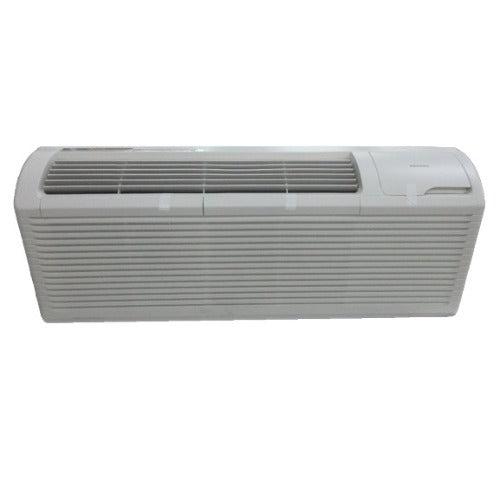
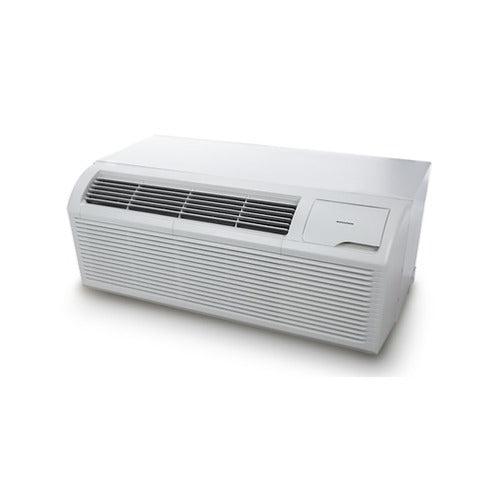
They’re not wrong—but the unit didn’t suddenly become “bad.” What usually happened is performance drift. Through-the-wall ACs like Amana are designed to deliver a specific level of cooling, airflow, and efficiency—but only if the operating conditions stay close to what they were on day one.
This guide explains why wall ACs slowly lose efficiency and, more importantly, how to keep yours performing like it did when it was new—without replacing it early.
🧠 What “Original Performance” Really Means
When your wall AC was new, it delivered:
-
Rated BTU output
-
Designed airflow volume
-
Short, efficient cooling cycles
-
Lower electrical draw per hour
Performance loss doesn’t mean the unit stops working. It means:
-
Longer run times
-
Weaker airflow
-
Higher energy bills
-
More wear per cycle
The goal of maintenance is preserving airflow and heat transfer, because those are the first things to degrade.
📉 Why Wall AC Units Lose Efficiency Over Time
Efficiency loss isn’t caused by age alone—it’s caused by accumulated resistance.
🧊 1. Airflow Restriction (The #1 Performance Killer)
What Happens
Every through-the-wall AC depends on airflow:
-
Air must pass through the filter
-
Across the evaporator coil
-
Through the blower wheel
-
Out the vents
Dust, lint, and pet hair slowly block that path.
The Result
-
Less air crosses the coil
-
Less heat is removed
-
The unit runs longer to compensate
Even a 10–15% airflow loss can noticeably reduce cooling performance.
🌀 2. Dirty Coils Reduce Heat Transfer
Your evaporator coil absorbs heat from the room. When dirt builds up:
-
Heat transfer efficiency drops
-
Refrigerant temperatures shift
-
Cooling capacity decreases
This forces the compressor to work harder for the same result—one of the fastest ways performance slips.
💧 3. Moisture & Drain Issues Increase Runtime
Blocked or partially clogged drain systems:
-
Increase indoor humidity
-
Make rooms feel warmer than they are
-
Keep the thermostat calling for cooling
Higher humidity means longer cycles, even if the temperature looks correct.
⚡ 4. Electrical Wear from Longer Run Cycles
As airflow and heat transfer degrade:
-
Motors run hotter
-
Electrical components stay energized longer
-
Efficiency drops even further
This creates a feedback loop:
less efficiency → longer runtime → more wear → even less efficiency
🔁 5. Environmental Changes Around the Unit
Performance can drop even if the unit is clean when:
-
Furniture blocks vents
-
Curtains interfere with airflow
-
Outdoor debris blocks heat rejection
-
Wall sleeve seals degrade
These changes are gradual and easy to miss.
🛠️ How to Maintain Original Performance (What Actually Works)
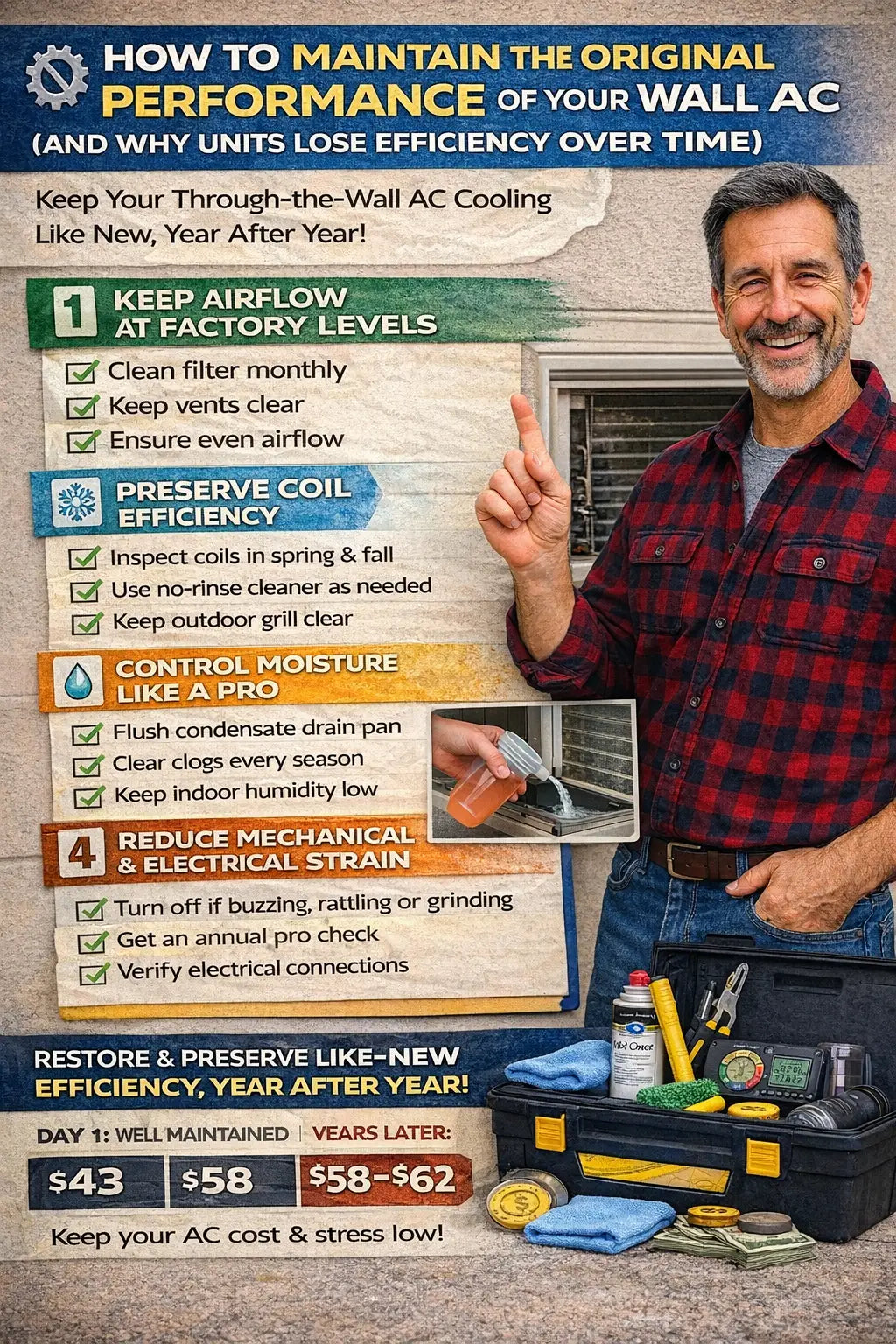
This is where homeowners win back lost performance.
🧼 1. Keep Airflow at Factory Levels
🔄 Filter Maintenance
-
Clean monthly during cooling season
-
Never reinstall a damp filter
-
Replace if damaged or warped
A clean filter alone can restore noticeable cooling strength.
🌬️ Vent & Louver Care
-
Keep vents unobstructed
-
Clean directional louvers
-
Ensure airflow is evenly distributed
Airflow direction affects perceived comfort just as much as temperature.
🌀 2. Preserve Coil Efficiency
❄️ Evaporator Coil Care
-
Inspect at least twice per year
-
Light dust → brush or vacuum
-
Heavy buildup → no-rinse coil cleaner
Clean coils allow the unit to hit target temperatures faster with less energy.
🌿 Outdoor Heat Rejection
-
Keep exterior grille clear
-
Maintain at least 12 inches of clearance
-
Remove leaves, grass, and debris
If heat can’t leave the system, cooling performance drops—no exceptions.
💧 3. Control Moisture Like a Pro
🚿 Drain Line & Pan Maintenance
-
Inspect every season
-
Flush gently with warm water
-
Clear standing water immediately
Moisture control keeps humidity low and cycles short.
⚙️ 4. Reduce Mechanical & Electrical Strain
🔊 Listen for Early Warning Signs
-
New buzzing → electrical strain
-
Rattling → loose components
-
Grinding → motor or blower wear
Addressing these early keeps components operating efficiently instead of compensating.
🔌 Annual Electrical Check (Recommended)
A professional annual check can:
-
Tighten connections
-
Verify amp draw
-
Identify failing components early
Especially important for R-410A systems, which rely on precise operating conditions:
https://www.epa.gov/mvac/acceptable-refrigerants-and-their-impacts
📊 Real-World Example: New vs Neglected Performance
Let’s compare two identical wall AC units:
| Condition | Runtime | Monthly Cost |
|---|---|---|
| Clean & maintained | Normal | $43 |
| Neglected (dirty filter + coil) | +35–40% | $58–$62 |
That difference compounds every season—and accelerates wear.
🧰 The Maintenance Schedule That Preserves Performance
| Task | Frequency |
|---|---|
| Filter cleaning | Monthly |
| Airflow check | Monthly |
| Coil inspection | Spring & Fall |
| Drain inspection | Seasonal |
| Exterior debris removal | Seasonal |
| Deep clean | Annually |
| Pro inspection | Annually |
This schedule keeps performance close to factory levels year after year.
💬 Mike’s Final Take: Performance Loss Is Optional
Through-the-wall ACs don’t “wear out” quickly—they get choked slowly by dirt, moisture, and restriction. Most efficiency loss is reversible if you catch it early.
Maintain airflow. Protect heat transfer. Control moisture.
Do those three things consistently, and your wall AC will cool like it did when it was new—long after most homeowners think replacement is the only option.
Buy this on Amazon at: https://amzn.to/47M5ozS
In the next topic we will know more about: The Hidden Maintenance Tasks Most Homeowners Forget (and How to Do Them Right)
🔗 External References
-
Energy.gov – Maintaining Your Air Conditioner
https://www.energy.gov/energysaver/air-conditioner-maintenance -
EPA – HVAC Systems & Efficiency
https://www.epa.gov/indoor-air-quality-iaq -
EPA – Refrigerant Systems & Performance
https://www.epa.gov/mvac/acceptable-refrigerants-and-their-impacts