Newsletter Subscribe
Enter your email address below and subscribe to our newsletter

HVAC made simple
By Tony Marino (Tony the Trusted Tech)
The Furnace Outlet | Updated October 2026
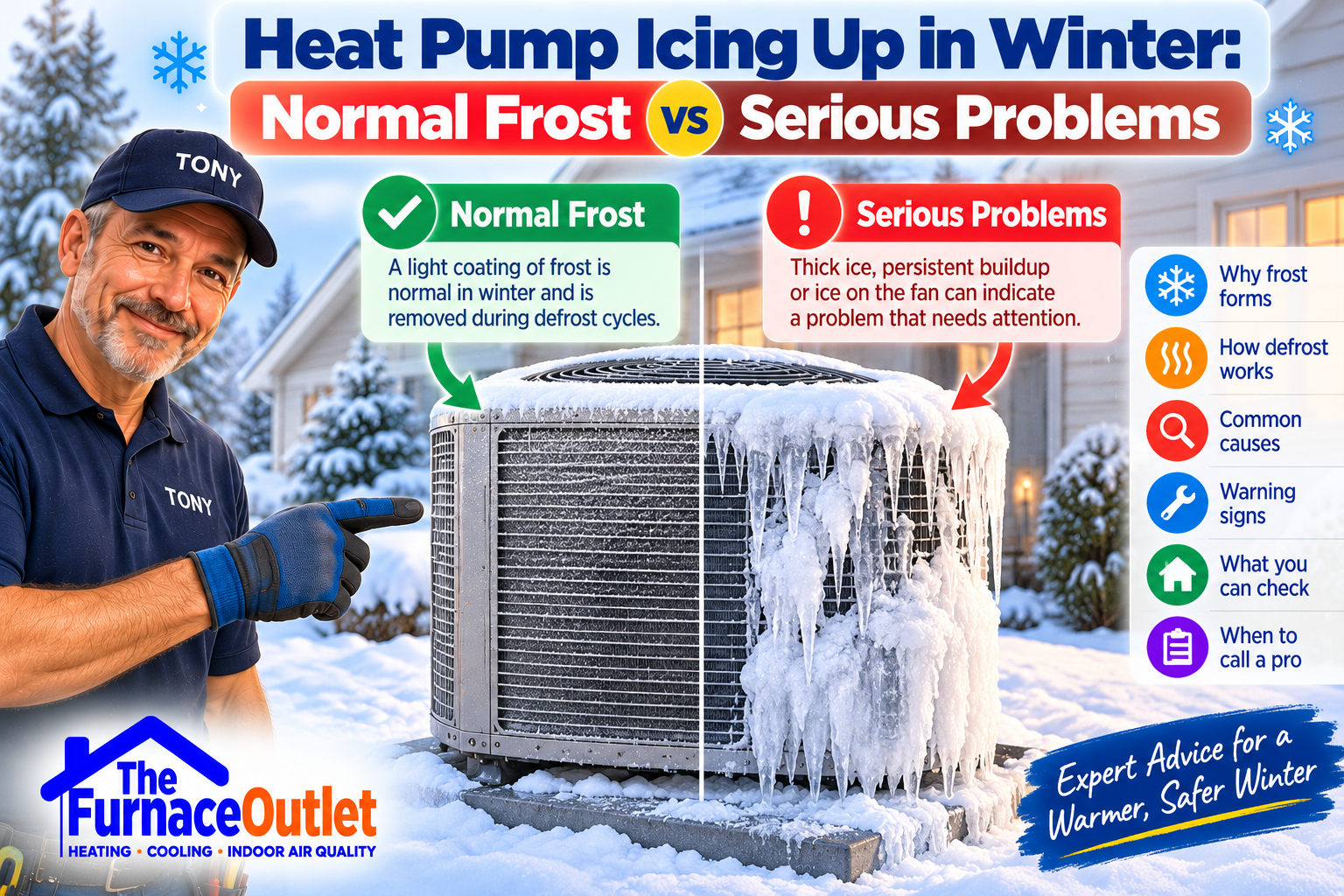
If you walk outside on a cold winter morning and discover your heat pump covered in frost or ice, it is natural to wonder whether something has gone wrong. You might notice a thin white coating across the outdoor coil, frozen water beneath the cabinet, or thick ice surrounding the equipment. Although these conditions may appear similar, they can have very different causes. Some frost formation is an expected part of winter heat pump operation, while persistent ice accumulation can indicate problems with defrost controls, airflow, drainage, or the refrigeration system.
After years of working with residential heating equipment, I have learned that one of the most common homeowner mistakes is assuming that any ice on a heat pump means the system is defective. In reality, air-source heat pumps are designed to operate in cold weather, and many periodically develop frost as they extract thermal energy from outdoor air. The equipment normally removes excessive frost through an automatic defrost cycle. The concern begins when frost does not clear properly, ice accumulates around moving components, or heating performance starts deteriorating.
The important distinction is between normal frost that forms and disappears as part of the equipment’s intended operation and abnormal ice that continues growing or interferes with heating. Understanding that difference can help homeowners avoid unnecessary repairs while recognizing problems that deserve prompt professional attention. In this guide, I will explain how frost develops, what normal defrost looks like, why serious icing occurs, and how to respond safely during the 2026–2027 heating season.
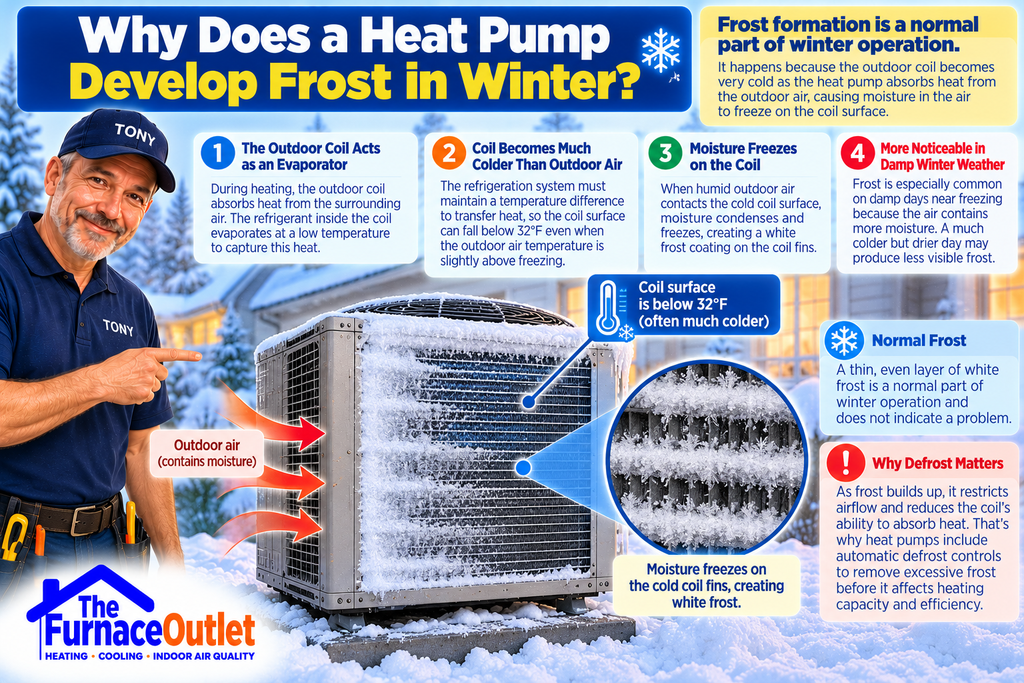
An air-source heat pump heats a home by transferring thermal energy from outdoor air into the indoor living space. During heating operation, the outdoor coil functions as an evaporator, allowing refrigerant to absorb heat from the surrounding environment. Because the refrigeration system must maintain a temperature difference to transfer heat, the outdoor coil can become considerably colder than the air passing across it. Under suitable conditions, the coil surface may fall below 32°F even when the outdoor air temperature is slightly above freezing.
When humid outdoor air contacts the cold coil, moisture may condense and freeze on its metal surfaces. This produces the familiar white frost coating that homeowners sometimes notice across the outdoor coil fins. The process is particularly common during damp winter weather when the air contains sufficient moisture and the coil temperature remains below freezing. Frost can initially appear as a thin, relatively even layer, and its presence alone does not indicate low refrigerant, a failed compressor, or defective installation.
Frost formation depends on outdoor temperature, humidity, coil temperature, airflow, and equipment operating characteristics. Interestingly, a damp day near freezing can sometimes produce more visible frost than a much colder but drier day. As frost accumulates, it begins restricting airflow and reducing the coil’s ability to absorb heat effectively. This is why heat pumps include automatic defrost controls designed to remove excessive frost before it significantly affects heating capacity and efficiency.
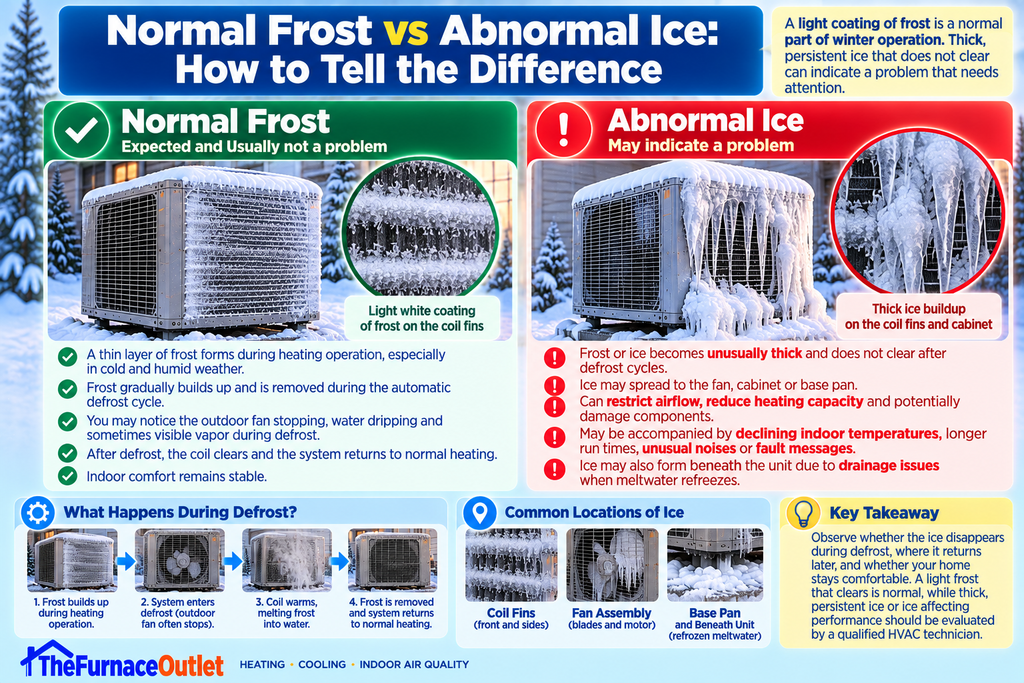
Normal frost generally appears as a light white coating across portions of the outdoor coil during heating operation. It may gradually develop over time and then disappear when the heat pump completes a defrost cycle. During that process, homeowners may observe the outdoor fan temporarily stopping, water dripping beneath the cabinet, or visible vapor rising from the coil. Once defrost finishes, the equipment should return to its normal heating sequence and continue maintaining indoor comfort.
Abnormal icing usually involves frost or ice that becomes unusually thick, remains after repeated defrost attempts, or spreads into areas where it interferes with equipment operation. A heavily encased outdoor coil can restrict airflow, while ice reaching the fan assembly may create scraping noises or damage moving components. Persistent ice buildup may also coincide with declining indoor temperatures, extended compressor operation, repeated protective shutdowns, or fault messages on the thermostat.
The location of the ice is just as important as its appearance. Frost distributed across the coil may involve different operating conditions from ice concentrated around the base pan or accumulating beneath the cabinet. A heat pump can remove frost successfully while still developing a drainage problem when meltwater refreezes below the equipment. I recommend observing whether ice disappears during defrost, where it returns afterward, and whether heating performance remains normal before assuming a particular component has failed.
Most conventional air-source heat pumps remove frost through a process known as reverse-cycle defrost. During ordinary winter heating, the outdoor coil absorbs heat from outside air while the indoor coil releases heat into the home. When the equipment’s controls determine that defrost is necessary, the refrigeration system temporarily changes its operating configuration so that heat is directed toward the outdoor coil.
The reversing valve changes refrigerant flow, allowing the outdoor coil to receive warm refrigerant and melt accumulated frost. The outdoor fan commonly stops during this period to reduce heat loss from the coil, while the compressor generally continues operating according to the manufacturer’s control sequence. As the coil warms, frost turns into liquid water that drains through the outdoor cabinet. Homeowners may notice a brief whooshing sound, water dripping below the unit, or a cloud of visible vapor as the moisture evaporates.
Once the controller determines that sufficient frost has been removed, the system returns to normal heating operation. The reversing valve changes back to the appropriate configuration, the outdoor fan resumes operation as required, and the equipment continues transferring heat indoors. Some ducted systems activate auxiliary electric heating during defrost to help maintain comfort. The exact sequence differs between manufacturers, but the important result is that frost should clear and useful heating should resume.
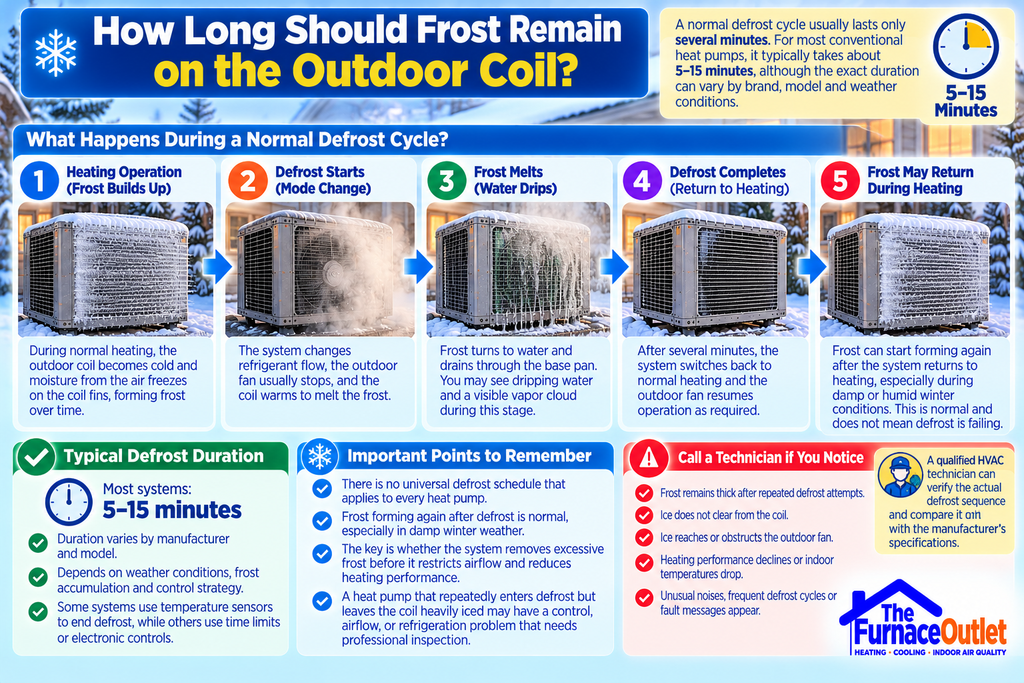
A normal defrost cycle often lasts only several minutes, although there is no single duration that applies to every heat pump. Many conventional systems complete defrost within approximately 5–15 minutes, depending on equipment design, outdoor conditions, frost accumulation, and control strategy. Some systems terminate defrost when a temperature sensor indicates that the outdoor coil has warmed sufficiently, while others incorporate maximum operating limits or additional electronic control conditions.
Frost may begin forming again after the equipment returns to heating, particularly during damp winter weather. This does not automatically mean that defrost is failing. The relevant question is whether the system periodically removes excessive accumulation before airflow and heating performance deteriorate. A heat pump that repeatedly enters defrost but leaves the coil heavily iced may have a control, airflow, or refrigeration problem that requires investigation.
Homeowners should avoid judging the equipment against a universal defrost schedule because operating strategies vary considerably. If frost remains thick after repeated defrost attempts, the outdoor fan becomes obstructed, or indoor heating declines significantly, a qualified technician should compare the actual operating sequence with the manufacturer’s specifications.
Outdoor humidity plays a major role in frost formation because moisture must be available for ice to accumulate on the coil. During damp conditions near freezing, the outdoor air can contain substantial moisture while the coil surface remains cold enough to freeze it. This combination can produce relatively rapid frost accumulation and more frequent defrost events. Fog, freezing drizzle, and prolonged humid weather may make the process especially noticeable.
Extremely cold weather does not necessarily produce the greatest amount of frost. When the air is relatively dry, less moisture may accumulate on the coil even though the heat pump is operating under demanding heating conditions. Consequently, homeowners may observe more frequent defrost cycles during a damp 35°F afternoon than during a colder but drier period.
Frequent defrost during suitable weather conditions is not automatically a malfunction. However, cycles that fail to clear the coil, repeatedly interrupt useful heating, or cause protective shutdowns require professional evaluation. The technician should consider weather conditions, actual frost accumulation, sensor readings, and manufacturer-specific defrost logic before deciding whether the frequency is abnormal.
Heat pumps rely on temperature sensors and electronic controls to determine when frost removal is necessary and when the defrost sequence should terminate. Depending on the equipment, the controller may evaluate outdoor-coil temperature, ambient temperature, compressor operating time, or additional operating information. These inputs help the system distinguish conditions that require defrost from those where continued heating is appropriate.
A defective temperature sensor can provide inaccurate information to the controller. If the system incorrectly interprets the outdoor coil as being warmer than it actually is, it may fail to initiate necessary defrost operation. Under other circumstances, inaccurate readings may trigger unnecessary defrost cycles or interfere with proper termination. Damaged wiring, corroded connectors, loose terminals, and incorrect sensor placement can produce similar control problems.
However, heavy icing does not automatically establish that a sensor is defective. Restricted outdoor airflow, abnormal refrigeration conditions, and drainage problems may produce overlapping symptoms. A technician should compare sensor readings with manufacturer specifications, inspect the associated wiring, and verify the complete defrost sequence before recommending replacement.
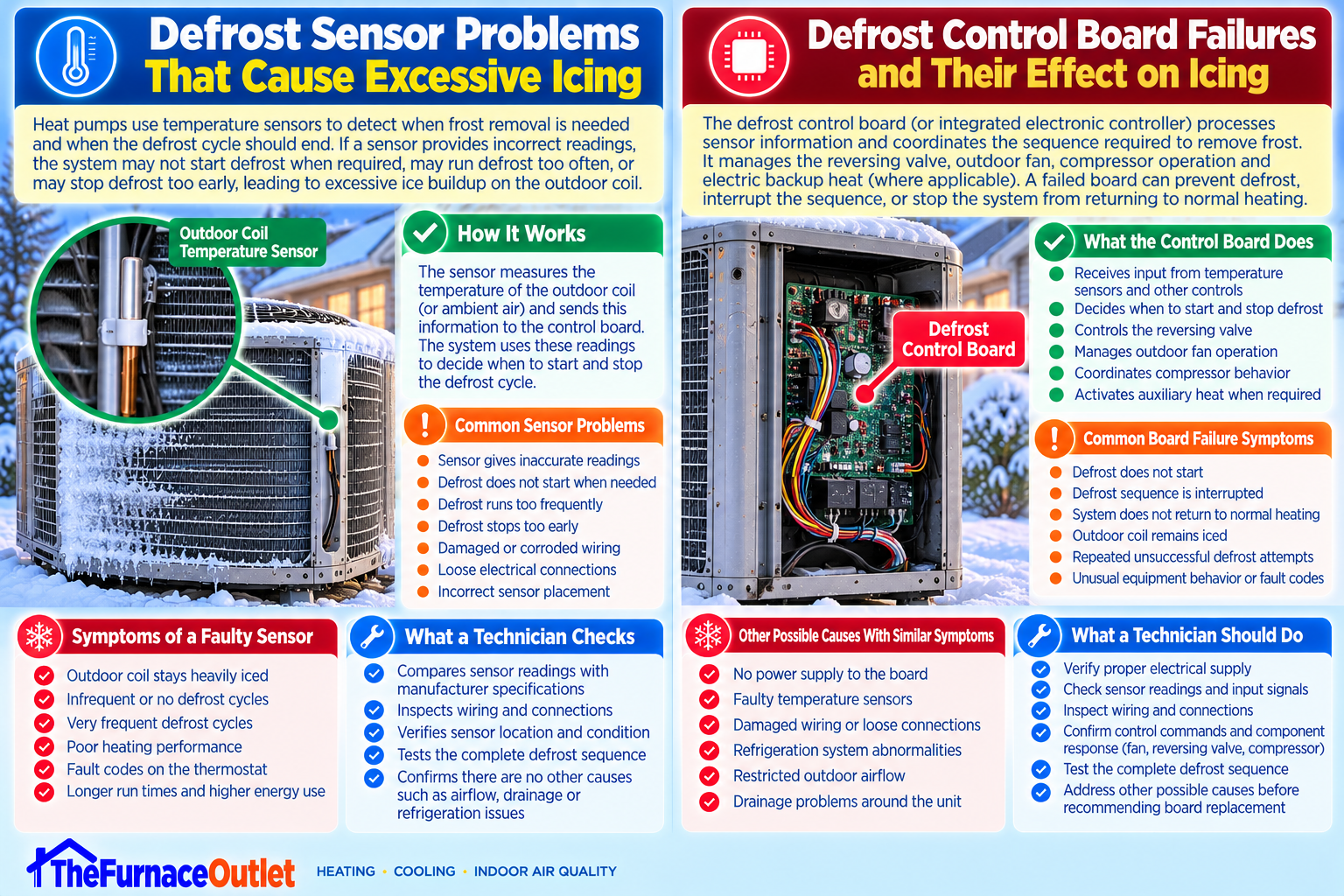
The defrost control system coordinates the operating changes required to remove frost from the outdoor coil. Depending on the heat pump design, the controller processes sensor information and manages reversing-valve commands, outdoor fan operation, compressor behavior, and auxiliary heating where applicable. Modern inverter-driven systems may use integrated electronic controllers rather than a separate conventional defrost board.
A defective board or associated control circuit can prevent defrost from beginning, interrupt the sequence, or prevent the system from returning to normal heating. Homeowners may observe persistent outdoor icing, repeated unsuccessful defrost attempts, unusual component behavior, or fault messages. However, these symptoms can also result from missing electrical supply, faulty sensors, damaged wiring, or refrigeration-system abnormalities.
Professional diagnosis should establish whether the controller is receiving valid inputs and issuing the correct commands before a replacement board is authorized. Replacing an expensive electronic component based solely on visible ice can leave the original problem unresolved, particularly when the actual cause involves airflow, drainage, or another part of the defrost sequence.
The reversing valve allows a conventional reversible heat pump to change refrigerant flow between heating and cooling operation. During reverse-cycle defrost, it temporarily redirects heat toward the outdoor coil so accumulated frost can melt. If the valve does not shift correctly, the outdoor coil may fail to receive sufficient heat, leaving ice in place even when the controls appear to initiate defrost.
Possible causes include a defective solenoid, damaged wiring, incorrect control signals, internal valve leakage, or mechanical valve problems. A reversing valve malfunction can also affect normal heating performance, potentially producing inadequate indoor warmth or abnormal refrigeration conditions. Nevertheless, unsuccessful defrost does not automatically prove that the valve itself is defective, because other electrical and refrigeration faults can prevent the intended operating change.
A technician should verify control commands, electrical conditions, valve response, and relevant refrigerant temperatures before recommending replacement. Complete reversing valve replacement generally requires sealed refrigeration-system work and can be expensive, making accurate diagnosis especially important.
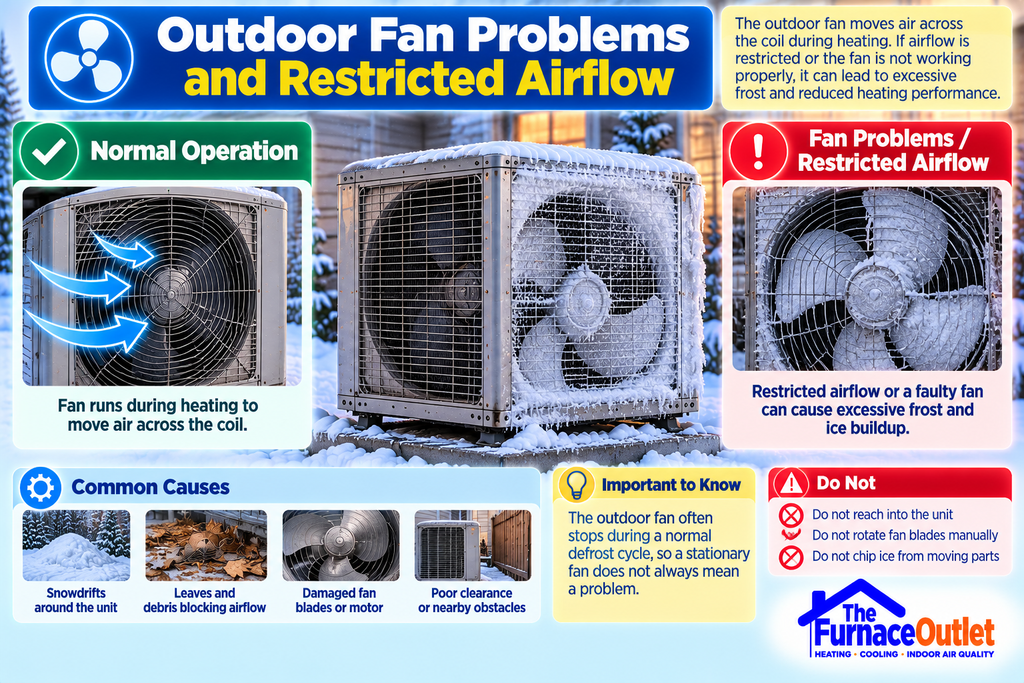
During normal heating operation, the outdoor fan moves air across the outdoor coil so refrigerant can absorb thermal energy from the environment. If airflow becomes restricted, heat transfer may deteriorate and abnormal coil conditions can develop. Potential causes include a defective fan motor, damaged blades, electrical control problems, mechanical obstructions, or excessive debris around the equipment.
Snowdrifts, leaves, nearby structures, and inadequate installation clearances can also interfere with airflow. However, the outdoor fan commonly stops during a normal defrost cycle, so a stationary fan does not automatically indicate motor failure. The technician must determine whether the equipment is heating, defrosting, or responding to a protective control before concluding that the fan is defective.
Ice contacting the fan assembly deserves particular attention because continued operation may damage blades, the motor, or surrounding cabinet components. Homeowners should never reach through the grille, rotate the blades manually, or attempt to chip ice away from moving parts. If a serious obstruction is suspected, stop operating the equipment safely according to manufacturer guidance and arrange professional inspection.
A heat pump requires an appropriate refrigerant charge and properly functioning refrigeration components to maintain its intended operating temperatures and heating capacity. Significant refrigerant leaks, restrictions, metering-device problems, or compressor-related faults can affect outdoor-coil conditions and produce unusual frosting patterns. Homeowners may also notice prolonged heating cycles, declining indoor comfort, or protective shutdowns.
However, a heavily iced outdoor coil does not automatically mean the system is low on refrigerant. Defrost control problems, restricted airflow, and other operating abnormalities can produce similar symptoms. Refrigerant pressure and temperature relationships also change with outdoor conditions, compressor speed, and equipment design, so a single generic pressure reading cannot reliably establish the cause.
A qualified technician should evaluate relevant operating pressures, temperatures, airflow, compressor behavior, and manufacturer performance data before making refrigerant adjustments. Refrigerant should not be added simply because ice is visible. If a leak is confirmed, the source should be investigated and repaired using approved procedures and applicable refrigerant-handling requirements.
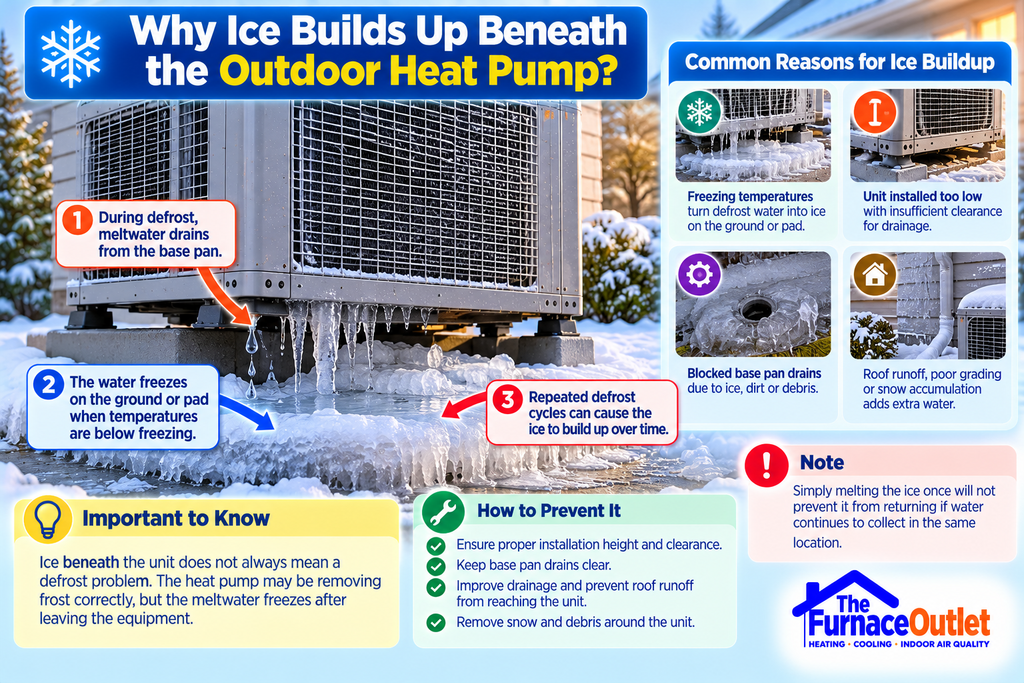
Ice beneath the outdoor cabinet does not necessarily indicate a failed defrost system. In many cases, the heat pump successfully removes frost from the coil, but the resulting water freezes after leaving the equipment. During defrost, meltwater drains through the outdoor base pan and reaches the surrounding ground, concrete pad, or support surface. If that surface remains below freezing, the water may accumulate as ice.
Initially, the accumulation may form only a thin frozen layer. As additional defrost cycles occur, the ice can gradually grow upward. If the outdoor unit is installed too close to the ground or lacks adequate winter clearance, the growing mass may eventually reach the base pan, obstruct drainage openings, or interfere with cabinet components. Poor grading, roof runoff, and snow accumulation can make the situation worse.
The appropriate solution depends on the equipment’s installation requirements and local winter conditions. Improving drainage, correcting support height, or addressing surrounding water sources may be more effective than replacing defrost components. Simply melting the ice once will not prevent recurrence if water continues collecting in the same location.
Many outdoor heat pumps include drainage openings in the base pan that allow defrost water to escape. These openings must remain functional under the installation conditions specified by the manufacturer. Leaves, dirt, small debris, and accumulated ice can obstruct drainage paths, allowing water to collect inside the cabinet and refreeze when outdoor temperatures fall.
Repeated defrost cycles may add more water to the affected area, gradually creating a larger ice mass. Eventually, the accumulation can reach the outdoor coil, fan assembly, or other components. Depending on the location, this may restrict airflow, produce unusual noises, or interfere with normal operation. Some cold-climate heat pumps incorporate base-pan heaters or offer manufacturer-approved accessories designed to reduce freezing in designated drainage areas.
Not every outdoor unit requires or supports these accessories, and drainage designs vary between models. Improvised heating cables, open flames, and unauthorized electrical modifications are not appropriate universal solutions. A qualified technician should review the exact installation instructions and determine whether drainage correction, equipment elevation, or a compatible accessory is necessary.
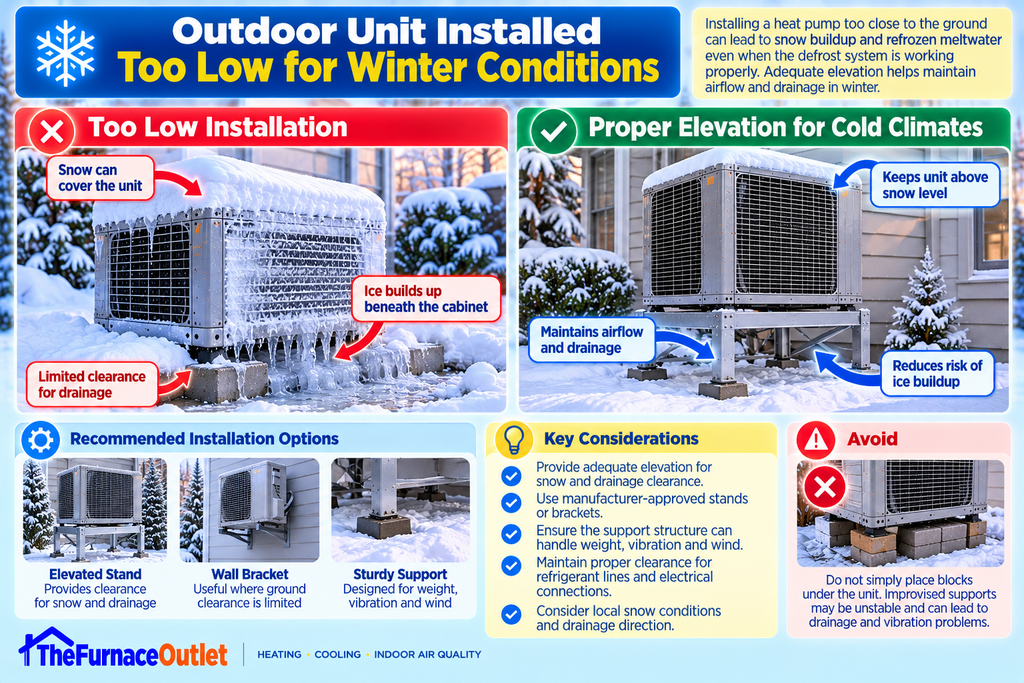
Outdoor unit elevation becomes particularly important in regions with frequent snowfall, prolonged freezing temperatures, or repeated defrost cycles. Equipment installed directly on a low concrete pad may have insufficient clearance for accumulated snow and refrozen meltwater. Even when the defrost system works correctly, ice can gradually build beneath the cabinet until it interferes with drainage or equipment components.
Cold-climate installations may use suitable elevated stands, wall brackets, or other manufacturer-approved support arrangements to maintain adequate airflow and drainage clearance. However, raising a heat pump is not simply a matter of placing blocks beneath it. The support structure must accommodate equipment weight, vibration, refrigerant piping, electrical connections, wind exposure, and applicable installation requirements.
Wall-mounted equipment introduces additional considerations because vibration may transfer into the building structure, while draining water can freeze on nearby surfaces. A qualified contractor should evaluate mounting height, support stability, drainage direction, and local winter conditions before recommending structural modifications.
Not every ice accumulation surrounding an outdoor heat pump originates from its refrigeration system. Snowdrifts can restrict airflow around the cabinet, while roof runoff, overflowing gutters, and melting snow from nearby structures may introduce additional water that freezes on or beneath the equipment. Icicles falling from roof edges can also damage protective grilles, panels, or refrigerant connections.
Poor surface grading may direct water toward the outdoor unit, creating ice deposits unrelated to defrost operation. These conditions can cause recurring problems even when the heat pump is functioning normally. A professional installation assessment should consider prevailing winter weather, required clearances, drainage direction, nearby roof features, and surrounding ground conditions.
Homeowners may carefully remove loose snow from accessible areas around the cabinet while avoiding electrical components and moving parts. The outdoor unit should never be tightly covered or enclosed in a way that blocks required airflow. Where roof runoff or grading is responsible, correcting the surrounding drainage arrangement may be more effective than modifying the heat pump.
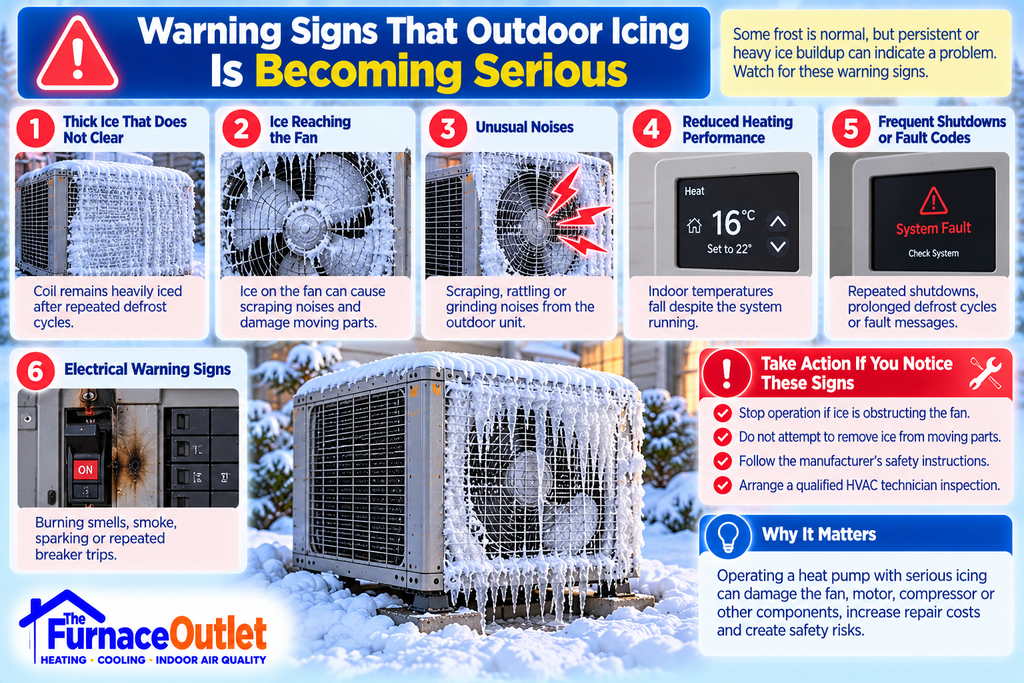
The most important warning signs involve ice accumulation that persists, interferes with moving components, or coincides with declining heating performance. A heavily iced outdoor coil that does not clear after repeated defrost attempts may indicate ineffective defrost, restricted airflow, or a refrigeration problem. Ice reaching the fan assembly can create scraping, rattling, or grinding noises and may lead to mechanical damage if operation continues.
Other concerning symptoms include indoor temperatures falling despite an active heating request, repeated compressor shutdowns, persistent fault codes, or unusually prolonged defrost behavior. Electrical warning signs such as burning odors, smoke, sparking, or repeated breaker trips require additional caution because they may indicate hazards beyond ordinary icing.
If ice obstructs the fan, the equipment develops severe mechanical noises, or protective shutdowns repeatedly occur, stop operation safely according to manufacturer guidance and arrange qualified service. Continuing to run equipment with a serious obstruction or confirmed mechanical problem may increase repair costs and create additional safety risks.
When a heat pump begins icing up, start by observing where the ice is forming and whether the equipment appears to remove it during defrost. A light coating on the outdoor coil may be normal, particularly during damp weather. Watch from a safe distance for temporary fan stoppage, visible vapor, dripping water, and the eventual return to normal heating. These observations can help distinguish an expected defrost sequence from an unsuccessful one.
Check whether the thermostat is maintaining the selected indoor temperature and note any displayed fault messages. Inspect the accessible indoor air filter and maintain it according to manufacturer instructions. Keep supply registers and return-air grilles unobstructed, and look for excessive snow or debris around the outdoor unit without reaching into the cabinet. Photographs or short videos taken from a safe distance can help a technician understand recurring icing patterns.
Do not pour boiling water onto frozen equipment, strike ice with tools, manually rotate fan blades, remove electrical panels, manipulate refrigerant connections, or bypass defrost controls. These actions can damage components and create injury risks. If ice interferes with moving parts or heating performance declines substantially, stop operation safely and arrange professional inspection.
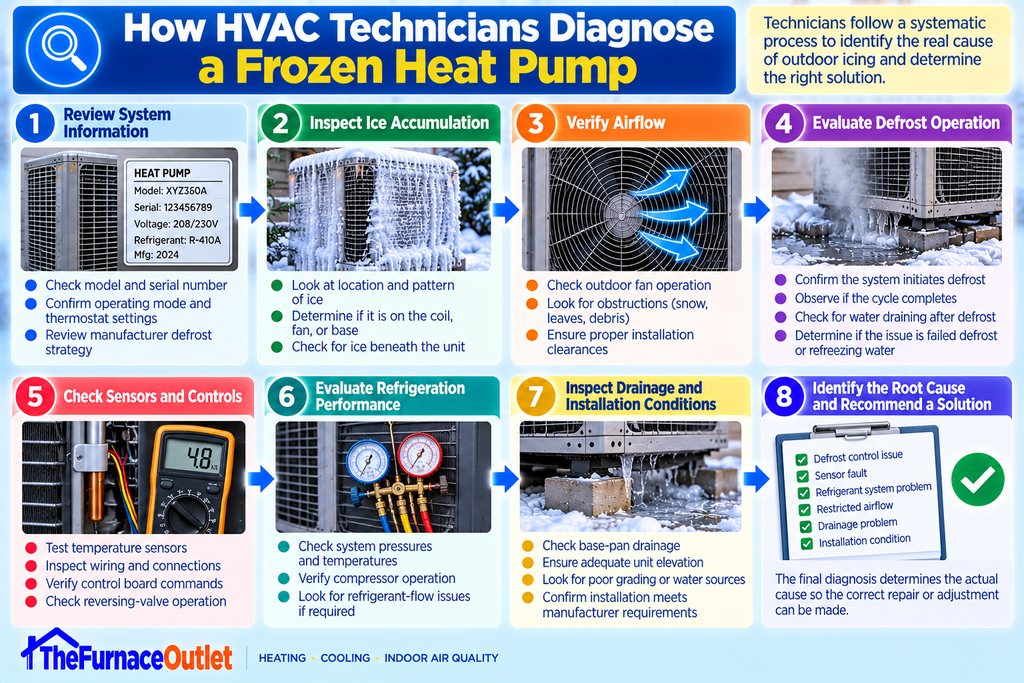
Professional diagnosis begins with identifying the equipment model, operating mode, thermostat configuration, and manufacturer-specific defrost strategy. The technician should inspect the location and pattern of ice accumulation, verify outdoor airflow, and determine whether the equipment is successfully initiating and completing defrost. This establishes whether the problem involves frost removal itself or water freezing after successful defrost.
The technician may evaluate temperature sensor readings, control commands, reversing-valve operation, outdoor fan behavior, and diagnostic fault history using manufacturer-approved procedures. If refrigeration performance appears abnormal, relevant pressures, temperatures, compressor operation, and refrigerant-flow conditions may also require evaluation. Drainage pathways, base-pan clearance, equipment elevation, and surrounding water sources should be inspected when ice accumulates beneath the cabinet.
The completed diagnosis should identify whether the primary issue involves defrost controls, refrigerant-system performance, restricted airflow, drainage, or installation conditions. That distinction is essential because replacing an electronic component will not correct poor drainage, while raising the outdoor unit will not repair a refrigeration system that cannot defrost properly.
Persistent icing does not automatically justify replacing the entire heat pump. Problems involving drainage obstructions, defective temperature sensors, isolated wiring connections, fan components, or certain control failures may be repairable without major equipment replacement. The appropriate decision depends on the confirmed cause, equipment condition, warranty coverage, replacement-part availability, and expected remaining service life.
More expensive failures involving a compressor, inverter module, reversing valve, or extensive refrigerant-circuit damage require a broader assessment. A technician should also determine whether the original problem caused additional damage or resulted from another unresolved operating condition. For relatively new equipment with otherwise reliable performance, repairing a confirmed fault may be sensible. For older systems with repeated major failures, severe corrosion, unavailable parts, or inadequate cold-weather capacity, replacement may deserve consideration.
When comparing replacement heat pumps, evaluate documented heating capacity at relevant outdoor temperatures, seasonal efficiency, defrost performance, sound ratings, installation requirements, and local service support. Proper sizing, airflow clearance, drainage design, and equipment elevation are essential to dependable winter operation.
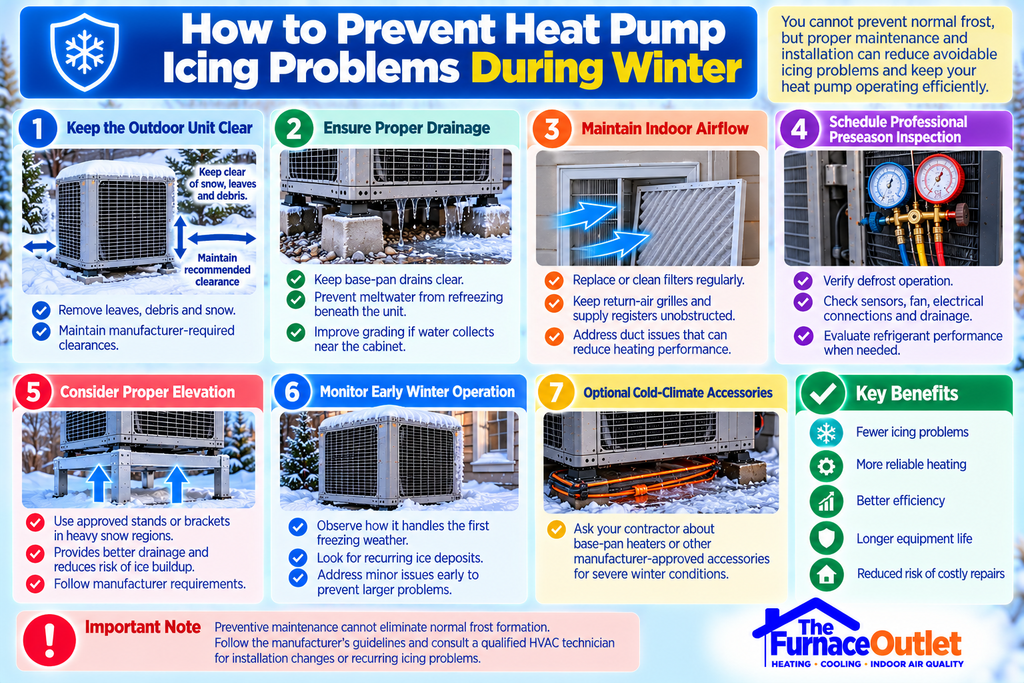
Preventive maintenance cannot eliminate normal frost formation, but it can reduce avoidable icing problems and help the equipment operate according to its intended design. Keep the outdoor unit clear of excessive leaves, debris, and snow accumulation while maintaining manufacturer-required airflow clearances. Inspect the surrounding drainage area for locations where defrost meltwater repeatedly freezes against the cabinet or creates a slipping hazard.
Indoor airflow also deserves attention because restricted filters, blocked return-air grilles, and duct problems can affect overall heating performance. Maintain accessible filters according to manufacturer instructions and keep supply registers unobstructed. A professional preseason inspection can include checking defrost operation, relevant temperature sensors, outdoor fan condition, electrical connections, drainage arrangements, and refrigeration performance when indicated.
In severe winter climates, ask the contractor whether the installation requires improved elevation or manufacturer-approved base-pan heating accessories. For the 2026–2027 heating season, I recommend observing how the outdoor unit handles its first periods of freezing weather. Early attention to recurring ice deposits can prevent a manageable drainage or control problem from developing into a more expensive equipment failure.
Yes. Light frost can form naturally on the outdoor coil during heating operation, particularly when outdoor conditions are damp and near freezing. The heat pump should periodically remove excessive frost through its automatic defrost system. The concern arises when frost becomes thick, persists after defrost attempts, or interferes with airflow and heating performance.
Persistent thick ice may result from ineffective defrost operation, restricted outdoor airflow, refrigeration abnormalities, or drainage problems. The location and pattern of the ice can provide useful clues, but visual inspection alone cannot establish the cause. A qualified technician should verify the operating sequence before recommending replacement parts.
Homeowners should not pour boiling water onto frozen equipment or attempt to break ice from internal components. Sudden temperature changes, electrical exposure, and refreezing can create additional hazards or damage equipment. Follow manufacturer guidance and arrange professional assistance when ice obstructs moving components or interferes with operation.
Visible water vapor may rise from the outdoor cabinet when accumulated frost melts during defrost. A brief cloud accompanied by dripping water and a normal return to heating is often expected. However, burning odors, sparking, or signs of actual smoke require prompt safety precautions and qualified assistance.
A light coating of frost does not normally require shutdown. However, if thick ice obstructs the fan, the equipment produces severe mechanical noises, or repeated protective shutdowns occur, stop operation safely according to manufacturer instructions and arrange professional service. The appropriate response depends on whether the icing is normal or interfering with equipment operation.
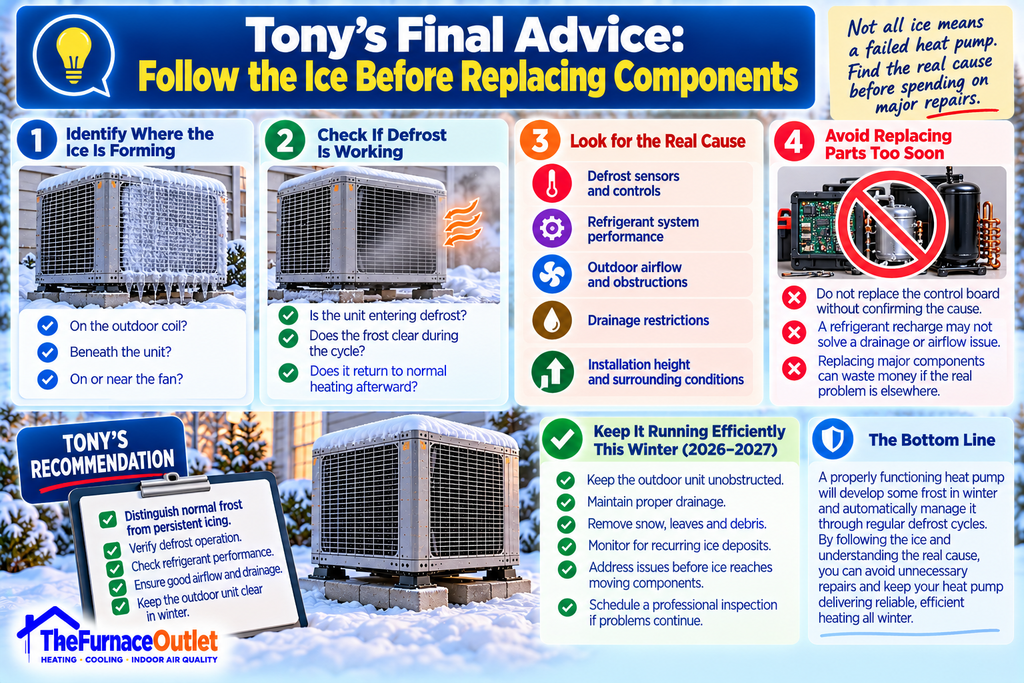
When a homeowner tells me their heat pump is frozen, I do not immediately recommend a new defrost control board, refrigerant recharge, or compressor replacement. I first want to know exactly where the ice is forming, whether the equipment is entering defrost, and whether accumulated frost disappears before normal heating resumes. A light white coating that clears during defrost is usually an expected part of winter operation. A heavily iced coil that never clears requires a different investigation from a growing ice mass beneath an otherwise functioning outdoor unit.
I also want the technician to evaluate the entire operating sequence rather than focusing on one suspected component. Defrost sensors, control boards, reversing valves, refrigerant conditions, outdoor airflow, drainage restrictions, and installation height can all contribute to winter icing. These problems may produce similar visible symptoms, but their solutions differ considerably. Replacing expensive components without confirming the actual cause can waste money and leave the equipment vulnerable to recurring failures.
My recommendation is to distinguish normal coil frost from persistent coil icing and refrozen drainage water before authorizing major repairs. A qualified HVAC technician should verify defrost operation, refrigeration performance, outdoor airflow, drainage clearance, and installation conditions before recommending corrective work. For the 2026–2027 winter season, keep the outdoor unit unobstructed, maintain appropriate drainage, and investigate growing ice deposits before they reach moving components. A properly functioning heat pump should manage normal frost automatically while continuing to provide dependable indoor heating.
This article provides general homeowner education and does not replace professional HVAC diagnosis. Heat pumps contain hazardous electrical components, moving fan assemblies, pressurized refrigerant, and manufacturer-specific safety controls. Homeowners should not remove electrical panels, manipulate refrigerant connections, bypass controls, chip ice from internal components, or attempt unauthorized repairs. Severe icing, electrical warning signs, and declining heating performance should be evaluated by qualified professionals.
U.S. Department of Energy — Air-Source Heat Pumps: https://www.energystar.gov/products/air_source_heat_pumps
U.S. Department of Energy — Operating and Maintaining Your Heat Pump: https://www.energy.gov/heat-pumps
ENERGY STAR — Air-Source Heat Pumps: https://www.energystar.gov/products/air_source_heat_pumps
Northeast Energy Efficiency Partnerships — Cold Climate Air-Source Heat Pump List: https://ashp.neep.org/
U.S. Environmental Protection Agency — Section 608 Technician Certification: https://www.epa.gov/section608/section-608-technician-certification
These references provide general information about heat pump performance, maintenance, cold-climate equipment, and refrigerant handling. Manufacturer-specific documentation should always take priority when evaluating defrost sequences, installation requirements, and service procedures.