Newsletter Subscribe
Enter your email address below and subscribe to our newsletter

HVAC made simple

By Jake Lawson | HVAC Specialist | The Furnace Outlet
When you turn on your heat pump for the first time during fall or winter, you expect warm, comfortable air to flow through your home. However, sometimes the heating cycle begins with an unexpected smell. It might resemble burning dust, dirty socks, damp laundry, hot plastic, or something chemical. Some odors disappear within minutes, while others return every time the heating system starts.
As an HVAC specialist, I always encourage homeowners to pay attention to unusual heating odors because they can provide useful clues about equipment condition. Some smells are associated with ordinary seasonal operation, particularly when electric supplemental heating elements activate after months of inactivity. Others may indicate moisture-related contamination, electrical overheating, drainage problems, or issues elsewhere in the home.
The important point is that not every heat pump smell means the equipment is failing, but not every smell should be ignored. Understanding the type of odor, when it appears, and whether it persists can help you decide whether basic maintenance is appropriate or professional inspection is necessary.
In this guide, I will explain the most common reasons heat pumps smell when heating starts, how to distinguish potentially normal odors from warning signs, and what homeowners can safely do to prevent recurring problems.
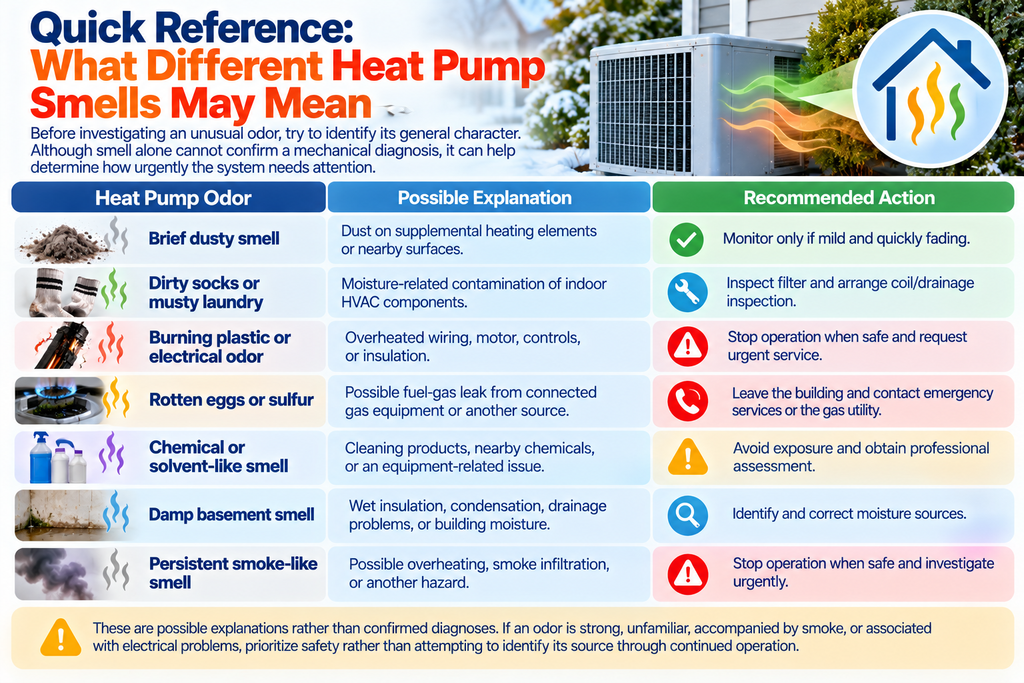
Before investigating an unusual odor, try to identify its general character. Although smell alone cannot confirm a mechanical diagnosis, it can help determine how urgently the system needs attention.
| Heat pump odor | Possible explanation | Recommended action |
|---|---|---|
| Brief dusty smell | Dust on supplemental heating elements or nearby surfaces | Monitor only if mild and quickly fading |
| Dirty socks or musty laundry | Moisture-related contamination of indoor HVAC components | Inspect filter and arrange coil/drainage inspection |
| Burning plastic or electrical odor | Overheated wiring, motor, controls, or insulation | Stop operation when safe and request urgent service |
| Rotten eggs or sulfur | Possible fuel-gas leak from connected gas equipment or another source | Leave the building and contact emergency services or the gas utility |
| Chemical or solvent-like smell | Cleaning products, nearby chemicals, or an equipment-related issue | Avoid exposure and obtain professional assessment |
| Damp basement smell | Wet insulation, condensation, drainage problems, or building moisture | Identify and correct moisture sources |
| Persistent smoke-like smell | Possible overheating, smoke infiltration, or another hazard | Stop operation when safe and investigate urgently |
These are possible explanations rather than confirmed diagnoses. If an odor is strong, unfamiliar, accompanied by smoke, or associated with electrical problems, prioritize safety rather than attempting to identify its source through continued operation.
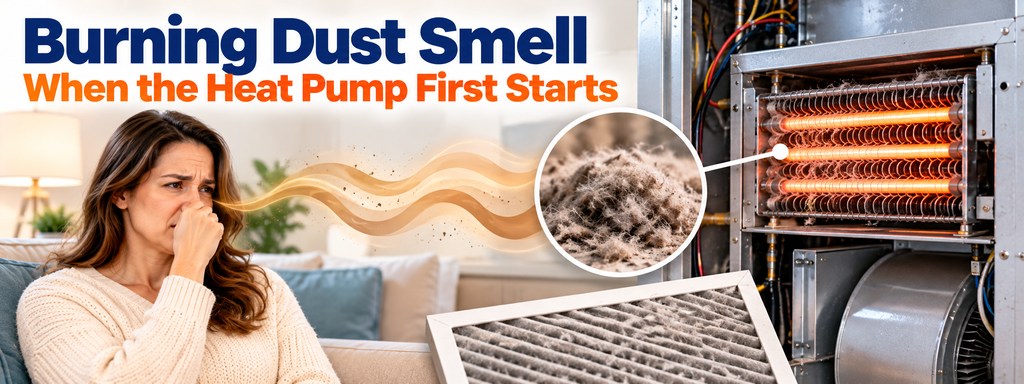
One of the most common seasonal complaints is a mild dusty or slightly burnt smell when heating begins after several months of cooling operation. Homeowners sometimes describe this as the smell of an electric heater that has not been used since the previous winter.
In a ducted heat pump with electric auxiliary heating elements, dust may accumulate on or near those components during periods of inactivity. When supplemental heat activates, the dust can warm and produce a temporary odor. This is different from assuming that the heat pump’s refrigerant-based heating process normally burns dust, because the primary heat pump does not generate heat through combustion or exposed resistance elements.
A mild dusty odor that disappears quickly and is not accompanied by smoke or abnormal equipment behavior may be associated with initial heating-element operation. However, there is no universal safe duration for an odor. A strong, persistent, acrid, or worsening smell should not be dismissed as ordinary seasonal dust.
I recommend checking the accessible air filter and observing whether the odor occurs specifically when auxiliary heat activates. If the smell persists, returns repeatedly, or resembles burning electrical insulation, shut down the equipment when safe and arrange professional inspection.
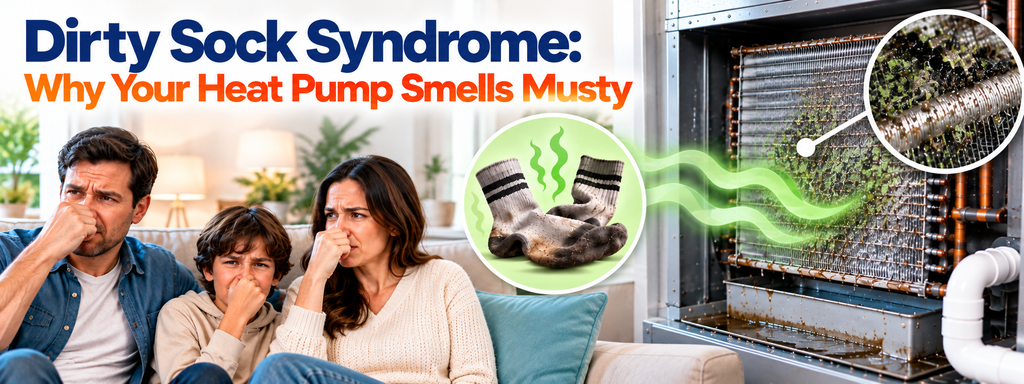
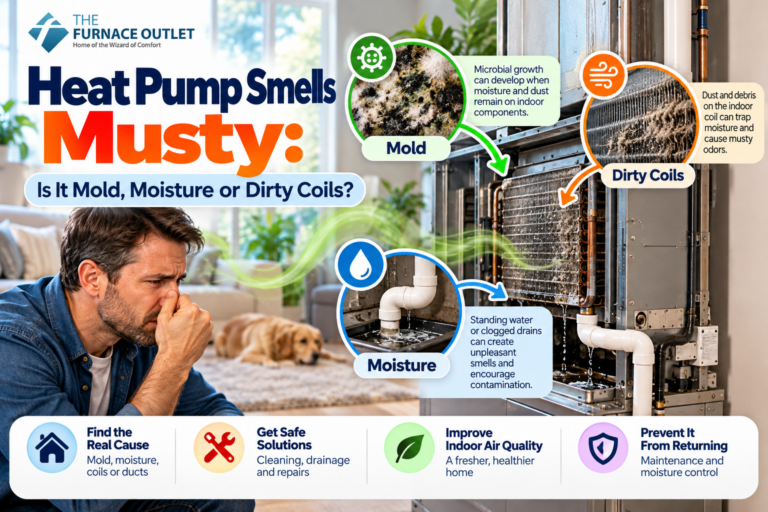
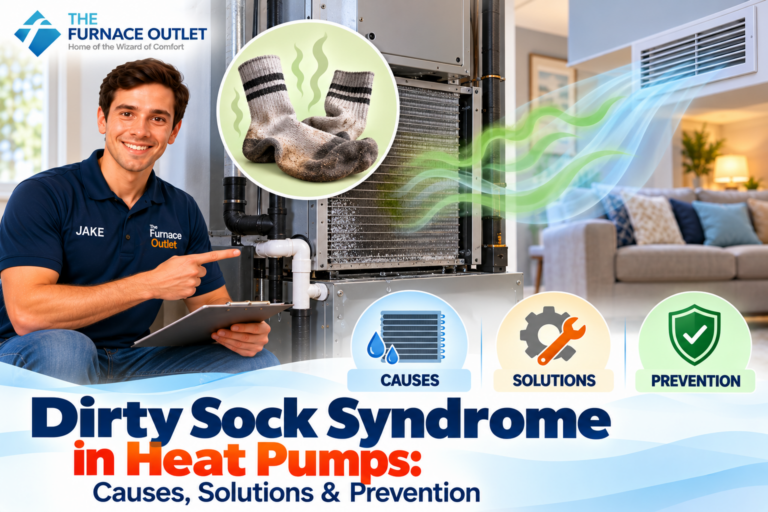
A heat pump that smells like dirty gym socks, damp towels, or a musty locker room may be experiencing what HVAC professionals call Dirty Sock Syndrome. This condition is frequently discussed during fall and spring, when systems alternate between heating and cooling as outdoor temperatures change.
During cooling operation, moisture condenses on the indoor heat exchanger and normally drains into a condensate pan. Dust and organic deposits can accumulate on the coil and nearby components. Under suitable conditions, these materials and persistent moisture may support microbial growth that produces unpleasant odors.
When the equipment starts or changes operating conditions, airflow can carry those odors into the living space. Some homeowners notice the smell most strongly during the first few minutes of heating, while others experience it whenever the blower operates.
However, not every musty smell is Dirty Sock Syndrome, and an odor alone cannot identify a particular microorganism or establish that hazardous mold is present. Similar smells can originate from clogged condensate drains, wet insulation, contaminated filters, or damp ductwork.
For a detailed explanation, see our related guide, Dirty Sock Syndrome in Heat Pumps: Causes, Solutions & Prevention. The best approach is to identify the contamination and moisture source before selecting a cleaning treatment.
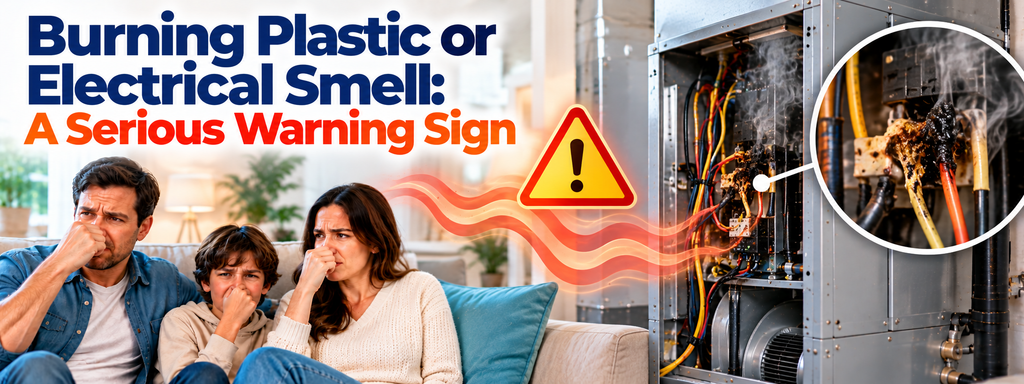
A burning plastic, melting insulation, or sharp electrical odor deserves immediate attention. Heat pumps contain electrical components such as motors, contactors, wiring, capacitors, control boards, and connections that can develop faults or overheat.
An overheating electrical connection may produce an acrid smell before a visible failure occurs. A struggling motor or damaged wiring can also create abnormal heat. These problems cannot be reliably identified simply by smelling air coming from a register, but the possibility is serious enough that continued operation is not appropriate.
If you notice a strong electrical burning smell, turn off the system if you can do so safely and contact a qualified HVAC technician. If there is visible smoke, fire, or an immediate danger, leave the area and contact emergency services.
Do not repeatedly reset tripped breakers, open electrical cabinets, or attempt to inspect energized components. A professional should identify the underlying fault and confirm that the equipment is safe before returning it to service.
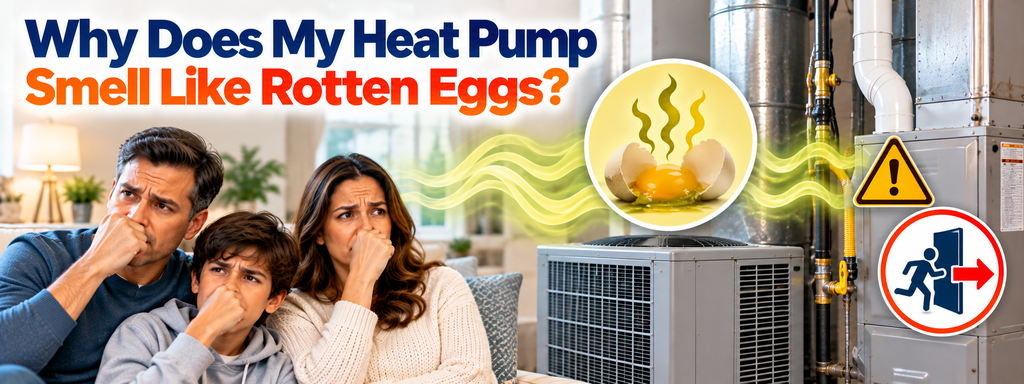
A rotten-egg or sulfur-like odor requires particular caution because it may indicate the odorant added to natural gas or propane. An all-electric heat pump does not burn gas during normal operation, but some homes use dual-fuel systems that combine a heat pump with a gas furnace.
A sulfur-like smell could also originate from another gas appliance or an unrelated source within the building. Because homeowners cannot safely distinguish these possibilities by smell alone, a suspected fuel-gas leak should be treated as an emergency.
If you suspect a gas leak, leave the building immediately. Avoid operating electrical switches, thermostats, phones, or other devices while inside the affected area. Once safely outside, contact your gas utility or emergency services and follow their instructions.
Do not restart the heating equipment or re-enter the building until the appropriate professionals confirm that it is safe.
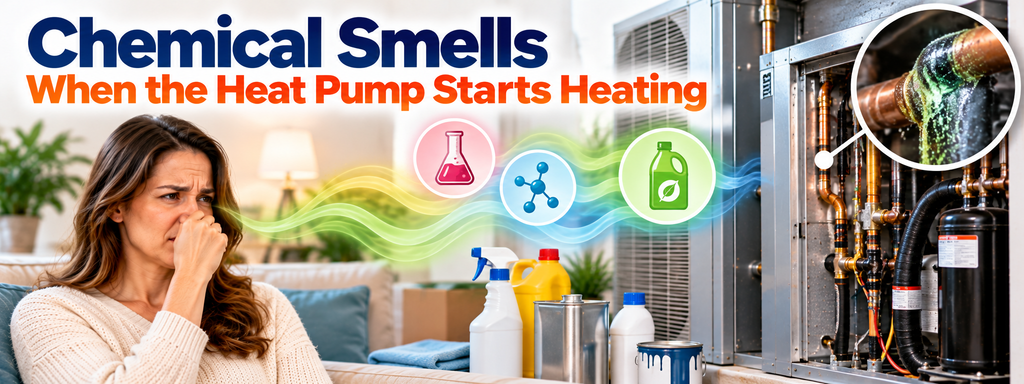
Some homeowners describe unusual heating odors as sweet, solvent-like, metallic, or chemical. These descriptions are subjective and do not reliably identify a particular refrigerant, cleaning product, or mechanical problem.
The odor could come from chemicals stored near a return-air intake, recently applied cleaning products, construction materials, overheated components, or other sources that become noticeable when the blower circulates air.
Refrigerant leaks can affect heat pump performance, but homeowners should not assume that a sweet or chemical smell confirms a refrigerant leak. Different refrigerants have different properties, and odor is not a dependable leak-detection method.
If a chemical smell is strong, persistent, or associated with irritation, avoid exposure and arrange professional assessment. A qualified technician can evaluate the equipment, ventilation conditions, and refrigerant system where appropriate.
The EPA’s Section 608 technician certification information explains requirements associated with regulated refrigerant servicing in the United States.
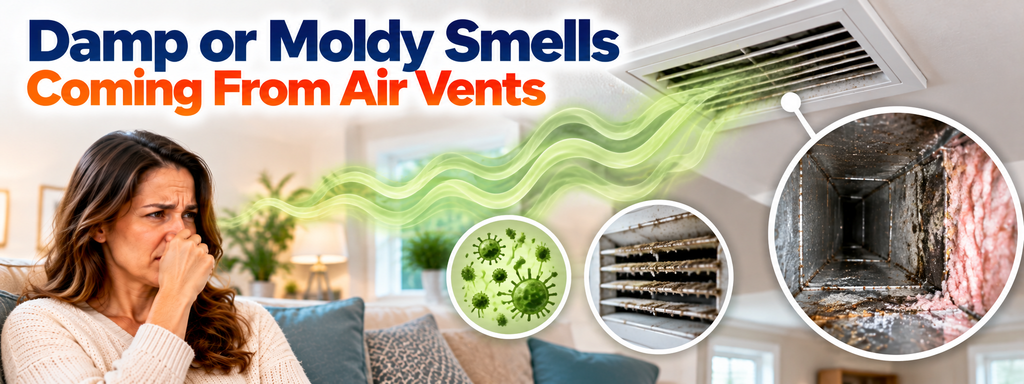
Sometimes the odor appears to come directly from the supply vents rather than the heat pump cabinet. This can happen when moisture-related contamination exists within the air distribution system, although airflow may also be carrying an odor from elsewhere.
Ductwork installed in unconditioned attics, crawl spaces, or other humid areas can develop condensation problems if insulation, sealing, or temperature conditions are unsuitable. Water intrusion and damaged internal duct insulation may also contribute to musty smells.
I would not automatically recommend whole-house duct cleaning based on odor alone. A proper inspection should determine whether the source is the indoor coil, drain pan, ductwork, air handler, or building materials.
The EPA’s guidance on air duct cleaning discusses circumstances in which cleaning may be appropriate and emphasizes correcting moisture problems rather than treating cleaning as a universal solution.
If porous insulation is wet or contaminated, replacement may be more appropriate than attempting to clean it.
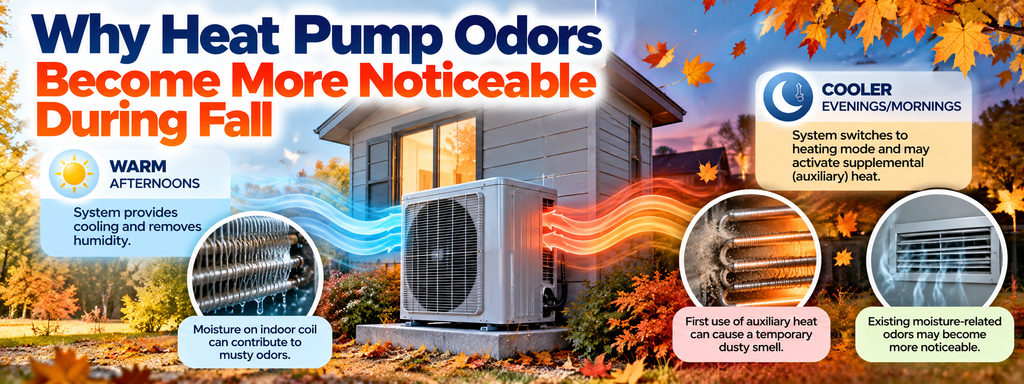
Fall creates a distinctive operating environment for heat pumps. During warm afternoons, the system may provide cooling and remove humidity. During cooler evenings or mornings, the same equipment may switch into heating mode.
These operating changes affect indoor coil temperature, condensation, evaporation, airflow, and sometimes supplemental heating operation. Consequently, existing moisture-related odors may become more noticeable, while the first use of electric backup heating can introduce a separate dusty smell.
A homeowner might therefore notice different odors on different days even when the same heat pump is operating. For example, a musty odor may appear during mild weather, while a dusty heating-element smell occurs during a colder morning when auxiliary heat activates.
This seasonal pattern is useful diagnostic information, but it does not establish a specific fault. Recording when an odor occurs can help an HVAC technician identify which operating sequence and components deserve closer inspection.
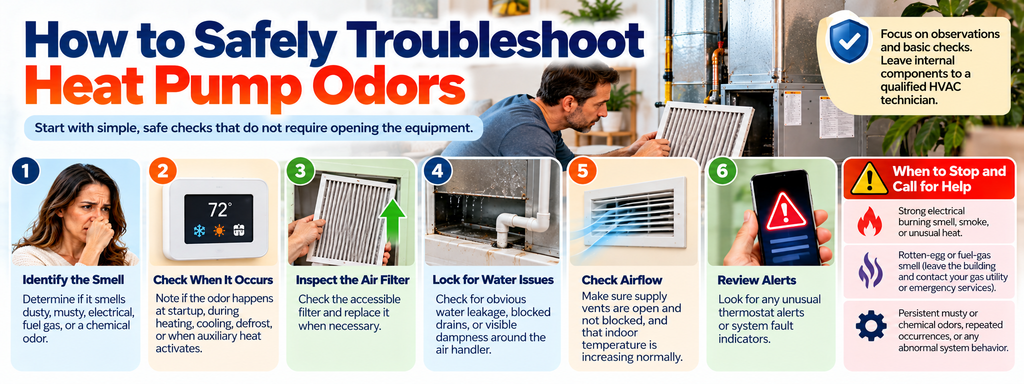
I recommend beginning with observations that do not require opening equipment cabinets or handling electrical and refrigerant components. First, identify whether the smell resembles ordinary dust, musty laundry, electrical burning, fuel gas, or an unfamiliar chemical.
Next, note whether the odor occurs only at startup, throughout the heating cycle, during defrost, or when auxiliary heat activates. Also check whether the indoor temperature is increasing normally and whether the thermostat displays any unusual alerts.
Inspect the accessible air filter and replace it when necessary. Look for obvious water leakage around the air handler, blocked vents, or visible dampness in accessible areas. Avoid touching internal coils, drain pans, wiring, or mechanical components unless the manufacturer’s instructions explicitly permit the homeowner maintenance involved.
If the smell is mild and dusty, quickly disappears, and no other symptoms occur, monitoring may be reasonable. Persistent musty odors deserve inspection, while burning electrical odors, smoke, and suspected gas leaks require immediate safety precautions.
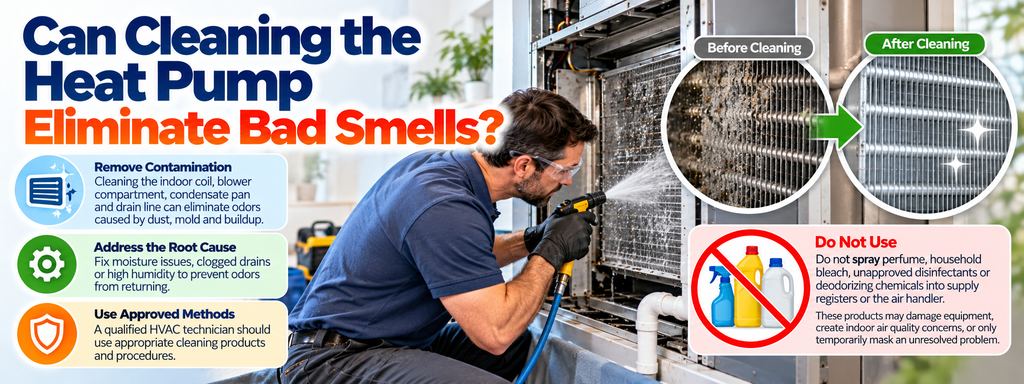
Cleaning can resolve certain HVAC odors when contamination is actually present on accessible equipment surfaces. However, effective cleaning depends on identifying the affected component and selecting an appropriate procedure.
A technician may inspect the indoor coil, blower compartment, condensate pan, drain line, and surrounding materials. If deposits are present, approved cleaning methods may help remove the contamination responsible for the odor.
The technician should also evaluate why contamination developed. A clogged drain, recurring water accumulation, high humidity, or damaged insulation can allow the smell to return even after cleaning.
I discourage spraying perfume, household bleach, unapproved disinfectants, or deodorizing chemicals into supply registers or the air handler. These products may damage equipment, create unwanted indoor exposures, or temporarily mask an unresolved problem.
The EPA’s mold guidance emphasizes the importance of moisture control when addressing indoor microbial contamination.
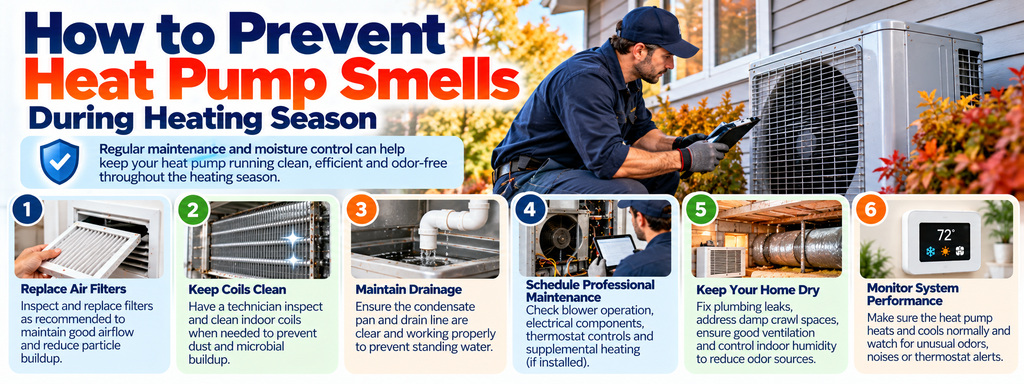
Prevention begins with routine HVAC maintenance and moisture management. Because heat pumps provide both heating and cooling, the equipment should be evaluated throughout the year rather than only when winter approaches.
Inspect and replace air filters according to the manufacturer’s instructions and household conditions. A properly fitted filter helps limit particle accumulation, while adequate airflow supports normal system performance.
Professional maintenance should include inspection of indoor coils, condensate drainage, blower operation, electrical components, thermostat controls, and supplemental heating where installed. The technician should also look for moisture problems, damaged insulation, and evidence of overheating.
Keeping the surrounding building dry is equally important. Plumbing leaks, damp crawl spaces, poor ventilation, and condensation can create odors that become noticeable whenever the HVAC blower runs.
The ENERGY STAR heating and cooling maintenance checklist provides practical guidance for regular inspections and equipment servicing.
A brief, mild dusty smell may occur when electric supplemental heating elements operate after a period of inactivity. However, persistent musty odors, burning plastic smells, smoke, or suspected gas odors should not be treated as normal.
Changes in indoor coil temperature and moisture conditions can make existing odor-producing contamination more noticeable during heating. Dirty Sock Syndrome is one possibility, but an inspection is needed to confirm the source.
A dirty filter can contribute to dust accumulation and restricted airflow. However, replacing it may not eliminate odors caused by contaminated coils, standing water, damp insulation, or electrical faults.
Some odor problems involve moisture or accumulated deposits rather than a failure of the refrigeration system. The equipment may continue heating effectively while circulating an unpleasant smell. Normal heating performance does not establish that the odor source is harmless.
Odor descriptions are not a reliable way to detect or identify refrigerant leaks. A qualified technician should evaluate suspected refrigerant problems using appropriate equipment and manufacturer procedures.
That depends on the odor and associated symptoms. A strong electrical burning smell or smoke warrants stopping operation when safe and seeking urgent help. Suspected fuel-gas odors require evacuation and emergency precautions. Persistent musty smells generally warrant a scheduled professional inspection.
When a homeowner tells me their heat pump smells whenever heating starts, I focus on three questions: What does the odor resemble, when does it occur, and does the system show any other abnormal behavior? Those observations often help distinguish seasonal heating-element odors from moisture-related contamination or more serious equipment problems.
I also encourage homeowners not to assume that every unusual smell requires a new heat pump. Many odor problems can be corrected through proper cleaning, drainage repairs, filter maintenance, or replacement of damaged components. The important part is identifying the underlying cause rather than simply covering up the smell.
Ultimately, your heat pump should provide dependable heating without recurring unpleasant odors. Understanding which smells are potentially harmless and which require immediate attention helps protect your home, avoid unnecessary repairs, and maintain healthier indoor conditions throughout the heating season.

This article is provided by The Furnace Outlet for general educational purposes only. It is not a substitute for professional HVAC inspection, emergency response, manufacturer instructions, or medical advice. Odors cannot reliably identify refrigerant leaks, microbial species, or specific electrical faults. Do not open energized equipment, handle refrigerants, or apply unapproved chemicals to HVAC components. If you suspect a gas leak, evacuate and contact the appropriate emergency service or utility from a safe location. The Furnace Outlet publishes independent educational information; references to outside organizations do not imply affiliation or endorsement.
© 2026 The Furnace Outlet. All rights reserved.