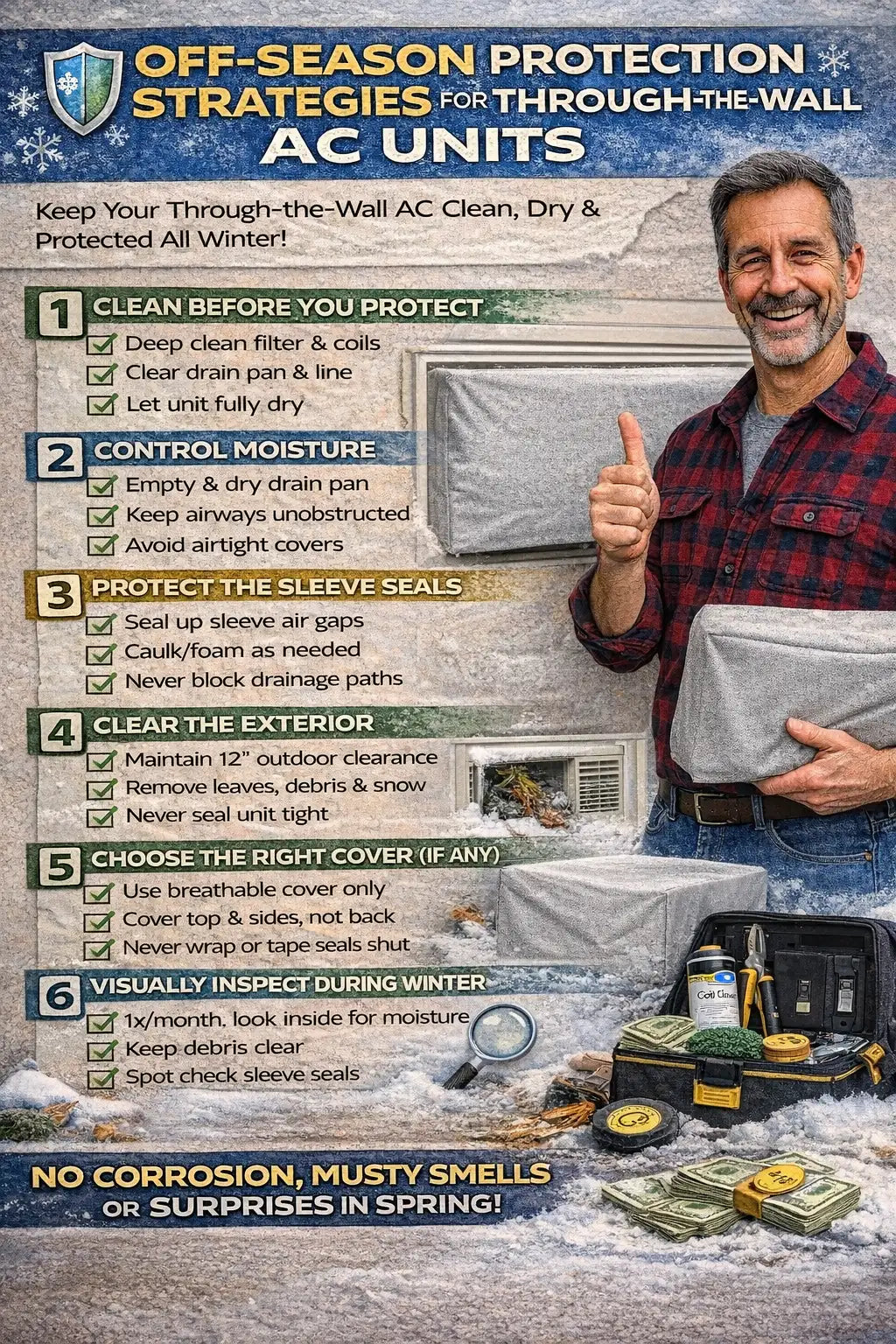
A Mike-Style Guide to Protecting Your AC When It’s Not Doing the Work
Most homeowners think off-season protection means one thing: cover it and forget it.
That mindset causes more damage than neglect.
Through-the-wall AC units—especially models like Amana—don’t like being ignored, sealed up, or left damp for months at a time. Off-season care isn’t about hiding the unit from winter or fall—it’s about protecting airflow paths, controlling moisture, and preventing corrosion while the unit rests.
This guide shows you what actually works, what doesn’t, and how to protect your wall AC so it’s ready to perform the moment you need it again.
🧠 What “Off-Season” Really Means for Wall AC Units
Off-season doesn’t mean “inactive.” It means:
-
Reduced or no cooling runtime
-
Exposure to cold air, moisture, and debris
-
Risk of corrosion, mold, and seal failure
Your goal is to pause wear without trapping damage.
🚫 The Biggest Off-Season Mistake: Fully Sealing the Unit
❌ Why Full Covers Backfire
Tightly wrapped plastic covers:
-
Trap condensation
-
Prevent airflow drying
-
Accelerate rust and corrosion
-
Encourage mold growth
Experts specifically warn against sealing AC units airtight during winter:
https://www.homesandgardens.com/solved/experts-warn-homeowners-not-to-cover-ac-units-this-winter
Moisture damage happens quietly—and shows up next cooling season as weak airflow, odors, or electrical issues.
✅ The Right Off-Season Mindset: Dry, Clear, Protected
Off-season protection should:
-
Keep debris out
-
Allow moisture to escape
-
Protect seals and electronics
-
Preserve airflow paths
Think ventilation + cleanliness, not insulation.
🧼 Step 1: Clean Before You Protect (Non-Negotiable)
🧽 Why Pre-Season Cleaning Matters
Leaving dirt inside the unit for months allows:
-
Moisture retention
-
Mold growth
-
Corrosion on coils and fasteners
✅ What to Clean Before Shutdown
-
Air filter (wash and dry completely)
-
Evaporator coil (light cleaning)
-
Drain pan and drain line
-
Louvers and vents
A clean unit dries faster and stays healthier.
💧 Step 2: Control Moisture (Your #1 Off-Season Enemy)
⚠️ Why Moisture Causes Most Off-Season Damage
Moisture leads to:
-
Mold smells
-
Corroded coils
-
Electrical contact oxidation
EPA guidance confirms moisture control is critical for HVAC longevity:
https://www.epa.gov/mold
✅ Moisture Control Checklist
-
Confirm drain line flows freely
-
Empty and dry drain pan
-
Leave vents unobstructed
-
Avoid airtight exterior covers
Dry air movement prevents long-term damage.
🧱 Step 3: Protect the Wall Sleeve & Seals
🧠 Why Sleeve Seals Matter Off-Season
Cold air infiltration and moisture seepage happen at the sleeve—not the unit.
Over winter:
-
Foam compresses
-
Caulk cracks
-
Drafts form
✅ What to Do
-
Inspect sleeve perimeter in fall
-
Seal gaps with exterior-rated caulk or foam
-
Never block drain openings
This protects your wall—not just the AC.
🌿 Step 4: Clear the Exterior (Even When Not Running)
⚠️ Why Outdoor Clearance Still Matters
Leaves, snow, and debris:
-
Trap moisture against the grille
-
Cause corrosion
-
Block airflow when the unit restarts
✅ Exterior Prep
-
Remove leaves and mulch
-
Clear snow buildup after storms
-
Maintain at least 12 inches of clearance
Even dormant units need breathing room.
🧊 Step 5: Should You Use an AC Cover? (The Right Way)
✅ When Covers Make Sense
-
Wind-driven debris exposure
-
Heavy snowfall areas
-
Units facing prevailing weather
❌ When Covers Cause Damage
-
Fully sealed plastic covers
-
Covers blocking ventilation
-
Covers trapping condensation
✔️ Best Practices
-
Use breathable covers only
-
Cover top and sides—leave airflow paths open
-
Never tape or seal edges airtight
Protection should shed debris—not trap moisture.
🔥 Step 6: Units With Electric Heat—Special Considerations
If your through-the-wall unit includes electric heat:
❄️ Off-Season Tips
-
Keep filters clean year-round
-
Run heat briefly once per month
-
Maintain airflow even in winter
This prevents dust buildup and electrical stagnation.
🔌 Step 7: Electrical Safety During the Off-Season
⚡ What Changes in Cold Weather
-
Electrical contacts contract
-
Moisture oxidation increases
-
Loose connections worsen
✅ Smart Protection
-
Avoid frequent breaker shut-offs/on
-
Use annual professional electrical inspection
-
Especially important for R-410A systems
📦 Step 8: Indoor Protection & Room Prep
🪑 What to Check Indoors
-
Don’t block intake vents
-
Avoid pushing furniture against unit
-
Keep curtains away from sensors
Blocked airflow in the off-season causes stale moisture pockets.
📊 What Happens If You Skip Off-Season Protection?
Neglected off-season care can lead to:
-
Musty odors in spring
-
Reduced airflow
-
Higher first-month energy bills
-
Early corrosion and wear
Energy.gov confirms poor maintenance increases startup inefficiency:
https://www.energy.gov/energysaver/air-conditioner-maintenance
🗓️ Simple Off-Season Protection Checklist
| Task | When |
|---|---|
| Deep clean before shutdown | Fall |
| Drain inspection | Fall |
| Sleeve seal check | Fall |
| Exterior debris removal | Fall & Winter |
| Breathable cover (if used) | Winter |
| Monthly visual check | Winter |
| Pre-season re-inspection | Spring |
💬 Mike’s Final Take: Off-Season Care Is About Readiness
The best off-season strategy isn’t hiding your AC—it’s keeping it clean, dry, and able to breathe.
If you do this right:
✔ No musty smells
✔ No corrosion surprises
✔ Faster spring startup
✔ Lower first-month bills
Your wall AC doesn’t need to be wrapped—it needs to be respected.
Buy this on Amazon at: https://amzn.to/47M5ozS
In the next topic we will know more about: Maintaining Efficiency in R-410A Refrigerant Systems: Best Practices for Amana Units
🔗 External References
-
Energy.gov – Maintaining Your Air Conditioner
https://www.energy.gov/energysaver/air-conditioner-maintenance -
EPA – Mold & Moisture in HVAC Systems
https://www.epa.gov/mold -
EPA – Refrigerant Systems & Equipment Care
https://www.epa.gov/mvac/acceptable-refrigerants-and-their-impacts -
Expert Guidance on AC Covers
https://www.homesandgardens.com/solved/experts-warn-homeowners-not-to-cover-ac-units-this-winter


