Newsletter Subscribe
Enter your email address below and subscribe to our newsletter

HVAC made simple
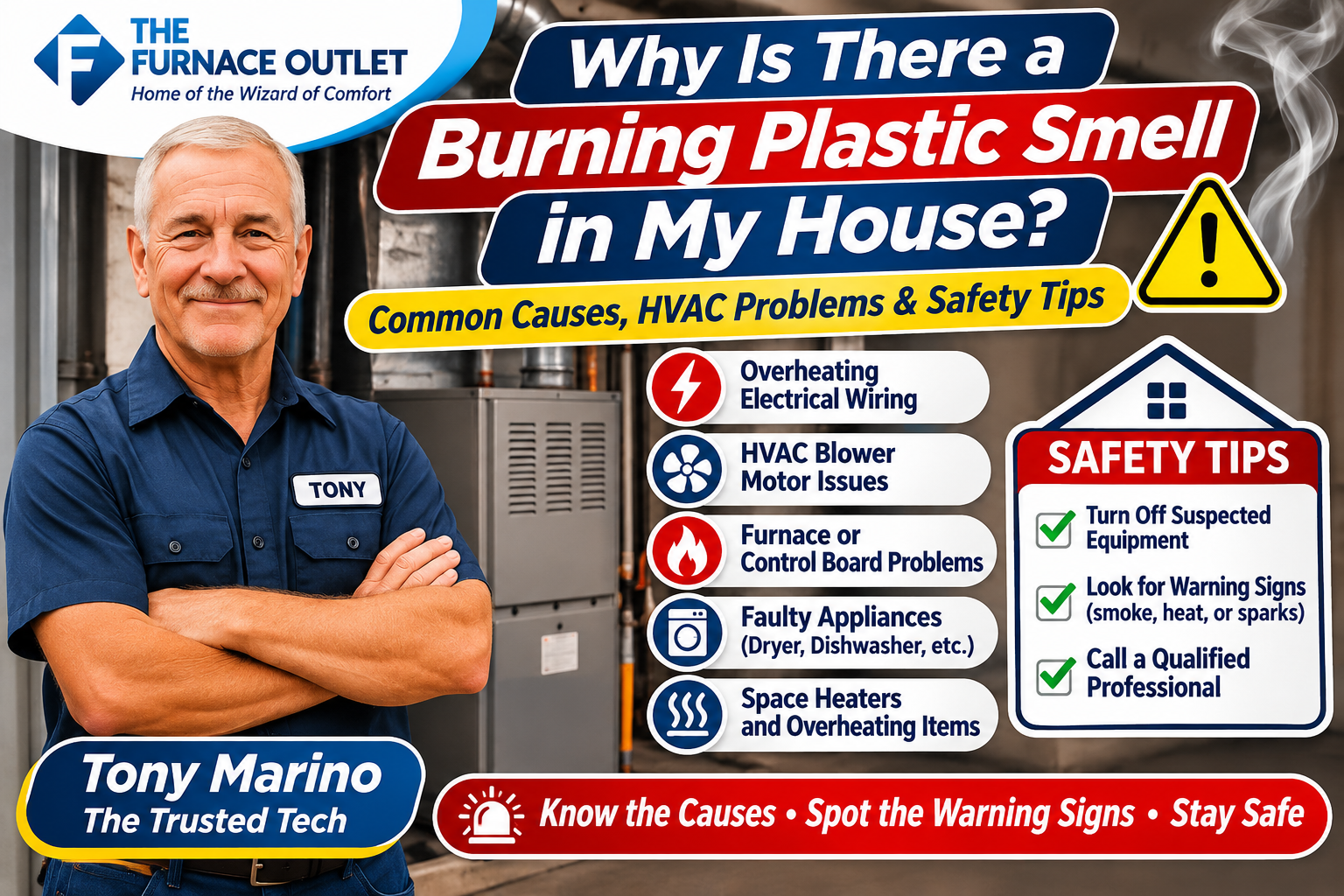
By Tony Marino — Tony the Trusted Tech | The Furnace Outlet
A burning plastic smell inside your home is something you should never ignore. Sometimes the cause is relatively simple, such as a plastic item accidentally placed near a heater or an appliance overheating during use. Other times, the odor can indicate damaged electrical wiring, a failing HVAC motor, overheating insulation, or a serious electrical problem developing behind a wall or inside your heating and cooling equipment.
After more than 25 years working with heating and cooling systems, I’ve learned that unusual smells can provide important warning signs. A furnace, heat pump, or air conditioner should not produce a persistent odor resembling melting plastic, burning rubber, or overheated electrical insulation. When that smell appears unexpectedly, the priority is identifying whether there’s an immediate safety risk before attempting to troubleshoot the equipment.
If you notice smoke, flames, sparking, or a strong and worsening burning odor, leave the building immediately and contact emergency services from outside. Don’t continue operating suspected equipment, touch hot electrical components, or repeatedly reset circuit breakers. Even when there’s no visible smoke, a persistent unexplained burning smell deserves prompt investigation.
One of the more serious causes of a burning plastic smell is overheated electrical wiring. Electrical conductors are surrounded by insulating materials that can soften, deteriorate, or burn when exposed to excessive heat. Loose connections, damaged wiring, overloaded circuits, and failing electrical components can generate enough heat to damage nearby insulation and produce a sharp chemical odor.
The smell may be noticeable near electrical outlets, switches, breaker panels, appliances, or HVAC equipment. In some cases, you may also notice flickering lights, unusual buzzing, discolored outlet covers, or a warm electrical enclosure. However, dangerous electrical faults can occur without obvious visible warning signs.
If the odor appears to come from an outlet, electrical panel, or wiring inside a wall, avoid using the affected circuit and contact a licensed electrician. Don’t remove electrical covers or attempt to tighten connections yourself. Electrical overheating can develop into a fire even when the equipment initially appears to be operating normally.
Your furnace or air handler contains a blower motor that circulates conditioned air throughout the home. When the motor operates normally, it should move air without producing strong electrical or burning odors. However, worn bearings, damaged windings, excessive electrical current, or restricted airflow can contribute to motor overheating.
An overheating blower motor may produce a smell resembling hot plastic, burning insulation, or electrical varnish. You might also notice unusual humming, squealing, reduced airflow, or a blower that stops unexpectedly. Some motors include thermal protection that interrupts operation when temperatures become excessive, but that protection shouldn’t be treated as a substitute for diagnosing the problem.
If the burning odor appears when your furnace or air conditioner starts, turn the system off at the thermostat and arrange professional inspection. A technician should evaluate the blower assembly, electrical connections, motor condition, and airflow restrictions before returning the equipment to service.
Modern furnaces rely on electronic controls, transformers, relays, wiring harnesses, and safety devices to coordinate heating operation. When an electrical component fails or overheats, it may produce an odor similar to melting plastic or burning electronics. In some cases, the smell becomes noticeable shortly after the thermostat calls for heat.
Damaged wiring terminals, overheated connectors, or failing control-board components can create localized heating. These problems may also cause intermittent furnace operation, unexpected shutdowns, or error codes. However, a furnace can continue operating even when an electrical component is developing a dangerous fault.
Don’t remove furnace access panels to investigate a suspected electrical burning smell. Turn the equipment off if you can do so safely and contact a qualified HVAC technician. If smoke, flames, or a strong worsening odor is present, evacuate and contact emergency services rather than attempting further troubleshooting.
Portable space heaters are another common source of burning plastic odors, particularly when placed too close to furniture, curtains, electrical cords, or household items. These heaters produce concentrated heat, and nearby plastic materials can soften or overheat when exposed to high temperatures.
A damaged power cord, loose plug connection, or overloaded outlet can also generate excessive heat. If you notice discoloration, melting, unusual buzzing, or a burning smell around a heater or its electrical connection, stop using it immediately. Don’t handle a hot or damaged plug, and don’t reuse the heater until the problem has been professionally evaluated.
The U.S. Consumer Product Safety Commission recommends keeping portable heaters at least three feet away from combustible materials and plugging electric heaters directly into wall outlets rather than extension cords or power strips. These precautions help reduce the risk of overheating and household fires.
Air conditioners and heat pumps contain electrical components that can produce burning odors when they malfunction. Indoor blower motors, control boards, wiring connections, and other components may overheat because of electrical faults, mechanical problems, or restricted operating conditions.
If the smell appears only when cooling begins, the indoor air handler is one possible source. However, odors from other parts of the house can also be drawn into the return-air system and distributed through the ductwork. That means a smell coming from a supply register doesn’t automatically prove the air conditioner is responsible.
Turn off the system and investigate only obvious, accessible conditions without opening equipment cabinets. If the smell persists, arrange professional diagnosis. A technician can inspect electrical connections, motor operation, wiring, and system controls to determine whether the HVAC equipment is the source.
When a furnace operates for the first time after months of inactivity, accumulated dust on heating surfaces may produce a temporary warm or dusty smell. This is especially common during the first heating cycle of the season. In many cases, the odor fades as the system operates and the dust is removed from heated surfaces.
However, there’s an important difference between an ordinary dusty smell and the sharp chemical odor associated with burning plastic or electrical insulation. A strong, persistent, or worsening plastic-like smell should never be dismissed as normal seasonal furnace operation.
If you’re uncertain about the source, shut the furnace down and arrange an inspection. The safest approach is to confirm that the equipment is operating correctly rather than continuing to run it while hoping the smell disappears.
Not every burning plastic smell comes from your HVAC system. Dishwashers, washing machines, clothes dryers, refrigerators, ovens, microwaves, and other appliances contain electrical wiring, motors, heating elements, and plastic components. A malfunction in any of these parts can produce an overheating odor.
A clothes dryer may develop problems involving its motor, electrical connections, or accumulated lint, while a dishwasher may experience overheating around a heating element or electrical component. Small appliances can also produce odors when cords, plugs, or internal components deteriorate.
If the smell seems concentrated around a particular appliance, stop using it and disconnect power only if doing so is safe. Avoid touching damaged cords, melted plugs, or unusually hot outlets. Have the appliance inspected before using it again, especially when the odor is accompanied by smoke, unusual noises, or repeated electrical interruptions.
When a burning odor comes through your home’s air vents, the HVAC system naturally becomes the first suspect. However, forced-air systems circulate air throughout the building, which means they can distribute odors originating elsewhere. A smell entering the return-air system may become noticeable at several supply registers.
If the odor begins whenever the blower starts, possible explanations include an overheating blower motor, damaged wiring, or another problem inside the air handler. A nearby appliance or electrical fault may also be contributing to the smell.
Avoid placing your face directly against vents or attempting to locate the source by inhaling the fumes. Turn the HVAC system off and seek professional assistance if the odor persists. If the smell is strong or accompanied by smoke, leave the building and contact emergency services.
A burning plastic odor with no obvious appliance or HVAC source can sometimes originate from concealed electrical wiring. Loose connections, damaged conductors, and overloaded electrical components may generate heat inside junction boxes or wall cavities.
You might notice the smell near a particular outlet, switch, or section of wall, although the odor can travel through openings and air movement. Buzzing sounds, flickering lights, and discoloration around electrical devices are additional warning signs, but their absence doesn’t rule out a problem.
If you suspect concealed electrical overheating, don’t cut into the wall or remove outlet covers. Contact a licensed electrician for an appropriate inspection. If smoke, unusual heat, or other signs of an active fire are present, evacuate immediately and call emergency services.
The first step is to assess whether the situation may involve an active fire. Smoke, flames, sparking, alarms, or a strong odor that is rapidly getting worse are reasons to evacuate immediately and contact emergency services. Don’t delay evacuation to locate the source, collect belongings, or investigate electrical equipment.
If there are no immediate danger signs and you can safely identify a particular appliance or HVAC system as the likely source, switch it off using its normal controls. Avoid touching suspicious electrical plugs, opening equipment cabinets, or operating breakers near signs of overheating. If the odor remains unexplained, contact an electrician or HVAC professional promptly rather than continuing to use the suspected equipment.
The U.S. Consumer Product Safety Commission’s home-heating safety guidance emphasizes working smoke alarms, appropriate heater clearances, and professional heating-equipment inspections. These precautions are particularly important during winter, when heating systems and portable appliances are used more frequently. U.S. Consumer Product Safety Commission
Smoke and fumes from overheated plastics, wiring insulation, and electrical components may contain irritating or harmful substances. The specific health risks depend on the materials involved, the temperature, the concentration of fumes, and how long someone has been exposed. Because homeowners generally cannot identify the material from its odor, it’s unwise to assume the fumes are harmless.
If the odor is strong or causing coughing, headache, dizziness, or breathing discomfort, move to fresh air and seek appropriate medical assistance. If someone has severe breathing difficulty, confusion, or collapses, contact emergency medical services immediately. Don’t return to an affected area until it has been assessed as safe.
Remember that carbon monoxide is odorless, so a burning plastic smell cannot confirm or rule out carbon monoxide exposure. Homes with fuel-burning appliances should have working carbon monoxide alarms installed in appropriate locations. The CPSC’s fire and carbon monoxide safety recommendations explain the importance of these protective devices. U.S. Consumer Product Safety Commission
When a technician investigates an HVAC-related burning smell, the goal is to identify the actual source rather than replacing parts based on assumptions. The inspection may involve checking the blower motor, electrical connections, wiring harnesses, control boards, heating components, and signs of overheating inside the equipment.
Depending on the system and symptoms, the technician may measure motor current, inspect terminals for heat damage, evaluate airflow restrictions, and verify that safety controls operate correctly. Any damaged wiring or electrical components must be repaired according to the manufacturer’s instructions and applicable electrical requirements.
The ENERGY STAR HVAC maintenance checklist recommends inspecting electrical connections, measuring motor voltage and current, and checking the equipment’s operating controls. These procedures help identify conditions that can affect both safety and reliability. ENERGY STAR
Routine maintenance can reduce some of the conditions that contribute to overheating. Dirty filters, restricted airflow, deteriorating electrical connections, and poorly maintained blower assemblies may place additional stress on HVAC equipment. Addressing these issues early can help prevent unexpected breakdowns and improve system performance.
Homeowners should inspect accessible air filters regularly and replace them when dirty. Professional maintenance should include appropriate electrical inspections, blower checks, airflow measurements, and examination of heating components. Fuel-burning heating equipment should also receive regular safety inspections, particularly before the heating season begins.
The ENERGY STAR heating and cooling guidance recommends regular filter maintenance and annual professional servicing. While maintenance cannot prevent every electrical failure, it helps identify developing problems before they become more serious. ENERGY STAR
Why does my house smell like burning plastic when the heat turns on? The odor could originate from an overheating blower motor, damaged electrical wiring, a failing control component, or material exposed to excessive heat. Ordinary dust burning off heating surfaces may produce a temporary smell, but a sharp plastic-like odor shouldn’t automatically be considered normal. Turn the heating system off and arrange professional inspection if the smell is persistent, strong, or unfamiliar.
Can a burning plastic smell come from an electrical outlet? Yes, damaged electrical connections, overloaded circuits, and deteriorating wiring can produce heat that affects plastic outlet components and insulation. The odor may appear before obvious smoke or visible damage develops. Stop using the affected outlet and contact a licensed electrician rather than attempting to repair it yourself.
Why do I smell burning plastic but cannot find the source? Odors can travel through ductwork, wall cavities, and open spaces, making their origin difficult to identify. Concealed wiring, appliances, and HVAC equipment are possible sources, but the smell alone cannot establish which one is responsible. If the odor is persistent or unexplained, seek prompt professional assistance, and evacuate if there are signs of an active fire.
Can I keep running my furnace if the smell eventually disappears? A smell that fades doesn’t necessarily prove that the underlying problem has been resolved. Some electrical components overheat intermittently, and a protective control may temporarily interrupt operation before the problem returns. If the odor resembles melting plastic or burning electrical insulation, have the equipment inspected before resuming normal use.
When homeowners tell me their house smells like burning plastic, I never recommend ignoring it or masking the odor with air fresheners. The cause might be a relatively minor appliance problem, but it could also involve overheated wiring, a failing HVAC motor, or another electrical hazard. Identifying the source safely is far more important than keeping the heating or cooling system running.
My recommendation is to shut down suspected equipment when it is safe to do so, avoid electrical or mechanical repairs without proper training, and arrange professional diagnosis promptly. If smoke, flames, sparking, or a strong worsening odor appears, evacuate and contact emergency services. A quick response can protect your equipment, your property, and, most importantly, the people inside your home.
Educational disclaimer: This article provides general home and HVAC safety information and does not replace emergency services, professional electrical inspection, or qualified HVAC diagnosis. Burning odors may indicate a fire or electrical hazard even when smoke is not visible. Never investigate potentially energized electrical components or remain inside a building when an active fire is suspected.