Newsletter Subscribe
Enter your email address below and subscribe to our newsletter

HVAC made simple
By Tony Marino (Tony the Trusted Tech)
The Furnace Outlet | Updated October 2026
When winter temperatures drop and your heat pump struggles to keep the house warm, it is easy to assume that the equipment simply cannot handle cold weather. You may notice that the thermostat is set to 72°F, but the indoor temperature remains at 67°F. The system might run continuously, supply air may feel lukewarm, and some rooms may remain noticeably colder than others. Although these symptoms can indicate a mechanical problem, they can also result from insufficient heating capacity, excessive building heat loss, incorrect thermostat settings, or inadequate supplemental heating.
After years of working with residential HVAC systems, I have learned that a heat pump not heating enough in cold weather requires a different approach from a system that has stopped operating completely. A heat pump can be running normally and still struggle to maintain comfort if the home’s heating demand exceeds its available output. Conversely, a properly sized system may lose heating performance because of restricted airflow, excessive outdoor icing, refrigerant problems, or failing components. These situations may look similar from the thermostat, but they require different solutions.
The key is to determine whether the heat pump is producing its expected heating capacity and whether that capacity is sufficient for the home under actual winter conditions. In this guide, I will explain the most common causes of inadequate heating, what homeowners can safely check, how HVAC technicians diagnose performance problems, and when repairs, supplemental heating, or equipment upgrades deserve consideration.
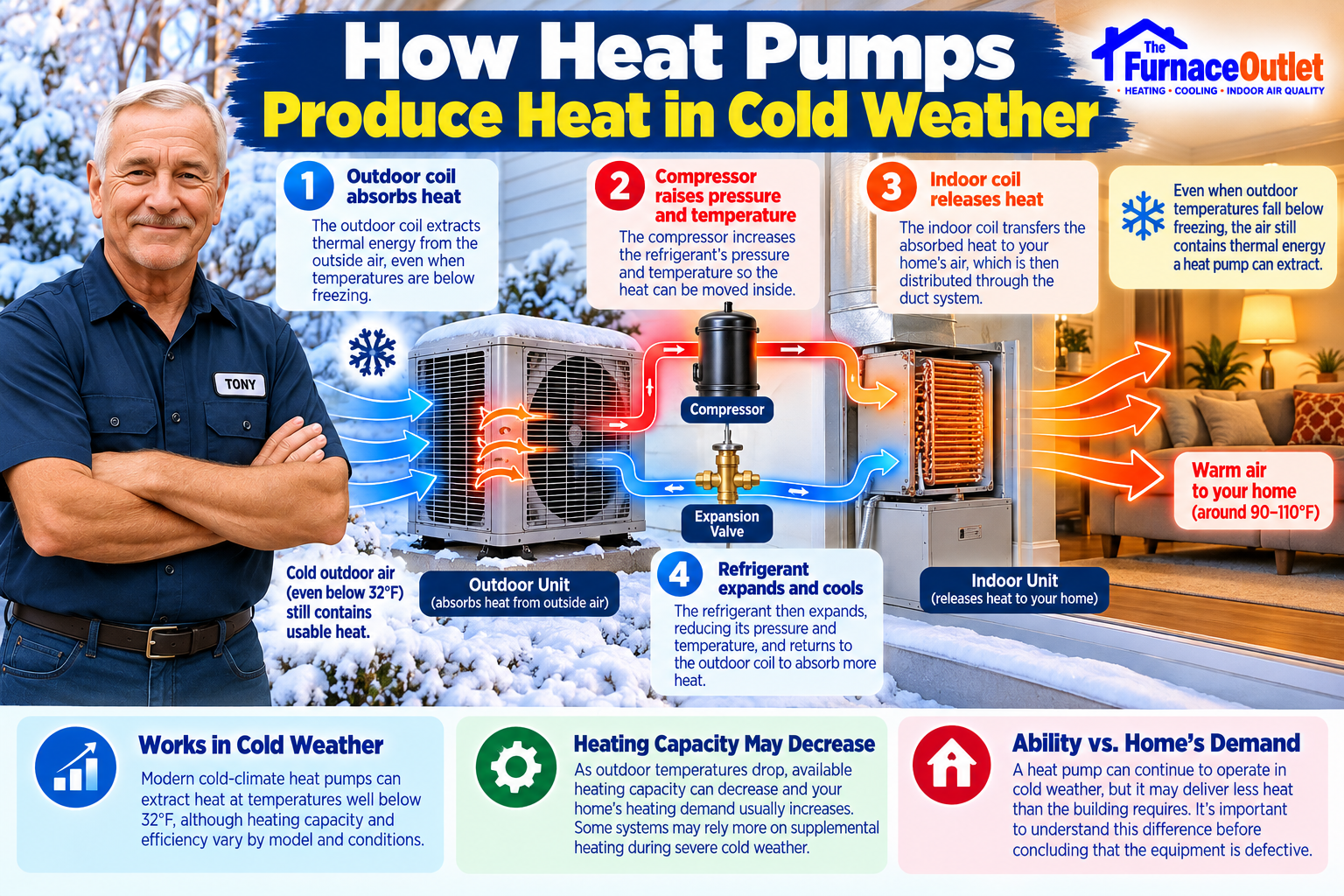
An air-source heat pump heats a home by extracting thermal energy from outdoor air and transferring it indoors through a sealed refrigeration circuit. During heating operation, the outdoor coil absorbs heat from the surrounding environment while the indoor coil releases that heat into the home’s air distribution system. The compressor raises refrigerant pressure and temperature, allowing heat to move from the colder outdoor environment to the warmer indoor living space.
Even when outdoor temperatures fall below freezing, the air still contains usable thermal energy. Modern cold-climate heat pumps are designed to extract this energy at temperatures well below 32°F, although their available heating capacity and efficiency vary by equipment model and operating conditions. Some systems maintain substantial heating output during severe winter weather, while others experience greater capacity reductions and depend more heavily on supplemental heating.
The important distinction is between the heat pump’s ability to operate in cold weather and its ability to satisfy a particular home’s heating demand. A system may continue operating at low outdoor temperatures but deliver less heat than the building requires. Understanding that relationship is essential before concluding that the equipment is defective.
As outdoor temperatures decline, the heat pump must operate across a greater temperature difference between the outdoor environment and the indoor living space. This generally makes heat transfer more demanding and can reduce efficiency. Depending on compressor design, refrigerant controls, and equipment characteristics, available heating capacity may also decline.
At the same time, the home’s heating demand usually increases. More heat escapes through walls, ceilings, windows, floors, and uncontrolled air leaks as the temperature difference between indoors and outdoors grows. Consequently, the equipment may face increasing demand while its available output becomes more limited. This combination explains why a heat pump that maintains comfort easily at 45°F may struggle during a prolonged period at 10°F.
Cold-climate heat pumps can reduce this challenge through advanced compressor technology, variable-speed operation, and improved refrigeration controls. However, there is no universal outdoor temperature at which every heat pump loses adequate heating capacity. The correct evaluation compares the installed equipment’s documented performance at relevant outdoor temperatures with the home’s actual heating load.
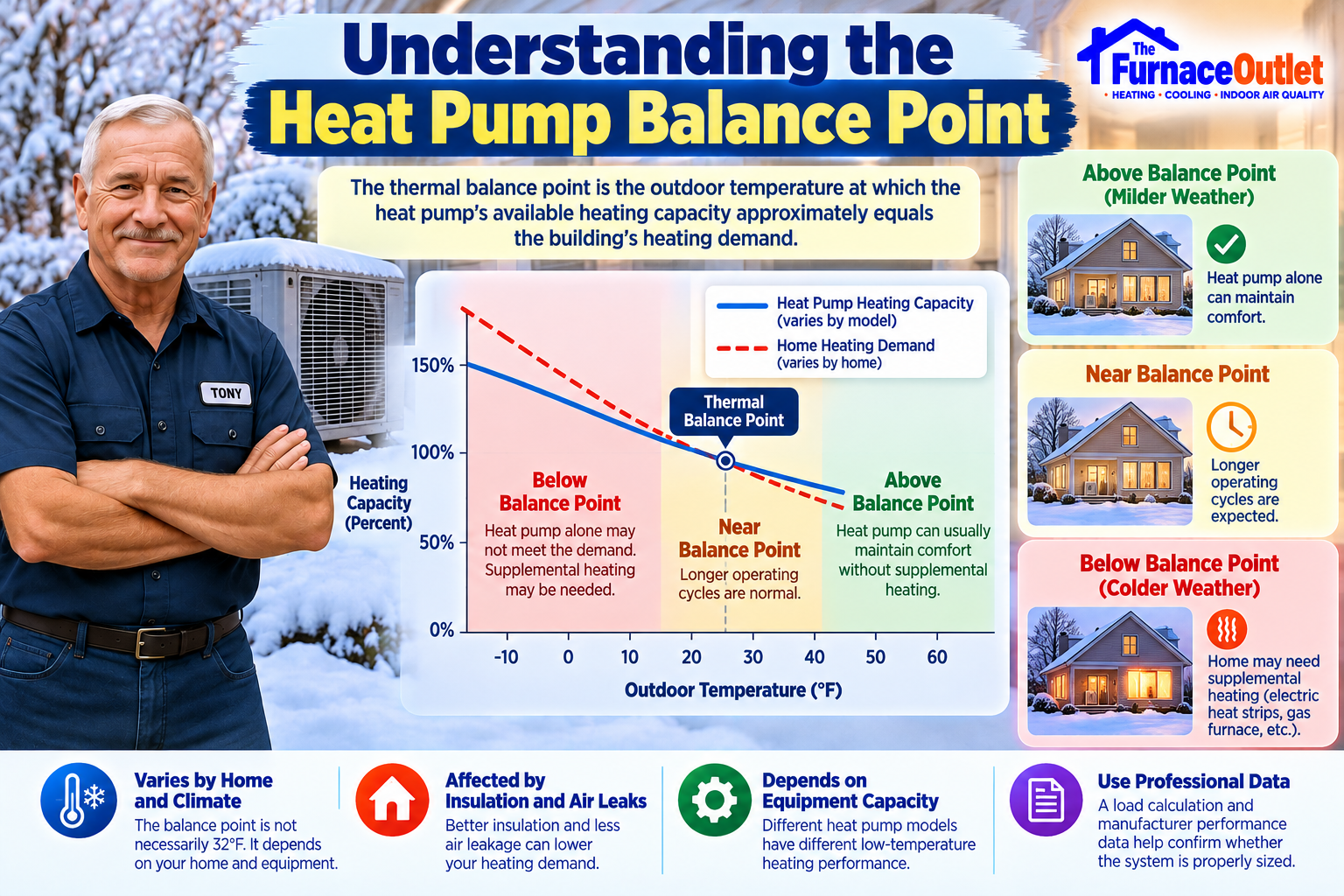
The thermal balance point is the outdoor temperature at which the heat pump’s available heating capacity approximately equals the building’s heating demand. Above this temperature, the heat pump may have sufficient output to maintain comfort without supplemental heating. Near the balance point, long operating cycles may be expected because the system is producing roughly the same amount of heat the building is losing.
Below the thermal balance point, the building may require more heating than the heat pump can provide by itself. If supplemental heating is available and correctly configured, it can help cover the difference. Without sufficient backup capacity, the indoor temperature may gradually fall even while the compressor continues operating.
The balance point varies according to equipment capacity, building insulation, air leakage, climate, and installation quality. It is not necessarily 32°F, and it should not be confused with a thermostat’s programmed auxiliary-heat activation temperature. A professional load calculation and manufacturer performance data can help determine whether the system is appropriately matched to the home.
Restricted indoor airflow is one of the first conditions I investigate when a heat pump appears to operate but delivers inadequate warmth. During heating, the indoor coil releases heat into the air moving through the duct system. If a heavily clogged filter, blocked return grille, restrictive ductwork, or malfunctioning blower reduces airflow, the system may struggle to distribute heat effectively.
Homeowners may notice weak airflow from supply registers, uneven room temperatures, unusual blower sounds, or extended heating cycles. Severe restrictions can also affect refrigeration operating conditions and trigger protective controls. However, a dirty filter should not automatically be blamed for every heating complaint, because airflow problems can originate in duct design, blower settings, coil restrictions, or installation deficiencies.
Start by checking the accessible air filter and maintaining it according to manufacturer instructions. Keep return-air grilles and supply registers unobstructed. If airflow remains weak or uneven, a qualified technician should evaluate blower operation, duct restrictions, coil condition, and actual system airflow before recommending repairs.
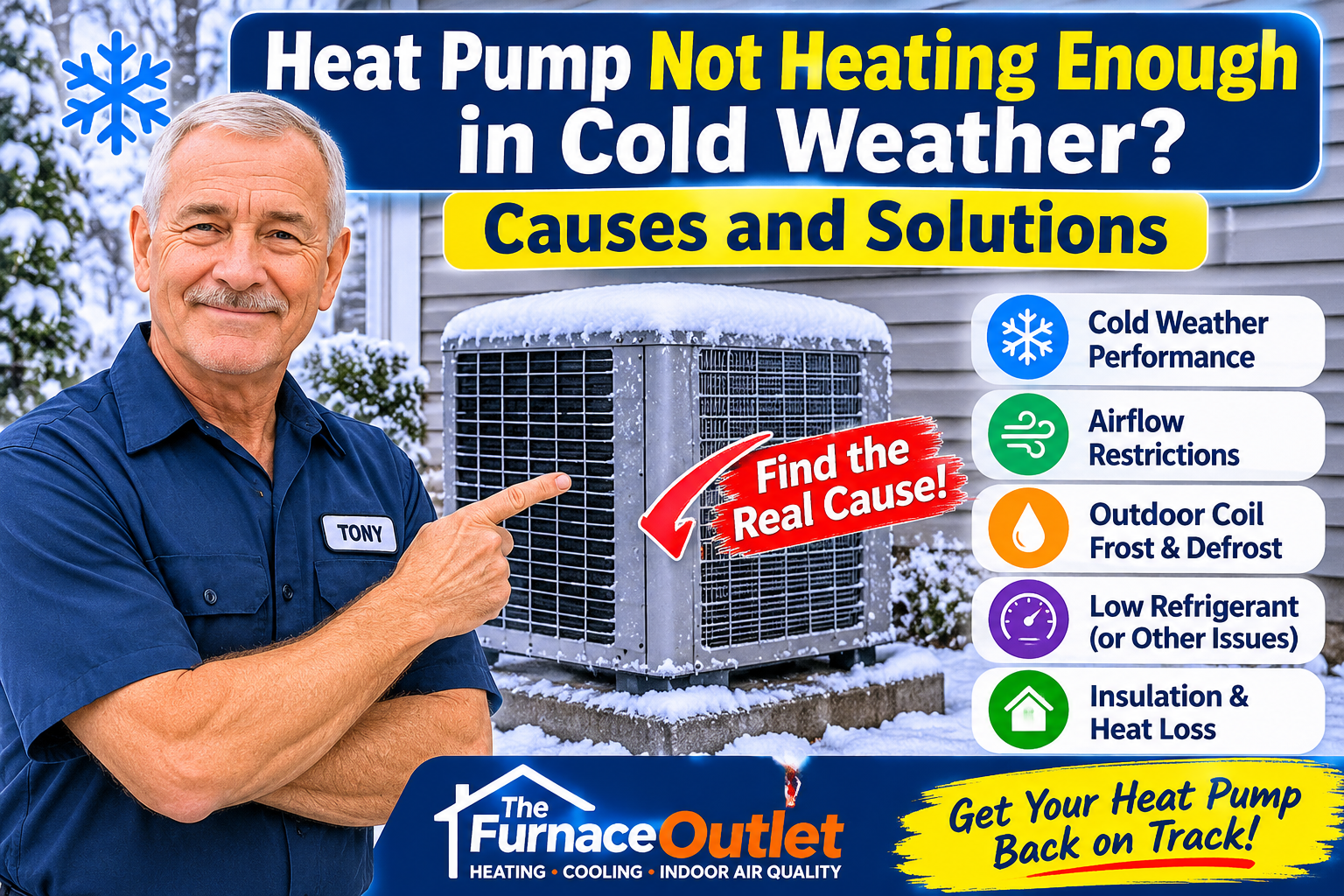
During winter heating, the outdoor coil absorbs heat from surrounding air and may operate below freezing. Moisture can accumulate as frost, particularly during damp conditions near 32°F. Light frost is normal, and heat pumps are designed to remove excessive accumulation through automatic defrost cycles.
Problems develop when frost becomes thick enough to restrict airflow or when the equipment cannot complete its defrost sequence successfully. A heavily iced coil absorbs heat less effectively, potentially reducing heating capacity and increasing compressor operating time. Defective temperature sensors, damaged wiring, control problems, reversing-valve abnormalities, and refrigeration faults can all interfere with frost removal.
A properly functioning defrost cycle may temporarily stop the outdoor fan, produce visible vapor, and release water beneath the cabinet. These observations are not automatically signs of failure. However, thick ice that remains after repeated defrost attempts, ice obstructing the fan, or declining indoor comfort requires professional investigation. The technician should verify the actual defrost sequence before replacing components.
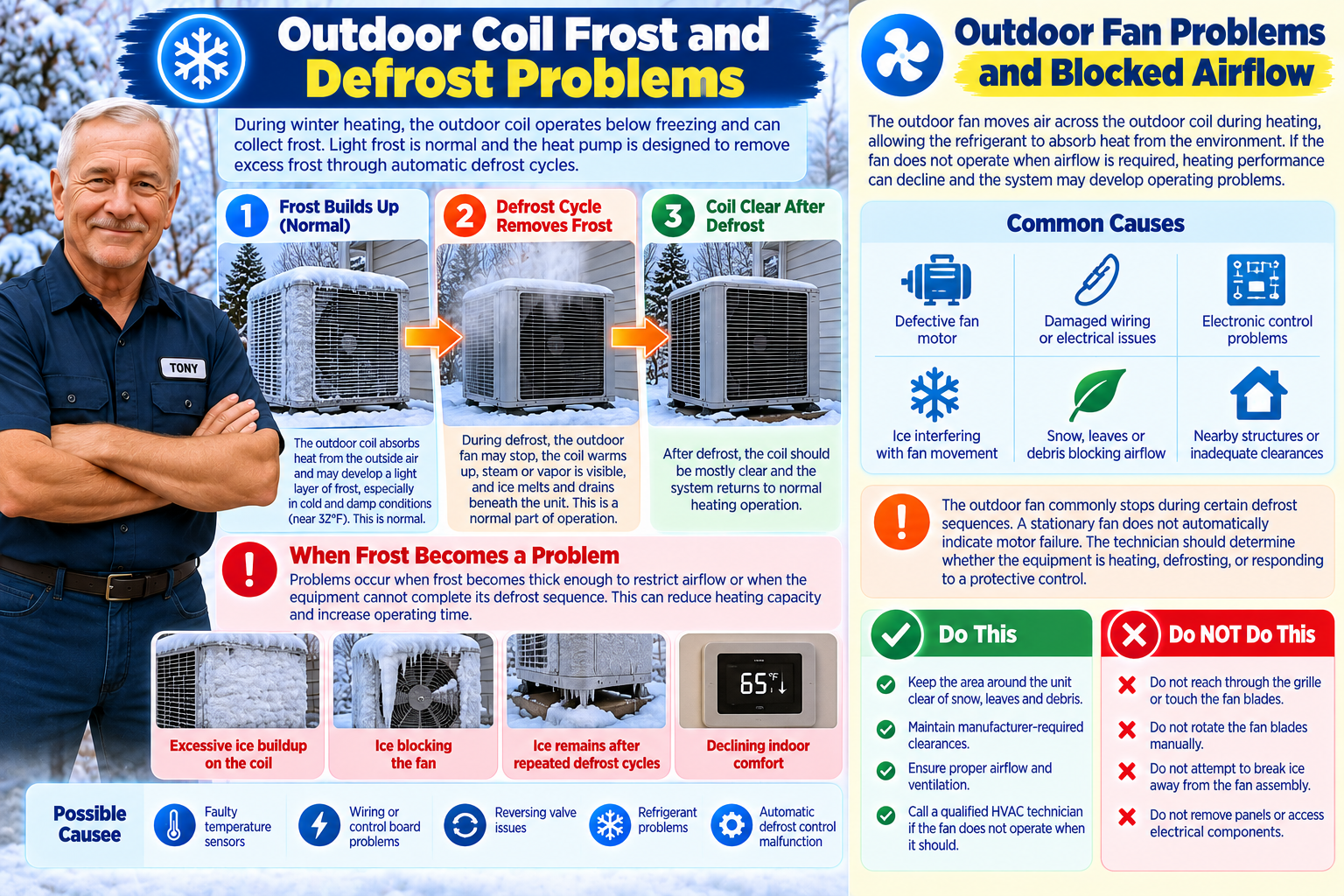
The outdoor fan moves air across the outdoor coil during normal heating, allowing the refrigerant to absorb thermal energy from the environment. If the fan fails when airflow is required, heat absorption may decline and the system can develop abnormal operating conditions.
Potential causes include a defective fan motor, damaged wiring, electronic control problems, mechanical obstructions, or ice interfering with fan movement. Snowdrifts, leaves, nearby structures, and inadequate installation clearances may also restrict airflow.
Importantly, the outdoor fan commonly stops during certain defrost sequences. A stationary fan does not automatically indicate motor failure. A technician should determine whether the equipment is heating, defrosting, or responding to a protective control before diagnosing a fan problem.
Homeowners should keep accessible areas around the cabinet clear of loose debris and excessive snow while maintaining safe distance from electrical and moving components. Never reach through the grille, rotate fan blades manually, or attempt to break ice away from the fan assembly.
A heat pump requires an appropriate refrigerant charge to transfer heat efficiently. A significant refrigerant leak can reduce the system’s ability to absorb heat outdoors and release it indoors. Depending on the equipment and operating conditions, insufficient charge may contribute to inadequate heating capacity, unusual coil frosting, prolonged operation, or protective shutdowns.
However, these symptoms do not prove that refrigerant is low. Restricted airflow, metering-device problems, compressor abnormalities, and control faults can produce overlapping symptoms. Refrigerant pressure relationships also change with outdoor temperature, compressor speed, and operating mode, so generic pressure readings cannot reliably establish correct charge.
Refrigerant is not a consumable that should require routine topping up in a properly sealed system. If a significant loss is confirmed, the technician should investigate the source of leakage and recommend an appropriate repair. Adding refrigerant without diagnosing the underlying condition may conceal the problem and create additional operating difficulties. Refrigerant handling should follow applicable regulations and manufacturer procedures.
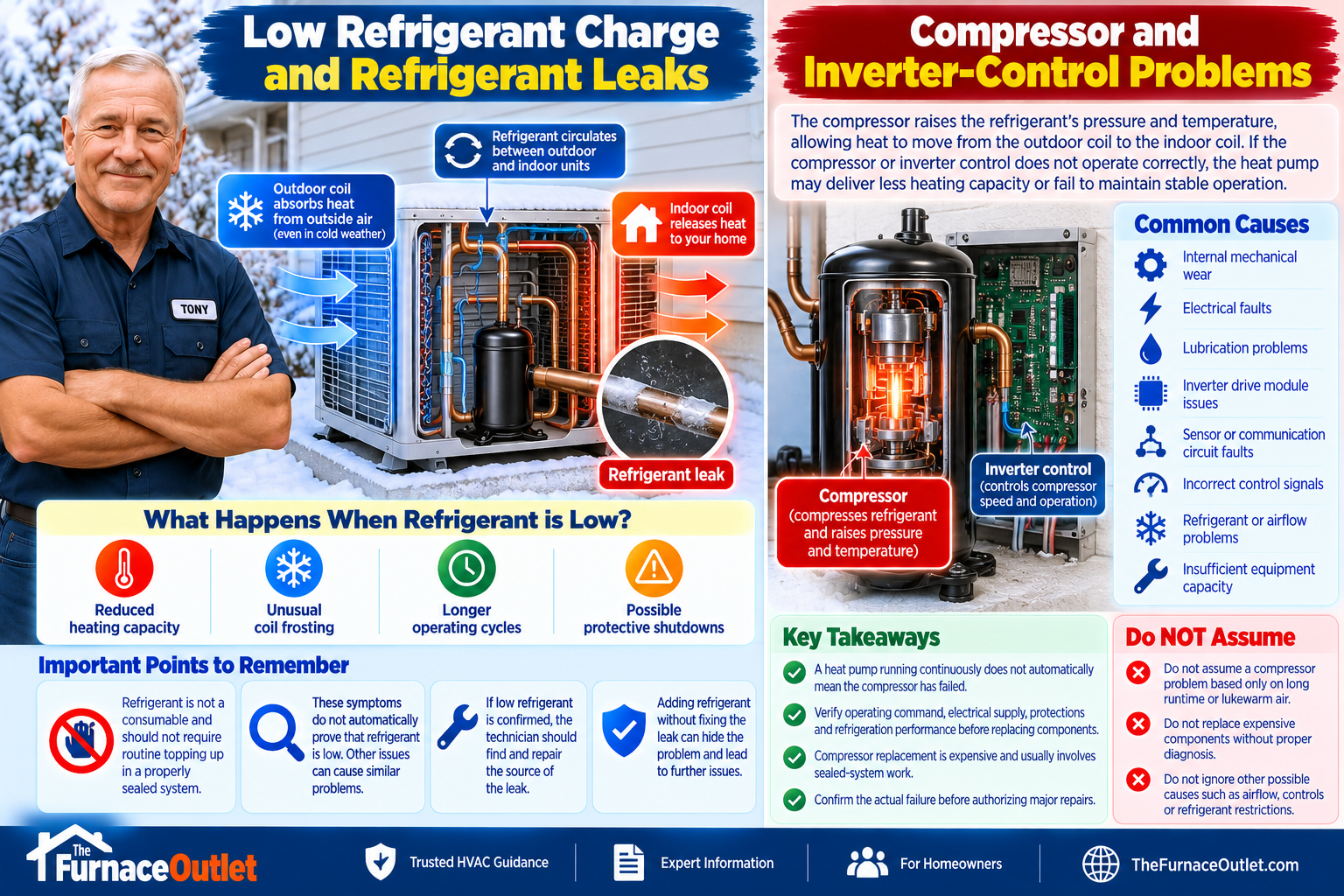
The compressor establishes the pressure and temperature relationships required for heat transfer. If it cannot operate correctly, the heat pump may deliver less heating capacity than expected or fail to maintain stable operation.
Internal mechanical wear, electrical faults, lubrication problems, and abnormal operating conditions can affect compressor performance. Modern inverter-driven heat pumps introduce additional possibilities because compressor operation depends on electronic drive modules, sensors, communication circuits, and speed-control commands.
A heat pump running continuously does not automatically have a failing compressor. Incorrect control signals, refrigerant restrictions, airflow deficiencies, and insufficient equipment capacity can produce similar symptoms. Before recommending compressor replacement, a technician should verify the operating command, electrical supply, applicable protections, and refrigeration performance.
Compressor replacement can be expensive and usually involves sealed-system work. Confirming the actual failure is essential before authorizing major repairs.
Many ducted heat pump systems include electric resistance heating elements that provide supplemental heat when the primary heat pump cannot meet the home’s heating demand. Other installations use a gas or oil furnace in a dual-fuel arrangement. These backup systems can become especially important during severe winter conditions.
If auxiliary heating fails when additional capacity is required, the compressor may continue operating while indoor temperature gradually falls. Possible causes include incorrect thermostat staging, damaged heat strips, failed relays or sequencers, interrupted electrical supply, or protective safety controls.
A thermostat displaying “AUX” does not necessarily prove that the backup heating equipment is energized. It may indicate only that supplemental heating has been requested. Not every heat pump includes electric resistance backup, and some cold-climate or ductless installations use different strategies.
A qualified technician should identify the installed backup equipment and verify whether it is operating correctly under the intended control sequence. Electrical heat strip circuits contain hazardous voltages and should not be tested by homeowners.
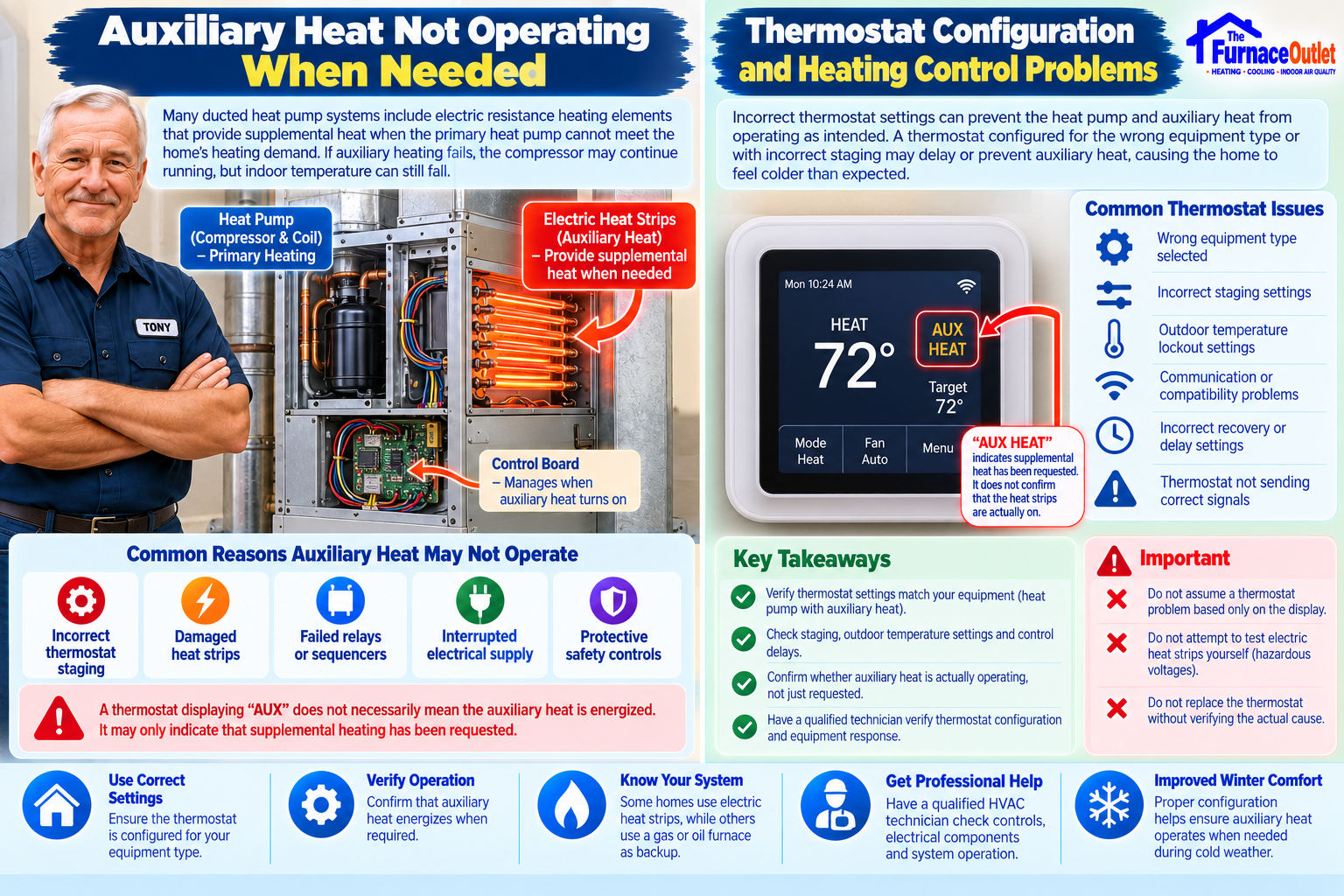
Incorrect thermostat settings can interfere with heating performance even when major equipment components are functioning correctly. A thermostat configured for the wrong equipment type may issue incorrect compressor, reversing-valve, or auxiliary heating commands.
Problems sometimes develop after thermostat replacement when staging settings, outdoor temperature lockouts, or communication requirements are not configured correctly. A thermostat displaying “Heating” generally indicates a request for heat, not confirmation that the equipment is delivering its expected capacity.
Large thermostat adjustments may activate auxiliary heating on certain systems, while other controls manage recovery through variable-speed compressor operation. Incorrect staging can delay supplemental heating or prevent it from operating when needed.
A technician should verify thermostat configuration, heating requests, control delays, and actual equipment response before replacing expensive components.
Sometimes the heat pump is working correctly, but the home loses heat faster than the equipment can replace it. Inadequate attic insulation, poorly sealed windows, deteriorated weatherstripping, uninsulated ductwork, and uncontrolled air leakage can substantially increase winter heating demand.
The problem often becomes more noticeable during windy weather because air infiltration may increase. Homeowners may experience cold rooms, drafts near windows and doors, uneven temperatures between floors, or continuous heating operation without reaching the thermostat setpoint.
A building with excessive heat loss may require substantially more heating capacity than originally expected. Replacing the heat pump without addressing these conditions may not solve the comfort problem.
I recommend considering the building envelope as part of the heating system. Appropriate air sealing, insulation improvements, and duct leakage correction can reduce heating demand and help existing equipment maintain comfort. A qualified energy auditor or HVAC contractor can identify opportunities and determine whether the installed heat pump is properly sized.
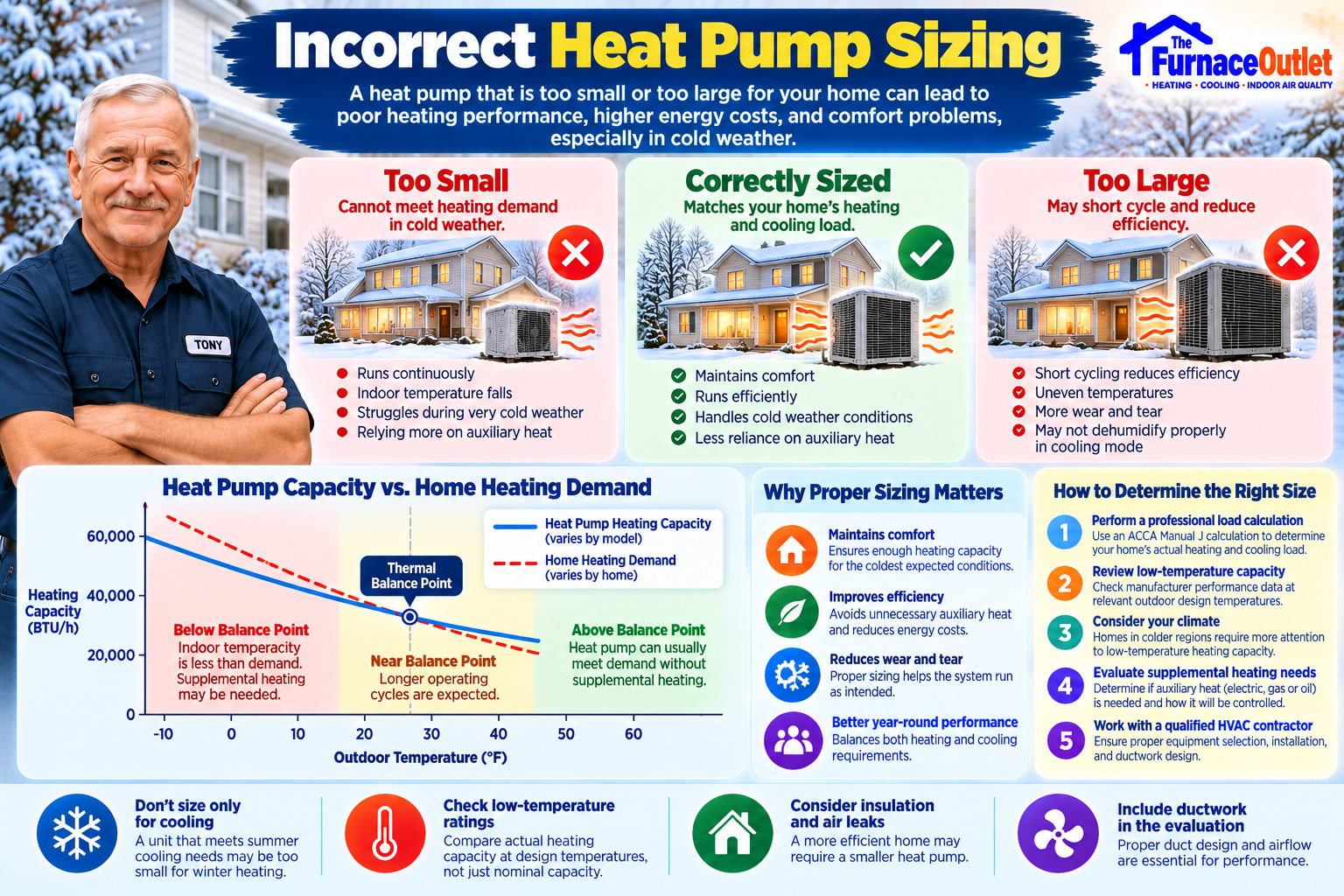
A heat pump that is too small for the home’s actual heating load may struggle during severe cold weather even when every component operates correctly. The system may run continuously, and indoor temperature may gradually fall as outdoor conditions become more demanding.
However, sizing problems are not always obvious. Equipment selected primarily around summer cooling requirements may have insufficient winter heating capacity in some climates. Conversely, oversized equipment can create other performance and comfort problems, particularly when modulation capability and ductwork are not appropriately matched.
Proper equipment selection should be based on a recognized heating and cooling load calculation, such as ACCA Manual J, followed by equipment selection using appropriate manufacturer performance data. The contractor should evaluate heating capacity at relevant outdoor design temperatures rather than relying only on the unit’s nominal capacity rating.
For cold-climate applications, low-temperature heating capacity and supplemental heating requirements deserve particular attention.
Homeowners accustomed to gas furnaces sometimes expect heat pump supply air to feel intensely hot. However, heat pumps often deliver air at a lower temperature than conventional combustion furnaces, particularly when operating efficiently at moderate output.
Air that feels lukewarm against your hand can still be warmer than the room and contribute useful heating. Modern variable-speed systems may operate for long periods while delivering relatively gentle, consistent warmth.
The more important observation is whether indoor temperature remains stable or gradually rises toward the thermostat setting. If the room temperature continues falling despite sustained operation, the system may be delivering insufficient heat or the building may be losing heat too quickly.
Technicians can evaluate appropriate supply- and return-air temperatures alongside airflow and equipment operating data. However, no single universal temperature difference proves correct performance across every heat pump design.
Long heating cycles are common during cold weather, particularly with inverter-driven heat pumps that adjust compressor speed to match demand. Instead of switching on and off frequently, these systems may operate continuously at reduced or variable output to maintain stable indoor temperatures.
As outdoor temperatures fall, the compressor may increase speed and remain active for extended periods. Near the building’s thermal balance point, continuous operation can be expected because the heat pump is producing approximately the same amount of heat the home is losing.
Runtime alone therefore does not establish whether the system is inefficient or defective. A heat pump that operates continuously while maintaining comfortable indoor conditions may be functioning exactly as intended.
The warning sign is continuous operation accompanied by declining indoor temperature, persistent fault codes, unusual noises, or evidence that the equipment is not delivering adequate heating capacity.
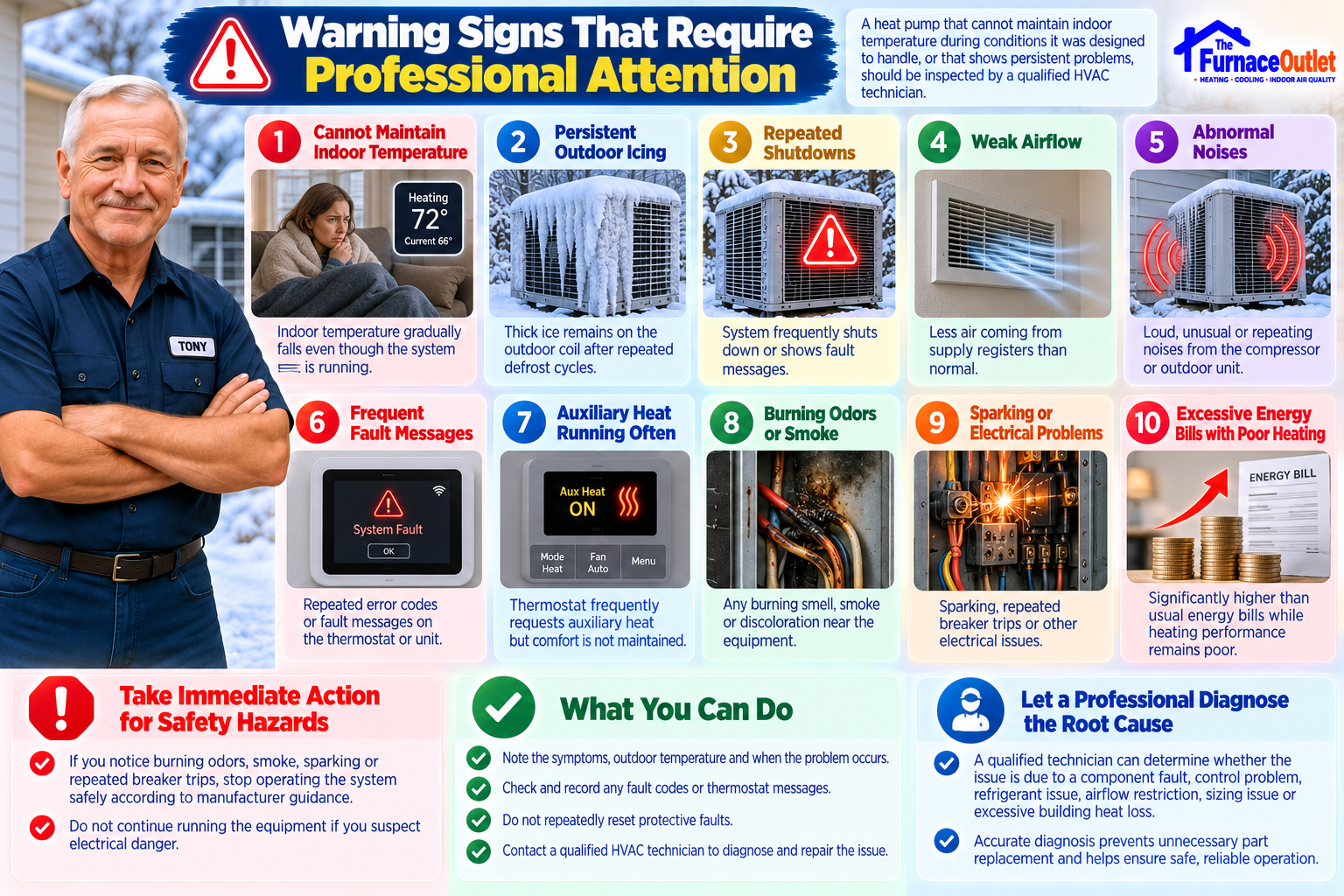
A heat pump that cannot maintain indoor temperature during conditions it was designed to handle deserves professional investigation. Persistent outdoor icing, repeated protective shutdowns, weak airflow, abnormal compressor noises, and frequent fault messages may indicate performance or component problems.
A thermostat that repeatedly requests auxiliary heat without maintaining comfort may also indicate insufficient primary heating capacity, failed backup heating, or excessive building heat loss. The cause cannot be determined from the thermostat message alone.
Electrical warning signs require additional caution. Burning odors, smoke, sparking, or repeated breaker trips may indicate hazardous conditions beyond ordinary heating performance problems.
If the equipment repeatedly shuts down, produces severe mechanical noises, or shows signs of electrical danger, stop operating the affected system safely according to manufacturer guidance and arrange qualified assistance. Repeatedly resetting protective faults without correcting their cause can increase the risk of equipment damage.
Begin by confirming that the thermostat is set to the intended heating mode and that the selected temperature is above the measured indoor temperature. Observe whether the indoor temperature is rising, remaining stable, or falling during a sustained heating request. Record any fault messages, auxiliary heat indicators, or unusual operating patterns.
Inspect the accessible indoor air filter and maintain it according to manufacturer instructions. Keep supply registers and return-air grilles unobstructed. From a safe distance, check the outdoor unit for excessive snow accumulation, debris, persistent ice, or visible physical damage. Remember that the outdoor fan may stop temporarily during normal defrost.
Avoid repeatedly increasing the thermostat setting in an attempt to force more heating. Large adjustments may activate expensive electric resistance heating on certain systems without correcting the underlying problem.
Do not remove electrical panels, manipulate refrigerant connections, bypass safety controls, manually rotate fan blades, or attempt to force compressor or auxiliary heating stages to operate. If heating performance remains inadequate or electrical warning signs appear, arrange qualified service.
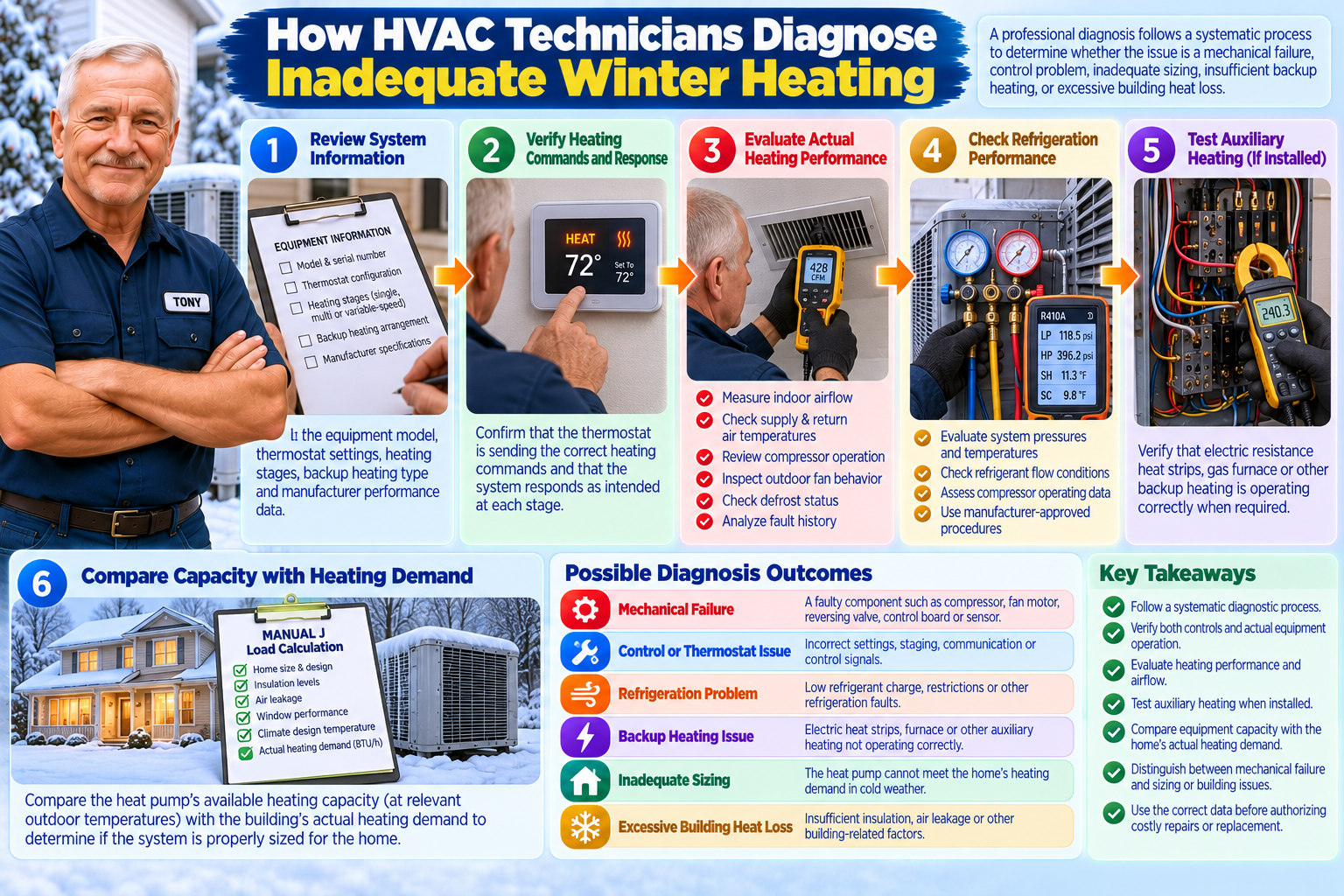
A reliable diagnosis begins with identifying the exact equipment model, thermostat configuration, heating stages, backup heating arrangement, and manufacturer performance specifications. The technician should establish whether the system is receiving the correct heating commands and whether the equipment responds as intended.
The next step is evaluating actual heating performance. This may involve measuring indoor airflow, assessing supply- and return-air temperatures, reviewing compressor operation, inspecting outdoor fan behavior, and checking defrost status and diagnostic fault history.
If refrigeration performance appears abnormal, the technician may evaluate relevant pressures, temperatures, refrigerant-flow conditions, and compressor operating data using manufacturer-approved procedures. Auxiliary heating should also be tested when the installed system requires supplemental output.
Finally, the technician should compare available heating capacity with the building’s actual heating demand. The completed diagnosis should distinguish a mechanical failure from inadequate equipment sizing, insufficient backup heating, or excessive building heat loss.
That distinction is essential before authorizing expensive repairs or replacement.
The repair decision depends on the confirmed cause, equipment age, warranty coverage, replacement-part availability, and overall condition. A clogged filter, incorrect thermostat configuration, defective sensor, isolated wiring problem, or replaceable fan component may be corrected without major equipment replacement.
More expensive failures involving a compressor, inverter module, reversing valve, or extensive refrigerant-circuit damage require a broader assessment. A contractor should also determine whether the original problem caused additional damage or resulted from another unresolved condition.
For relatively new equipment that has otherwise performed reliably, repairing a confirmed fault may be sensible. For older systems with repeated major failures, poor efficiency, unavailable components, or inadequate cold-weather capacity, replacement may deserve consideration.
When selecting new equipment, compare documented low-temperature heating capacity, efficiency, sound performance, backup heating requirements, and local service support. Proper sizing, installation, airflow, and refrigerant charging are essential to dependable winter operation.
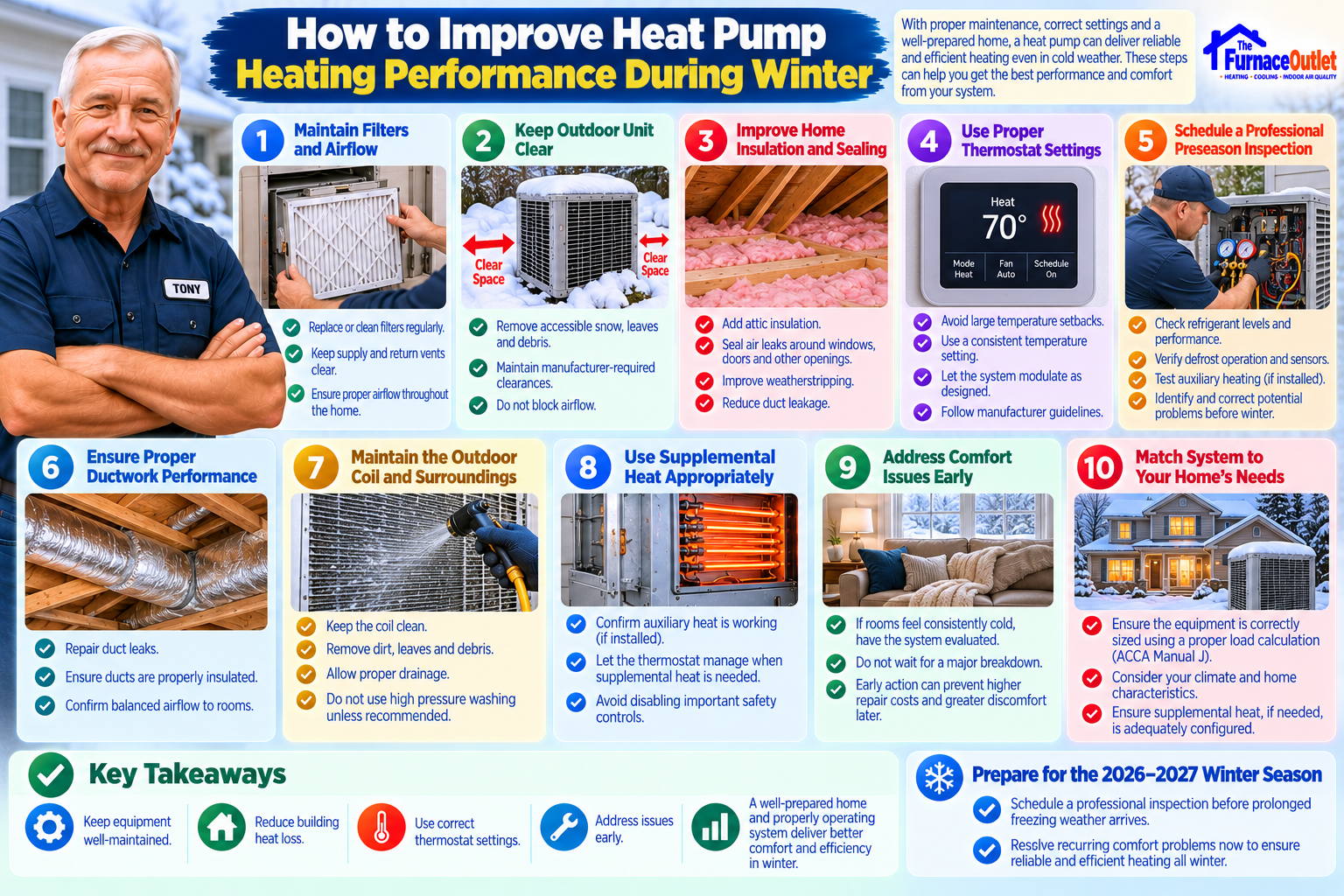
Improving winter heating performance begins with reducing avoidable restrictions and ensuring the equipment operates according to its intended design. Maintain indoor filters, keep supply and return airflow unobstructed, and preserve manufacturer-required clearances around the outdoor unit. Remove accessible loose snow and debris without approaching electrical or moving components.
Building-envelope improvements can make a substantial difference. Appropriate attic insulation, weatherstripping, air sealing, and duct leakage correction can reduce the amount of heat the home loses during cold weather. Lower heating demand may allow the existing heat pump to maintain comfort more effectively without relying as heavily on supplemental heating.
Thermostat settings should reflect the equipment’s control strategy. Large setbacks and sudden temperature increases may activate electric auxiliary heating during recovery on certain systems, potentially increasing operating costs.
A professional preseason inspection can identify airflow restrictions, defrost problems, sensor faults, backup heating deficiencies, and other conditions that reduce heating performance. For the 2026–2027 winter season, I recommend addressing recurring comfort problems before prolonged freezing weather arrives.
A heat pump may run continuously without maintaining comfort because of insufficient heating capacity, restricted airflow, outdoor icing, refrigerant problems, incorrect thermostat staging, failed auxiliary heating, or excessive building heat loss. Professional diagnosis should determine whether the equipment is underperforming or the home’s heating demand exceeds its available output.
No. Air-source heat pumps can extract usable thermal energy from outdoor air below freezing. Many cold-climate models are designed to operate at substantially lower temperatures. However, available heating capacity varies by model, and some installations require supplemental heating during severe cold weather.
Not simply because the outdoor temperature falls below freezing. Emergency heat typically substitutes backup heating for normal compressor operation on conventional systems. Unnecessary use may increase energy costs. Follow manufacturer guidance and use emergency heat when the installed equipment and circumstances justify it.
Heat pumps often deliver supply air at lower temperatures than conventional furnaces. Lukewarm-feeling air can still provide useful heating if it is warmer than the room. The concern arises when indoor temperature continues falling or the system cannot maintain the selected setpoint.
Yes. Excessive heat loss through insulation deficiencies, air leakage, and duct problems can increase heating demand beyond what the equipment was expected to handle. Building-envelope improvements may restore comfort without replacing a properly functioning heat pump.
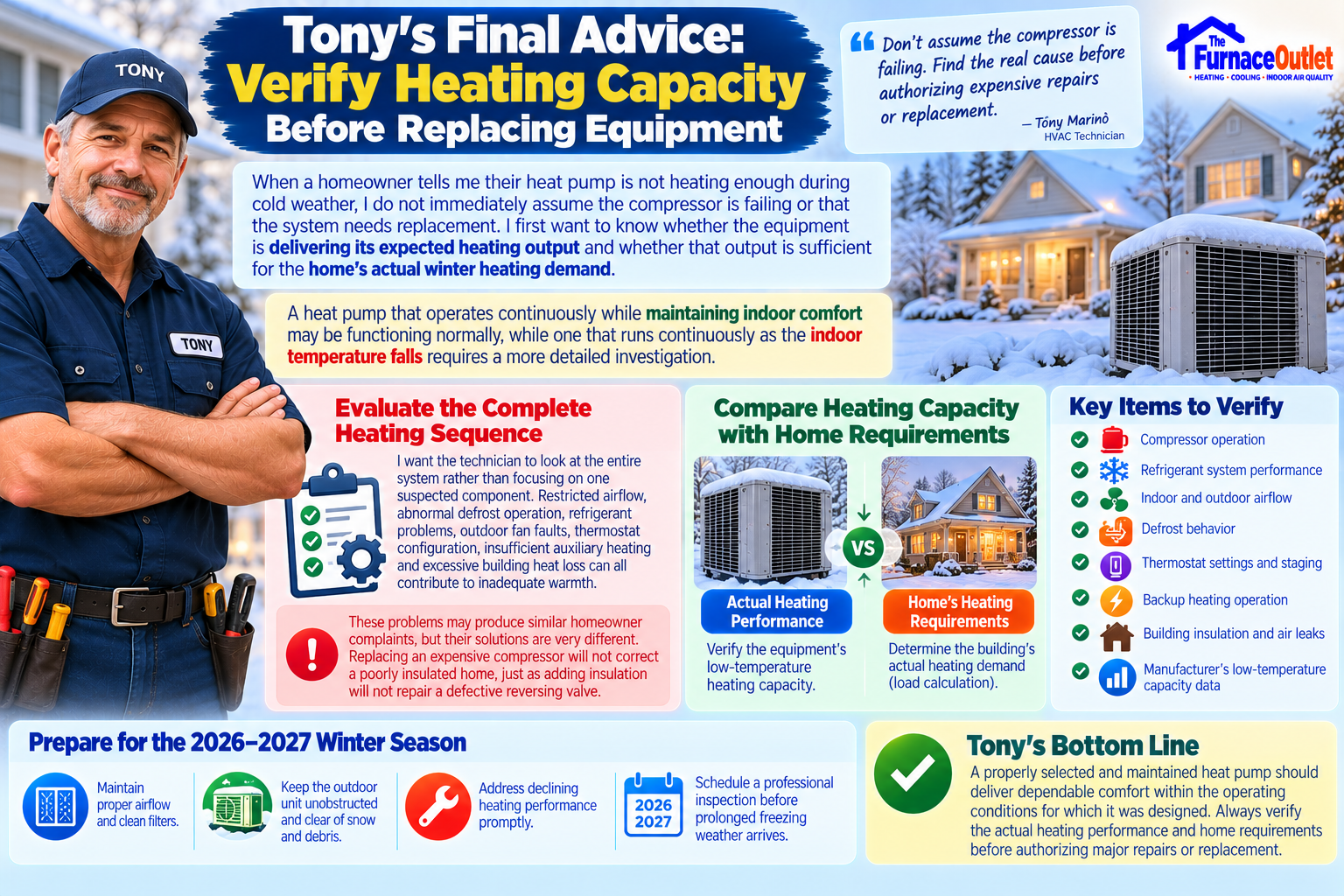
When a homeowner tells me their heat pump is not heating enough during cold weather, I do not immediately assume the compressor is failing or that the system needs replacement. I first want to know whether the equipment is delivering its expected heating output and whether that output is sufficient for the home’s actual winter heating demand. A heat pump that operates continuously while maintaining indoor comfort may be functioning normally, while one that runs continuously as the indoor temperature falls requires a more detailed investigation.
I also want the technician to evaluate the complete heating sequence rather than focusing on one suspected component. Restricted airflow, abnormal defrost operation, refrigerant problems, outdoor fan faults, thermostat configuration, insufficient auxiliary heating, and excessive building heat loss can all contribute to inadequate warmth. These problems may produce similar homeowner complaints, but their solutions are very different. Replacing an expensive compressor will not correct a poorly insulated home, just as adding insulation will not repair a defective reversing valve.
My recommendation is to compare the heat pump’s actual heating performance with the home’s heating requirements before authorizing major repairs or replacement. A qualified HVAC technician should verify compressor operation, refrigerant-system performance, airflow, defrost behavior, thermostat staging, backup heating, and documented low-temperature capacity. For the 2026–2027 winter season, maintain proper airflow, keep the outdoor unit unobstructed, and address declining heating performance promptly. A properly selected and maintained heat pump should deliver dependable comfort within the operating conditions for which it was designed.
This article is intended for general homeowner education and does not replace professional HVAC diagnosis. Heat pumps contain hazardous electrical components, moving fan assemblies, pressurized refrigerant, and manufacturer-specific safety controls. Homeowners should not remove electrical panels, manipulate refrigerant connections, bypass controls, or attempt unauthorized repairs. Persistent heating failures, electrical warning signs, and abnormal mechanical operation should be evaluated by qualified professionals.
U.S. Department of Energy — Air-Source Heat Pumps: https://www.energystar.gov/products/air_source_heat_pumps
U.S. Department of Energy — Operating and Maintaining Your Heat Pump: https://www.epa.gov/burnwise/heat-pumps
ENERGY STAR — Air-Source Heat Pumps: https://www.energystar.gov/products/air_source_heat_pumps
Northeast Energy Efficiency Partnerships — Cold Climate Air-Source Heat Pump List: https://ashp.neep.org/
U.S. Department of Energy — Weatherization: https://www.energy.gov/cmei/scep/wap/weatherization-assistance-program
These resources provide general guidance on heat pump performance, cold-climate operation, maintenance, and building energy efficiency. The exact manufacturer’s documentation should take priority for equipment-specific operating limits, controls, and service procedures.