Newsletter Subscribe
Enter your email address below and subscribe to our newsletter

HVAC made simple
By Tony Marino (Tony the Trusted Tech)
The Furnace Outlet | Updated October 2026
A heat pump can make some surprisingly loud noises during winter, especially when temperatures drop below freezing and the system begins working harder to maintain indoor comfort. Homeowners sometimes hear a sudden whooshing sound, a loud click, a brief hissing noise, or an unfamiliar humming coming from the outdoor unit. These sounds can be alarming, particularly when they occur late at night or during a snowstorm. However, not every unusual noise indicates a mechanical failure. Some are normal consequences of refrigerant movement, compressor operation, and automatic defrost cycles.
After decades of working with residential HVAC systems, I’ve learned that the most useful question is not simply whether a heat pump is making noise, but what kind of noise it makes, when the noise occurs, and whether heating performance changes at the same time. A brief whoosh during defrost can be entirely normal, while persistent metal scraping, violent vibration, repeated electrical buzzing, or loud compressor knocking may indicate a developing problem. Two sounds that appear similar to a homeowner can have very different causes.
Winter introduces operating conditions that make noise diagnosis more complicated. Outdoor fans may stop temporarily during defrost, ice can accumulate around the cabinet, refrigerant pressures change as operating conditions shift, and auxiliary heating components may activate. Modern inverter-driven heat pumps also vary compressor and fan speeds, creating changing sound patterns that differ from older single-stage equipment.
In this guide, I’ll explain the difference between normal winter heat pump sounds and warning signs that deserve professional attention. We’ll examine defrost noises, fan motor problems, compressor sounds, refrigerant-related noises, vibration, electrical buzzing, and practical troubleshooting steps homeowners can perform safely.
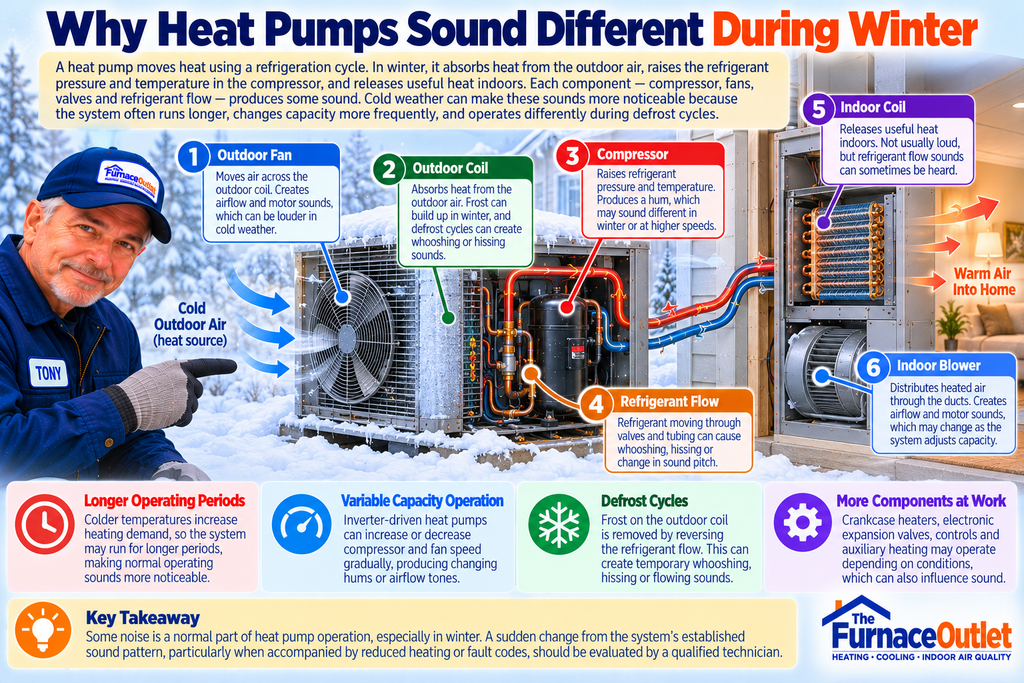
An air-source heat pump operates through a refrigeration cycle that transfers thermal energy between outdoor air and the home’s indoor heating system. During heating operation, the outdoor coil absorbs heat while the compressor raises refrigerant pressure and temperature so that useful heat can be released indoors. The outdoor fan moves air across the coil, and the indoor blower distributes conditioned air throughout the home.
Each operating component produces some sound. Compressors generate mechanical and electrical noise, fans create airflow and motor sounds, and refrigerant moving through valves and tubing can produce brief changes in pitch or intensity. During cold weather, the equipment may operate for longer periods or adjust its capacity more frequently, making these sounds more noticeable.
Conventional single-stage systems generally have distinct starting and stopping events, while inverter-driven equipment can increase or decrease compressor and fan speed gradually. A variable-speed heat pump may produce a changing hum or airflow tone without indicating a defect. Some systems also incorporate crankcase heating, electronic expansion valves, and other components that influence operating sounds.
The important distinction is whether the sound matches the manufacturer’s expected operation. A sudden change from the system’s established sound pattern, particularly when accompanied by reduced heating or fault codes, deserves closer attention.
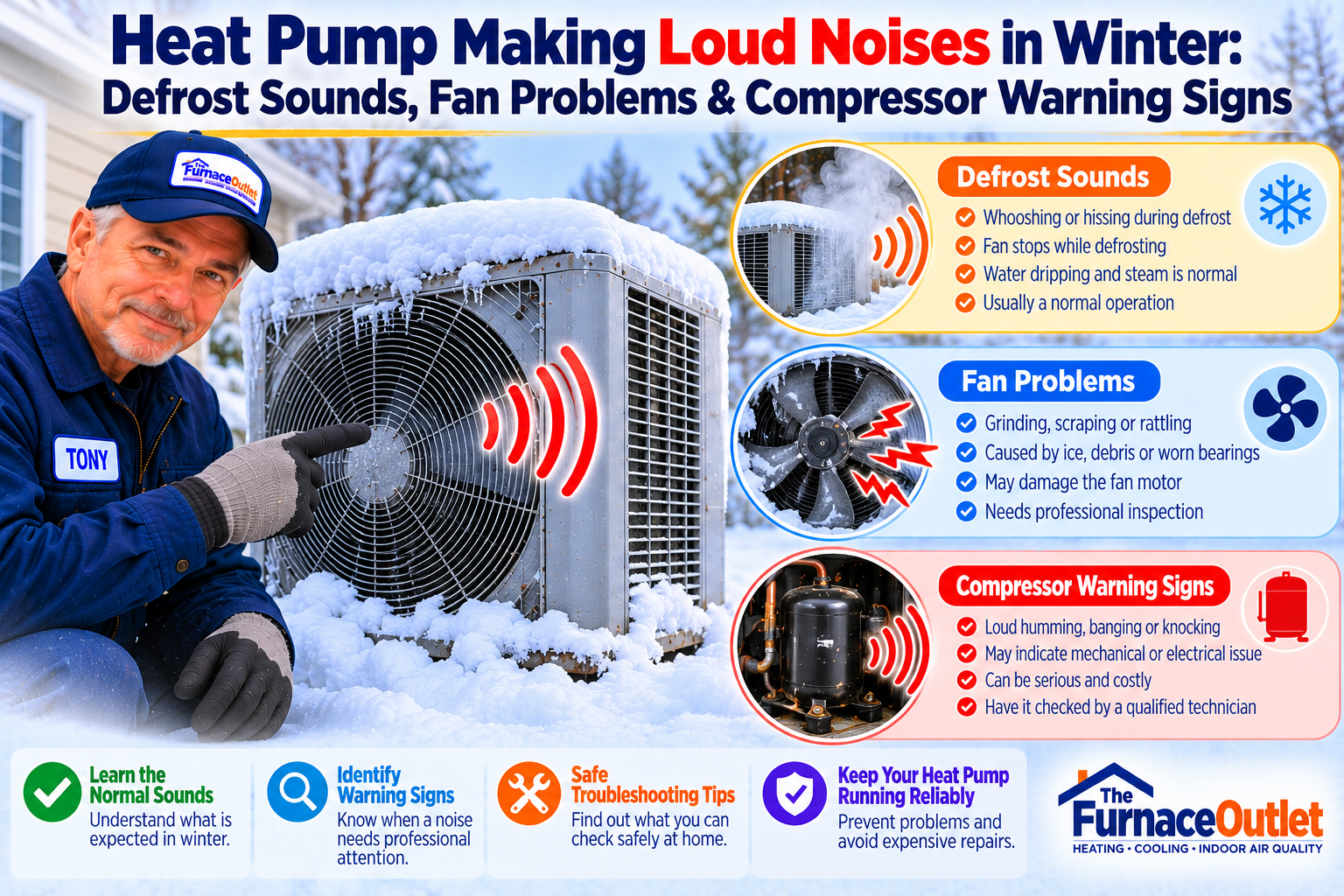
One of the most common winter noise complaints involves a sudden whooshing or hissing sound from the outdoor unit. Many conventional air-source heat pumps periodically enter a reverse-cycle defrost mode to remove frost that develops on the outdoor coil during heating.
When the system initiates defrost, the reversing valve changes the refrigerant-flow path so that warm refrigerant can heat the outdoor coil and melt accumulated frost. The resulting change in refrigerant flow and pressure relationships may produce a noticeable whoosh, hiss, or brief rushing sound. The outdoor fan commonly stops during this sequence, which can make other operating noises more apparent.
Homeowners may also observe water dripping beneath the outdoor unit or vapor rising from the cabinet. These observations can be normal during defrost, provided the equipment subsequently returns to stable heating operation. The compressor may continue operating during defrost, depending on the equipment design.
A brief sound associated with the beginning or end of a successful defrost cycle is generally less concerning than continuous hissing, persistent ice accumulation, or repeated abnormal cycling. I recommend observing whether frost actually melts and whether the system resumes normal heating before assuming the reversing valve or compressor is defective.
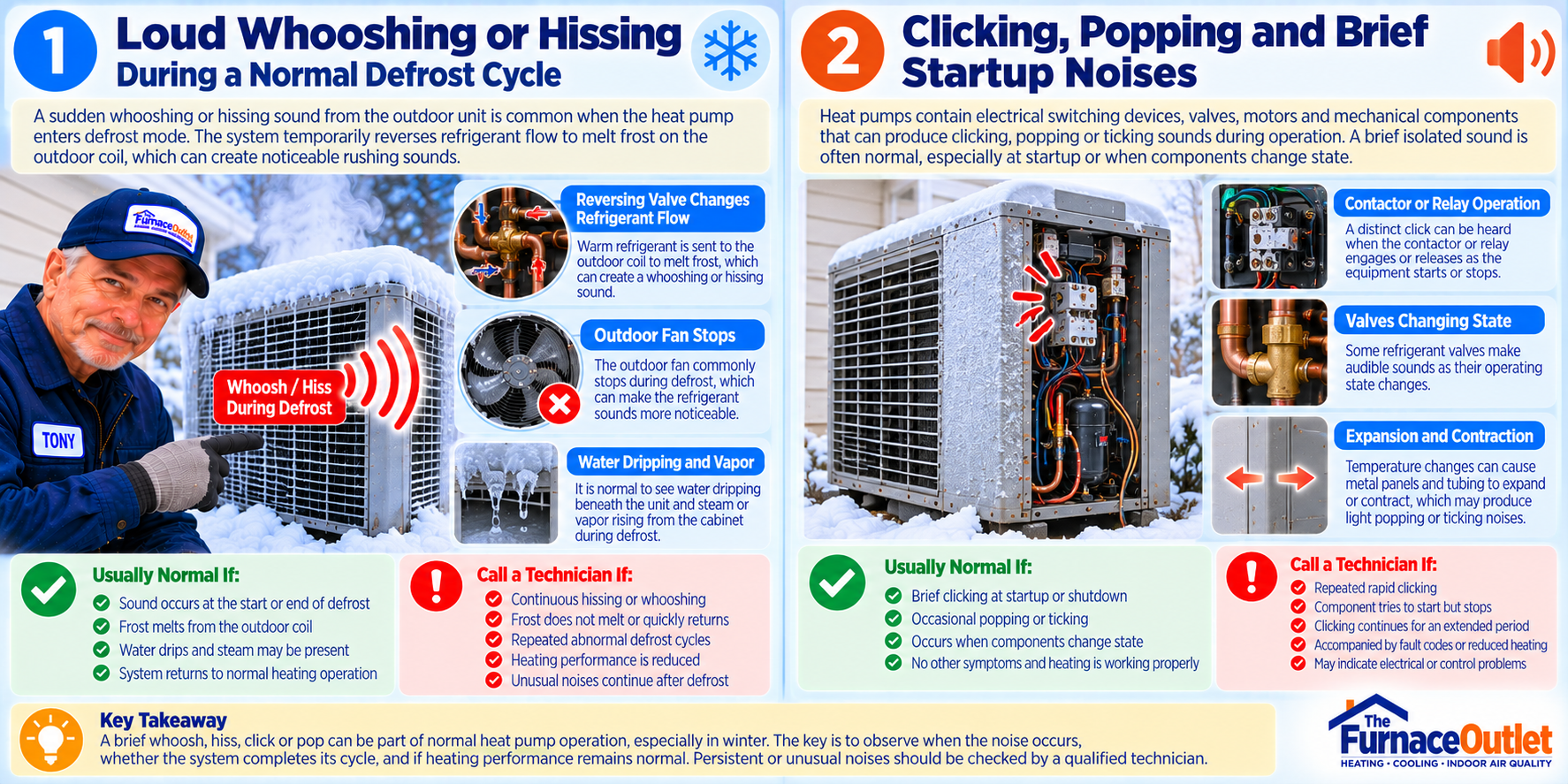
Heat pumps contain electrical switching devices, valves, motors, and mechanical components that can produce clicking sounds during operation. A contactor or relay may make a distinct click when equipment starts or stops. Some refrigerant valves also produce audible sounds as their operating state changes.
Temperature changes can cause metal panels, tubing, and other components to expand or contract. This may occasionally produce light popping or ticking noises, especially as equipment warms or cools. A brief isolated sound without other symptoms is not necessarily evidence of a failure.
However, repeated rapid clicking can indicate a different problem. A contactor that repeatedly engages and releases, a relay that cycles abnormally, or controls that continually attempt to start equipment may produce a series of clicks. Such behavior can involve electrical supply problems, control faults, or protective shutdowns.
A technician should evaluate repeated clicking alongside the thermostat command, diagnostic codes, and actual equipment response. Homeowners should not open electrical compartments to identify the source because heat pump equipment contains potentially hazardous voltages.
The outdoor fan is a frequent source of winter heat pump noise complaints. Its blades must rotate with adequate clearance from the surrounding grille, cabinet, and other components. When something interferes with that movement, the resulting noise may sound like scraping, grinding, rattling, or repeated tapping.
Ice accumulation is one possible cause. During defrost, melted frost drains from the outdoor coil. If water refreezes in an unfavorable location, it can build up around the fan assembly or other cabinet components. Snow, freezing rain, and debris can also create obstructions.
Mechanical problems can produce similar sounds. A deteriorated motor bearing, damaged fan blade, loose mounting hardware, or vibrating grille may cause noise even when the equipment is free of ice. Depending on the motor design, electronic control problems can also affect fan operation.
A scraping fan should not be ignored because continued operation may damage blades, the motor, or surrounding components. Homeowners should never reach through the fan grille, manually rotate the blades, or attempt to chip ice away from moving parts. If a serious obstruction is suspected, stop operating the equipment safely and arrange professional inspection.
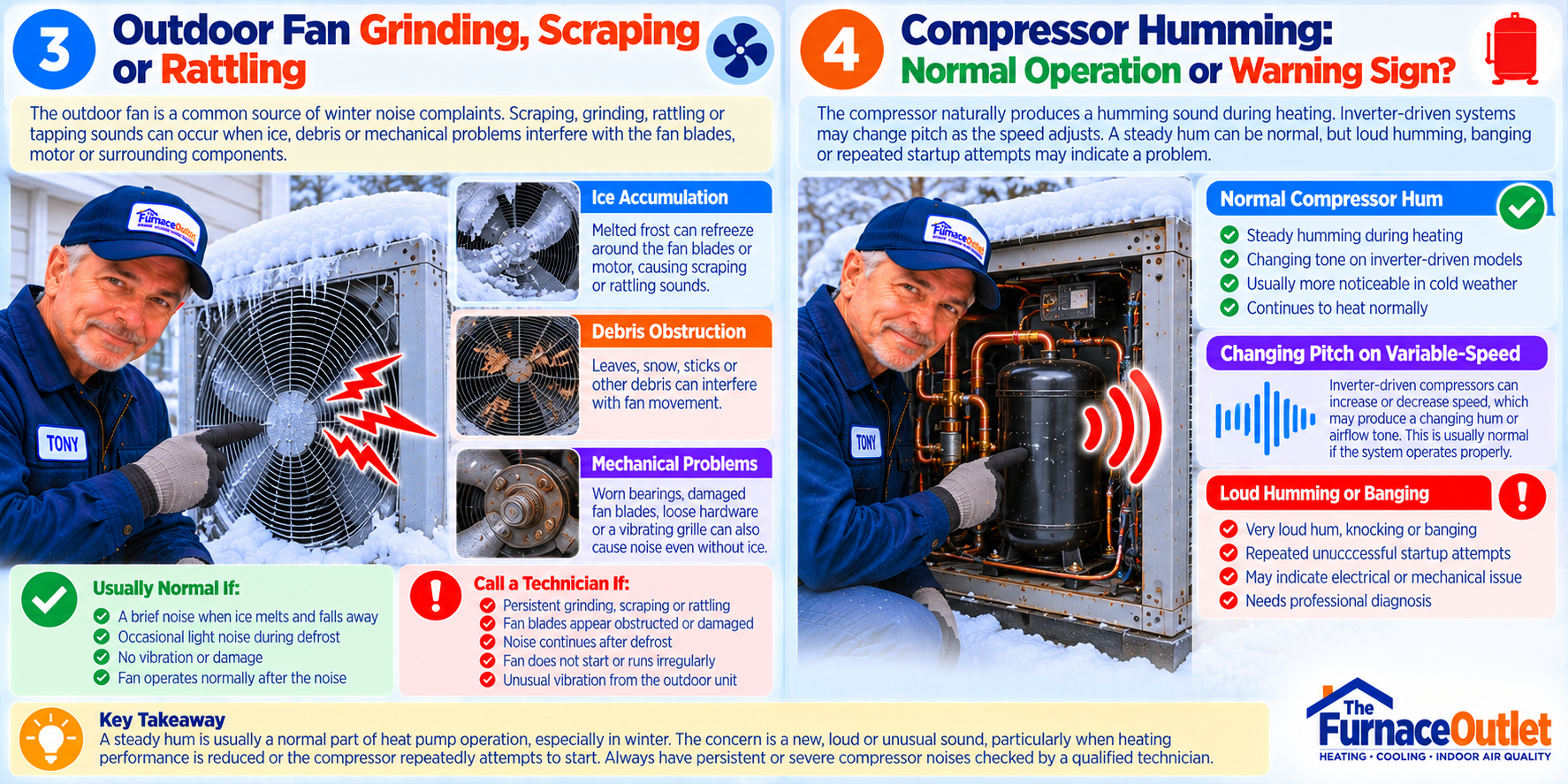
The compressor is central to heat pump operation and naturally produces some mechanical sound. A steady hum during normal heating is common, although its intensity and frequency vary according to compressor design, equipment capacity, and operating speed.
Inverter-driven compressors can produce changing tones as the electronic drive adjusts motor speed. These sounds may be especially noticeable when the system increases output during colder weather. A changing compressor pitch does not automatically indicate a problem if the equipment continues operating normally.
A more concerning pattern involves a loud hum accompanied by repeated unsuccessful startup attempts. On some conventional compressors, defective starting components, abnormal electrical supply, internal mechanical resistance, or motor problems may prevent successful startup. The compressor may briefly attempt to operate before protective controls interrupt the process.
A technician must distinguish compressor noise from nearby fan motors, contactors, cabinet vibration, and refrigerant flow. Replacing a compressor based on humming alone can be an expensive mistake, particularly when an external electrical component is responsible.
Persistent knocking, heavy banging, or sharp metallic noises from a heat pump deserve professional attention. These sounds may involve compressor-related mechanical problems, refrigerant-system abnormalities, or another component vibrating or striking nearby equipment.
Internal compressor wear, lubrication problems, and certain abnormal operating conditions can contribute to unusual mechanical noise. However, sound alone cannot establish internal compressor damage. Loose mounting hardware, refrigerant tubing contacting the cabinet, and deteriorated vibration isolators can produce noises that appear to originate inside the compressor.
Certain refrigeration problems can also create severe operating conditions. For example, excessive liquid refrigerant reaching a compressor can produce damaging mechanical stress in susceptible designs. Determining whether such a condition exists requires appropriate professional diagnosis rather than interpretation of noise alone.
If the equipment suddenly begins making severe metallic noises, particularly when heating performance declines or protective shutdowns occur, I recommend stopping operation safely and arranging prompt service. Continuing to run a system with a confirmed serious mechanical problem may increase repair costs.
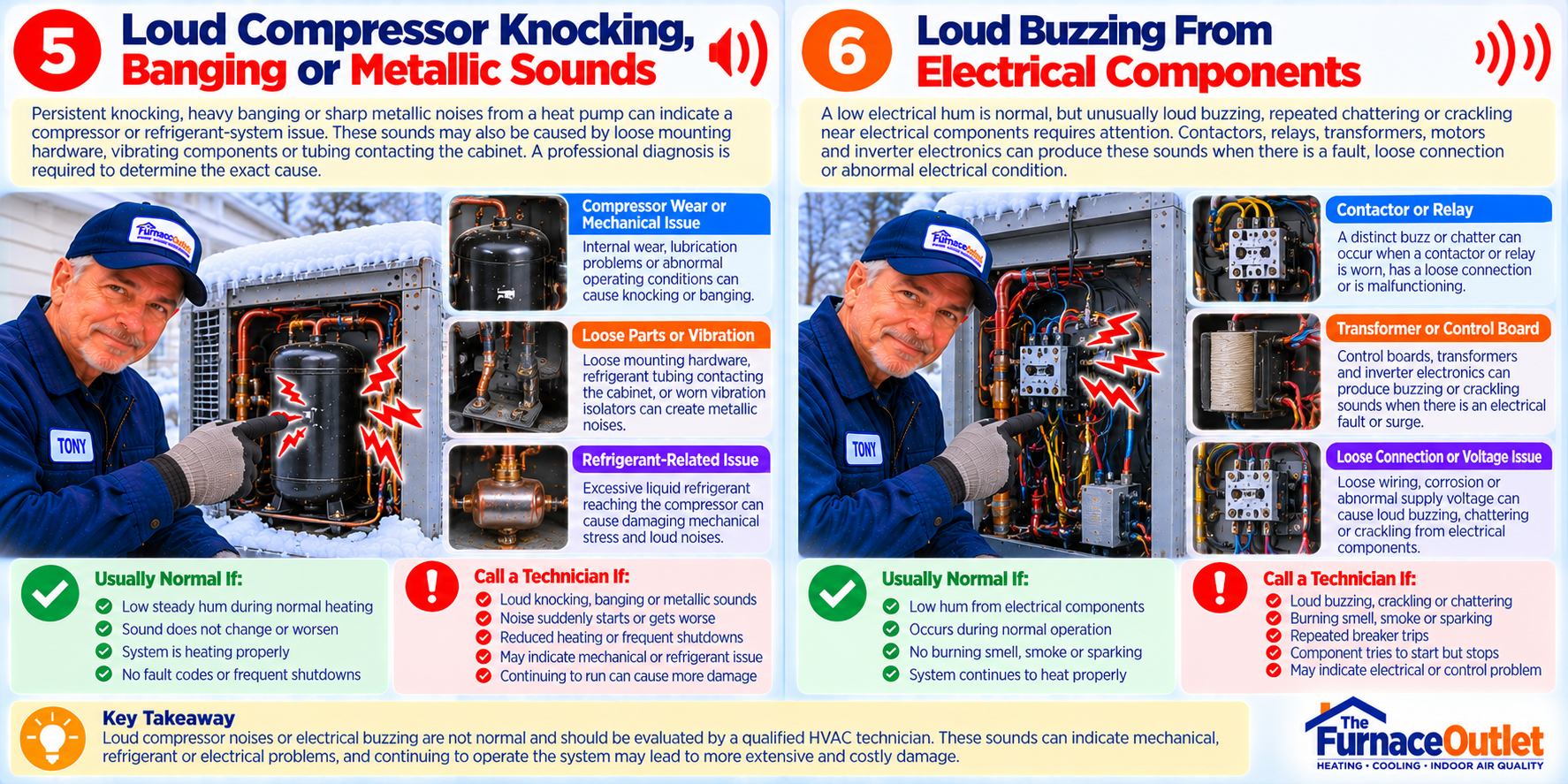
A low electrical hum can occur during normal equipment operation, but unusually loud buzzing, repeated chattering, or crackling near electrical components requires attention. Contactors, relays, transformers, motors, and inverter electronics can produce different sounds depending on their design and operating conditions.
A deteriorated contactor, loose electrical connection, abnormal supply voltage, or malfunctioning component may produce excessive buzzing. In some cases, a compressor attempting to start unsuccessfully can create a sound that homeowners interpret as electrical buzzing.
The location and timing of the noise provide useful diagnostic information. Buzzing that begins when auxiliary heating activates may suggest a different affected circuit from buzzing associated with compressor startup. However, the sound cannot reliably identify the failed component.
Electrical buzzing accompanied by burning odors, smoke, sparking, or repeated breaker trips should be treated as a potential safety hazard. Stop using the affected equipment and contact a qualified professional. Do not remove panels, touch wiring, or repeatedly reset electrical protection.
Refrigerant moves through the heat pump’s compressor, heat exchangers, expansion devices, and connecting tubing under changing pressure and temperature conditions. This movement can produce brief hissing, rushing, or gurgling sounds during startup, shutdown, capacity changes, and defrost transitions.
Electronic expansion valves may also create operating sounds as refrigerant flow is regulated. These noises vary considerably between equipment designs, so an unfamiliar sound is not necessarily abnormal.
Persistent hissing combined with declining heating performance, abnormal icing, or repeated fault codes may justify investigation of the refrigeration system. Refrigerant leaks, restrictions, and other circuit problems can affect operation, although a hissing sound alone does not prove a leak.
A qualified technician should use appropriate leak-detection methods and manufacturer-specific diagnostic procedures. Homeowners should not open refrigerant connections, attempt to release pressure, or add refrigerant without a confirmed diagnosis.
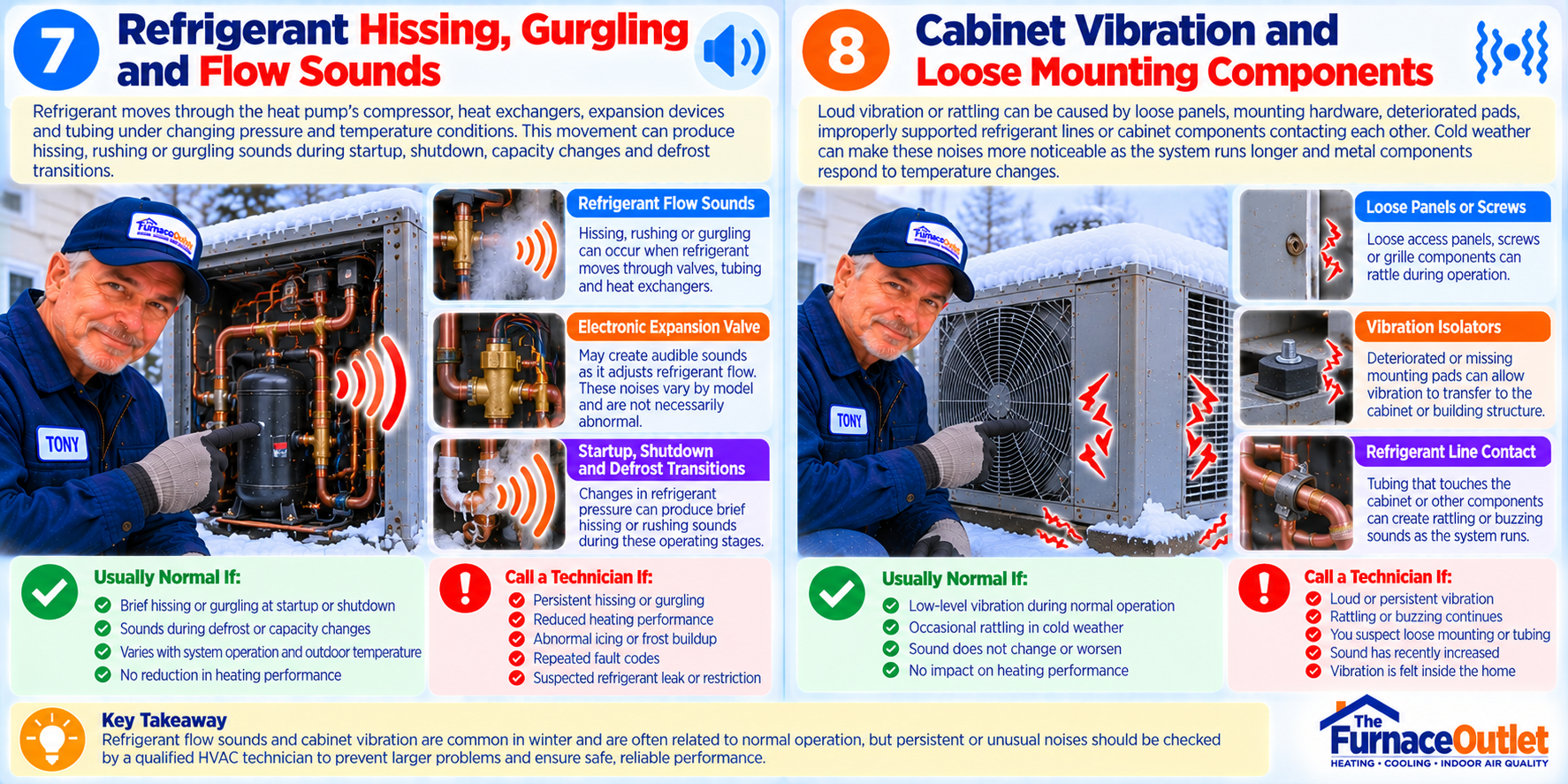
Sometimes the loudest heat pump noises come from relatively simple mechanical conditions rather than major equipment failures. Loose access panels, deteriorated mounting pads, improperly supported refrigerant lines, or cabinet components contacting one another can transmit vibration throughout the outdoor unit.
Winter can make these noises more noticeable because compressors may operate for longer periods or change capacity as heating demand increases. Metal components also respond to temperature changes, potentially altering clearances or vibration patterns.
A heat pump installed on an unstable base or mounting bracket may transfer vibration into nearby building structures. Homeowners may hear a low-frequency rumble indoors even when the outdoor equipment does not sound especially loud at close range.
A technician can evaluate mounting stability, vibration isolation, tubing support, and cabinet hardware. The objective is to correct the source of vibration without interfering with equipment clearances, airflow, drainage, or manufacturer-approved installation requirements.
Not every noise associated with a heat pump originates outdoors. Indoor blower motors, ductwork, return-air grilles, and air handler components can also become noisy during winter heating.
A dirty filter, blocked return, restrictive ductwork, or incorrect blower configuration may increase airflow noise. Some variable-speed blowers increase their output to maintain airflow, which can make an existing duct restriction more noticeable. Rattling duct panels and loose registers may amplify the sound.
Electric auxiliary heating can introduce additional operating stages, and some air handlers adjust blower speed when backup heating activates. This may change the sound of air moving through the duct system.
Grinding or squealing from the air handler can indicate a motor, bearing, blower-wheel, or mounting problem. Professional inspection should distinguish ordinary airflow changes from mechanical faults and verify that the system maintains adequate airflow.
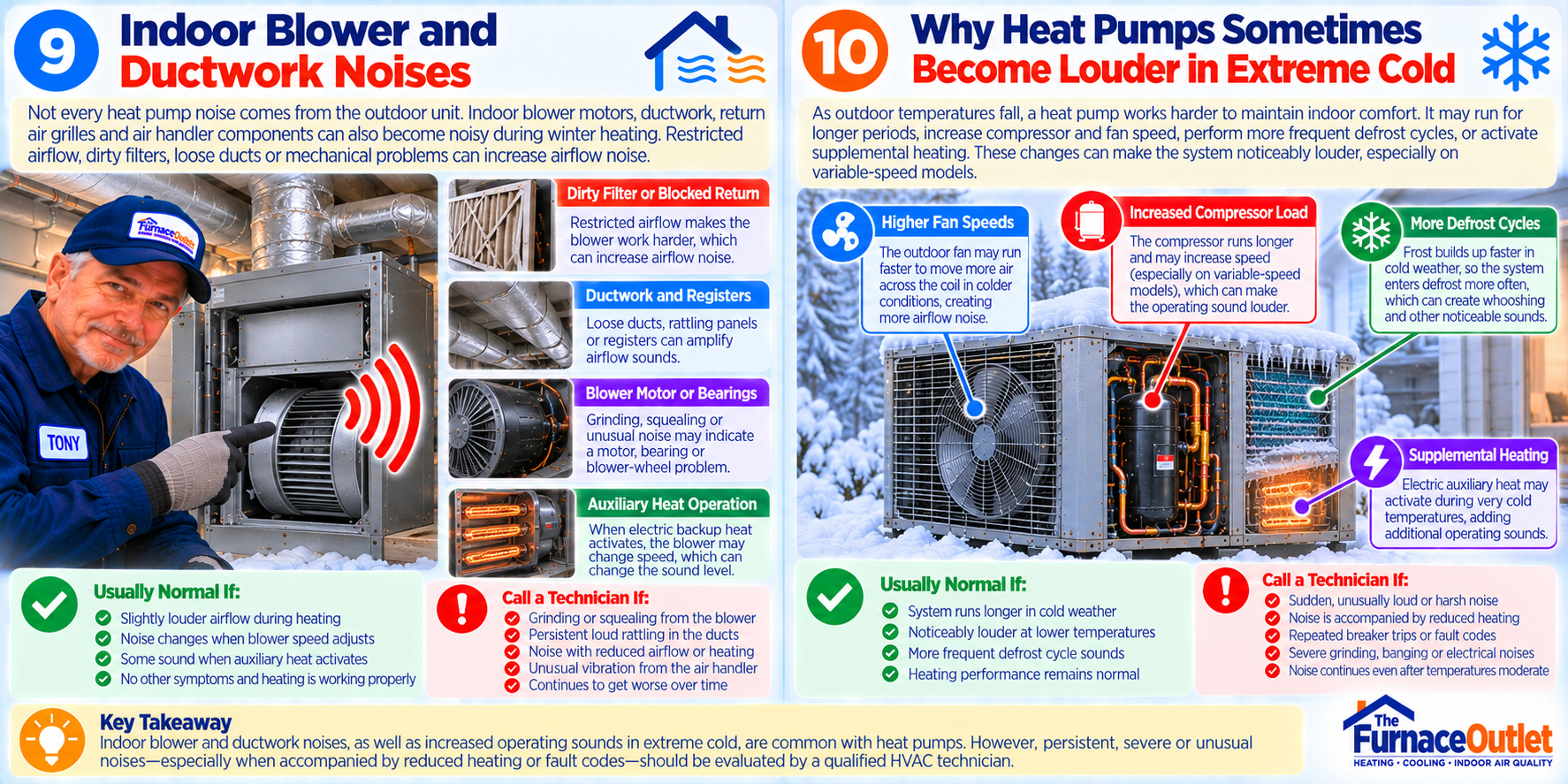
As outdoor temperatures fall, a building generally requires more heating energy to maintain indoor comfort. Depending on equipment design, a heat pump may respond by operating for longer periods, increasing compressor speed, changing outdoor fan operation, or activating supplemental heating.
These changes can increase the amount of sound homeowners notice, particularly on variable-speed equipment operating at higher capacity. Defrost events may also become more apparent during weather conditions that promote frost accumulation.
However, colder weather does not automatically mean a heat pump should become dramatically louder. Properly functioning cold-climate equipment is designed to operate within its specified temperature range without severe grinding, banging, or repeated electrical disturbances.
The best comparison is the manufacturer’s documented operating behavior and the system’s established sound pattern. A new, persistent, or unusually harsh noise deserves investigation even when outdoor temperatures are extremely low.
| Sound | Possible explanation | Recommended response |
|---|---|---|
| Brief whoosh during defrost | Reversing valve and refrigerant-flow transition | Observe whether defrost completes normally |
| Light clicking at startup | Relay or contactor operation | Usually normal if brief and isolated |
| Changing low hum | Variable-speed compressor operation | Monitor heating performance |
| Persistent grinding or scraping | Fan obstruction, bearings, or mechanical contact | Stop safely and arrange service |
| Repeated rapid clicking | Electrical or control problem | Professional diagnosis |
| Loud compressor knocking | Mechanical or refrigeration problem | Prompt professional inspection |
| Buzzing with burning smell | Potential electrical fault | Stop operation and seek urgent assistance |
| Strong cabinet rattling | Loose panels or vibration-related problem | Have mounting and components inspected |
This table provides general guidance rather than a diagnosis. A technician must evaluate the sound together with equipment operation, heating performance, and available diagnostic information.
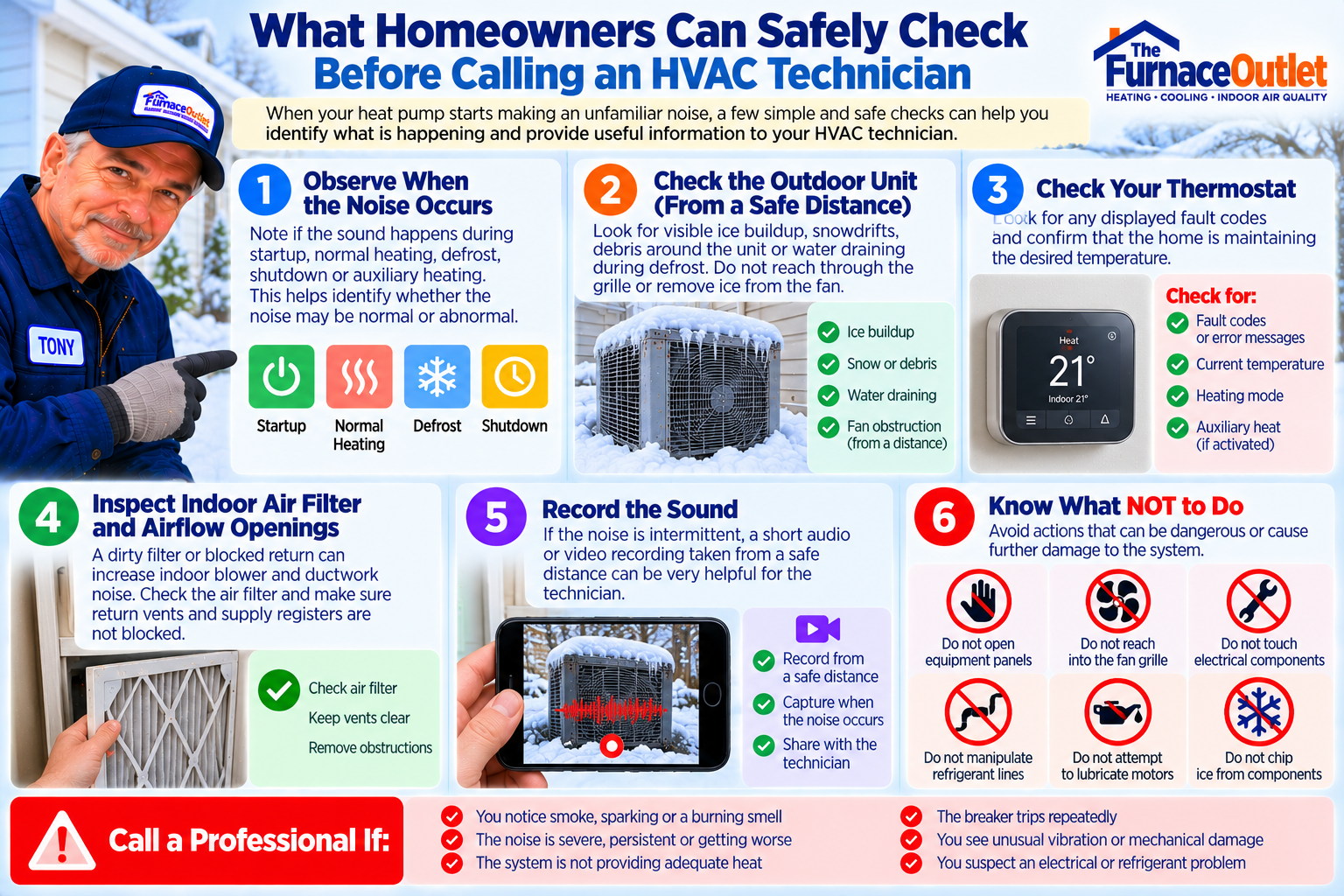
When a heat pump begins making an unfamiliar noise, start by observing when it occurs. Note whether the sound appears during startup, normal heating, defrost, shutdown, or auxiliary heating operation. This information can help distinguish expected operating sounds from abnormal mechanical or electrical behavior.
Observe the outdoor unit from a safe distance. Look for visible ice accumulation, snowdrifts, loose debris around the cabinet, or water draining during defrost. Do not reach through the grille or attempt to remove ice from the fan assembly. If the sound is severe or the fan appears obstructed, stop operating the equipment according to manufacturer guidance and contact a professional.
Check the thermostat for displayed fault messages and verify whether the home is maintaining the desired temperature. Inspect the indoor air filter and accessible airflow openings when it is safe to do so. A short audio or video recording taken from a safe distance can be useful when describing an intermittent noise to a technician.
Avoid opening equipment panels, touching electrical components, manipulating refrigerant lines, or attempting to lubricate motors without manufacturer-approved instructions. If you notice smoke, sparking, burning odors, or violent mechanical noise, stop operation safely and seek qualified assistance promptly.
A reliable diagnosis begins with identifying the exact heat pump model and understanding its normal heating, defrost, and compressor control sequences. The technician should ask when the noise occurs, how long it lasts, whether it has changed recently, and whether heating performance has declined.
The technician may observe the outdoor fan, compressor, cabinet, mounting components, and refrigerant tubing during approved operating tests. Electrical measurements, fault-code history, and manufacturer-specific diagnostic procedures can help distinguish control problems from motor or compressor faults.
When refrigerant-system abnormalities are suspected, the technician may evaluate relevant pressures, temperatures, and operating conditions. Defrost behavior, drainage, outdoor airflow, and auxiliary heating operation should also be considered when the symptoms suggest a connection.
The goal is to identify the actual source of the sound and explain whether it represents normal operation, a maintenance issue, or a component failure. Replacing major equipment based only on an unfamiliar noise is rarely a sound diagnostic approach.
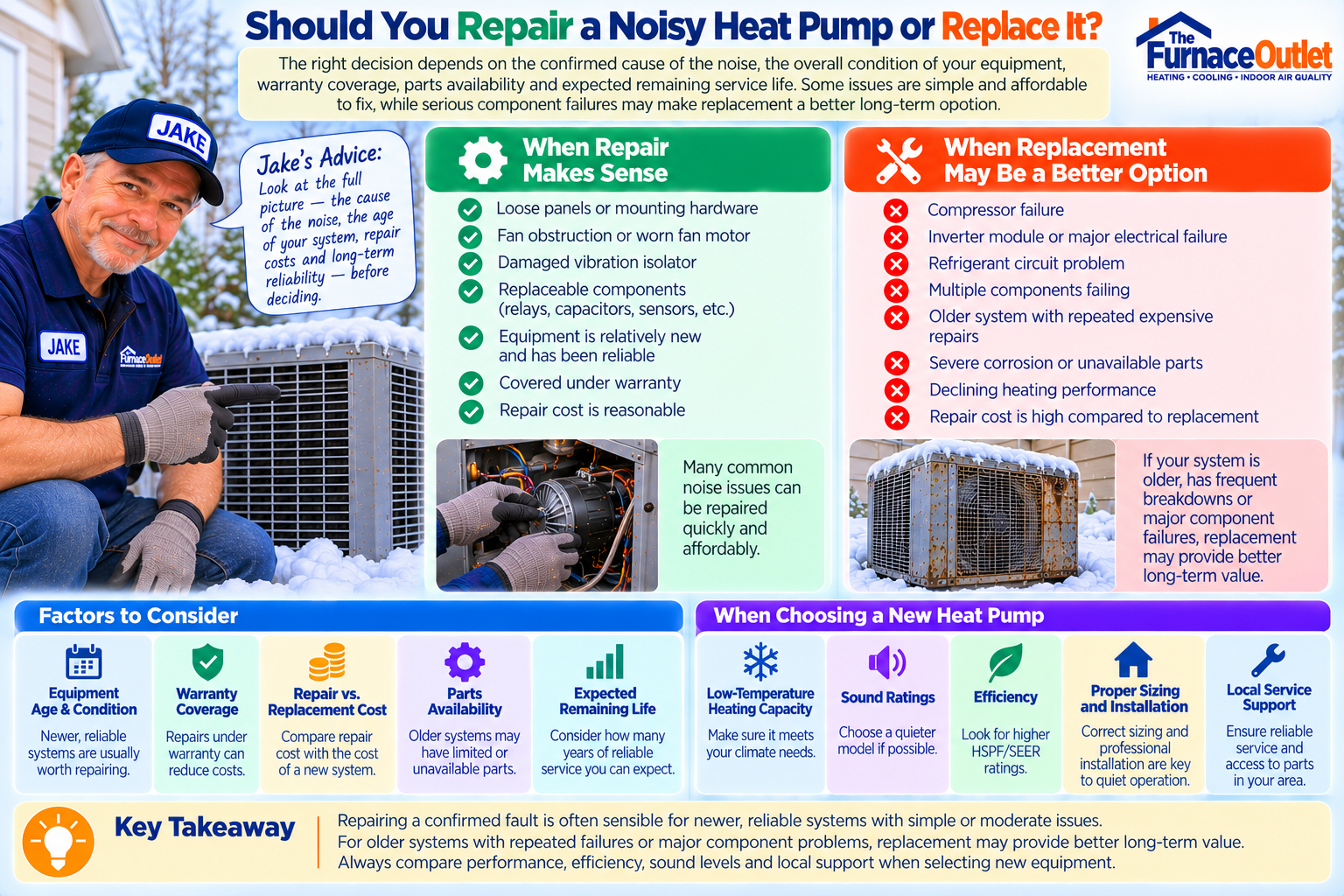
Repair decisions depend on the confirmed cause, equipment condition, warranty coverage, parts availability, and expected remaining service life. A loose panel, damaged vibration isolator, fan obstruction, or replaceable motor component may be repairable without major equipment replacement.
More extensive failures involving a compressor, inverter module, refrigerant circuit, or multiple deteriorated components can make repair considerably more expensive. A technician should also determine whether the original problem caused additional damage or resulted from another unresolved operating condition.
For newer equipment that has otherwise performed reliably, repairing a confirmed fault may be sensible. For older systems with repeated expensive failures, severe corrosion, unavailable parts, or declining heating performance, replacement may deserve consideration.
When evaluating replacement equipment, compare documented low-temperature heating capacity, efficiency, sound ratings, installation requirements, and local service support. A quieter model is desirable, but it should also be properly sized and installed to deliver dependable winter heating.
Regular maintenance helps reduce avoidable mechanical and airflow problems, although it cannot prevent every motor, compressor, or electronic failure. Keep outdoor equipment clear of excessive leaves, debris, and snow accumulation while maintaining manufacturer-required airflow clearances.
Drainage deserves particular attention because defrost meltwater can refreeze in locations that interfere with moving components. Outdoor units should be installed and maintained in accordance with manufacturer requirements for elevation, drainage, and winter exposure.
A professional preseason inspection can include checking fan operation, motor condition, mounting hardware, electrical connections, control sequences, and heating performance. Technicians should use equipment-specific procedures, particularly on variable-speed systems.
Homeowners should also become familiar with their heat pump’s ordinary operating sounds. Recognizing a genuine change early can help prevent a relatively minor issue from developing into a more expensive failure.
A brief whooshing sound can be normal when a heat pump changes refrigerant flow during a defrost cycle. The outdoor fan may stop, frost may melt, and vapor may rise from the unit. Persistent unusual sounds or unsuccessful defrost operation deserve professional evaluation.
Grinding may involve a fan obstruction, ice accumulation, deteriorated bearings, damaged blades, or another mechanical problem. Stop operation safely if the noise is severe and arrange professional inspection rather than attempting to reach into the fan assembly.
Certain compressor problems can produce abnormal mechanical sounds, but loose tubing, cabinet vibration, and other equipment faults may create similar noises. Compressor replacement should follow manufacturer-approved testing and confirmation of the actual failure.
Cold weather can increase heating demand and change compressor speed, fan operation, and defrost activity. Ice accumulation or existing mechanical problems may also become more noticeable. The sound’s timing and accompanying symptoms help determine whether it is normal.
No. Brief hissing can occur during normal refrigerant-flow changes, including defrost transitions. Persistent hissing combined with poor heating, abnormal icing, or fault codes may warrant professional refrigeration-system testing.
A brief, familiar defrost sound does not necessarily require shutdown. However, severe grinding, violent banging, electrical crackling, burning odors, smoke, or suspected fan obstruction should prompt safe shutdown and professional assistance.
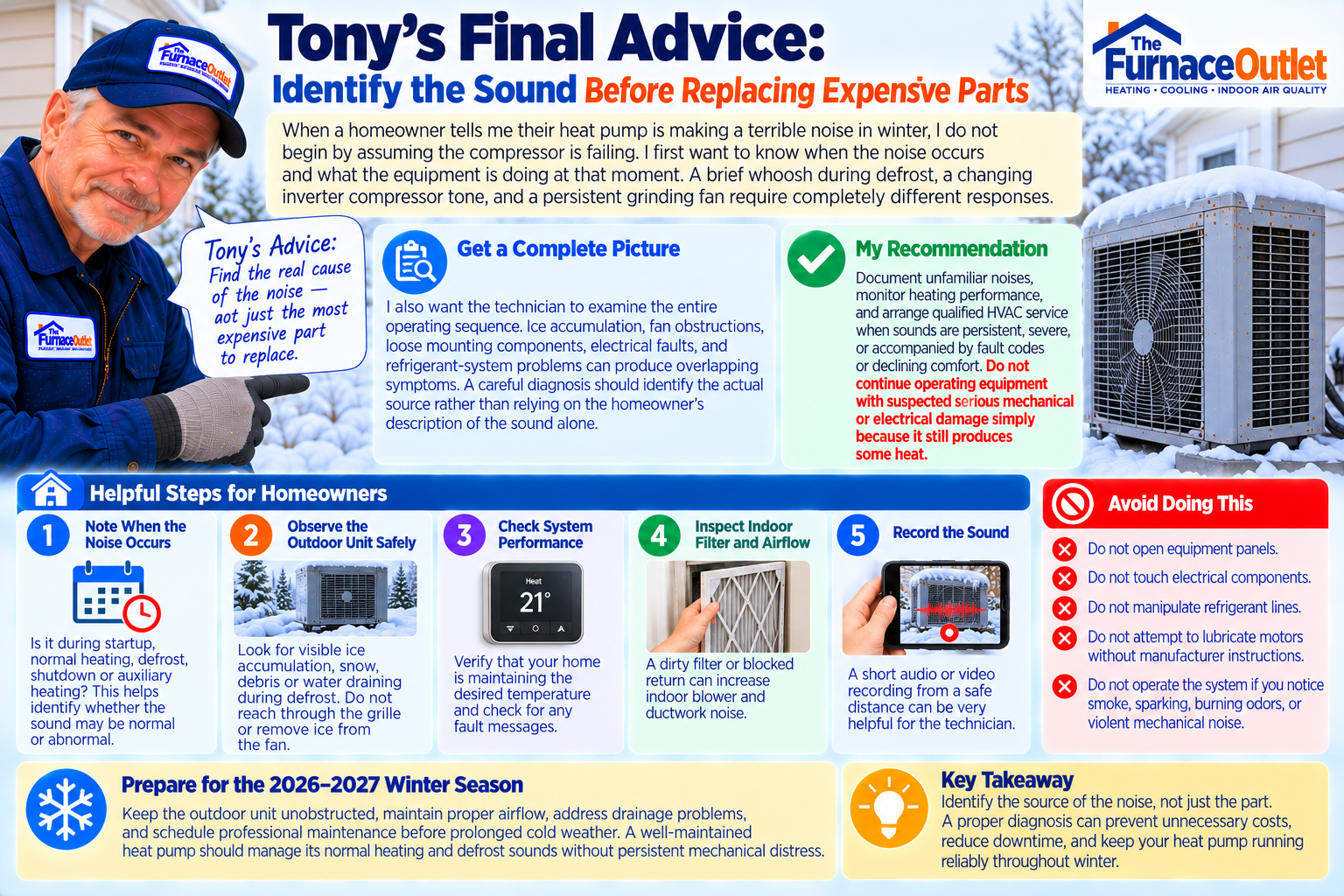
When a homeowner tells me their heat pump is making a terrible noise in winter, I do not begin by assuming the compressor is failing. I first want to know when the noise occurs and what the equipment is doing at that moment. A brief whoosh during defrost, a changing inverter compressor tone, and a persistent grinding fan require completely different responses.
I also want the technician to examine the entire operating sequence. Ice accumulation, fan obstructions, loose mounting components, electrical faults, and refrigerant-system problems can produce overlapping symptoms. A careful diagnosis should identify the actual source rather than relying on the homeowner’s description of the sound alone.
My recommendation is to document unfamiliar noises, monitor heating performance, and arrange qualified HVAC service when sounds are persistent, severe, or accompanied by fault codes or declining comfort. Do not continue operating equipment with suspected serious mechanical or electrical damage simply because it still produces some heat.
For the 2026–2027 winter season, keep the outdoor unit unobstructed, maintain proper airflow, address drainage problems, and schedule professional maintenance before prolonged cold weather. A well-maintained heat pump should manage its normal heating and defrost sounds without persistent mechanical distress.
This article is intended for general educational purposes and does not replace professional HVAC diagnosis or manufacturer instructions. Heat pumps contain high-voltage electrical components, moving fan blades, pressurized refrigerants, and mechanical parts that may operate unexpectedly. Homeowners should not open service panels, touch electrical terminals, manipulate refrigerant components, manually rotate fans, or attempt to remove ice from moving assemblies. Severe mechanical noise, sparking, smoke, or burning odors require prompt professional attention.
The U.S. Department of Energy’s Air-Source Heat Pumps resource explains how heat pumps operate and how their performance changes under different heating conditions. This provides useful background for understanding compressor operation and winter heating behavior.
The Department of Energy’s Heat Pump Systems overview describes heat pump technology and its role in residential heating and cooling. It can help homeowners understand the major components involved in the heating process.
The ENERGY STAR Heating and Cooling Maintenance Checklist provides recommendations concerning professional maintenance, airflow, controls, and electrical connections that support reliable system operation.
The ENERGY STAR Air-Source Heat Pumps resource provides information about efficient heat pump equipment and selection considerations. Manufacturer-published sound ratings and performance documentation should be reviewed when comparing specific models.
The Northeast Energy Efficiency Partnerships Cold Climate Air-Source Heat Pump List provides performance information for qualifying cold-climate heat pump models. It can support equipment comparisons, although model-specific sound characteristics and diagnostic procedures should be confirmed using manufacturer documentation.
These references provide general technical guidance. Exact sound levels, defrost behavior, operating sequences, and service requirements depend on the installed heat pump model.