Newsletter Subscribe
Enter your email address below and subscribe to our newsletter

HVAC made simple
By Jake Lawson | HVAC Specialist | The Furnace Outlet
Updated: October 2026 | Category: Indoor Air Quality
When homeowners start looking for ways to improve indoor air quality, they often come across two filtration terms: HEPA and MERV. Both are associated with cleaner indoor air, but they represent different filtration classifications, testing methods, and applications. Understanding these differences is essential before purchasing a replacement HVAC filter, upgrading an existing filtration system, or investing in a dedicated air purification device.
HEPA stands for High-Efficiency Particulate Air, while MERV stands for Minimum Efficiency Reporting Value. HEPA filtration is recognized for its exceptionally high particle-capture efficiency under specified testing conditions. MERV, on the other hand, provides a standardized rating system for comparing the particle-removal performance of filters commonly used in residential and commercial HVAC systems. Although HEPA filters generally offer higher single-pass particle capture than ordinary residential MERV-rated filters, that does not automatically make them the best choice for every home.
During my years working with residential and commercial HVAC equipment, I have seen homeowners focus almost entirely on filtration efficiency without considering how a filter affects airflow. This can be a costly mistake because heating and cooling systems are designed to operate within specific airflow and static-pressure limits. Installing a highly restrictive filter without checking compatibility may reduce heating and cooling performance, increase operating problems, and potentially damage equipment.
My approach is to consider filtration efficiency, airflow resistance, equipment compatibility, maintenance requirements, and the pollutants homeowners are trying to control. For many households, a properly designed MERV 13 filtration system offers a practical balance between particle removal and HVAC performance. HEPA filtration may provide additional benefits in specific rooms or specialized applications, but it should be selected with a clear understanding of its installation and operating requirements.
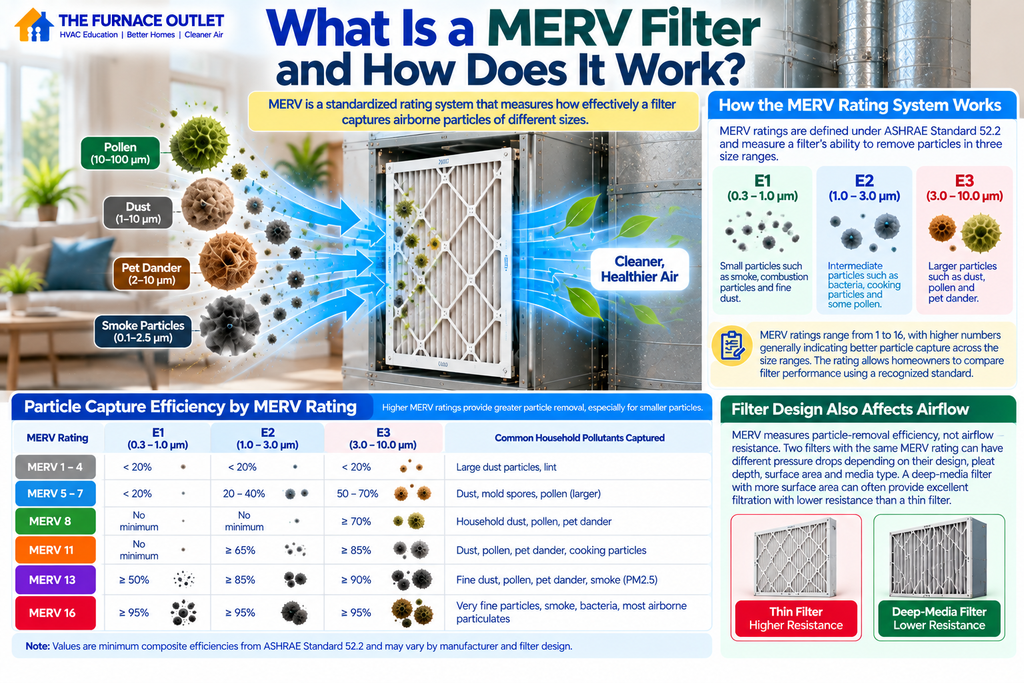
MERV is a filtration rating system established through ASHRAE Standard 52.2, which evaluates how effectively air-cleaning devices remove particles of different sizes under controlled laboratory conditions. Conventional MERV ratings range from 1 to 16, with higher numbers generally indicating better particle-capture performance across the size ranges covered by the standard. The rating allows homeowners, HVAC contractors, and building operators to compare filtration performance using a recognized testing framework rather than relying entirely on manufacturer advertising.
The MERV system evaluates particle removal across three size categories. The E1 category includes particles measuring 0.3–1.0 micrometers, E2 covers particles from 1.0–3.0 micrometers, and E3 covers particles from 3.0–10.0 micrometers. These distinctions matter because household pollutants vary considerably in size. Larger dust and pollen particles may be captured relatively easily, while smaller particles associated with combustion, cooking, and outdoor pollution often require more efficient filtration.
A MERV 8 filter generally provides useful capture of larger particles but has limited standardized efficiency requirements for the smallest particle categories. MERV 11 offers improved performance for intermediate-sized particles, while MERV 13 introduces a specified minimum efficiency for particles in the E1 range. This makes MERV 13 particularly relevant for homeowners concerned about fine particulate matter, although actual indoor particle reduction still depends on the volume of air passing through the filter and how frequently the HVAC blower operates.
One important point I explain to homeowners is that MERV measures particle-removal efficiency, not airflow resistance. Two filters carrying the same MERV rating may have substantially different pressure drops because of variations in pleat design, media surface area, filter thickness, and construction quality. A properly designed deep-media filter can sometimes provide excellent filtration with less airflow resistance than a poorly designed, thinner alternative.
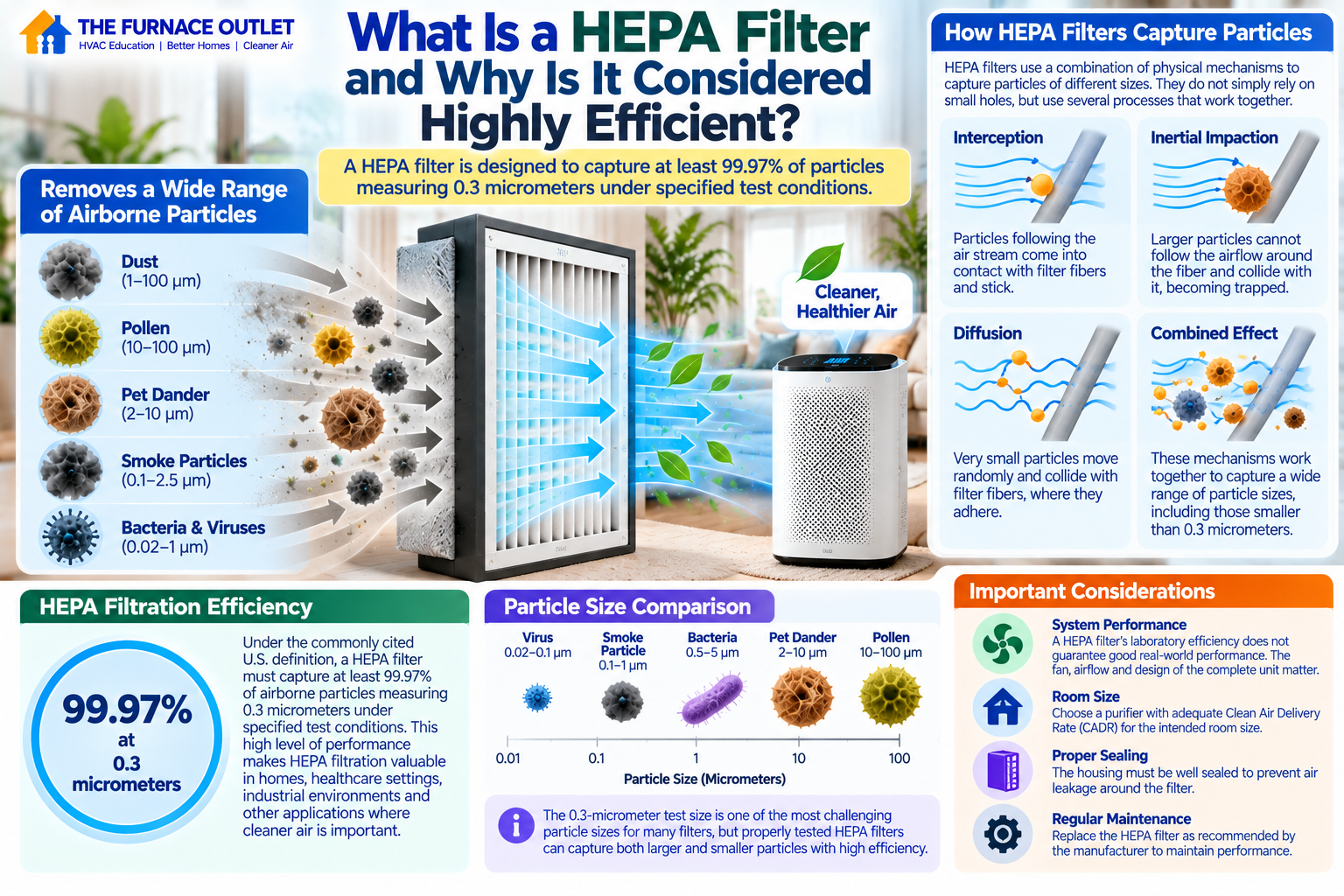
HEPA filtration is designed to remove an exceptionally high proportion of airborne particles. Under the commonly cited United States definition, a HEPA filter must capture at least 99.97% of particles measuring 0.3 micrometers under specified test conditions. This level of performance makes HEPA filtration valuable in applications where effective particulate removal is especially important, including certain healthcare, industrial, laboratory, and residential air-cleaning environments.
HEPA filters operate through several physical particle-capture mechanisms rather than simply trapping particles that are too large to pass through microscopic openings. Larger particles may be captured through interception or inertial impaction, while very small particles can be collected through diffusion as they move through the filter media. The combination of these mechanisms allows HEPA filters to capture particles across a broad range of sizes, including particles smaller than the commonly referenced 0.3-micrometer test size.
The 0.3-micrometer figure is frequently misunderstood. It does not mean that particles smaller than this size pass freely through a HEPA filter. Instead, this size is associated with a particularly challenging region for many filtration designs, although the exact most-penetrating particle size depends on the filter and operating conditions. Properly tested HEPA filters can capture particles both larger and smaller than this reference size with high efficiency.
However, a HEPA filter’s laboratory efficiency should not be confused with the overall performance of the appliance containing it. A portable purifier may use excellent HEPA media but still deliver inadequate room filtration if its fan moves too little air, its housing permits significant leakage, or the device is undersized. I recommend evaluating the complete air-cleaning system rather than treating the HEPA label as sufficient proof of performance.
The fundamental difference between HEPA and MERV filtration is that they use different classification and testing approaches. MERV provides graded particle-removal performance across defined particle-size categories, whereas HEPA represents a high-efficiency classification established through separate testing criteria. Both can be effective technologies, but their suitability depends on the application, the volume of air being treated, and the equipment used to move that air.
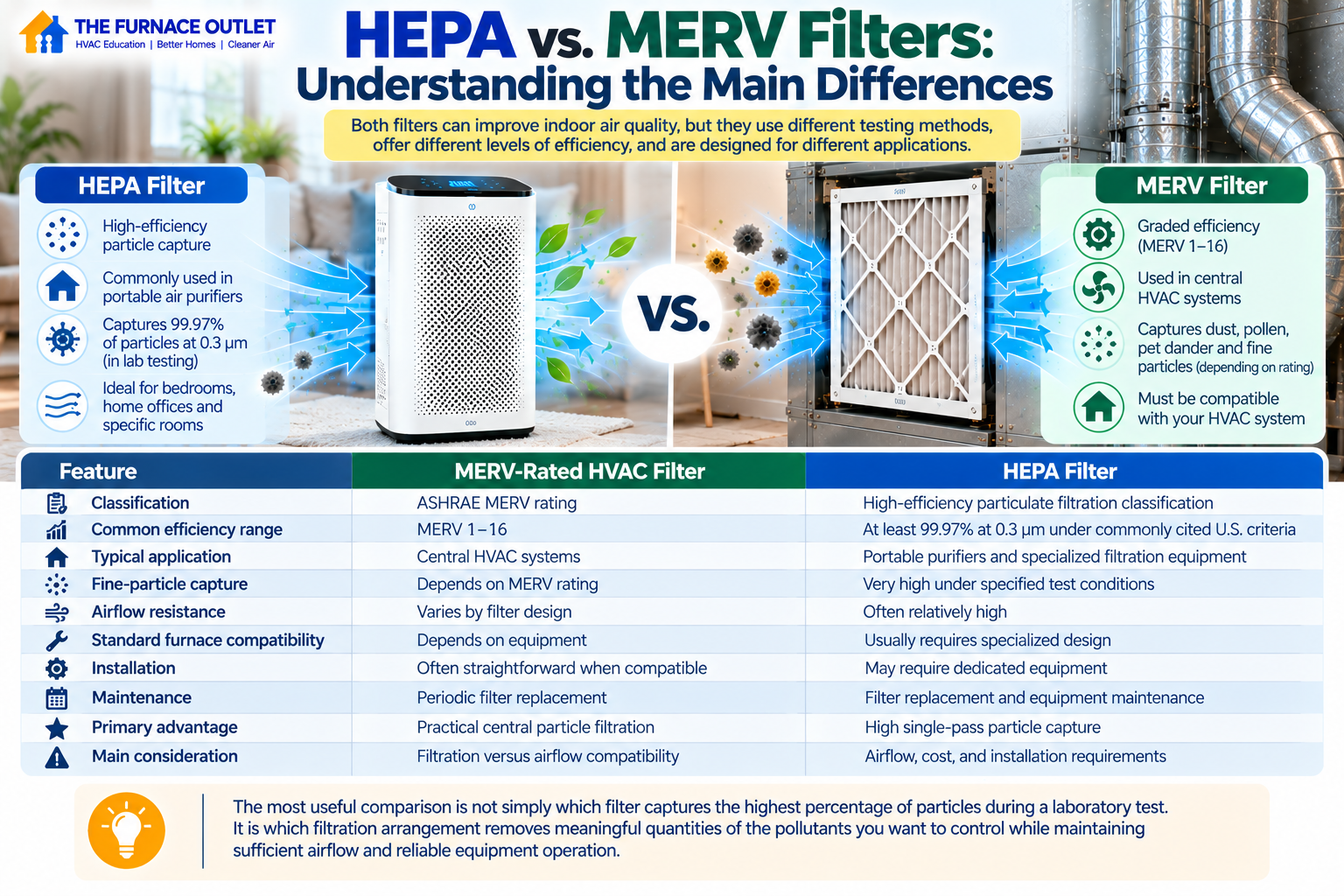
| Feature | MERV-Rated HVAC Filter | HEPA Filter |
|---|---|---|
| Classification | ASHRAE MERV rating | High-efficiency particulate filtration classification |
| Common efficiency range | MERV 1–16 | At least 99.97% at 0.3 µm under commonly cited U.S. criteria |
| Typical application | Central HVAC systems | Portable purifiers and specialized filtration equipment |
| Fine-particle capture | Depends on MERV rating | Very high under specified test conditions |
| Airflow resistance | Varies by filter design | Often relatively high |
| Standard furnace compatibility | Depends on equipment | Usually requires specialized design |
| Installation | Often straightforward when compatible | May require dedicated equipment |
| Maintenance | Periodic filter replacement | Filter replacement and equipment maintenance |
| Primary advantage | Practical central particle filtration | High single-pass particle capture |
| Main consideration | Filtration versus airflow compatibility | Airflow, cost, and installation requirements |
For homeowners, the most useful comparison is not simply which filter captures the highest percentage of particles during a laboratory test. It is which filtration arrangement removes meaningful quantities of the pollutants of concern while maintaining sufficient airflow and reliable equipment operation. A moderately efficient filter processing a large volume of air can sometimes provide more practical particle removal than a highly efficient filter processing very little air.
The performance differences between common MERV ratings become clearer when examining their standardized particle-size efficiency requirements. MERV 8 filters are primarily intended to capture larger airborne particles, while MERV 11 filters provide improved removal of intermediate-sized particles. MERV 13 filters add meaningful capture efficiency for smaller particles, making them an attractive option for homeowners concerned about smoke-related particulate matter, airborne allergens, and other fine particles.
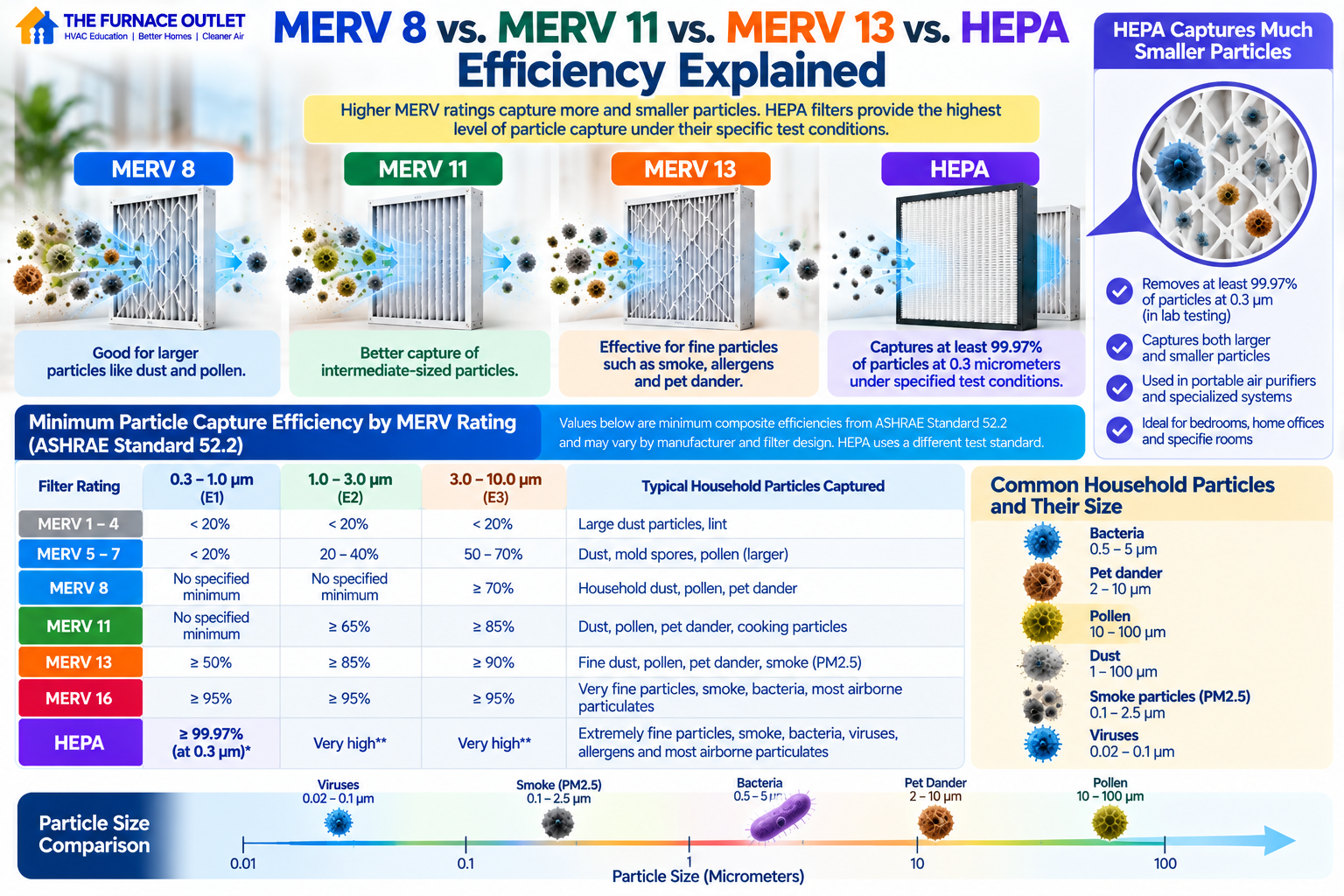
Under ASHRAE Standard 52.2, the selected MERV classifications have the following minimum composite efficiency requirements. These figures represent standardized filter-performance thresholds and should not be interpreted as guaranteed reductions in actual household pollutant concentrations.
| MERV rating | 0.3–1.0 µm | 1.0–3.0 µm | 3.0–10.0 µm |
|---|---|---|---|
| MERV 8 | No specified minimum | No specified minimum | ≥70% |
| MERV 11 | No specified minimum | ≥65% | ≥85% |
| MERV 13 | ≥50% | ≥85% | ≥90% |
| MERV 16 | ≥95% | ≥95% | ≥95% |
HEPA filtration generally provides substantially higher single-pass particle-capture efficiency than common residential MERV filters under its own specified test conditions. However, it would be misleading to compare the HEPA percentage directly with the MERV table as though both classifications were measured using identical procedures. The appropriate comparison must account for the different test standards and the airflow characteristics of the equipment.
For most residential applications, I consider MERV 13 a reasonable filtration target when the HVAC system can accommodate it. Higher MERV ratings may be appropriate for certain installations, but increasing the rating without evaluating airflow resistance does not necessarily produce a better overall result. The objective should be effective particle removal with dependable heating and cooling performance.
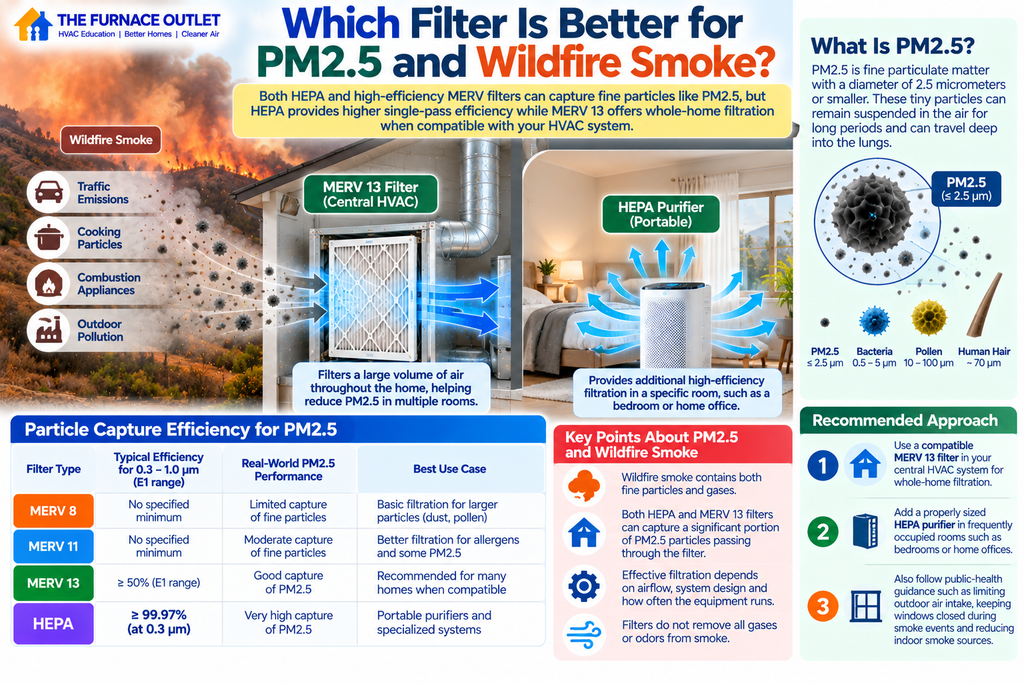
Fine particulate matter, commonly called PM2.5, consists of airborne particles with aerodynamic diameters of 2.5 micrometers or smaller. These particles may originate from wildfire smoke, traffic emissions, cooking, combustion appliances, and outdoor pollution entering the building. Because fine particles can remain suspended in indoor air and spread between rooms, effective filtration and appropriate airflow are important components of exposure reduction.
Both HEPA and high-efficiency MERV filters can capture fine particles. A compatible MERV 13 filter can remove a substantial proportion of particles passing through a central HVAC system, while HEPA filtration generally offers higher single-pass capture efficiency. However, a filter cannot remove airborne contaminants unless the air reaches it. Central filtration performance therefore depends on blower operation, return-air pathways, ductwork, and the distribution of air throughout occupied spaces.
During wildfire smoke events, I often recommend considering a combination of compatible central filtration and a properly sized portable HEPA purifier in a frequently occupied room. This approach can provide broader filtration through the HVAC system while offering additional particle removal in a bedroom or another space where occupants spend considerable time. The portable purifier should be selected using verified performance information, including an appropriate Clean Air Delivery Rate.
It is also important to recognize that wildfire smoke contains gases as well as particles. Neither ordinary MERV filtration nor HEPA media removes every gaseous component of smoke. Homeowners should follow public-health guidance regarding outdoor-air intake, window operation, and smoke infiltration rather than relying exclusively on filtration equipment.
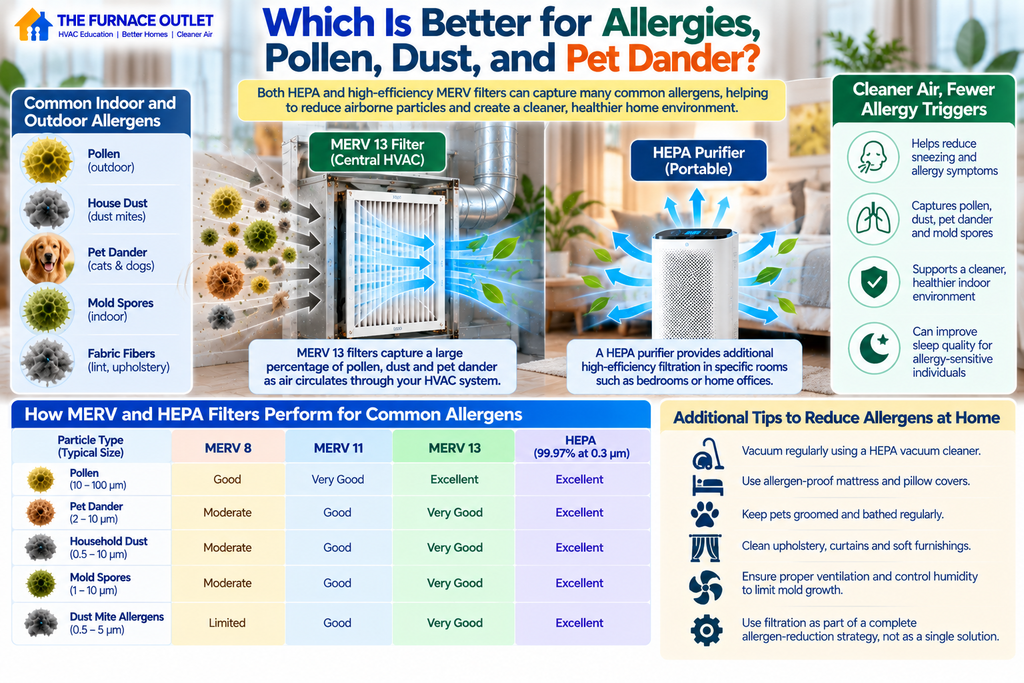
Airborne allergens are among the most common reasons homeowners investigate higher-efficiency filtration. Pollen, pet-related particles, dust, and other biological materials can circulate through occupied spaces, particularly when doors open frequently, pets move between rooms, or outdoor air enters the home. Both HEPA and appropriately rated MERV filters can capture many of these particles when they pass through the filtration media.
For a home equipped with central heating and cooling, a compatible MERV 13 filter may help reduce airborne allergens circulating through the return-air system. This can be particularly convenient when several connected rooms are affected. However, filtration performance may be uneven if the home has inadequate return-air pathways, substantial duct leakage, or limited blower runtime. A filter cannot capture particles that remain in a room without reaching the equipment.
A portable HEPA purifier may provide additional targeted filtration in bedrooms, home offices, or other frequently occupied spaces. For example, operating a properly sized purifier in a bedroom can provide particle removal independently of the central HVAC operating schedule. This may be useful when occupants spend long periods in one room and the central system operates intermittently.
Nevertheless, filtration does not eliminate allergens embedded in mattresses, carpeting, upholstered furniture, or other household surfaces. Regular cleaning, appropriate vacuuming, bedding care, and management of pollutant sources remain important. I recommend considering filtration as part of an overall exposure-reduction strategy rather than promising that a particular filter will eliminate allergy symptoms.
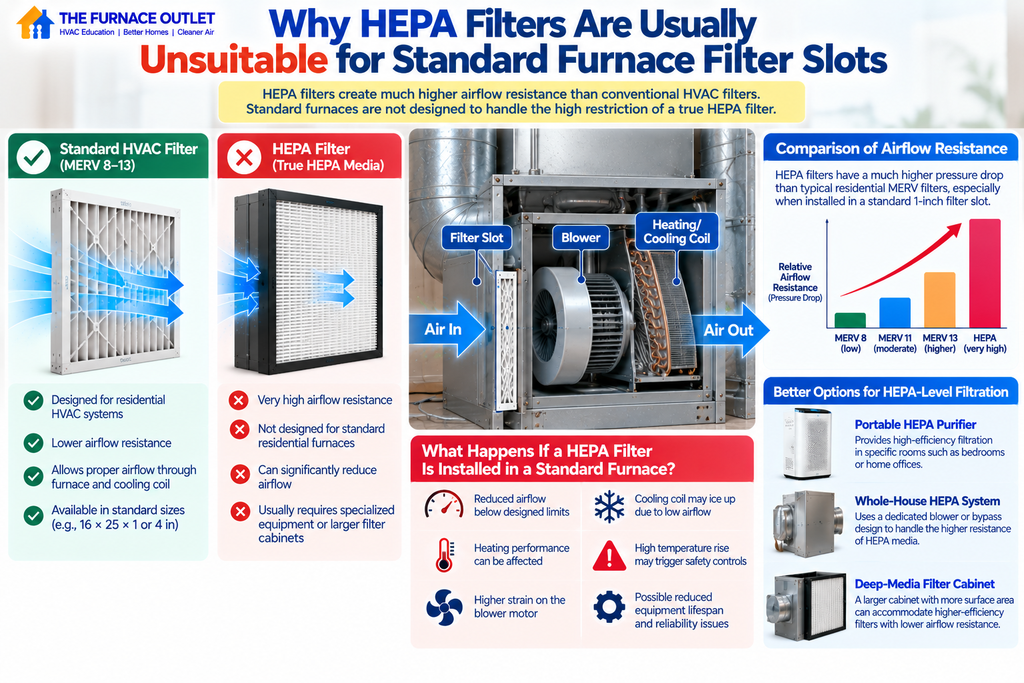
One of the most important practical differences between HEPA and MERV filtration involves airflow resistance. Residential furnaces and air handlers are designed to move a specified volume of air through their heating and cooling components. The blower must overcome resistance created by ductwork, coils, grilles, filters, and other components while maintaining airflow within the equipment manufacturer’s operating requirements.
A true HEPA filter can create substantially greater resistance than a conventional residential HVAC filter, particularly when the available filter surface area is limited. Installing a restrictive HEPA filter directly into a standard furnace filter slot may reduce airflow below the intended operating range. This can affect temperature control, heating performance, cooling capacity, and equipment reliability, depending on the system design.
In cooling operation, insufficient airflow across the evaporator coil can contribute to operating problems, including coil icing under certain conditions. In heating operation, inadequate airflow may cause excessive temperature rise or trigger equipment protection controls. The consequences depend on the equipment and operating conditions, but the underlying concern is that the filtration upgrade may prevent the HVAC system from functioning as designed.
For this reason, I do not recommend installing HEPA media into a conventional furnace filter slot unless the system and filtration arrangement are specifically engineered for it. Homeowners seeking HEPA-level filtration should consider properly designed portable equipment or dedicated whole-house filtration arrangements that can deliver sufficient airflow without compromising the central heating and cooling system.
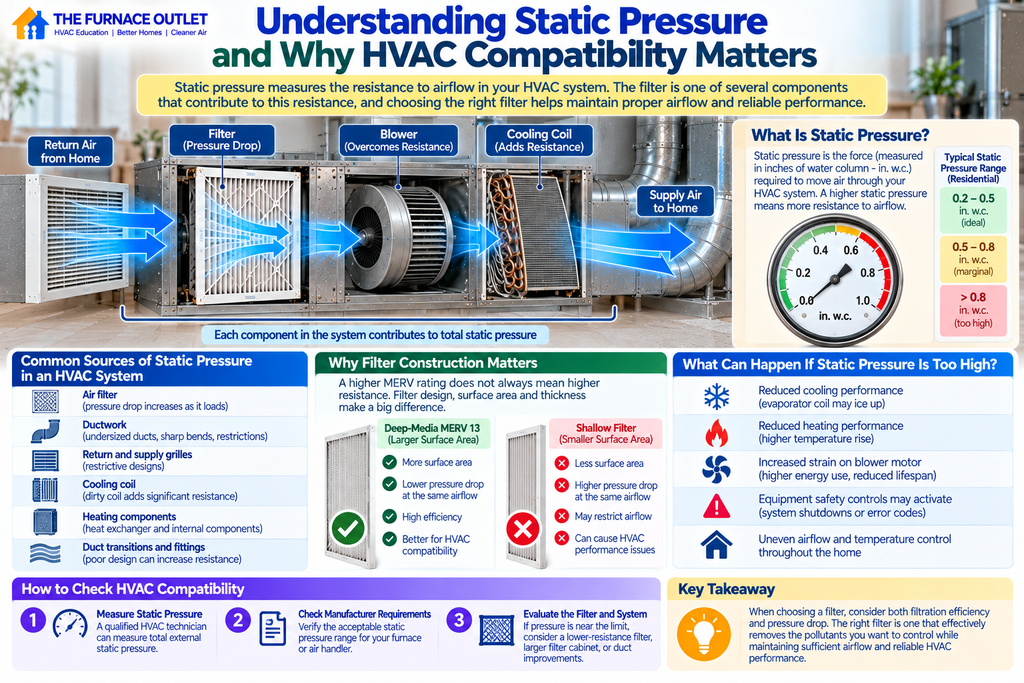
Static pressure is one of the most important measurements when evaluating HVAC filtration compatibility. As the blower moves air through ductwork and equipment, it must overcome resistance created by the system’s components. The filter contributes to this resistance, and its pressure drop changes with airflow rate, media construction, and the amount of particulate material accumulated during operation.
A common misconception is that every higher-MERV filter necessarily creates more resistance than every lower-MERV filter. In practice, filter construction makes a substantial difference. A high-quality deep-media MERV 13 filter with generous surface area may create less pressure drop at a specified airflow than a restrictive, shallow filter with a lower efficiency rating. This is why pressure-drop specifications are more useful than MERV ratings alone when assessing equipment compatibility.
Homeowners should also recognize that filter resistance is only one part of the overall system. Undersized return ducts, restrictive grilles, dirty cooling coils, and poorly designed duct transitions may already place substantial demands on the blower. Adding a more restrictive filter to a system operating near its pressure limits can worsen existing airflow problems.
When filtration compatibility is uncertain, I recommend having a qualified HVAC technician measure static pressure, assess airflow, and review the equipment manufacturer’s requirements. These measurements help determine whether the existing filter arrangement is suitable or whether improvements to the filter cabinet or ductwork would provide a better long-term solution.
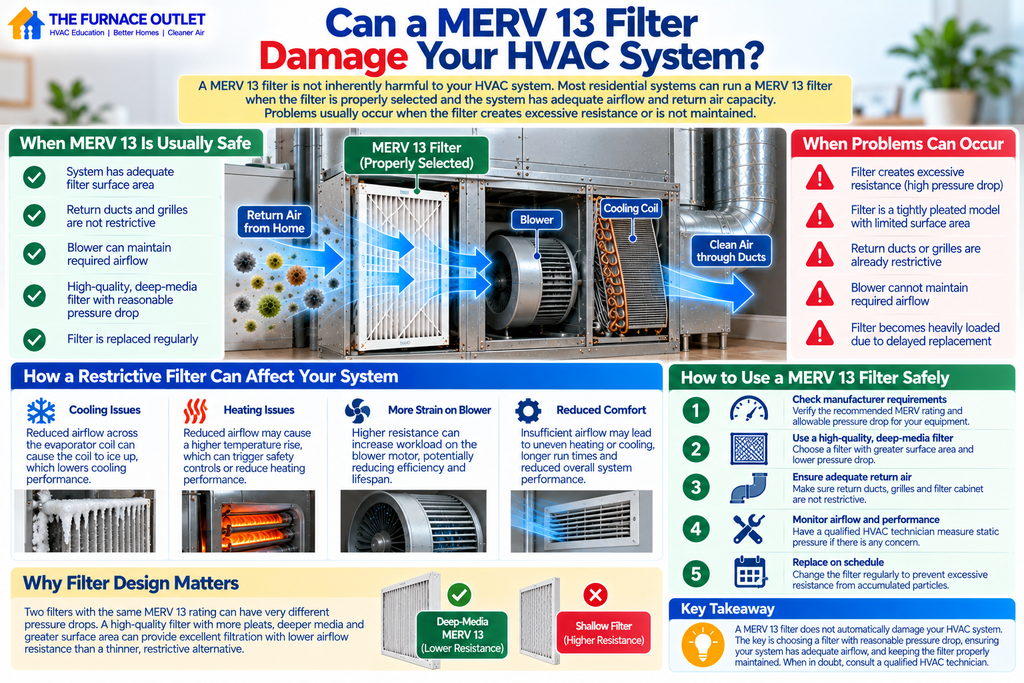
MERV 13 filtration is not inherently harmful to residential HVAC equipment. Many systems can accommodate properly selected MERV 13 filters, particularly when they have adequate filter surface area, suitable ductwork, and sufficient blower capability. Problems arise when the selected filter creates excessive resistance or when maintenance is neglected and the filter becomes heavily loaded with accumulated particles.
For example, a homeowner may replace a relatively open filter with a tightly pleated high-efficiency model of the same nominal dimensions. Although the replacement fits physically, its pressure drop may be significantly higher at the system’s operating airflow. If the return-air arrangement was already restrictive, the change could reduce airflow enough to affect comfort or equipment performance.
The appropriate solution is not necessarily to abandon higher-efficiency filtration. A larger filter opening or properly designed deep-media cabinet may provide greater filtration surface area and reduce resistance. In other cases, correcting restrictive return-air ductwork may be necessary before increasing filtration efficiency.
I recommend evaluating the complete HVAC system before concluding that MERV 13 is either universally safe or universally unsuitable. Filter dimensions, pressure-drop data, blower characteristics, and manufacturer requirements should guide the decision.
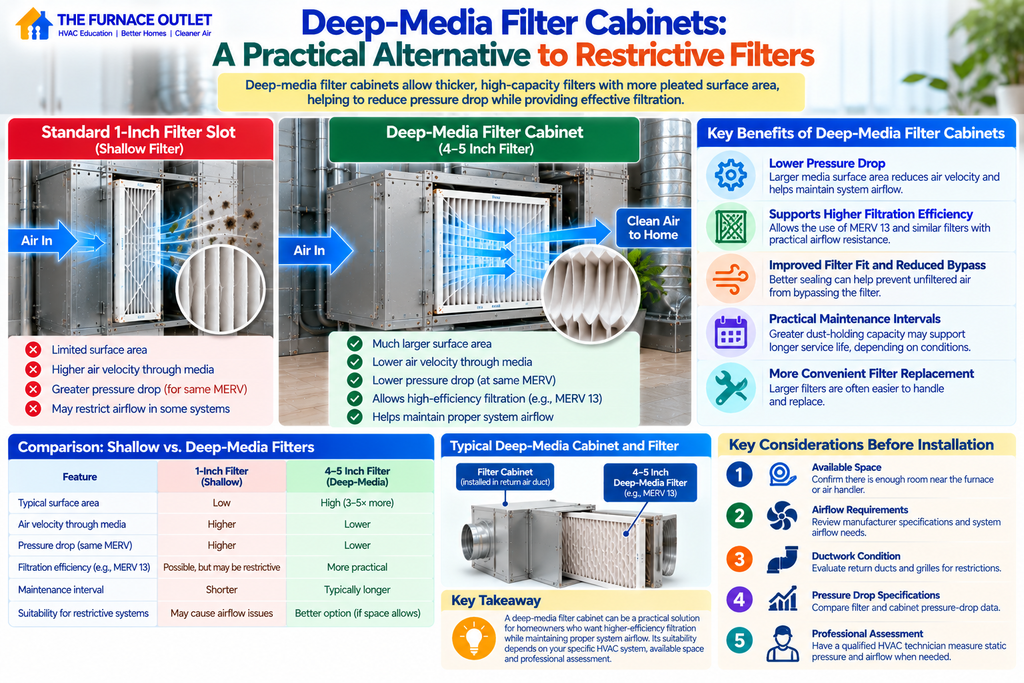
Deep-media filter cabinets are designed to accommodate thicker filters with extended pleated surfaces. Compared with a shallow filter occupying a similar face area, a properly designed deep-media filter can provide substantially more filtration material. This greater surface area can reduce air velocity through the media and help limit pressure drop while maintaining useful particle-removal efficiency.
For homeowners who want MERV 13 filtration but have an undersized or restrictive filter slot, a deep-media cabinet may be worth considering. These cabinets are available in different sizes and configurations and are commonly installed near the furnace or air handler. Their suitability depends on the available installation space, ductwork arrangement, and airflow requirements.
A cabinet upgrade is not automatically necessary for every home. Some existing systems already have adequate filter capacity, while others may require additional return-duct modifications to achieve acceptable performance. I recommend reviewing manufacturer pressure-drop specifications and requesting an airflow assessment before committing to installation.
A well-designed filtration cabinet can offer benefits beyond efficiency alone. Improved filter fit may reduce bypass leakage, larger media capacity may support practical maintenance intervals, and a properly selected cabinet can make routine filter replacement more convenient. The actual benefits depend on the installation and equipment used.
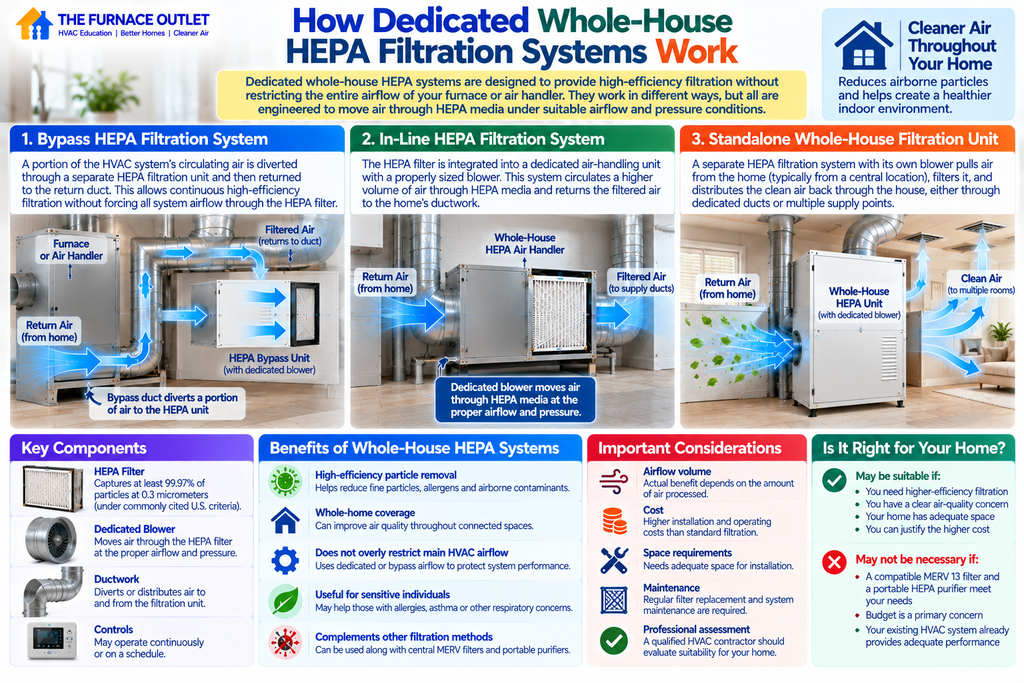
Dedicated whole-house HEPA systems are designed to overcome some of the airflow limitations associated with placing restrictive filtration directly into conventional HVAC equipment. Rather than forcing the entire furnace or air-handler airflow through a HEPA filter, certain systems use bypass arrangements that divert a portion of circulating air through a separate filtration unit.
Other designs incorporate dedicated blowers that move air through specialized filter assemblies. These arrangements allow the HEPA filtration equipment to operate under conditions more suitable for its pressure drop and intended airflow. However, the actual benefit depends on the volume of air processed, the filter’s performance, the installation arrangement, and the amount of time the system operates.
A system with excellent single-pass efficiency but very limited airflow may provide less practical whole-home particle reduction than homeowners expect. I therefore recommend asking contractors for verified airflow data, filtration-performance information, maintenance requirements, and an explanation of how the system will interact with the existing HVAC equipment.
Dedicated whole-house HEPA filtration may be appropriate in certain applications, but its higher installation and operating costs should be justified by a clear need. For many households, compatible central MERV 13 filtration combined with a properly sized portable HEPA purifier provides a simpler and more economical approach.
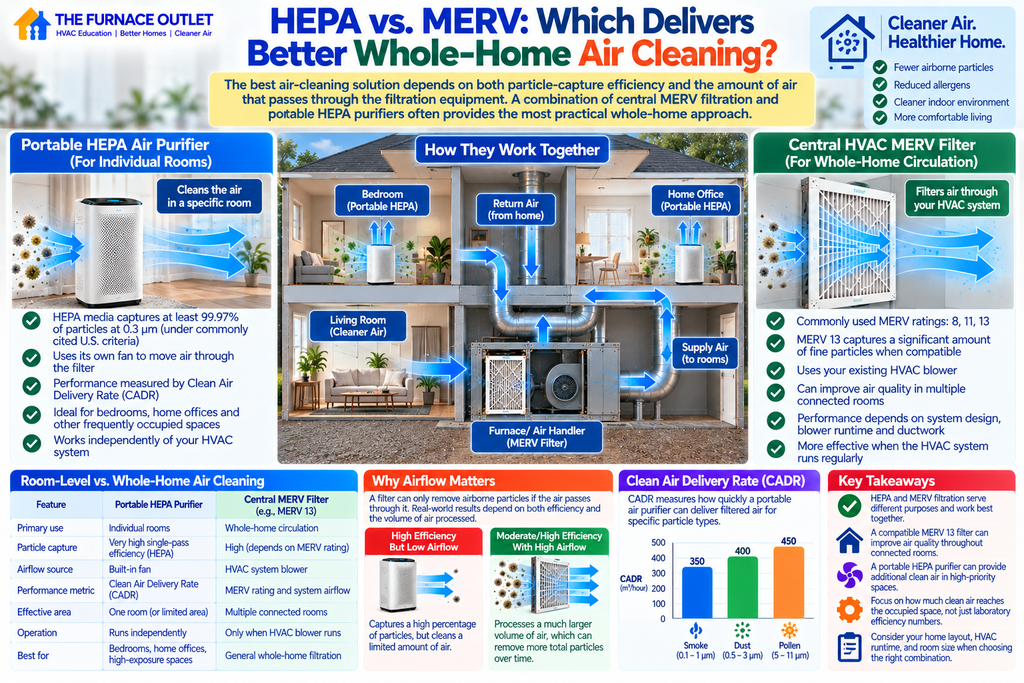
The effectiveness of an air-cleaning system depends on both particle-capture efficiency and the amount of air passing through the filtration equipment. This distinction is particularly important when comparing central HVAC filters with portable HEPA purifiers. A filter that captures a very high percentage of particles in one pass may provide limited room-level benefits if the appliance processes too little air.
Portable air purifiers are commonly evaluated using Clean Air Delivery Rate, or CADR, which describes their ability to deliver filtered air for specified particle categories under standardized testing conditions. A properly sized purifier with sufficient CADR can provide useful filtration within an occupied room, particularly when operated consistently at an appropriate fan speed.
Central HVAC filtration works differently because its performance depends on the blower, ductwork, filter efficiency, and distribution of air throughout the home. A compatible MERV 13 filter may process air from several connected rooms, but filtration stops or decreases when the blower is not operating. Closed doors, inadequate return pathways, and duct leakage may also affect results.
I recommend evaluating how much clean air reaches the occupied space rather than concentrating exclusively on laboratory filter efficiency. In many homes, the most practical arrangement combines suitable central filtration with targeted portable purification where additional clean-air delivery is needed.
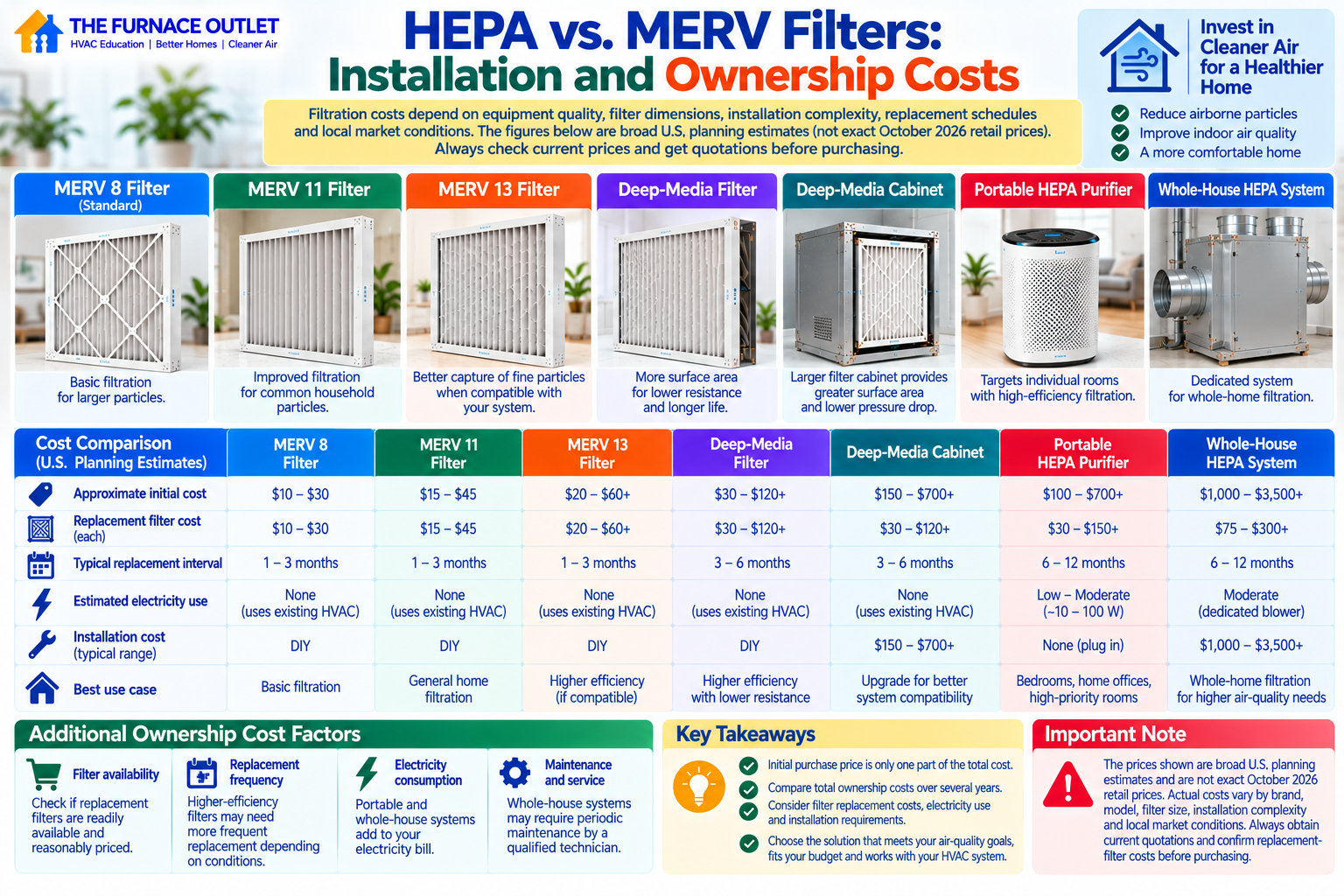
Filtration costs depend on equipment quality, filter dimensions, installation complexity, replacement schedules, and local market conditions. Conventional HVAC replacement filters are generally less expensive initially than dedicated HEPA filtration equipment, although higher-efficiency and deep-media filters may cost more than basic alternatives. Portable HEPA purifiers introduce additional equipment and electricity expenses, while whole-house HEPA systems may require substantial installation work.
The following figures represent broad U.S. planning estimates rather than independently verified October 2026 retail prices. Homeowners should obtain current quotations and confirm replacement-filter costs before purchasing.
| Filtration option | Approximate U.S. cost |
|---|---|
| MERV 8 replacement filter | $10–$30 |
| MERV 11 replacement filter | $15–$45 |
| MERV 13 replacement filter | $20–$60+ |
| Deep-media replacement filter | $30–$120+ |
| Deep-media cabinet installation | $150–$700+ |
| Portable HEPA air purifier | $100–$700+ |
| Dedicated whole-house HEPA system | $1,000–$3,500+ |
The initial purchase price is only one part of the financial comparison. Homeowners should consider how frequently replacement filters are required, whether proprietary filters are readily available, how much electricity the equipment consumes, and whether specialized maintenance or installation work is necessary.
I generally recommend comparing total ownership costs over several years rather than selecting the least expensive product on the shelf. A modestly priced purifier requiring frequent costly filter replacements may become expensive to operate, while an appropriately designed central media-filter upgrade may provide long-term value without requiring multiple appliances throughout the home.
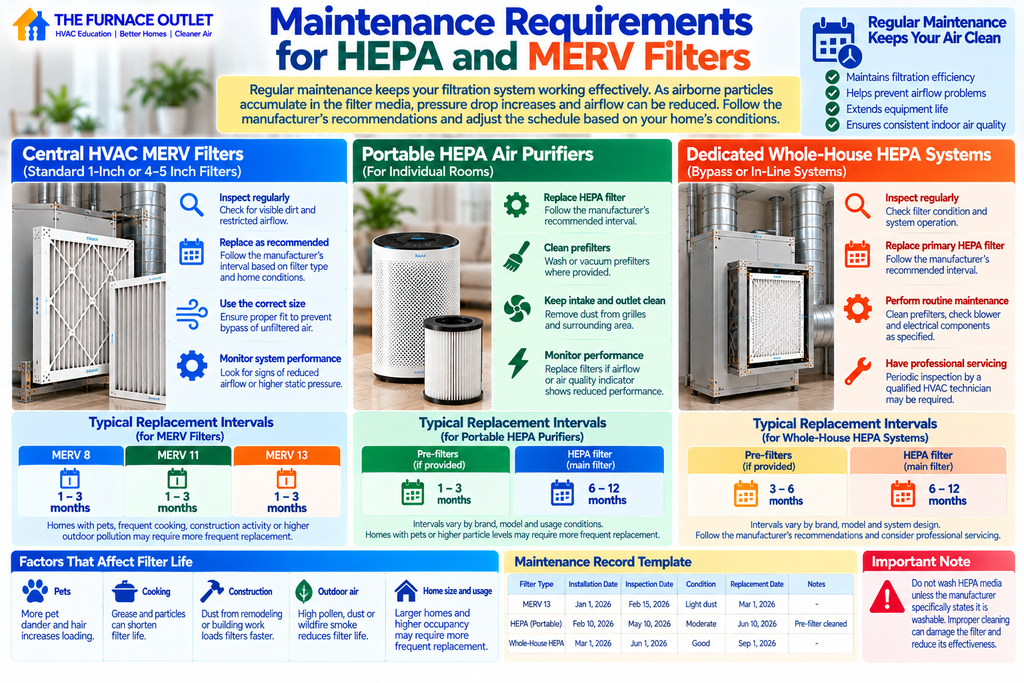
Both HEPA and MERV filters require regular inspection and replacement to maintain appropriate performance. As airborne particles accumulate within the filter media, pressure drop generally increases. In central HVAC equipment, excessive filter loading can contribute to reduced airflow and operating problems, particularly when the system already has limited airflow capacity.
Replacement intervals depend on the manufacturer’s recommendations, filter design, operating hours, and environmental conditions. Homes with pets, frequent cooking, construction activity, or substantial outdoor particle infiltration may experience faster filter loading than homes with fewer airborne particle sources.
Portable HEPA purifiers also require maintenance, including replacement of the primary filter and cleaning of accessible intake surfaces or washable prefilters where provided. Homeowners should not wash HEPA media unless the manufacturer specifically identifies the filter as suitable for washing, because improper cleaning can damage the filtration material.
I recommend keeping a simple maintenance record that identifies the filter type, installation date, inspection findings, and replacement date. Consistent maintenance helps ensure that filtration equipment continues to operate as intended and makes it easier to recognize unusual changes in airflow or performance.
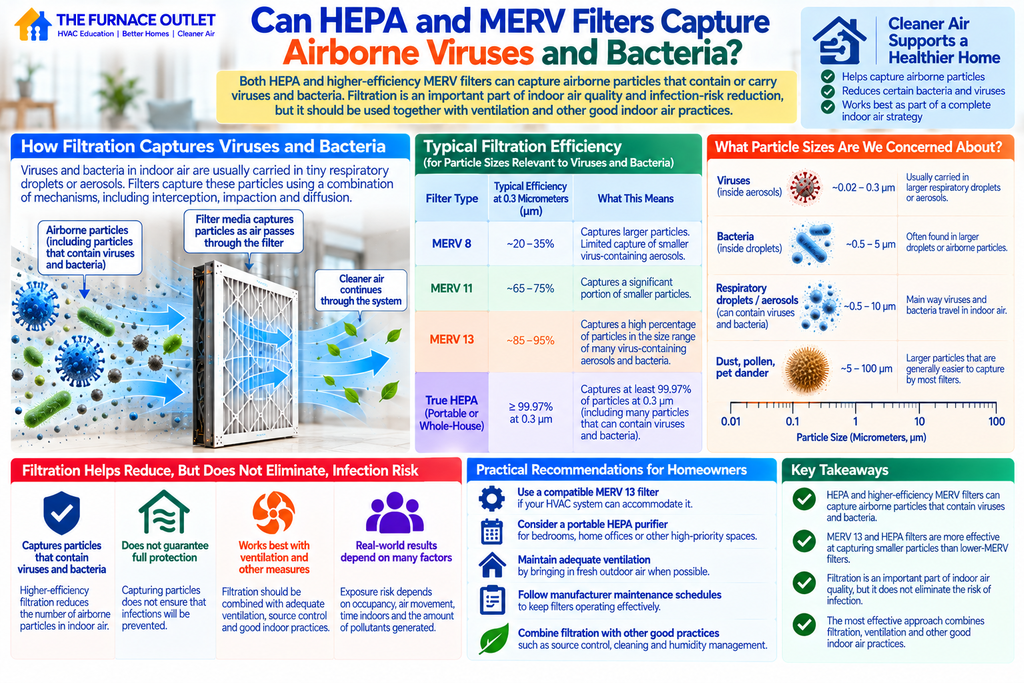
Mechanical filters can capture airborne particles that contain or carry microorganisms, including certain bacteria and virus-containing respiratory aerosols. Higher-efficiency filtration generally improves the capture of smaller particles under comparable testing conditions, which is one reason effective filtration is included in many indoor air quality and airborne infection-risk reduction strategies.
However, capturing airborne particles does not guarantee that infections will be prevented. Real-world exposure depends on ventilation, occupancy, air movement, time spent indoors, pollutant generation, and other environmental and behavioral factors. A residential HEPA purifier should not be assumed to create hospital-equivalent conditions simply because it uses high-efficiency filtration media.
Similarly, installing a MERV 13 filter does not eliminate the need for appropriate ventilation or other relevant health precautions. Filtration should be understood as one component of a broader approach to improving indoor air quality rather than a complete solution to every airborne biological concern.
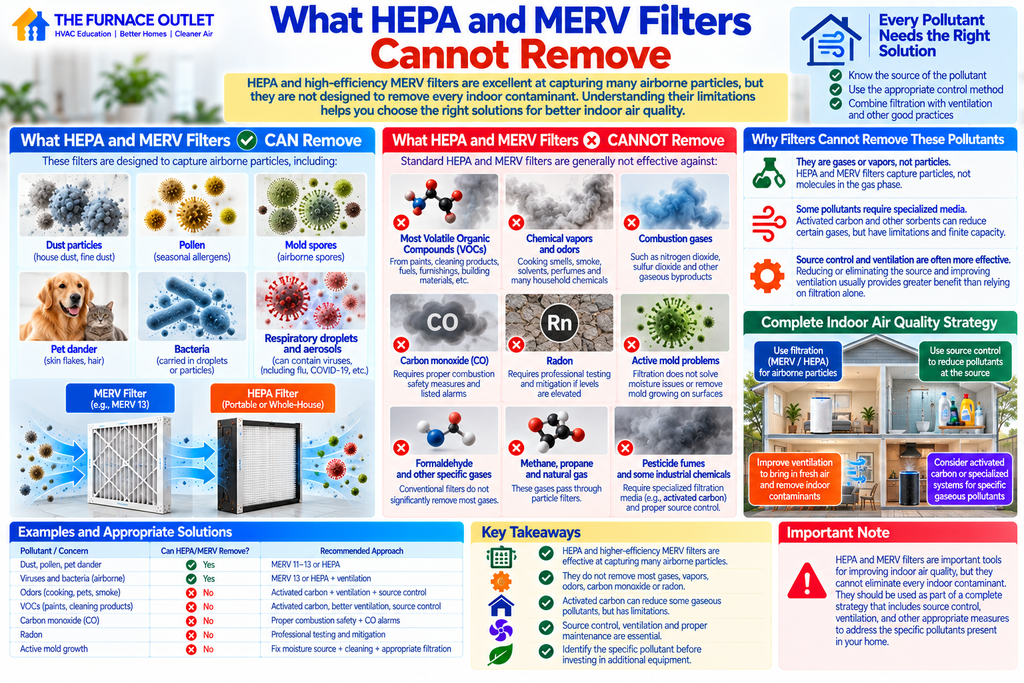
Although HEPA and high-efficiency MERV filters can capture many airborne particles, they are not designed to eliminate every indoor contaminant. Ordinary mechanical particle filtration is generally ineffective against many gaseous pollutants, including certain volatile organic compounds, chemical vapors, and combustion gases. Homeowners should not assume that a filter capable of capturing fine particles will also remove odors or hazardous gases.
Activated carbon and other gas-phase filtration materials may reduce selected gaseous contaminants, depending on the sorbent material, quantity, airflow, and chemicals present. Even these specialized systems have limitations and may become less effective as their adsorption capacity is exhausted. Source control and appropriate ventilation are often more important than attempting to filter continuous chemical emissions.
Neither HEPA nor MERV filtration should be relied upon to control carbon monoxide hazards or elevated radon concentrations. Carbon monoxide requires appropriate combustion safety measures and listed alarms, while radon requires recognized testing and potentially mitigation. Similarly, an active mold problem cannot be resolved simply by installing a better air filter because the underlying moisture source must be corrected.
I recommend identifying the pollutant of concern before investing in additional equipment. Effective indoor air quality management begins with understanding the source, selecting appropriate controls, and using filtration where it provides a meaningful benefit.
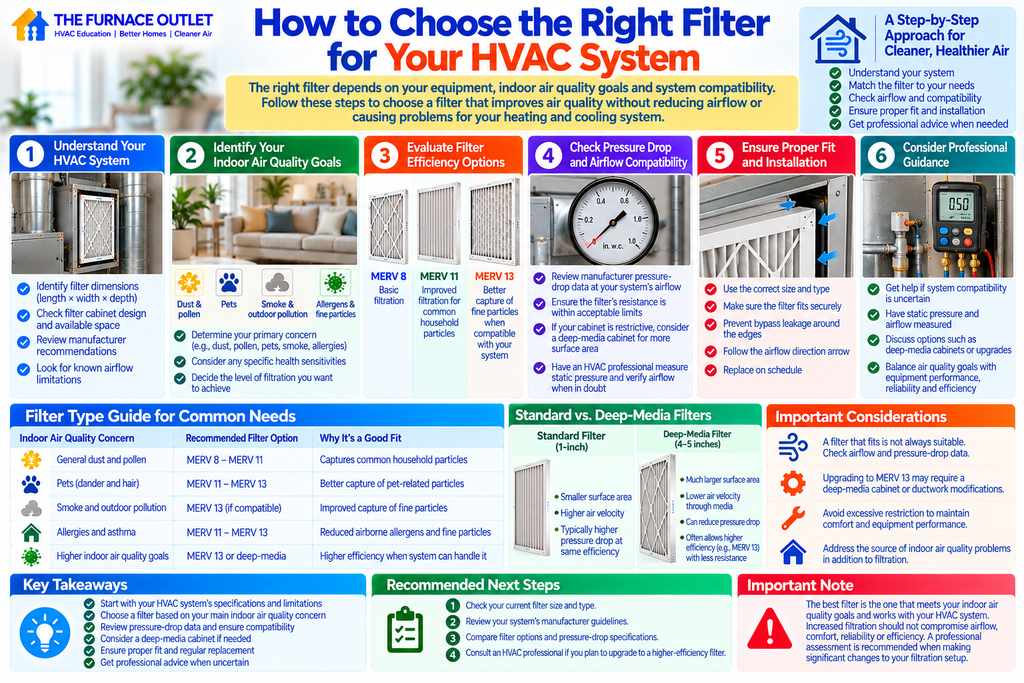
My preferred filter-selection process begins with understanding the existing HVAC equipment. Homeowners should identify the filter dimensions, cabinet design, manufacturer recommendations, and any known airflow limitations before considering an efficiency upgrade. A filter that physically fits the opening is not necessarily suitable for the system’s airflow requirements.
The next step is to identify the primary indoor air quality concern. For general airborne dust and pollen, a compatible medium- or high-efficiency filter may provide useful performance. For fine particles associated with smoke and outdoor pollution, MERV 13 is often a reasonable target when the HVAC equipment can accommodate it.
Filter pressure-drop data should then be reviewed at the expected operating airflow. If the existing cabinet is restrictive, a properly designed deep-media cabinet may provide an opportunity to improve filtration without excessive resistance. Homeowners should also ensure that the filter fits securely and does not allow significant bypass leakage around its edges.
When compatibility is uncertain, I recommend having an HVAC professional measure static pressure and verify airflow. The goal is to improve particle removal without sacrificing the performance, reliability, or efficiency of the heating and cooling equipment.
HEPA filtration may be particularly worthwhile when homeowners want enhanced particle removal in a specific frequently occupied room. Bedrooms, home offices, and other spaces where occupants spend extended periods are common examples. A properly sized portable HEPA purifier can operate independently of the central HVAC system, making it useful when heating or cooling equipment operates intermittently.
Portable HEPA purification can also be valuable during periods of elevated outdoor particle pollution, particularly when homeowners are trying to establish a cleaner-air room. The purifier should be selected using verified performance information, appropriate CADR, acceptable noise levels, and practical replacement-filter costs.
Dedicated whole-house HEPA equipment may be justified when a particular filtration need cannot be adequately addressed through compatible central filtration or portable devices. However, the installation must be designed to deliver sufficient airflow without compromising the HVAC system, and the expected benefits should justify the additional cost.
For many households, I would begin with a compatible MERV 13 central filter and consider a portable HEPA purifier in the most frequently occupied room. This arrangement can provide useful broad and targeted filtration without requiring extensive modifications to the central heating and cooling system.
HEPA filtration generally offers higher single-pass particle-capture efficiency under its specified test conditions, but that does not automatically make it the better choice for a conventional residential HVAC system. A properly selected MERV 13 filter may provide effective central particle filtration while maintaining acceptable airflow, whereas HEPA equipment often requires a dedicated or specially engineered arrangement.
There is no direct MERV rating that is equivalent to HEPA because the classifications use different testing methods and performance criteria. MERV 16 is the highest conventional MERV classification under ASHRAE Standard 52.2, but it should not be described as identical to a HEPA filter.
A conventional furnace should not be fitted with a restrictive HEPA filter unless the equipment and filtration arrangement are specifically designed for that application. Excessive pressure drop can reduce airflow and interfere with heating and cooling operation, so compatibility should be verified before making such a modification.
Some older systems can accommodate MERV 13 filtration, while others may have restrictive return-air arrangements or limited blower capacity. The appropriate decision depends on filter construction, available surface area, system airflow, and manufacturer requirements rather than equipment age alone.
HEPA filters can capture many fine particles associated with wildfire smoke when incorporated into properly designed air-cleaning equipment. However, smoke also contains gases, and the overall benefit depends on purifier airflow, room size, operating time, and the amount of outdoor smoke entering the home.
A filter that increases airflow resistance may affect blower operation and electricity consumption, depending on the blower design and control strategy. The relationship is not identical for every HVAC system, which is why pressure-drop information and equipment compatibility should be evaluated rather than assuming that all high-efficiency filters have the same operating impact.
Replacement schedules vary by manufacturer, filter design, operating conditions, and particulate loading. Homeowners should inspect filters regularly, follow equipment instructions, and replace filters when required rather than assuming that every filter should be changed after the same number of months.
Combining compatible central MERV 13 filtration with a properly sized portable HEPA purifier can be a practical approach for households seeking both broad particle reduction and targeted filtration. This arrangement may be particularly useful in bedrooms or other frequently occupied rooms where additional clean-air delivery is desired.
When homeowners ask me whether they should choose HEPA or MERV filtration, I explain that the answer depends on what they want to accomplish and how their HVAC equipment is designed. HEPA filtration provides exceptionally high particle-capture efficiency, but its performance advantages do not justify installing a restrictive filter into equipment that cannot accommodate it. Effective air cleaning requires both suitable filtration media and enough airflow to process the air in occupied spaces.
For most homes with central heating and cooling, I recommend beginning with an assessment of the existing filtration system. If the equipment can accommodate it, a properly fitted MERV 13 filter or suitable deep-media cabinet may provide a practical improvement in airborne particle removal. Where additional filtration is needed in a bedroom, home office, or another frequently occupied room, a properly sized portable HEPA purifier can provide targeted benefits without requiring extensive modifications to the central HVAC system.
I also encourage homeowners to recognize the limitations of mechanical filtration. Even an excellent filter cannot correct inadequate ventilation, eliminate a moisture problem, repair an unsafe combustion appliance, or resolve elevated radon concentrations. These concerns require their own appropriate corrective measures, and filtration should complement rather than replace source control and preventive maintenance.
The best filtration system is not necessarily the one with the highest advertised efficiency. It is the system that removes the pollutants that matter, maintains adequate airflow, operates safely with the HVAC equipment, and delivers dependable performance over time.
By evaluating filtration efficiency alongside airflow compatibility, installation quality, maintenance requirements, and actual indoor air quality concerns, homeowners can make better-informed decisions about HEPA and MERV filtration. A carefully selected system can provide meaningful particle reduction while preserving the comfort, efficiency, and reliability of the home’s heating and cooling equipment throughout 2026 and beyond.
This article provides general educational information about HVAC filtration and indoor air quality. Filter efficiency ratings reflect performance under defined testing conditions and should not be interpreted as guarantees of whole-home pollutant reduction or individual health outcomes. Equipment costs are illustrative planning estimates and may vary by manufacturer, installation requirements, and location.
Homeowners should review manufacturer instructions and consult a qualified HVAC professional before making filtration changes that could affect airflow or static pressure. Mechanical filtration does not replace carbon monoxide alarms, radon testing, appropriate ventilation, combustion safety inspections, or moisture remediation. The Furnace Outlet publishes independent educational information and does not imply endorsement by any government agency or standards organization.
U.S. Environmental Protection Agency — Guide to Air Cleaners in the Home https://www.epa.gov/indoor-air-quality-iaq/guide-air-cleaners-home
U.S. Environmental Protection Agency — Air Cleaners and Air Filters in the Home https://www.epa.gov/indoor-air-quality-iaq/air-cleaners-and-air-filters-home
U.S. Environmental Protection Agency — What Is a HEPA Filter? https://www.epa.gov/indoor-air-quality-iaq/what-hepa-filter
ASHRAE — Filtration and Disinfection https://www.ashrae.org/technical-resources/filtration-and-disinfection-faq
ASHRAE Standard 52.2 — Method of Testing General Ventilation Air-Cleaning Devices for Removal Efficiency by Particle Size https://www.ashrae.org
ENERGY STAR — Room Air Cleaners https://www.energystar.gov/products/air_cleaners
© 2026 The Furnace Outlet | https://thefurnaceoutlet.com
Independent HVAC education for cleaner air, better comfort, and more informed homeowners.