Newsletter Subscribe
Enter your email address below and subscribe to our newsletter

HVAC made simple
By Savvy Mavi — Sustainability Expert | The Furnace Outlet
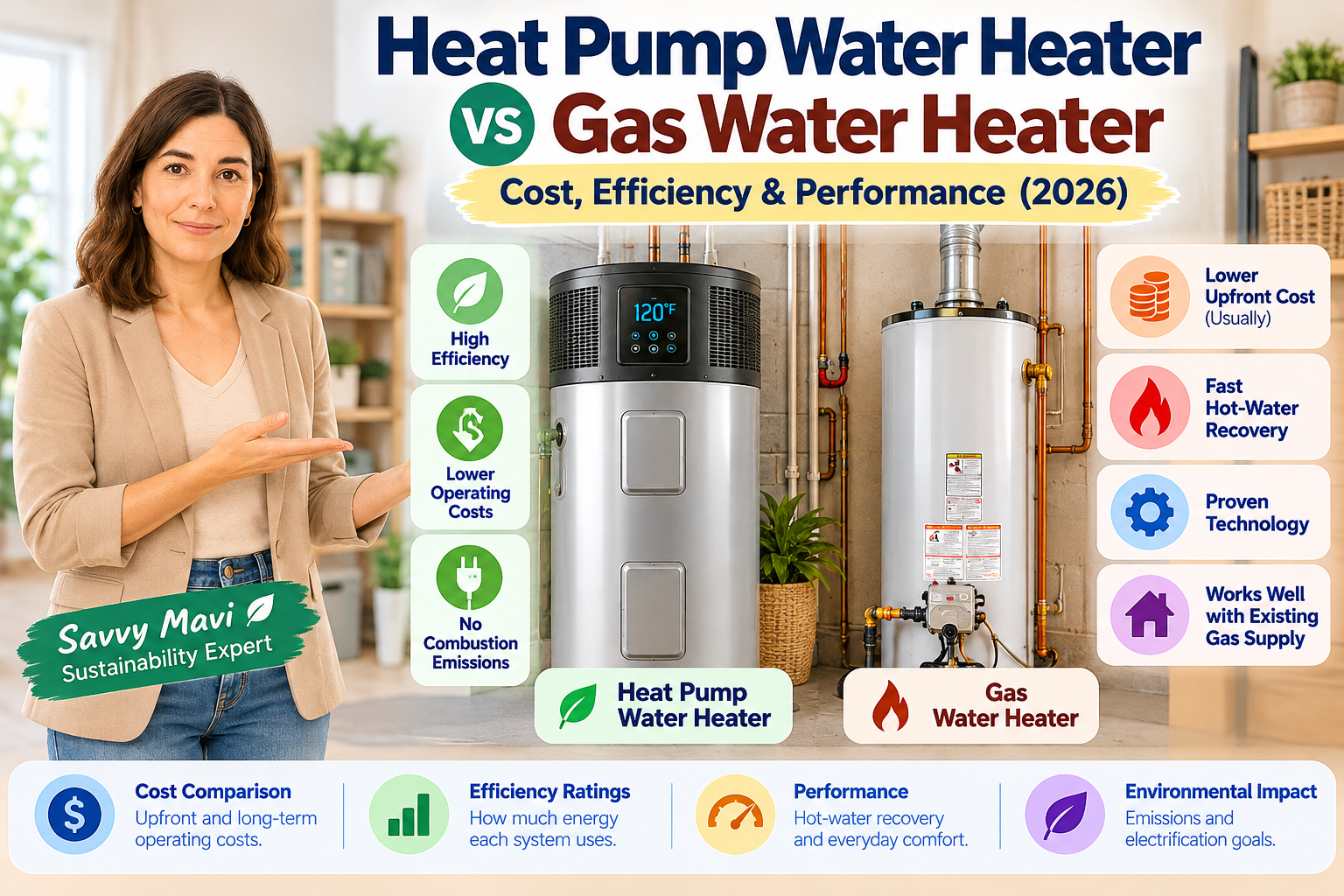
Choosing between a heat pump water heater and a gas water heater is an important decision for homeowners looking to balance energy efficiency, reliable hot water, installation costs, and long-term savings. Both technologies can provide dependable domestic hot water, but they operate differently, use different energy sources, and have distinct advantages depending on the home.
As someone passionate about practical sustainability, I find heat pump water heaters particularly appealing because they use electricity to move heat rather than produce it through combustion. Their efficiency can be substantially higher than that of conventional gas water heaters, and they eliminate combustion emissions at the appliance. However, I would never assume that higher efficiency automatically means lower utility bills in every location.
Natural gas prices, electricity rates, installation conditions, and household demand can change the financial comparison considerably. In this guide, I will explain how these technologies compare in 2026, where each performs best, and how homeowners can make an informed decision without sacrificing comfort.
A heat pump water heater uses a refrigeration cycle to absorb heat from surrounding air and transfer that thermal energy into stored water. The compressor and fan consume electricity, but much of the delivered heat comes from the surrounding environment. Most integrated residential models are hybrid systems with electric resistance elements that provide additional heating when required.
A conventional gas storage water heater uses a burner to heat water inside a tank. Natural gas or propane supplies the energy, while combustion products must be safely vented according to the appliance’s design and applicable codes. Gas-fired tankless models operate differently, heating water as it flows through the appliance rather than relying on substantial stored capacity.
For a fair comparison, I would primarily evaluate heat pump storage water heaters against conventional gas storage water heaters, while noting where high-efficiency condensing gas or tankless equipment changes the results.
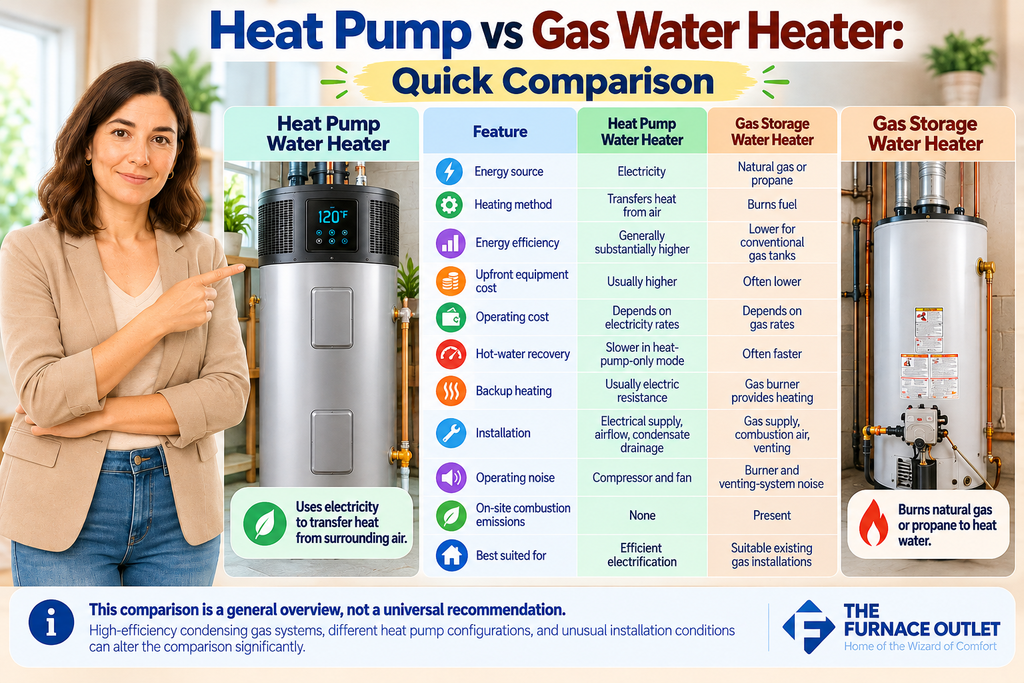
| Feature | Heat Pump Water Heater | Gas Storage Water Heater |
|---|---|---|
| Energy source | Electricity | Natural gas or propane |
| Heating method | Transfers heat from air | Burns fuel |
| Energy efficiency | Generally substantially higher | Lower for conventional gas tanks |
| Upfront equipment cost | Usually higher | Often lower |
| Operating cost | Depends on electricity rates | Depends on gas rates |
| Hot-water recovery | Slower in heat-pump-only mode | Often faster |
| Backup heating | Usually electric resistance | Gas burner provides heating |
| Installation | Electrical supply, airflow, condensate drainage | Gas supply, combustion air, venting |
| Operating noise | Compressor and fan | Burner and venting-system noise |
| On-site combustion emissions | None | Present |
| Best suited for | Efficient electrification | Suitable existing gas installations |
I would treat this table as an overview rather than a universal ranking. High-efficiency condensing gas systems, different heat pump configurations, and unusual installation conditions can alter the comparison significantly.
Energy efficiency is the clearest technical advantage of heat pump water heaters. Because they transfer heat instead of creating it entirely from purchased energy, they can deliver substantially more useful water-heating energy than the electricity consumed by their compressor and associated components.
Efficiency is commonly expressed through Uniform Energy Factor, or UEF. Higher values indicate better performance under the applicable standardized test procedure, although product categories, draw patterns, and operating conditions must be considered when comparing ratings.
ENERGY STAR’s published product criteria illustrate the difference. Its criteria for conventional integrated heat pump water heaters include UEF values of at least 3.30, while qualifying gas storage water heaters have substantially lower UEF thresholds. Certain 120-volt and split-system heat pump configurations have different criteria.
These figures demonstrate a significant difference in purchased-energy efficiency. However, a heat pump UEF and a gas UEF should not be interpreted as identical measures of electricity cost, fuel cost, or greenhouse-gas emissions. The technologies use different energy sources, and those differences matter when calculating household expenses.
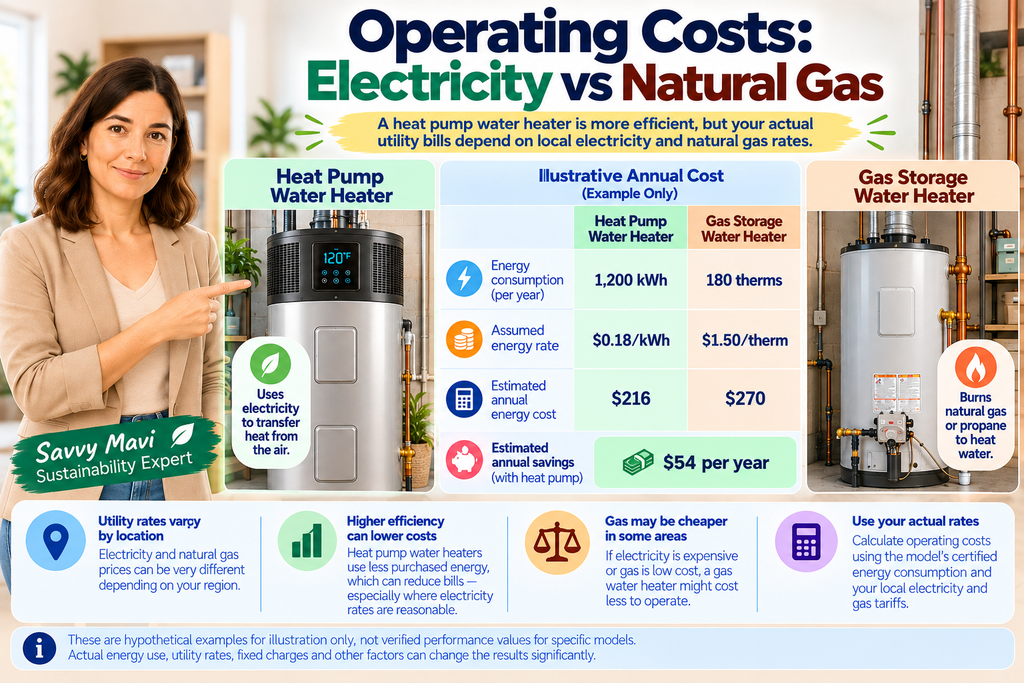
A heat pump water heater’s superior efficiency does not guarantee lower operating costs in every market. Electricity and natural gas are priced differently, and regional utility rates can vary substantially. For example, suppose a heat pump water heater uses 1,200 kWh annually and electricity costs $0.18 per kWh. Its estimated annual electricity cost would be $216.
Now suppose a gas water heater consumes 180 therms annually at $1.50 per therm. Its estimated annual gas cost would be $270. Under those illustrative assumptions, the heat pump saves approximately $54 per year in energy costs.
| Illustrative Annual Cost | Heat Pump | Gas Storage |
|---|---|---|
| Energy consumption | 1,200 kWh | 180 therms |
| Assumed energy rate | $0.18/kWh | $1.50/therm |
| Estimated annual energy cost | $216 | $270 |
These are hypothetical consumption figures, not verified performance values for specific models. They also exclude applicable fixed utility charges and other billing adjustments.
If electricity were more expensive or gas substantially cheaper, the gas water heater might cost less to operate. Conversely, a household with favorable electricity pricing could see greater savings from a heat pump.
I would therefore calculate operating costs using each candidate model’s certified energy-consumption information and the homeowner’s actual utility tariffs rather than relying on a generic national savings estimate.
Conventional gas storage water heaters often have lower equipment prices than comparable heat pump models. For homes already equipped with an appropriate gas connection and venting system, replacing an existing gas tank with a similar unit may also be relatively straightforward.
Heat pump water heaters generally cost more upfront because they contain a compressor, fan, refrigeration components, sensors, and electronic controls. Converting from gas may require a suitable electrical circuit, condensate drainage, plumbing modifications, and changes to the installation space.
For preliminary budgeting, a conventional gas storage replacement might cost approximately $1,000–$2,500 installed, while a heat pump water heater installation might cost approximately $2,000–$5,000 or more. These are broad illustrative U.S. planning ranges rather than verified 2026 market quotations.
I would request itemized contractor estimates covering equipment, electrical work, plumbing, venting changes where applicable, condensate management, permits, disposal, and any required code upgrades. The complete installed cost matters much more than the advertised equipment price.
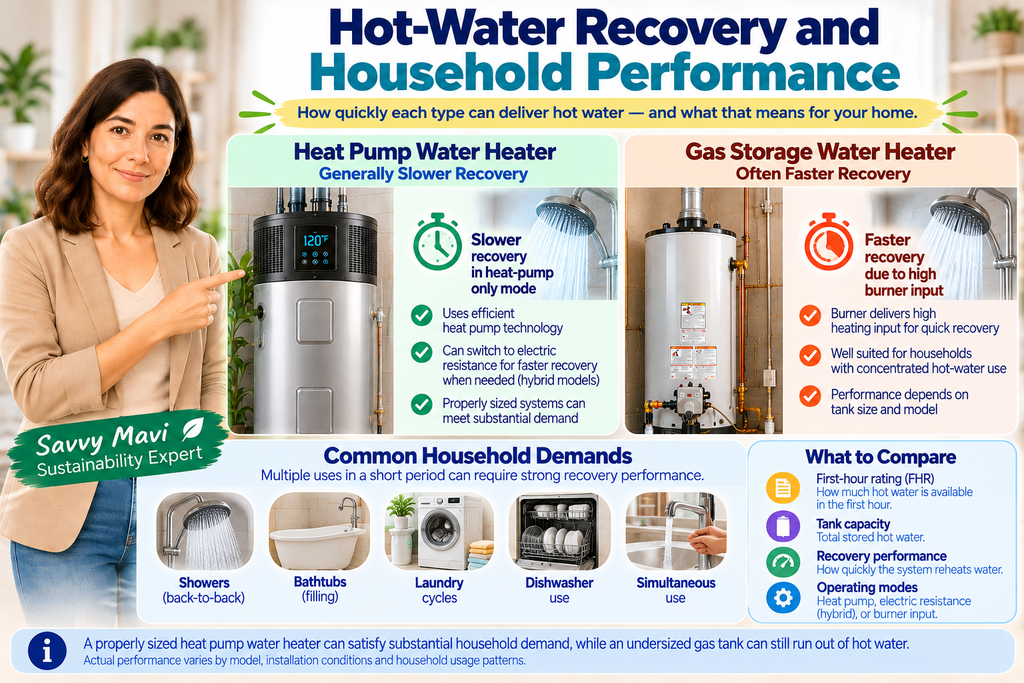
Gas water heaters often have an advantage in recovery speed because their burners can deliver substantial heating input over a relatively short period. That can be useful in households where several showers, laundry cycles, and other hot-water uses occur close together.
Heat pump water heaters generally recover more slowly when operating exclusively through their compressors. However, most hybrid models can activate electric resistance elements when additional heating capacity is needed.
That flexibility helps maintain comfort, although resistance heating reduces the efficiency advantage during those periods.
I would compare first-hour rating, tank capacity, recovery performance, and operating modes rather than assuming one technology automatically provides better hot-water service. A properly sized heat pump water heater can satisfy substantial household demand, while an undersized gas tank can still run out of hot water.
Installation requirements are among the most important differences between these technologies. A gas water heater requires an appropriate fuel supply, combustion air, venting arrangements, and compliance with applicable gas and plumbing codes. Certain high-efficiency gas appliances also require condensate management. A heat pump water heater avoids the need for combustion venting at the appliance, but it introduces different requirements. Integrated models need adequate airflow, manufacturer-specified clearances, suitable ambient temperatures, electrical service, and condensate drainage.
Because heat pump water heaters extract heat from surrounding air, they also cool and generally dehumidify that air while operating. This can be useful in some garages or basements but may affect heating loads in conditioned spaces during colder weather.
I would evaluate the actual installation environment before making a purchasing decision. A highly efficient heat pump model installed in an unsuitable location may perform poorly or rely excessively on backup heating.
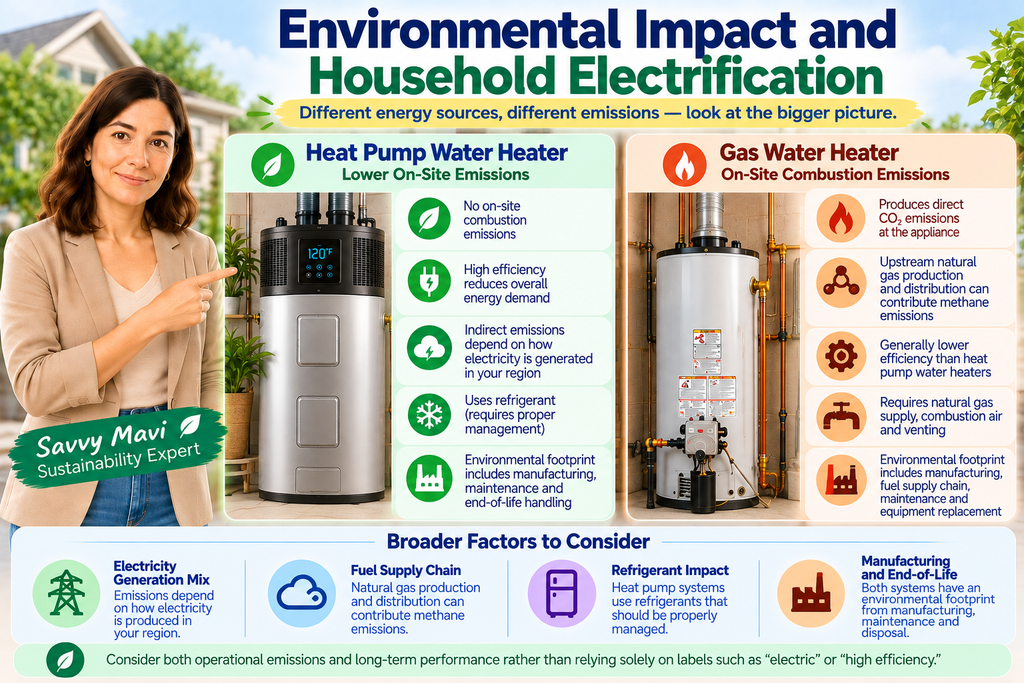
From a sustainability standpoint, I generally favor heat pump technology when the installation is suitable and the equipment can operate efficiently. A heat pump water heater eliminates combustion at the appliance, avoiding the direct combustion emissions associated with gas-fired water heating. Its high efficiency can also reduce overall energy demand.
However, the broader environmental comparison depends on how electricity is generated, the gas supply chain, refrigerant characteristics, equipment manufacturing, maintenance, and end-of-life handling. A gas water heater produces direct carbon dioxide emissions during combustion, while upstream natural gas production and distribution can also contribute methane emissions. A heat pump avoids on-site fuel combustion but still has an environmental footprint associated with electricity generation and refrigerant management.
I would therefore consider both operational emissions and long-term equipment performance rather than relying solely on labels such as “electric” or “high efficiency.”
Gas water heaters require attention to burner operation, combustion-related components, venting, tank condition, sediment, and applicable safety devices. Maintenance needs differ between conventional, power-vented, and condensing gas models.
Heat pump water heaters require tank-related maintenance along with care for air filters, airflow pathways, condensate drainage, and refrigeration-related components according to the manufacturer’s instructions.
Neither technology is automatically more reliable simply because its design is simpler or its efficiency is higher. Product quality, water conditions, installation practices, maintenance, and local service support can influence ownership experience.
I would compare warranties, replacement-part availability, qualified service providers, and manufacturer documentation before selecting a model. For gas appliances, combustion and venting work should be performed by appropriately qualified professionals.
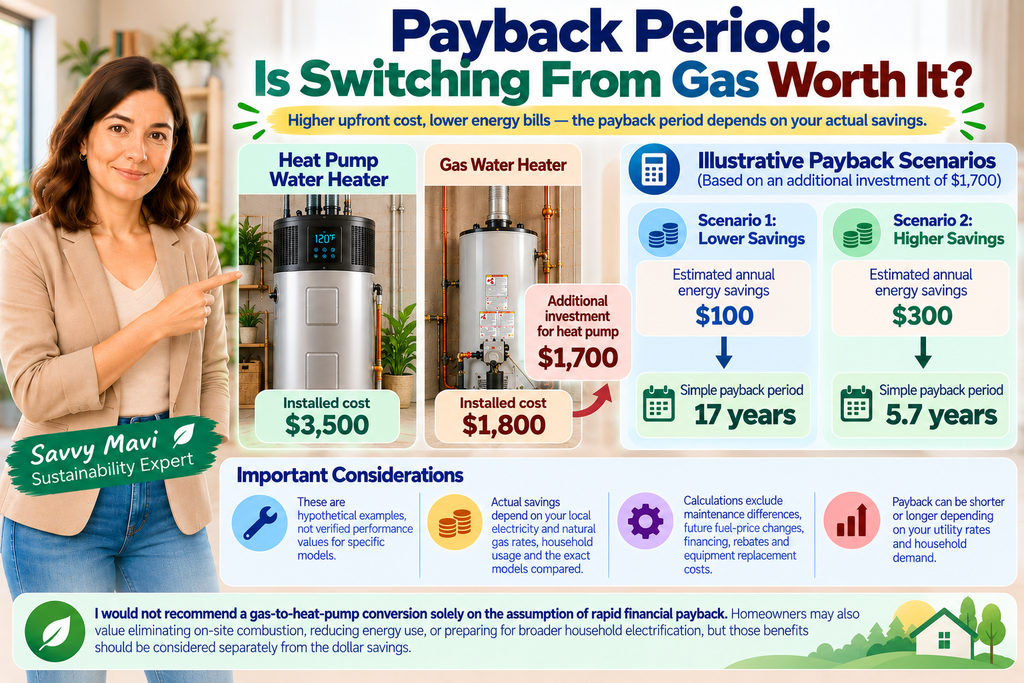
The economics of switching from gas to a heat pump water heater can be less straightforward than replacing an electric resistance tank. Suppose the heat pump installation costs $3,500 and a comparable gas replacement costs $1,800. The additional investment is $1,700. If estimated annual energy savings are only $100, simple payback would be 17 years.
If the household instead saves $300 annually, simple payback would be approximately 5.7 years. These calculations are hypothetical and exclude maintenance differences, future fuel-price changes, financing, rebates, and equipment replacement costs.
I would not recommend a gas-to-heat-pump conversion solely on the assumption of rapid financial payback. Homeowners may also value eliminating on-site combustion, reducing energy use, or preparing for broader household electrification, but those benefits should be considered separately from the dollar savings.
Available incentives can improve the economics of heat pump water heaters, but the rules have changed significantly.
The former federal Energy Efficient Home Improvement Credit under Section 25C is not available for qualifying property placed in service after December 31, 2025. Homeowners planning a 2026 installation should not rely on outdated advertisements promoting that former federal credit.
State, utility, local, and other incentive programs may still provide assistance, subject to their own eligibility requirements, funding, and deadlines.
I would verify incentives directly with the relevant program administrator before purchasing equipment. Confirm the exact model, installation date, contractor requirements, household eligibility, and application procedures.

| Your Situation | My Recommended Starting Point |
|---|---|
| Replacing an existing gas tank with minimal modifications | Gas storage water heater |
| Want to eliminate combustion at the appliance | Heat pump water heater |
| Have suitable garage or basement space | Heat pump water heater |
| Have inexpensive natural gas and expensive electricity | Compare operating costs carefully |
| Prioritize efficient household electrification | Heat pump water heater |
| Need strong recovery during concentrated demand | Compare gas recovery and hybrid FHR |
| Have limited electrical capacity | Evaluate gas or electrical upgrade costs |
| Want lower long-term energy consumption | Heat pump water heater |
| Have restricted airflow or installation space | Gas or approved alternative configuration |
| Plan to remain in the home long-term | Compare complete lifecycle costs |
For most homeowners, I would narrow the decision to three questions: Can the home accommodate the equipment properly? Will it meet peak hot-water demand? And what will it cost to own over time? Those questions are more useful than choosing based solely on fuel type or efficiency ratings.
Generally, yes. Heat pump water heaters can achieve substantially higher UEF ratings than conventional gas storage water heaters because they transfer heat from surrounding air. However, greater energy efficiency does not automatically guarantee lower utility costs, since electricity and gas prices differ.
That depends on local electricity and gas rates, household demand, and the specific models being compared. Heat pump water heaters often have lower purchased-energy requirements, but inexpensive natural gas can make gas equipment competitive on operating cost.
Yes, provided the home can accommodate the necessary electrical service, airflow, physical clearances, and condensate drainage. Gas-line and venting modifications may also be required when retiring the existing appliance.
Conventional gas storage water heaters often recover hot water faster than heat pump models operating in heat-pump-only mode. Hybrid heat pump systems can use resistance heating to improve recovery, so first-hour rating and exact model performance should guide the comparison.
They can offer significant environmental benefits through high energy efficiency and the elimination of on-site combustion. The total environmental impact also depends on electricity generation, refrigerant management, manufacturing, equipment longevity, and maintenance.
It can be worthwhile for homeowners prioritizing electrification, reduced on-site emissions, and long-term energy efficiency. Financial payback varies substantially, so I would calculate the additional installed cost and realistic operating savings before deciding.
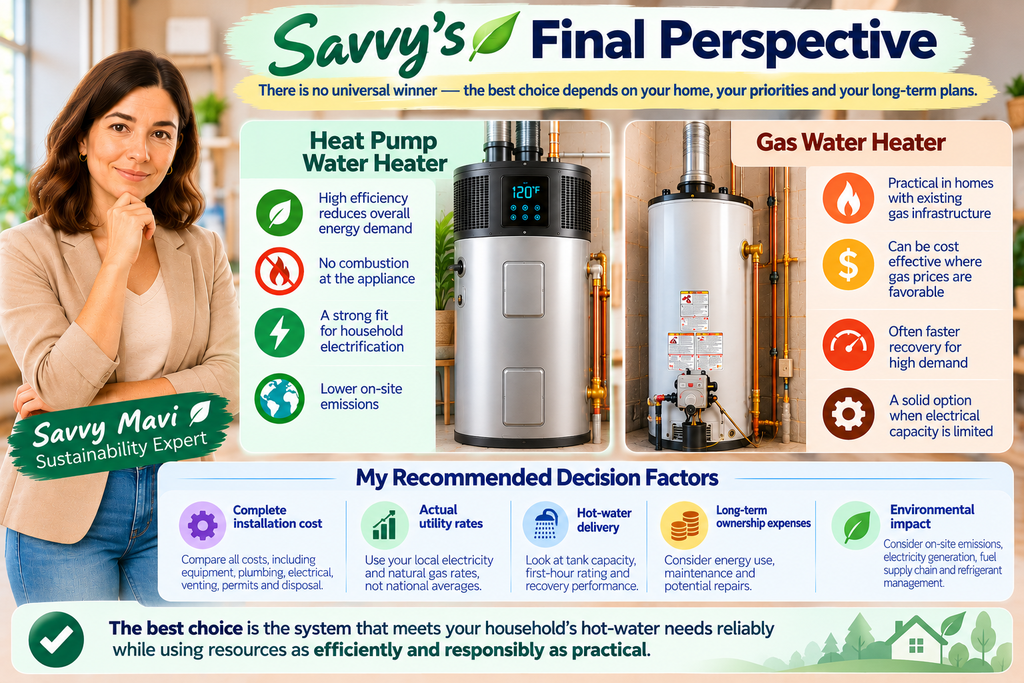
When comparing heat pump and gas water heaters, I would not declare a universal winner. Heat pump technology offers a compelling combination of high efficiency, reduced purchased-energy demand, and freedom from combustion at the appliance. For homeowners with suitable installation conditions and an interest in electrification, it deserves serious consideration.
Gas water heaters remain practical in homes with existing fuel infrastructure, favorable gas prices, limited electrical capacity, or demanding recovery requirements. Replacing a functioning gas system solely to obtain a higher efficiency rating is not always the most economical or environmentally responsible decision.
My preferred approach is to compare complete installation cost, actual utility rates, hot-water delivery, long-term ownership expenses, and environmental impact. The best choice is the system that meets household needs reliably while using resources as efficiently and responsibly as practical.
The Furnace Outlet is an independent educational and informational website. We are not affiliated with, associated with, sponsored by, endorsed by, or officially connected with any water-heater manufacturer, brand, retailer, utility, government agency, or other company referenced in this article unless expressly disclosed. All product names, company names, and trademarks belong to their respective owners and are used solely for identification and informational purposes.
Our comparisons are based on publicly available technical information, manufacturer documentation, government resources, and general water-heating principles. We do not claim to have independently laboratory-tested products unless explicitly stated. Some articles may contain affiliate links through which The Furnace Outlet may earn a commission at no additional cost to readers.
Cost ranges, energy-consumption examples, savings calculations, and payback estimates are illustrative and do not guarantee actual performance or financial results. Gas and electric water-heater installations involve potentially hazardous electrical, plumbing, combustion, venting, and pressurized-water systems. Always follow manufacturer instructions, applicable codes, and permit requirements, and consult appropriately qualified professionals for equipment selection, installation, maintenance, and repairs.