Newsletter Subscribe
Enter your email address below and subscribe to our newsletter

HVAC made simple
By Jake Lawson | HVAC Specialist, The Furnace Outlet
Updated: November 2026
Mini-split heat pumps have become an increasingly popular heating and cooling option for American homeowners, especially those looking to reduce electricity bills without sacrificing comfort. But one question comes up repeatedly: how much does a mini-split actually cost to run every month, and will it really save money compared with conventional heating and cooling systems?
After more than a decade working with residential HVAC equipment, I’ve learned that the answer depends on more than the efficiency rating printed on the box. Your local electricity price, climate, insulation, system size, thermostat settings, and daily operating hours all influence what you ultimately pay.
In this guide, I’ll break down realistic operating-cost scenarios for 9,000, 12,000, 18,000, and 24,000 BTU mini-splits, explain where the biggest savings come from, and show how to estimate your own monthly and annual expenses.
A typical residential mini-split may cost approximately $20–$100 per month to operate during moderate cooling conditions, depending on capacity, electricity rates, and usage. Larger systems, extreme temperatures, or extended daily operation can push monthly costs considerably higher.
For perspective, the U.S. Energy Information Administration projects an average residential electricity price of approximately 18.2 cents per kilowatt-hour in 2026, increasing to around 18.7 cents in 2027. These are national averages, not fixed rates for every household. Homeowners in high-cost electricity markets may pay substantially more, while others pay considerably less.
The important distinction is that a mini-split’s advertised BTU capacity describes how much heating or cooling it can deliver, not how much electricity it consumes. A 12,000 BTU system doesn’t continuously draw 12,000 watts. Modern inverter-driven systems adjust compressor output as indoor conditions change, which can substantially reduce average electricity consumption during lighter loads.
Mini-splits use electricity to operate their compressors, fans, electronic controls, and other components. Unlike electric resistance heaters, heat-pump mini-splits transfer heat between indoors and outdoors, allowing them to deliver more heating energy than the electrical energy they consume.
For cooling, a 12,000 BTU mini-split might draw approximately 500–1,200 watts during different operating conditions, although actual consumption can fall outside this range depending on the equipment and load. Once the room approaches its thermostat setting, an inverter system may reduce compressor speed and use less electricity.
Heating consumption can vary even more because outdoor temperatures affect heat-pump performance. During mild weather, the equipment may operate very efficiently. During freezing conditions, electrical demand can increase as the system works harder and periodically performs defrost cycles.
That’s why I recommend estimating operating costs using average electrical input rather than assuming the unit operates at maximum power throughout the day.
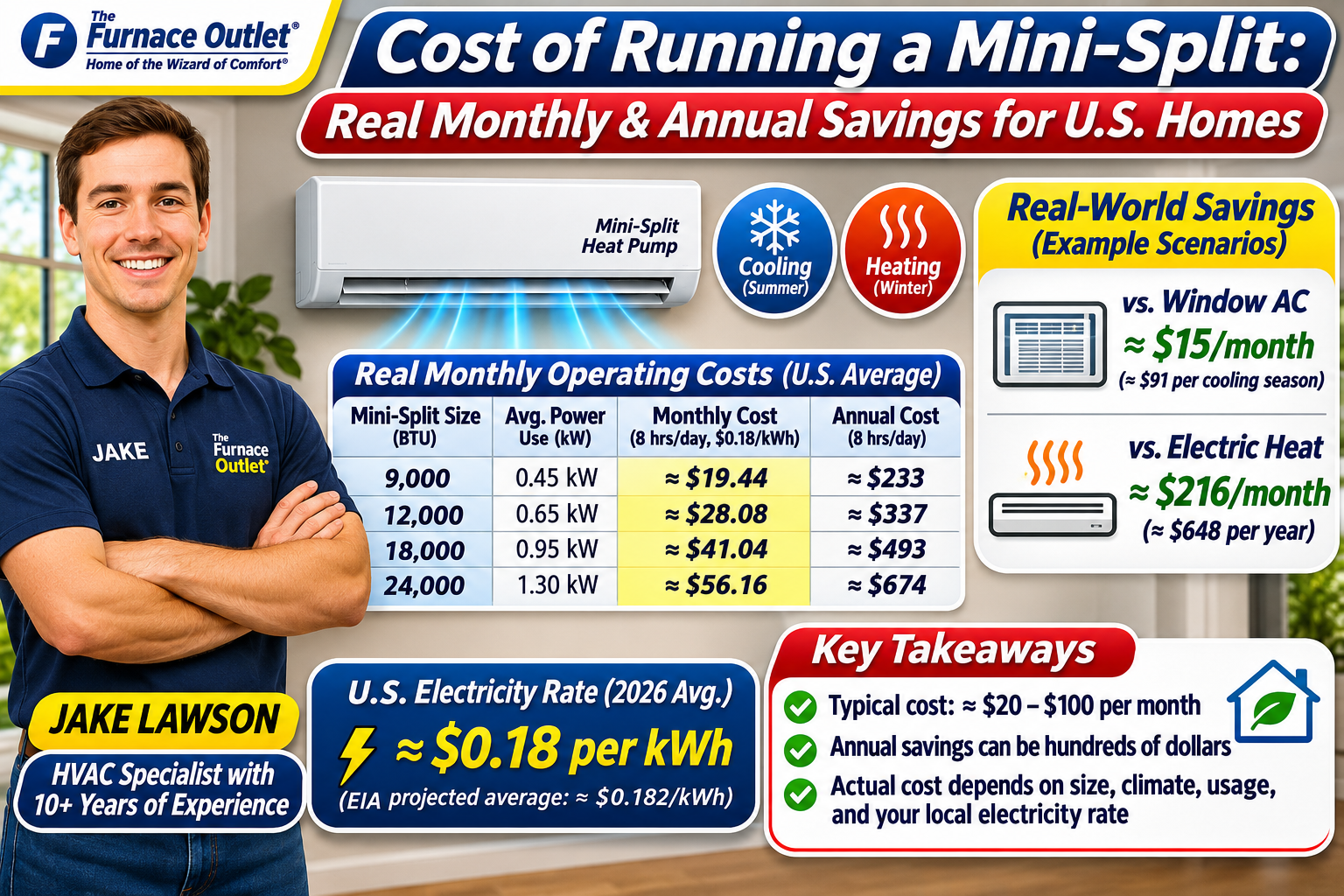
To illustrate the difference between mini-split capacities, let’s assume an electricity price of $0.18 per kWh, eight hours of operation per day, and 30 days per month. The following figures are illustrative calculations based on assumed average electrical demand, not measured performance data for specific brands.
A 9,000 BTU mini-split averaging 450 watts would consume approximately 108 kWh per month, costing about $19.44. This could represent a small bedroom or home office operating under relatively moderate cooling conditions.
A 12,000 BTU system averaging 650 watts would consume approximately 156 kWh monthly, resulting in an estimated electricity cost of $28.08. This size is commonly considered for larger bedrooms, offices, or modest living spaces, subject to proper load calculations.
An 18,000 BTU mini-split averaging 950 watts would consume approximately 228 kWh per month, costing around $41.04. Larger living rooms and open-plan areas may require this capacity, although actual sizing depends on insulation, windows, climate, and building layout.
A 24,000 BTU system averaging 1,300 watts would consume approximately 312 kWh monthly, producing an estimated cost of $56.16. During demanding summer or winter conditions, average electrical consumption may be significantly higher than these assumptions.
These examples show why equipment size matters, but they shouldn’t be treated as guaranteed monthly bills. A properly sized inverter system may operate at reduced capacity for substantial periods, while an undersized system may run near maximum output for much longer.
The basic calculation is straightforward: multiply the unit’s average electrical consumption in kilowatts by its daily operating hours, the number of days used, and your electricity price per kWh.
For example, suppose a mini-split averages 0.8 kW while operating for ten hours per day. Over 30 days, it would consume approximately 240 kWh. At $0.18 per kWh, the estimated monthly electricity expense would be $43.20.
However, homeowners should distinguish between the number of hours the system is switched on and the amount of electricity it actually consumes. An inverter mini-split may remain active throughout the day while adjusting its compressor output to maintain the selected temperature.
For a more accurate estimate, check the manufacturer’s electrical performance information or measure consumption using compatible monitoring equipment. Compare the results with your utility’s actual energy rate, including applicable variable delivery charges.
Mini-splits often provide better seasonal efficiency than older or basic window air conditioners, particularly when the mini-split uses inverter technology and the window unit operates with a conventional fixed-speed compressor.
Imagine a window air conditioner consuming 1,000 watts on average for eight hours daily. At $0.18 per kWh, its monthly operating cost would be approximately $43.20. A mini-split delivering comparable cooling while averaging 650 watts would cost approximately $28.08 under the same schedule.
That represents an illustrative saving of $15.12 per month, or approximately $90.72 over a six-month cooling season. Actual savings depend on the certified efficiency of both units, installation conditions, and cooling requirements.
Modern inverter window air conditioners can also be highly efficient, so homeowners shouldn’t assume that every mini-split will outperform every window unit. Comparing current efficiency ratings and realistic operating conditions provides a more meaningful answer.
A ductless mini-split can reduce cooling expenses when it allows homeowners to condition occupied rooms instead of cooling an entire house unnecessarily. This advantage is particularly noticeable in homes where certain bedrooms, offices, or living areas are used only during specific hours.
For example, a household might operate a central air conditioner to maintain comfortable temperatures throughout a 2,000-square-foot home, even though family members spend most of their time in just two rooms.
A mini-split serving those occupied areas may reduce total cooling demand, provided the remaining rooms can safely and comfortably operate at different temperatures.
However, comparing a single-room mini-split with a whole-house central system isn’t an equal-capacity comparison. If multiple mini-splits must condition every room, the overall operating cost depends on the efficiency and configuration of the complete system.
Well-designed modern central air conditioners can also be highly efficient. The biggest savings usually come from reducing unnecessary conditioning, improving equipment efficiency, or correcting problems in an existing system.
Heating is where heat-pump mini-splits can deliver particularly substantial savings compared with electric resistance systems such as baseboard heaters and electric wall heaters.
A conventional electric resistance heater converts electrical energy directly into heat. A heat-pump mini-split moves heat from outdoor air into the home, allowing it to deliver considerably more heat for the same electrical input under suitable conditions.
Consider a home requiring 2,000 kWh of electric resistance heating during a particular month. At $0.18 per kWh, that heating demand would cost approximately $360.
If a mini-split delivers the same amount of heat with an average coefficient of performance of 2.5, it would consume approximately 800 kWh, costing about $144. The illustrative saving would be $216 for that month.
This example assumes equal delivered heating energy and a seasonal operating efficiency equivalent to the stated COP. Actual savings depend on outdoor temperature, defrost operation, system sizing, distribution of heat, and whether supplemental heating is needed.
Mini-splits may also reduce heating costs compared with oil or propane systems, but savings aren’t guaranteed. Natural gas can remain economically competitive in some regions, especially where electricity is expensive and gas prices are relatively low.
Annual savings depend on the equipment being replaced and the amount of heating or cooling required throughout the year.
A homeowner replacing an older window air conditioner might save approximately $75–$200 annually under a moderate-use scenario, while a household replacing substantial electric resistance heating could potentially save several hundred dollars or more each year.
For example, if a home previously used 6,000 kWh annually for electric resistance heating, the cost at $0.18 per kWh would be $1,080. A mini-split achieving an average seasonal heating COP of 2.5 would require approximately 2,400 kWh to deliver the same heating energy, costing about $432.
The resulting illustrative annual heating saving would be $648, before considering maintenance, installation expenses, backup heating, or changes in household behavior.
That doesn’t mean every homeowner will save $648 annually. A lightly used mini-split in a mild climate might generate much smaller savings, while a heavily heated home with expensive electricity could experience a different result entirely.
One advantage of inverter-driven mini-splits is their ability to maintain indoor temperatures without repeatedly operating at full capacity. Once the room reaches the selected temperature, the compressor can slow down and maintain comfort with reduced electrical demand.
Because of this, leaving a mini-split operating continuously doesn’t necessarily mean it consumes its maximum rated electricity input for 24 hours. However, continuous operation still uses energy, and maintaining an unnecessarily tight temperature setting can increase costs.
For frequently occupied rooms, maintaining a reasonably consistent temperature may provide comfortable and efficient operation. For spaces that remain unoccupied for extended periods, an appropriate thermostat setback can reduce heating or cooling demand.
The best strategy depends on climate, equipment controls, building insulation, and occupancy patterns. I generally recommend following the manufacturer’s operating guidance rather than assuming continuous operation or frequent switching is always cheaper.
Poor insulation is one of the biggest contributors to higher operating expenses. When conditioned air escapes through gaps around windows, doors, and building penetrations, the mini-split must work harder to maintain the desired temperature.
Incorrect equipment sizing can also affect performance. An undersized unit may struggle during extreme weather, while an oversized system can introduce comfort and humidity-control problems, even when inverter technology helps moderate output.
Dirty filters, obstructed outdoor coils, incorrect refrigerant charge, and poor installation practices can further reduce efficiency. A neglected system may consume more electricity while delivering less effective heating or cooling.
Electricity pricing also matters enormously. At $0.30 per kWh, the same 240 kWh monthly consumption that costs $43.20 at $0.18 per kWh would cost $72. This difference can significantly affect projected savings and payback periods.
My first recommendation is to choose a properly sized system rather than buying the largest unit available. Correct sizing allows the equipment to match the home’s actual heating and cooling requirements and maintain comfortable indoor conditions.
I also recommend selecting equipment with strong certified seasonal efficiency ratings, particularly for homes with long cooling seasons or substantial winter heating requirements. SEER2 helps compare cooling efficiency, while HSPF2 provides information about seasonal heating efficiency.
Regular filter cleaning, unobstructed airflow, sensible thermostat settings, and appropriate maintenance can help preserve the efficiency of the equipment. Keeping outdoor units clear of debris and following the manufacturer’s service schedule are equally important.
Homeowners should also address insulation and air-sealing problems whenever practical. Improving the building envelope can reduce heating and cooling demand regardless of which HVAC system is installed.
Mini-splits generally cost more to install than basic portable or window air conditioners, especially when professional electrical work, refrigerant piping, wall penetrations, and multiple indoor units are required.
A single-zone professionally installed mini-split might cost roughly $3,000–$6,500 in many U.S. markets, while more complicated installations and multi-zone systems can cost considerably more. These are broad budgeting estimates rather than guaranteed quotations.
The financial decision should compare the additional installation cost against realistic annual operating savings. If a mini-split costs $3,000 more than an alternative and saves $300 annually, the simple payback period would be ten years before accounting for maintenance, repairs, financing, or energy-price changes.
However, financial payback isn’t the only consideration. Quiet operation, improved room-by-room temperature control, heating capability, and reduced dependence on ductwork can provide additional value.
How much electricity does a 12,000 BTU mini-split use per month?
A 12,000 BTU mini-split averaging 650 watts for eight hours daily would consume approximately 156 kWh over 30 days. At an electricity price of $0.18 per kWh, that equals about $28 per month. Actual consumption can be substantially different depending on weather, operating hours, equipment efficiency, and indoor temperature settings.
Is a mini-split cheaper to run than central air conditioning?
A mini-split can be cheaper when it cools only occupied areas or replaces a less efficient central system. However, a modern high-efficiency central air conditioner may compete closely with a multi-zone mini-split serving an entire home. The comparison should account for equivalent heating or cooling demand rather than equipment type alone.
Do mini-splits save money during winter?
Mini-split heat pumps can significantly reduce electricity consumption compared with conventional electric resistance heaters because they transfer heat instead of generating it directly. Savings depend on winter temperatures, the system’s heating efficiency, electricity prices, and supplemental heating requirements.
How long does it take for a mini-split to pay for itself?
Payback depends on the installed price difference and actual annual savings. A homeowner saving $500 annually on an installation that costs $4,000 more than the alternative would have an illustrative simple payback period of eight years. Maintenance costs, energy prices, incentives, and equipment lifespan can change the calculation.
When homeowners ask me whether a mini-split will lower their electricity bills, I always recommend starting with their current heating and cooling expenses. A high-efficiency system can be an excellent investment, but meaningful savings depend on what it’s replacing and how the home is used.
For 2026–2027, I would prioritize a professional load calculation, certified equipment efficiency, realistic operating-hour estimates, and accurate local electricity rates. I’d also consider insulation, installation quality, and whether room-by-room temperature control could reduce unnecessary energy consumption.
A properly selected mini-split can provide efficient year-round comfort and worthwhile long-term savings. The smartest purchase, however, is the system that matches your home’s actual requirements rather than one chosen solely because of an advertised efficiency rating or impressive savings claim.
This article is intended for general homeowner education. Operating-cost calculations and savings examples are illustrative, not guarantees of actual utility bills or equipment performance. Electricity rates, weather conditions, equipment efficiency, installation quality, and household usage vary significantly. Consult a qualified HVAC contractor and your electricity provider before making equipment or financial decisions.
The operating-cost estimates above use the U.S. Energy Information Administration’s projected 2026 residential electricity rate of approximately $0.182 per kWh. U.S. Energy Information Administration. For additional technical guidance, refer to the U.S. Department of Energy’s Heat Pump Guide, ENERGY STAR’s Ductless Heating and Cooling Guide, and the Bonneville Power Administration’s Ductless Heat Pump Guidance. These resources explain heat-pump efficiency, operating characteristics, and potential energy savings.