If you’re asking yourself “what type of furnace do I have?” you’re already ahead of most homeowners. That question usually comes up for a reason—maybe your heat isn’t working, maybe you’re getting quotes for replacement, or maybe someone asked you whether your system is gas or electric and you realized you weren’t actually sure.
I hear it every week. Sometimes it’s phrased differently:
“How to tell if furnace is gas or electric?”
“Do I even have a furnace?”
“What does a gas furnace look like compared to this thing in my closet?”
And my personal favorite, usually said with total sincerity: “I think it’s electric… but there’s a vent pipe, so now I’m not sure.”
If you own a system like the Goodman MBVK electric furnace, this confusion is incredibly common. Modern HVAC equipment doesn’t look the way people expect it to look, and the language around “furnaces,” “air handlers,” and “heat pumps” hasn’t made things any clearer.
So let’s slow it down and answer this properly—without assumptions, without jargon, and without guessing.
Do I Have a Furnace, or Something Else?
Let’s start with the most basic question: do I have a furnace?
The answer depends on how your home is heated.
Traditionally, a furnace is a piece of equipment that creates heat and distributes it through ductwork. That heat could come from gas, oil, propane, or electricity.
But here’s where things get tricky.
Many homes today use:
-
Heat pumps
-
Electric air handlers with backup heat
-
Hybrid systems
In those cases, homeowners often do have a furnace—but it may not look or operate like the one they grew up with.
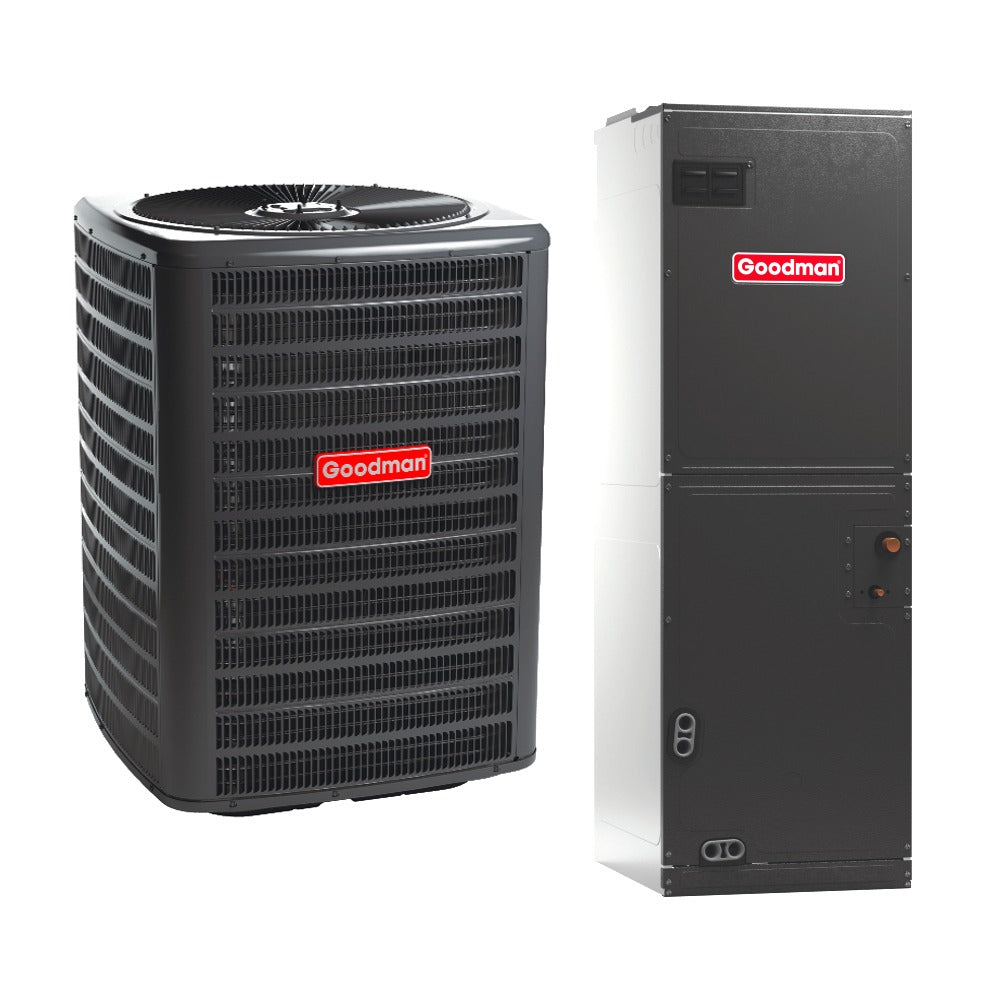
The Goodman MBVK is a perfect example. It’s often referred to as an electric furnace, but functionally it also acts as an air handler when paired with a heat pump. That dual role is one of the main reasons people ask, “do I have a furnace, or do I have something else?”
The short answer: if your system contains electric heating elements designed to heat air directly, yes—you have a furnace.
Why “What Type of Furnace Do I Have?” Is Such a Common Question
Homeowners don’t ask this out of curiosity. They ask because something forced the issue.
Common triggers include:
-
No heat on a cold day
-
Conflicting advice from contractors
-
Utility bills that don’t make sense
-
Smart thermostat installation
-
Warranty or service questions
At that point, you’re staring at a metal cabinet wondering what it actually does.
The Goodman MBVK doesn’t have flames, burners, or a pilot light. It doesn’t smell like gas. It doesn’t vent combustion gases. So people naturally wonder whether it’s even a furnace at all.
That uncertainty is normal—and fixable.
How to Tell If Furnace Is Gas or Electric (Without Guessing)
This is the single most important distinction you can make.
Step One: Look for a Gas Line
If there is no gas line connected to the unit, it is not a gas furnace. Period.
Gas furnaces require:
-
A black iron or flexible gas line
-
A shutoff valve
-
A gas meter somewhere on the property
If none of that exists, you’re dealing with electric heat.
Step Two: Look for Venting
Gas furnaces must vent exhaust gases. That means:
-
Metal flue pipe or PVC venting
-
A clear path to the outdoors
Here’s where people get confused: heat pump systems may also have pipes nearby, but those are for refrigerant or condensate—not combustion.
The U.S. Department of Energy explains that electric furnaces and heat pumps do not require combustion venting, which is a key identifier.
Step Three: Open the Panel (Visually Only)
Without touching anything, look inside.
A gas furnace will have:
-
Burners
-
A heat exchanger
-
Ignition components
An electric furnace like the Goodman MBVK will have:
-
Electric heating elements
-
Heavy wiring
-
Sequencers or control boards
-
No burners at all
If you don’t see anything that looks like it could burn fuel, you’re not looking at a gas furnace.
What Does a Gas Furnace Look Like?
This question comes up a lot, especially from homeowners transitioning from older homes.
What does a gas furnace look like?
Gas furnaces typically include:
-
A visible burner assembly
-
A combustion chamber
-
A gas valve
-
A flue or exhaust pipe
They often have warning labels related to combustion and carbon monoxide.
By contrast, the Goodman MBVK looks cleaner and simpler inside. No burners. No flames. No soot. Just electrical components and airflow management.
That visual difference alone answers the gas-versus-electric question in most cases.
Electric Furnaces Don’t Look “Hot”—And That’s the Point
One reason people doubt electric furnaces is that they don’t look like they’re doing much. There’s no fire, no glow, no roar.
But electric resistance heat doesn’t need spectacle. When current passes through the heating elements, they warm the air directly. It’s controlled, quiet, and efficient at the point of use.
According to Conforto, electric heating systems eliminate combustion byproducts entirely, which is why they’re common in tighter, newer homes.
So if your system looks “too simple,” that’s often a sign it’s electric—not that something’s missing.
Furnace Model Numbers: The Fastest Way to Know for Sure
If you want a definitive answer, skip the guesswork and go straight to the data.
Furnace model numbers tell you almost everything you need to know—if you know how to read them.
On a Goodman MBVK, the model number:
-
Is located on the data plate inside the cabinet
-
Includes “MBVK” as part of the designation
-
Identifies it as an electric furnace / air handler
Goodman’s naming conventions clearly separate gas furnaces from electric units. Once you have the model number, there’s no ambiguity.
Organizations like AHRI maintain databases that allow contractors and homeowners to verify equipment type and ratings using model numbers, which is why that information matters during service calls.
Why Contractors Ask What Type of Furnace You Have
If you’ve ever called for service and been asked “Is it gas or electric?” and didn’t know the answer, don’t feel bad.
Contractors ask because:
-
The troubleshooting process is completely different
-
Parts are not interchangeable
-
Safety procedures vary
A gas furnace problem could involve combustion, venting, or fuel delivery. An electric furnace problem is almost always electrical, airflow-related, or control-based.
With the Goodman MBVK, knowing it’s electric immediately narrows the diagnostic path.
Do I Have a Furnace If I Have a Heat Pump?
This is another major source of confusion.
Many homes with the Goodman MBVK also have a heat pump. In those systems:
-
The heat pump handles most heating
-
The MBVK provides backup or auxiliary heat
Homeowners feel warm air and assume the heat pump is doing all the work. When the MBVK turns on, they sometimes don’t even notice.
So they ask, “Do I have a furnace, or just a heat pump?”
The answer is: you have both, and the MBVK is the furnace portion of that system.
The Air Conditioning Contractors of America explains that electric furnaces often serve as backup heat sources in heat pump systems, even if homeowners don’t think of them as furnaces.
Why Knowing Your Furnace Type Actually Matters
This isn’t trivia. It affects real decisions.
Knowing whether your furnace is gas or electric impacts:
-
Repair costs
-
Replacement options
-
Energy efficiency expectations
-
Utility billing
-
Safety considerations
It also determines whether certain advice applies to you at all. Gas-furnace tips don’t help electric-furnace owners—and vice versa.
If you own a Goodman MBVK, you can safely ignore anything related to:
-
Pilot lights
-
Gas valves
-
Flame sensors
-
Combustion air
That alone narrows your troubleshooting universe significantly.
Common Misconceptions About Electric Furnaces
Let’s clear up a few myths I hear all the time.
“Electric furnaces don’t make real heat.”
They do. It just feels different than gas heat.
“If there’s no flame, it can’t be a furnace.”
Wrong. Heat is heat, regardless of how it’s produced.
“I must not have a furnace because I have a heat pump.”
Also wrong. Many systems use both.
The Goodman MBVK exists precisely because electric furnaces still play a vital role in modern HVAC systems.
What to Do If You’re Still Not Sure
If you’ve read this far and you’re still asking “what type of furnace do I have?”, here’s what I recommend:
-
Check the model number
-
Look for a gas line or lack thereof
-
Observe whether there’s any combustion venting
-
Ask a professional to confirm during routine service
You don’t need to guess—and you don’t need to feel embarrassed for asking.
Final Thoughts from the Field
The question “what type of furnace do I have?” seems simple, but modern HVAC systems have made it anything but.
The Goodman MBVK electric furnace doesn’t look like older gas furnaces, doesn’t behave like them, and doesn’t require the same maintenance mindset. That difference causes confusion—but it also brings benefits: safety, simplicity, and compatibility with high-efficiency heat pumps.
Once you know what you have, everything else gets easier. Service makes sense. Advice becomes relevant. And you stop second-guessing the system that keeps your home comfortable.
And that’s the goal—clarity, not mystery, when it comes to the equipment you rely on every day.