
Alright folks — Tony here. I’ve been installing HVAC systems for years. I’ve been up in attics, in crawlspaces, fighting old ductwork, battling mismatched systems, fighting for homeowner value. If you’re reading this, you’re probably at the point where you’re asking questions like:
-
“I keep hearing about a 4 ton AC unit — what does that mean for my home?”
-
“What’s a fair price for a 4 ton AC system installed?”
-
“What should I watch out for so I’m not overpaying for the ‘4 ton AC unit price’?”
-
“How do I decide between 3 ton vs 4 ton vs 5 ton for my home?”
We’re going to cut through the jargon, run through cost benchmarks, talk about the specific product (Goodman bundle), and give you a decision‑making roadmap you can use when you talk to contractors. Because here’s the truth: you don’t need to be an HVAC engineer to ask smart questions — you just need clear info.
What Does “4 Ton AC” Really Mean?
When I’m talking HVAC with homeowners I always start with “tonnage” — because many people mis‑understand it. A 4 ton AC doesn’t mean the unit weighs four tons or somehow is a 4‑ton physical weight. It refers to capacity. One ton of cooling equals ~12,000 BTU per hour of cooling capacity. So a “4 ton AC unit” typically handles ~48,000 BTU/hour of cooling capacity. (This aligns with standard industry sizing.)
What does that capacity cover? The rule of thumb often used (with many caveats) is: a 4‑ton AC can cool a home roughly 2,000 to 2,600 square feet in many climates. But that’s just a starting point. Your actual required tonnage depends on insulation, ceiling height, ductwork, windows, climate zone, orientation, shading, number of occupants, etc.
So if someone mentions a “4 ton air conditioning system” or “4 ton AC system” or “4 ton AC unit” — they’re talking about a specific capacity class. But it must be properly matched to your home. Oversizing (say installing a 4‑ton when a 3 ton would have sufficed) can actually degrade comfort and efficiency (short‑cycling, humidity issues).
The Good Product Reference: Goodman and Beyond
Let’s tie this back to product examples so you can see actual numbers.
-
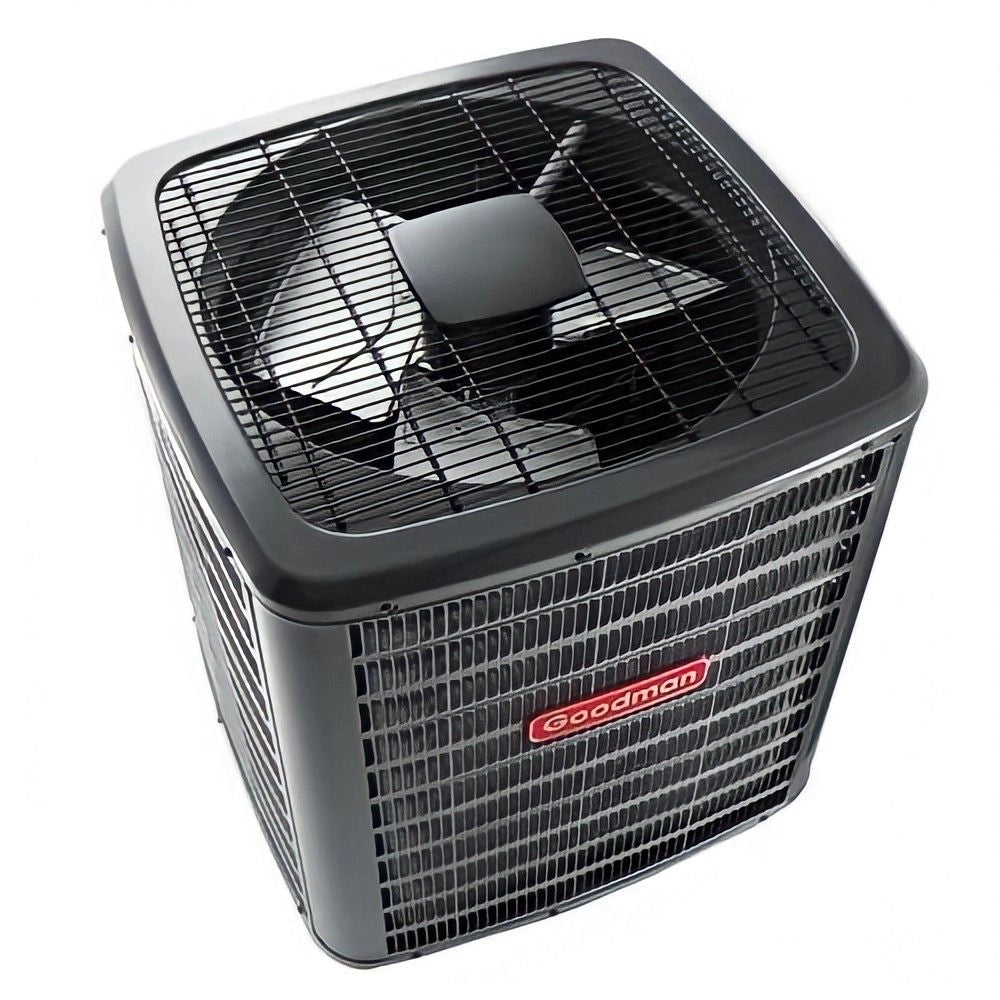
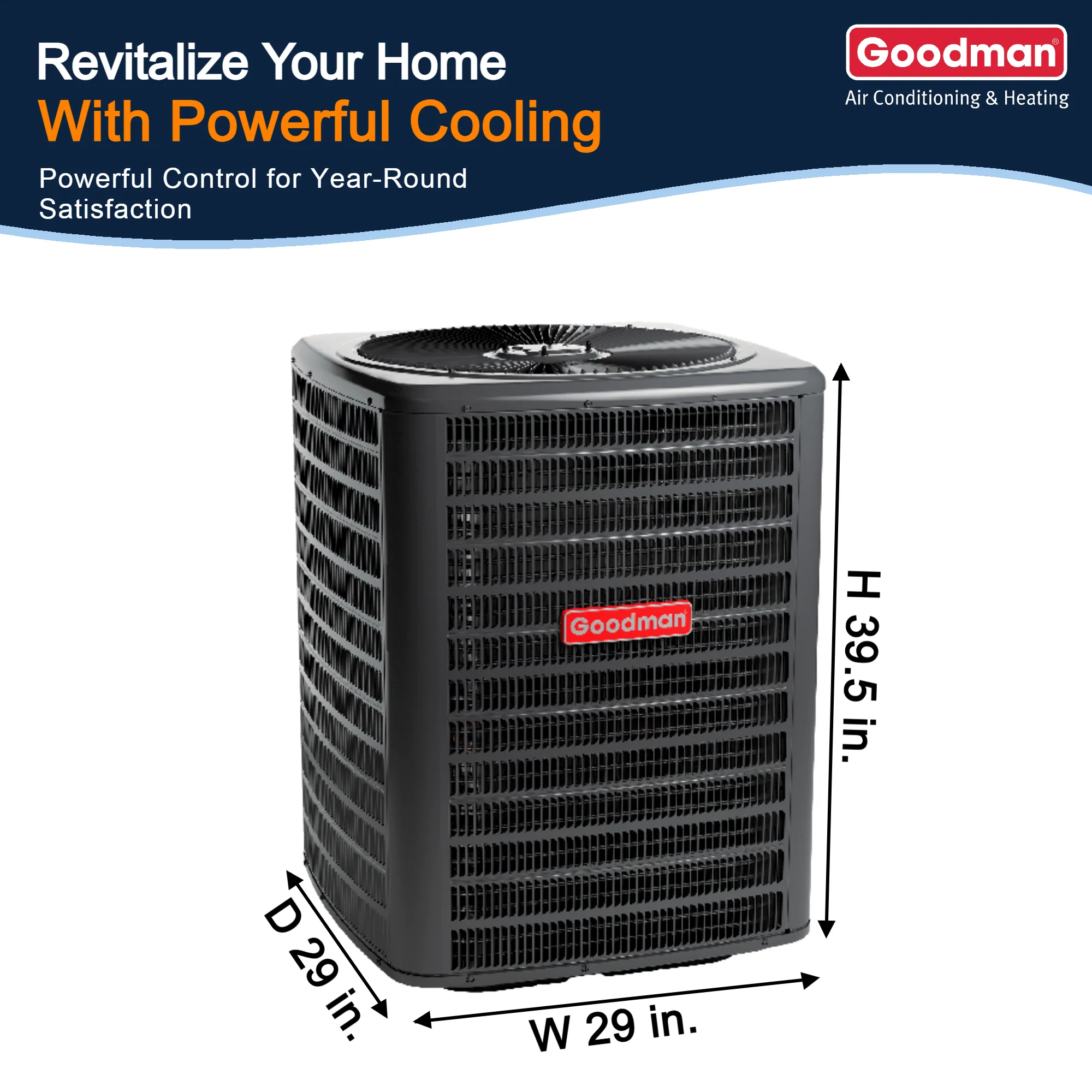
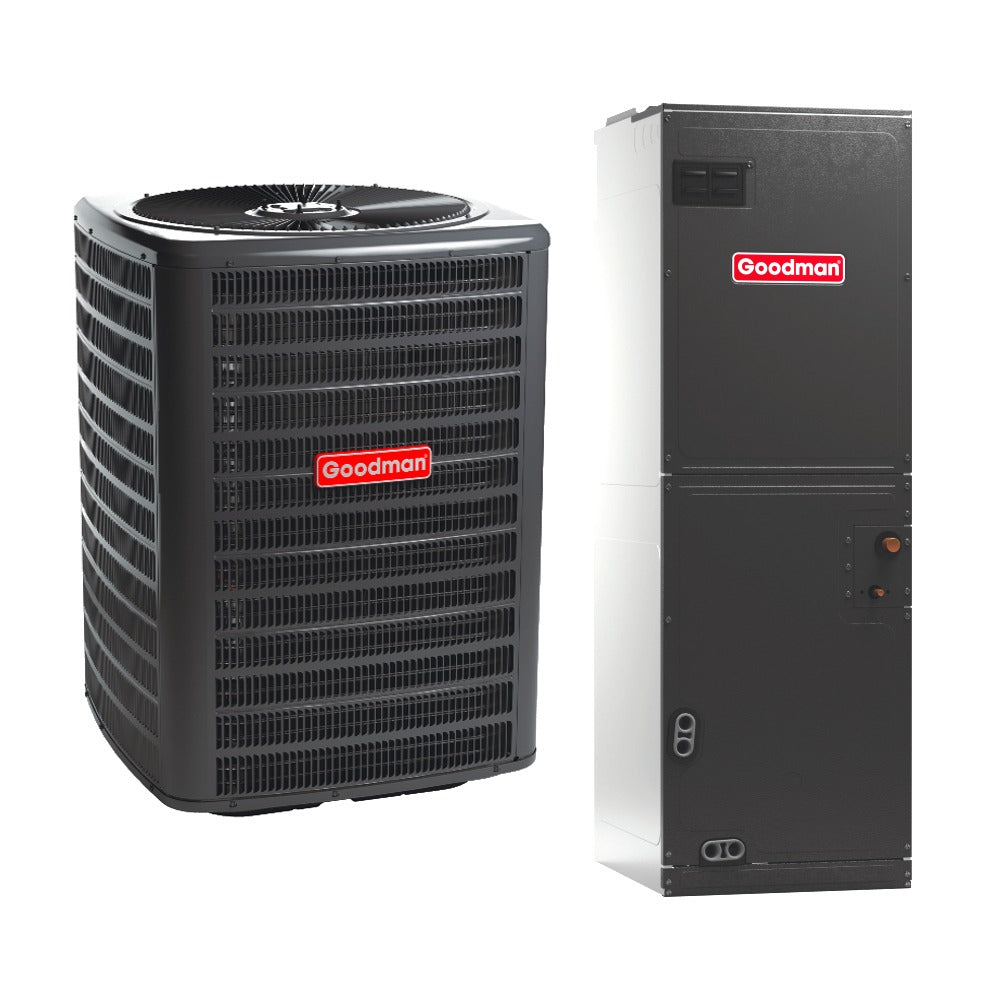
For example, you can find a Goodman 4‑Ton 17.2 SEER2 Air Conditioner listed around $3,219 to $4,312 for the condenser/coil pair (equipment alone).
-
Another 4‑ton AC condenser only (Goodman 14.3 SEER2) is listed ~$2,825 equipment alone.
-
These equipment‑only numbers give you a baseline. But when we talk “4 ton AC unit price installed” or “4 ton air conditioning unit cost installed” we have to add installation, labor, permitting, ductwork, modifications, etc.
So when someone mentions “4 ton AC unit”, I want you to remember: equipment price is just part of the story — installation and system compatibility matter just as much.
What is the Typical Cost for a 4 Ton AC Unit?
Here’s where the benchmarking gets useful. According to multiple sources:
-
One guide states: “average cost to install a 4‑ton central air conditioner is $6,000 to $11,000, with most homeowners spending around ~$8,500 on a standard 16‑SEER split system with minor modifications.” (Fixr)
-
Another states the installed price of a 4‑ton AC system typically falls between $5,500 and $12,000, with unit alone priced at $3,500‑$6,500. (Today's Homeowner)
-
Another breakdown: equipment alone may range from $3,000‑$6,000, while full install with ducts/mods may push up to $10,000 or more. (Filterbuy)
So when you hear phrases like “price of 4 ton air conditioning unit” or “how much is a 4 ton ac unit installed” — you should keep in mind this broad range: $5k‑$12k+ depending on home, region, efficiency, and modifications.
Why the Cost Varies: Key Drivers for 4 Ton AC Pricing
Let’s break down what causes the difference between a low‑end installed cost and a high‑end installed cost for a 4‑ton AC system. As your trusted tech (that’s me), I’ve seen these variables up close.
1) Efficiency & Unit Tier
Higher SEER/SEER2 ratings = higher upfront cost. Premium brands, variable‐speed compressors, advanced features (smart thermostats, zoning) raise cost. For example, Carrier notes that “a 3‑ton AC unit will cost more than a 4‑ton unit” in some cases because of features — weird, but capacity plus features mix matters. (Carrier)
2) Existing Ductwork & System Condition
If the home’s ductwork is in good shape (sealed, properly sized, minimal mods needed), your install cost stays lower. If ducts are leaky, inadequate, or you’ve got attic runs or second story issues, you’ll pay more. Also if the air handler/coil needs replacement, or refrigerant lineset is long, expect higher labor cost.
3) Installation Complexity and Home Layout
If the condenser has to go up on a roof, or through tight access, or old wiring must be replaced — labor goes up. If permits are required or regional labor rates are high, cost increases accordingly.
4) Brand & Equipment Cost
The equipment cost alone varies widely: a basic 4‑ton condenser for ~$2,500‑$4,500 (as we saw) vs premium units easily $6,000+ or more. That baseline shifts your total.
5) Region & Market Labor Rates
Labor costs vary by region (urban vs rural), season (peak summer installs cost more), and local codes. So a quote in Ohio might differ significantly from one in California or Florida.
6) Timing & Scope
If you’re replacing cooling and heating, or redoing ducts, or doing a “full system upgrade,” you’ll incur additional costs. Likewise, if you delay and more damage or extra repairs pop up, cost rises.
Applying This to the Goodman Bundle and Your Decision
Now let’s tie it back to your specific situation. Suppose you’re looking at the Goodman bundle on the pillar page (replace cooling/air conditioner) — we’ll look at how you should budget for a 4‑ton or similarly sized system, and how you should evaluate the quote.
-
If your home actually requires a 4‑ton system (e.g., home >2,000 sq ft, poor insulation, second story, high ceilings) then you should plan for something in the installed cost range above ($6k‑$11k or more).
-
If you install the Goodman 3‑ton bundle, but load calcs show you really need 4‑ton capacity, you may under‑size the system — comfort and efficiency suffer.
-
If your home and load justify 3‑ton, you’ll pay less — which means better value. So the first step is proper load-sizing (Manual J).
-
If you get a quote for a 4‑ton system, don’t just ask “what’s the 4 ton AC unit price” — ask for full breakdown: equipment, labor, duct modifications, warranty, accessories.
As a practical rule from the field: if a quote for a 4‑ton system installed is less than ~$5,000, ask for scope clarity (what parts are being reused? any duct mods?). If it’s much above ~$12,000, ask what heavy modifications or premium features are included.
Realistic Budget Scenario: 4‑Ton AC in an Ohio Home
Suppose you live in Englewood, Ohio, in a 2,400 sq ft home, two‑story, moderate insulation, attic ductwork runs. You’ve been quoted for a replacement of your AC system with a 4‑ton unit. Here’s how I’d walk you through budgeting:
-
Equipment (4‑ton condenser/coil pair): say $3,500‑$5,000 (depending brand/efficiency).
-
Install labor, refrigerant lineset, electrical, condenser pad: ~$1,500‑$3,000.
-
Ductwork modifications/sealing (especially attic): ~$1,000‑$3,000.
-
Permits, start‑up, removal of old equipment: ~$500‑$1,000.
-
Contingency/unseen extras: ~$500‑$1,000.
That gives a total installed cost estimate: ~$6,500‑$13,000. If your contractor’s quote is within that band, you’re in range. If it’s $4,000 or $15,000, you should dig deeper.
My Field‑Tech Advice: Questions to Ask When You’re Quoting a 4‑Ton AC
As Tony Marino I want you to walk into this with clarity. When you’re reviewing quotes, ask the contractor these:
-
“Is that quote for a full 4‑ton system (condenser + coil + air handler/blower) or just the condenser?”
-
“What SEER/SEER2 rating is the unit? Are there variable‑speed or two‑stage compressors included?”
-
“What’s included in the labor and install scope? Does it cover refrigerant lineset replacement, concrete pad, electrical, start‑up, permits?”
-
“Are you re‑using any major components (blower/air handler, ductwork)? If yes, what condition are those in and what warranty covers that reuse?”
-
“What ductwork inspection or modifications are included? Are ducts sealed, sized, insulated, balanced?”
-
“What’s the expected change in my energy bill or comfort level after installation?”
-
“What’s the warranty on equipment and labor? Who handles defects or future issues?”
-
“What happens if there are hidden issues (access, framing, wiring, long runs) — will there be change orders, and how are they capped?”
-
“When will the install be done? Off‑peak timing sometimes reduces cost.”
-
“Can you provide references for similar sized installs in my region (similar square footage, attic duct run, two‑story)?”
Final Thoughts: Why “4 Ton AC” Sizing & Cost Matters
Here’s the wrap from Tony: The size of the unit (4 ton AC unit, 4‑ton air conditioner) matters because it must match your home’s needs. The cost matters because there are thousands of dollars in up‑front cost and long‑term performance implications. The biggest value comes not from picking “bigger is better” or “brand is premium” but from right‑sizing the system, ensuring installation quality, and making sure your ductwork and air distribution system are up to par.
So when you hear all the phrases: “4 ton AC unit price”, “4 ton air conditioner cost”, “how much is a 4 ton AC unit installed”, just remember: the equipment is one part; installation, ducts, labor, matching and quality are the rest. Use the cost ranges above (equipment ~$3k‑$6k, installed ~$6k‑$12k+ for typical 4‑ton systems) as your benchmark. Anything outside that? Ask why.