
Hi there! I’m Samantha Reyes, and if you’re reading this, I bet you’re a homeowner who’s ready to get serious about comfort, efficiency, and value — not just for today, but for years down the road. Because let’s face it: when you finally decide to replace your heating & cooling system, you don’t want to guess; you want to know. You want to budget smart. You want to make a decision that doesn’t haunt you.
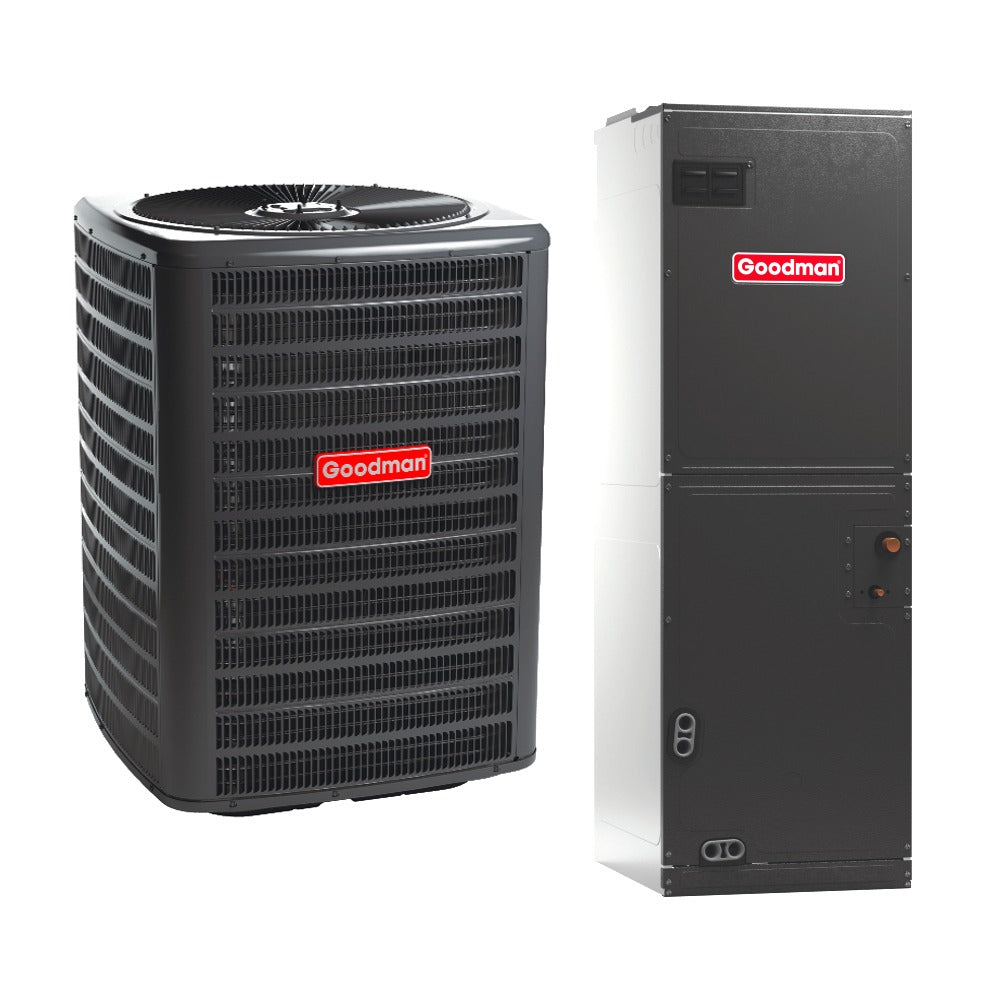
That’s why I’m so excited to walk through the cost implications, square‑foot calculations, and overall investment you’re looking at right now for the 3‑ton 14.5 SEER2 R‑32 bundle from Goodman — specifically the Goodman 3 Ton 14.5 SEER2 R‑32 Bundle (GLXS4BA3610 + AMST36CU1300). I’ll show you how to translate that into “HVAC cost per square foot ( hvac cost per sf )”, what drives that number up or down, and how you can walk away feeling confident — not stressed.
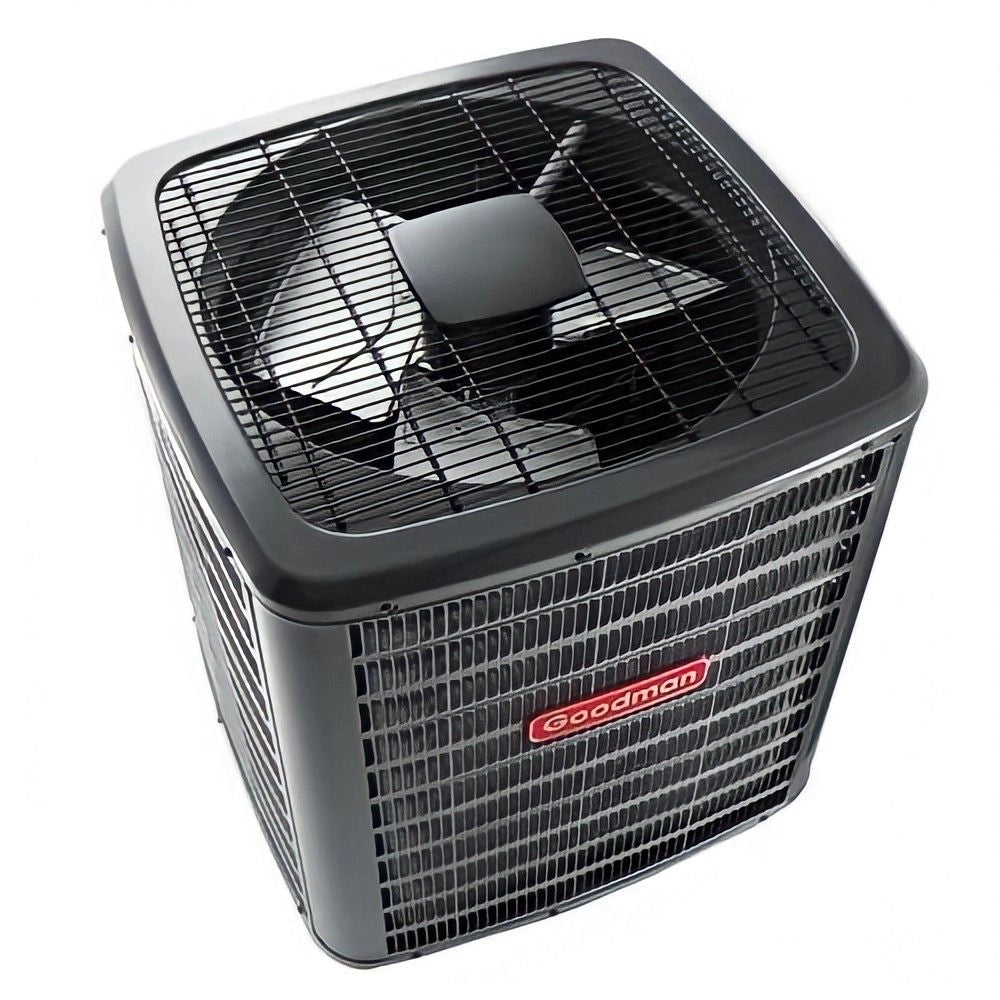
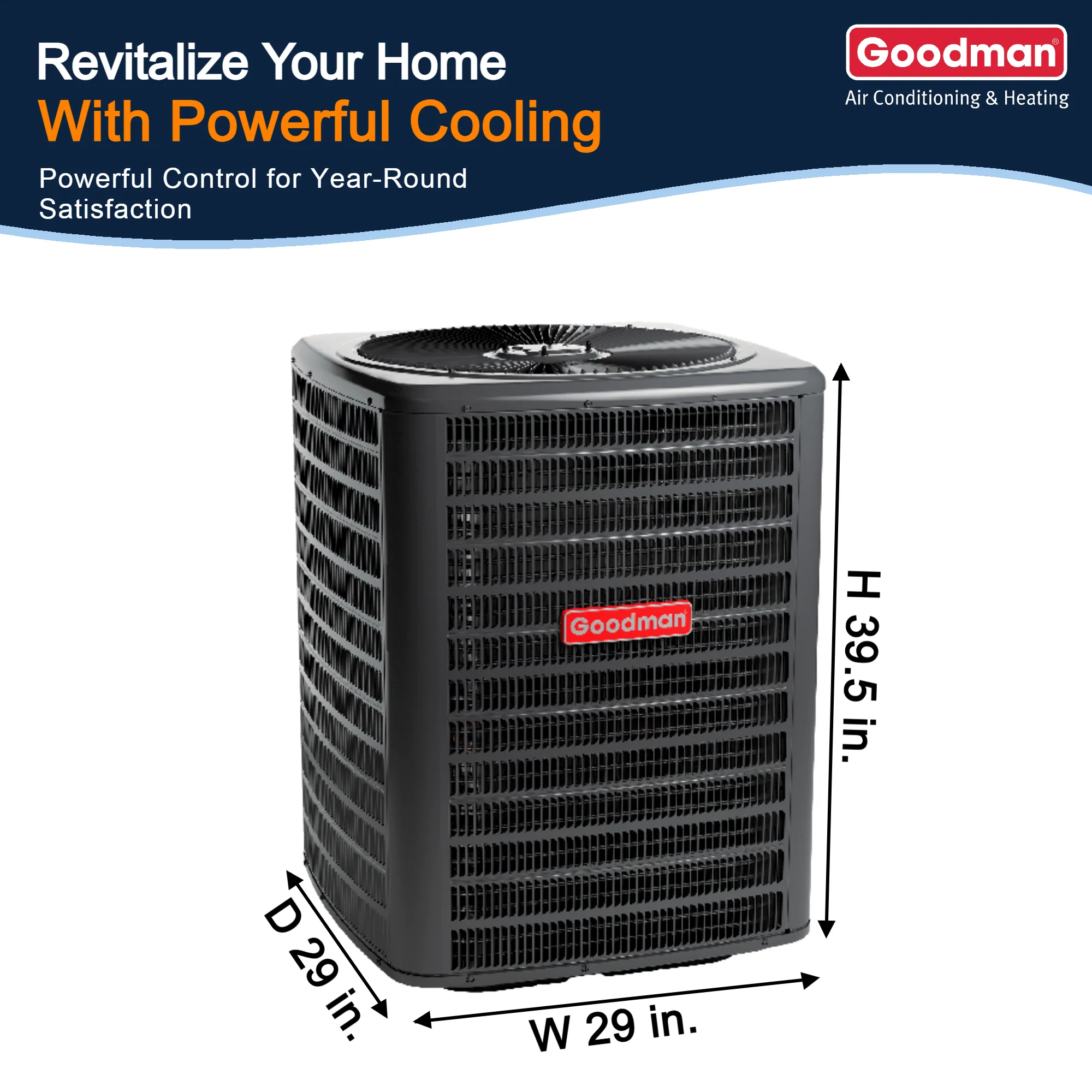
What you’re looking at: the system bundle in question
To set the stage, this particular bundle is described on the site this way:
-
A matched 3‑ton system (condenser model GLXS4BA3610 + air handler AMST36CU1300) for homes around 1,500–2,800 sq ft.
-
It uses R‑32 refrigerant (which is more environmentally friendly and forward‑looking) and meets 14.5 SEER2 efficiency standards.
-
The listed sale price is $4,050 (regular $6,749) for homeowner direct online purchase.
This is a great reference point. Because when I talk about cost per square foot, I’m going to compare this system (and what additional costs likely exist) to your home’s size, condition, and long‑term value.
Section 1: Why “hvac cost per square foot (hvac cost per sf)” matters
Think of “cost per square foot” like a benchmark: if you know it, you can check whether the quote you receive is reasonable or overpriced — before you sign anything. It’s a tool for you, the smart shopper.
Here’s what the research says:
-
According to a recent guide, a full HVAC system (furnace + AC unit + installation) for a standard home tends to cost about $3‑6 per sq ft. (HomeGuide)
-
For new construction (where systems are installed fresh) the cost may be lower, around $1.75‑2.50 per sq ft (because you may avoid complicated retrofits).
-
Other industry commentary shows rate ranges of $20‑30 per sq ft for commercial HVAC installations — but that’s a different beast. (Super Brothers Plumbing Heating & Air)
-
Some breakdowns indicate labor alone might be $0.60‑$2 per sq ft depending on home size, ductwork condition, and system complexity. (Oasis Heating & Cooling)
Why this metric helps you:
-
It helps adjust for home‑size: A 1,500 sq ft home and a 3,000 sq ft home will have very different equipment needs — cost per sq ft gives you a normalized view.
-
It exposes where hidden costs hide — e.g., if the quote is $10 per sq ft but your home is well‑insulated and the system is simple, you should ask why.
-
It helps evaluate value: higher cost per sq ft could be justified by higher efficiency, future energy savings, or premium equipment — but you need to know what part of the cost is worth it.
So when you see that “1,500–2,800 sq ft” range for the Goodman bundle above, you can already run quick math.
Section 2: Doing the math for your home
Let’s walk through some scenarios so you can plug in your home size and understand what you might expect.
Scenario A: Home size = 1,500 sq ft
-
Using $3‑6 per sq ft typical range → that equates to $4,500‑$9,000 total system installation.
-
This Goodman bundle shows list price $4,050 for equipment alone (before install).
-
So if your home is 1,500 sq ft and you can get installation for, say, $4,000‑$5,000, your cost per sq ft might be $4,000 ÷ 1,500 = $2.67/sq ft (very favorable).
-
But — if there’s significant ductwork repair, difficult access, or premium install work, you might end up $7,000, which is ~$4.67/sq ft.
Scenario B: Home size = 2,500 sq ft
-
At $3‑6 per sq ft → expected ball‑park $7,500‑$15,000.
-
If you buy equipment at $4,050 and install costs run $6,000, total ~$10,050. That’s ~$4.02/sq ft.
-
If there’s ductwork replacement, high ceilings, or other issues, install might be $10,000 → total $14,050 → ~$5.62/sq ft.
Scenario C: Home size = 3,000 sq ft (even though bundle says up to ~2,800)
-
At $3‑6/sq ft → $9,000‑$18,000.
-
If you proceed with the bundle (assuming it still “works” for you) and spend $8,000 install, total $12,050 → ~$4.02/sq ft. If install hits $12,000 → $16,050 → ~$5.35/sq ft.
What this means:
-
If you’re in the lower end of need (smaller home, good ductwork, minimal upgrades) you could pay ~$2.50‑$4/sq ft using this type of bundle.
-
If you’re larger, have tricky installation, lots of ductwork changes, premium labor, etc., you could pay up to $5‑$6/sq ft (or higher).
-
Anything well above $6/sq ft should raise questions about why it’s so expensive.
Section 3: Why your cost per square foot might go up (and why that might be okay)
Having established what the metric is, let’s talk about what drives it upward — and how you can determine whether that is justified.
Key factors that increase cost per sq ft
-
Size or complexity of the home
-
Two‑story homes, high ceilings, many rooms/zones require more capacity, more duct runs → more cost.
-
If your home is “larger” for the system (like near that 2,800 sq ft high end) you might need the 3‑ton unit anyway, but installation may be more intensive.
-
-
Ductwork condition and layout
-
If existing ducts are undersized, damaged, leaky — you’ll likely need major duct modification. That’s often $2,000‑$5,000 extra.
-
If you have no ductwork (rare for central systems) it could add heavy cost.
-
-
Labor cost / region
-
Labor rates vary by geography. Urban, high‑cost‑of‑living areas pay more. One study shows labor for central AC install might range $1,500‑$2,500 for 1,500‑2,500 sq ft homes (~$0.60‑$1.67/sq ft) depending on condition.
-
-
Efficiency / equipment level upgrades
-
Higher SEER2 ratings typically cost more upfront. The bundle we’re looking at is 14.5 SEER2, which is a mid‑efficiency level.
-
Premium upgrades — smart thermostats, zoning, better indoor air quality, etc. — add cost but may reduce operating cost later.
-
-
Refrigerant type and future‑proofing
-
The Goodman bundle uses R‑32 refrigerant (good!). That may cost slightly more than older refrigerants, but it helps with regulatory future‑proofing. If you go with something else or add features, it may add cost.
-
-
Installation timing and site conditions
-
Tight attic spaces, rooftop installs, long line‑sets, difficult access = higher cost.
-
Seasonal demand (summer is busy) may mean premium labor rates — scheduling in off‑peak may reduce cost.
-
When higher cost per sq ft makes sense
It’s not always bad to have a higher cost per square foot — if the extra investment delivers meaningful value. For instance:
-
Better efficiency → lower energy bills for years.
-
Smart integration (thermostats, zoning) → enhanced comfort & savings.
-
Reliable brand/warranty → fewer service calls and peace of mind.
-
Proper sizing and installation → longer system life and fewer issues.
So if you find your cost per square foot is $5‑$6 or even $7, don’t panic — dig into why it’s that much.
Section 4: Why this Goodman 3 Ton Bundle is a strong value
Now let’s zoom in on the system itself — why I, as the smart shopper, like this option — and how that plays into your cost‑per‑square‑foot calculation.
Key highlights of the bundle
-
The equipment is described as “ideal for homes up to 1,500‑2,800 sq ft”. That range is broad and gives flexibility. (The Furnace Outlet)
-
It uses R‑32 refrigerant: more eco‑friendly, lower global warming potential, and in many jurisdictions increasingly “future‑proof”.
-
14.5 SEER2 is above the minimum threshold for many regions, so you’re getting decent efficiency without necessarily paying top‑tier premium.
-
Goodman offers a 10‑year limited parts warranty (according to the product page).
-
The bundle’s online price ($4,050) is competitive for equipment only — this helps reduce base cost, leaving more budget room for installation.
How this improves your cost per square foot
-
Because equipment cost is relatively modest, the denominator (home size) remains favorable — you’re not paying $7,000 for equipment, which would drive up cost/sqft.
-
The mid‑efficiency level means you’re not paying ultra‑premium pricing (which might be $10‑$15/sq ft just for equipment+install).
-
By selecting matched condenser + air handler, you avoid mismatched components, which often lead to performance issues and wasted energy — meaning you get better long‑term value.
-
Future‑proof refrigerant means less risk of obsolescence / major change‑out down the road — which protects your investment.
Section 5: What to budget in addition to the equipment
When thinking about cost per square foot — remember: the equipment list price is only part of the story. You’ll want to build in extra line items.
Here are typical add‑ons:
-
Installation labor: Technician time, supervision, coordination. If the home is 2,000 sq ft, labor might run $1,000‑$3,000 depending on complexity.
-
Ductwork repairs/upgrade: Might be $2,000‑$5,000 (or more) if you have older ducts, leaks, or no existing ducts.
-
Permit fees / disposal / electrical upgrade: Permit might be $100‑$500, disposal of old equipment $100‑$200, electrical panel upgrade maybe $1,000 if needed.
-
Upgrades: Smart thermostat, zoning dampers, indoor air‑quality equipment (humidifier/dehumidifier, filtration). These could add $400‑$3,000+.
-
Site conditions: If the outdoor unit needs special concrete pad, longer line‑sets, rooftop mounting, etc., expect extra cost.
When you add all of this in and divide by your home size, that gives your “true cost per square foot”.
Section 6: Sample budget calculations with the Goodman bundle
Let’s run through two full example budgets (equipment + install + extras) to see how cost per square foot plays out.
Example 1: Home size = 1,800 sq ft — minimal ductwork repairs
-
Equipment (Goodman bundle) = $4,050
-
Install labor = $3,000
-
Minor ductwork repair = $1,000
-
Permit/disposal etc = $300
Total = $8,350
Cost per square foot: $8,350 ÷ 1,800 = $4.64/sq ft
That’s well within the $3‑$6/sq ft benchmark — very reasonable for a good value system.
Example 2: Home size = 2,500 sq ft — moderate upgrades + some duct issues
-
Equipment = $4,050
-
Install labor = $4,000
-
Ductwork repair/upgrade = $3,000
-
Upgrade to smart thermostat & IAQ = $1,000
-
Permit/disposal etc = $500
Total = $12,550
Cost per square foot: $12,550 ÷ 2,500 = $5.02/sq ft
Still reasonable — you’re getting a solid system, upgrades included — value is good.
Example 3: Home size = 2,800 sq ft — home has high ceilings, needs new ducts, tricky install
-
Equipment = $4,050
-
Install labor/higher complexity = $5,000
-
Major ductwork (new runs) = $5,000
-
Smart upgrades = $1,500
-
Permit/disposal = $600
Total = $15,150
Cost per square foot: $15,150 ÷ 2,800 = $5.41/sq ft
Still under the upper benchmark of $6/sq ft which many guides suggest as “upper normal” for residential installs.
So in all these example cases, using this Goodman bundle gives you a cost per square foot that fits nicely into the typical range — meaning you’re getting value.
Section 7: How to use this metric when you get quotes
As you move toward getting quotes from HVAC contractors (which you should do!), keep these tips in mind using cost per square foot as your reference:
-
Ask for a detailed breakdown
Make sure the quote breaks out equipment, labor, ductwork, upgrades, permits. If everything is lumped together you’ll have trouble evaluating. -
Divide total by your home’s square footage
If your home is 2,000 sq ft and the quote is $16,000 → that’s $8/sq ft, which may be above typical. Ask why it’s higher. Is it justified (complex job, major ductwork, top‑tier equipment)? -
Compare to the benchmark
If you’re seeing $3‑$6/sq ft range for similar homes and systems, that gives you confidence. If you see $10+/sq ft you’ll want to dig deep. -
Check equipment specs
If you’re comparing a 14.5 SEER2 system (like the Goodman bundle) with a contractor quote for 18 SEER2 or 20 SEER2, you’ll expect higher cost — so make apples‑to‑apples comparisons. -
Ask about ductwork condition
If the home’s ductwork is ancient, leaking, uninsulated — the extra cost might be justified. But if the home has good ducts and the install is straightforward, you should negotiate accordingly. -
Consider long‑term value
If you choose to pay more now (higher cost per sq ft) because you’re getting zoned HVAC, premium IAQ, ultra‑efficiency, etc., that can be worth it. But know that you are paying more upfront.
Section 8: My verdict — Why this bundle is a smart purchase for you
Here’s my bottom line: If I were in your shoes, making the decision for a home upgrade, and I came across the Goodman 3 Ton 14.5 SEER2 R‑32 Bundle at $4,050, I would feel confident. Because:
-
It falls in the “sweet spot” for homes in the 1,500‑2,800 sq ft range — conveniently covering many typical single‑family homes.
-
The cost per square foot potential is very favorable compared to market averages.
-
The R‑32 refrigerant ensures you’re investing in a more future‑resilient system (helping insulate you from regulatory changes).
-
The mid‑efficiency level means you get good returns without paying “top tier ultra‑premium” now.
-
As a busy household decision‑maker (just like you), this means fewer headaches down the line and a system that supports comfort, good performance, and sustainability.
That said — and this is important — you must still ensure professional installation is done properly. Because all the savings and value in the world won’t matter if the ductwork is leaking, the system is oversized/undersized, or the install is done shoddily.
Section 9: Your takeaway checklist
Before you pick up the phone to schedule a quote, here’s a checklist:
-
Measure your home’s square footage (and note if you have multiple floors, open plan, high ceilings).
-
Get at least two or three quotes from reputable HVAC contractors.
-
Ask each quote to list equipment model, SEER2 rating, refrigerant type (R‑32 is good), labor, ductwork, permit cost, upgrades.
-
Divide quote total by square footage → you get cost per square foot. Compare to guideline $3‑$6/sq ft (residential).
-
Ask about ductwork condition: “Is my existing duct system in good shape?” If not, get a cost estimate for ductwork separately.
-
Check for warranties and future‑proofing (refrigerant type, parts warranty).
-
Ask about smart thermostat/zone/IAQ add‑ons — these may be worthwhile, but make sure cost per sq ft remains reasonable.
-
Think long term: How many years do I expect to stay in this home? Will higher upfront cost pay off via lower bills or better comfort?
Section 10: Final words of encouragement
As someone who runs a busy household and makes major decisions — I totally get the stress of wondering if you’re making the right call. But when you approach the decision with data (cost per square foot, equipment specs, future‑proofing), you shift from “hoping I got a good deal” to “knowing I got a smart deal”.
If you choose the Goodman bundle I walked through and plug in your numbers, you’ll likely land in a very healthy place: a system that gives comfortable cooling (and heating if paired appropriately), efficiency, durability, and value — all at a reasonable cost per square foot.
When you’re ready, you might want me to walk you through how to size your home exactly, what to ask your contractor during install, or what upgrades are worth the extra dollars. I’d be glad to do that — just say the word.
Here’s to smart decisions, cool summers, cozy winters, and a home you love.
Yours in comfort,
Samantha Reyes