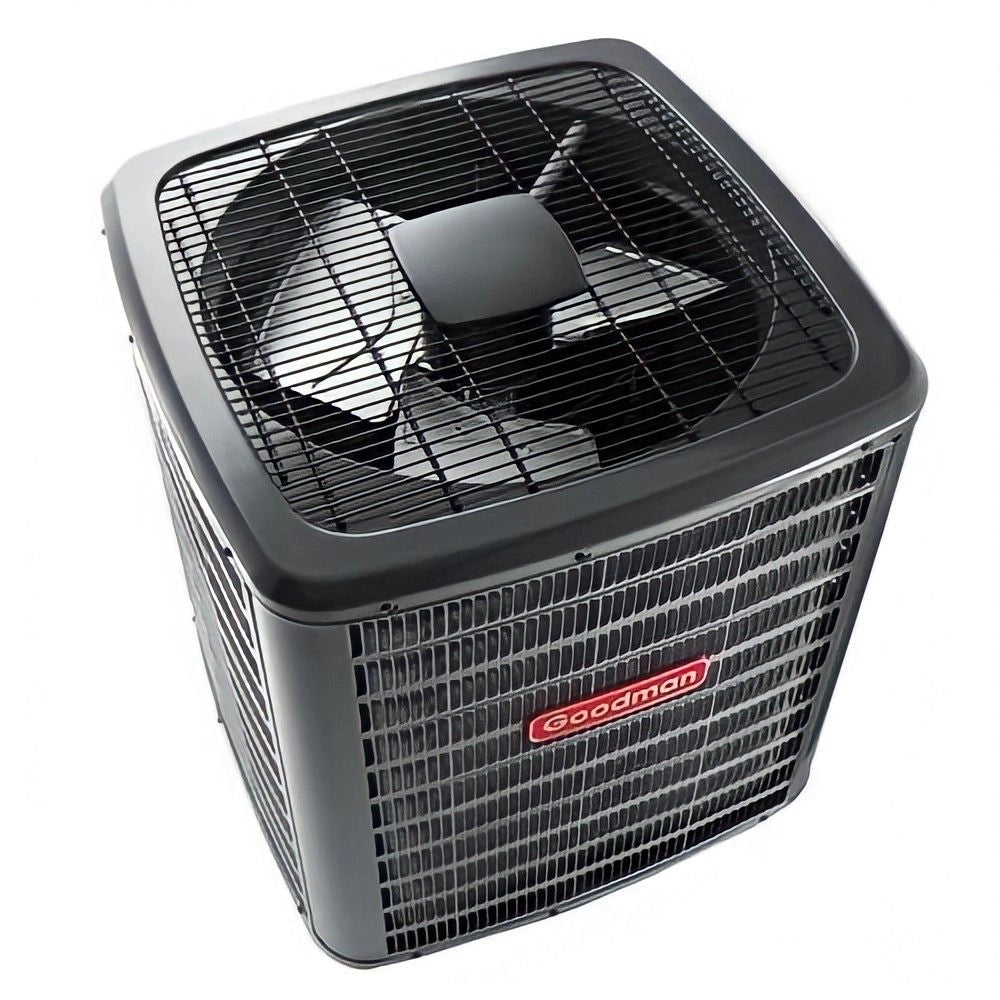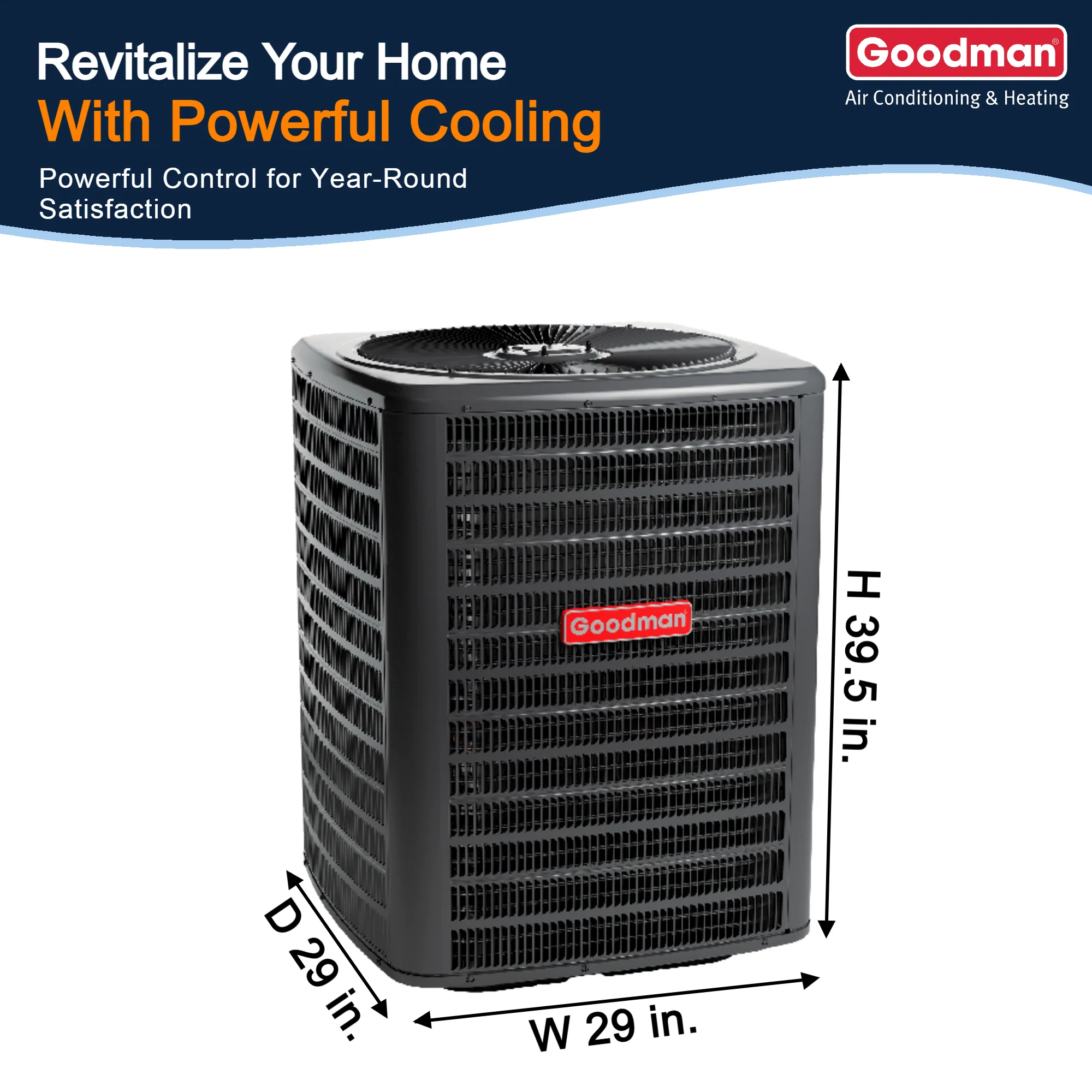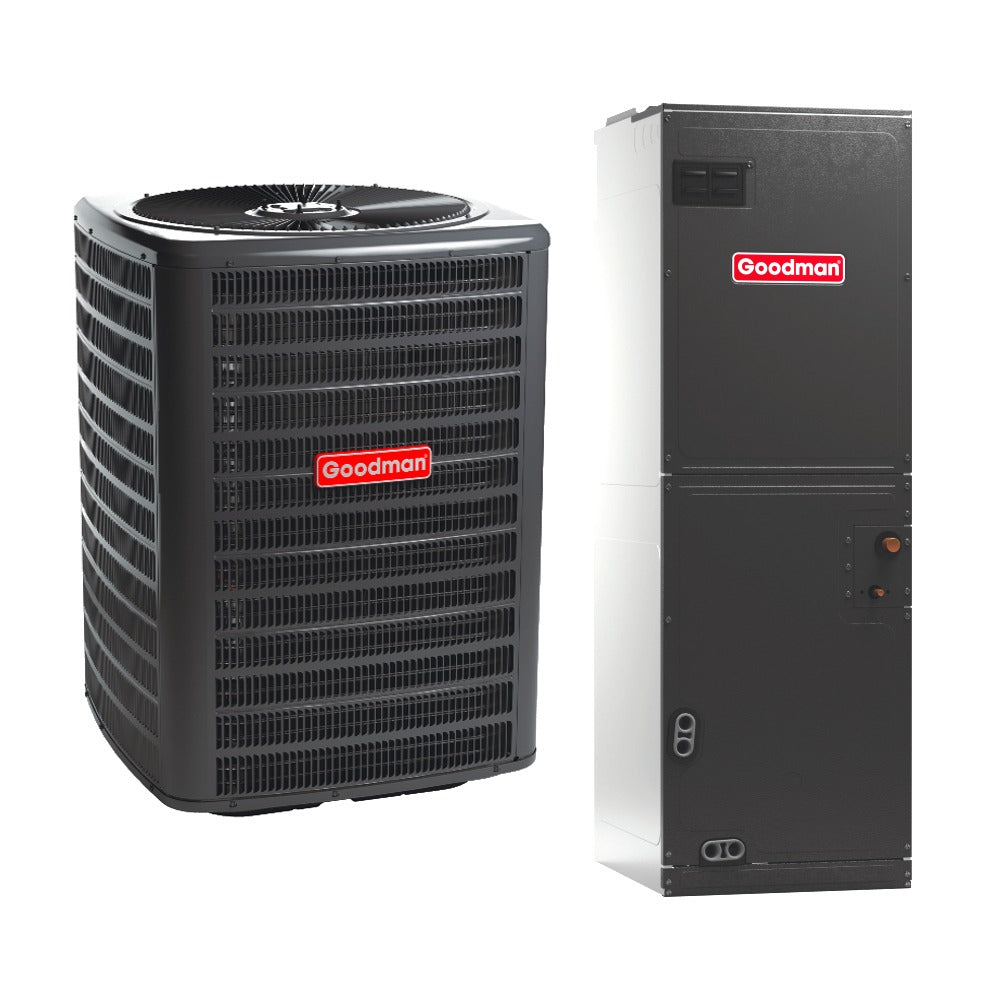

Hey folks — Mike Sanders here, and today we’re going to take a no‑fluff deep dive into one of the questions I hear all the time when homeowners are comparing cooling systems: “What about a 500 square foot air conditioner?” or phrased another way, “What size air conditioner for 500 sq ft?” and how that relates to putting in a much larger system like the Goodman 3 Ton 14.5 SEER2 R‑32 Bundle. If you want to know when a 500 sq ft AC unit is appropriate, when it’s not, and whether a 3‑ton system makes sense for such a space (spoiler: often it doesn’t, but there are caveats), you’re in the right place.
We’ll cover: how sizing works, the “500 sq ft AC unit” idea, when you actually need that kind of size, why you might not, and how that ties back into a larger system like the 3‑ton Goodman bundle. If you’re contemplating a cooling system for a modest sized space (maybe a finished basement, a large open living/dining area, a small home) or comparing to a system sized for much larger homes — read on.
What do we mean by “500 square foot air conditioner” / “air conditioner 500 square feet” / “500 sq ft AC unit”
When people say “500 square foot air conditioner,” they’re usually asking: What size AC unit (in BTU or tons) is appropriate for a space that’s about 500 sq ft? It could be a large room, a finished bonus room, a basement, a small apartment, etc. The key question: what capacity do you need for ~500 sq ft?
One widely‑used rule of thumb: estimate ~20 BTUs per square foot (for cooling) in a reasonably insulated space. (This Old House) So for 500 sq ft, that’s about 500 × 20 = 10,000 BTUs. Since 12,000 BTUs ≈ 1 ton (for central systems), 10,000 BTUs is ~0.8 tons. In practical terms, most equipment is incremented in 0.5‑ton (6,000 BTUs) steps, so you might see a 1‑ton unit (~12,000 BTUs) used for a space around that size.
Another rule of thumb from HVAC experts: maybe ~35 BTUs per square foot depending on ceiling height, insulation, sun exposure. (TemperaturePro) On that scale, 500 × 35 = 17,500 BTUs — which means ~1.5‑tons (since 12,000 BTUs = 1 ton).
So you can see already that “for 500 sq ft” you might logically be looking at something in the 1‑ton to 1.5‑ton range in many homes. If someone suggested a full 3‑ton system for 500 sq ft, I raise my eyebrow — likely that would be oversized unless there are unusual conditions.
And yes — the phrase “500 sq ft AC unit” typically refers to the capacity of the unit sized for that footprint, not the physical dimensions of the unit.
Does “500 sq ft AC unit” always mean 1‑ton? Not always — more nuance
Even though the rule‑of‑thumb math suggests 1‑ton covers ~500 sq ft, the “right size” depends on lots of other variables. According to American Standard (and others) you want a proper load calculation (Manual J) rather than just square‑footage. (American Standard®)
Here are variables that shift the sizing for a 500 sq ft space:
-
Ceiling height: If your 500 sq ft has 10′ ceilings vs standard 8′, more volume means more load.
-
Window size, orientation and sun exposure: If your area has large south/west facing windows or skylights, you might need more cooling capacity than the rule of thumb suggests.
-
Insulation & building envelope: If that space is well insulated, tight, and has modern windows, you might get by with less capacity. If it’s older, drafty, poorly insulated, you might need more.
-
Open plan vs closed rooms: If the space is open to other areas, shares air, or has high heat loads (lots of electronics, lighting, people) you’ll need to adjust.
-
Duct location and condition: If ductwork is in a hot attic or poorly sealed, you lose performance and might need a larger unit to compensate.
-
Usage & humidity: If the space is used heavily, has high internal heat gain (computers, large TVs, appliances) or is in a humid climate, capacity needs shift.
So yes — for a “500 sq ft” space you might aim for 1‑ton, but you might go up to 1.25‑tons or more depending on the factors. And conversely if it’s super efficient, maybe 0.9‑ton would suffice (but you may not find that size in standard equipment sizes).
Why people consider much larger systems for 500 sq ft (and why that can be a problem)
You’ll sometimes hear someone say: “Well I want a 3‑ton system even though the space is only ~500 sq ft — extra capacity is better.” As Mike Sanders, I’ll tell you upfront — that’s usually a bad idea. Let me explain why, and then you’ll see how it relates to the 3‑ton Goodman bundle.
Problems with oversizing
-
Short‑cycling: A system that’s too big will cool the space too quickly, then shut off, then start again. That means it doesn’t run long enough to properly dehumidify the air, leading to clamminess or “just cool but muggy feel”.
-
Reduced efficiency: Oversized units don’t operate in their optimal efficiency zones; cycling on/off frequently uses more energy than steady run times.
-
Comfort issues: It may create temperature swings, uneven cooling, higher humidity, and more wear on the unit.
-
Shorter lifespan & more maintenance: More cycling = more stress on components, filters, controls.
-
Unnecessary cost: A 3‑ton system is more expensive upfront, bigger installation, larger ductwork and pad potentially, and more complexity — for no real benefit if the space doesn’t require that capacity.
So if your space is ~500 sq ft, aiming for a 3‑ton unit is likely overkill — unless you have extremely high load conditions (lots of sun, very poor insulation, extremely high ceilings, etc).
Why some might consider larger capacity anyway
There are cases where someone might upsize. For example:
-
If the “500 sq ft” is just part of a larger open area (say the living/dining/kitchen is 500 sq ft but the ducts serve additional spaces).
-
If you plan significant expansion later (finish basement, add rooms) and you want extra capacity now.
-
If the space is extremely hot/unshaded, high ceilings, many windows, huge heat load (say a media room with projection, many computers, etc).
-
If you live in an extreme climate with very high cooling loads (though even then you don’t want to oversize by a large factor).
But again — these should be special cases, not the rule.
Linking it back to the Goodman 3‑Ton 14.5 SEER2 R‑32 Bundle
Now let’s talk about that bigger system: the Goodman 3‑Ton 14.5 SEER2 R‑32 bundle (inside the product entity above). If you’re looking at a system of that size, you’re typically in the “1,500‑2,000+ sq ft” home range (depending on climate/insulation). For a 500 sq ft space, this system is likely too large — unless you intend to expand or serve more than that 500 sq ft single area.
Here’s how to think of it with this system:
-
Capacity: 3‑ton = 36,000 BTUs of cooling capacity (approx).
-
Coverage common guideline: As many HVAC sizing charts show, ~1.5‑2 tons might cover ~1,500‑2,000 sq ft under typical conditions. For 500 sq ft, this system by comparison has ~3× the capacity required by simple square‑foot rule of thumb.
-
So in a scenario where someone installs this 3‑ton bundle in a 500 sq ft space, you risk the oversizing issues listed above (short cycling, poor dehumidification, excess cost).
But when might it still make sense?
-
If your 500 sq ft is part of a larger zone or your ductwork runs throughout multiple rooms.
-
If you anticipate future expansion of the conditioned space significantly.
-
If you have very poor insulation, massive sun exposure, very high ceilings or other abnormal load conditions — though even then you’d want the Manual J calculation to justify going that large.
-
If your existing system is under‑performing and upgrading ductwork / insulation is too expensive, sometimes people oversize. That’s not ideal, but it happens.
My recommendation
If you were working with me (Mike Sanders style) I’d say: For ~500 sq ft you should aim for a system around 1‑ton (12,000‑15,000 BTUs) or maybe up to 1.5‑tons if conditions demand it. Before opting for the 3‑ton bundle:
-
Get a load calculation done (Manual J) that includes that 500 sq ft area + any other spaces served.
-
Look at your insulation, windows, ceiling heights, sun exposure.
-
Check your ductwork and confirm how many rooms are being served from this same system.
-
Consider future expansion — if you plan to serve 1,500 sq ft eventually then sizing up now might make sense.
-
If you still choose the 3‑ton system for the 500 sq ft space anyway, limit the risk by ensuring your installer sets up proper airflow, thermostat zoning, and ensures that system can modulate/operate efficiently (if applicable) so you don’t lose comfort or efficiency.
“500 sq ft AC unit” scenarios — typical use cases
Let’s talk about practical situations where sizing an air conditioner for 500 sq ft is common — and where it becomes more nuanced.
Scenario A: Finished basement / bonus room
You have a 500 sq ft basement finished with standard 8′ ceilings, moderate windows, average insulation. It’s primarily used as a rec room + some storage. HVAC ductwork exists but may run through attic/crawl space. In that case, sizing ~1‑ton (12k‑15k BTUs) would likely be appropriate.
Scenario B: Detached guest house / ADU of ~500 sq ft
Small one‑bed one‑bath guest house, with maybe vaulted ceilings and large windows. Sun exposure is heavy, insulation moderate. Here maybe you size ~1.5‑tons to accommodate extra load (vaulted ceiling + sun exposure) but still nowhere near 3‑tons.
Scenario C: Small apartment or condo, 500 sq ft
Well‑insulated, modern windows, moderate ceilings, moderate sun exposure. Here sizing may lean toward the lower end of 12k‑14k BTUs (about 1‑ton) and the system is straightforward.
Scenario D: 500 sq ft retail space / workshop with heavy heat loads
If that 500 sq ft space has lots of equipment (computers, lights, appliances), large garage door, poor insulation, or high sun exposure — you might need capacity upward of 15k‐20k BTUs (so maybe ~1.5 tons). But again, still far from 3 tons unless extreme.
In none of the typical scenarios does a 3‑ton system immediately make sense without additional justification.
Why the “500 sq ft AC unit” framing is helpful — but why it can mislead
Using the label “500 square foot air conditioner” is useful because it grounds you in the sizing context. It helps you say: “Ok, for this space I should expect roughly X capacity.” That’s a great starting point. But it can mislead if taken as a fixed rule rather than a starting point. The “tons per square foot” rule of thumb is just that — a rough rule. The real calculation is more complex.
Here’s what I tell homeowners: treat square footage as your initial filter, then layer in all the other factors. Many homeowners see “500 sq ft” → “1‑ton system” and assume that covers everything — only to find out the unit is under‑sized because of attic ductwork, poor insulation, or sun exposure. Conversely, some are talked into 2‑ton or 3‑ton units for small spaces because the salesperson points to “well we’ll oversize to be safe” — but that “safety” can backfire.
For example: according to one sizing article, “a 500‑square‑foot space equates to a small one‑bedroom home … a system of ~12,000 BTUs would be sufficient”. (BKV Energy) On the other hand, other charts suggest more—like 450‑550 sq ft might need 15,750‑19,250 BTUs under certain conditions. (TemperaturePro) That’s a wide spread. The real answer is it depends.
How do you decide whether you need a “500 sq ft AC unit” or something different — step by step
If I were advising you directly (Mike Sanders style), here are the steps I’d recommend:
-
Measure the space – verify the 500 sq ft figure: length × width of conditioned area. If it’s open‑plan or shares air with other spaces, note that.
-
Assess ceiling height and shape – if ceilings are 9′ or vaulted the load is higher.
-
Check insulation and windows – old single pane vs new double pane; lots of large windows? Sun exposure?
-
Inspect ductwork and air distribution – is the current system serving that space efficiently? Are ducts running through unconditioned attic/crawl?
-
Identify extra heat loads – are there many electronics, appliances, large number of occupants, heat‑generating lighting, etc?
-
Estimate capacity – use a rule of thumb (e.g., 20 BTUs × 500 = 10,000 BTU) for a baseline, then adjust upward depending on variables.
-
Talk to an HVAC professional and get a Manual J load calculation – this is the gold standard to decide actual tonnage needed. (Lennox)
-
Compare matching system sizes and cost/benefit – for instance: is a 1‑ton system available, cost effective? If you size up to 1.5 tons, what extra cost vs extra benefit?
-
Consider future changes – are you finishing an adjacent room, planning expansion, or just sticking with the 500 sq ft footprint?
-
Choose your system – once you know your load, pick a system that matches, install properly, ensure ductwork and airflow are optimized.
So… what if you’re considering the Goodman 3‑Ton bundle for this 500 sq ft space?
Here’s the direct Mike Sanders verdict:
Unless you have a very good reason (high ceilings, terrible insulation, massive sun exposure, future expansion) — the Goodman 3‑Ton bundle is likely overkill for a 500 sq ft space. Installing a system of that size for a space that small can lead to inefficiency, higher upfront cost, poor humidity control, and shortened system life.
However… if you know that your 500 sq ft space is part of a larger system (say the same ducts feed an adjoining 1,000 sq ft, or you’ll finish more space later), then sizing up to the 3‑ton may make sense. Also, if the budget allows and the installation is properly executed (right ductwork, zoning, airflow, etc), then you could make it work — but you’ll still want the professional load calculation to support it.
Here are specific pros & cons in the context of the bundle:
Pros
-
Using a high‑capacity system could give more “headroom” for hot days or high load conditions.
-
If you expand later, you may not need to replace the system as soon.
-
Goodman is a reputable brand; the bundle offers a matched indoor/outdoor system which helps performance and reliability.
Cons
-
For just 500 sq ft, the system may run short (cycle on/off too quickly) leading to humidity & comfort issues.
-
The upfront cost will be higher (equipment cost, installation cost, possibly larger pad/footprint).
-
Operating efficiency could suffer compared to a properly sized smaller system.
-
You’re risking paying for capacity you may not effectively use.
My final advice for you
If I were sitting across from you in your home today, here’s what I would say:
-
If your space is ~500 sq ft and will stay roughly that size, go with something sized around 1‑ton (maybe up to 1.5 tons depending on your specifics).
-
Make sure you get a comprehensive load calculation rather than just picking from a chart.
-
If you are looking at the Goodman 3‑Ton bundle, make sure you have a justification (e.g., future expansion, shared ductwork with larger area, unusually high loads). If you do, great — proceed, but understand you’re buying extra capacity.
-
Whatever size you choose, invest in good installation, proper ductwork, good insulation and airflow. A properly sized system poorly installed will still perform worse than a slightly undersized system done right.
-
If you end up sizing up (to 3 tons or more) for some future proofing reasons, ask your installer about zoning, variable speed options, or other ways to reduce short‑cycling and maintain humidity control.
-
Finally — The comfort you feel isn’t just about capacity. It’s about proper airflow, balanced system, good insulation, good windows. So don’t treat tonnage as the only metric.