
Why the condenser matters — and why its replacement cost is a key piece of the puzzle
Before we get into the numbers, let’s talk about what a condenser does and why replacing it is often more involved (and more expensive) than you might expect.
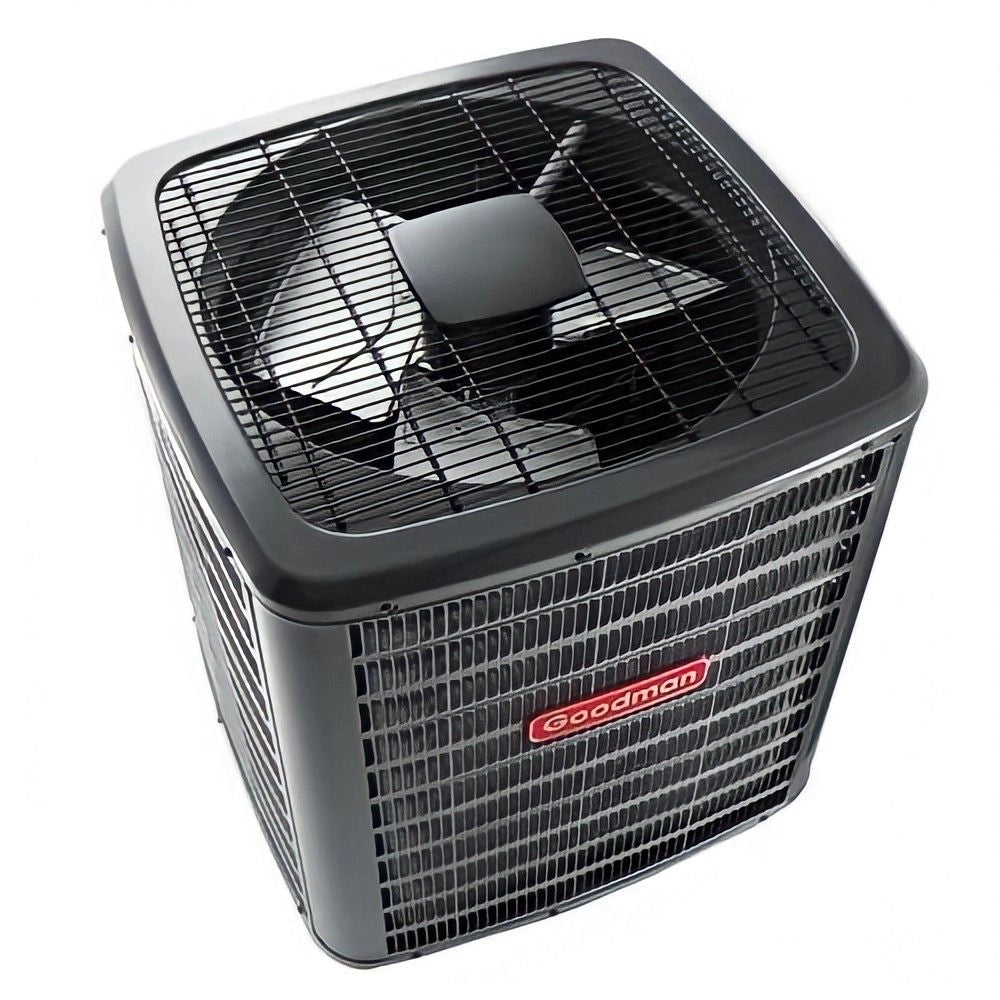
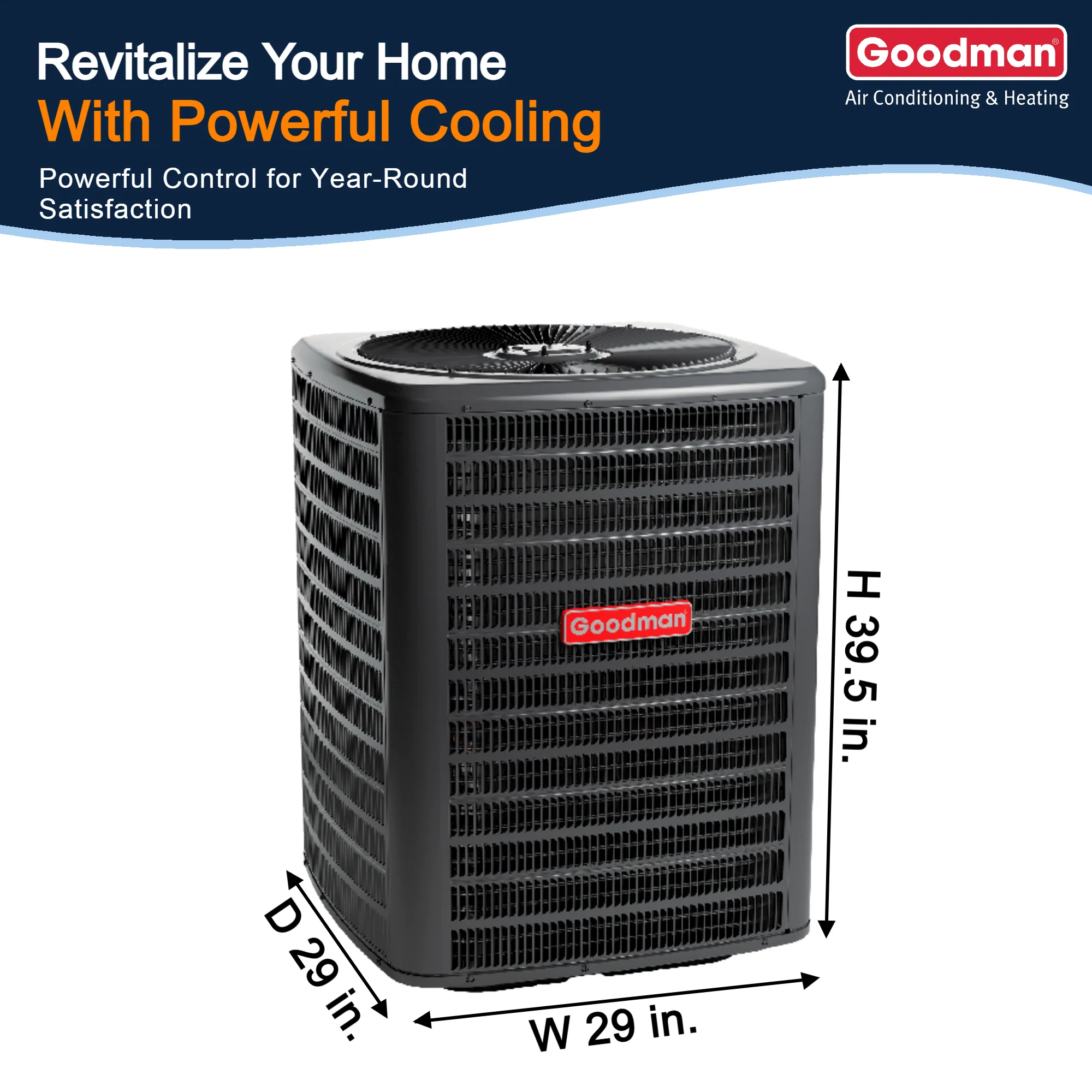
The condenser is the outdoor portion of your HVAC split system — it’s responsible for releasing heat outside, compressing refrigerant, and working with the indoor unit (air handler or furnace coil) and duct system to keep your home cool. When it fails, you either need a major repair or a full replacement.
Because of its central role, when you replace a condenser you’re not just swapping equipment — you’re matching tonnage, refrigerant type, efficiency (SEER2), compatibility with the indoor unit, and your existing ductwork. That’s why the phrase “home AC condenser replacement cost” is very appropriate — you’re dealing with a home system upgrade, not just a part.
If you’re asking “how much does a new AC condenser cost?” or “HVAC condenser replacement cost?”, the short answer is: it varies significantly. And if you’re looking at full system upgrades like the Goodman bundle, you’ll want to understand those variations.
Typical cost ranges for condenser replacement
Let’s look at what the data says — what homeowners typically pay to replace a condenser.
-
According to one trusted source, replacing an AC condenser unit costs $1,200 to $4,200 on average for the unit and installation. (This Old House)
-
Another recent study lists the average cost to replace an AC condenser at $2,900, with a range from about $2,500 to $5,000. (Home Advisor)
-
For full system replacements (not just the condenser), one guide shows average costs of $11,590 to $14,100. (Modernize)
Here’s a breakdown by tonnage (condenser size) from one source:
-
3‑ton unit: material cost ~$1,100‑$1,900; installed ~$1,400‑$3,100. (HomeGuide)
-
5‑ton unit: material cost ~$1,600‑3,000; installed ~$1,900‑4,200.
So when you see “how much is a new AC condenser cost,” you’re not looking at a single number but a range — largely based on size, efficiency, brand, installation complexity, refrigerant type, and compatibility.
What drives the cost of a condenser replacement?
When we talk about “home AC condenser replacement cost” or “HVAC condenser replacement cost,” here are the factors that make the biggest difference:
-
Tonnage / size — A 3‑ton unit costs less than a 5‑ton unit. Bigger homes need bigger units, more material, more labour.
-
Efficiency rating (SEER/SEER2) and refrigerant type — Newer refrigerants (like R‑32) and higher efficiency units generally cost more upfront.
-
Brand & features — Premium brands and features (variable‑speed compressors, sound reduction, premium coils) add cost.
-
Installation complexity & location — If the unit is in a difficult location (tight space, second story, rooftop), or if ductwork needs modification, costs go up.
-
Matching with indoor components & compatibility — If your indoor air handler or coil must be changed to match the new condenser, you may incur extra cost.
-
Permits, disposal, wiring, refrigerant lines — Non‑equipment items like permits, old equipment disposal, refrigerant charge, electrical upgrades also add cost.
Understanding these variables is key to interpreting any quote you get. If you accept a low quote but none of these are addressed, you may be sacrificing performance or future issues.
How the Goodman 3 Ton 14.5 SEER2 R‑32 bundle fits into this cost picture
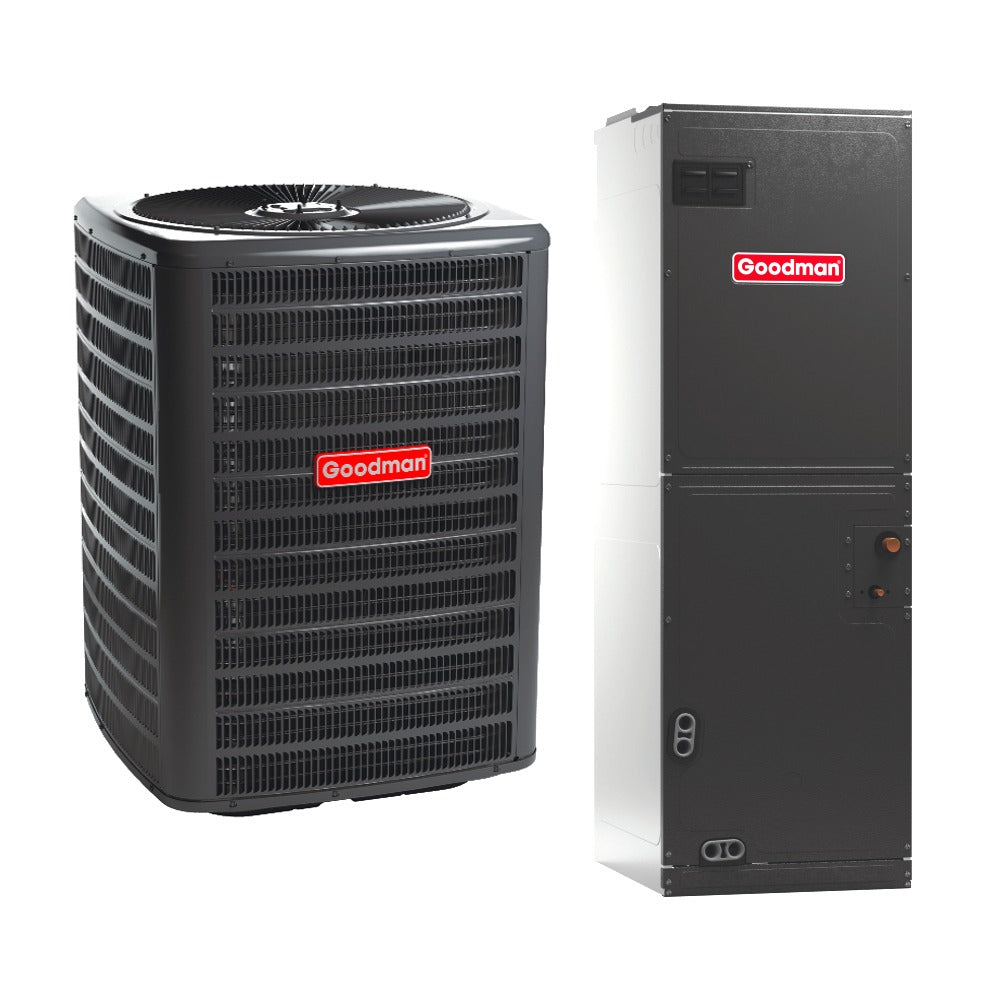
Now let’s connect this to the actual system we’re discussing — the Goodman 3 Ton 14.5 SEER2 R‑32 bundle (condenser + matched air handler). Here’s how I (Mike Sanders) view it:
-
The equipment cost (gear only) for the bundle is in the range of $3,500‑$4,500, based on current listings.
-
Given that, if you’re replacing the condenser (outdoor unit) but keeping the indoor side (if compatible), you might see a lower cost than full replacement — but you must ensure compatibility and good condition of the indoor unit.
-
If you’re doing the full system (condenser + air handler + maybe new ductwork) then you’re in the range of typical full system replacement costs which are much higher than just condenser replacement. (As seen above: $11K+ for full system in many cases.)
Here are my take‑aways:
-
If your current system is sized properly, your ductwork is in decent shape, and you’re replacing only the condenser (because the indoor side is still good and compatible with R‑32, etc.), then replacing with the Goodman 3 Ton bundle could be a smart move — you get the matched system benefit, newer refrigerant, modern equipment.
-
Total installed cost in that scenario might be on the lower end of the condenser replacement cost range (maybe $2,500‑$5,000) plus whatever modifications are needed.
-
If however you’re dealing with older indoor unit, mismatched refrigerant, undersized/oversized system, or major ductwork issues, you should really budget for full system replacement — and the Goodman bundle becomes an attractive value choice.
What you should expect when you get quotes
Here’s what I recommend you ask for and expect when you call contractors:
-
A line‑item quote showing: condenser equipment cost, labour cost, permit/disposal, refrigerant lines, wiring, any ductwork modifications.
-
A manual J load calculation (or at least confirmation of system sizing) so you know that 3 Ton is the correct size for your home.
-
Confirmation that the indoor unit (if not being replaced) is compatible with the new condenser (same refrigerant, matched tonnage). If you’re doing the bundle (both indoor + outdoor) you have fewer compatibility worries.
-
A statement on warranty/brand — what parts are covered, labour warranty, installation date, etc.
-
A timeline of installation, including removal of the old equipment, disposal fees, access issues (attic/rooftop), clean‑up, and testing/commissioning.
-
A contingency budget — ask what happens if during replacement the installer finds ductwork issues, electrical upgrades, refrigerant line problems or corrosion.
Sample budgeting scenarios using the condenser replacement cost ranges
Let me walk you through a few different home homeowner scenarios to show how the numbers might play out.
Scenario A – Smaller home, ~1,200 sq ft, good ductwork, just condenser needs replacing
-
Current system: 3 Ton, 14 SEER, older refrigerant (R‑410A)
-
Indoor unit is in good shape and is compatible with R‑32 and matched tonnage.
-
Contractor quotes: condenser equipment ~$2,000; labour/installation ~$1,200; permit/disposal ~$300; refrigerant & wiring ~$400.
-
Total installed cost ~$3,900.
This is well within the typical range ($2,500‑$5,000) for condenser replacement per sources.
If you choose the Goodman bundle (both indoor + outdoor) you might spend more — but you also get a full matched system and modern refrigerant.
Scenario B – Medium home ~1,800 sq ft, system older, indoor unit also showing wear
-
Here you might decide to replace both condenser + air handler. The bundle price (equipment) ~$3,500‑$4,500.
-
Labour + install + ductwork modifications + permit might push the installed cost to say ~$8,000‑$10,000 depending on region.
This moves into full system replacement territory. The numbers align with full system cost studies (~$11,590‑$14,100) from one source.
Scenario C – Larger home ~2,500‑3,000 sq ft, older system, large home cooling demands
-
Here a 3‑Ton system might be undersized. You might instead require a 4‑5 Ton condenser. That would drive the cost up to the higher end of replacement ranges — maybe $4,000‑$6,000+ for condenser alone, or $10,000+ for full replacement.
-
At that point you must evaluate efficiency (higher SEER), refrigerant, ductwork, possibly zoning, etc.
Is replacing the condenser while keeping the indoor unit always a good idea?
Not always. Here are pros & cons to weigh:
Pros:
-
Lower upfront cost if indoor unit is still in good shape and compatible.
-
Quicker installation.
-
Less disruption.
Cons:
-
Risk of mismatch (tonnage, refrigerant, efficiency) which can reduce system lifespan, efficiency, and comfort.
-
Warranty issues if indoor and outdoor aren’t matched from the manufacturer.
-
If indoor unit is older, savings may be minimal vs full replacement; you might be paying for an inefficient indoor component for years.
-
The outdoor unit has the lifespan of maybe ~12‑15 years in many climates. If indoor is older, you might face another indoor replacement sooner.
So if you’re looking at “how much does a new AC condenser cost?” and you’re thinking of just replacing the condenser, make sure the indoor side and ducts are in strong condition and compatible — otherwise you may regret it.
Why choosing the Goodman 3 Ton 14.5 SEER2 R‑32 bundle makes sense (and what to check)
Because this blog is written in the voice of Mike Sanders — the kind of “plainspoken homeowner educator” — here’s my take:
Why I like the bundle:
-
Using modern refrigerant (R‑32) means future‑proofing.
-
The 14.5 SEER2 efficiency is a good middle ground — you get decent efficiency but not the premium cost of ultra‑high SEER systems.
-
A 3 Ton size is a good fit for many average sized homes when properly sized.
-
The fact that the bundle pairs indoor + outdoor means compatibility is built in — less risk of mismatch.
What you should verify before signing:
-
Confirm the manual J load calculation for your home size, insulation, duct condition, and local climate — to verify 3 Ton is correct.
-
Ensure the indoor unit and outdoor unit match tonnage, refrigerant type, coil size.
-
Ask about installed cost not just equipment cost — labour, permits, ductwork, lines, disposal.
-
Check warranty details: what parts, labour, how long.
-
Ask competitor quotes: get 2‑3 detailed bids to compare equipment, labour, and inclusions.
-
Plan for extras: if ductwork needs repair or replacement, that can add heavily.
-
Timing: Sometimes contractors offer discounts in shoulder seasons (spring/fall) vs high‑demand summer.
Final thoughts and take‑home advice
If I were sitting at your kitchen table, here’s what I’d tell you:
-
Replacing a condenser is often the smart move when your outdoor unit is aging, failing frequently, or inefficient. The cost ranges we reviewed ($1,200‑$4,200 average for condenser replacement; $2,500‑$5,000 typical in many cases) are useful benchmarks.
-
But truly understanding “how much does a new AC condenser cost?” means factoring in your home size, duct condition, refrigerant type, installation complexity, and whether you’re keeping or replacing the indoor unit.
-
The Goodman 3 Ton 14.5 SEER2 R‑32 bundle is a very solid choice for many homeowners who want a matched system with modern refrigerant and reasonable efficiency — especially when your current system is under serious consideration for replacement.
-
However: if your home is larger (2,500‑3,000 sq ft+), your ductwork is poor, or your indoor unit is old and stressed — you may need to budget for more than just the condenser. Full system replacement might make more sense.
-
Always get multiple quotes, ask for line‑items, verify sizing and compatibility, and plan for the “extras” (permit, disposal, duct modifications).
-
Remember: Upfront cost is important, but performance, comfort, efficiency, service life and compatibility matter just as much. Don’t let a low quote lure you into a job that under‑performs.
In short: Think of the condenser replacement not just as buying a new box outside, but as investing in your home’s comfort, efficiency, and future HVAC performance. With the right decision now — one grounded in cost‑realities, sizing, compatibility and workmanship — you’ll be well positioned for years of reliable comfort.