
Why This Topic Matters — and Why I’m Writing
I’ve been doing HVAC for decades. I’ve walked through houses built in the 1940s with radiators, seen homes with window units and space heaters, and watched owners dream of central air — only to balk when they learn their house has no ducts.
If you’re considering installing central air in a house without ducts, you’re not alone. More and more homeowners ask: “Is it even possible to upgrade to central AC?” “What will it cost?” “Is there a better way than gutting walls to run ductwork?”
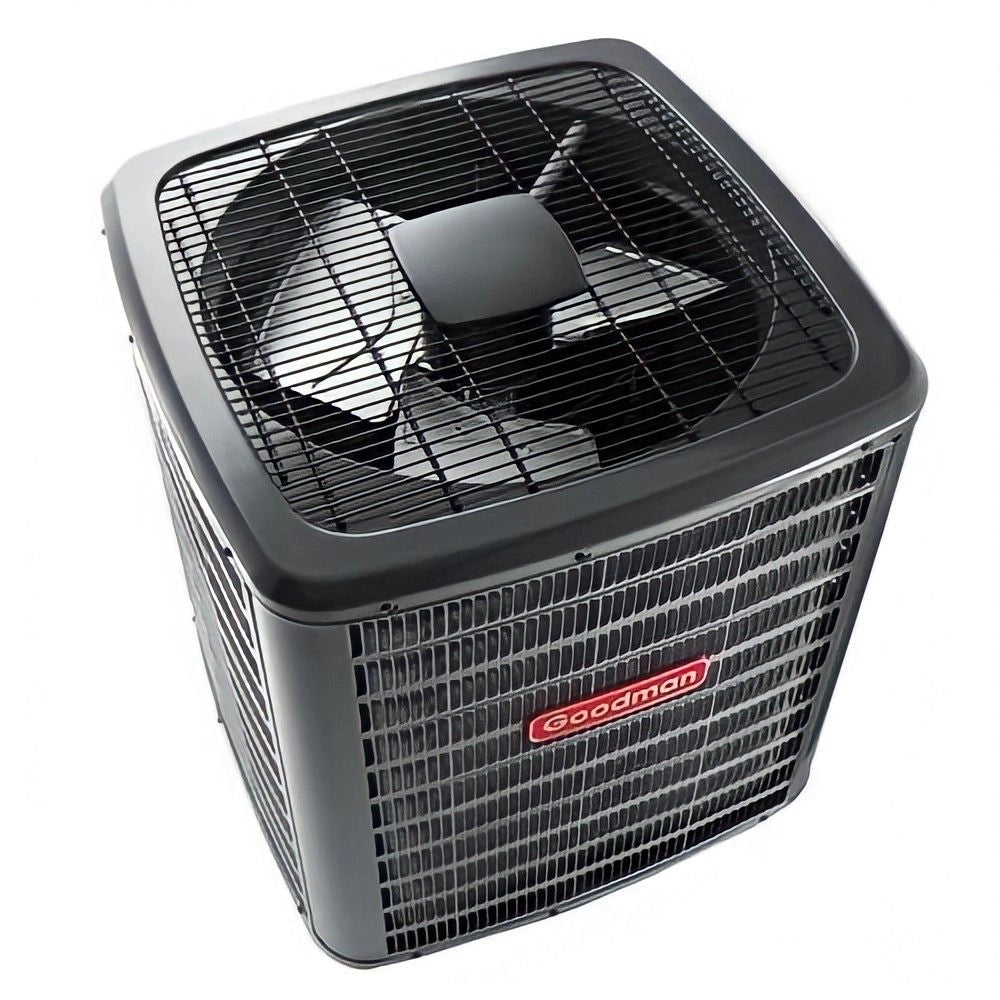
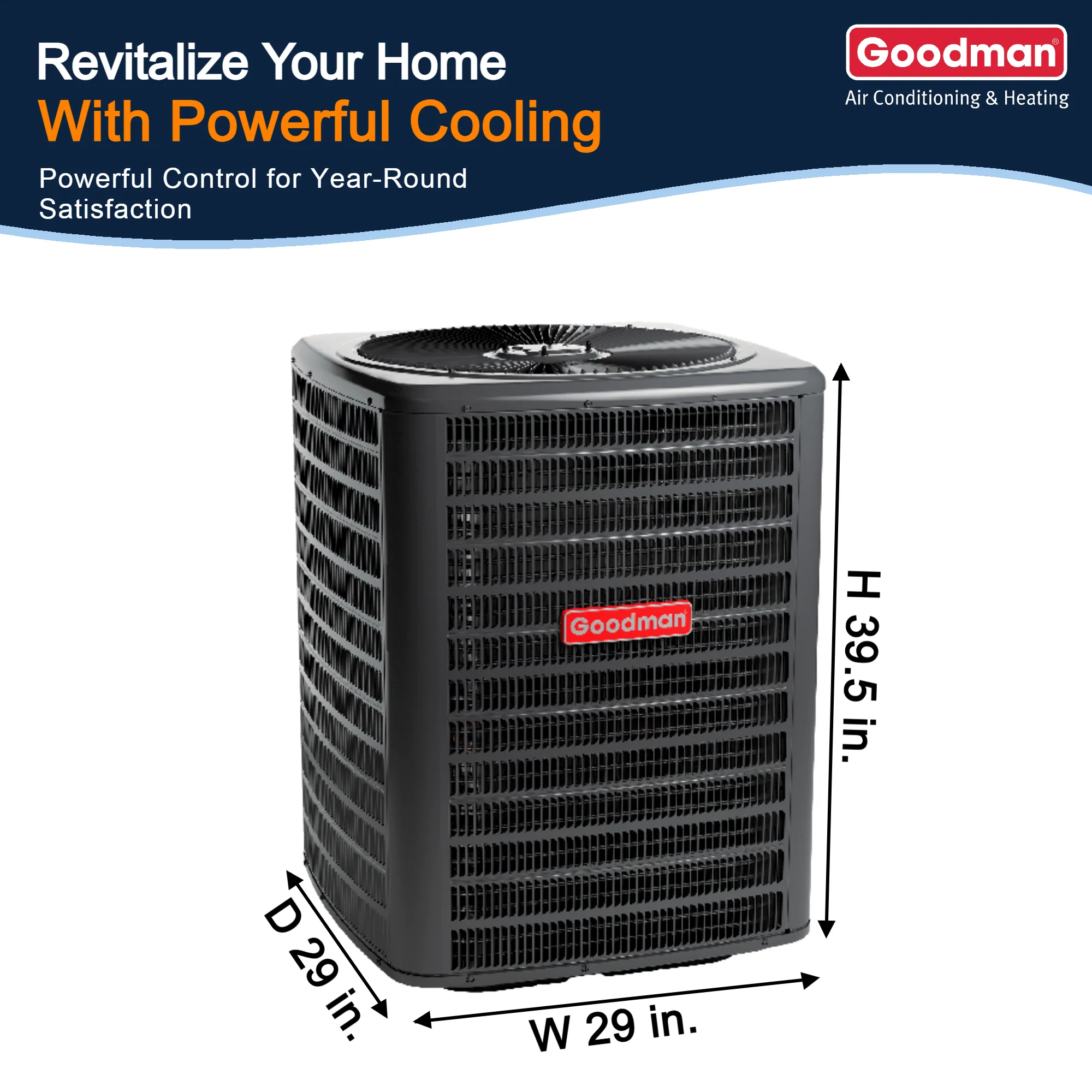
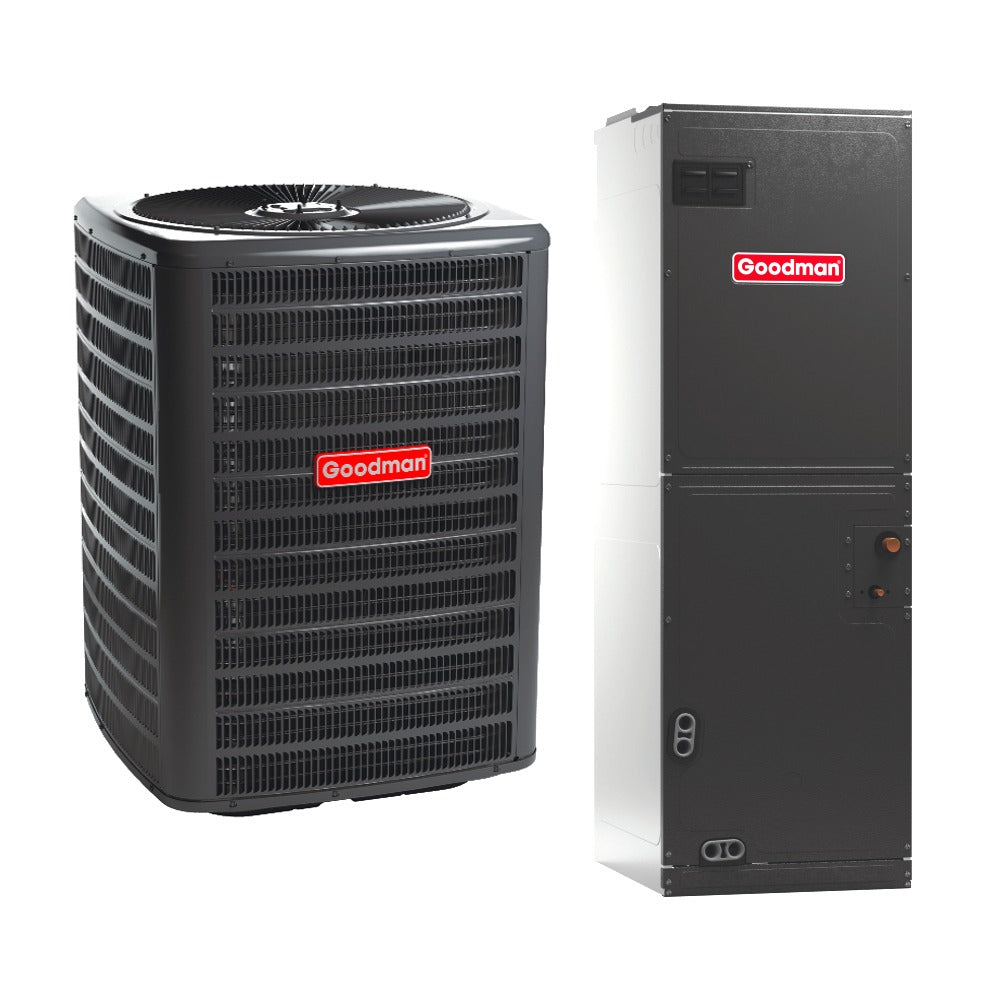
With bundles like the Goodman 3 Ton 14.5 SEER2 R-32 available, having a modern, efficient cooling (and possibly heating) system is tempting. But deciding how to get there — ducted retrofit, ductless, hybrid — isn’t trivial. That’s why I want to walk you through all the angles: the good, the bad, the expensive, the practical.
The Goodman 3 Ton 14.5 SEER2 R-32 Bundle — Is It Even Right for a Home Without Ducts?
Before diving into ductwork or ductless solutions, let’s understand what the Goodman bundle is:
-
A 3-ton system, providing enough cooling capacity for many medium-to-larger homes — assuming ductwork and load calculations are correct.
-
14.5 SEER2 efficiency, giving decent energy performance compared to older systems.
-
Uses R-32 refrigerant, which meets current standards and is considered modern and efficient.
For a standard ducted central air system, this bundle can be a solid match. But if your home lacks ducts, it complicates the equation — because central “air” implies some way to move cooled air from the unit to every room.
That doesn’t mean the Goodman unit is useless — but it does mean you’ve got to seriously weigh how you deliver air: via ducts (requiring major renovation) or some alternative (ductless or hybrid).
Option 1: Retro-Fit Ductwork — Making Your House “Central-Air Compatible”
If you want true whole-house central air — meaning vents, registers, return ducts, a blower / air handler, and the condenser — then for a house without existing ducts you’ll have to install ductwork from scratch. That’s a big job.
What’s involved
-
Running supply and return ducts throughout the house — to every living space, bedrooms, bathrooms, etc.
-
Cutting into walls, ceilings, or floors to install duct runs, vents, and returns.
-
Installing an air handler (evaporator coil + blower) — often in a basement, attic, or utility closet.
-
Setting up condensate drainage, refrigerant lineset, electrical lines, and the outdoor condenser unit.
-
Sealing, insulating, balancing duct airflow; verifying static pressure, airflow volume; ensuring proper load calculations for the 3-ton system.
Cost — what to expect
-
According to a recent cost guide: installing central air with no existing ductwork can cost $8,000 to $24,000 depending on size of home and complexity. (HVAC Calc)
-
Another estimate says that full AC + ductwork for a typical home can end up between $10,000 and $20,000+. (iHomeRank)
-
The reason for the jump: retrofitting ducts into an existing structure — especially an older home — is labor-intensive and often intrusive. Walls, ceilings, floors, attic space, crawlspaces — all might need modification.
Pros of retro-fitting ductwork
-
Achieves a true central HVAC system: air is distributed evenly, whole-house cooling (or heating), typical thermostat control, familiar vents/registers.
-
Using a robust system like the Goodman 3 Ton R-32 bundle with proper duct design gives efficient cooling with capacity for whole-house needs.
-
Once done, maintenance and operation are like any standard central air system — familiar, conventional, and often easier for future servicing or resale.
Cons & challenges
-
High upfront cost and significant construction disruption — walls, interiors, and design may be altered.
-
Potential for duct leaks, high static pressure, poor airflow if duct design/installation is poor.
-
Need to factor in permitting, labor, structural changes, insulation, possibly electrical upgrades, drainage, and careful planning.
-
For smaller houses or houses with odd layouts (multiple floors, additions, limited attic/basement space), the ductwork routing might be very complicated or compromised.
Option 2: Go Ductless — Skip the Ductworks, Use Mini-Splits or Multi-Zone Systems
If retrofitting ducts sounds like too much hassle (and expense), there is a widely used alternative: use a ductless system, often called a mini-split or multi-zone ductless AC.
What is a ductless system
-
A ductless system includes one outdoor condenser/compressor and one or more indoor air handlers (mounted on wall, ceiling, or floor) in different zones or rooms.
-
Each indoor unit delivers conditioned air directly into a room — no ducts, no vents, no registers.
-
Good for homes without ductwork, older homes, additions, or when you want room-by-room control.
According to HVAC cost guides: ductless mini-split installation typically costs $2,000 to $6,000 for a single-zone system; multi-zone (whole-house coverage) can cost more depending on number of zones. (Today's Homeowner)
A recent analysis comparing ductless vs central air notes that for homes without ducts, ductless systems are often less expensive than retrofitting full ductwork.
Pros of ductless
-
Much lower initial cost compared to full duct retrofit — especially if you only want to cool/heat certain rooms or portions of the house.
-
Minimal disruption — no need to cut walls or ceilings for ducts; simpler installation.
-
Energy efficiency — since there's no duct losses (duct losses can account for 20–30% energy waste) and often uses inverter-driven compressors for better efficiency. (HVAC Calculate)
-
Zoned comfort — you can cool/heat only rooms in use, avoid overcooling empty spaces.
Cons & trade-offs
-
For whole-house conditioning, you may need multiple indoor units (“zones”) — cost adds up, and installation becomes more complicated.
-
Indoor units are more visible (wall/ceiling/floor mounted) compared to central vents/registers — aesthetics may concern some.
-
Ductless systems may not deliver the same “whole-house airflow feel” as central air with proper ducting, especially in larger or more compartmentalized homes.
-
If you already own or plan to buy the Goodman 3-ton bundle, using it as a ductless system doesn’t make sense — because that system is built for ducted, whole-house airflow, not distributed mini-split heads.
Option 3: Hybrid Approach — Ducted + Ductless, or Ductwork + Zoned Ductless Add-On
For some homes — especially older homes or those with mixed layouts (some rooms easy to duct, others not) — a hybrid solution can make sense. This might mean:
-
Doing a partial duct retrofit (e.g. main floor) and using ductless units for areas where duct runs would be impractical (attic rooms, additions, finished basements).
-
Using the Goodman 3 Ton (or another ducted system) for main distribution, but supplementing with ductless units for zones where airflow won’t reach efficiently.
This approach tries to balance cost, disruption, and comfort — but it also complicates planning, installation, and controls.
Realistic Cost Comparison: What You Might Spend
Here’s a rough table (ballpark) based on what I see in the industry — for a home with no existing ductwork:
| Scenario | Estimated Cost Range* |
|---|---|
| Full ducted central AC + new ducts (retrofit) — unit + ductwork + installation | $8,000 to $24,000+ (often $10,000–$20,000 for typical 2,000 sq ft home) |
| Ductless mini-split (single zone / small area) | $2,000 – $6,000 installed |
| Ductless multi-zone (whole-house) | $5,000 – $15,000+, depending on number of zones and complexity |
| Hybrid (partial ducts + some ductless zones) | Varies widely — depends on scope of ducts + number of zones + complexity; often somewhere between ductless full-house and full ducted retrofit. |
*Note: These are typical ranges. Final cost depends heavily on home size, layout (single story vs multi-story), how invasive the ductwork installation is (walls/ceilings/floors), required electrical upgrades, permits, code compliance, and system efficiency / capacity.
Why Some Homeowners Try to Retrofit — Despite the Cost
You might ask: “If ductless is cheaper and simpler, why bother with full ducts at all?” Good question. There are several reasons people still choose ducted central air even when their home didn’t originally have ducts:
-
Whole-house uniform comfort: Central ducted systems deliver cooled (or heated) air evenly — not room-by-room. For many families, that means consistent temperatures, simpler controls (single thermostat), and a “whole-house feel.”
-
Resale value: A properly ducted central HVAC system tends to add more resale value (or avoid resale resistance) than a patchwork of ductless units. Some buyers expect vents, registers, return grills — not wall-mounted AC heads.
-
Better air distribution and filtration: With proper ducts, you can add whole-house filtration, humidity control, even integrated heating (if paired with furnace or heat pump), which is often more complex with ductless systems.
-
Capacity for larger loads: A 3-ton system like the Goodman bundle is sized for whole-house cooling. If your home is large, or if you expect heavy cooling demand, ducted systems scale better.
Why Many Experts (and I) Recommend: For No-Duct Homes, Start With Ductless
If I was advising a homeowner today — especially in a house with no ducts — here’s where I’d lean, and where I’d caution:
When ductless makes more sense
-
The house is modest size, or you only need cooling/heating for certain zones or rooms (living room + bedrooms, basement, addition).
-
You don’t want major renovation — no invasive cutting of walls/ceilings, minimal disruption.
-
You care about upfront cost, want to avoid big debt, or want phased installation (add units over time as budget permits).
-
Energy efficiency and zoning are priorities — you don’t need to cool the whole house at once.
When ducted retrofit may be justified
-
You plan to stay in the home long-term and want whole-house comfort, resale value, and full HVAC integration (heating + cooling + filtration).
-
The home layout allows for duct runs without excessive structural changes (unfinished attic, basement, drop ceilings, accessible cavities).
-
You're comfortable dealing with the cost, disruption, and time required — or the budget supports it without compromising other priorities.
-
You want the capacity and distribution of a robust system like the Goodman 3 Ton R-32 bundle for larger square footage or high cooling demand.
What It Really Costs — More Than Money
When considering installing central air in a house without ducts, don’t just think about your checkbook. Think about time, disruption, long-term maintenance, flexibility, and comfort trade-offs.
-
Disruption: Full duct retrofit means cutting into walls/ceilings, perhaps opening up multiple rooms, possible drywall repair, repainting, restructuring space — not just a weekend project.
-
Complexity: Proper duct design — supply/return balancing, static pressure, airflow volume, correct vent placement — is a specialized job. A poor design ruins comfort and efficiency.
-
Maintenance & Efficiency: Ducted systems require regular maintenance: filter changes, duct cleaning, possible sealing or insulation fixes, airflow balancing over time. Ductless is simpler: less infrastructure, fewer leak points, simpler maintenance.
-
Flexibility: Ductless systems are modular — easier to add/subtract zones, relocate heads, or expand cooling as needed. Ducted systems — once installed — are more permanent, less flexible.
-
Resale & Comfort Expectations: Some buyers expect central air and ducted HVAC; others are fine with ductless mini-splits. The “perception of comfort” with vents vs wall-mounted heads can vary.
My Take — The “Tony Marino Verdict” for No-Duct Homes
Look — if you asked me as a hard-nosed HVAC guy — here’s what I’d say:
If your home lacks ductwork and you’re not ready to rip apart walls, ceilings, or floors — you start with a ductless system. It’s smart, cost-effective, lower risk, and gets you comfort quickly without massive disruption.
If you’re committed for the long haul — plan to stay many years, want whole-house comfort, care about resale value, and have space/layout that supports duct runs — then a full duct retrofit plus central system (like Goodman 3 Ton R-32) is worth serious consideration. You just have to budget correctly, expect disruption, and ensure everything’s properly designed and installed.
If I were you — and I owned a 1950s/1970s/older home with no ducts — I’d likely go ductless first. But if I planned to be there for decades — and wanted that “classic central air” feel — I’d factor in cost and disruption and do the ducted system, maybe phased over time.
Practical Advice for Homeowners Thinking About This
If you’re reading this because you’re thinking “I want central air — but I don’t have ducts,” here’s a quick action checklist before you decide:
-
Measure your home. Square footage, number of rooms, levels. This helps determine load and whether a ductless or ducted system makes sense.
-
Inspect available spaces. Do you have a basement, attic, crawl space, closets, chases, or drop ceilings that could hide ducts? If not — duct retrofit may be very invasive.
-
Get multiple quotes. Ask HVAC contractors about: full duct retrofit cost, ductless multi-zone options, hybrid options. Compare not just price, but disruption and long-term value.
-
Plan for disruption. If ducts must go through finished walls/ceilings, plan for drywall, painting, finish work. Factor that into budgeting.
-
Think long-term. Will you stay in the house 10+ years? Planning to expand or remodel? Do you want resale value? These impact whether ducted central air is worth it.
-
Consider ductless first — especially if budget or disruption are concerns. It’s a valid, practical solution many homeowners use successfully.
-
If you choose ducted, prioritize proper design and installation. Poor ductwork does more harm than good — high energy bills, uneven cooling, airflow issues, noise, etc.
Final Thoughts
Installing central air in a house without ducts — it’s absolutely possible. But it’s rarely simple. Whether you go ductless, ducted retrofit, or a hybrid solution — each path has trade-offs: cost, disruption, aesthetics, comfort, long-term value.
If I were advising someone today — with the way homes are built and budgets work — I’d lean toward ductless for flexibility and lower risk, or ducted only if you’re committed to whole-house comfort and longevity.
A system like the Goodman 3 Ton 14.5 SEER2 R-32 bundle is strong and capable — but to get the most out of it, you need the right infrastructure (ducts) and a serious plan.
For many people living in older homes (or homes without ducts), making that commitment is a big decision — but with the right planning, the payoff can be real: steady comfort, better cooling, long-term value, and a home that feels built for modern living.