
If there is one service call I’ve taken more times than I can count, it’s the homeowner who says, “My electric furnace keeps tripping the breaker.” That single sentence almost always leads to the same root question: Is the breaker sized correctly for the furnace? When we talk about breaker size for electric furnace systems, we’re not talking about a guess or a rule of thumb. We’re talking about precise electrical engineering, manufacturer specifications, and strict code compliance.
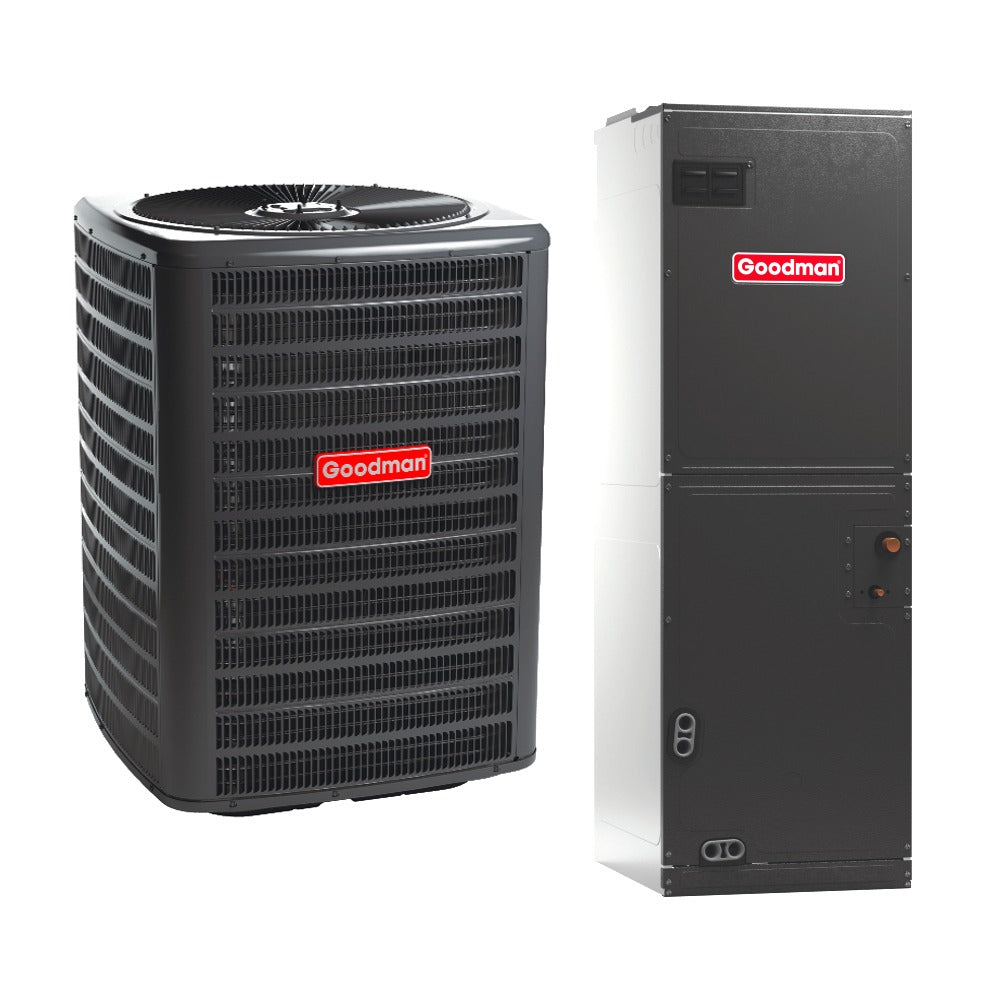
The Goodman MBVK electric furnace is an excellent case study for understanding circuit breaker size for electric furnace installations because it represents what modern electric heating systems demand: higher efficiency, modular heat strips, and a clear relationship between heating capacity and electrical load. If you own an MBVK, install them, or service them, understanding breaker sizing is not optional—it is foundational.
In this article, I’ll walk you through how breaker sizing actually works, why electric furnaces draw so much current, how the MBVK is designed to manage that load, and how mistakes in breaker sizing can shorten equipment life or create serious safety hazards.
Why Breaker Size Matters More for Electric Furnaces Than Almost Any Other Appliance
Electric furnaces are unique in residential HVAC. Unlike gas furnaces, which rely on combustion for heat and electricity mainly for controls and the blower, electric furnaces create heat electrically. That means resistance heating elements—essentially giant, controlled versions of toaster coils—are doing the heavy lifting.
Those heating elements pull significant amperage, often more than any other single appliance in the home.
When homeowners or even inexperienced installers underestimate breaker size for electric furnace systems, several things happen:
-
Breakers trip during high-demand heating cycles
-
Heating strips fail prematurely due to voltage drop
-
Wiring insulation overheats
-
Nuisance shutdowns become routine
-
In worst cases, fire risk increases
Circuit breaker size for electric furnace applications isn’t just about keeping the unit running—it’s about protecting the entire electrical system.
Understanding the Goodman MBVK Electric Furnace Platform
Before we talk numbers, it’s important to understand what the Goodman MBVK actually is.
The MBVK is an electric air handler and furnace platform designed to work with optional electric heat kits. It is commonly installed in:
-
All-electric homes
-
Heat pump systems requiring auxiliary heat
-
Manufactured and modular housing
-
Regions where gas is unavailable or undesirable
Unlike older fixed-output electric furnaces, the MBVK is modular. Heat capacity is determined by the heat strip kit installed, which can range widely in kilowatt output. This modularity is efficient—but it also means breaker sizing must match the specific configuration, not just the cabinet.
The Relationship Between Kilowatts, Amps, and Breaker Size
To understand breaker size for electric furnace systems, you must understand the math behind electric heat.
Electric heat output is rated in kilowatts (kW). Electrical current is measured in amps (A). Voltage is typically 240V in residential electric furnaces.
The basic formula is:
Amps = Watts ÷ Volts
Since 1 kW equals 1,000 watts, a 10 kW heat strip produces 10,000 watts of heat. At 240 volts, that translates to roughly 41.7 amps.
However, breakers are not sized at exact amperage. The National Electrical Code requires continuous loads—like electric heat—to be protected at 125% of the actual load. This buffer prevents overheating during long run times.
So that same 10 kW strip requires a breaker capable of handling more than 50 amps.
This is where many breaker size for electric furnace mistakes happen.
Typical Heat Strip Sizes Used in the Goodman MBVK
The Goodman MBVK can accept a range of electric heat kits, often in staged configurations. Common sizes include:
-
5 kW
-
7.5 kW
-
10 kW
-
15 kW
-
20 kW
Each of these changes the required circuit breaker size for electric furnace operation.
Let’s break that down.
Breaker Size for Electric Furnace: Common MBVK Configurations
5 kW Heat Strip
A 5 kW electric heater draws approximately 20.8 amps at 240V. Applying the NEC 125% rule, the required circuit capacity is roughly 26 amps. In practice, this typically means a 30-amp double-pole breaker.
This is the smallest MBVK heat configuration and is often used as supplemental heat with a heat pump in mild climates.
7.5 kW Heat Strip
At 7,500 watts, current draw is about 31.25 amps. Applying the safety factor brings us close to 39 amps.
Most manufacturers specify a 40-amp or 45-amp double-pole breaker for this configuration, depending on wiring size and heater staging.
10 kW Heat Strip
This is one of the most common MBVK installations.
A 10 kW heater draws roughly 41.7 amps. With the 125% factor, you’re now over 52 amps. That means a 60-amp breaker is typically required.
This is also the point where wire size becomes critical. Undersized conductors paired with the correct breaker still create dangerous heat buildup.
15 kW Heat Strip
Now we’re in serious electrical territory.
A 15 kW heater draws approximately 62.5 amps. Applying the safety factor puts the load near 78 amps. That typically means an 80-amp or 90-amp breaker, often split into multiple circuits depending on the MBVK heat kit design.
Many MBVK units at this level require two separate breakers, not one oversized breaker.
20 kW Heat Strip
This configuration is common in colder climates with all-electric homes.
A 20 kW heater draws about 83 amps. After the safety factor, you’re over 100 amps. At this level, breaker size for electric furnace systems often involves dual 60-amp or dual 70-amp breakers, each feeding separate heating stages.
This is not optional. The manufacturer’s wiring diagram dictates the exact breaker arrangement.
Why “Bigger Is Better” Is a Dangerous Myth
I’ve walked into homes where someone thought they solved a tripping issue by simply installing a larger breaker. That is one of the most dangerous mistakes you can make.
Circuit breakers protect the wiring, not the appliance.
If you oversize the breaker without upsizing the conductors, the breaker will no longer trip when the wire overheats. That heat builds silently inside walls and cabinets until insulation breaks down.
This is why breaker size for electric furnace installations must always match:
-
Heat strip kilowatt rating
-
Manufacturer MCA (Minimum Circuit Ampacity)
-
Manufacturer MOCP (Maximum Overcurrent Protection)
-
Wire gauge
Goodman clearly lists these values in the MBVK documentation, and they are not suggestions.
Manufacturer Specifications Always Override Rules of Thumb
One of the first places I send technicians and homeowners alike is manufacturer documentation. Goodman publishes clear electrical data for the MBVK series, and it must be followed.
You can see how Goodman structures electrical requirements by reviewing manufacturer technical literature available through resources like the Goodman Manufacturing product documentation library, which outlines MCA and breaker limits for each configuration.
Ignoring this information is how systems end up out of compliance and unsafe.
How the National Electrical Code Influences Breaker Size
The NEC doesn’t list specific breaker sizes for each furnace model, but it establishes the framework manufacturers must follow.
Electric furnaces fall under continuous load rules, which means:
-
Conductors must be rated at 125% of load
-
Breakers must not exceed the MOCP rating
-
Heating equipment must be on dedicated circuits
The NEC’s treatment of fixed electric space-heating equipment explains why circuit breaker size for electric furnace installations is rarely a neat, round number.
For a deeper understanding of how the NEC classifies electric heating loads, the National Fire Protection Association’s guidance on electric heating equipment is a valuable reference.
Dedicated Circuits: A Non-Negotiable Requirement
Every Goodman MBVK electric furnace must be on one or more dedicated circuits. Sharing a breaker with other loads is prohibited.
Why?
Because electric heat doesn’t cycle like lighting or receptacles. It can run continuously for hours during cold weather. Any additional load on that circuit introduces unpredictable current spikes.
Breaker size for electric furnace systems is calculated assuming only the furnace is on that circuit.
Why MBVK Units Often Use Multiple Breakers
Many homeowners are surprised to find two or even three breakers labeled “furnace” in their panel.
This is not a mistake.
Larger MBVK heat kits are staged. Each stage may have its own breaker and contactor. This allows:
-
Reduced inrush current
-
Better temperature control
-
Less stress on electrical components
If one stage fails or trips, the furnace may still operate at reduced capacity, preventing a complete loss of heat.
Breaker Size vs. Wire Size: They Must Match
A breaker is only half the equation. The wire feeding the MBVK must be sized correctly for the breaker.
Common pairings include:
-
30A breaker with 10 AWG copper
-
60A breaker with 6 AWG copper
-
80A breaker with 4 AWG copper
Installing a 60-amp breaker on 8 AWG wire is a violation and a fire risk, regardless of whether the furnace “seems to work.”
Resources such as Underwriters Laboratories’ electrical safety guidance explain how conductor overheating occurs long before a breaker trips.
Common Symptoms of Incorrect Breaker Size
If the breaker size for electric furnace systems is wrong, the MBVK will usually tell you—indirectly.
Watch for:
-
Breakers tripping only during cold snaps
-
Heat works briefly, then shuts off
-
Blower runs but heat strips drop out
-
Discolored wiring in the furnace cabinet
-
Burnt smell near breaker panel
These are not nuisance issues. They are warning signs.
MBVK, Heat Pumps, and Auxiliary Heat Breaker Sizing
Many MBVK units are paired with heat pumps. In these systems, the electric furnace acts as auxiliary or emergency heat.
This does not reduce breaker size requirements.
When outdoor temperatures drop, auxiliary heat can run for extended periods. The breaker must be sized as if the electric heat is the primary source, not a backup.
The U.S. Department of Energy’s explanation of electric resistance heating makes it clear why auxiliary heat can become the dominant load in cold conditions.
When to Call a Professional
Breaker sizing is not a DIY experiment. If you are unsure about:
-
Heat strip kilowatt rating
-
Existing breaker configuration
-
Wire gauge feeding the furnace
-
Panel capacity
You need a licensed electrician or HVAC professional.
Correcting breaker size for electric furnace installations often involves panel upgrades, additional circuits, or load calculations that go beyond furnace wiring alone.
Final Thoughts from the Field
After decades in HVAC, I can tell you this with confidence: electric furnaces are reliable, efficient, and safe when installed correctly. The Goodman MBVK is a solid platform, but it demands respect for electrical fundamentals.
Breaker size for electric furnace systems is not about convenience—it is about compliance, performance, and safety. Circuit breaker size for electric furnace installations must always be based on the exact configuration of the equipment, not assumptions or shortcuts.
If your MBVK is properly matched with the correct breakers, correct wiring, and correct installation practices, it will deliver steady, dependable heat for many years. If it isn’t, the breaker panel will eventually remind you—usually on the coldest night of the year.
And that’s one call none of us enjoy taking.