Your thermostat says 72°F.
Your AC is running.
Cold air is coming out of the vents.
So why does your house still feel sticky, clammy, or just plain uncomfortable?
Here’s the Savvy truth:
👉 Cooling and dehumidifying are two different jobs—and your AC may only be doing one of them.
Let’s break down why humidity lingers, what your system is trying to tell you, and how to fix the real issue instead of cranking the thermostat lower and wasting energy.
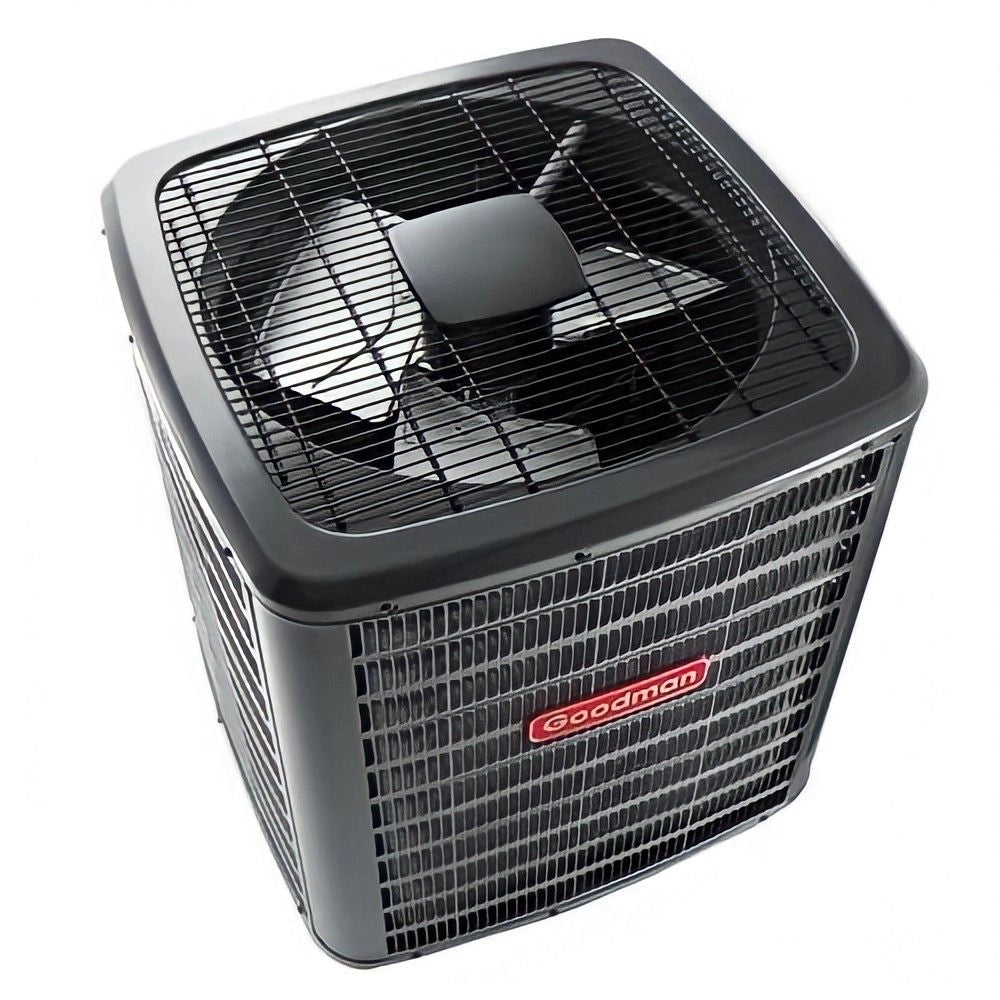
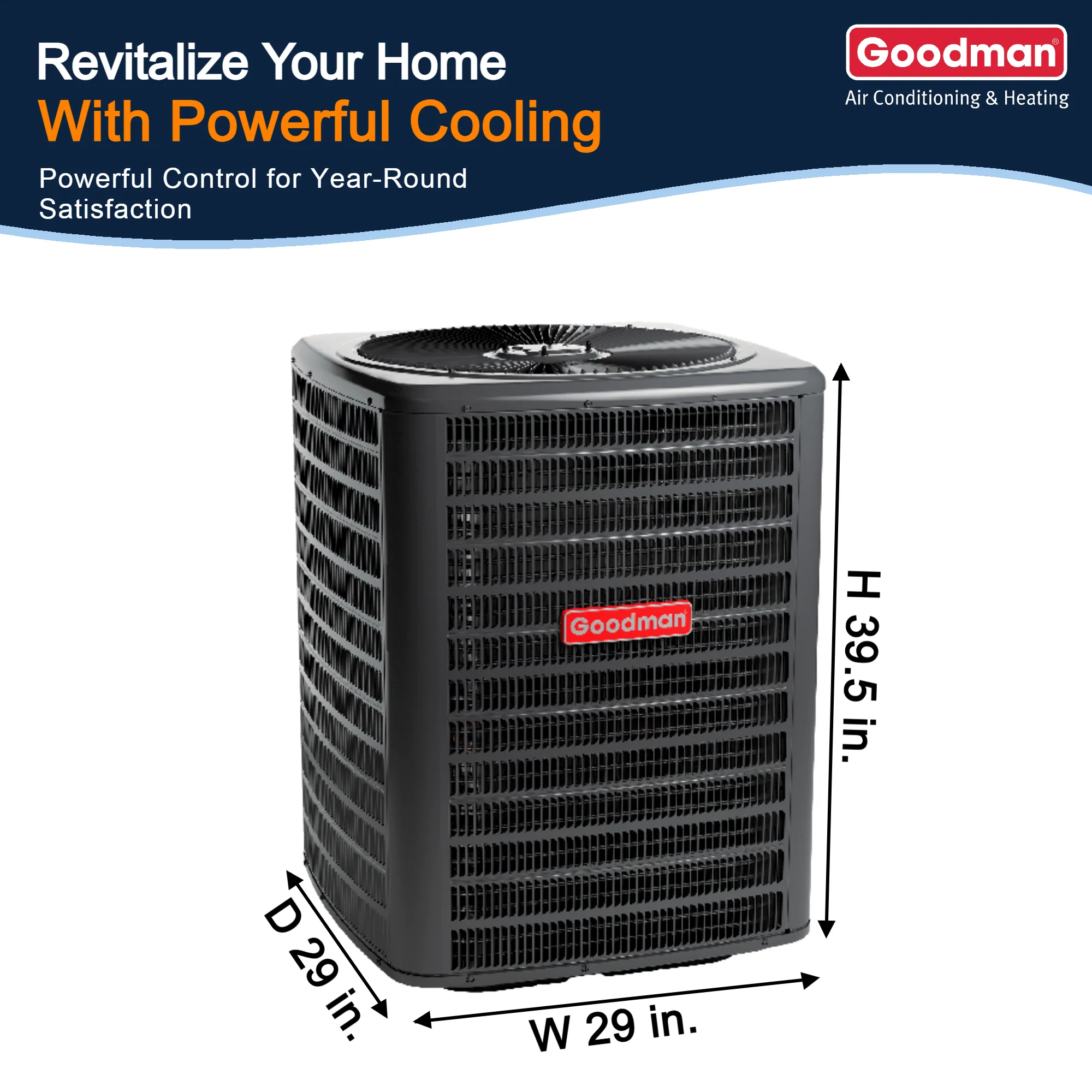
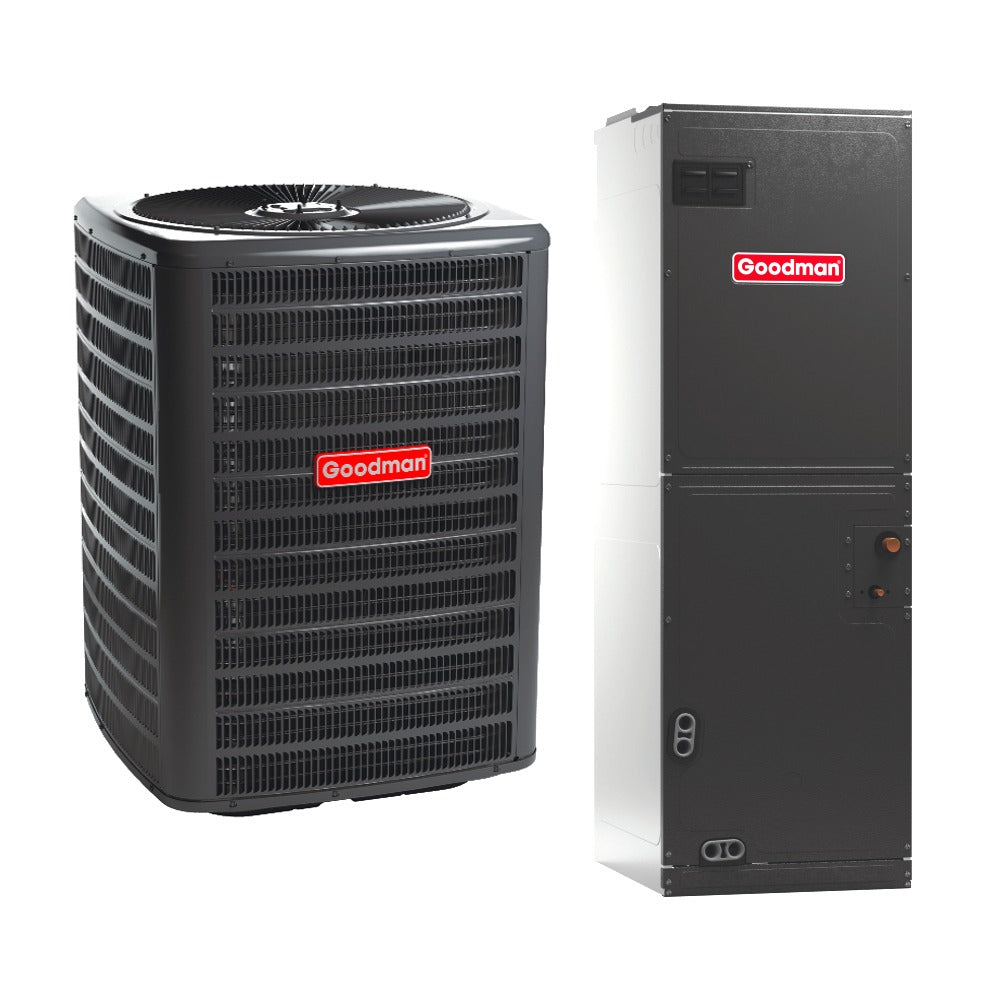
2.5 Ton Up To 15 SEER2 Goodman Air Conditioner Model - GLXS3BN3010
🧠 First: Why Humidity Matters More Than You Think
Humidity affects comfort more than temperature alone.
At the same temperature:
-
Low humidity feels crisp and comfortable
-
High humidity feels warm, heavy, and sticky
That’s because moisture in the air:
-
Slows sweat evaporation
-
Makes your body feel hotter
-
Encourages mold and dust mites
💡 Savvy insight:
If humidity is high, your AC hasn’t finished the job—even if the temperature looks right.
❄️ How Your AC Is Supposed to Remove Humidity
When working correctly, your AC:
-
Pulls warm, humid air across the evaporator coil
-
Moisture condenses on the cold coil
-
Water drains away through the condensate line
-
Drier, cooler air circulates back into the home
If any part of that process breaks down, humidity stays behind.
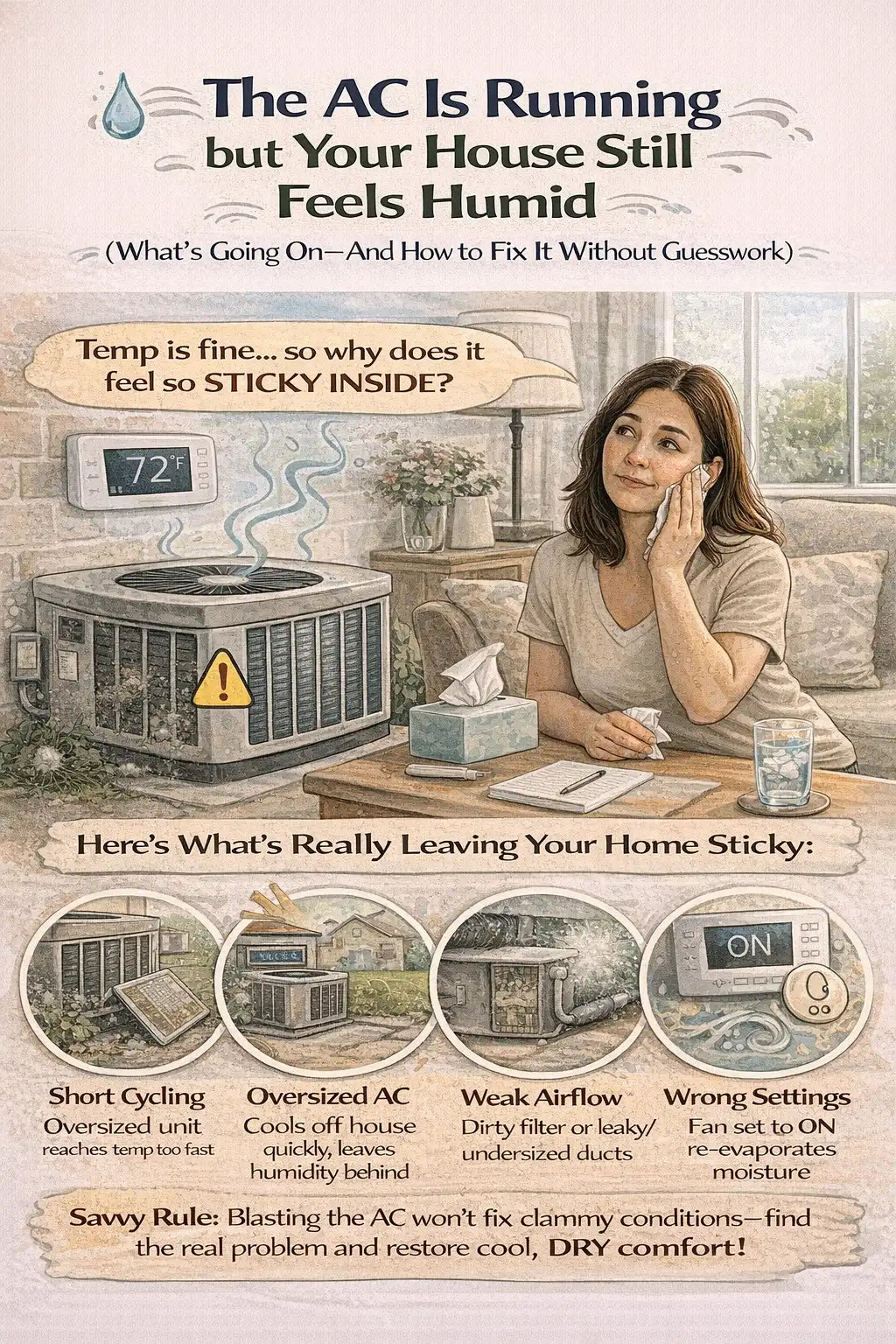
🚨 The #1 Cause of High Humidity: Short Cycling
Short cycling happens when the AC:
-
Turns on
-
Cools the air quickly
-
Shuts off before removing enough moisture
This is the most common reason homes feel cool but humid.
Why it happens:
-
Oversized AC system
-
Thermostat reaches setpoint too fast
-
Poor airflow design
💡 Moisture removal requires longer run times, not bursts.
📐 Oversized AC Systems (Yes, Bigger Can Be Worse)
An oversized AC:
-
Slams the temperature down quickly
-
Shuts off before humidity is removed
-
Leaves moisture suspended in the air
This often shows up as:
-
Cold but clammy rooms
-
Frequent on/off cycling
-
Moldy smells or window condensation
Correct sizing matters as much as efficiency ratings.
🌪️ Airflow Problems That Kill Dehumidification
Humidity control depends on air spending enough time on the coil.
Airflow problems that reduce moisture removal:
-
Fan speed set too high
-
Dirty air filters
-
Leaky or undersized ductwork
-
Poor return air placement
If air moves too fast, it doesn’t stay cold long enough to condense moisture.
🎛️ Thermostat & Fan Settings That Trap Moisture
Small settings can have big humidity effects.
Common mistakes:
-
Fan set to ON instead of AUTO
-
Smart thermostat humidity control disabled
-
Large temperature setbacks during the day
💡 Fan-on mode can re-evaporate moisture back into the air after cooling stops.
🧊 Dirty or Frozen Evaporator Coils
When evaporator coils are dirty or frozen:
-
Moisture can’t condense properly
-
Airflow drops
-
Cooling becomes inefficient
This can create a paradox:
👉 The AC runs longer—but dehumidifies less.
🌿 Outdoor Humidity + Infiltration Issues
Sometimes the AC is doing its job—but outdoor humidity keeps sneaking in.
Common entry points:
-
Poorly sealed doors or windows
-
Attic air leaks
-
Unsealed duct chases
-
Crawlspace moisture
Your AC ends up fighting constant humidity reinforcements.
🔌 System Design Limits (What Your AC Can—and Can’t—Do)
Standard AC systems are designed to:
-
Control temperature
-
Remove moderate humidity
They are not dedicated dehumidifiers.
In extremely humid climates or homes with:
-
Large families
-
Basements
-
Poor ventilation
…supplemental dehumidification may be needed.
🧰 What You Can Check Yourself
Savvy homeowners can safely check:
-
Thermostat fan set to AUTO
-
Air filter condition
-
Condensate drain flowing freely
-
Whether the AC runs long enough
-
Humidity readings (ideal indoor: ~40–55%)
🚫 Do not adjust refrigerant or blower speeds without guidance.
🛑 When Humidity Signals a Bigger Problem
Call a professional if:
-
Humidity stays high despite long run times
-
You see condensation on vents or walls
-
Musty smells persist
-
Mold or mildew appears
-
Energy bills spike with no comfort gain
Ignoring humidity can damage:
-
Walls and ceilings
-
Flooring
-
Furniture
🧠 How to Lower Humidity the Smart Way
Savvy solutions include:
-
Correct system sizing
-
Adjusting blower speed properly
-
Sealing ducts and air leaks
-
Improving drainage
-
Using smart humidity controls
-
Adding a whole-home dehumidifier if needed
Efficiency and humidity guidance:
https://www.energy.gov/energysaver/air-conditioning
🧠 Final Savvy Takeaway
If your AC is running but your house still feels humid, the system isn’t broken—it’s misaligned with your home’s needs.
Humidity problems usually come from:
-
Short cycling
-
Oversizing
-
Airflow issues
-
Settings that work against moisture removal
Fix the cause, not the thermostat setting—and you’ll finally get the comfort your AC was meant to deliver.
Cool is good.
Cool and dry is better.
Buy this on Amazon at: https://amzn.to/47dm4yJ
In the next topic we will know more about: What Your Installer Never Told You About Sizing Your Condenser Right