By Savvy Mavi — Sustainability-Focused HVAC Strategist
Hotels have perfected something most homeowners desperately need: high-efficiency, room-by-room comfort. Hotels cool (and heat) thousands of rooms every year with extreme precision. They do it quietly, reliably, and — when designed right — with surprisingly low energy consumption.
And this is where things get fun.
Because the same hotel-grade PTAC design strategies used in high-end hospitality can be adapted to residential homes, apartments, mother-in-law suites, basements, converted garages, bonus rooms, and ADUs.
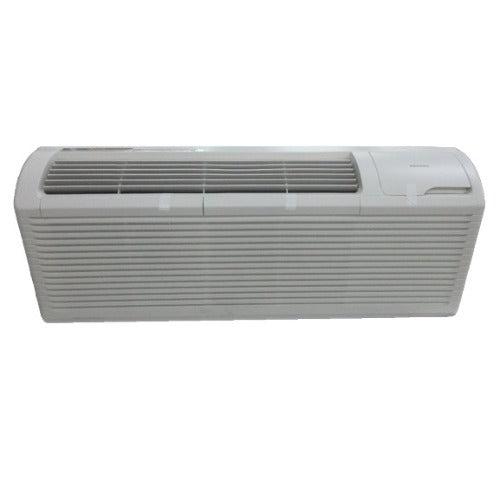
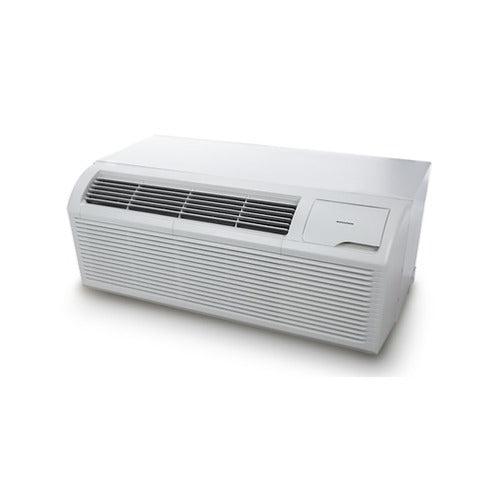
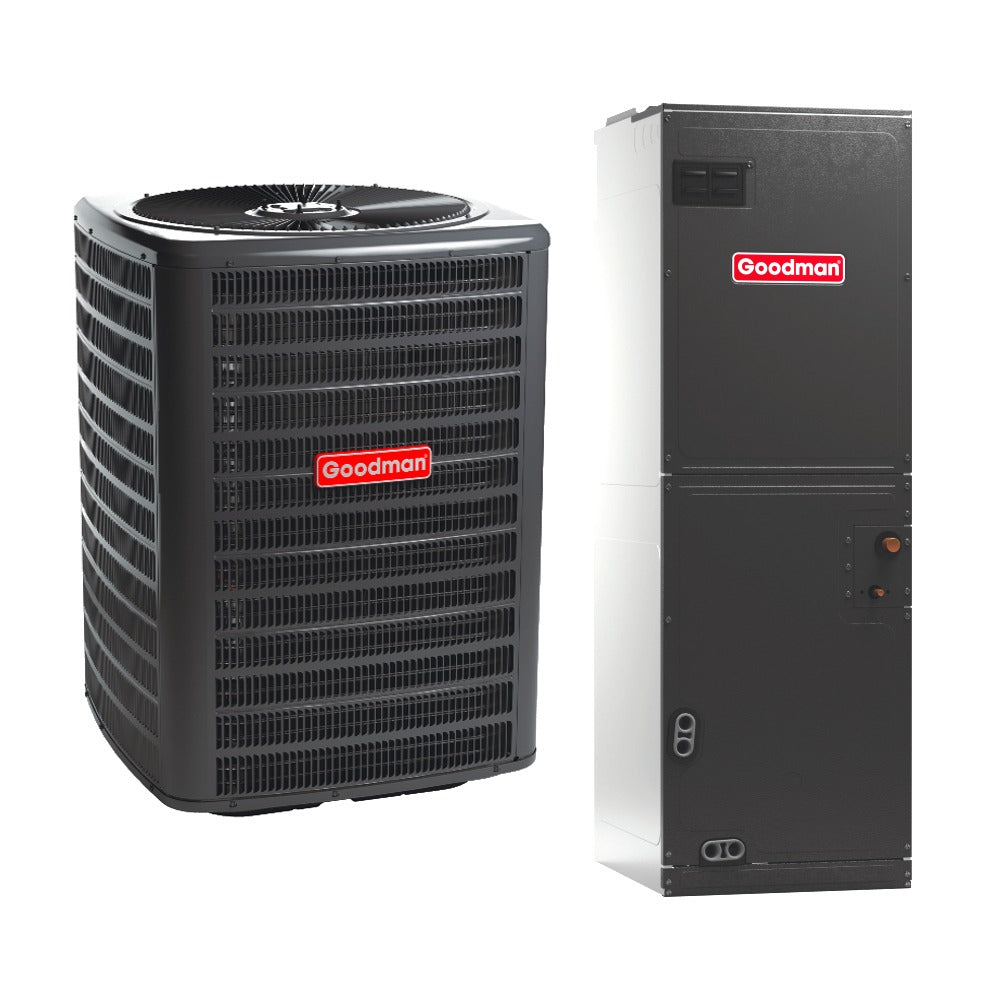
Amana J-Series PTAC Model 17,000 BTU PTAC Unit with 5 kW Electric Heat
This guide shows you exactly how to steal these pro techniques and build a home comfort system that feels as polished as a luxury hotel, while lowering your carbon footprint.
Let’s go full Savvy.
🧭 1. Why Hotels Are the Masters of PTAC System Design
Hotels rely on PTACs not because they’re cheap — but because they’re predictable, controllable, and room-specific. When designed well, a PTAC can outperform many ducted systems in efficiency and comfort personalization.
🟩 Hotels prioritize:
-
Proper airflow channels
-
Perfect unit placement
-
Sealed wall sleeves (no leaks!)
-
Minimal noise for sleep
-
Individually zoned rooms
-
Energy recovery
-
Smart cycling
-
Balanced return & supply air
Now ask yourself:
Why shouldn’t your home get the same treatment?
Verified Link
DOE on room-by-room HVAC zoning:
https://www.energy.gov/energysaver/room-air-conditioners
🛏️ 2. The Core Philosophy of Hotel System Layouts
Hotel HVAC design is built around three principles:
🌬 1. Condition only the space you’re in
Hotels don’t try to cool entire buildings with ductwork.
They cool rooms, not floors.
🔇 2. Quiet comfort is non-negotiable
Noise ruins guest ratings — hotels engineer silence into their layouts.
🔄 3. Airflow must be controlled, not chaotic
Every room is designed around deliberate airflow paths.
These three concepts translate beautifully to homes.
📍 3. Placement Secrets Hotels Always Follow (But Homeowners Rarely Know)
Hotel designers never place PTACs randomly. There are strict rules.
Let’s map them.
🟦 ✔ Rule #1: PTAC goes on the building’s perimeter wall
Why?
Because:
-
heat load is greatest at exterior walls
-
shortest path to outdoor coil
-
lowest refrigerant losses
-
best drainage performance
🟦 ✔ Rule #2: Place the PTAC across from the bed
This reduces noise perception and prevents direct airflow over the body.
🟦 ✔ Rule #3: Install at a height that supports natural airflow
Typical: 6–12 inches above the floor.
🟦 ✔ Rule #4: Keep 3 feet of open space in front
Hotels never block PTACs with chairs, drapes, or dressers.
🟥 Avoid:
-
placing the bed beside the PTAC
-
positioning PTAC beneath full-length curtains
-
installing next to tall furniture
Residential homeowners accidentally break these rules all the time — and pay for it with uneven temperatures and wasted energy.
🧱 4. The Wall Sleeve: The Small Rectangle That Changes Everything
Hotels always use properly sealed, properly sized wall sleeves, because they dramatically affect:
-
noise
-
thermal leakage
-
humidity
-
compressor strain
-
energy consumption
-
airflow direction
A well-designed wall sleeve prevents:
-
outdoor air infiltration
-
insects
-
condensation issues
-
vibration noise
-
PTAC cycling confusion
Verified Link
EPA on sealing building penetrations:
https://www.epa.gov/indoor-air-quality-iaq
Many homes have poorly installed PTAC sleeves — sometimes even gaps around the sleeve (!) — which hotels would never allow.
🌬️ 5. Hotel-Grade Airflow Planning — The Real Magic Trick
Hotels treat airflow like an engineered system, not an accident of architecture.
Here’s how they do it — and how you can replicate it.
🟩 1. Create a smooth airflow path from supply to return
Air should travel through the room, not swirl in circles near the PTAC.
🟩 2. Angle louvers upward
This creates a “cool-air glide” that mixes silently and evenly.
🟩 3. Avoid air collision points
Air should not hit:
-
the bed
-
a door
-
a nightstand
-
thick curtains
🟩 4. Use ceiling fans to support quiet comfort
Low-speed ceiling fans reduce cooling load by up to 30%.
Verified Link
Energy-efficient fan usage (EnergyStar)
🔇 6. Sound Engineering — The Hotel Quiet Recipe
Hotels know noise is the enemy of guest comfort, so they design “Quiet Zones” around PTACs.
Here’s how to borrow that strategy.
🤫 1. Never install a PTAC near the head of the bed
Low-frequency hum + proximity = sleep disruption.
🤫 2. Avoid hollow interior walls
Exterior walls handle vibration better.
🤫 3. Add soft materials near airflow paths
Rugs + curtains + bedding = natural acoustic treatments.
🤫 4. Level the wall sleeve
An uneven sleeve causes rattling and scraping sounds during cycles.
Hotels measure PTAC noise in decibels — homeowners should too.
🌡️ 7. Thermal Envelope Design — Why Hotels Stay Comfortable Longer
Hotels don’t let conditioned air leak out.
Homeowners often do.
Hotels maintain a tight envelope using:
-
insulated PTAC sleeves
-
sealed window assemblies
-
reduced infiltration around doors
-
thermal curtains
-
modern glazing
When you take this same approach at home, PTAC efficiency skyrockets.
Verified Link
DOE on insulation and envelope performance:
https://www.energy.gov/energysaver/weatherize/insulation
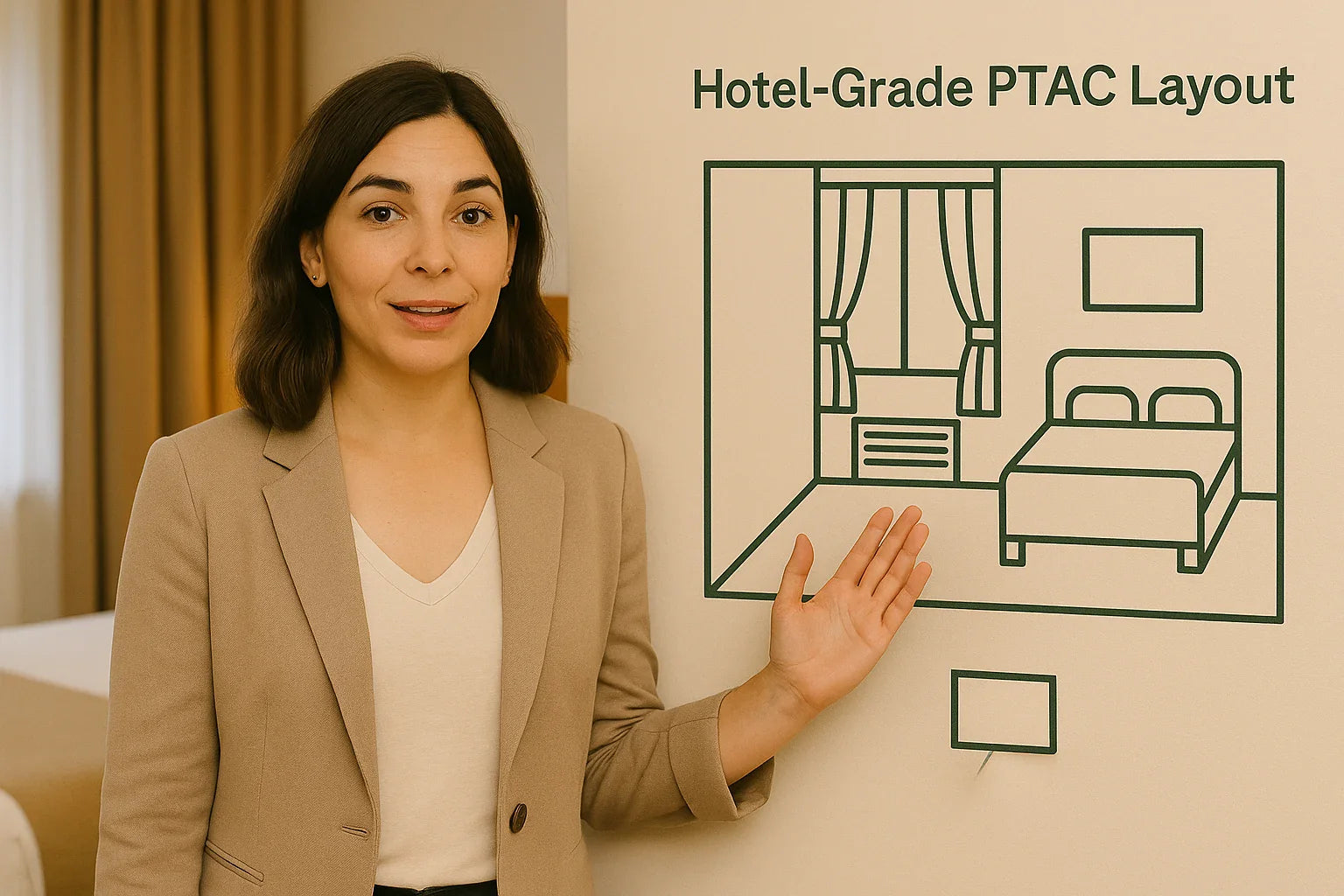
🛏 8. The Hotel Bedroom Layout — And How to Copy It
Let’s steal the exact room layout hotels use.
✔ PTAC centered under the window
✔ Bed across from the PTAC
✔ Curtains that stop at the sill
✔ No furniture within 3 feet of unit
✔ Low nightstands (airflow-friendly)
✔ Ceiling fan to help mix air
Hotels place PTACs under windows because:
-
windows create the biggest heat load
-
airflow is easier to distribute
-
the return air path stays clear
-
the room warms/cools evenly
When you recreate this in your home, comfort improves dramatically.
🛋 9. Living Room Layout — The Hotel Way
Hotels don’t randomly place seating. They follow airflow logic.
✔ Seating arranged so airflow moves across occupants
✔ No couches in front of PTAC
✔ Large furniture kept on opposite walls
✔ TV placed away from direct airflow
✔ Air doesn’t blow toward drapes
This creates both acoustic calm and energy efficiency.
🏠 10. Multi-Room Homes: Borrowing Hotel Zoning Logic
Hotels excel because each room is its own zone.
Here’s how to apply that at home:
🟩 OPTION A: One PTAC per major room
Best for:
-
basements
-
converted garages
-
bonus rooms
-
ADUs
-
home offices
🟩 OPTION B: Micro-zones using mini splits + PTAC combinations
For whole-home low-carbon comfort.
🟩 OPTION C: Hybrid zoning
PTAC in bedrooms + central HVAC in living areas.
Benefits of Hotel-Style Zoning:
-
no duct losses
-
perfect room-by-room temperatures
-
reduced BTU requirements
-
ultra-low energy bills
Verified Link Energy.gov on zoning efficiency
🧰 11. Electrical Planning — The Hotel-Level Safety Standard
Commercial-grade PTAC installs follow strict electrical rules:
✔ Dedicated 208/240V circuits
✔ Proper breaker sizing
✔ Correct plug type (often NEMA 6-20P or 6-30P)
✔ No shared loads
✔ Consistent grounding
✔ Surge protection
✔ Neutral-free PTAC configuration
Homes often cut corners — hotels never do.
Verified Link Basic electrical safety (Energy.gov)
🧼 12. Maintenance Strategy — Why Hotel PTACs Last so Long
Hotels maintain PTACs better than homeowners maintain any appliance they own.
Hotel Maintenance Cycle:
-
filters checked every 30 days
-
coils cleaned every quarter
-
wall sleeves re-sealed annually
-
thermostat calibration yearly
-
drain pan flushed every season
-
blower wheels cleaned twice yearly
This is why hotel PTACs stay efficient even under heavy use.
📏 13. The Hotel Comfort Curve — What Homeowners Can Learn
Hotels design for comfort efficiency over brute-force cooling.
They target:
-
temperature stability
-
quick recovery times
-
quiet operation
-
smart airflow
-
low cycling frequency
-
micro-zones instead of overcooling entire floors
When homeowners adopt this mindset, their BTU usage drops as much as 40%.
🌱 14. Sustainability Gains — The Real Reason to Borrow Hotel Design
Hotel-grade PTAC layouts are sustainable because they:
-
reduce carbon emissions
-
reduce wasted BTUs
-
improve thermal retention
-
lower peak load
-
reduce compressor runtime
-
shrink equipment sizes
-
eliminate duct losses (up to 30%)
🧠 15. Final Thoughts — Bring Hotel Comfort Home
Hotel-grade HVAC design works because it’s intentional:
-
intentional airflow
-
intentional placement
-
intentional pressure balance
-
intentional thermal envelope
-
intentional zoning
-
intentional sound control
Residential spaces benefit from these same principles — and when you apply them, your home transforms into a quiet, efficient, eco-friendly retreat.
Bring the hotel logic home.
Bring the comfort home.
Bring the sustainability home.
Stay Savvy. 🌿🏨➡️🏡
Buy this on Amazon at: https://amzn.to/434DIng
In the next topic we will know more about: Overshoot Protection — Designing Systems That Don’t Short-Cycle or Overheat Your Space