Newsletter Subscribe
Enter your email address below and subscribe to our newsletter

HVAC made simple
By Tony Marino (Tony the Trusted Tech)
The Furnace Outlet | Updated October 2026
When homeowners notice water collecting beneath their outdoor heat pump or discover a thick layer of ice around its base during winter, their first reaction is often concern that something has broken. Some worry about a refrigerant leak, while others assume the outdoor unit has developed a serious mechanical problem. In reality, water beneath an air-source heat pump can be a completely normal result of winter heating and automatic defrost operation. However, excessive ice accumulation, blocked drainage, and repeated freezing around the cabinet can indicate problems that deserve attention.
After decades of working with residential HVAC equipment, I have learned that the important question is not simply whether water is present. It is where the water originates, how it drains, whether it refreezes, and whether the heat pump continues operating correctly. A properly functioning outdoor unit may release a surprising amount of water during certain weather conditions, particularly when frost repeatedly forms and melts on the outdoor coil. The trouble begins when that water cannot escape safely or when ice interferes with airflow, fan operation, or other components.
Winter drainage problems are especially common in installations exposed to freezing rain, snow accumulation, poorly graded surfaces, or inadequate equipment elevation. In some situations, the defrost system works correctly but the installation does not provide a suitable path for meltwater. In others, abnormal frost accumulation or a malfunctioning defrost sequence produces an ice problem that ordinary drainage improvements cannot solve.
In this guide, I will explain why heat pumps produce water during winter, how defrost drainage should work, what causes ice to build up around the outdoor unit, and how to distinguish normal operation from a genuine equipment problem. I will also cover safe homeowner checks, professional diagnostic procedures, and practical ways to reduce recurring winter icing.
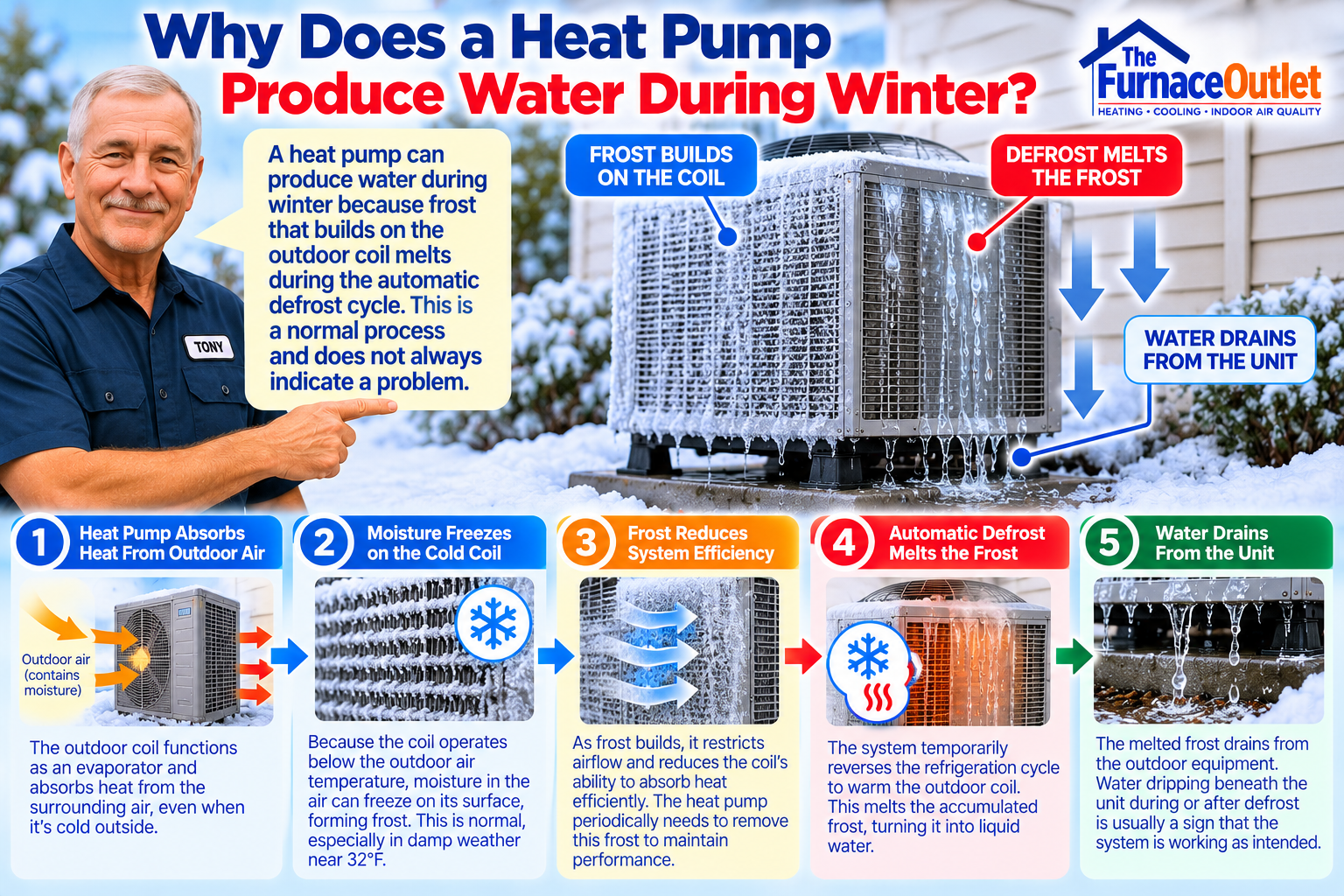
An air-source heat pump heats a home by extracting thermal energy from outdoor air and transferring that energy indoors through its refrigeration system. During heating operation, the outdoor coil functions as an evaporator, absorbing heat from the surrounding air. Because the coil can operate at temperatures below the outdoor air temperature, moisture in the air may condense or freeze on its surface.
When the coil temperature falls below freezing and sufficient moisture is present, frost begins accumulating. This is a normal physical process and does not automatically indicate an equipment defect. The amount of frost depends on outdoor temperature, humidity, coil conditions, airflow, and the system’s operating characteristics. A damp winter day near 32°F can sometimes produce substantial frosting, while colder, drier weather may create less visible accumulation.
As frost builds, it restricts airflow and reduces the coil’s ability to absorb heat efficiently. To restore performance, many heat pumps periodically activate an automatic defrost cycle. During this process, accumulated frost melts and becomes liquid water that drains from the outdoor equipment. Consequently, water dripping beneath an outdoor heat pump during winter may simply indicate that the defrost system is performing its intended function. The important distinction is whether the water drains without creating an obstruction or damaging the installation.
Many conventional heat pumps remove outdoor-coil frost by temporarily reversing the refrigeration cycle. The reversing valve redirects refrigerant flow so that heat is delivered to the outdoor coil rather than being used primarily for indoor heating. The outdoor fan commonly stops during this sequence, reducing cold airflow across the coil and helping accumulated frost melt.
As the coil warms, frost turns into water and flows downward through the outdoor cabinet. Depending on the equipment design, this water may leave through openings in the base pan or through a manufacturer-approved drainage arrangement. Homeowners may observe water dripping from several locations beneath the unit rather than from a single dedicated drainpipe.
Visible vapor can also rise from the cabinet during defrost. This is often water vapor or mist associated with the melting process, not smoke from an electrical problem. A brief whooshing sound may occur when the reversing valve changes operating mode. Once defrost terminates, the system returns to heating. The outdoor fan resumes according to the manufacturer’s sequence, and the coil begins absorbing heat again. Water remaining on cold surfaces may subsequently freeze if outdoor conditions permit.
A successful defrost cycle should remove excessive frost from the coil and allow the system to resume useful heating. It does not necessarily guarantee that every drop of water beneath the cabinet remains liquid.
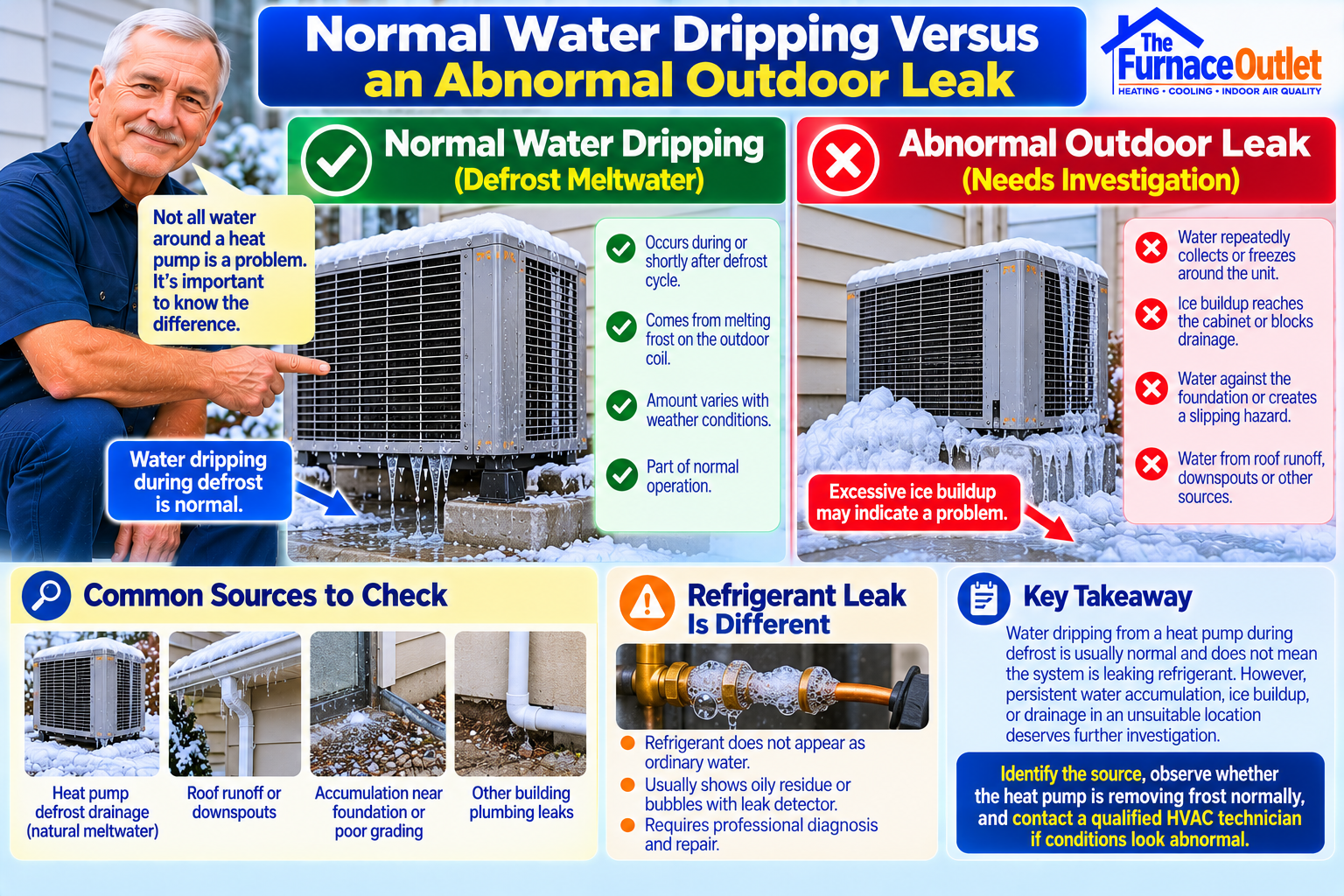
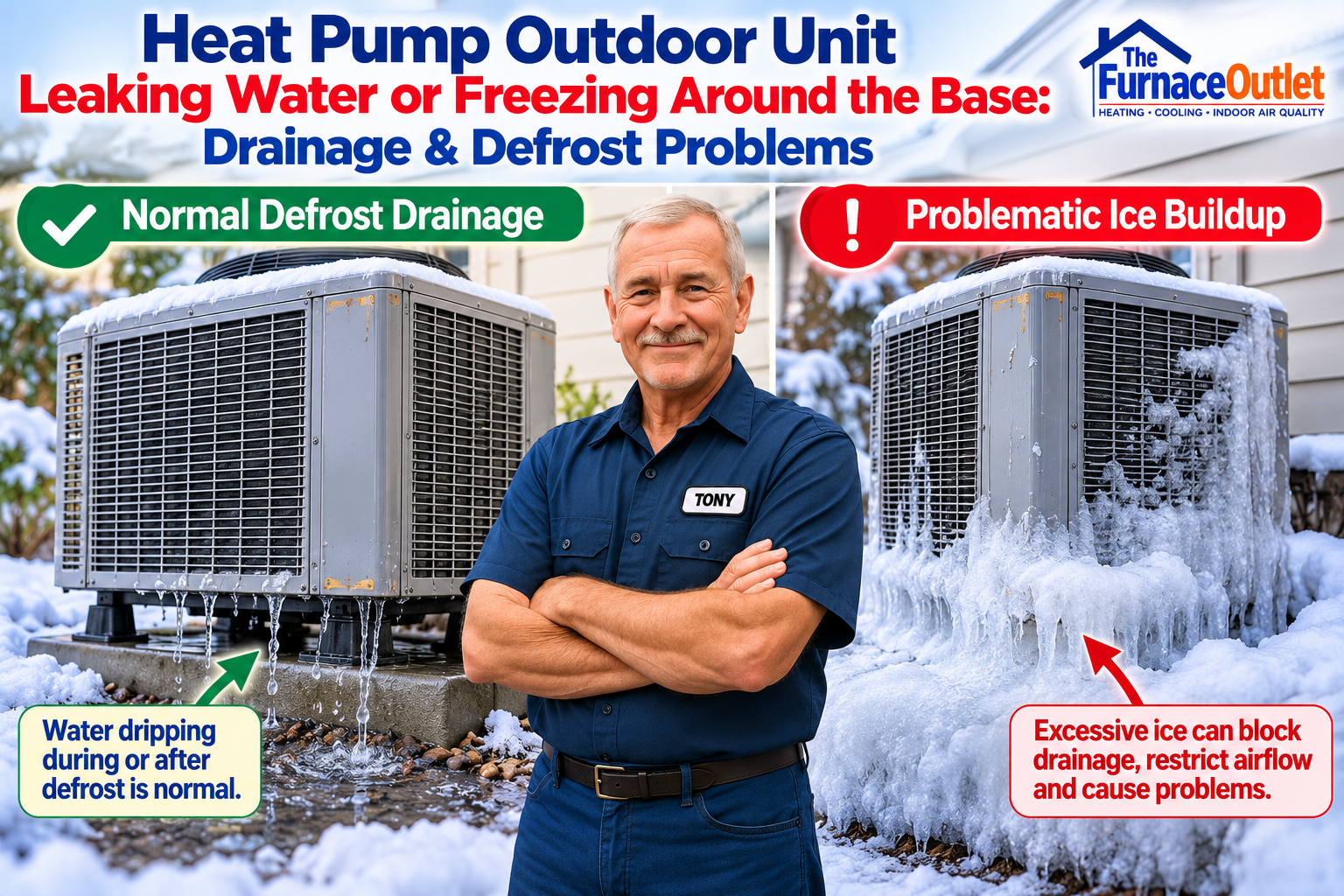
The word “leak” can be misleading when discussing heat pumps. Water released during defrost is not the same as refrigerant escaping from the sealed refrigeration circuit. Refrigerant leaks involve a different system and require specialized diagnostic procedures. Ordinary defrost meltwater does not mean refrigerant is leaking. Normal drainage usually occurs during or shortly after defrost, particularly when the outdoor coil has accumulated frost. Water may appear beneath the cabinet, around its support structure, or on the surrounding ground. The amount varies with weather conditions and operating frequency, so there is no single universal quantity that defines normal drainage.
More concerning conditions include water repeatedly collecting against building foundations, entering areas where it can create a slipping hazard, or freezing into a growing mass that reaches the outdoor cabinet. Water dripping from damaged building plumbing, roof drainage, or other nearby sources can also be mistaken for heat pump drainage. I recommend identifying the apparent source and observing whether the heat pump is removing frost normally. Water alone is not enough to diagnose a problem, but persistent accumulation in an unsuitable location deserves investigation.
Many outdoor heat pump units have openings in the base pan that allow defrost meltwater to escape. These openings are part of the equipment’s drainage design and must remain functional under the installation conditions specified by the manufacturer. Leaves, dirt, small debris, and accumulated ice can obstruct drainage paths. When water cannot leave the cabinet efficiently, it may collect in the base pan and freeze as outdoor temperatures fall. Repeated defrost cycles can add more water, allowing ice to build gradually.
A growing ice mass may eventually reach the outdoor coil, fan assembly, or other internal components. The resulting obstruction can affect airflow, produce unusual noises, or interfere with equipment operation. In severe cases, ice expansion may contribute to mechanical damage. Drainage arrangements differ between models. Some manufacturers provide specific instructions for cold-climate installation, while others discourage certain drain fittings or arrangements because they can freeze. A technician should review the exact installation manual before modifying the drainage system.
Homeowners should not insert tools through drainage openings or attempt to break ice inside the cabinet. Internal components may be damaged, and moving parts or electrical equipment can create additional hazards.
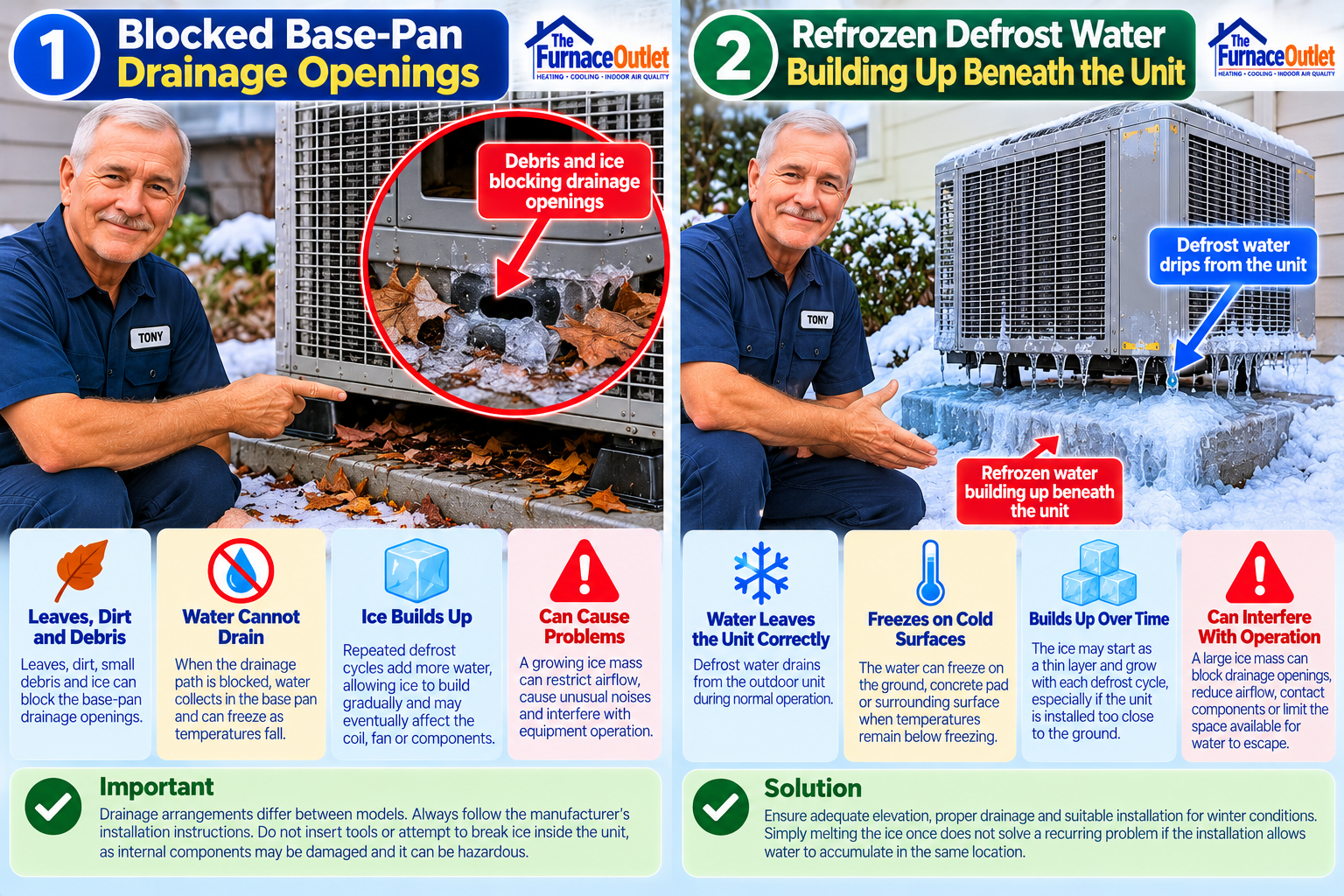
One of the most common winter drainage problems occurs when defrost water leaves the outdoor unit correctly but freezes on the surface beneath it. This may happen when the ground, concrete pad, or surrounding air remains below freezing. Initially, the ice may form a thin layer below the cabinet. As additional defrost cycles occur, the accumulation can grow upward. If the outdoor unit is installed too close to the ground or lacks adequate winter clearance, the ice may eventually reach the base pan.
At that point, the issue can progress from ordinary ground icing to equipment interference. Ice may block drainage openings, contact cabinet components, or reduce the space available for water to escape. The correct solution depends on local winter conditions, the equipment’s mounting arrangement, and the manufacturer’s requirements. In some installations, improved elevation or a different support configuration may be appropriate. In others, the surrounding drainage surface may need correction.
Simply melting the ice once does not solve a recurring problem if the installation continues allowing water to accumulate in the same location.
Outdoor unit elevation becomes particularly important in climates with frequent snowfall, persistent freezing temperatures, or repeated defrost cycles. Equipment installed directly on a low pad may have insufficient clearance for accumulated snow and refrozen meltwater. A properly designed cold-climate installation often uses a suitable stand, wall bracket, or elevated support arrangement consistent with the manufacturer’s instructions. The objective is to maintain airflow, provide drainage clearance, and reduce the likelihood of snow or ice contacting the cabinet.
However, raising equipment is not simply a matter of placing blocks beneath it. Support structures must accommodate the unit’s weight, vibration, electrical connections, refrigerant piping, wind exposure, and local installation requirements. Wall-mounted units may also require consideration of vibration transmission and drainage below the equipment. Water should not be directed toward pedestrian walkways, entrances, or surfaces where freezing could create a hazard.
I would have a qualified contractor assess mounting height and support conditions before making structural changes. Proper elevation can help prevent recurring icing, but the appropriate dimensions are equipment- and location-specific.
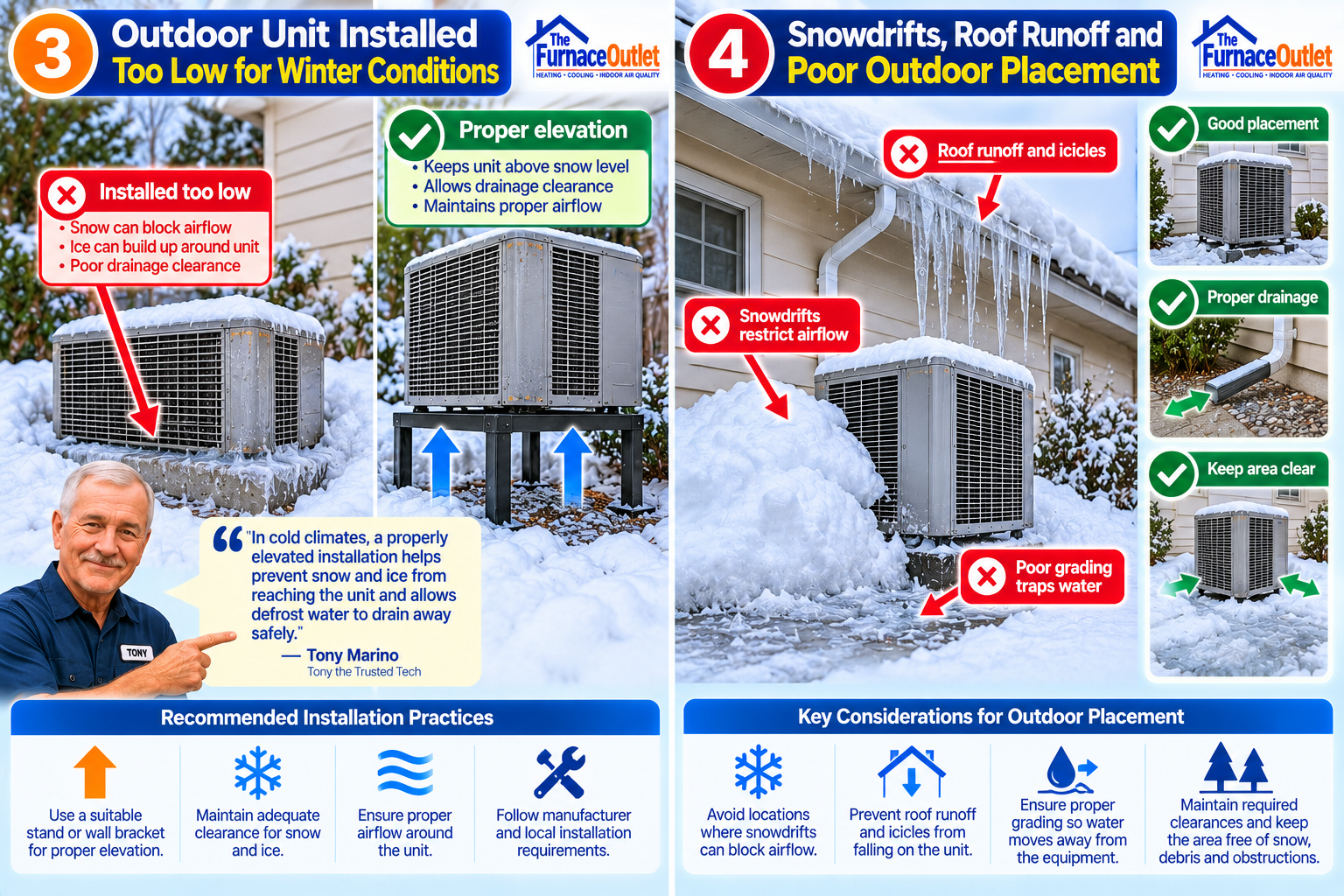
Even a properly functioning heat pump can experience winter problems when its location exposes it to excessive snow accumulation or water from surrounding structures. Snowdrifts may restrict airflow around the cabinet, while roof runoff can introduce additional water that freezes on or beneath the equipment. Icicles falling from gutters or roof edges may damage protective grilles, panels, or refrigerant connections.
Poor grading can also direct surface water toward the outdoor unit. When that water freezes, it may create an ice mass unrelated to the heat pump’s own defrost process. A professional installation assessment should consider prevailing winter conditions, required clearances, drainage direction, and nearby building features. Where roof runoff is a problem, appropriate building drainage improvements may be more effective than modifications to the heat pump.
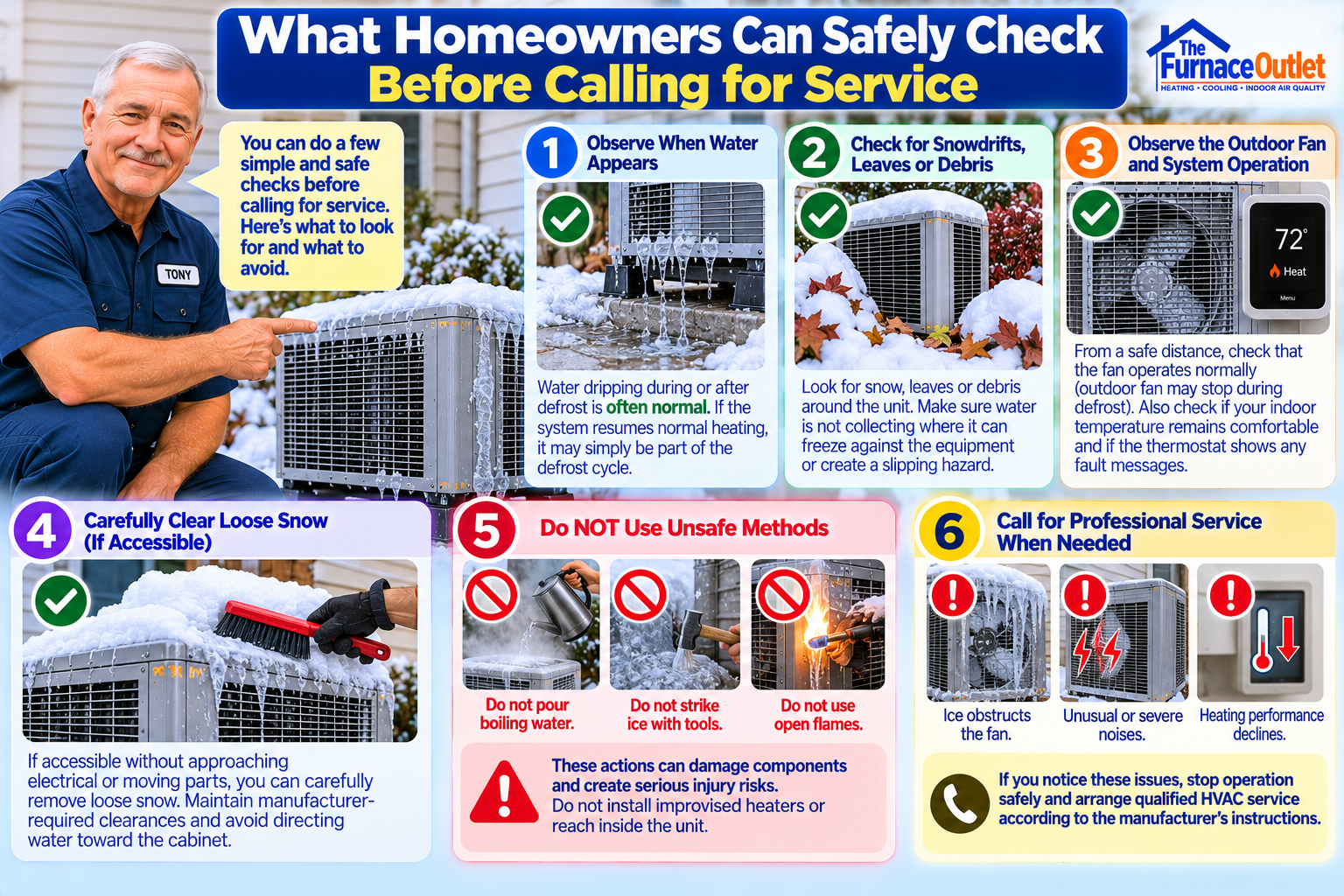
Homeowners can carefully clear loose snow outside the equipment’s protective enclosure while maintaining safe distance from electrical components and moving parts. They should never cover the unit tightly or block required airflow in an attempt to protect it from winter weather.
Not every outdoor icing problem begins with drainage. Sometimes the outdoor coil develops excessive frost because the heat pump is not initiating or completing its defrost sequence correctly. Modern heat pumps use sensors and control logic to determine when defrost is required. Depending on the equipment, the system may evaluate coil temperature, outdoor conditions, operating time, or other measurements. A defective temperature sensor, damaged wiring connection, control-board problem, or incorrect operating sequence can interfere with frost removal. The outdoor coil may become heavily coated with ice, reducing airflow and heating performance.
In other cases, the equipment enters defrost but fails to warm the coil adequately. A reversing-valve problem, refrigeration-system abnormality, or another operating fault may prevent successful frost removal. The distinction matters because improving drainage will not correct a heat pump that cannot perform defrost properly. A technician must establish whether the coil is being defrosted as intended before treating the problem as a drainage-only issue.
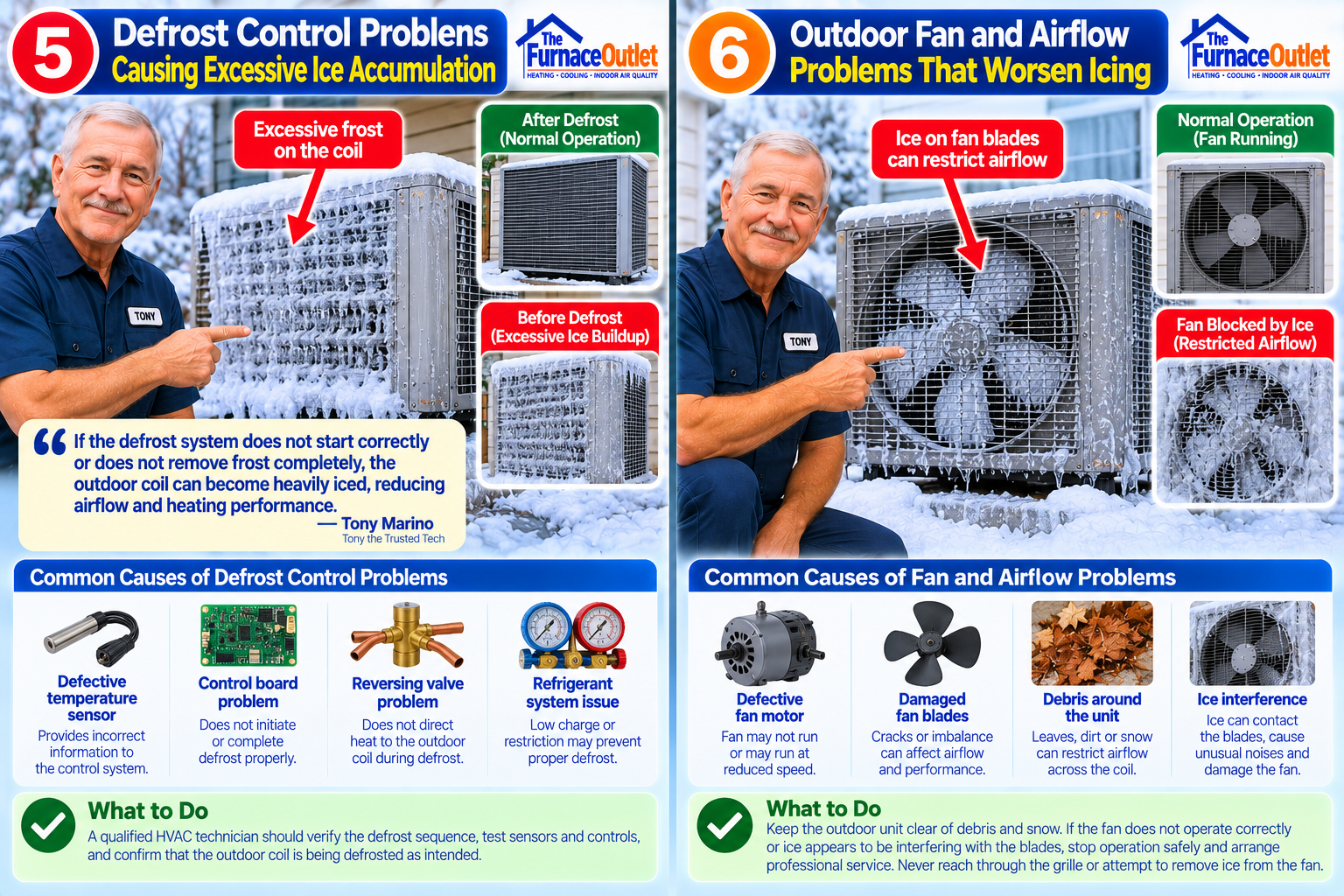
The outdoor fan moves air across the coil during normal heating, allowing refrigerant to absorb heat from the surrounding environment. If airflow becomes restricted, heat transfer may deteriorate and abnormal coil conditions can develop. Potential causes include a defective fan motor, damaged fan blades, electrical control problems, excessive debris, or ice physically interfering with fan movement.
However, the outdoor fan commonly stops during normal defrost. A stationary fan observed while frost is melting does not automatically indicate a motor failure. The important question is whether the fan resumes normal operation when the equipment returns to heating. Ice contacting fan blades may create scraping, rattling, or grinding noises. Continued operation with a serious mechanical obstruction can damage equipment.
Homeowners should never reach through the fan grille, manually rotate blades, or chip ice away from the fan assembly. If ice appears to be interfering with moving components, stop operating the equipment safely and arrange professional service.
A heat pump’s refrigeration system must operate within appropriate pressure and temperature conditions to deliver heating efficiently. Significant refrigerant leaks, restrictions, metering-device problems, or compressor-related faults can affect coil temperatures and overall performance. These conditions may produce unusual frosting, inadequate heating, or protective shutdowns. Consequently, a heavily iced outdoor coil does not always indicate a defective defrost sensor or blocked drain.
Refrigerant-related problems require model-specific diagnosis. A qualified technician may evaluate operating pressures, temperatures, compressor behavior, airflow, and control signals to identify the underlying condition. Adding refrigerant without confirming the cause is not an appropriate response to an iced outdoor unit. Incorrect charging can create additional operating problems and conceal the actual fault. If a refrigerant leak is confirmed, repairs and refrigerant handling should follow applicable regulations and manufacturer requirements.
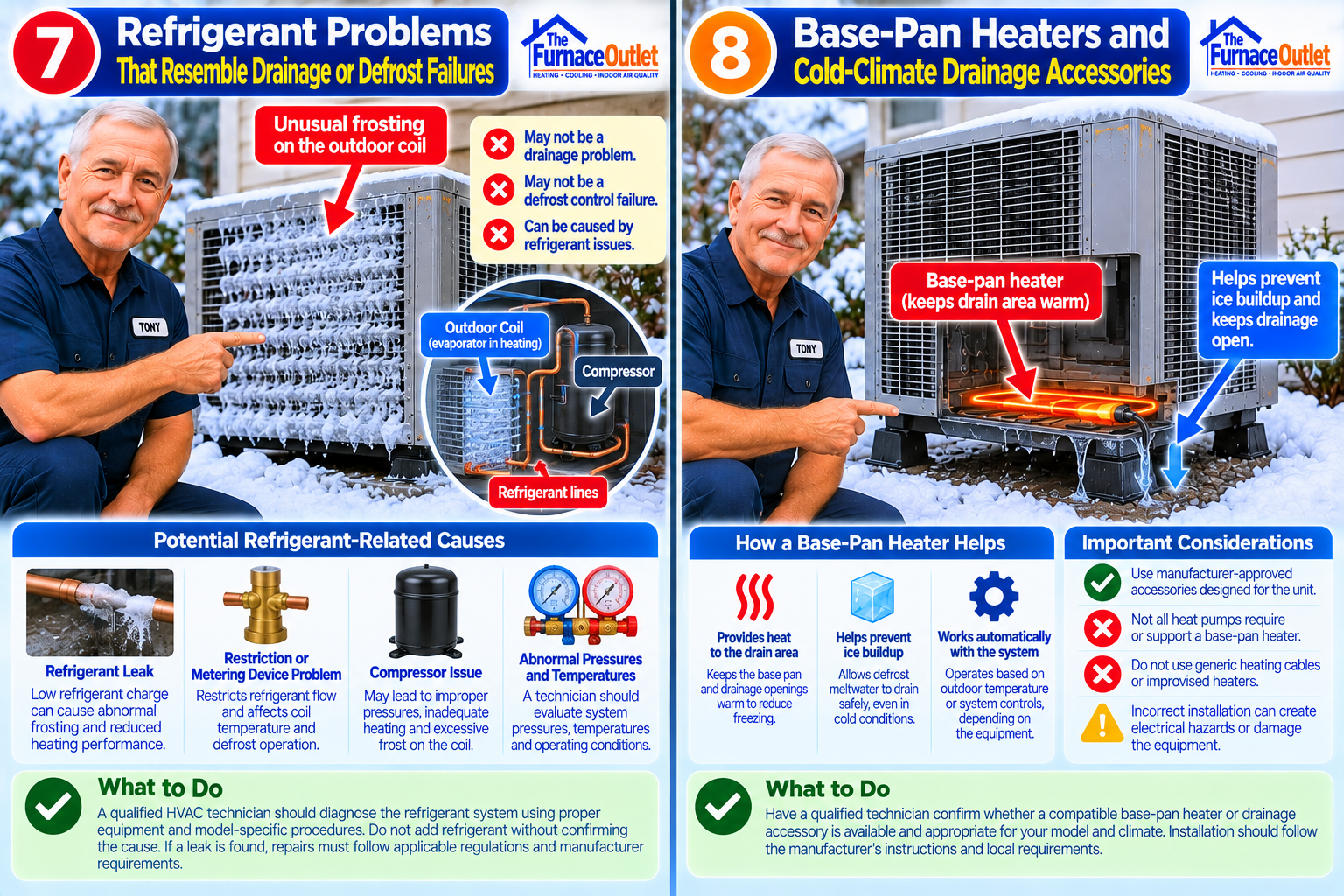
Some heat pumps designed for demanding winter conditions incorporate base-pan heaters or offer manufacturer-approved heating accessories. These devices help reduce ice accumulation in designated drainage areas by providing heat where freezing could interfere with water removal. Their operation varies by equipment. Certain systems activate a heater according to outdoor temperature or operating conditions, while others use different control arrangements. Not every outdoor unit requires or supports this feature.
A failed base-pan heater, damaged electrical connection, or incorrect accessory installation may contribute to recurring ice buildup on equipment designed to use one. However, adding a generic heating cable or improvised electrical heater is not an appropriate universal solution. Unauthorized modifications can create electrical hazards, interfere with drainage, or damage equipment. A qualified technician should confirm whether a compatible manufacturer-approved accessory exists and whether it is appropriate for the installation.
A small amount of frost on the outdoor coil or ice on the ground beneath the unit is not automatically an emergency. Concern increases when ice accumulates progressively and begins interfering with equipment operation. Warning signs include a thick ice mass reaching the cabinet, fan blades contacting ice, repeated grinding noises, persistent frost that does not clear during defrost, or declining indoor heating performance.
Other concerning symptoms include repeated equipment shutdowns, diagnostic fault codes, unusual compressor behavior, or water freezing where it creates a significant slipping hazard. Ice accumulation around electrical connections or damaged enclosures also deserves professional attention. Homeowners should not attempt to diagnose electrical exposure by opening equipment panels. I recommend addressing unusual icing before it causes mechanical damage. Waiting until the outdoor unit is completely encased in ice can make diagnosis and repair more difficult.
A reliable diagnosis begins with identifying the equipment model, installation requirements, and intended winter operating sequence. The technician should determine whether the reported water is normal defrost meltwater, water from another source, or the result of an equipment malfunction. The outdoor coil should be examined for frost patterns, while the base pan and surrounding support structure should be assessed for drainage restrictions and refrozen water.
The technician may evaluate outdoor fan operation, defrost sensors, control-board commands, reversing-valve response, and refrigerant-system performance. Manufacturer-approved diagnostic procedures can help determine whether the system initiates and terminates defrost correctly. Installation conditions are equally important. The technician should examine equipment elevation, drainage clearance, nearby roof runoff, snow exposure, and whether the surrounding surface directs water toward the cabinet. The completed diagnosis should explain whether the problem is primarily related to normal meltwater management, abnormal frost formation, mechanical obstruction, or an equipment control failure.
Water accumulation beneath an outdoor heat pump rarely justifies complete equipment replacement by itself. Many problems can be addressed through drainage corrections, improved mounting arrangements, removal of external obstructions, or repair of a confirmed defective component. A failed sensor, control component, fan motor, or manufacturer-approved drainage accessory may be replaceable when compatible parts are available.
More extensive problems involving a reversing valve, compressor, major refrigerant-system damage, or repeated failures require a broader economic assessment. Equipment age, warranty coverage, repair cost, and overall heating performance should influence the decision. For relatively new equipment that has otherwise operated reliably, correcting the confirmed cause may be sensible. For older systems with repeated major failures, extensive corrosion, unavailable parts, or inadequate cold-weather capacity, replacement may deserve consideration. Any replacement installation should address the original drainage and winter exposure conditions. Installing new equipment in the same unsuitable location can reproduce the problem.
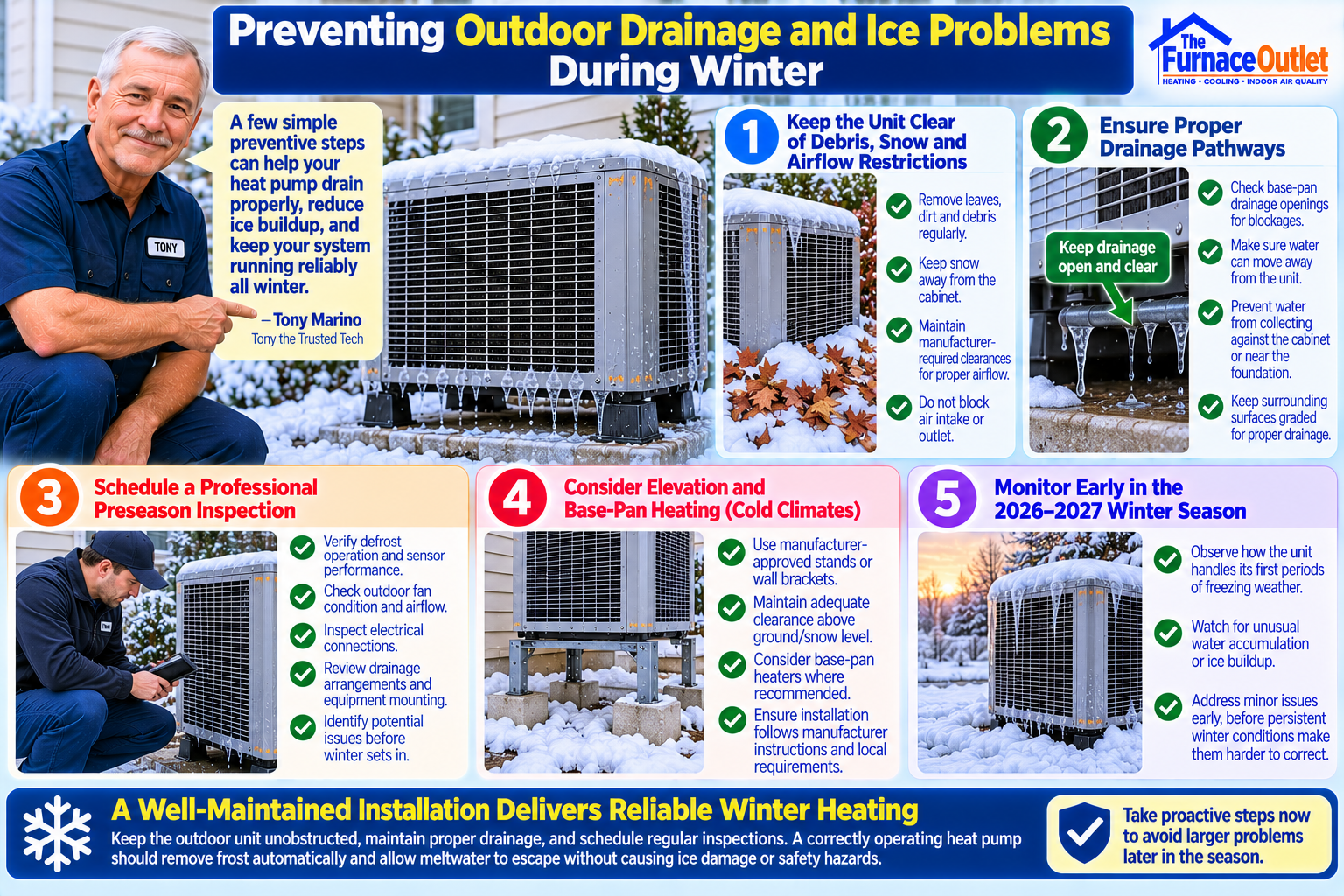
For the 2026–2027 winter season, I recommend paying attention to how the outdoor unit handles its first periods of freezing weather. Early observations can reveal drainage problems before persistent winter conditions make them more difficult to correct.
Yes. Water commonly drains from the outdoor unit when accumulated frost melts during a normal defrost cycle. The amount varies with weather conditions and equipment operation.
Defrost meltwater may be freezing on the ground or support surface. Inadequate equipment clearance, poor drainage, snow accumulation, or other water sources can contribute. If ice reaches the cabinet, professional assessment is appropriate.
Yes. Excessive accumulation may obstruct drainage, interfere with moving components, restrict airflow, or contribute to mechanical damage.
No. Boiling or very hot water, forceful ice removal, and improvised heating methods can damage equipment or create hazards. Follow manufacturer instructions and arrange professional service when ice interferes with operation.
Not necessarily. Ordinary water from defrost is different from refrigerant escaping the sealed circuit. Refrigerant leaks require professional diagnosis and cannot be identified from water beneath the unit alone.
No. The need depends on equipment design, manufacturer specifications, installation conditions, and climate. Only compatible, approved accessories should be considered.
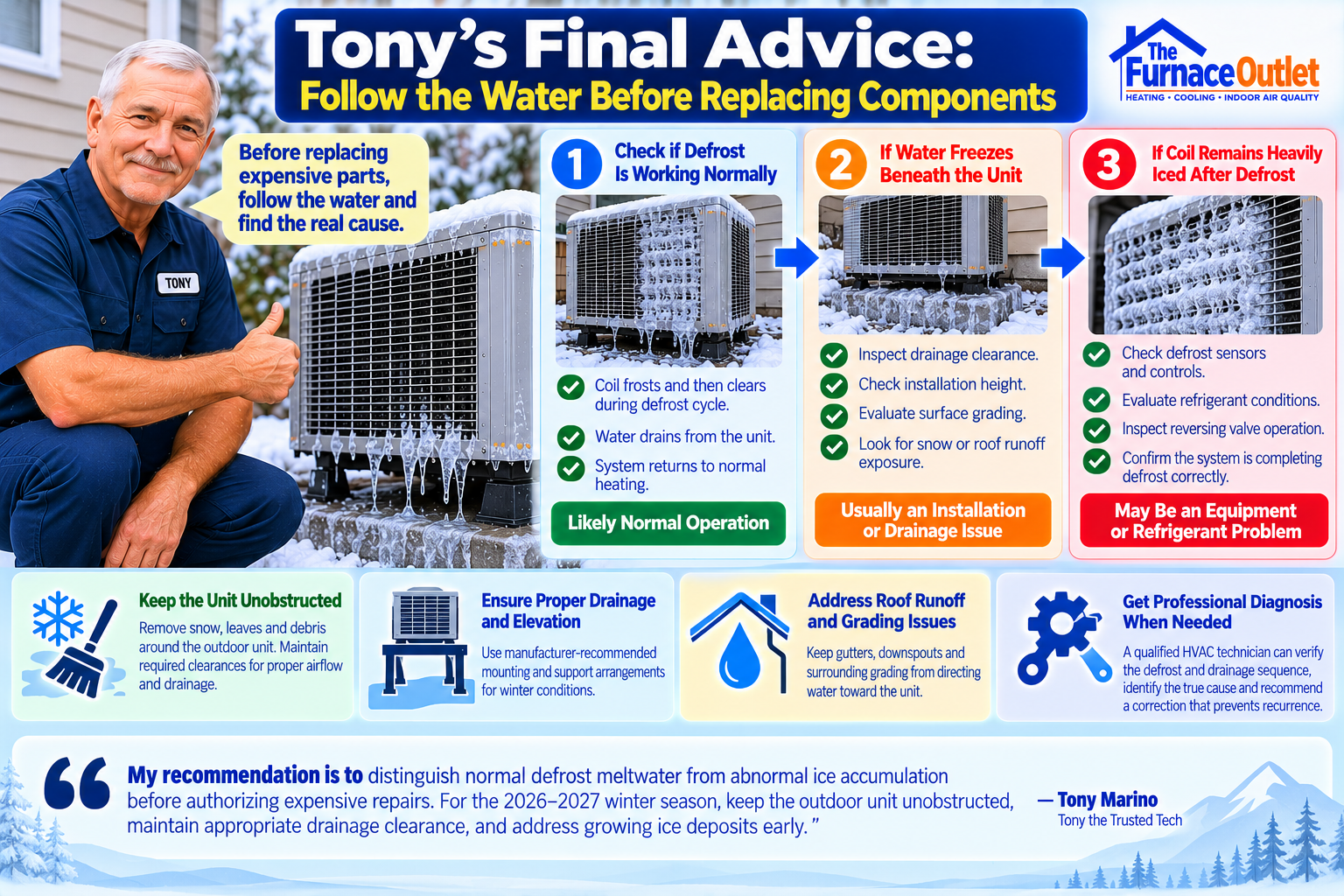
When a homeowner tells me their outdoor heat pump is leaking water or surrounded by ice, I do not immediately assume that the defrost board has failed. I first want to know whether the coil is frosting normally, whether the defrost sequence removes that frost, and where the resulting water goes.
If the equipment is defrosting correctly but water repeatedly freezes beneath the cabinet, I investigate drainage clearance, installation height, surface grading, and exposure to snow or roof runoff. If the outdoor coil remains heavily iced despite attempted defrost cycles, I investigate sensors, controls, refrigerant conditions, and reversing-valve operation.
My recommendation is to distinguish normal defrost meltwater from abnormal ice accumulation before authorizing expensive repairs. A qualified HVAC technician should verify the complete defrost and drainage sequence, identify the source of the problem, and recommend a correction that prevents recurrence.
For the 2026–2027 winter season, keep the outdoor unit unobstructed, maintain appropriate drainage clearance, and address growing ice deposits early. A properly functioning heat pump should remove frost automatically and allow meltwater to escape without compromising dependable winter heating.
This article is intended for general educational purposes and does not replace professional HVAC diagnosis or service. Outdoor heat pumps contain high-voltage electrical components, pressurized refrigerants, moving fans, and manufacturer-specific safety controls. Homeowners should not remove service panels, manipulate refrigerant connections, bypass controls, install improvised heating devices, or attempt to break ice from internal components. Serious mechanical noise, electrical hazards, or equipment shutdowns require qualified professional attention.
U.S. Department of Energy — Air-Source Heat Pumps: https://www.energystar.gov/products/air_source_heat_pumps
U.S. Department of Energy — Heat Pump Systems: https://www.energy.gov/heat-pumps
ENERGY STAR — Heating and Cooling Maintenance Checklist: https://www.energystar.gov/saveathome/heating-cooling/maintenance-checklist
ENERGY STAR — Air-Source Heat Pumps: https://www.energystar.gov/products/air_source_heat_pumps
Northeast Energy Efficiency Partnerships — Cold Climate Air-Source Heat Pump List: https://ashp.neep.org/
These resources provide general information about heat pump operation, efficiency, maintenance, and cold-climate performance. Exact drainage requirements, defrost sequences, approved accessories, and installation clearances must be confirmed using the applicable manufacturer’s documentation.