Newsletter Subscribe
Enter your email address below and subscribe to our newsletter

HVAC made simple
A 12,000 BTU mini-split sits in one of the most useful positions in the ductless HVAC market. At a nominal one ton of cooling capacity, it can be a practical solution for larger bedrooms, home offices, garages, finished basements, additions, workshops and many moderately sized living spaces. However, the fact that two systems both say “12,000 BTU” on the specification sheet does not mean they will provide the same comfort, efficiency, heating performance, noise level or long-term value.
I’m Jake Lawson, and one of the things I want homeowners to understand before comparing mini splits is that capacity is only the beginning of the conversation. A good 12,000 BTU system should not simply produce enough cooling on a hot afternoon. It should modulate effectively when the room needs less capacity, remove moisture without constantly short cycling, provide useful heating when outdoor temperatures fall, operate quietly and have realistic service and warranty support behind it.
The 2026 market also gives homeowners more choices than we had several years ago. High-efficiency inverter compressors have become common, cold-weather performance has improved dramatically in premium product families, smart controls are easier to find, and newer refrigerants are appearing across current-generation equipment. At the same time, genuinely homeowner-oriented DIY systems have created another purchasing path for people who would previously have needed a conventional contractor-installed mini split.
That variety is good, but it makes comparison more complicated. My goal in this guide is therefore not to tell you that one model is automatically right for every house. Instead, I’ll explain the types of 12,000 BTU systems I would put on a homeowner’s shortlist, what separates them technically, and how I would decide which features actually matter for a particular room and climate.
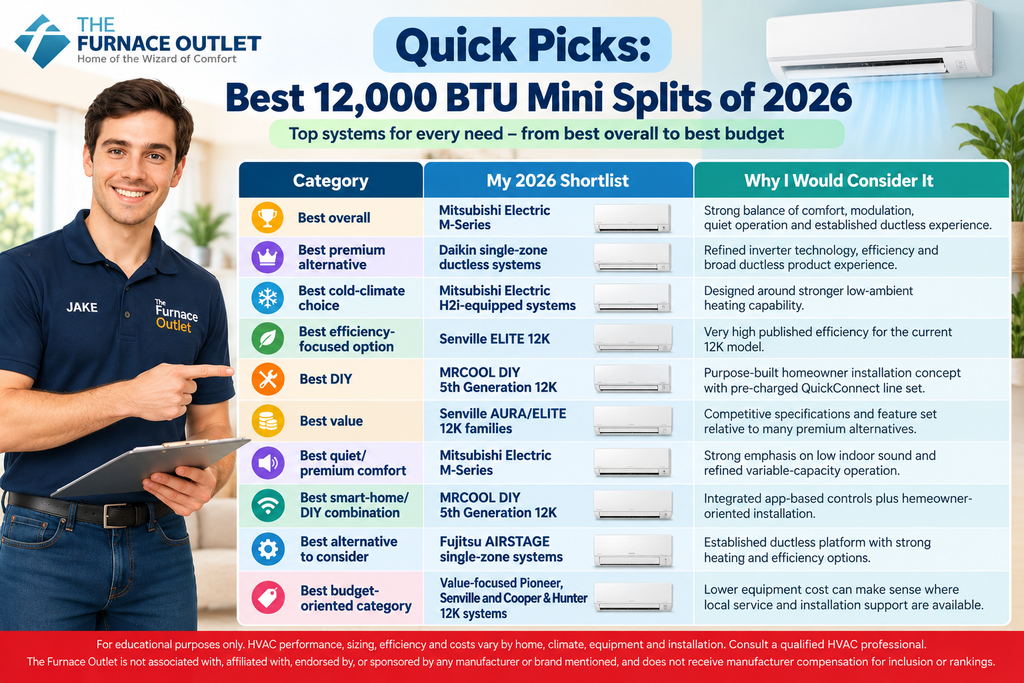
For homeowners who want the short version before getting into the technical details, I would begin the comparison with several established product families and then verify the exact 12,000 BTU indoor/outdoor combination available in your market. Model numbers, refrigerants, efficiency ratings and qualifying combinations can change, so the specific matched system matters more than the brand name printed on the cabinet.
| Category | My 2026 Shortlist | Why I Would Consider It |
|---|---|---|
| Best overall | Mitsubishi Electric M-Series | Strong balance of comfort, modulation, quiet operation and established ductless experience |
| Best premium alternative | Daikin single-zone ductless systems | Refined inverter technology, efficiency and broad ductless product experience |
| Best cold-climate choice | Mitsubishi Electric H2i-equipped systems | Designed around stronger low-ambient heating capability |
| Best efficiency-focused option | Senville ELITE 12K | Very high published efficiency for the current 12K model |
| Best DIY | MRCOOL DIY 5th Generation 12K | Purpose-built homeowner installation concept with pre-charged QuickConnect line set |
| Best value | Senville AURA/ELITE 12K families | Competitive specifications and feature set relative to many premium alternatives |
| Best quiet/premium comfort | Mitsubishi Electric M-Series | Strong emphasis on low indoor sound and refined variable-capacity operation |
| Best smart-home/DIY combination | MRCOOL DIY 5th Generation 12K | Integrated app-based controls plus homeowner-oriented installation |
| Best alternative to consider | Fujitsu AIRSTAGE single-zone systems | Established ductless platform with strong heating and efficiency options |
| Best budget-oriented category | Value-focused Pioneer, Senville and Cooper & Hunter 12K systems | Lower equipment cost can make sense where local service and installation support are available |
These are category-based editorial selections rather than a claim that every 12,000 BTU configuration within a product family has identical specifications. Before buying, I would always verify the exact indoor unit, outdoor unit, AHRI-rated combination, voltage, refrigerant, efficiency ratings, operating-temperature range and warranty conditions.
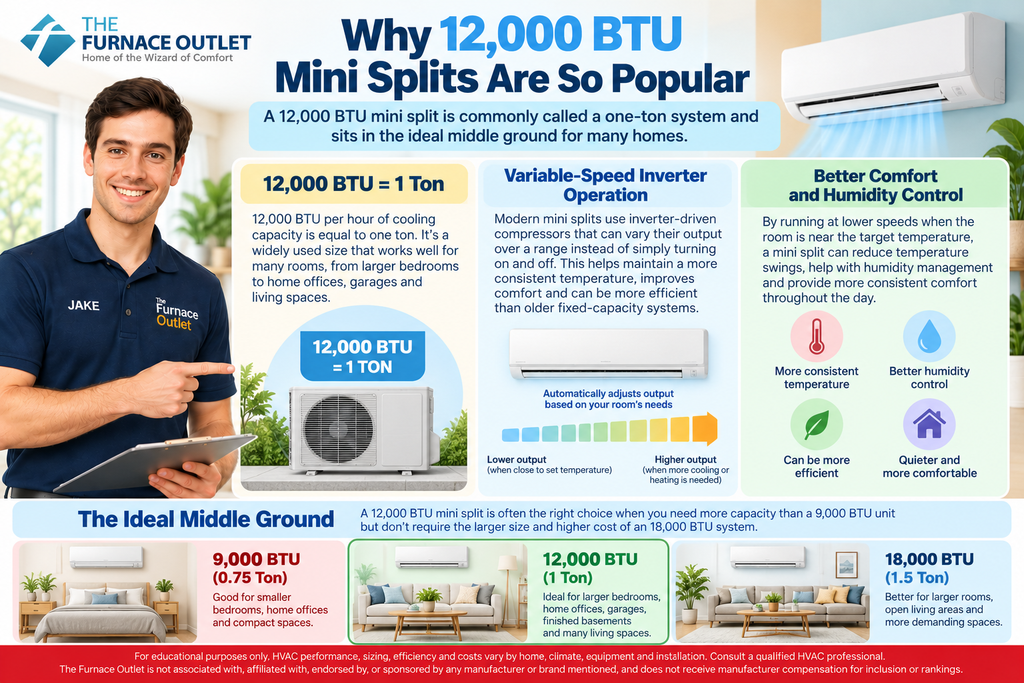
A 12,000 BTU mini split is commonly described as a one-ton system because 12,000 BTU per hour corresponds to one ton of nominal cooling capacity. That does not mean the compressor simply switches between zero and exactly 12,000 BTU every time the thermostat calls for cooling. Modern inverter-driven mini splits can typically vary their output over a range, which is one of their major advantages over older fixed-capacity air-conditioning equipment.
When the room is close to its target temperature, an inverter system can reduce compressor speed rather than repeatedly shutting completely off and restarting. This can improve comfort, reduce temperature swings and help with humidity management. When the load increases, the compressor can ramp upward. Some systems can temporarily operate above their nominal rating under particular test or operating conditions, which is another reason I pay attention to the published minimum and maximum capacity range rather than focusing exclusively on the “12K” name.
A one-ton mini split also occupies a useful middle ground. A 9,000 BTU unit may be appropriate for many smaller bedrooms and offices, while 18,000 BTU equipment begins moving into larger rooms, open living areas and more demanding spaces. Twelve thousand BTUs often lands between those two, which makes it attractive for homeowners who have a room that is clearly beyond the smallest mini-split category but does not require a substantially larger system.
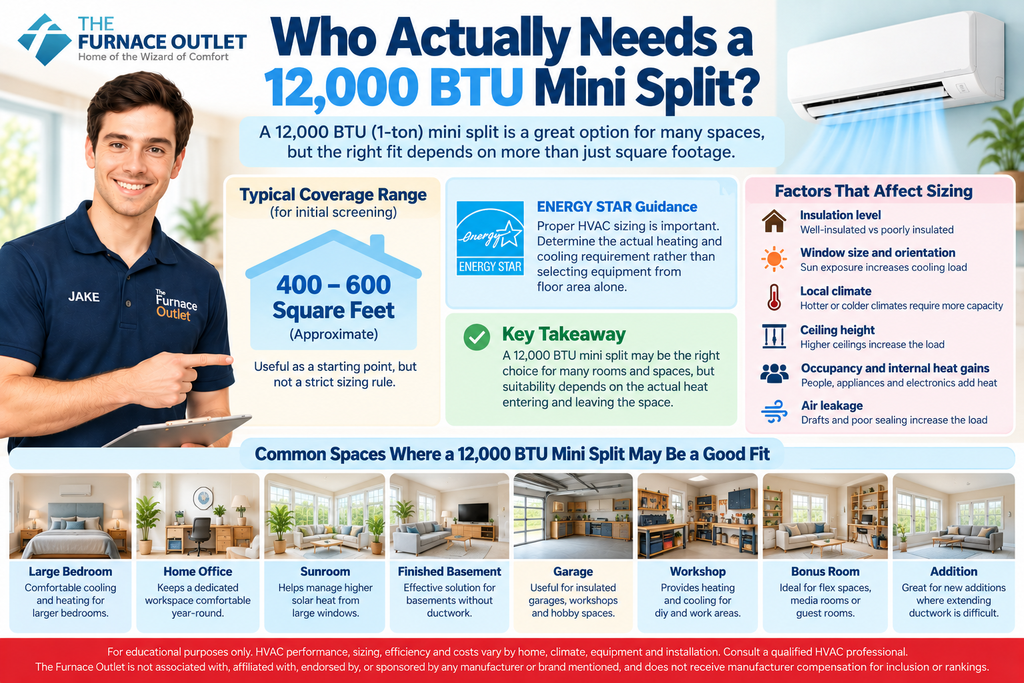
You will often see 12,000 BTU mini splits marketed for approximately 400 to 600 square feet. That range can be useful as an initial screening tool, but I would never treat it as a sizing rule. A 450-square-foot room in a well-insulated home in a moderate climate can have a dramatically different load from a 450-square-foot west-facing garage in Arizona or an older room with substantial air leakage and large windows.
ENERGY STAR specifically emphasizes that proper HVAC sizing is important and recommends determining the actual heating and cooling requirement rather than selecting equipment from floor area alone. ENERGY STAR Ductless Heating & Cooling guidance
A 12,000 BTU system may make sense in a large bedroom, home office, sunroom, finished basement, garage, workshop, bonus room, addition or moderately sized open living area. The suitability depends on the actual heat entering and leaving the space, however, so square footage should be treated as the beginning of the sizing conversation rather than its conclusion.
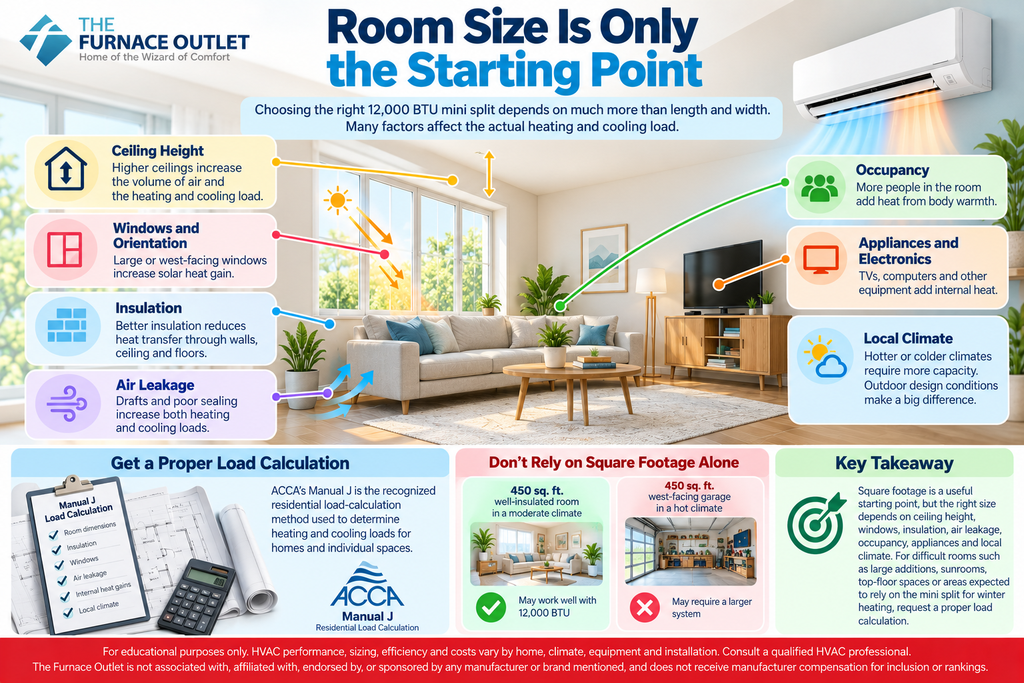
When I evaluate a room, I want to know much more than its length and width. Ceiling height affects the volume of air being conditioned. Window area and orientation influence solar gain. Insulation changes the rate of heat transfer through walls and ceilings. Air leakage can increase both heating and cooling loads. Occupancy, appliances and electronics contribute internal heat, while the local climate determines how severe the outdoor design conditions become.
That is why a professionally calculated heating and cooling load is so valuable. ACCA’s Manual J is the recognized residential load-calculation methodology used to determine heating and cooling loads for homes and individual spaces. ACCA Manual J Residential Load Calculation
If a contractor is proposing a mini split for a difficult room, particularly a large addition, sunroom, top-floor space or area expected to rely on the mini split as its primary winter heating source, I would be much more comfortable seeing a proper load calculation than hearing, “This size normally covers 500 square feet.”
For a homeowner looking for a premium all-around 12,000 BTU mini split, Mitsubishi Electric’s M-Series remains one of the product families I would examine closely. Mitsubishi has extensive experience with variable-speed ductless equipment, and the appeal of the M-Series is not based on one headline specification. It is the overall combination of modulation, indoor comfort, low sound, heating capability, control options and an established contractor ecosystem that makes the family important in this category.
I particularly like premium ductless equipment when the mini split is going into a room where comfort matters every day. A bedroom, home office or frequently occupied family room benefits from a system that can settle into long, low-output operating cycles rather than behaving aggressively around the set point. That kind of operation can make the equipment feel less intrusive.
For cold-climate applications, Mitsubishi’s Hyper-Heating INVERTER, commonly referred to as H2i, deserves separate attention. Homeowners should still verify the performance data for the exact system combination because low-temperature capacity varies by model. A cold-climate badge or product-family reputation should never replace checking what the particular system can actually deliver at the winter design temperature for your location.
The tradeoff is cost. Premium equipment can have a higher purchase and installation price than value-oriented online brands. I would therefore evaluate not only the equipment quote but also the quality of the contractor, commissioning, warranty terms and local service support. A premium mini split installed poorly is not automatically a premium HVAC system.
Daikin is another manufacturer I would include when comparing higher-end 12,000 BTU systems. The company has deep experience with inverter-driven heat-pump technology and offers ductless equipment aimed at homeowners who prioritize efficiency, comfort and sophisticated control.
The reason I consider Daikin alongside Mitsubishi is that buying a premium mini split should involve more than chasing the highest SEER2 number. Compressor modulation, heating behavior, indoor airflow, sound, controls, installer familiarity and future serviceability all contribute to ownership experience.
The exact Daikin series available to you may vary by distributor and market, and product transitions can change specifications. I would therefore compare the actual matched indoor and outdoor model numbers rather than assuming that every Daikin 12K system provides the same efficiency or low-temperature heating capability.
For homeowners working with a strong local Daikin contractor, that local support can be an important factor. HVAC equipment eventually needs cleaning, diagnostics or repair, and access to technicians who understand the platform can be more valuable over ten or fifteen years than a small difference in an efficiency number.
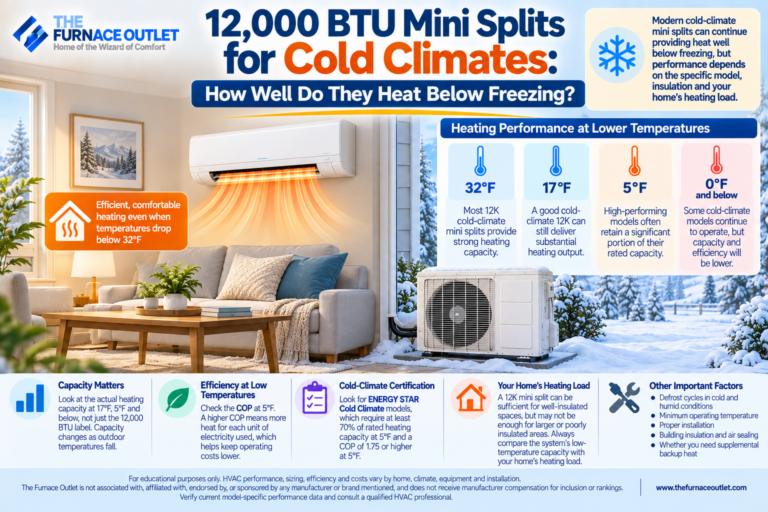
Heating is where the 12,000 BTU comparison becomes much more interesting. A mini split that performs beautifully during summer is not necessarily the system I would choose for a homeowner expecting it to carry a substantial winter heating load in Minnesota, Maine or another cold region.
As outdoor temperatures fall, the building’s heating requirement generally rises while the heat pump has to work under increasingly difficult conditions. What matters is not simply whether the manufacturer says the unit can “operate” at a low temperature. I want to know how much heating capacity remains available at that temperature and how efficiently the system produces it.
ENERGY STAR’s current cold-climate criteria provide a useful reference point. For qualifying non-ducted split heat pumps, ENERGY STAR specifies cold-climate efficiency requirements and also requires low-ambient performance testing. Among the criteria, qualifying equipment must demonstrate a coefficient of performance of at least 1.75 at 5°F and retain at least 70% of its 47°F nominal heating capacity at 5°F under the applicable test procedure. ENERGY STAR Heat Pump Key Product Criteria
That is the type of information I want homeowners to examine. Mitsubishi H2i systems are well known in the cold-climate mini-split category, while Fujitsu, Daikin and other manufacturers also offer systems designed for demanding winter conditions. The correct choice depends on the exact model, local design temperature and calculated heating load.
For buyers focused heavily on efficiency, the current Senville ELITE 12K deserves attention. Senville publishes a SEER2 rating of 29.4 and HSPF2-4 of 14.5 for its SENE-12EL configuration, along with a 12,000 BTU nominal cooling and heating rating. The manufacturer also lists operation for heating down to -22°F for this model.
Those are impressive published numbers for a 12K system, but I still would not purchase it from the SEER2 figure alone. The installation pathway, contractor availability, warranty process, local parts support and exact application need to be considered alongside efficiency.
This is an important lesson across the entire mini-split market. A very high seasonal efficiency rating tells you something useful about standardized test performance. It does not tell you everything about how much electricity your particular home will consume or how easy the system will be to service several years from now.
The MRCOOL DIY 5th Generation occupies a different position because its biggest selling point is not simply cooling efficiency. It is designed around homeowner installation using a factory pre-charged QuickConnect line-set concept that avoids the conventional field evacuation process associated with many mini splits.
For the current 12,000 BTU 115V DIY 5th Generation condenser, MRCOOL publishes 23.5 SEER2, 12.5 EER2 and HSPF2-4 of 10.2, with R-454B refrigerant and a 115V electrical requirement. MRCOOL also offers a 12K Hyper Heat 208/230V configuration with low-ambient capability, illustrating why homeowners should distinguish between variants even when both carry the same nominal 12,000 BTU capacity.
This is the system I would investigate first when genuine homeowner installation is the priority. The pre-charged connection approach removes one of the largest technical barriers associated with conventional mini-split installation. That does not mean the entire project becomes trivial, however. Mounting, condensate drainage, line routing, electrical work, clearances and code compliance still matter.
There is also an important refrigerant boundary to understand. EPA Section 608 requirements apply to technicians performing work that can release refrigerant, including activities involving the refrigerant circuit. The EPA specifically explains certification requirements for servicing stationary air-conditioning equipment. EPA Section 608 Technician Certification Requirements
A homeowner should therefore follow the exact manufacturer instructions and understand what portions of an installation are designed for DIY completion and what work may require a qualified electrician, HVAC professional, permit or inspection under local rules.
Senville remains interesting for value-conscious buyers because several of its product families combine competitive efficiency with features that would historically have been associated with more expensive equipment. Depending on the series, homeowners can find inverter operation, heat-pump capability, Wi-Fi or smart controls, low-ambient operation and strong published efficiency ratings.
Value, however, is not the same thing as lowest purchase price. When I evaluate a lower-cost mini split, I want to know whether replacement boards, fan motors, sensors and other components can be obtained several years from now. I also want to know who will diagnose the equipment if something goes wrong and whether the warranty covers only the part or also the labor involved in replacing it.
A system that costs $500 less initially but becomes difficult to repair after a failure is not necessarily the better value. Conversely, homeowners with access to competent local service may find that a well-selected value-oriented system gives them excellent performance without paying for the most expensive premium brand.
Fujitsu should not be overlooked when shopping for a 12,000 BTU mini split, especially when heating performance matters. Its AIRSTAGE ductless lineup includes high-efficiency and low-temperature-oriented equipment, and the company has long participated in the North American ductless market.
As with Mitsubishi and Daikin, I would avoid choosing purely by brand reputation. Ask the contractor for the exact indoor and outdoor model numbers, the AHRI certificate, rated cooling performance, heating output at relevant low temperatures and the warranty requirements.
The advantage of including Fujitsu in your quotes is that it gives you another established ductless platform to compare against Mitsubishi and Daikin. In some markets, contractor availability or distributor support may make one of these brands substantially easier to own than another.
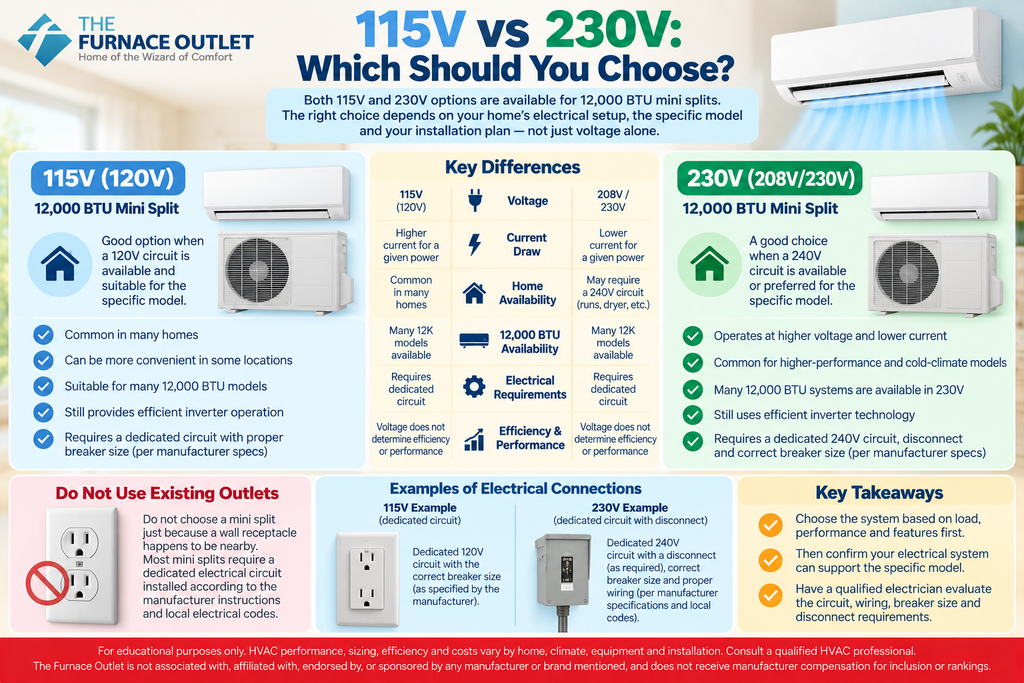
Voltage creates considerable confusion in the 12,000 BTU category because this is one of the capacities where homeowners can encounter both 115/120V and 208/230V equipment. It is tempting to assume that 230V automatically means a better or more efficient mini split, but voltage alone does not determine HVAC efficiency.
A 115V system can be attractive when the home’s electrical situation makes that configuration practical. A 230V system operates at a higher voltage and, for a given power level, can draw less current. The actual circuit requirement, minimum circuit ampacity and maximum overcurrent protection are determined by the equipment specifications rather than a generic rule based on BTU capacity.
Do not choose a unit because you happen to have a convenient wall receptacle nearby. Mini splits commonly require dedicated electrical provisions, disconnects and installation consistent with the manufacturer instructions and applicable electrical codes. Have a qualified electrician evaluate the circuit when appropriate.
My recommendation is therefore to choose the mini split based on load, performance and features first, and then make sure your electrical system can support the specific equipment correctly.
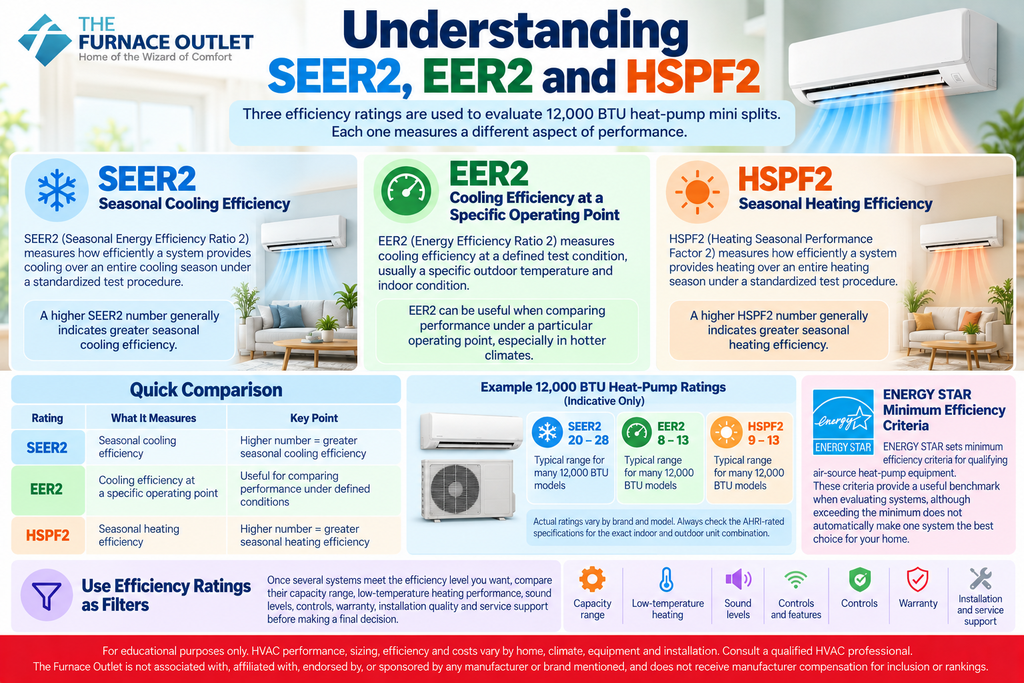
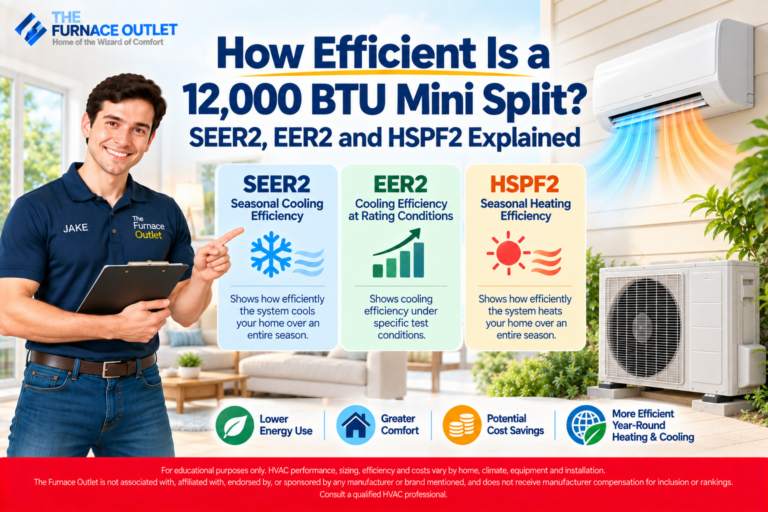
Three efficiency terms appear repeatedly when comparing 12,000 BTU heat-pump mini splits: SEER2, EER2 and HSPF2. They describe different aspects of performance and should not be treated as interchangeable numbers.
SEER2 represents seasonal cooling efficiency under a standardized test procedure. A higher number generally indicates greater seasonal cooling efficiency when comparing appropriately matched equipment. EER2 provides another cooling-efficiency metric under defined test conditions and can be useful when considering performance under a particular operating point. HSPF2 addresses seasonal heating efficiency.
ENERGY STAR currently establishes minimum efficiency criteria for qualifying air-source heat-pump equipment. Those criteria can provide a useful benchmark when evaluating equipment, although exceeding the minimum does not automatically make one system the best choice for a particular home. ENERGY STAR Air-Source Heat Pumps
I would use efficiency ratings as filters rather than trophies. Once several systems meet the efficiency level you want, compare their capacity range, low-temperature heating, sound, controls, warranty, installation quality and service support.
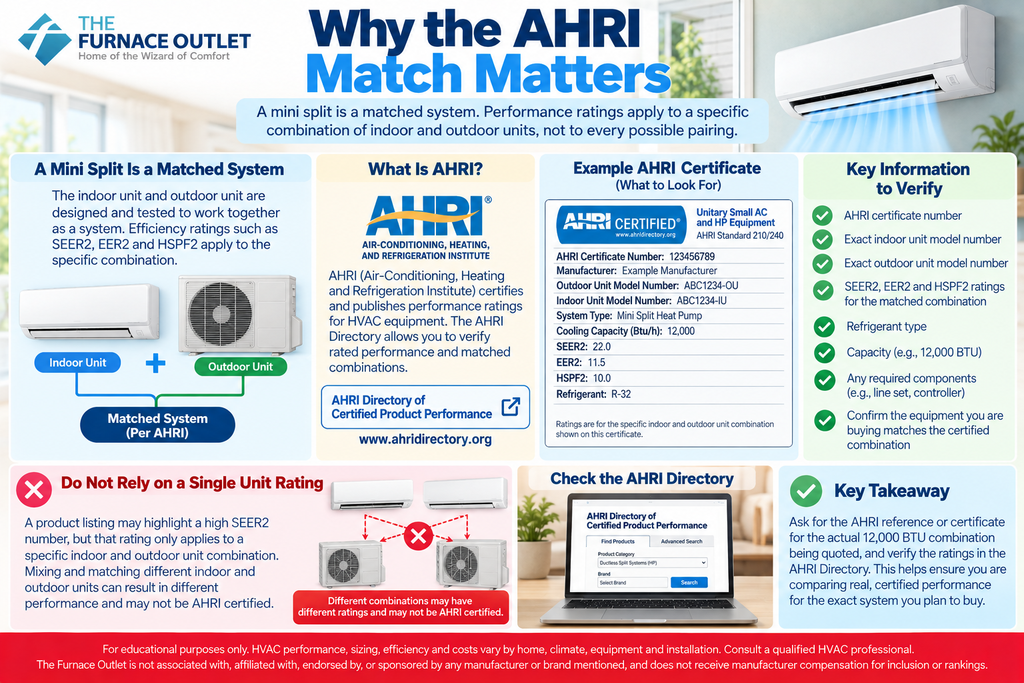
A mini split consists of matched components. The indoor unit and outdoor unit work together as a system, and performance ratings apply to particular combinations rather than every imaginable pairing of components carrying the same brand name.
That is why I encourage homeowners to ask for the AHRI reference or certificate for the actual combination being quoted. The AHRI Directory is a useful place to verify certified HVAC equipment ratings and matched combinations. AHRI Directory of Certified Product Performance
This becomes particularly important when shopping online. A product listing may emphasize a headline SEER2 number, but you should confirm that the indoor unit, outdoor unit and any required components in the package correspond to the certified combination producing that rating.
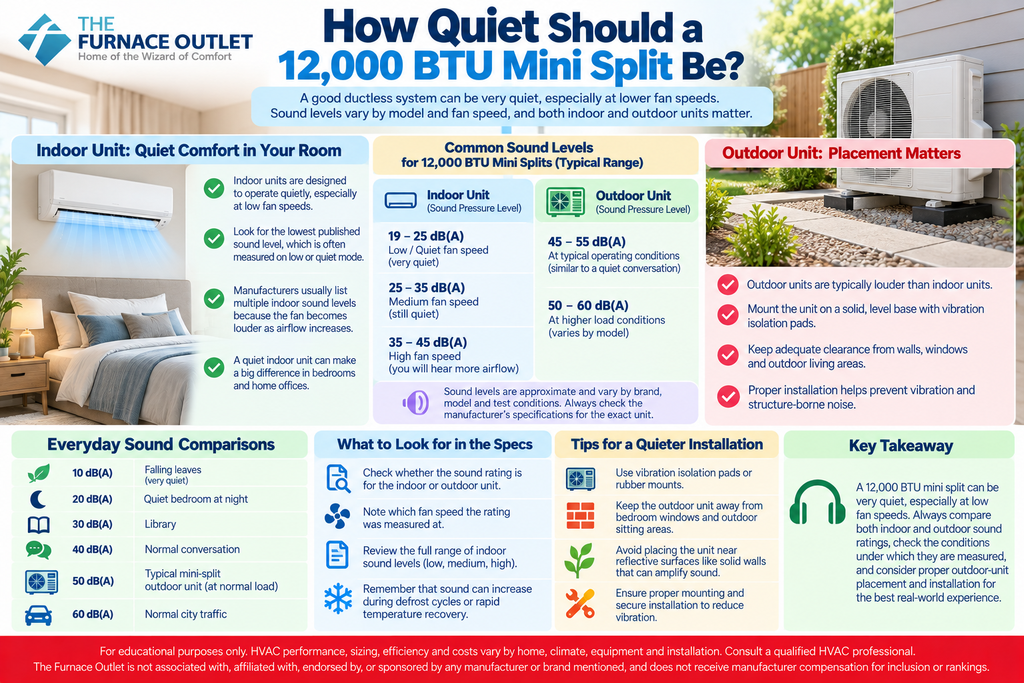
Noise is one of the areas where a good ductless system can dramatically improve the experience of a bedroom or home office. Instead of moving conditioned air through a large central duct system, the indoor head operates directly within the room, so fan design and low-speed performance matter.
When comparing sound specifications, make sure you know whether the number refers to the indoor or outdoor unit and which fan speed produced the rating. Manufacturers often publish several indoor sound levels because the air handler becomes louder as airflow increases.
A very low minimum sound rating can be meaningful in a bedroom because an inverter mini split may spend substantial time operating at reduced capacity. However, do not assume the lowest published number represents how the system will sound during maximum output, defrost or rapid temperature recovery.
Outdoor-unit placement matters as well. Mounting technique, vibration isolation, nearby walls and windows can influence perceived noise. Even a quiet compressor can become annoying if vibration is transferred into the structure through poor installation.
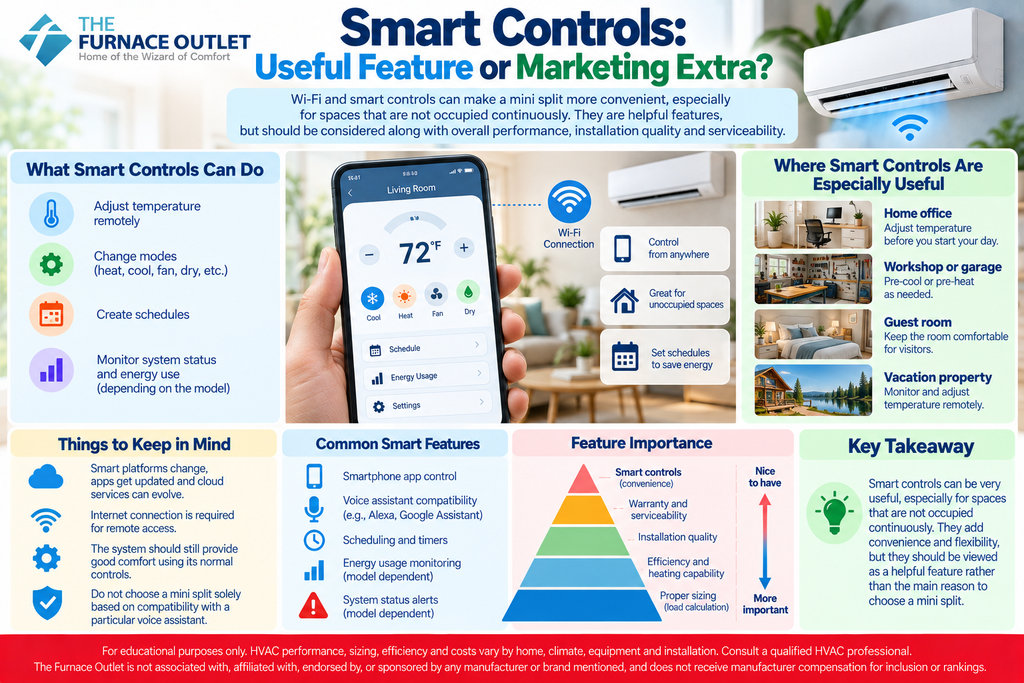
Wi-Fi has moved from a premium novelty to a common mini-split feature. Depending on the equipment, homeowners may be able to adjust temperature, change modes, create schedules and monitor the system through a smartphone application.
I find smart control particularly useful for spaces that are not occupied continuously. A detached office, workshop, guest room or vacation property may benefit from remote temperature adjustment. Scheduling can also help prevent unnecessary operation when a room is empty.
I would not choose a mini split solely because it works with a particular voice assistant, however. Smart platforms change, apps get updated and cloud services can evolve. The underlying HVAC system should still provide good comfort using its normal controls.
For that reason, smart functionality sits below sizing, efficiency, heating capability, installation quality and serviceability on my priority list.
I have seen homeowners spend weeks comparing SEER ratings and then treat installation as an afterthought. That reverses the order of importance. A technically excellent mini split can perform poorly if it is incorrectly sized, improperly mounted, inadequately evacuated on a conventional system, charged incorrectly where field adjustment is required, wired improperly or installed with bad condensate drainage.
Line-set routing matters. Drainage matters. Flare quality matters on conventional connections. Vacuum procedures matter when the installation method calls for evacuation. Electrical sizing matters. Outdoor-unit clearances matter. Indoor-unit placement affects airflow and temperature distribution.
With a conventional mini split, I would rather buy a solid system from a contractor who installs and commissions it carefully than chase a marginally higher efficiency rating from an installer I do not trust.
DIY mini splits need to be divided into two categories. The first consists of equipment genuinely engineered around homeowner installation, such as the MRCOOL DIY platform with its pre-charged connection system. The second consists of conventional mini splits that happen to be sold directly to consumers online.
Those are not the same thing.
A conventional system may arrive with refrigerant stored in the outdoor unit, but that does not necessarily mean the entire installation is homeowner-ready. Depending on the design, the refrigerant piping may still require proper flaring, leak testing, evacuation and commissioning before the service valves are opened.
EPA rules also matter when refrigerant-circuit work is involved. EPA guidance explains that activities such as attaching gauges, adding or removing refrigerant and other work that can violate the integrity of the refrigerant circuit fall within Section 608 requirements. EPA Stationary Refrigeration and Air Conditioning Resources
For that reason, I would never assume that “pre-charged” means “no HVAC technician required.” Verify exactly how the system is designed to be installed.
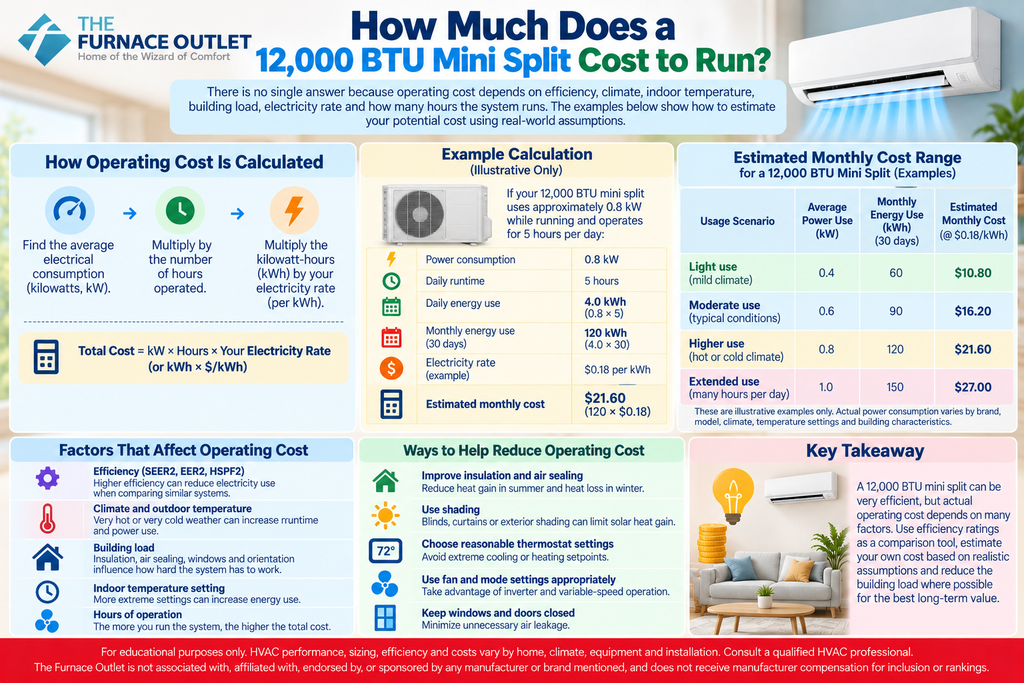
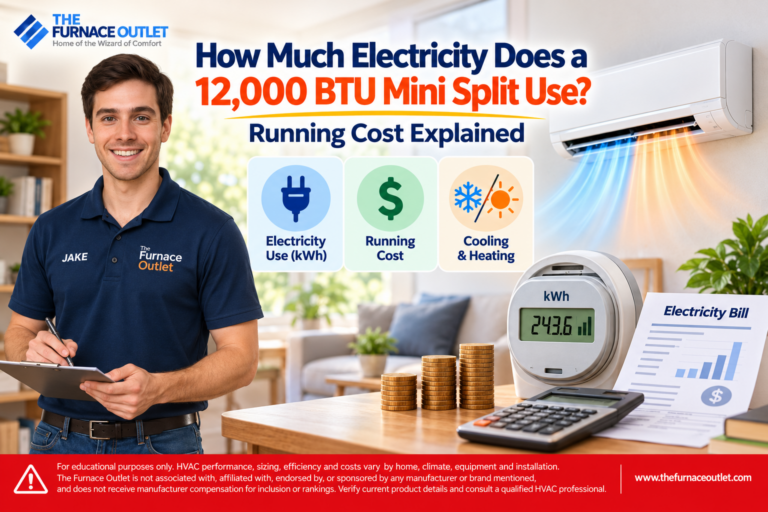
There is no honest universal answer because operating cost depends on efficiency, climate, indoor temperature, building load, electricity rate and how many hours the equipment runs. Inverter systems complicate simple calculations further because they do not necessarily operate continuously at their rated input.
A rough estimate can still be useful. If you know the approximate electrical consumption over a period, multiply kilowatt-hours by your utility’s electricity rate. For example, 250 kWh consumed during a month at $0.18 per kWh would cost approximately $45 for that electricity. That is only an illustrative calculation, not a prediction of what a particular 12K mini split will consume.
The better approach is to compare efficiency ratings while also reducing the building load where practical. Air sealing, insulation, solar shading and reasonable thermostat settings can influence operating cost regardless of which brand is installed.
A “10-year warranty” sounds simple until you read what it actually covers. Compressor coverage, other parts and labor may have different terms. Registration may be required. Some warranties may depend on installation conditions or approved distribution channels.
Before purchasing, I would ask who handles a warranty claim, whether labor is included, whether registration is required and whether replacement parts are available locally. If the installer disappears three years from now, can another contractor obtain the part and complete the repair?
For online purchases, this question becomes particularly important. A long parts warranty is useful, but the homeowner still needs someone capable of diagnosing the failure correctly and installing the replacement component.
If I were building a homeowner shortlist rather than selecting purely by one specification, I would place Mitsubishi Electric M-Series at the top of my overall comparison because of the balance of comfort, product maturity, heating options and contractor support. Daikin and Fujitsu would remain serious premium alternatives, particularly where a strong local dealer makes ownership easier.
For cold climates, I would prioritize a verified cold-climate system such as an appropriate Mitsubishi H2i configuration or another model whose published low-temperature capacity matches the calculated heating requirement. For maximum published efficiency among the systems discussed here, the current Senville ELITE 12K deserves close examination. For homeowners specifically seeking a genuine DIY pathway, MRCOOL DIY 5th Generation is the obvious system to investigate because its installation concept is fundamentally different from a conventional mini split.
For budget-focused buyers, Senville, Pioneer and Cooper & Hunter can be worth comparing, but I would put greater weight on parts availability and local service support as the purchase price falls. Saving money at checkout should not leave you with equipment nobody in your area wants to repair.
The important point is that these categories answer different questions. There is no single 12,000 BTU mini split that is automatically the best for a Florida bedroom, a Maine addition, a Colorado garage and a California home office.
The 12,000 BTU category is one of my favorite mini-split sizes because it can solve a wide variety of comfort problems without jumping immediately into larger equipment. A properly selected one-ton inverter mini split can provide quiet cooling, efficient shoulder-season heating and, when the right cold-climate equipment is selected, meaningful winter heating as well.
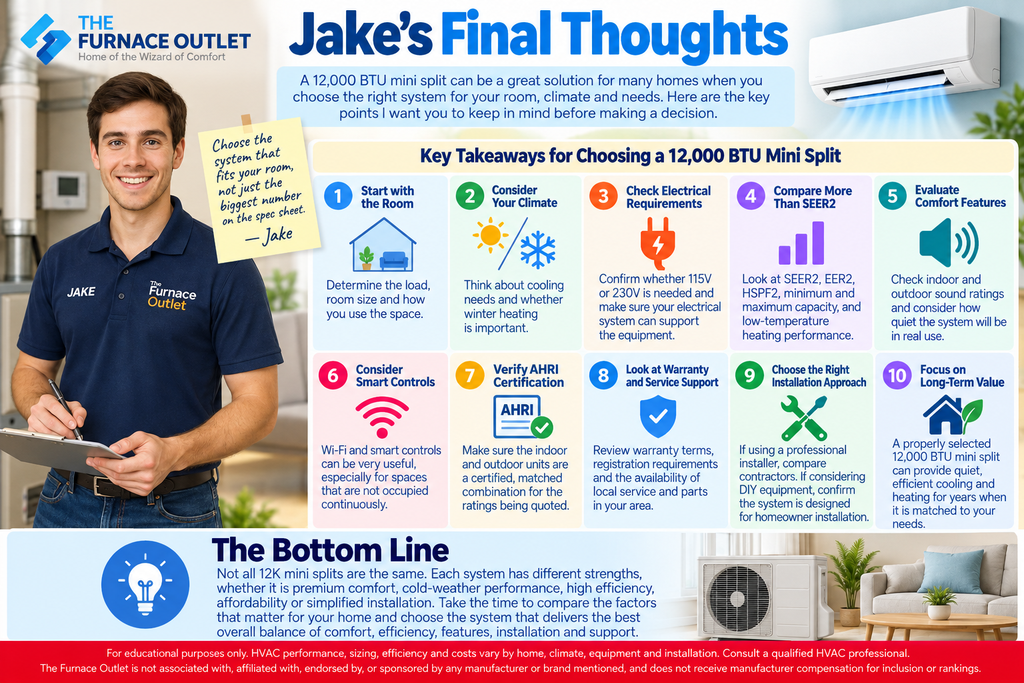
The mistake I want homeowners to avoid is assuming that all 12K systems are essentially interchangeable. They are not. One may be optimized around premium comfort and cold-weather performance, another around extremely high seasonal efficiency, another around affordability, and another around simplifying homeowner installation. Those differences matter more than the shared “12,000 BTU” label.
Start with the room rather than the equipment. Determine the load, consider your climate, decide how important winter heating is, verify the available electrical service and then compare properly matched systems. Check SEER2, EER2 and HSPF2, but also look at minimum and maximum capacity, low-temperature heating output, indoor sound, controls, warranty requirements and local service support.
If you are investing in a professionally installed system, the quality of the contractor should be part of the product comparison. If you are considering DIY equipment, make sure it is genuinely engineered for the type of installation you intend to perform rather than assuming that every online mini split is homeowner-installable.
That approach may take a little longer than simply choosing whichever unit has the biggest efficiency number or the lowest sale price, but it gives you a much better chance of ending up with what you actually wanted in the first place: a quiet, efficient 12,000 BTU mini split that keeps the room comfortable for years.
For readers who want to go deeper into the technical standards behind the recommendations in this guide, I recommend reviewing ENERGY STAR’s ductless heating and cooling guidance, the ENERGY STAR air-source heat-pump criteria, and the ACCA Manual J residential load-calculation standard. These are particularly useful for understanding proper sizing and cold-climate performance.
Homeowners comparing actual equipment combinations can also use the AHRI Directory of Certified Product Performance to investigate certified matched-system ratings. For installation and refrigerant-handling questions, review the EPA Section 608 Technician Certification Requirements and EPA stationary refrigeration and air-conditioning resources. EPA specifically identifies activities involving refrigerant-circuit integrity among the work covered by Section 608 technician requirements.
Editorial and HVAC Disclaimer: The Furnace Outlet is not associated with, affiliated with, endorsed by, or sponsored by any manufacturer or brand mentioned in this article, and no manufacturer compensation is received for inclusion or rankings. Product selections represent independent editorial analysis and are not universal recommendations. Specifications, model availability, refrigerants, efficiency ratings, warranties, certifications and pricing can change, and readers should verify current information for the exact indoor/outdoor equipment combination before purchasing. HVAC sizing, performance, efficiency, installation requirements and operating costs vary by home, climate, equipment and installation. This content is for educational purposes and does not replace a professional load calculation, electrical evaluation or HVAC installation assessment. Consult a qualified HVAC professional where appropriate