Newsletter Subscribe
Enter your email address below and subscribe to our newsletter

HVAC made simple
By Jake Lawson | HVAC Specialist | The Furnace Outlet
Updated October 2026 | Estimated reading time: 12 minutes
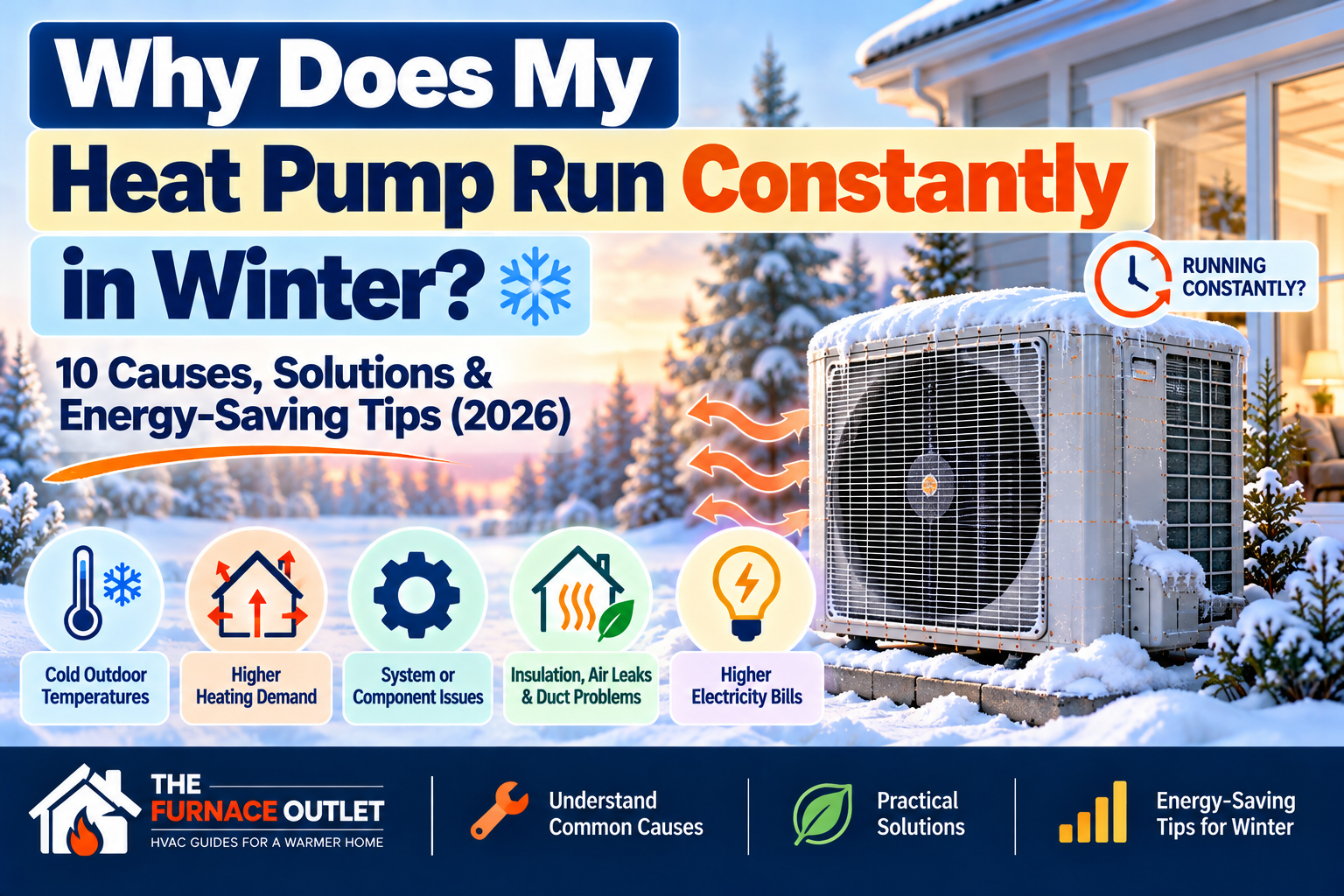
If your heat pump seems to run continuously during winter, you may wonder whether something is wrong with the equipment or whether your electricity bill is about to increase dramatically. Unlike traditional gas furnaces, which often operate in relatively short heating cycles, heat pumps can run for extended periods, particularly when outdoor temperatures fall and the home’s heating demand increases.
As an HVAC specialist with more than 10 years of experience, I frequently encounter homeowners who become concerned because their heat pump appears to operate almost nonstop. In many cases, the equipment is functioning exactly as intended. Modern variable-speed heat pumps are designed to adjust their heating output and maintain consistent indoor temperatures rather than repeatedly switching between full power and complete shutdown.
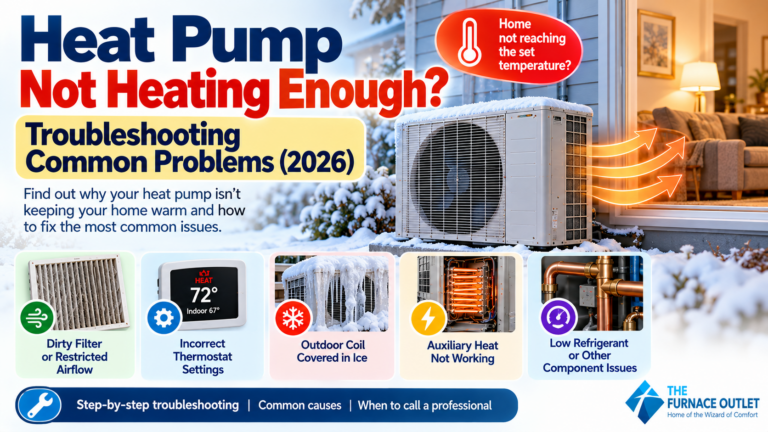
However, continuous operation is not always normal. Restricted airflow, incorrect thermostat settings, insufficient heating capacity, refrigerant problems, excessive building heat loss, or malfunctioning supplemental heating can cause a heat pump to struggle during winter.
The most important question is not simply how long your heat pump runs, but whether it maintains indoor comfort while operating efficiently. In this guide, I will explain why heat pumps run longer in cold weather, how to recognize genuine problems, and what homeowners can safely do to improve winter heating performance.
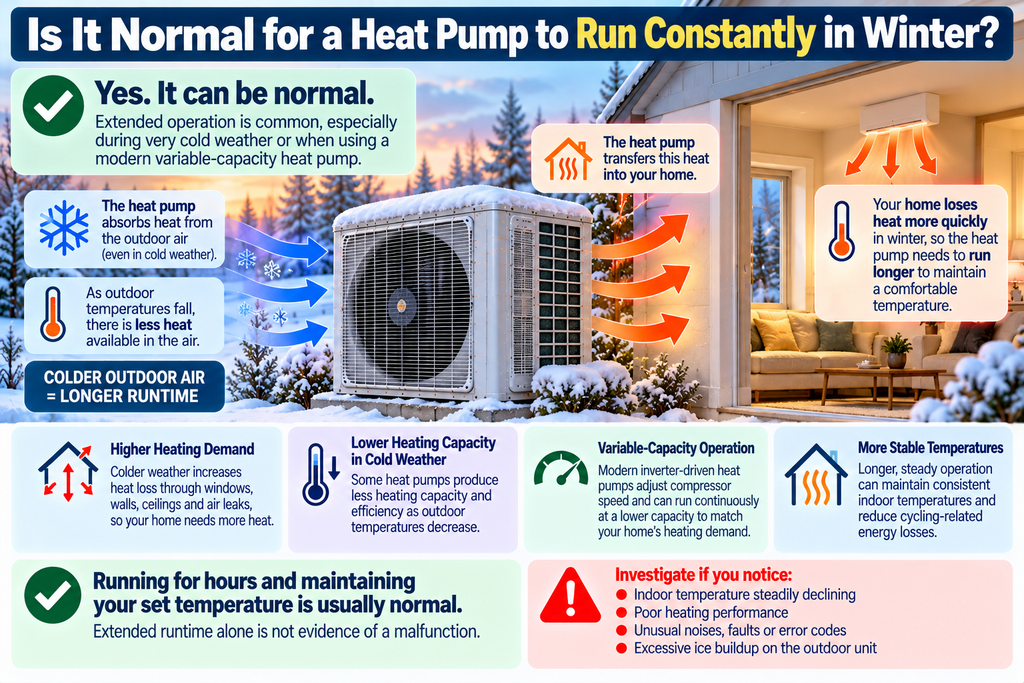
Yes. Extended operation can be completely normal, especially during very cold weather or when using a modern variable-capacity heat pump. A heat pump transfers thermal energy from outdoor air into the home. As outdoor temperatures fall, the building generally loses heat more rapidly, increasing the amount of heating energy required to maintain a comfortable indoor temperature. At the same time, the available heating capacity and efficiency of some heat pumps decline as outdoor temperatures decrease. The equipment may therefore operate for longer periods to replace the heat escaping through windows, walls, ceilings, and other parts of the building.
Modern inverter-driven heat pumps can also adjust compressor speed to match heating demand. Instead of repeatedly starting and stopping, they may operate continuously at reduced capacity. This can improve temperature stability and reduce some cycling-related losses. The U.S. Department of Energy’s heat pump systems guide explains how heat pumps transfer thermal energy and why they can provide efficient heating even in cold weather.
If your heat pump runs for hours while maintaining the thermostat setting, that alone is not evidence of a malfunction. However, if the indoor temperature steadily declines despite continuous operation, further investigation is appropriate.
| Observation | Possible explanation | Recommended response |
|---|---|---|
| Runs continuously during extreme cold | High heating demand | Monitor indoor comfort |
| Runs for long periods at low output | Normal variable-speed operation | Usually no action required |
| Runs constantly but maintains temperature | May be operating normally | Compare energy use and weather |
| Runs constantly while indoor temperature falls | Insufficient heating output | Investigate system performance |
| Outdoor coil develops heavy persistent ice | Defrost or equipment problem | Arrange professional inspection |
| AUX HEAT operates excessively in mild weather | Controls or capacity problem | Request thermostat and system evaluation |
| Airflow becomes weak | Dirty filter or airflow restriction | Inspect accessible filter and vents |
| Heating bills rise unexpectedly | Weather, backup heat, or efficiency issue | Compare electricity consumption |
| Outdoor unit repeatedly starts and stops | Possible control or equipment issue | Record symptoms and seek diagnosis |
| Uneven room temperatures persist | Duct leakage or building heat loss | Evaluate distribution and insulation |
These observations are starting points rather than confirmed diagnoses. Different heat pump models use different operating strategies, and continuous operation should be assessed against equipment design and actual heating demand.
The most common reason a heat pump runs continuously in winter is simply that the home requires more heating energy. As outdoor temperatures decline, the difference between indoor and outdoor temperatures increases. This generally causes heat to escape more rapidly through the building envelope, including walls, windows, ceilings, floors, and uncontrolled air leaks.
For example, maintaining a home at 70°F when the outdoor temperature is 45°F usually requires less heating energy than maintaining the same indoor temperature when it is 10°F outside. A heat pump must operate long enough to replace that lost heat. During severe winter conditions, the required heating output may approach the equipment’s available capacity, resulting in extended or nearly continuous operation.
This does not necessarily indicate poor efficiency or a mechanical problem. However, if the system cannot maintain the requested temperature, its available heating capacity may be insufficient for the current conditions. I recommend comparing indoor comfort with outdoor weather rather than judging performance solely by runtime.
Many newer heat pumps use inverter-driven compressors that adjust operating speed according to heating demand. Traditional single-stage systems typically operate at a relatively fixed output and cycle on and off as the thermostat calls for heating. Variable-speed systems can reduce output when demand is low and increase it when additional heating is required.
This allows the equipment to maintain more consistent indoor temperatures without frequent shutdowns. A homeowner accustomed to a conventional furnace may interpret this longer operating pattern as excessive runtime, even when the system is functioning efficiently.
However, continuous operation should still produce adequate heating. If the home becomes progressively colder, or if the equipment repeatedly displays faults, the behavior should not be dismissed as a normal characteristic of inverter technology. I recommend reviewing the manufacturer’s operating information and having a technician evaluate performance if the system’s behavior changes significantly.
Incorrect equipment sizing can cause a heat pump to operate continuously without maintaining indoor comfort. A heat pump must provide sufficient heating capacity to meet the building’s calculated heat loss under the local winter design conditions. If the equipment is too small, it may operate at maximum output for extended periods while the indoor temperature continues falling.
Sizing should consider more than floor area. Insulation, window performance, building orientation, air leakage, climate, and construction characteristics all influence heating demand. An undersized system may appear adequate during mild weather but struggle during the coldest periods.
However, continuous operation alone does not prove that the heat pump is undersized. Variable-speed equipment may intentionally run for long periods, and some installations are designed to use supplemental heating under severe conditions. Before replacing equipment, I recommend requesting a recognized residential heating-load calculation, such as ACCA Manual J, together with an evaluation of manufacturer-published heating capacity at the local design temperature.
Restricted airflow is another common contributor to inadequate heat pump performance. The indoor blower must circulate sufficient air across the heat exchanger to distribute heating energy throughout the home. When an air filter becomes heavily clogged, airflow can decline, potentially reducing comfort and interfering with normal operation.
Blocked return grilles, closed supply registers, damaged ductwork, and malfunctioning blowers may create similar problems. A heat pump experiencing airflow restrictions may operate longer than expected because heating energy is not being distributed effectively.
Homeowners can inspect accessible filters and replace them when necessary, following the manufacturer’s approved size and filtration specifications. I also recommend checking whether furniture, rugs, or other objects obstruct supply and return openings. If airflow remains weak after these basic checks, professional measurement and diagnosis are appropriate.
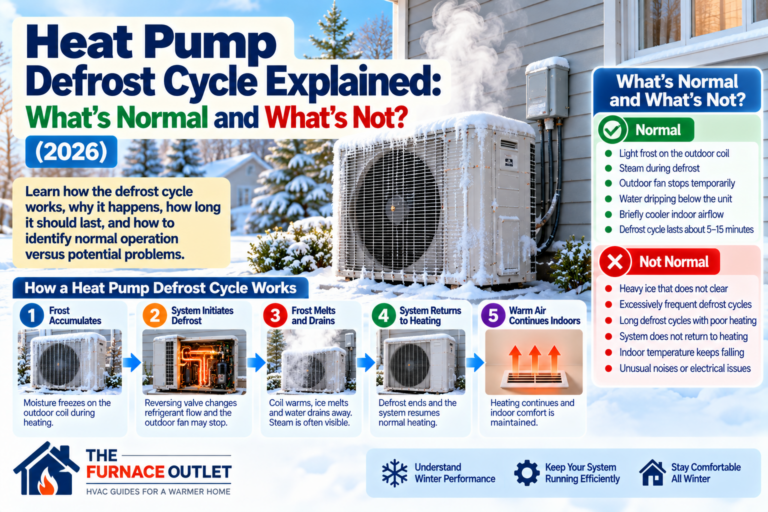
During winter heating, the outdoor coil absorbs thermal energy from surrounding air. Under suitable temperature and humidity conditions, frost can develop on its surface. Heat pumps normally remove frost through automatic defrost cycles. During defrost, the system temporarily changes operation to warm the outdoor coil and melt accumulated frost.
A properly functioning defrost cycle may produce visible steam, dripping water, and temporary changes in fan operation. However, heavy ice that remains on the outdoor coil can restrict airflow and reduce heat transfer. The heat pump may then struggle to maintain indoor temperature despite extended operation.
Possible causes include defective defrost sensors, control problems, drainage issues, refrigerant-related faults, or snow and debris obstructing the equipment. Homeowners can visually inspect the outdoor unit from a safe distance, but should never chip ice from the coil or pour boiling water onto frozen components. For additional guidance, read our related article, Heat Pump Defrost Cycle Explained: What’s Normal and What’s Not? (2026).
Refrigerant allows a heat pump to absorb heat outdoors and release it indoors. The system is designed to operate with a specified refrigerant charge within a sealed refrigeration circuit. If a leak develops, reduced refrigerant charge may affect heating capacity and operating conditions. The heat pump may run for extended periods without delivering the expected heating output.
However, low refrigerant cannot be reliably diagnosed from long runtime alone. Airflow restrictions, expansion-device problems, faulty sensors, and compressor issues can produce similar symptoms. A qualified technician should evaluate system conditions against manufacturer specifications and investigate leaks where appropriate.
The EPA Section 608 technician certification guidance explains the certification requirements associated with regulated refrigerant servicing in the United States. I strongly discourage homeowners from attempting refrigerant additions or opening refrigerant connections. Adding refrigerant without identifying the underlying problem can result in unnecessary expense and recurring performance issues.
Many ducted heat pumps use supplemental heating when the primary heat pump cannot meet the home’s heating demand. In all-electric installations, supplemental heating commonly consists of electric resistance elements inside the air handler. Dual-fuel systems may use a gas furnace as the backup heating source.
During very cold weather, supplemental heating may operate automatically when required by the equipment’s control strategy. If backup heating fails to activate when needed, the heat pump may run continuously while the indoor temperature gradually declines.
Possible causes include failed heating elements, electrical faults, thermostat configuration problems, or defective controls. However, not every heat pump requires auxiliary heating during freezing conditions. Some modern cold-climate models can provide substantial heating output without backup operation. A technician should determine whether supplemental heating is required by the system design and verify that it operates correctly under appropriate conditions.
Sometimes the heat pump is functioning properly, but the house loses heat faster than expected. Insufficient attic insulation, drafty windows, poorly sealed doors, and uncontrolled air leakage can increase heating demand significantly. For example, warm indoor air escaping through gaps in the building envelope must be replaced by outdoor air that requires heating. This increases the workload on the heat pump. Poor insulation may also create cold interior surfaces and uncomfortable rooms even when the thermostat indicates a reasonable temperature.
The ENERGY STAR heating and cooling recommendations provide useful guidance on improving HVAC performance and household energy efficiency. Before recommending a larger heat pump, I prefer to evaluate insulation, air sealing, and other building-envelope conditions. Reducing unnecessary heat loss can improve comfort while decreasing heating demand.
A heat pump may produce adequate heating energy while the duct system fails to deliver it efficiently. Leaking supply ducts can release heated air into attics, crawl spaces, or other unconditioned areas. Poorly insulated ductwork may also lose heat before conditioned air reaches occupied rooms.
Disconnected ducts, crushed flexible duct sections, and inadequate airflow balancing can create uneven temperatures throughout the home. The thermostat may continue requesting heating because the room containing the thermostat does not reach the desired temperature, even though other parts of the house receive sufficient warmth. I recommend having a qualified contractor evaluate duct leakage, insulation, airflow distribution, and system balancing when certain rooms remain consistently colder than others.
Thermostat operation plays an important role in determining how long a heat pump runs. Large temperature setbacks can create substantial recovery demands. Depending on the system, the heat pump may operate for extended periods or activate supplemental electric heating to restore the requested temperature.
Incorrect thermostat configuration can also interfere with heating operation, reversing-valve controls, or auxiliary heat activation. If the fan is set to ON instead of AUTO, the indoor blower may continue circulating air even when the compressor is not actively heating. This can create the impression that the heat pump itself never stops.
Begin by checking the accessible thermostat settings and confirming that the equipment is operating in HEAT mode. If the thermostat was recently replaced or the system began behaving abnormally after control work, professional verification of compatibility and configuration is appropriate.
Not necessarily. Runtime alone does not determine electricity consumption because heat pumps operate at different capacities and electrical input levels. A variable-speed heat pump running for many hours at reduced output may consume less electricity than a system repeatedly operating at maximum output, depending on equipment efficiency and heating demand.
However, continuous high-capacity operation during severe cold can increase electricity consumption. Backup electric resistance heating may also raise energy use when it operates frequently. The most useful way to evaluate energy consumption is to compare actual kilowatt-hours used during similar weather conditions.
Review outdoor temperatures, thermostat settings, supplemental heating activity, and any recent changes in household occupancy or electricity rates. If electricity consumption rises unexpectedly while heating performance declines, professional evaluation may help identify an underlying problem.
There is no universal outdoor temperature at which a heat pump should stop operating. Modern cold-climate heat pumps can deliver useful heating at temperatures well below freezing, although their available capacity and efficiency depend on equipment design.
The important distinction is whether the system can meet the home’s complete heating demand at the local winter design temperature. A heat pump may continue operating in very cold weather while requiring supplemental heating to maintain comfort. The ENERGY STAR air-source heat pump performance criteria provide useful information about qualifying cold-climate equipment. I recommend comparing manufacturer-published heating capacity with the home’s calculated heating load rather than relying on general temperature claims.
My preferred approach begins with observing the equipment’s performance rather than attempting internal repairs. First, record the thermostat setting and actual indoor temperature. Determine whether the home is maintaining comfort or gradually becoming colder. Next, inspect the accessible air filter and confirm that supply and return vents are unobstructed. Observe the outdoor unit for heavy ice, snow accumulation, or blocked airflow.
Check whether the indoor fan is set to ON or AUTO and note whether auxiliary heating appears to operate. If the system runs continuously but maintains indoor temperature, the behavior may be normal for the weather and equipment design. If indoor temperature continues falling, the system repeatedly shuts down, or unusual mechanical or electrical symptoms appear, arrange professional inspection.
Do not repeatedly reset breakers, bypass controls, open electrical cabinets, or attempt refrigerant repairs.
Reducing unnecessary heating demand is generally more useful than trying to force a heat pump to cycle off more frequently. Start by maintaining clean air filters and keeping supply and return openings clear. Ensure that the outdoor unit has adequate airflow and that snow or debris does not obstruct the equipment.
Review thermostat settings and avoid unnecessarily large temperature adjustments unless recommended for your particular heat pump. Improving attic insulation, sealing air leaks, and repairing leaking ductwork can reduce the amount of heating energy required to maintain comfort. Professional maintenance should include checking heat exchanger condition, blower operation, electrical connections, defrost controls, thermostat configuration, and supplemental heating where installed.
The ENERGY STAR HVAC maintenance checklist provides practical guidance for regular equipment servicing. I also recommend keeping records of heating performance, energy consumption, and maintenance history. These records can help identify developing problems before they cause major comfort issues.
It can be normal during severe cold or with variable-speed equipment, provided the system maintains indoor comfort and operates according to its design. Continuous runtime accompanied by falling indoor temperature deserves investigation.
Colder weather increases building heat loss, while some heat pumps deliver less heating capacity as outdoor temperatures decline. The system may need longer operating periods to maintain the thermostat setting.
Not simply because it runs for a long time. Extended operation can be normal. However, severe icing, burning smells, electrical faults, or abnormal mechanical noises require appropriate safety precautions and professional attention.
No. Continuous operation alone does not establish incorrect sizing. Equipment capacity, outdoor temperature, thermostat settings, building heat loss, and control strategy must be evaluated together.
Possible explanations include colder weather, greater heating demand, supplemental electric heating, poor insulation, airflow restrictions, or equipment problems. Compare actual electricity consumption under similar conditions before assuming a fault.
Emergency heat should not be selected merely because the heat pump runs continuously. On many systems, it bypasses the primary heat pump and relies on backup heating. Follow manufacturer instructions and seek professional guidance when the primary system is malfunctioning.
When homeowners tell me their heat pump runs constantly during winter, I begin by determining whether the system is maintaining indoor comfort. A heat pump that operates for long periods while keeping the home at the desired temperature may be performing exactly as designed, particularly during cold weather or when using variable-speed technology.
The symptoms that concern me most are steadily declining indoor temperatures, heavy outdoor icing, weak airflow, repeated equipment faults, and unexpectedly high energy consumption under comparable conditions. These problems may involve maintenance issues, controls, equipment capacity, or excessive building heat loss.
My preferred approach is to evaluate the entire heating system rather than focusing exclusively on compressor runtime. Proper sizing, sufficient airflow, correctly configured controls, effective insulation, and well-sealed ductwork all contribute to reliable winter performance.
Ultimately, the goal is not to make a heat pump switch off more frequently; it is to maintain comfortable indoor temperatures with reasonable energy consumption and dependable equipment operation. A properly selected and maintained heat pump can deliver excellent winter comfort even when its operating pattern differs substantially from that of a conventional furnace.
This article is published by The Furnace Outlet for general educational purposes only. It does not replace professional HVAC diagnosis, manufacturer instructions, or applicable safety requirements. Electrical repairs, refrigerant servicing, internal component testing, and equipment modifications should be performed by appropriately qualified professionals. Heat pump performance varies with climate, equipment design, installation quality, and building conditions. The Furnace Outlet publishes independent educational content, and references to external organizations do not imply affiliation or endorsement.
© 2026 The Furnace Outlet. All rights reserved.