Newsletter Subscribe
Enter your email address below and subscribe to our newsletter

HVAC made simple
By Jake Lawson | HVAC Specialist | The Furnace Outlet
Updated October 2026 | Estimated reading time: 12 minutes
Your heat pump is running on a cold winter morning when something unusual happens. The outdoor fan stops, a cloud of steam rises from the equipment, and the warm air coming through your vents briefly becomes cooler. A few minutes later, the system returns to normal heating. For homeowners unfamiliar with heat pump operation, this sequence can look like a serious mechanical failure.
As an HVAC specialist with more than 10 years of experience, I frequently explain that these symptoms may be part of a completely normal heat pump defrost cycle. Unlike conventional furnaces, air-source heat pumps extract thermal energy from outdoor air. Under certain winter conditions, frost develops on the outdoor heat exchanger, and the equipment must periodically remove it to maintain effective heating.
However, not every defrost-related symptom is harmless. Heavy ice that never clears, excessively frequent defrost operations, prolonged interruptions in heating, or a system that cannot maintain indoor comfort may indicate a problem requiring professional diagnosis.
In this guide, I will explain how heat pump defrost cycles work, how long they typically last, which symptoms are normal, what causes defrost failures, and how homeowners can safely recognize problems before they become expensive repairs.
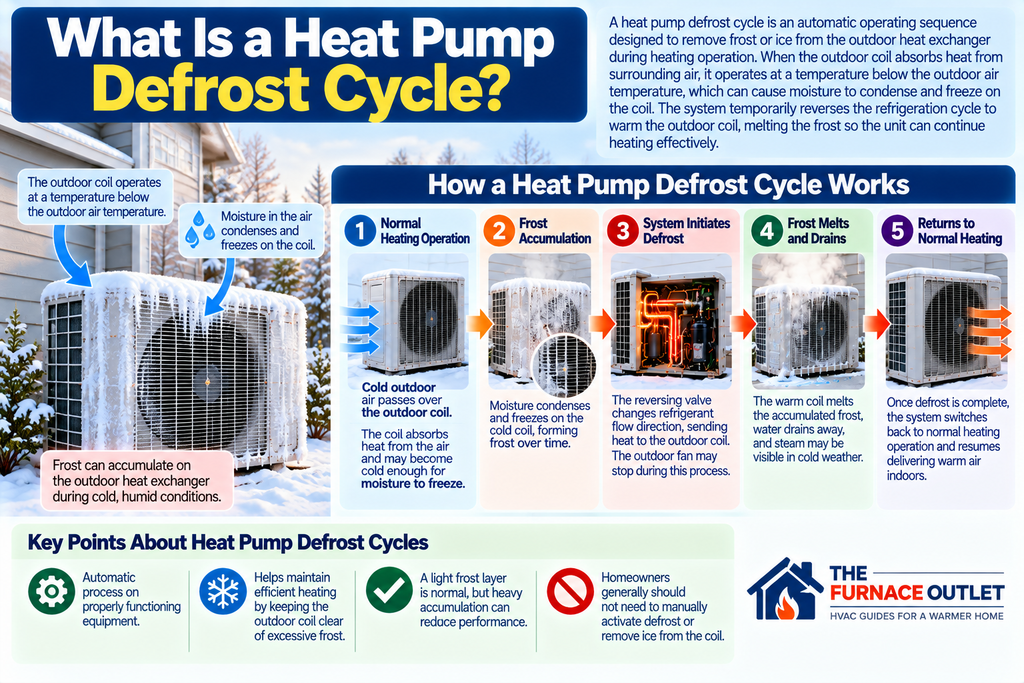
A heat pump defrost cycle is an automatic operating sequence designed to remove frost or ice from the outdoor heat exchanger during heating operation. Frost develops because the outdoor coil absorbs heat from surrounding air, often operating at a temperature below the outdoor air temperature.
When moisture in the air contacts the cold coil, it may condense and freeze. A light frost layer is not necessarily a problem, but excessive accumulation can restrict airflow and reduce heat transfer. To remove frost, many air-source heat pumps temporarily reverse the refrigeration cycle, directing heat toward the outdoor coil. The accumulated frost melts, water drains away, and the system resumes normal heating.
The process is automatic on properly functioning equipment. Homeowners generally should not need to manually activate defrost or remove ice from the coil. The U.S. Department of Energy’s heat pump systems guide provides useful background on heat pump operation and the refrigeration cycle.
During heating, the outdoor coil must operate at a temperature low enough to absorb heat from the surrounding environment. Under suitable temperature and humidity conditions, moisture can freeze on the coil’s surface. Frost acts as an unwanted barrier to airflow and heat transfer. As accumulation increases, the equipment may need to work harder to collect sufficient heat, potentially reducing available heating capacity.
Interestingly, frost problems are not limited to the coldest days. Damp weather near freezing can create favorable conditions for frost accumulation because relatively humid air supplies moisture to the cold coil. During extremely cold but dry conditions, frost accumulation may be less pronounced. Actual behavior depends on outdoor humidity, coil temperature, equipment design, airflow, and operating conditions. Modern heat pumps use defrost controls to manage this process automatically and limit unnecessary interruptions to heating.
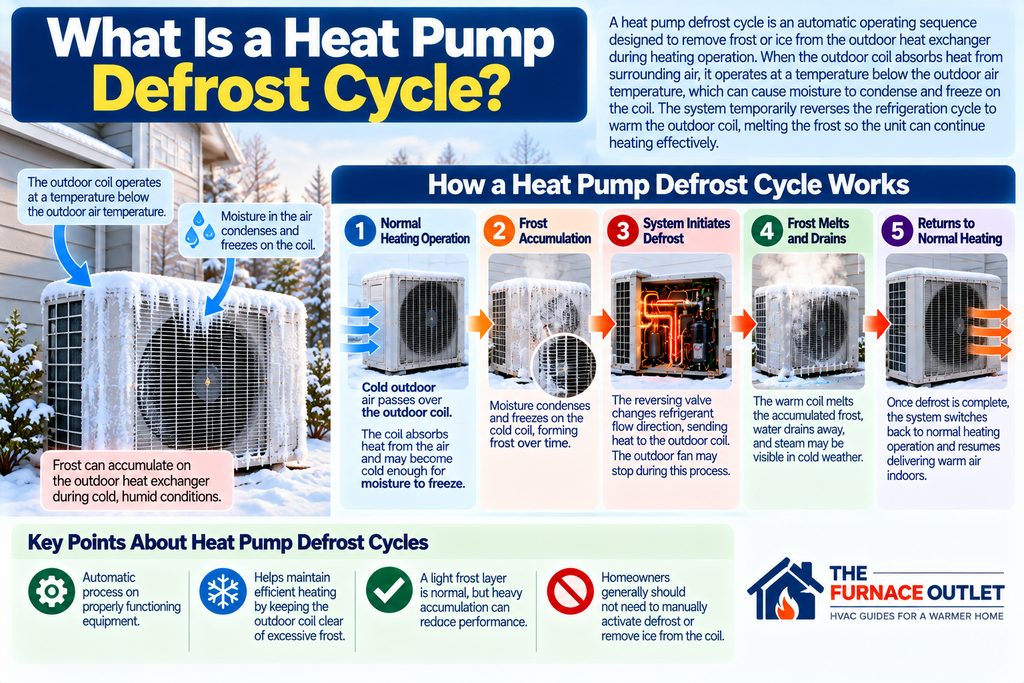
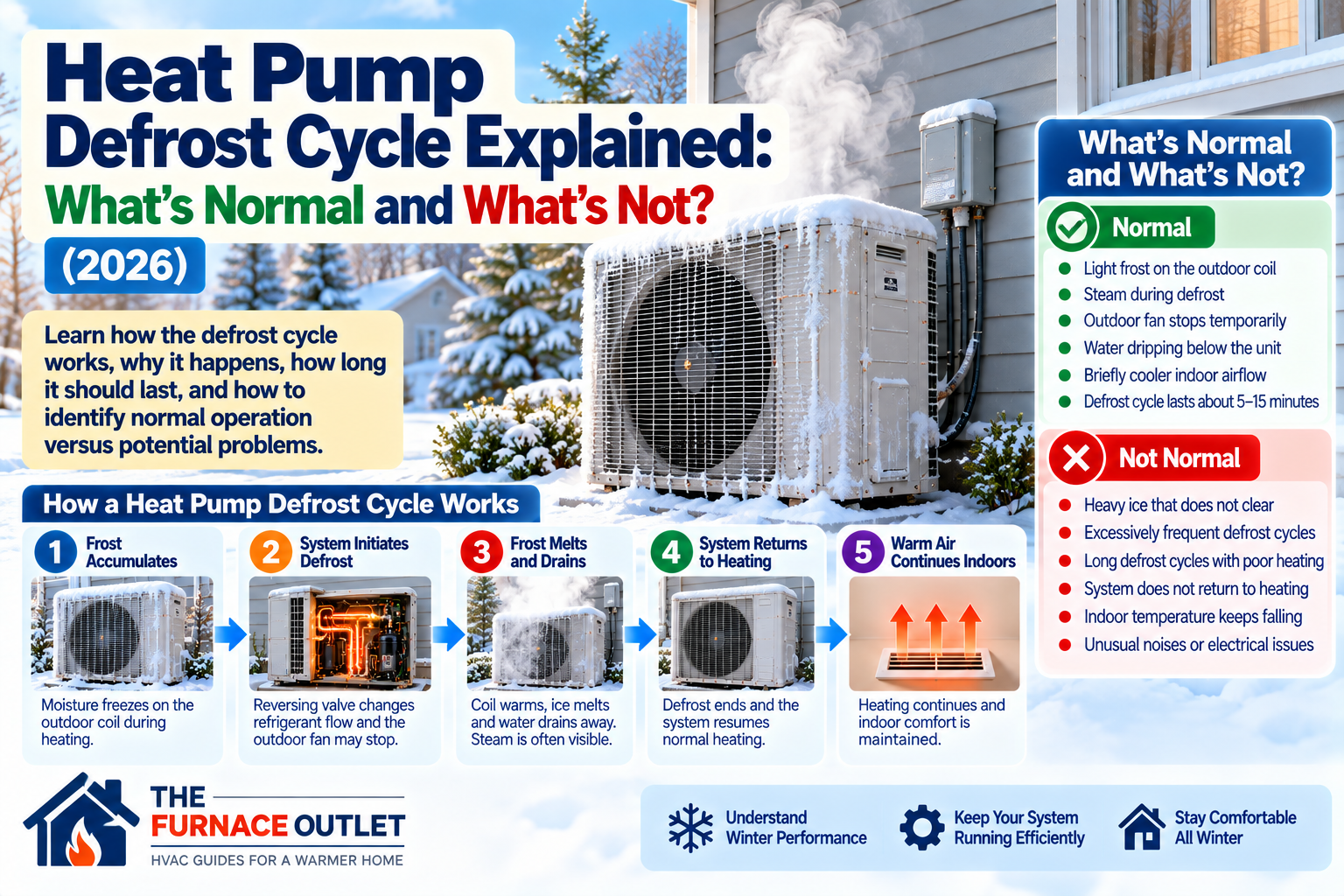
Most conventional air-source heat pumps use a sequence similar to the following, although exact operation varies by manufacturer and model.
This sequence explains why temporary fan changes, steam, water drainage, and altered airflow temperatures are not automatically signs of equipment failure.
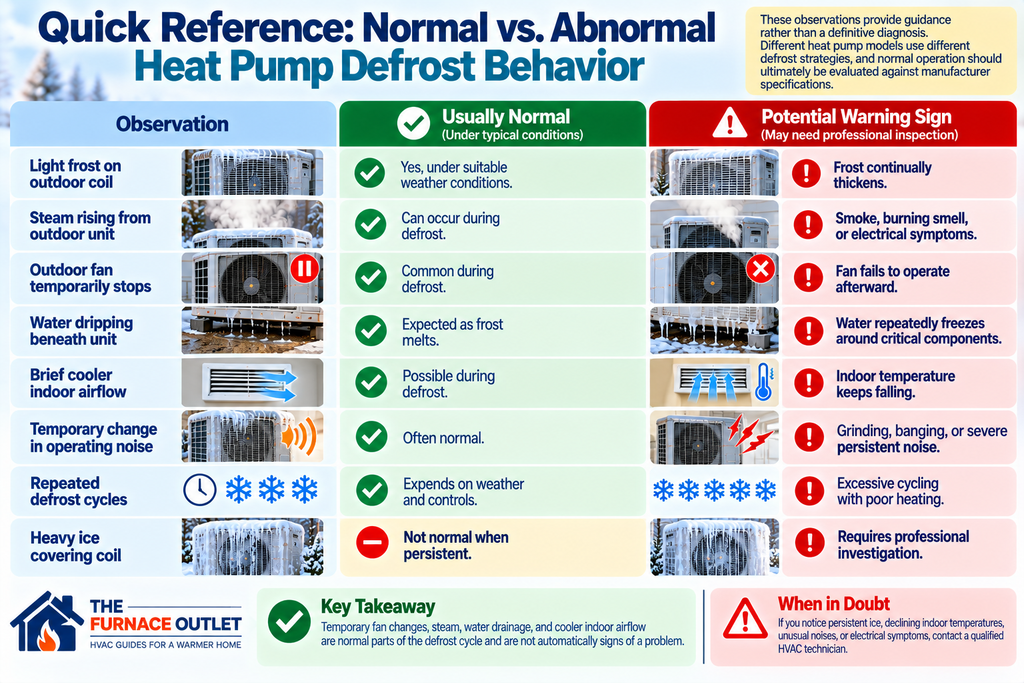
| Observation | Usually normal | Potential warning sign |
|---|---|---|
| Light frost on outdoor coil | Yes, under suitable weather conditions | Frost continually thickens |
| Steam rising from outdoor unit | Can occur during defrost | Smoke, burning smell, or electrical symptoms |
| Outdoor fan temporarily stops | Common during defrost | Fan fails to operate afterward |
| Water dripping beneath unit | Expected as frost melts | Water repeatedly freezes around critical components |
| Brief cooler indoor airflow | Possible during defrost | Indoor temperature keeps falling |
| Temporary change in operating noise | Often normal | Grinding, banging, or severe persistent noise |
| Repeated defrost cycles | Depends on weather and controls | Excessive cycling with poor heating |
| Heavy ice covering coil | Not normal when persistent | Requires professional investigation |
These observations provide guidance rather than a definitive diagnosis. Different heat pump models use different defrost strategies, and normal operation should ultimately be evaluated against manufacturer specifications.
Many residential heat pumps complete defrost in approximately 5–15 minutes, although some cycles are shorter and manufacturer-specific limits vary. There is no universal duration that applies to every heat pump. Defrost time depends on accumulated frost, outdoor conditions, coil temperature, control strategy, and equipment design. A relatively light frost layer may clear quickly, while more demanding conditions can require a longer sequence.
The important question is whether the equipment successfully removes frost and returns to normal heating. A cycle lasting several minutes is not inherently concerning if the system resumes heating and maintains indoor comfort. However, a heat pump that appears stuck in defrost, repeatedly interrupts heating without clearing frost, or experiences a substantial loss of indoor temperature deserves professional inspection.
I recommend recording the approximate duration and frequency of unusual cycles rather than attempting to override the controls.
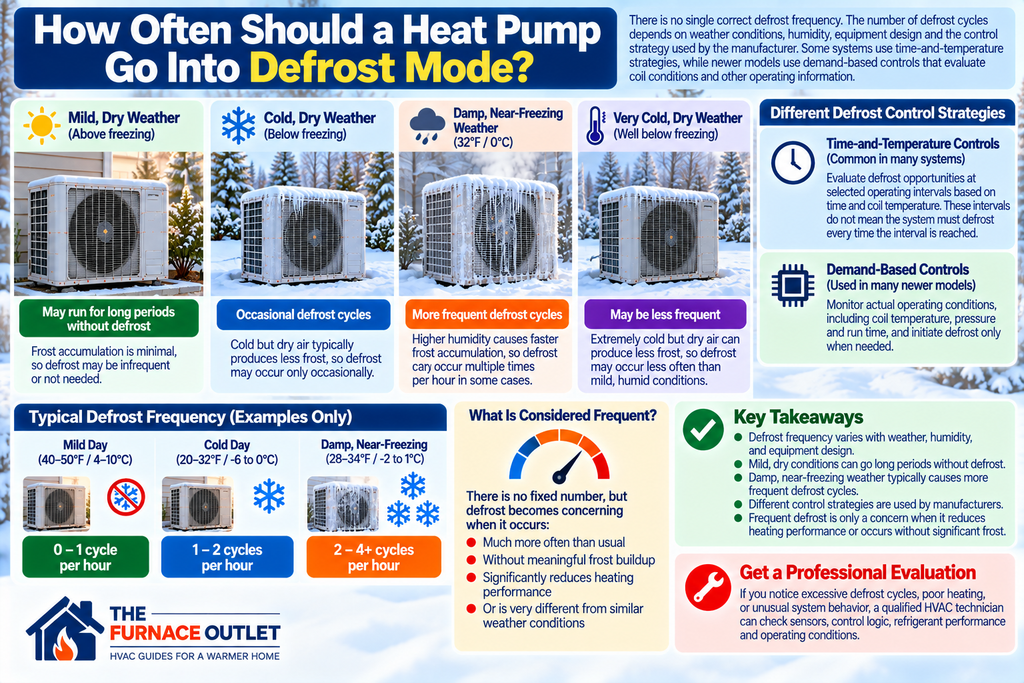
There is no single correct defrost frequency. Some systems use time-and-temperature strategies, while more advanced equipment may employ demand-based controls that evaluate coil conditions and other operating information. Under mild, dry conditions, a heat pump may operate for extended periods without needing defrost. During damp, near-freezing weather, defrost may occur more frequently because frost accumulates faster.
Older controls may evaluate defrost opportunities at selected operating intervals, while newer systems can adjust their behavior according to actual conditions. These intervals should not be confused with a requirement to defrost every time an interval is reached.
Frequent defrost is concerning when it occurs without meaningful frost accumulation, significantly reduces heating performance, or differs sharply from the system’s normal behavior under comparable weather conditions. A qualified technician can evaluate sensors, control logic, refrigerant performance, and operating conditions to determine whether the frequency is appropriate.
One of the most alarming but often normal defrost symptoms is a visible cloud of steam around the outdoor heat pump. When the refrigeration cycle temporarily warms the outdoor coil, frost melts and moisture can evaporate into the cold surrounding air. This may create a white cloud that resembles smoke.
Steam associated with defrost generally dissipates quickly and is not accompanied by a burning smell or other signs of overheating. However, homeowners should not automatically assume that every visible cloud is harmless. Smoke, electrical burning odors, unusual noises, or visible damage require immediate attention.
If you suspect an electrical or fire hazard, stop the system when safe and contact appropriate emergency or service professionals.
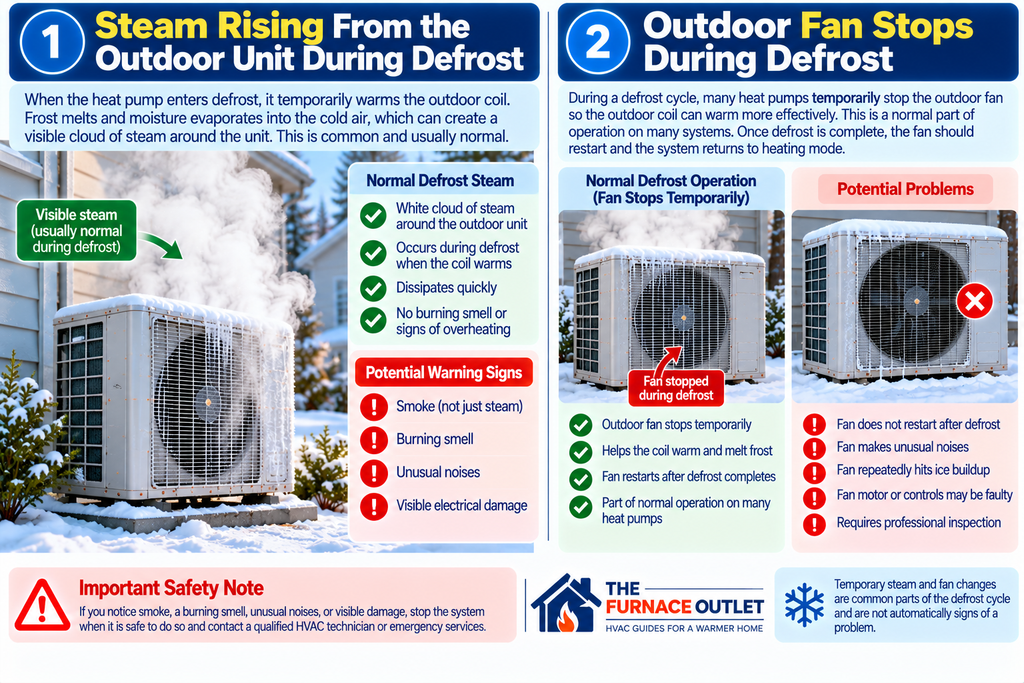
The outdoor fan commonly stops during a defrost cycle because the system is attempting to warm the outdoor coil rather than continuously draw cold air across it. This temporary fan shutdown is part of normal operation on many heat pumps. Once defrost finishes, the fan should resume operation according to the equipment’s heating sequence.
Problems may arise when the fan does not restart, makes unusual noises, or repeatedly contacts ice accumulated around the housing. A malfunctioning fan motor, control issue, or mechanical obstruction may interfere with normal heating and defrost performance. Do not attempt to reach into the fan compartment or remove protective grilles. If the fan appears damaged or cannot operate normally, arrange professional inspection.
During defrost, many heat pumps temporarily reverse refrigerant flow, which changes how heat is transferred through the system. Some equipment activates auxiliary electric heating to maintain indoor comfort during this period. Other configurations may allow a brief reduction in supply-air temperature.
Homeowners may notice cooler airflow for several minutes, particularly if supplemental heating is unavailable or insufficient. A temporary change in airflow temperature does not necessarily indicate a fault. However, persistent cold air after defrost has ended may suggest another problem. Possible explanations include incorrect thermostat controls, failed supplemental heating, reversing-valve problems, or reduced heating capacity.If indoor temperature continues declining, the system should be evaluated rather than assuming that extended cold airflow is normal defrost behavior.
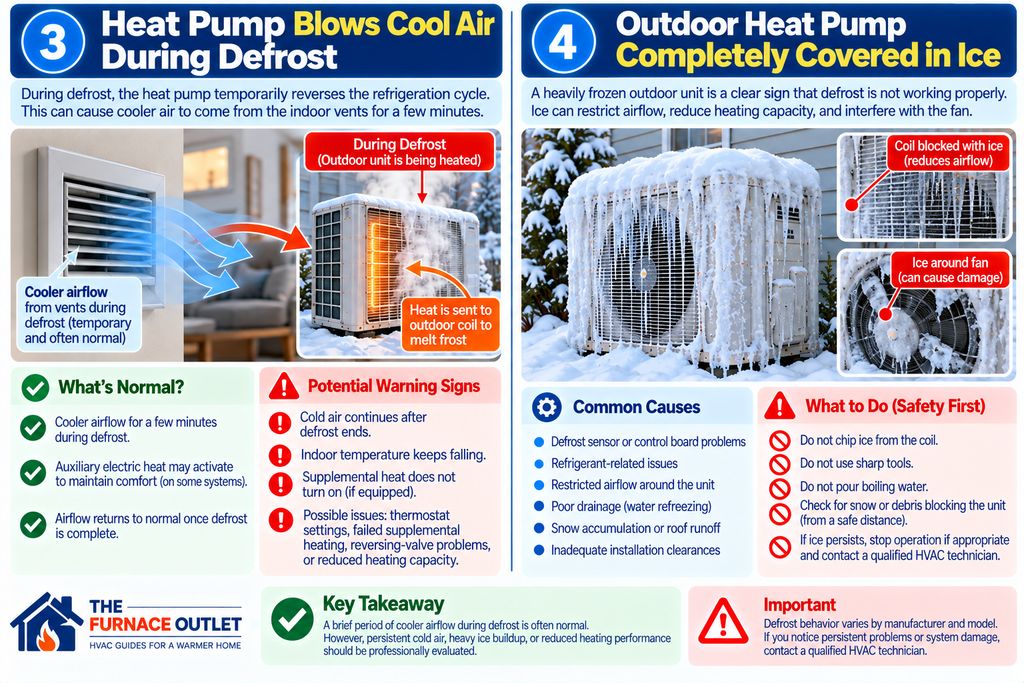
A heavily frozen outdoor unit is one of the clearest indications that frost management may not be working properly. When ice covers large portions of the coil, restricts airflow, or interferes with the fan, the heat pump may struggle to absorb sufficient thermal energy. Possible causes include malfunctioning defrost sensors, control board problems, refrigerant-related faults, restricted airflow, and drainage conditions that allow water to refreeze.
Snow accumulation, roof runoff, and inadequate installation clearances can also contribute to excessive icing. Homeowners may safely observe whether loose debris or snow is obstructing the unit, but should never chip ice from the coil, use sharp tools, or pour boiling water over the equipment. If ice persists or the fan is striking frozen material, stop operation when appropriate and contact a qualified technician.
A heat pump that enters defrost repeatedly may experience reduced heating performance and increased electricity consumption. However, frequent operation is not automatically abnormal because weather conditions strongly influence frost accumulation. During cold, humid conditions, more frequent defrost may be necessary. The concern is whether defrost occurs excessively when little frost is present or repeatedly interrupts the system’s ability to heat the home.
Potential causes include faulty temperature sensors, incorrect control readings, control board problems, or abnormal refrigeration conditions. A technician should examine the equipment’s actual operating data and manufacturer specifications before determining that the defrost frequency is excessive.
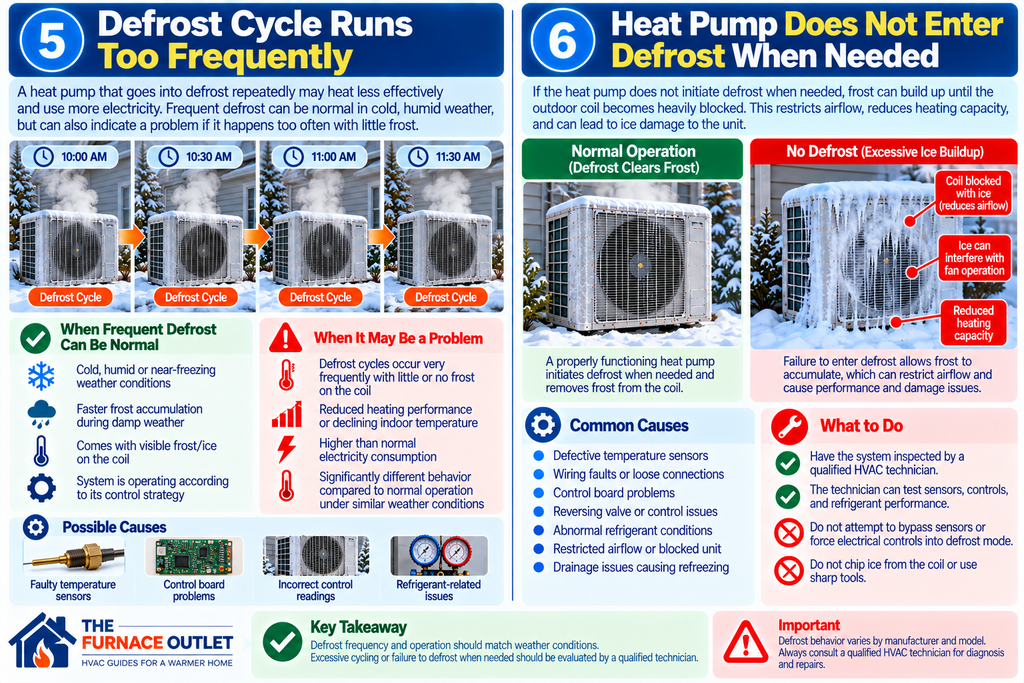
Failure to initiate defrost can allow frost to accumulate until the outdoor coil becomes heavily blocked. As airflow decreases, heat transfer deteriorates, and the heat pump may lose heating capacity. In severe cases, ice can interfere with moving components. Possible causes include defective sensors, wiring faults, control problems, or failures in components involved in changing refrigeration operation.
Because several faults can produce similar symptoms, proper testing is necessary. Homeowners should not attempt to bypass sensors or force electrical controls into defrost mode. A qualified technician can determine why the system is failing to remove frost and restore normal operation safely.
During defrost, melted frost must drain away from the outdoor equipment. If water collects beneath the unit and repeatedly freezes, ice may gradually accumulate around its base. Poor drainage, inadequate ground clearance, roof runoff, or improper installation conditions can contribute to this problem.
In some climates, specialized equipment designs or manufacturer-approved drainage accessories may be necessary to manage freezing conditions. I recommend ensuring that the outdoor unit has the clearances specified by the manufacturer and that surrounding snow or debris does not obstruct drainage. Persistent ice buildup around the base, fan, or refrigerant components should be evaluated by a professional rather than repeatedly broken away by hand.
Yes. Improper defrost operation can increase energy consumption by interrupting useful heating, reducing heat transfer, or causing supplemental heating to operate more frequently than necessary. However, higher winter electricity bills do not automatically indicate a defrost malfunction. Colder outdoor temperatures increase heating demand, and backup electric resistance heating may legitimately operate more often.
The most useful comparison is actual electricity consumption under similar weather conditions, rather than simply comparing the total amount billed. The ENERGY STAR heating and cooling guidance offers recommendations for maintaining efficient HVAC operation. If consumption increases unexpectedly while comfort deteriorates, a professional performance evaluation may help identify whether defrost controls or another part of the system is responsible.
My preferred troubleshooting approach begins with careful observation rather than equipment disassembly. First, check whether the outdoor coil has light frost or heavy persistent ice. Note whether the system periodically clears frost and returns to heating. Next, observe whether steam, water drainage, and temporary fan changes occur during defrost. Record how long the sequence lasts and whether indoor temperature remains reasonably stable.
Check that vegetation, leaves, and snow are not obstructing required outdoor airflow. Maintain safe clearances and avoid touching internal components. If the system repeatedly fails to clear frost, becomes heavily iced, or cannot maintain indoor comfort, arrange professional service.
Never bypass defrost controls, handle refrigerant components, open electrical cabinets, or attempt to force ice removal from delicate coil surfaces.
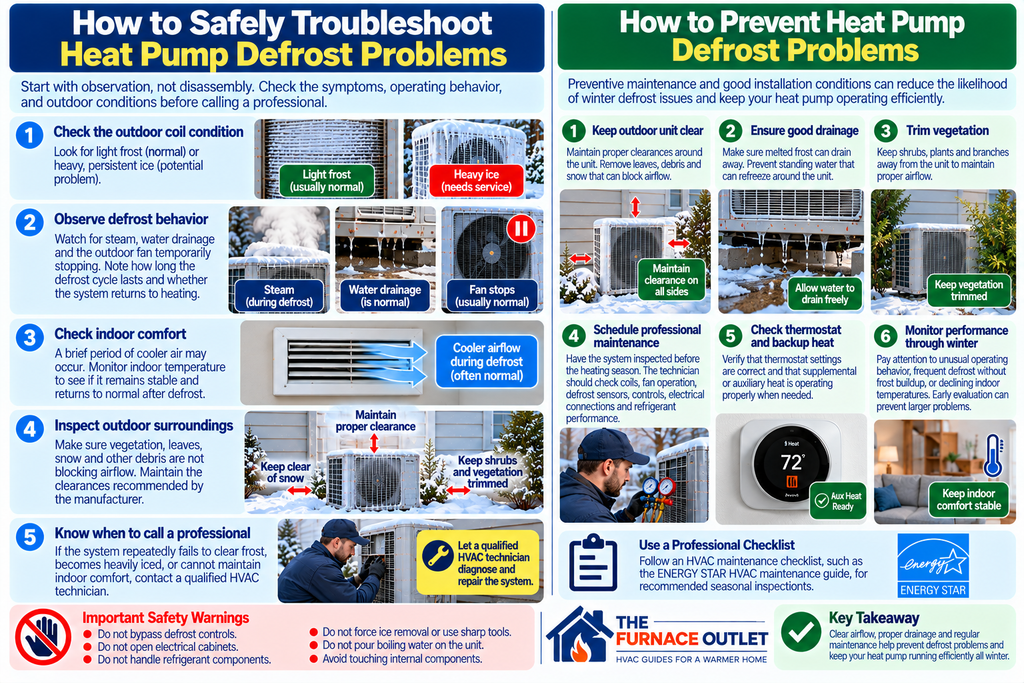
Preventive maintenance is one of the most effective ways to reduce winter heat pump problems. Homeowners should maintain clear outdoor airflow pathways, remove loose debris from surrounding areas, and ensure that snow does not block the equipment. Drainage conditions should also be monitored because refreezing water can create mechanical problems.
Professional maintenance should include inspection of outdoor coil condition, fan operation, defrost sensors, controls, electrical connections, and refrigerant performance where indicated. The technician should also evaluate thermostat operation and supplemental heating where installed, because these components influence indoor comfort during defrost.
The ENERGY STAR HVAC maintenance checklist provides practical guidance on routine equipment inspections. I recommend scheduling heating-season maintenance before sustained freezing weather begins rather than waiting until the system becomes heavily iced.
Yes. White steam may appear when frost melts during defrost. However, smoke, burning odors, or electrical symptoms should be treated as potential hazards.
On many heat pumps, yes. The outdoor fan temporarily stops while the coil is warmed. Normal operation should resume after defrost finishes.
Homeowners should not attempt to override electrical controls or remove ice using sharp tools or boiling water. Follow manufacturer-approved procedures and arrange service when automatic defrost is not functioning properly.
The outdoor coil can be colder than the surrounding air. Frost may therefore form under certain humid conditions even when outdoor air temperature is slightly above 32°F.
No. Defrost timing, sensors, control strategies, and operating sequences vary by manufacturer and model.
Arrange service if heavy ice persists, the fan contacts ice, the system repeatedly fails to resume heating, or indoor temperatures continue falling. Severe mechanical noises, smoke, and electrical burning odors require urgent attention.
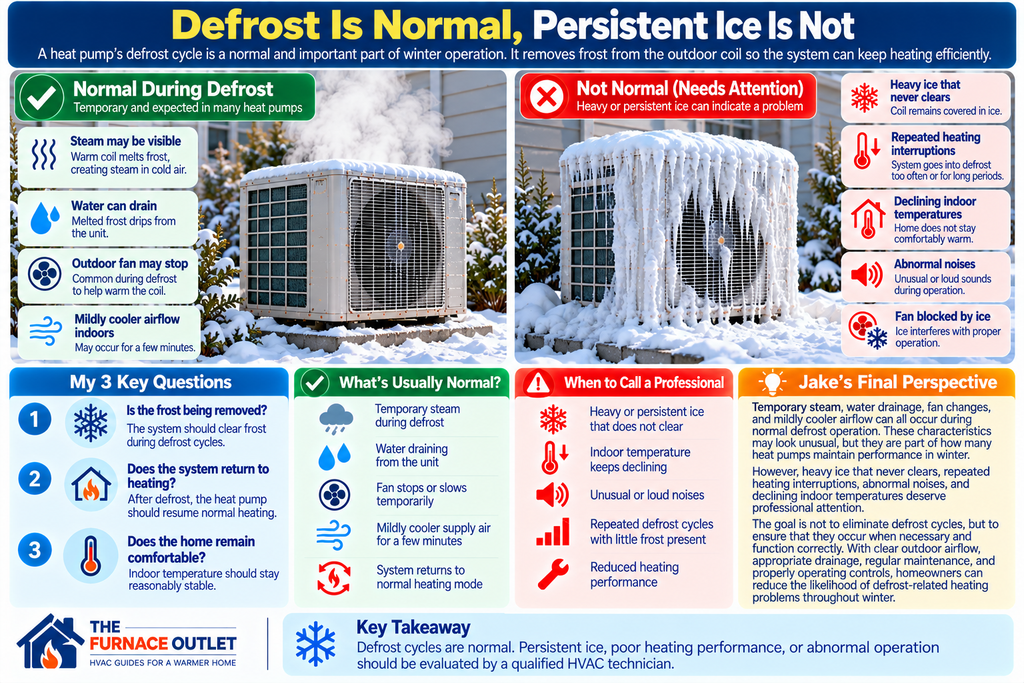
When homeowners ask me whether their heat pump’s defrost cycle is normal, I focus on three things: whether frost is being removed, whether the system returns to heating, and whether the home remains comfortable. Temporary steam, water drainage, fan changes, and mildly cooler airflow can all occur during normal defrost operation. These characteristics may look unusual, but they are part of how many heat pumps maintain performance during winter.
However, heavy ice that never clears, repeated heating interruptions, abnormal noises, and declining indoor temperatures deserve professional attention. The objective is not to eliminate defrost cycles, but to ensure that they occur when necessary and function correctly.
A properly maintained heat pump should manage ordinary frost accumulation automatically. With clear outdoor airflow, appropriate drainage, regular maintenance, and correctly operating controls, homeowners can reduce the likelihood of defrost-related heating problems throughout winter.
For additional technical background, homeowners can consult the U.S. Department of Energy’s heat pump systems guide, which explains the fundamentals of heat pump operation, and ENERGY STAR’s air-source heat pump information, which provides guidance on equipment efficiency and selection. The ENERGY STAR HVAC maintenance checklist offers practical servicing recommendations, while its heating and cooling guidance addresses efficient system operation. For homeowners comparing equipment in colder regions, ENERGY STAR’s heat pump performance criteria provide additional information about qualifying equipment. Manufacturer installation and service manuals remain the primary references for model-specific defrost sequences and diagnostic limits.
This article is published by The Furnace Outlet for general educational purposes only. It does not replace professional HVAC diagnosis, manufacturer instructions, or applicable electrical and refrigerant safety requirements. Homeowners should not open electrical cabinets, bypass controls, handle refrigerants, or attempt mechanical repairs beyond manufacturer-approved maintenance. Defrost behavior varies by equipment model, climate, and operating conditions. The Furnace Outlet provides independent educational content; external references do not imply affiliation or endorsement.
© 2026 The Furnace Outlet. All rights reserved.