Newsletter Subscribe
Enter your email address below and subscribe to our newsletter

HVAC made simple
By Jake Lawson | HVAC Specialist | The Furnace Outlet
Have you ever switched on your heat pump during a cool fall morning and noticed an unpleasant smell resembling dirty gym socks, damp laundry, or a musty locker room? If the odor disappears after a while but returns whenever the system starts, you may be experiencing a condition HVAC professionals commonly call Dirty Sock Syndrome.
I have encountered homeowners who initially assume their heat pump is overheating, leaking refrigerant, or suffering a major mechanical failure when they notice this smell. In many cases, however, the problem is associated with moisture and microbial contamination on the indoor cooling coil or nearby HVAC components. The system may continue heating and cooling effectively while circulating an odor that makes the living space uncomfortable.
Dirty Sock Syndrome deserves attention because it can indicate conditions that allow contamination to develop inside the HVAC system. The good news is that identifying the source, correcting moisture problems, and maintaining the equipment can often resolve the odor without replacing the entire heat pump.
In this guide, I will explain why Dirty Sock Syndrome occurs, why it often appears during seasonal transitions, how to distinguish it from other HVAC odors, and which solutions are most likely to prevent it from returning.
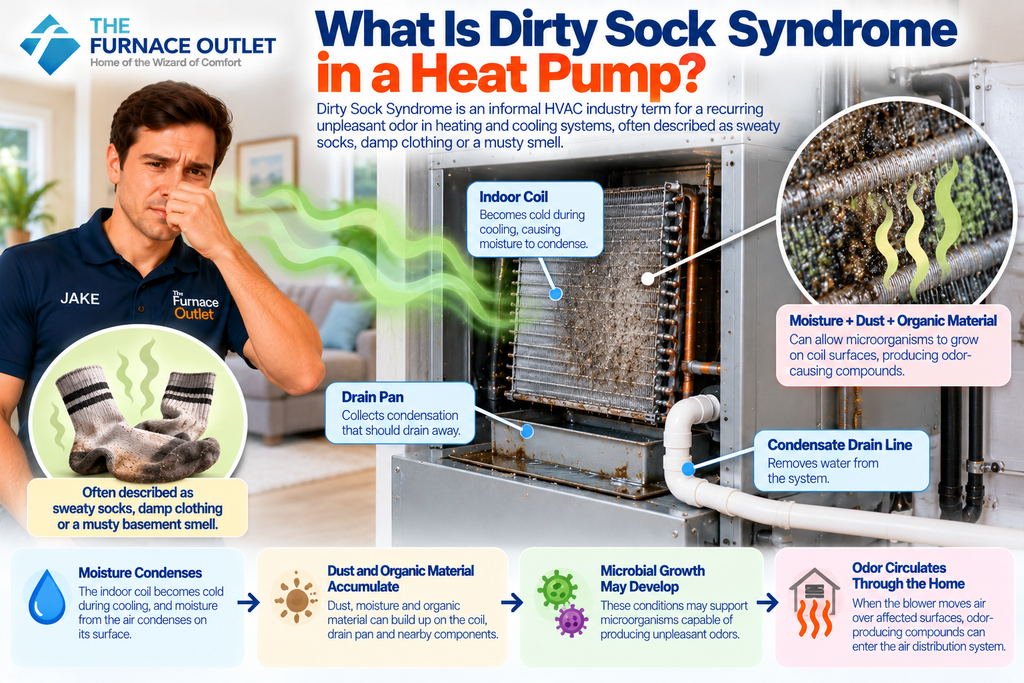
Dirty Sock Syndrome is an informal HVAC industry term for a recurring unpleasant odor associated with certain heating and cooling systems. Homeowners commonly describe the smell as sweaty socks, damp clothing, stale air, or a musty basement. The odor may be strongest when the equipment first starts or when a heat pump changes operating conditions.
The condition is frequently associated with microbial growth and accumulated organic material on indoor heat exchanger surfaces. During cooling operation, the indoor coil becomes cold enough for moisture in the air to condense on its surface. Under normal circumstances, this water collects in a drain pan and leaves through the condensate drainage system.
However, dust, moisture, and organic material can accumulate on coil surfaces, drain pans, and surrounding components. These conditions may support microorganisms capable of producing unpleasant odors. When the blower moves air across affected surfaces, odor-producing compounds can enter the home’s air distribution system.
It is important to understand that Dirty Sock Syndrome is a description of an odor pattern, not a laboratory diagnosis. A musty smell does not automatically prove that a particular bacterium or mold species is present. Similar odors can originate from wet insulation, dirty filters, ductwork contamination, or moisture problems elsewhere in the building.
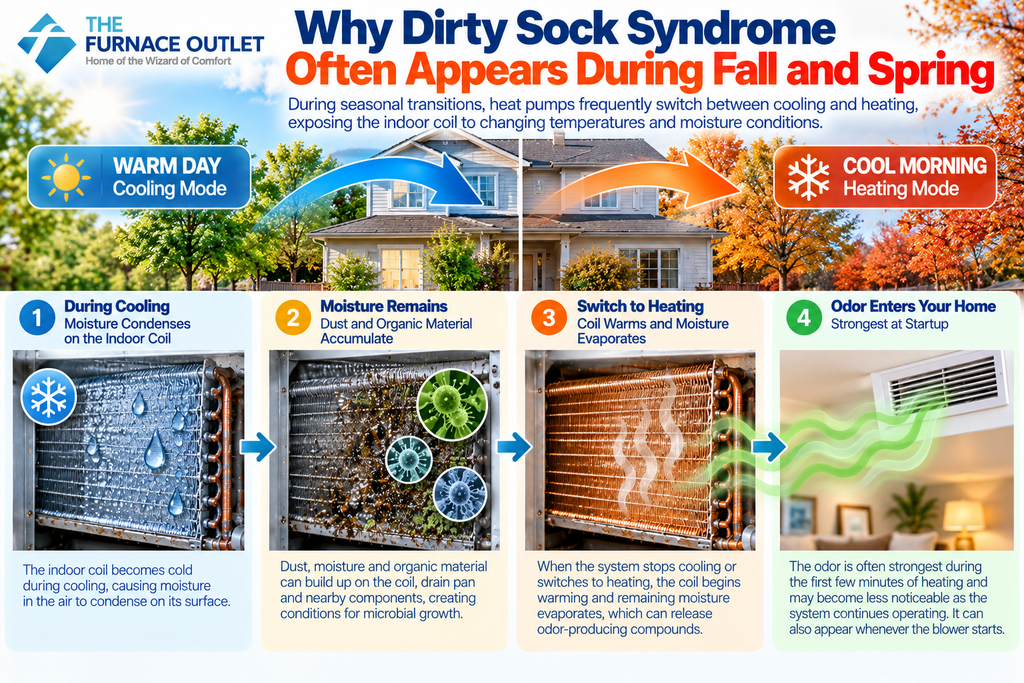
Seasonal transitions are particularly relevant because heat pumps frequently alternate between cooling and heating during mild weather. A home may require air conditioning on a warm afternoon and heating the following morning, exposing the indoor coil to changing temperatures and moisture conditions.
During cooling, condensation develops on the indoor coil. When the system stops cooling or switches to heating, the coil begins warming, and remaining moisture may evaporate. If odor-producing contamination is present, these changes can make the smell more noticeable.
Some homeowners report that the odor is strongest during the first few minutes of heating and becomes less noticeable as the system continues operating. Others experience recurring smells whenever the blower starts, regardless of the operating mode.
These differences matter because the timing of an odor can help a technician narrow down possible sources. Nevertheless, the pattern alone cannot confirm Dirty Sock Syndrome or identify the contaminated component.
The indoor coil is one of the first components I would investigate when a homeowner reports a recurring dirty-sock odor. During air conditioning, this coil repeatedly becomes wet as it removes moisture from indoor air. Dust and other airborne material may accumulate on the fins and surrounding surfaces, particularly when filtration or maintenance is inadequate.
When moisture and organic deposits remain on these surfaces, microorganisms may establish themselves under suitable conditions. Some microbial processes generate volatile compounds that produce musty or unpleasant odors. As air moves across the coil, these odors may spread through the home’s supply registers.
A coil does not necessarily need to appear heavily contaminated to produce an odor. Conversely, visible discoloration does not establish the exact cause of a smell. A professional inspection is more useful than making assumptions based solely on appearance.
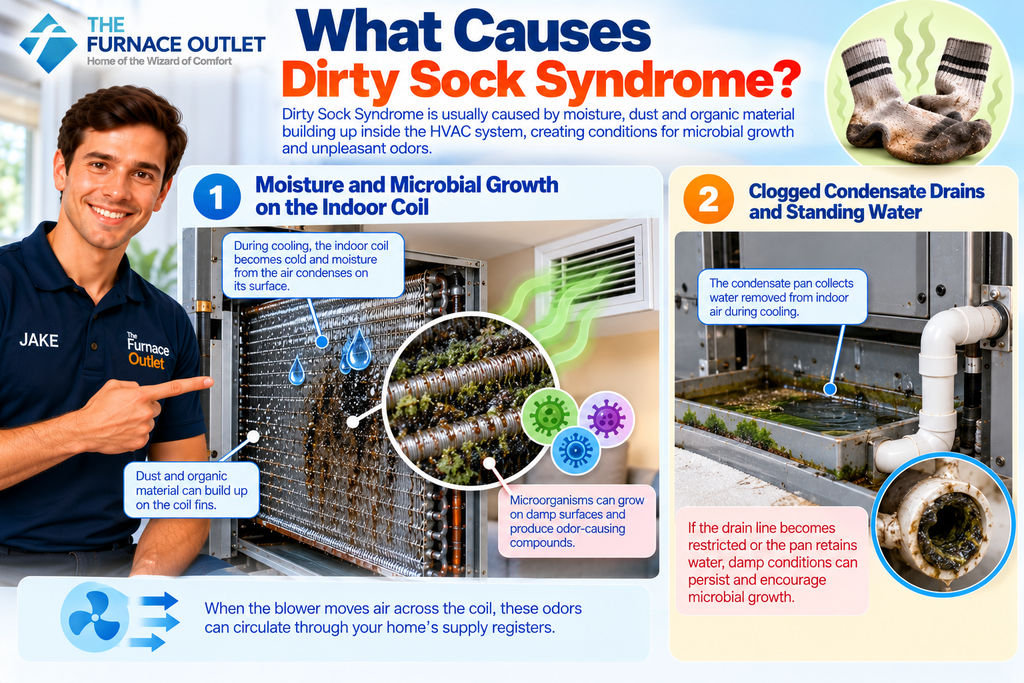
A properly functioning condensate system should remove water collected during cooling and dehumidification. If the drain line becomes restricted or the drain pan retains water, damp conditions can persist longer than intended.
Standing water may encourage microbial growth, and drainage problems can affect nearby insulation or other materials. In some installations, improper drain trapping or configuration may also contribute to drainage difficulties.
I recommend treating recurring condensate problems as more than a nuisance. The objective should be to identify why water is collecting and correct the drainage issue before contamination spreads or the odor returns.
Air filters help capture airborne particles before they circulate through the HVAC equipment. When filters become excessively dirty, airflow can decline and the system may operate less effectively. Dust that bypasses poorly fitted filters can also accumulate on indoor components.
Although a dirty filter is not always the direct cause of Dirty Sock Syndrome, inadequate filtration can contribute to the conditions that allow contamination to develop. Replacing a clogged filter is a sensible starting point, but it will not necessarily remove existing deposits from the coil or drain pan.
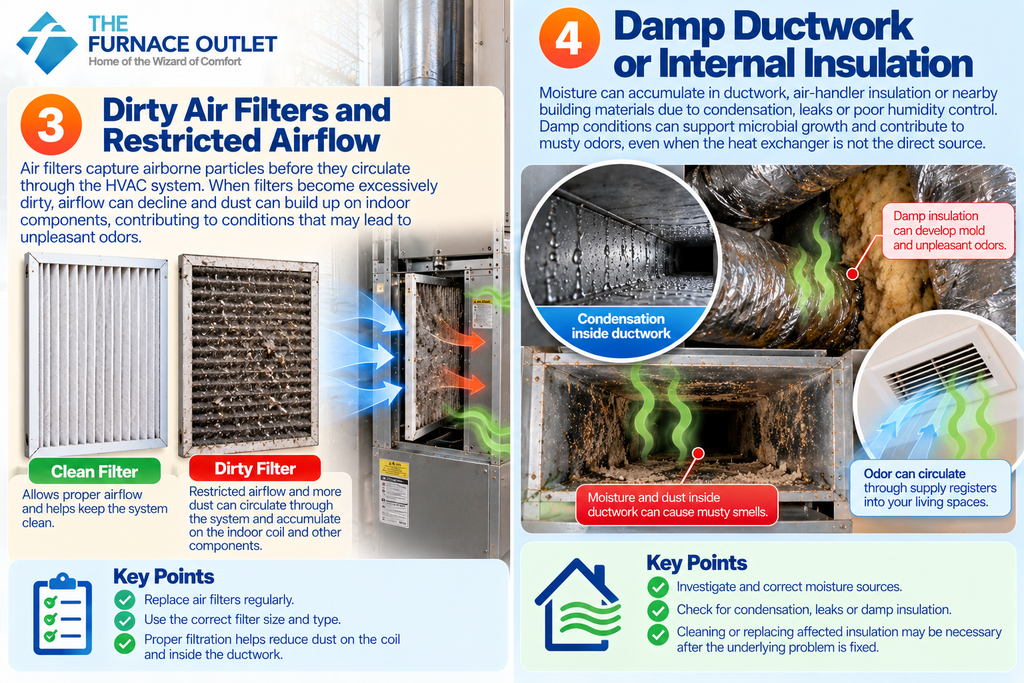
Not every musty odor originates from the heat exchanger. Moisture can accumulate in ductwork, air-handler insulation, or surrounding building materials because of condensation, leaks, or poor humidity control.
If porous insulation becomes contaminated, surface cleaning may not be sufficient. The affected material may need to be replaced after the underlying moisture problem is corrected.
This is one reason I discourage homeowners from purchasing expensive duct-cleaning services before identifying the actual odor source.
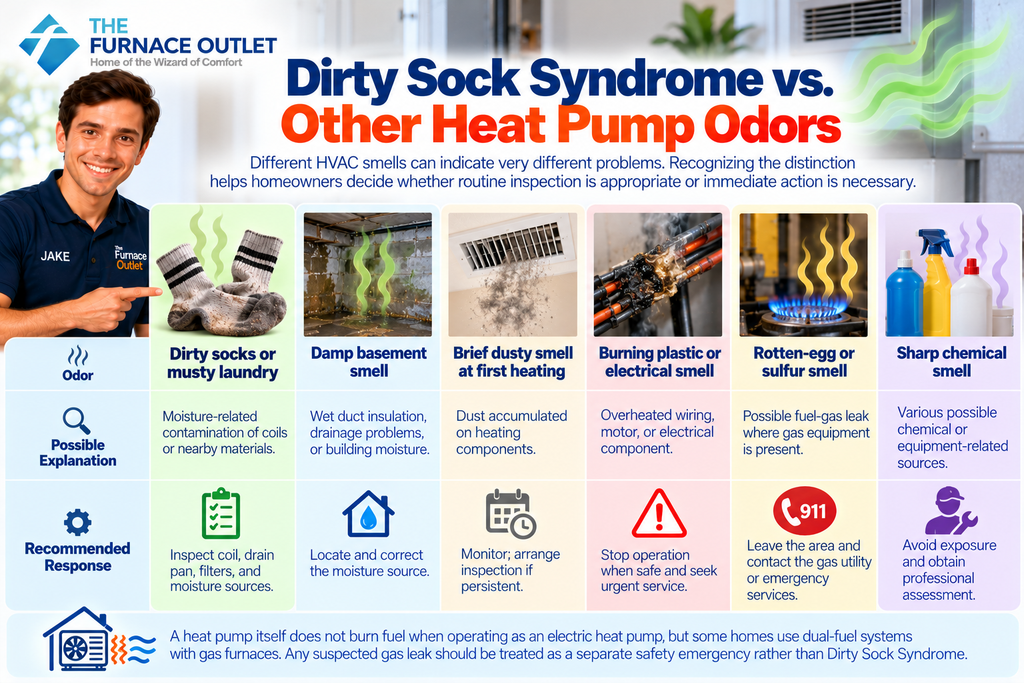
Different HVAC smells can indicate very different problems. Recognizing the distinction helps homeowners decide whether routine inspection is appropriate or immediate action is necessary.
| Odor | Possible explanation | Recommended response |
|---|---|---|
| Dirty socks or musty laundry | Moisture-related contamination of coils or nearby materials | Inspect coil, drain pan, filters, and moisture sources |
| Damp basement smell | Wet duct insulation, drainage problems, or building moisture | Locate and correct the moisture source |
| Brief dusty smell at first heating | Dust accumulated on heating components | Monitor; arrange inspection if persistent |
| Burning plastic or electrical smell | Overheated wiring, motor, or electrical component | Stop operation when safe and seek urgent service |
| Rotten-egg or sulfur smell | Possible fuel-gas leak where gas equipment is present | Leave the area and contact the gas utility or emergency services |
| Sharp chemical smell | Various possible chemical or equipment-related sources | Avoid exposure and obtain professional assessment |
A heat pump itself does not burn fuel when operating as an electric heat pump, but some homes use dual-fuel systems with gas furnaces. Any suspected gas leak should be treated as a separate safety emergency rather than Dirty Sock Syndrome.
Begin with basic homeowner maintenance. Check the accessible air filter and replace it if dirty, following the equipment manufacturer’s instructions. Confirm that supply and return registers are unobstructed and that the thermostat is operating normally.
You can also observe whether water is collecting around the air handler or whether the condensate drainage system shows visible signs of leakage. Avoid removing sealed equipment panels, touching electrical components, or reaching into the coil compartment.
These checks may reveal straightforward maintenance problems, but they cannot confirm that the coil is clean or that the drainage system is functioning correctly.
If the odor continues, I recommend having a qualified HVAC technician inspect the indoor coil, blower compartment, drain pan, and nearby materials. The technician should determine whether contamination is present and whether moisture is accumulating where it should not.
Where cleaning is appropriate, the contractor should use products and procedures approved for the specific equipment and coil materials. Certain chemicals can damage protective coatings, aluminum components, plastics, or other HVAC materials.
Cleaning must also be performed with attention to drainage, electrical protection, and indoor exposure. Spraying household bleach, fragrances, or general-purpose disinfectants into the air handler is not a safe substitute for proper service.
Coil cleaning may provide only temporary relief if the condensate system continues retaining water. A technician should check whether the drain pan is positioned correctly, the drain line is clear, and the drainage arrangement complies with the equipment’s installation requirements.
The contractor may also need to evaluate drain traps, condensate pumps, and overflow safety switches, depending on the installation.
Addressing drainage problems helps reduce the moisture conditions that can support recurring contamination.
Persistent odors sometimes require a broader inspection of the home. High indoor humidity, duct condensation, water leaks, or damp insulation can create contamination sources independent of the heat pump coil.
The U.S. Environmental Protection Agency (EPA) emphasizes moisture control as an essential part of managing indoor mold problems. Its guidance on mold and moisture provides additional information about preventing and correcting damp indoor conditions.
If contaminated porous materials are discovered, a qualified professional should determine whether cleaning or replacement is appropriate.
In some recurring cases, a contractor may recommend replacing a coil or contaminated internal material when appropriate cleaning and moisture correction have failed. This is a more significant intervention and should not be the automatic first recommendation.
Before approving replacement, ask the contractor to explain what was inspected, why previous treatment was unsuccessful, whether a material or coating issue is involved, and what steps will prevent the problem from returning.
Replacing components without addressing the original moisture conditions can leave homeowners facing the same odor again.
Not necessarily. A dirty-sock odor can be associated with microbial contamination, but smell alone cannot determine which organisms are present, how much contamination exists, or whether occupants face a specific health risk.
The EPA notes that mold exposure can affect people differently, particularly those with allergies, asthma, or other sensitivities. However, identifying a musty smell is not the same as confirming a hazardous mold condition.
Homeowners should focus on locating moisture sources, evaluating visible contamination, and correcting the underlying problem. If occupants experience persistent respiratory symptoms or other health concerns, appropriate medical advice may also be warranted.
For additional information, consult the EPA’s Introduction to Indoor Air Quality.
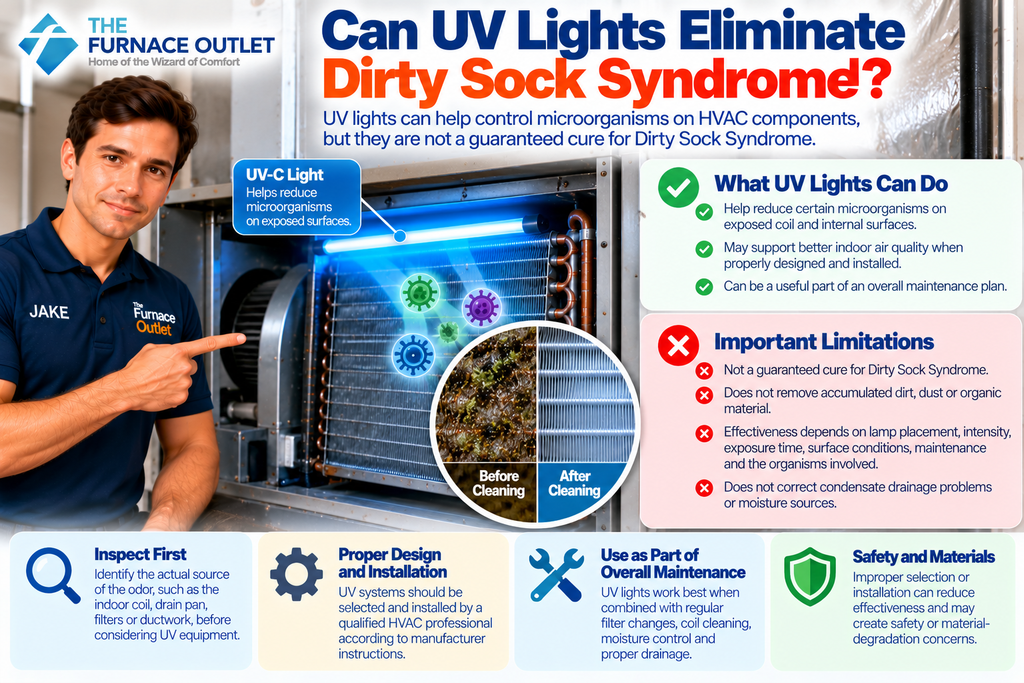
Ultraviolet germicidal irradiation, often called UVGI or UV-C treatment, is sometimes marketed as a solution for microbial contamination in HVAC systems. Properly designed UV systems may help control certain microorganisms on exposed surfaces under suitable operating conditions.
However, UV treatment is not a guaranteed cure for Dirty Sock Syndrome. Its effectiveness depends on lamp placement, intensity, exposure time, surface conditions, maintenance, and the organisms involved. UV light also does not remove accumulated dirt or correct drainage problems.
I would not recommend installing UV equipment before inspecting the coil and identifying the moisture source. Some UV products can create additional safety or material-degradation concerns if improperly selected or installed.
The EPA provides further background in its guide to air cleaners in the home.
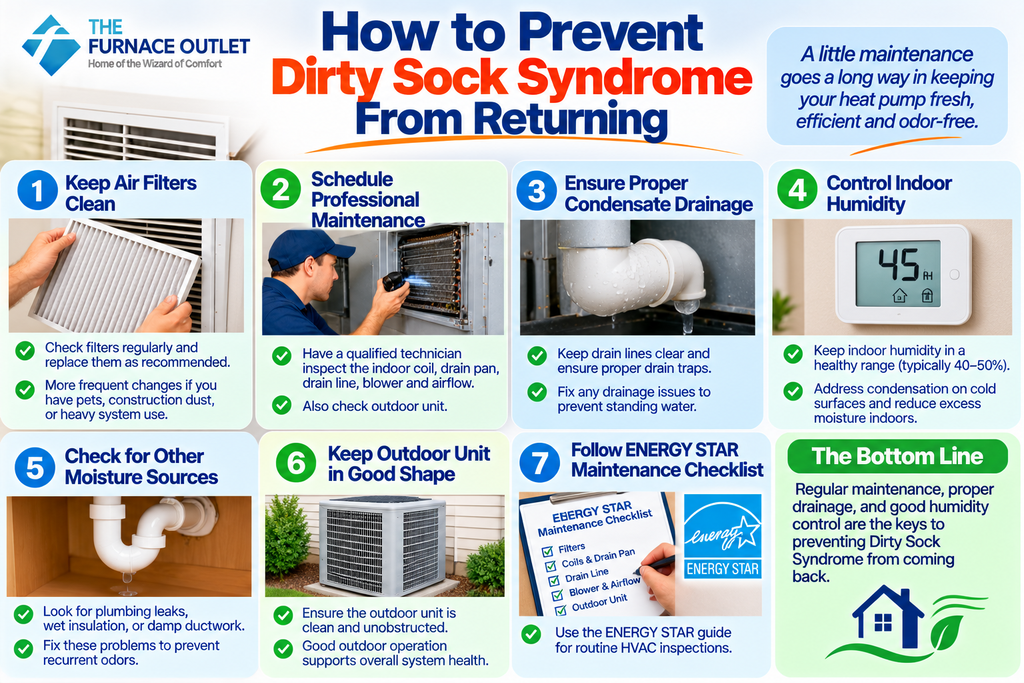
Prevention depends on keeping HVAC components reasonably clean, controlling moisture, and ensuring that the condensate system functions correctly. Because heat pumps operate in both heating and cooling modes, maintenance should account for the equipment’s year-round use rather than focusing exclusively on winter heating.
I recommend inspecting air filters regularly and replacing them according to manufacturer instructions and actual household conditions. Homes with pets, construction dust, or heavy system usage may require more frequent attention than homes with relatively clean indoor environments.
Professional maintenance should include evaluating the indoor coil, condensate pan, drain line, blower, airflow, and accessible moisture-sensitive materials. Outdoor equipment should also receive appropriate inspection, although Dirty Sock Syndrome is more commonly associated with indoor components.
Indoor humidity should be managed according to the home’s climate and conditions, with particular attention to condensation on cool surfaces. Homeowners should also investigate plumbing leaks, wet insulation, and other sources of persistent dampness rather than assuming every odor originates inside the HVAC system.
The ENERGY STAR heating and cooling maintenance checklist offers useful guidance on routine HVAC inspections and maintenance.
If a musty odor returns repeatedly, persists after filter replacement, or appears alongside water leakage, reduced heating or cooling performance, or visible contamination, professional inspection is appropriate. A qualified technician can examine components that are not safely accessible to homeowners and determine whether cleaning, drainage repairs, or other corrective work is needed.
Urgent evaluation is warranted when the odor resembles burning electrical insulation, is accompanied by smoke, or coincides with repeated electrical shutdowns. Suspected fuel-gas odors require immediate gas-leak precautions rather than ordinary HVAC troubleshooting.
When arranging service, describe when the odor occurs, how long it lasts, whether it appears during heating or cooling, and whether previous cleaning or repairs temporarily improved the situation. This information can make diagnosis more efficient.
The smell may originate from moisture-related contamination on the indoor coil or nearby components. Seasonal changes in coil temperature and airflow can make existing odors more noticeable. A professional inspection is needed to identify the source.
The odor may temporarily fade as operating conditions change, but that does not mean the underlying contamination or moisture problem has disappeared. Recurring smells should be investigated rather than ignored.
Replacing a dirty filter may improve airflow and reduce particle accumulation, but it generally cannot remove established contamination from an indoor coil or drain pan. Additional inspection and cleaning may be necessary.
The term is particularly associated with heat pumps because their indoor coils alternate between cooling and heating conditions. However, musty odors can develop in other HVAC systems wherever moisture and contamination accumulate.
Usually not. Many cases can be addressed through inspection, appropriate cleaning, drainage correction, and moisture management. Replacement should be considered only when justified by the condition of the equipment and the results of previous corrective work.
I do not recommend using household disinfectants, bleach, fragrances, or unapproved coil treatments inside HVAC equipment. Improper chemicals may damage components or introduce additional indoor air quality concerns.
When homeowners describe a heat pump that smells like dirty socks, my first priority is identifying where the odor originates rather than recommending a quick deodorizing treatment. The most useful inspection typically focuses on the indoor coil, condensate drainage, air filtration, nearby insulation, and other areas where moisture may accumulate. Understanding when the smell occurs can help narrow the possibilities, but the final diagnosis should be based on actual equipment conditions.
I also believe prevention is more valuable than repeatedly treating the same odor. Proper drainage, appropriate filtration, routine inspections, and prompt correction of moisture problems can reduce the likelihood of recurring contamination. A well-maintained heat pump should provide comfortable heating and cooling without persistent unpleasant smells, and homeowners should not have to accept recurring odors as an unavoidable characteristic of the technology.
This article is provided by The Furnace Outlet for general educational purposes and does not replace a qualified HVAC inspection, manufacturer instructions, or professional medical advice. Odors alone cannot establish the presence of mold, identify microorganisms, or confirm equipment defects. HVAC electrical components, refrigerant circuits, internal cleaning procedures, and chemical treatments should be handled only by appropriately trained professionals. The Furnace Outlet provides independent informational content; references to external organizations do not imply endorsement or affiliation.
© 2026 The Furnace Outlet. All rights reserved.