Newsletter Subscribe
Enter your email address below and subscribe to our newsletter

HVAC made simple
By Jake Lawson — the HVAC Specialist
Heat pumps have become one of the most popular alternatives to traditional heating and cooling systems, and for good reason. They can provide efficient heating during winter, reliable cooling during summer, and year-round comfort without requiring separate heating and air-conditioning equipment. However, as dependable as modern heat pumps can be, they are not immune to problems. A system that suddenly starts blowing cold air, struggles to maintain the thermostat setting, develops excessive frost, or produces an unpleasant smell can leave homeowners wondering whether they are dealing with normal operation or an expensive repair.
One thing I have learned from more than a decade of working with residential and commercial HVAC equipment is that heat pump troubleshooting requires a slightly different mindset from conventional furnace troubleshooting. A heat pump does not generate heat in the same way as a gas furnace, and some of its normal operating characteristics can initially seem unusual. For example, a heat pump may run for extended periods during cold weather, temporarily reverse its refrigeration cycle to remove outdoor frost, or deliver air that feels less intensely warm than the air coming from a traditional furnace. None of these conditions automatically means something is wrong.

The real challenge is recognizing when normal behavior becomes a performance problem. If your heat pump runs continuously but your home keeps getting colder, that deserves attention. If a light layer of frost appears on the outdoor coil and disappears during defrost, that may be perfectly normal. But if the entire outdoor unit becomes encased in ice, airflow is restricted, or the fan begins striking frozen buildup, you could be dealing with a malfunction that requires professional service. The same distinction applies to unusual odors, short cycling, auxiliary heat operation, and unexpected increases in electricity consumption.
In this comprehensive guide, I will walk you through the most common heat pump heating problems, explain what causes them, and show you how to approach troubleshooting logically. We will look at airflow restrictions, thermostat problems, refrigerant issues, defrost cycles, winter heating limitations, Dirty Sock Syndrome, and maintenance-related failures. More importantly, I will explain which checks homeowners can safely perform and which repairs should always be handled by a qualified HVAC technician.
My objective is to help you understand your equipment rather than encourage unnecessary repairs. When you know how your heat pump is supposed to behave, it becomes much easier to recognize genuine warning signs, communicate effectively with a technician, and make sensible decisions about maintaining or replacing your system.
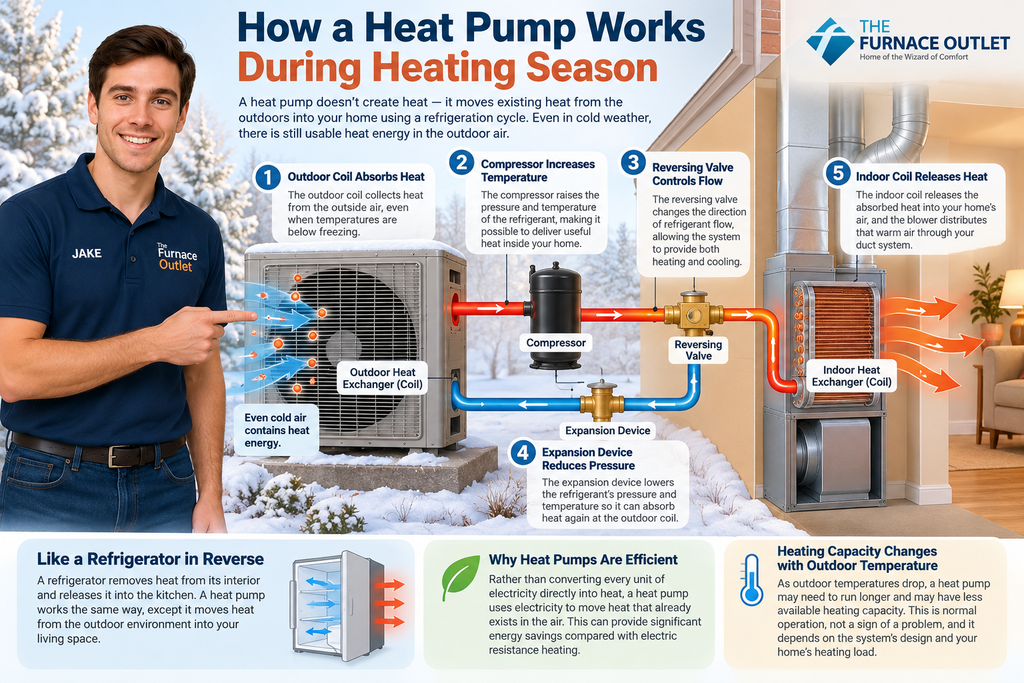
Before diagnosing heating problems, it helps to understand the basic operating principle behind a heat pump. Unlike a gas furnace, which burns fuel to produce heat, or an electric resistance heater, which converts electrical energy directly into heat, an air-source heat pump primarily transfers existing thermal energy from outdoors into your home. Even when outdoor temperatures fall below freezing, there is still heat energy available in the surrounding air. The heat pump uses a refrigeration cycle to collect that energy, increase its temperature, and release it indoors.
The system accomplishes this through several interconnected components, including a compressor, indoor and outdoor heat exchangers, refrigerant, an expansion device, and a reversing valve. During heating operation, refrigerant absorbs energy at the outdoor coil and releases it at the indoor coil. The compressor raises the refrigerant’s pressure and temperature, making it possible to deliver useful heating energy inside the building. The reversing valve allows the same equipment to change operating modes, which is why a heat pump can provide both heating and cooling.
I often compare a heat pump to a refrigerator working in reverse. A refrigerator removes heat from its interior and releases that energy into the kitchen. A heat pump performs a similar process, except that it moves heat from the outdoor environment into your living space. This is also why heat pumps can be so efficient. Rather than converting every unit of electricity directly into heat, they use electricity to move heat that already exists elsewhere.
The U.S. Department of Energy’s heat pump systems guide explains that modern air-source heat pumps can provide substantial energy savings compared with electric resistance heating, although actual performance depends on climate, equipment efficiency, installation quality, and operating conditions.
Understanding this process is important because a heat pump’s available heating capacity changes as outdoor conditions change. A system that performs effortlessly during a mild fall afternoon may need to run much longer during a freezing winter night. That does not necessarily mean the equipment has become less reliable. It means the heat pump is operating under a different heating load and temperature difference.
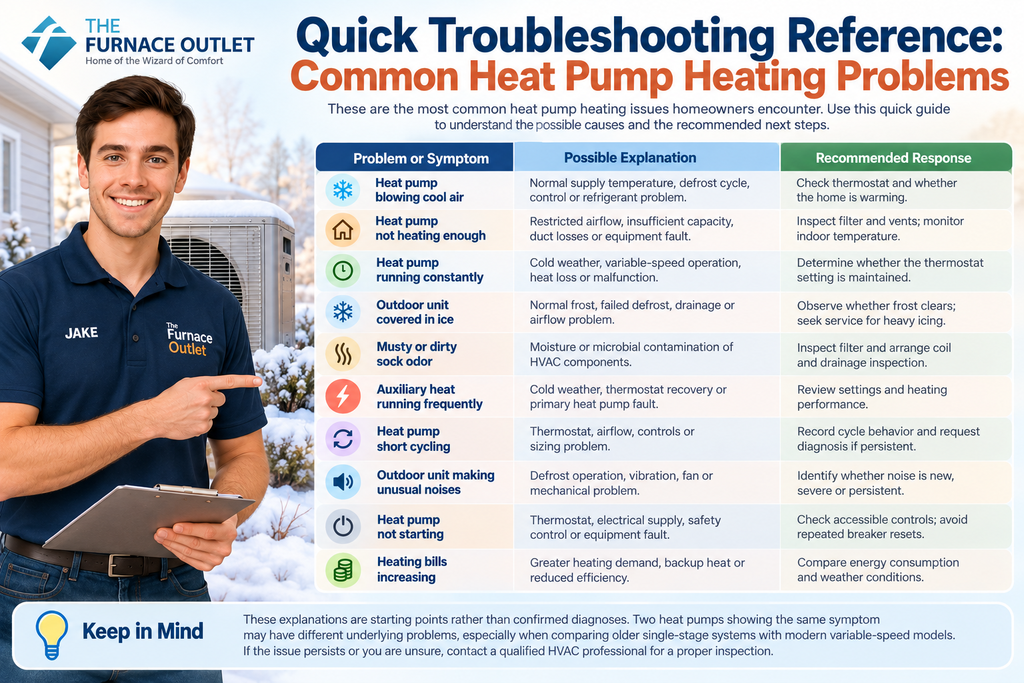
When a homeowner contacts an HVAC contractor about a heating problem, the symptoms often provide the first clues about what may be happening. Although a symptom cannot confirm a diagnosis by itself, understanding the likely possibilities can help you decide whether to perform a basic maintenance check or arrange professional service.
| Problem or symptom | Possible explanation | Recommended response |
|---|---|---|
| Heat pump blowing cool air | Normal supply temperature, defrost cycle, control or refrigerant problem | Check thermostat and whether the home is warming |
| Heat pump not heating enough | Restricted airflow, insufficient capacity, duct losses or equipment fault | Inspect filter and vents; monitor indoor temperature |
| Heat pump running constantly | Cold weather, variable-speed operation, heat loss or malfunction | Determine whether the thermostat setting is maintained |
| Outdoor unit covered in ice | Normal frost, failed defrost, drainage or airflow problem | Observe whether frost clears; seek service for heavy icing |
| Musty or dirty sock odor | Moisture or microbial contamination of HVAC components | Inspect filter and arrange coil and drainage inspection |
| Auxiliary heat running frequently | Cold weather, thermostat recovery or primary heat pump fault | Review settings and heating performance |
| Heat pump short cycling | Thermostat, airflow, controls or sizing problem | Record cycle behavior and request diagnosis if persistent |
| Outdoor unit making unusual noises | Defrost operation, vibration, fan or mechanical problem | Identify whether noise is new, severe or persistent |
| Heat pump not starting | Thermostat, electrical supply, safety control or equipment fault | Check accessible controls; avoid repeated breaker resets |
| Heating bills increasing | Greater heating demand, backup heat or reduced efficiency | Compare energy consumption and weather conditions |
These explanations should be treated as starting points rather than confirmed faults. Two heat pumps displaying the same symptom may have entirely different underlying problems, particularly when comparing older single-stage equipment with modern variable-speed systems.
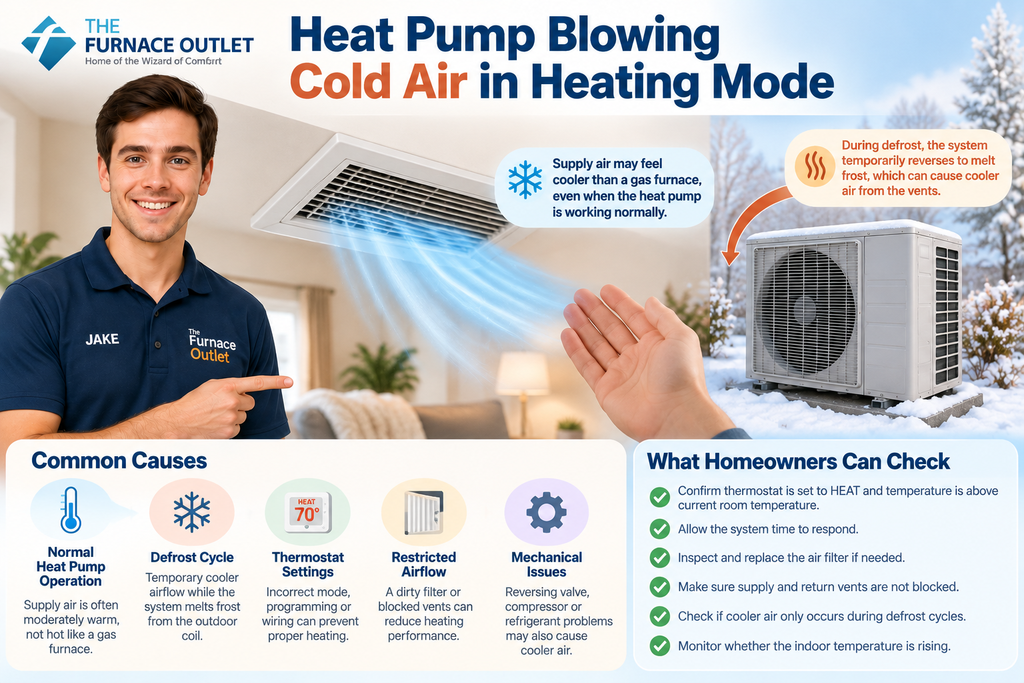
One of the most frequent complaints I encounter is that a heat pump appears to be operating normally, but the air coming from the vents does not feel particularly warm. Homeowners who previously used a gas furnace often notice this difference immediately because conventional furnaces typically deliver much hotter supply air during their heating cycles. Heat pumps generally operate with lower supply-air temperatures, especially when running at reduced capacity, so the airflow can feel surprisingly mild even when the system is successfully heating the home.
This happens because the temperature of the air leaving a heat pump is not the same thing as the amount of heat being delivered. A system can supply a large volume of moderately warm air and still maintain comfortable indoor conditions. If the room temperature is gradually rising toward the thermostat setting, the heat pump may be performing exactly as intended. The situation becomes more concerning when the supply air remains genuinely cold, the indoor temperature continues falling, or the system cannot recover from a modest temperature setback.
A temporary change in supply-air temperature can also occur during a defrost cycle. When frost accumulates on the outdoor coil, many heat pumps briefly reverse their refrigeration operation to warm that coil and melt the frost. Depending on the equipment design, supplemental heating may operate during this process to maintain indoor comfort. On systems without sufficient supplemental heat, homeowners may notice a short period of cooler airflow. This is usually different from a heat pump that continuously delivers cold air throughout normal heating operation.
Thermostat configuration is another potential cause. An incorrect operating mode, incompatible thermostat, improper wiring, or incorrect control settings can interfere with the heat pump’s heating sequence. Mechanical problems such as a malfunctioning reversing valve, compressor issue, or refrigerant circuit fault may produce similar symptoms. However, these conditions require proper diagnostic testing because it is not possible to identify the exact fault simply by feeling the air coming from a register.
My recommendation is to begin by confirming that the thermostat is set to HEAT and that the requested temperature is slightly above the current room temperature. Allow the system sufficient time to respond, inspect the accessible air filter, and make sure supply and return vents are not blocked. If the indoor temperature begins increasing, the system may simply be delivering the gentler heating associated with heat pump operation. If the temperature continues falling or the equipment repeatedly fails to heat, a qualified technician should evaluate the system.
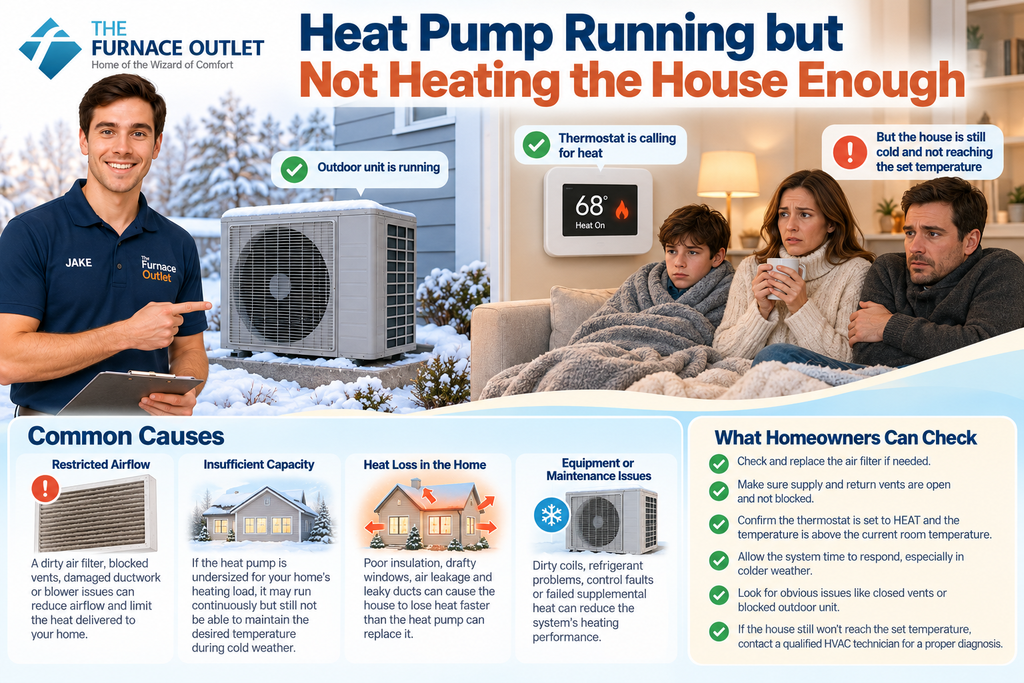
A heat pump that operates continuously without maintaining a comfortable indoor temperature can be particularly frustrating because it appears to be doing everything except its primary job. The indoor blower may be running, the outdoor unit may be operating, and the thermostat may indicate an active heating call, yet the house remains colder than expected. In my experience, this type of complaint requires looking at both the heat pump and the building it serves.
One of the first things I would investigate is airflow. A dirty air filter can restrict the amount of air moving across the indoor heat exchanger, reducing the system’s ability to distribute heat effectively. Blocked return grilles, closed supply registers, damaged ductwork, or blower problems can produce similar results. Restricted airflow may also cause certain systems to activate protective controls, leading to interrupted operation or reduced performance. Replacing a clogged filter can sometimes resolve a straightforward problem, but persistent heating difficulties should not automatically be blamed on filtration.
Equipment sizing is another important consideration. A heat pump must be selected according to the building’s actual heating requirements, which depend on insulation, air leakage, window performance, climate, building orientation, and other factors. Two houses with identical square footage can have very different heating loads. If a system was selected using only a rough square-footage estimate, it may not have sufficient capacity during colder weather. This is especially important when evaluating equipment that loses heating capacity as outdoor temperatures decrease.
The building envelope can also create problems that appear to originate with the heat pump. Poor attic insulation, drafty windows, unsealed penetrations, and leaking ducts can allow heated air to escape or increase the rate at which the home loses heat. A heat pump that performs well in a tightly sealed house may struggle in a poorly insulated building of the same size. Before recommending a larger replacement system, I would want to know whether the existing equipment is actually undersized or whether excessive heat loss is creating the problem.
For a system that previously heated the home effectively but has recently started struggling, I would give greater attention to maintenance and equipment faults. Dirty coils, malfunctioning controls, refrigerant problems, and failed supplemental heating can all reduce available capacity. A technician should evaluate the actual operating conditions and compare measured performance with the manufacturer’s specifications rather than immediately recommending replacement.
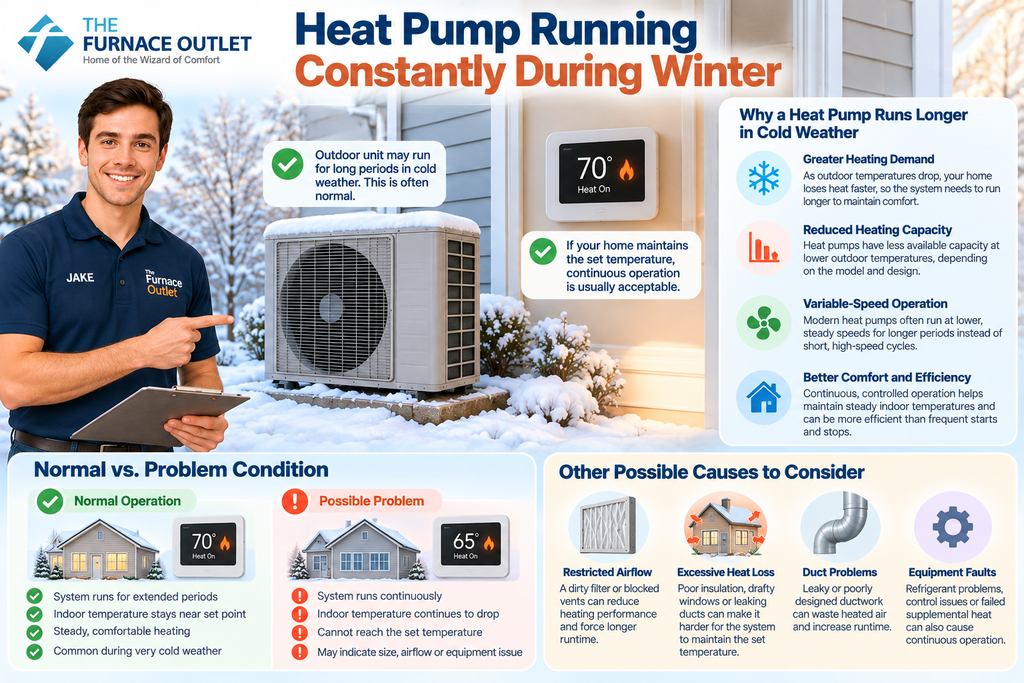
Many homeowners become concerned when their heat pump seems to run almost continuously during cold weather. If you are accustomed to a gas furnace that turns on, produces very hot air, and shuts off after a relatively short cycle, a heat pump’s longer operating periods can seem unusual. However, extended runtime is often a normal characteristic of efficient heat pump operation, particularly with variable-speed equipment designed to maintain steady indoor temperatures.
A variable-capacity heat pump can adjust its output according to the home’s heating demand. Instead of repeatedly starting at full capacity and shutting down, it may operate at a lower speed for an extended period. I like to compare this with maintaining a steady driving speed rather than repeatedly accelerating and braking. Continuous, controlled operation can reduce temperature fluctuations and improve comfort while avoiding unnecessary cycling.
Outdoor temperature plays a major role as well. As the weather becomes colder, heat loss from the building increases. At the same time, the heat pump may have less heating capacity available, depending on its design. During the coldest expected conditions, a properly sized system may run for long periods because the building requires nearly all the heating output the equipment can deliver. The important question is whether the indoor temperature remains stable.
If the thermostat is set to 70°F and the house remains near that temperature during cold weather, continuous operation may be entirely acceptable. However, if the indoor temperature gradually drops to 67°F, then 65°F, and continues declining while the heat pump runs, the system may not be meeting the heating load. Possible explanations include inadequate capacity, restricted airflow, refrigerant-related faults, excessive building heat loss, or supplemental heating that is not operating when required.
I would also investigate any sudden change in runtime. If a heat pump that previously maintained comfort during similar outdoor conditions now runs much longer, that difference may indicate deteriorating performance. Comparing operation during similar weather conditions is much more useful than comparing a mild October day with an exceptionally cold January night.
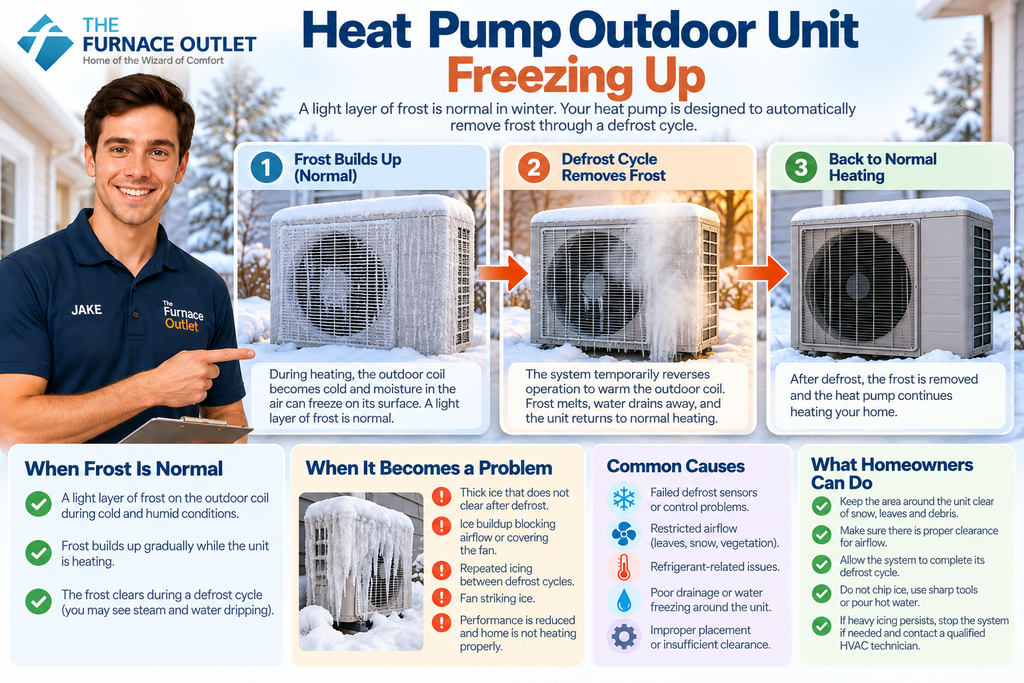
Seeing frost on an outdoor heat pump during winter can be alarming, especially when homeowners assume that ice formation means the system is failing. In reality, frost is a normal consequence of extracting heat from cold outdoor air under certain temperature and humidity conditions. The outdoor coil becomes cold enough for moisture in the surrounding air to condense and freeze, gradually forming a frost layer on its surface.
Modern heat pumps are designed to manage this condition through automatic defrost operation. When the controls determine that frost removal is necessary, the system temporarily changes its operating sequence to warm the outdoor coil. The frost melts, water drains away, and the heat pump returns to normal heating. You may notice steam rising from the outdoor unit, water dripping beneath it, or a temporary change in fan operation. These effects can look dramatic, but they are often normal parts of the defrost process.
The concern begins when frost develops into thick ice that does not clear properly. Heavy ice accumulation can restrict airflow, reduce heat transfer, and interfere with the outdoor fan. Possible causes include malfunctioning defrost sensors, control problems, restricted airflow, refrigerant faults, or drainage conditions that allow water to freeze around the equipment. Outdoor unit placement also matters because snow accumulation, roof runoff, and inadequate clearance can create icing problems even when the refrigeration system itself is operating correctly.
Homeowners can visually inspect the outdoor unit and make sure that loose leaves, vegetation, or snow are not blocking the required airflow. However, it is important not to chip ice from the coil, use sharp tools, or pour boiling water over frozen components. The coil fins and refrigerant tubing can be damaged relatively easily, and forcing ice removal can create additional problems.
If the outdoor fan is striking ice, the coil remains heavily frozen, or the system repeatedly fails to clear frost, stop operation as appropriate and contact a qualified HVAC technician. A properly functioning defrost system should be able to manage ordinary frost accumulation within the operating limits established by the manufacturer.
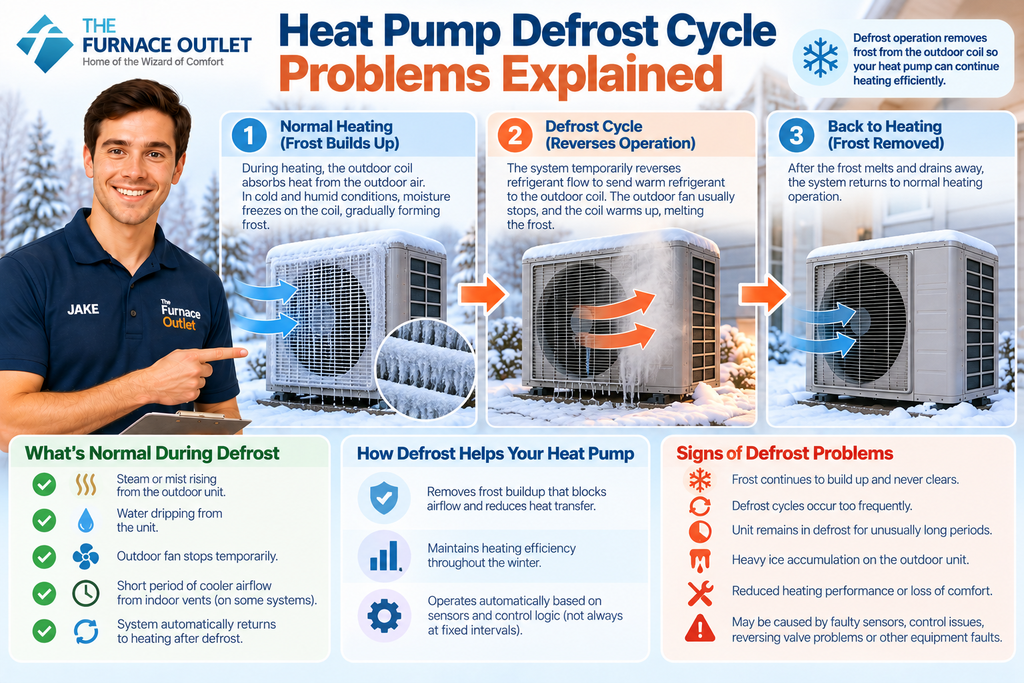
Because defrost operation is essential to winter heat pump performance, it deserves a closer explanation. During normal heating, the outdoor coil absorbs heat from the surrounding air. As frost builds up, it acts as an unwanted barrier to airflow and heat transfer. The system therefore needs a controlled way to remove that frost without requiring homeowners to intervene manually.
Many air-source heat pumps accomplish this by temporarily reversing refrigerant flow, effectively operating in a cooling-like refrigeration mode for a short period. This directs heat toward the outdoor coil, allowing accumulated frost to melt. The outdoor fan commonly stops during defrost, and electric auxiliary heat may activate indoors to reduce the effect on room temperature. The exact sequence depends on the heat pump’s design and control strategy.
Defrost cycles are not necessarily triggered at fixed intervals. Many modern systems use demand-based controls that evaluate coil temperature, operating time, and other conditions to determine when defrost is needed. This helps avoid unnecessary defrost operation, which can reduce heating efficiency. However, older equipment and certain control designs may use different strategies, so homeowners should not assume that every heat pump follows the same timing pattern.
A malfunctioning defrost system can cause several noticeable problems. If defrost never occurs when needed, frost may continue accumulating until airflow is severely restricted. If defrost occurs too frequently, the heat pump may spend unnecessary time interrupting normal heating. A system that remains in defrost unusually long may also struggle to maintain indoor comfort. These problems can result from sensors, control boards, reversing valves, or other components that require professional testing.
I would advise homeowners to observe the overall pattern rather than judge the system based on a single defrost cycle. Occasional steam, water drainage, and temporary fan changes during freezing weather are expected. Repeated heavy icing, prolonged loss of heating, or persistent abnormal behavior should be investigated.
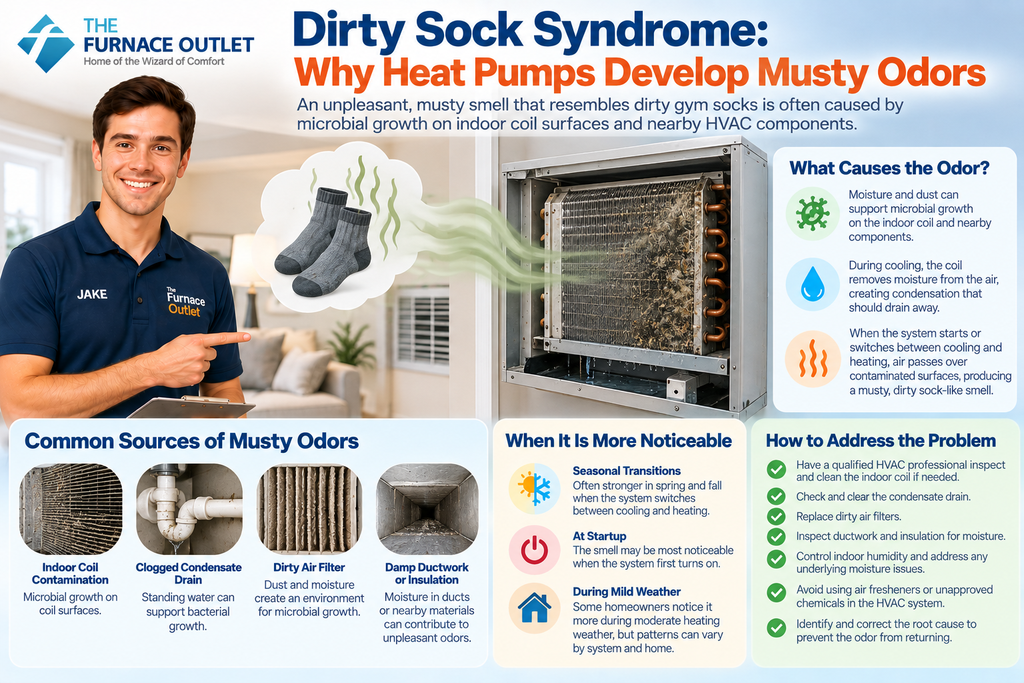
One of the more unusual heat pump complaints is an unpleasant smell that resembles dirty gym socks, damp laundry, or a musty locker room. HVAC professionals commonly refer to this condition as Dirty Sock Syndrome, and it can become particularly noticeable during seasonal transitions when a heat pump switches between cooling and heating. For homeowners experiencing it for the first time, the odor can be confusing because the system may continue heating and cooling normally despite the unpleasant smell.
Dirty Sock Syndrome is commonly associated with microbial contamination on indoor heat exchanger surfaces and nearby HVAC components. During cooling operation, the indoor coil removes moisture from the air, creating condensation that should drain away through the condensate system. Under certain conditions, moisture combined with dust and organic material can support microbial growth. When airflow passes across contaminated surfaces, odor-producing compounds may be carried into the living space. The odor may become especially noticeable when the system starts or when operating conditions change.
The seasonal connection is particularly interesting. During fall and spring, outdoor temperatures may require cooling during warmer afternoons and heating during cooler evenings. This alternating operation changes coil temperatures and moisture conditions, potentially making existing odors more noticeable. Some homeowners report that the smell is strongest during mild heating weather and becomes less noticeable when the equipment operates under different conditions. However, these patterns vary, and the presence of an odor alone cannot establish the precise source or identify a particular microorganism.
I would caution homeowners against assuming that every musty smell is Dirty Sock Syndrome or that every affected system contains dangerous mold. Similar odors can originate from clogged condensate drains, wet insulation, contaminated filters, damp ductwork, or moisture problems elsewhere in the home. A proper inspection should identify the source before any cleaning or treatment is recommended.
The U.S. Environmental Protection Agency’s guidance on HVAC contamination and duct cleaning emphasizes the importance of controlling moisture and addressing underlying contamination sources rather than relying on cleaning alone.
When Dirty Sock Syndrome is suspected, I recommend having a qualified HVAC professional inspect the indoor coil, drain pan, condensate drainage, filters, and surrounding materials. Depending on the findings, corrective action may include approved coil cleaning, drainage repairs, moisture management, or replacement of contaminated components. Spraying fragrances, household bleach, or unapproved disinfectants into the system is not a reliable solution and can damage equipment or introduce additional indoor air quality concerns.
For homeowners experiencing recurring odors, the long-term objective should be to identify why contamination developed and prevent the conditions that allow it to return. Simply masking the smell may make the house more pleasant temporarily, but it does not address the underlying cause.
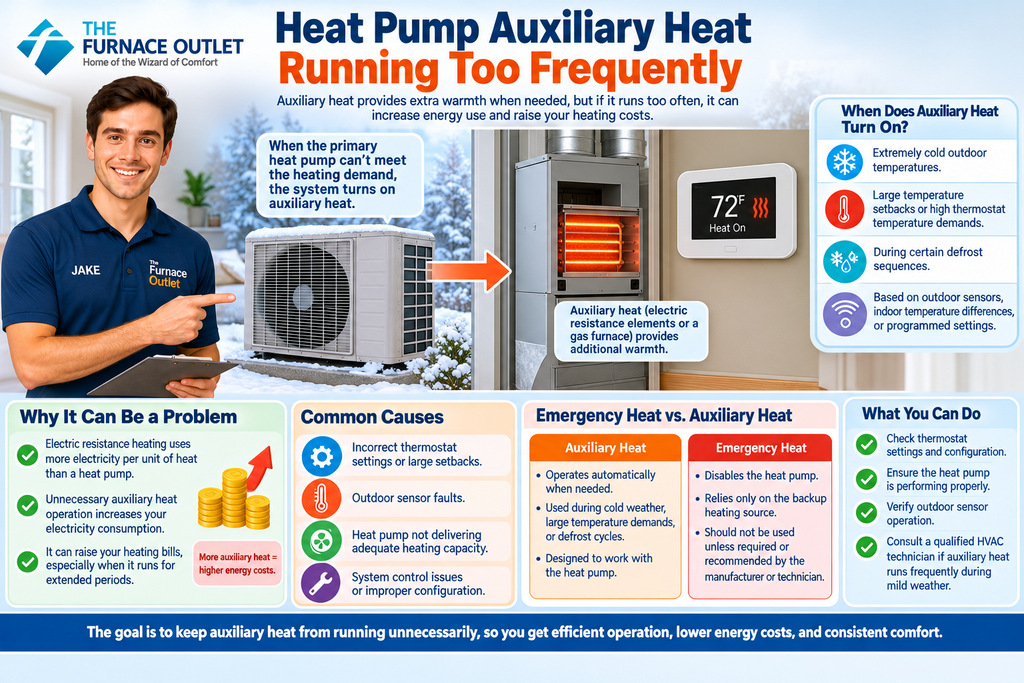
Many ducted heat pumps are equipped with supplemental heating systems designed to provide additional warmth when the primary heat pump cannot meet the building’s heating demand. In an all-electric installation, this supplemental system often consists of electric resistance heating elements inside the air handler. Other installations use a gas furnace as part of a dual-fuel arrangement. Understanding how supplemental heating operates is important because it affects comfort, system performance, and energy consumption.
Auxiliary heat normally operates automatically when the controls determine that additional heating is required. This may happen during extremely cold weather, when the thermostat calls for a substantial temperature increase, or during certain defrost sequences. The system may use outdoor temperature sensors, indoor temperature differences, or programmed operating conditions to determine when supplemental heating should activate.
The problem is that electric resistance heating generally consumes more electricity per unit of delivered heat than an efficiently operating heat pump. While resistance heating converts electrical energy directly into heat, a heat pump can transfer several units of thermal energy for each unit of electrical energy consumed under favorable conditions. Consequently, unnecessary auxiliary heat operation can significantly increase electricity consumption, particularly when it runs for extended periods.
If a homeowner notices that the AUX HEAT indicator appears frequently during relatively mild weather, I would investigate the thermostat configuration and the primary heat pump’s performance. Large temperature setbacks, incorrect thermostat settings, outdoor sensor faults, or a heat pump that is not delivering adequate heating capacity may cause the backup system to operate more than expected. However, auxiliary heat activation during very cold weather does not automatically indicate a malfunction because some systems are specifically designed to rely on supplemental heating under those conditions.
Emergency heat is a related but different operating mode. On many systems, selecting emergency heat disables the primary heat pump and relies on the backup heating source. This mode should not be used simply because outdoor temperatures fall below freezing. Its purpose and correct application depend on the equipment configuration, and homeowners should follow the manufacturer’s instructions or the advice of a qualified technician when the primary heat pump is not functioning.
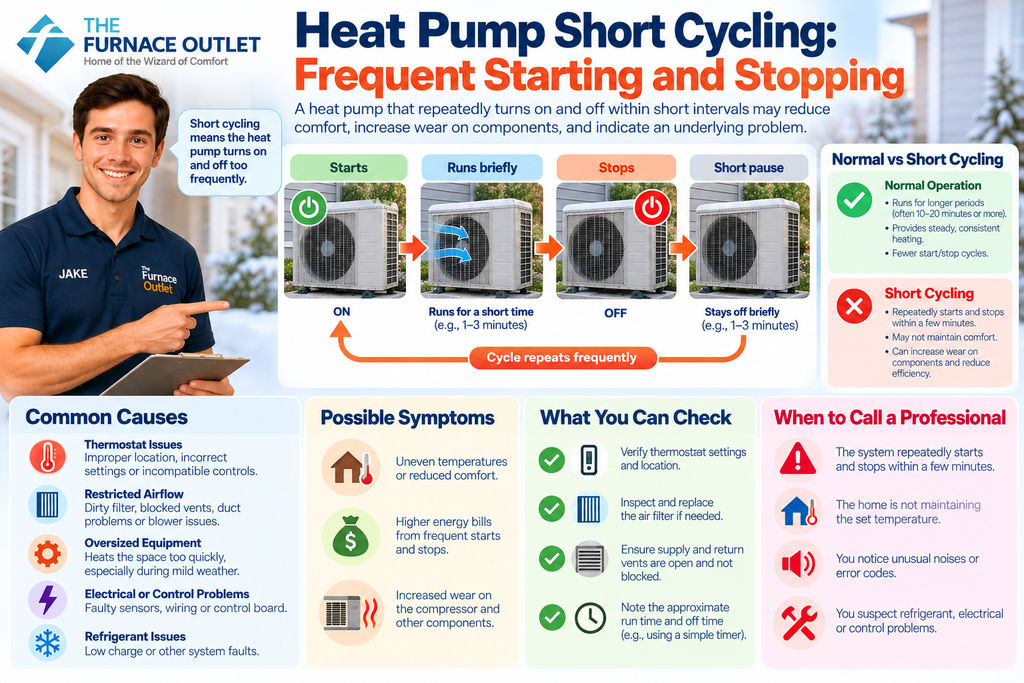
A heat pump that repeatedly turns on and off within unusually short intervals may be experiencing short cycling. This behavior can reduce comfort, increase wear on certain components, and sometimes indicate a control or installation problem. However, not every short operating period is abnormal because cycle duration depends on outdoor temperature, equipment design, heating demand, and the way the system controls its output.
Thermostat placement is one potential cause. If the thermostat is installed near a supply register, exposed to direct sunlight, or affected by localized temperature changes, it may detect a temperature that does not accurately represent the rest of the home. The heat pump can then shut down before the building has been heated evenly. Incorrect thermostat programming or incompatible controls may create similar behavior.
Airflow restrictions can also contribute to interrupted operation. A clogged filter, obstructed ductwork, or malfunctioning blower may cause protective controls to activate. Other possible causes include electrical problems, refrigerant circuit faults, sensor malfunctions, and incorrect equipment sizing. A heat pump that is substantially oversized for the home’s heating load may satisfy the thermostat quickly, especially during mild weather, although variable-capacity equipment can reduce this tendency by operating at lower output levels.
When investigating short cycling, I would begin by recording the approximate operating times and noting whether the indoor temperature is being maintained. I would also check the thermostat location, inspect the air filter, and look for error messages. If the system repeatedly starts and stops without providing adequate heating, professional diagnosis is appropriate because continued cycling may place unnecessary stress on the equipment.
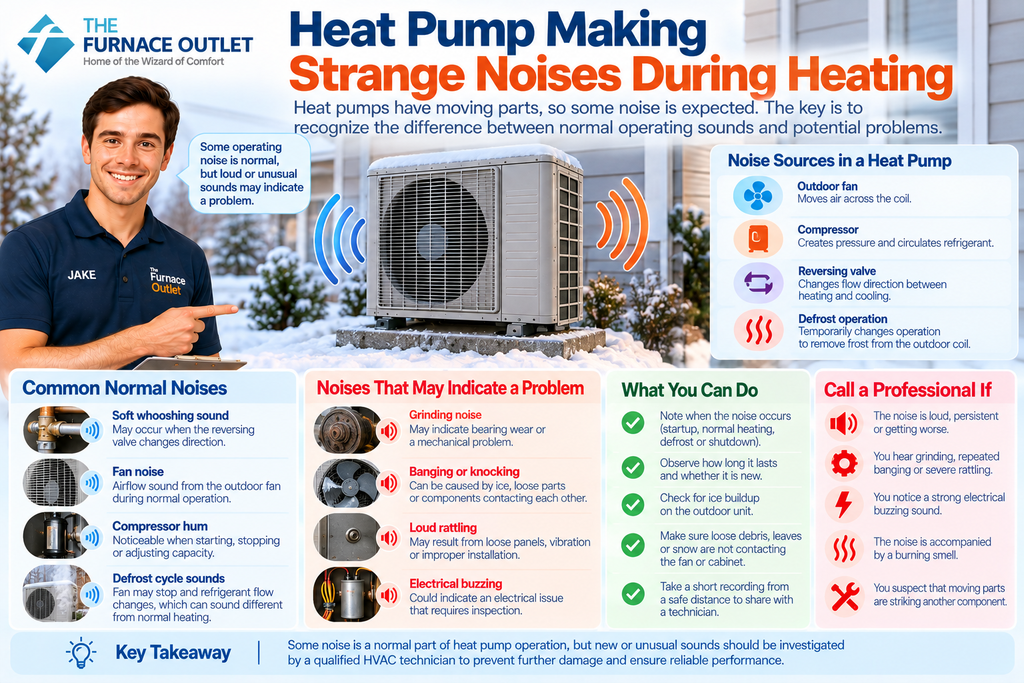
Heat pumps are mechanical systems, so some operating noise is unavoidable. Compressor vibration, fan movement, refrigerant flow, and changes between heating and defrost operation can all produce sounds that homeowners notice. The important distinction is whether the noise is consistent with normal equipment operation or represents a new mechanical or electrical problem.
A brief whooshing sound may occur when the reversing valve changes refrigerant flow direction. Some systems produce noticeable compressor sounds when starting, stopping, or adjusting capacity. During defrost, the outdoor fan may stop while refrigerant flow and compressor operation change, creating sounds that differ from ordinary heating. If these noises have been present since installation and the system otherwise performs normally, they may simply be characteristics of the equipment.
Grinding, repeated banging, severe rattling, or loud electrical buzzing deserve greater attention. Grinding may indicate bearing wear or another mechanical problem, while rattling can result from loose panels, vibration, or components contacting surrounding materials. A banging sound may occur if ice interferes with the outdoor fan, and persistent electrical buzzing can indicate problems that require immediate inspection. These symptoms should not be diagnosed solely by sound, but they provide useful information for a technician.
I recommend noting when the noise occurs, how long it lasts, and whether it coincides with heating startup, defrost, or shutdown. A short recording taken from a safe distance can help communicate the problem to a service professional. If the noise is severe, accompanied by a burning smell, or suggests that moving parts are striking another component, stop the system when safe and arrange service rather than allowing the equipment to continue operating.
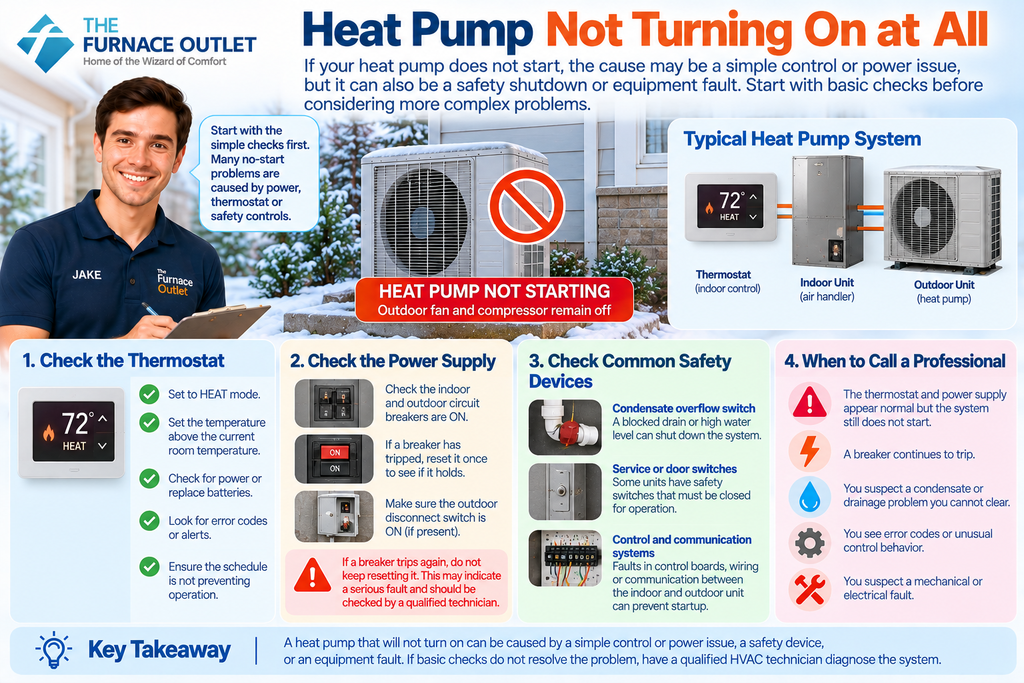
When a heat pump fails to start, homeowners often assume that the compressor or another major component has failed. In reality, several simpler control and power-related issues can prevent the equipment from responding to a heating request. The most sensible approach is to begin with basic observations before considering more complicated mechanical faults.
The thermostat is the first place I would look. Confirm that it has power, is set to the correct operating mode, and is requesting a temperature above the current indoor reading. If the thermostat uses replaceable batteries, check whether they need replacement. Modern thermostats may also display error codes, communication faults, or equipment alerts that provide valuable information about the problem.
Electrical supply problems can also prevent startup. Heat pumps commonly have separate electrical circuits for indoor and outdoor equipment, and a problem affecting either section may interrupt normal operation. However, electrical troubleshooting should be approached carefully. A breaker that repeatedly trips may indicate an equipment fault, and repeatedly resetting it can create additional risks. Homeowners should never open electrical cabinets or attempt to bypass protective devices to restore operation.
Certain systems also include condensate overflow safety switches that interrupt operation when water accumulates because of a blocked drain or another drainage problem. This can become relevant during seasonal transitions after extended cooling operation. Other possible causes include control board faults, failed contactors, communication problems, and protective shutdowns triggered by abnormal operating conditions.
If the thermostat and other accessible controls appear normal but the heat pump does not respond, I recommend arranging professional diagnosis. A technician can determine whether the issue originates with the power supply, controls, safety devices, compressor, or another component without exposing the homeowner to electrical or mechanical hazards.
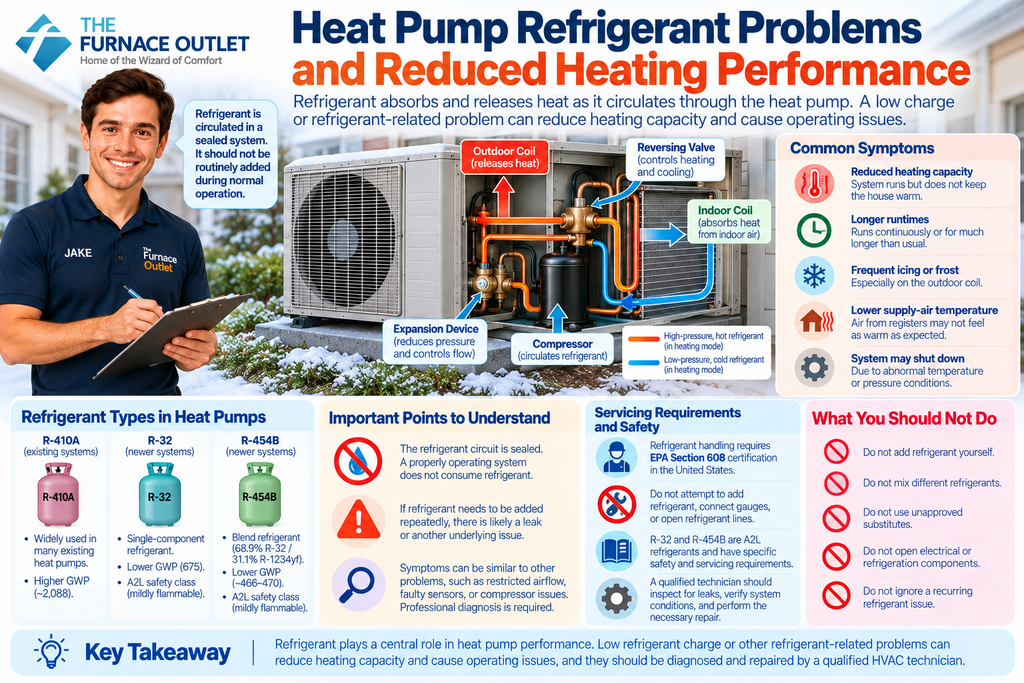
Refrigerant plays a central role in heat pump operation because it absorbs and releases thermal energy as it circulates through the refrigeration system. A properly functioning heat pump uses a sealed refrigerant circuit, meaning refrigerant is not routinely consumed during operation. If a system repeatedly requires refrigerant additions, that generally indicates an unresolved leak or another servicing issue rather than normal maintenance.
Low refrigerant charge can reduce heating capacity, increase operating difficulties, and contribute to abnormal temperature or pressure conditions. However, the symptoms are not always obvious. A heat pump with restricted airflow, a malfunctioning expansion device, faulty sensors, or compressor problems may behave similarly. This is why refrigerant problems should not be diagnosed from supply-air temperature, frost patterns, or a single pressure reading alone.
Refrigerant handling has also become more technically demanding as the industry adopts newer refrigerants. Many existing heat pumps use R-410A, while newer equipment may use alternatives such as R-32 or R-454B. These refrigerants have different operating characteristics and safety requirements, and they cannot simply be substituted into equipment designed for another refrigerant. Some newer refrigerants are classified as A2L, meaning they have lower flammability than many other flammable refrigerants but still require appropriate equipment design and servicing precautions.
The EPA Section 608 technician certification guidance explains the certification requirements associated with regulated refrigerant servicing activities in the United States.
For homeowners, the practical lesson is straightforward. Do not attempt to add refrigerant, connect pressure gauges, open refrigerant lines, or replace refrigeration components without the required training and authorization. A qualified technician should identify the underlying problem, inspect for leaks when appropriate, verify system conditions against manufacturer specifications, and perform the necessary repair. Simply adding refrigerant without addressing the cause can waste money and allow the problem to return.
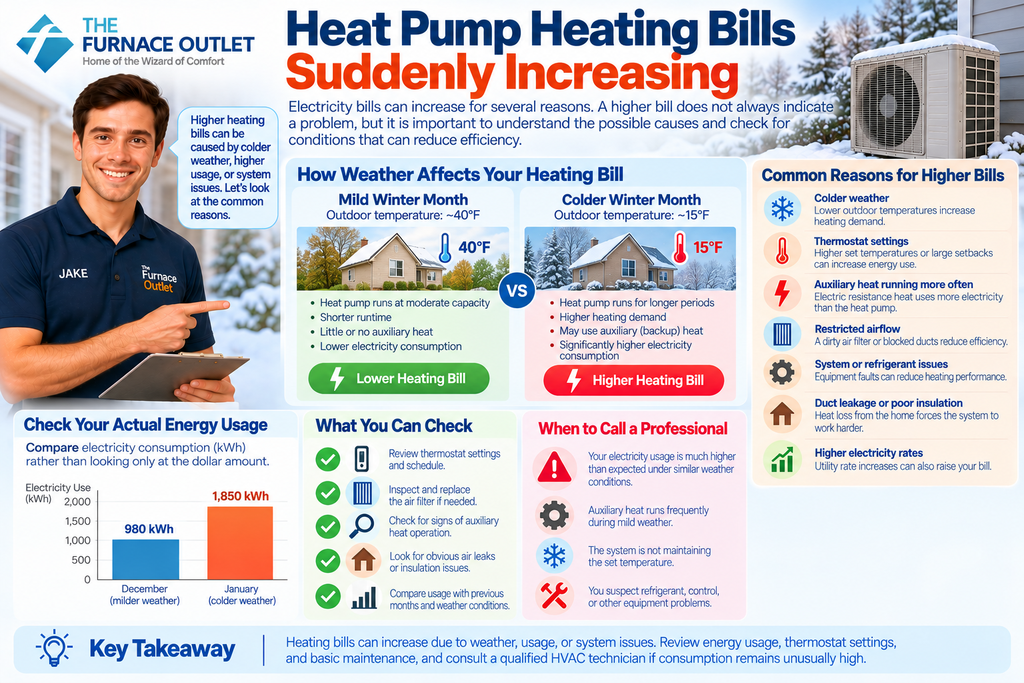
One of the strongest reasons homeowners choose heat pumps is their potential to reduce heating energy consumption. When electricity bills suddenly increase, it is understandable to suspect that the equipment has become inefficient. However, a higher bill does not necessarily indicate a malfunction because heating demand can change substantially with outdoor temperature, household occupancy, thermostat settings, and electricity rates.
Consider two winter months with very different weather conditions. During a relatively mild month, the heat pump may operate at moderate capacity and maintain the home comfortably with little supplemental heating. During a much colder month, the same system may need to operate for longer periods, deliver more heating energy, and occasionally activate backup heat. Electricity consumption can increase significantly even when the equipment is functioning correctly.
The concern becomes greater when energy consumption rises without a corresponding increase in heating demand. A dirty air filter, restricted airflow, malfunctioning controls, refrigerant problems, or excessive auxiliary heat operation can reduce overall system efficiency. Duct leakage and poor insulation may also increase heating costs by allowing conditioned air to escape or forcing the heat pump to replace heat lost through the building envelope.
Thermostat programming deserves attention as well. Large temperature setbacks can sometimes cause a heat pump to activate electric resistance backup heating during recovery, reducing the expected savings. Although programmable thermostats can be useful, they should be configured for the particular heat pump and backup heating arrangement rather than operated exactly like a conventional furnace thermostat.
The ENERGY STAR’s heating and cooling efficiency recommendations emphasize regular filter maintenance, equipment servicing, proper installation, and duct improvements as important ways to support efficient HVAC performance.
When evaluating an unexpectedly high bill, I recommend comparing actual electricity consumption in kilowatt-hours rather than looking only at the amount charged. Review outdoor weather conditions, thermostat settings, auxiliary heat activity, and any recent changes in household usage. If consumption remains unusually high under comparable conditions, a professional performance assessment can help determine whether the heat pump is operating efficiently.
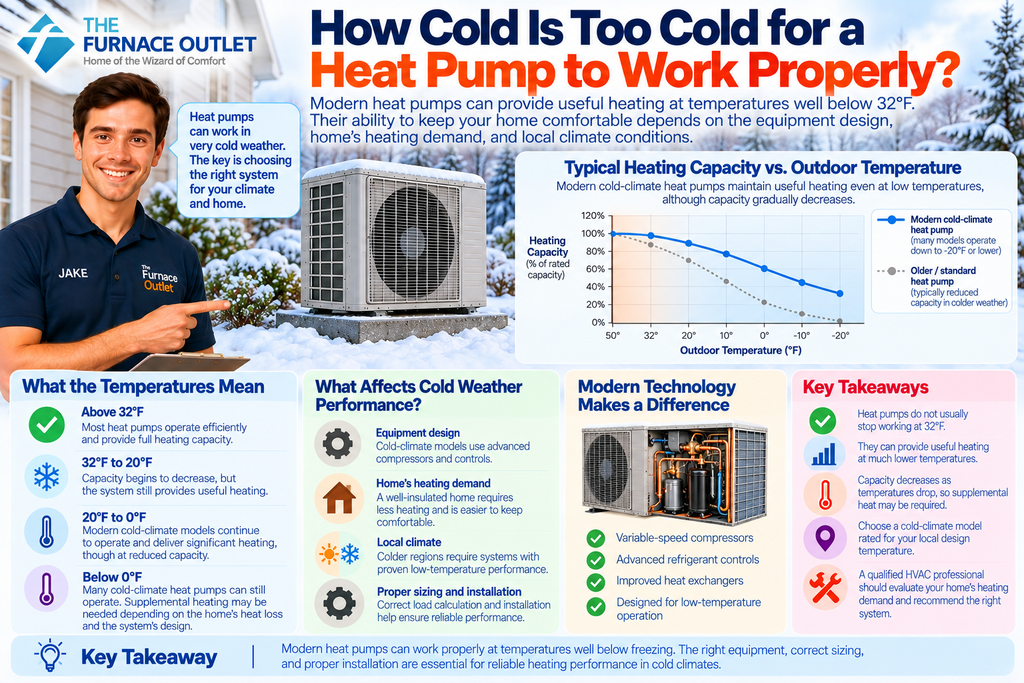
A common misconception is that heat pumps stop working whenever outdoor temperatures fall below freezing. This may have been a more reasonable concern with some older equipment, but modern heat pump technology has advanced considerably. Today’s cold-climate systems can deliver useful heating at temperatures well below 32°F, although their available capacity and efficiency still depend on equipment design and operating conditions.
The key is understanding the difference between a heat pump’s minimum operating temperature and its ability to meet the home’s complete heating requirement. A system may continue operating at very low temperatures but deliver less heating capacity than the building requires. In that situation, supplemental heating may be necessary even though the heat pump itself is functioning normally. The correct solution depends on the home’s heat loss, the manufacturer’s published capacity data, and the local winter design temperature.
Modern cold-climate heat pumps often use variable-speed compressors, advanced refrigerant controls, and improved heat exchangers to maintain stronger low-temperature performance. ENERGY STAR’s cold-climate heat pump criteria include specific performance requirements at 5°F, providing homeowners and contractors with a useful basis for comparing equipment designed for colder regions.
For homeowners in northern states or regions experiencing prolonged freezing temperatures, I recommend evaluating heating capacity at the actual local design temperature rather than relying only on advertised efficiency ratings. A high-efficiency heat pump that is incorrectly sized or poorly matched to the climate may not deliver the expected comfort. Conversely, a properly selected cold-climate model can provide reliable heating even where winter temperatures frequently fall below freezing.
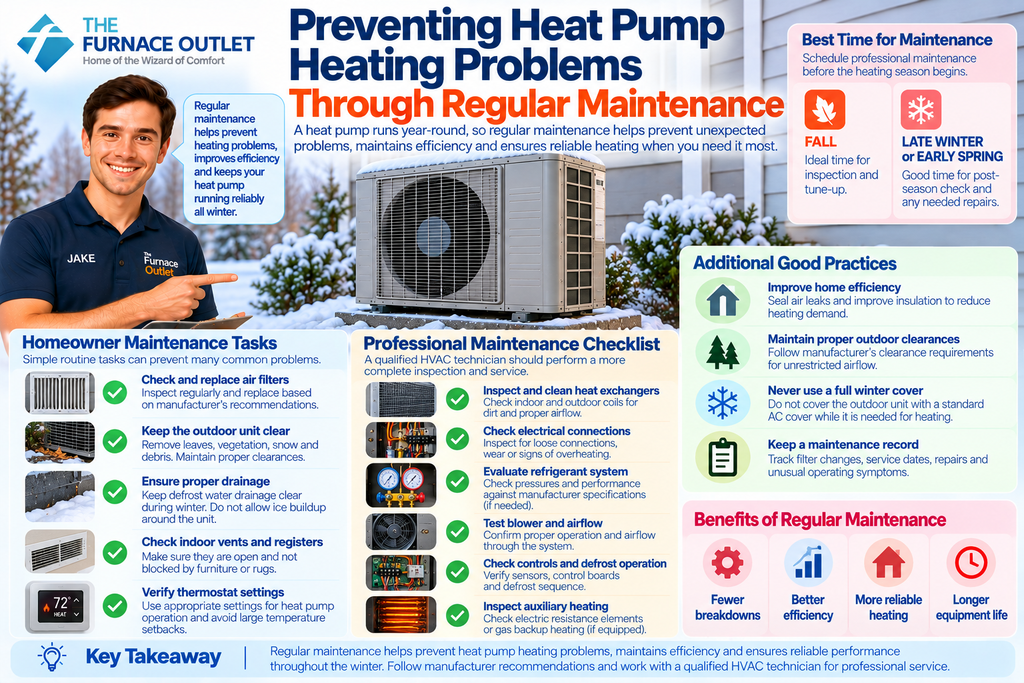
Preventive maintenance is one of the most practical ways to reduce unexpected heat pump problems, particularly before the heating season begins. A heat pump operates throughout much of the year, providing cooling during summer and heating during winter, which means its fans, coils, controls, and other components experience regular use. Small maintenance issues can gradually affect performance, and problems that remain unnoticed during mild weather may become much more obvious when heating demand increases.
Air filter maintenance should be part of every homeowner’s routine. A filter that becomes heavily loaded with dust restricts airflow and can reduce comfort and equipment performance. However, replacement intervals depend on filter design, household conditions, and system operating hours. I recommend inspecting accessible filters regularly and following the manufacturer’s replacement instructions rather than assuming that every filter should be replaced on the same schedule.
Outdoor unit maintenance is equally important. Leaves, vegetation, snow, and other debris should not obstruct airflow around the heat exchanger. Homeowners should maintain the clearances specified by the equipment manufacturer and pay particular attention to drainage conditions during winter. Water produced during defrost must be able to drain without repeatedly freezing around critical components. The outdoor unit should never be covered with an ordinary air-conditioner winter cover while it is expected to operate in heating mode.
Professional maintenance should include evaluation of the thermostat and controls, electrical connections, indoor and outdoor heat exchangers, airflow, blower operation, defrost controls, and supplemental heating. Refrigerant system measurements and additional diagnostic testing should be performed as appropriate for the equipment and observed conditions. A competent technician should also identify installation problems that may affect performance, such as duct restrictions, inadequate outdoor clearances, or improper thermostat configuration.
The ENERGY STAR HVAC maintenance checklist recommends regular professional inspections and pre-season maintenance to help prevent operating problems and unnecessary costs.
I also encourage homeowners to keep a simple maintenance record that includes filter changes, service dates, repair history, and unusual operating symptoms. This information becomes particularly valuable when troubleshooting recurring problems because it helps establish whether a fault developed suddenly or has been gradually worsening over time.
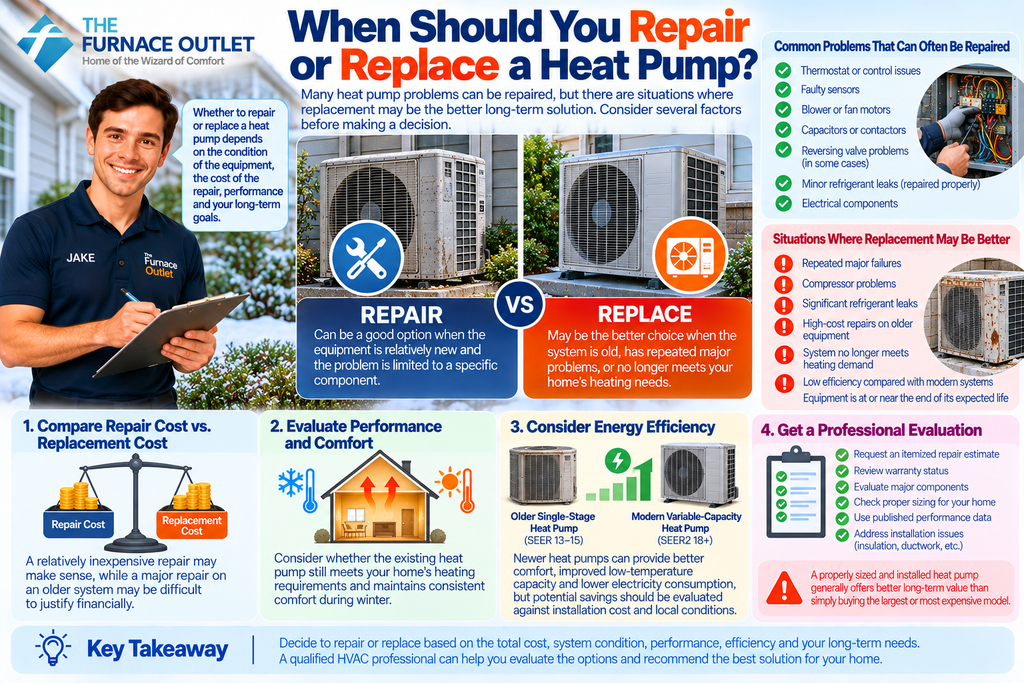
Not every heat pump heating problem justifies replacing the entire system. Many faults involving thermostats, sensors, controls, motors, or other serviceable components can be repaired economically, especially when the equipment is relatively new and has otherwise performed reliably. The decision becomes more complicated when an older system develops repeated major failures, significant refrigerant leaks, compressor problems, or increasingly expensive repair requirements.
I prefer to evaluate replacement decisions using several factors rather than relying on equipment age alone. The first consideration is the cost of the proposed repair compared with the installed cost of a suitable replacement. A relatively inexpensive repair may make sense even on an older heat pump, while a major compressor replacement on equipment with additional reliability problems may be difficult to justify financially.
The second consideration is whether the existing heat pump still meets the home’s heating requirements. If the system has consistently struggled during winter despite proper maintenance and verified operation, replacement may provide an opportunity to correct an original sizing or equipment-selection problem. However, installing a larger heat pump without evaluating insulation, ductwork, and building heat loss can create new problems rather than solve existing ones.
Energy efficiency is another important factor, particularly when comparing older single-stage equipment with modern variable-capacity systems. A newer heat pump may provide better comfort, improved low-temperature capacity, and lower electricity consumption, but the potential savings should be evaluated against installation cost and actual operating conditions. I would never recommend replacement solely because a newer model advertises a higher efficiency rating.
Before making a final decision, request an itemized repair estimate, review the equipment’s warranty status, and ask the contractor to explain the condition of the major components. If replacement is recommended, the contractor should evaluate the home’s heating and cooling loads and select equipment using published performance data. A properly sized and installed heat pump generally offers better long-term value than simply purchasing the largest or most expensive system available.
A heat pump can run without delivering sufficient heating because of restricted airflow, incorrect thermostat settings, inadequate system capacity, refrigerant problems, or malfunctioning supplemental heating. The first step is to determine whether the indoor temperature is actually increasing and whether the equipment is operating under unusually cold outdoor conditions. If the thermostat setting cannot be maintained despite a clean filter and unobstructed airflow, professional diagnosis is recommended.
Heat pumps often deliver air that feels less intensely warm than the air produced by a gas furnace, so moderately warm supply air may feel cool against your skin. Temporary cooler airflow can also occur during defrost operation, depending on the equipment design. However, consistently cold air accompanied by declining indoor temperatures suggests that the system may not be delivering adequate heating and should be investigated.
Dirty Sock Syndrome is commonly associated with odor-producing microbial contamination on damp indoor HVAC components, particularly heat exchanger surfaces and nearby materials. Seasonal changes in temperature and operating mode can make existing odors more noticeable. Because other moisture-related problems can produce similar smells, a qualified technician should inspect the coil, condensate system, filters, and surrounding components before recommending treatment.
Emergency heat may be appropriate when the primary heat pump has failed and the system has a functioning backup heating source, but it should be used according to the equipment manufacturer’s instructions. On many systems, emergency heat bypasses the heat pump and relies on supplemental heating, which may increase operating costs. If the heat pump cannot maintain a safe indoor temperature, contact a qualified HVAC professional promptly rather than relying indefinitely on an unexplained emergency heating condition.
Most homeowners should arrange professional maintenance at least annually, with inspections before both heating and cooling seasons often beneficial for equipment operating year-round. The appropriate schedule depends on the manufacturer’s recommendations, system condition, and operating environment. Regular filter inspection and outdoor unit care between service visits can help maintain performance and identify developing problems before they become serious.
Yes. Modern cold-climate heat pumps are designed to provide heating at temperatures well below freezing, although efficiency and available capacity vary by model and outdoor conditions. The important consideration is whether the equipment has enough heating capacity to meet the building’s load at the local winter design temperature. Proper equipment selection, installation, and backup heating arrangements are essential for reliable cold-weather performance.
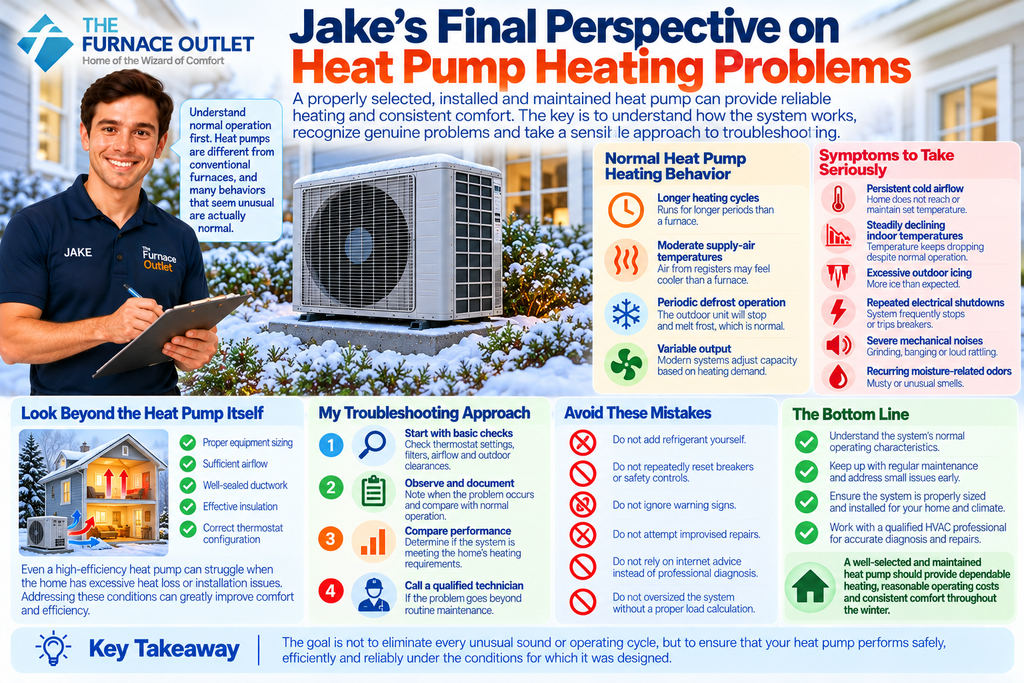
When I evaluate heat pump heating problems, I always begin with the same principle: understand the system’s normal operating behavior before assuming that something has failed. Heat pumps are different from conventional furnaces, and their longer heating cycles, moderate supply-air temperatures, and periodic defrost operation can surprise homeowners who are unfamiliar with the technology. Once these characteristics are understood, it becomes much easier to distinguish expected behavior from genuine performance problems.
The symptoms I take most seriously are those that indicate the equipment is no longer meeting the home’s heating requirements or is operating outside normal conditions. Persistent cold airflow, steadily declining indoor temperatures, excessive outdoor icing, repeated electrical shutdowns, severe mechanical noises, and recurring moisture-related odors all deserve careful investigation. These problems may originate from relatively simple maintenance issues, but they can also involve controls, airflow, refrigeration components, or installation conditions that require professional attention.
I also believe homeowners should look beyond the heat pump itself when evaluating heating performance. A well-designed system depends on appropriate equipment sizing, sufficient airflow, properly sealed ductwork, effective insulation, and sensible thermostat operation. Even a high-efficiency heat pump can struggle when installed in a building with excessive heat loss or when its controls are not configured correctly. Addressing these underlying conditions can sometimes provide greater improvements in comfort and efficiency than replacing otherwise functional equipment.
My preferred troubleshooting approach is straightforward: start with safe homeowner checks, observe the symptoms carefully, compare performance with normal operating conditions, and involve a qualified technician when the problem extends beyond routine maintenance. Avoid unnecessary refrigerant additions, repeated electrical resets, improvised repairs, and other shortcuts that can create additional expense or safety concerns. A good diagnosis should identify the underlying cause rather than simply suppress the symptom.
Ultimately, a properly selected and maintained heat pump should provide dependable heating, reasonable operating costs, and consistent comfort throughout the winter. The objective is not to make every unusual sound or operating cycle disappear, but to ensure that the system performs safely and efficiently under the conditions for which it was designed. With the right maintenance practices and a clear understanding of how heat pumps work, homeowners can often prevent minor issues from developing into major heating problems.
The information provided in this article by The Furnace Outlet is intended for general educational and informational purposes only. It is not a substitute for professional HVAC diagnosis, manufacturer installation and service instructions, or applicable building, mechanical, electrical, and refrigerant safety requirements. Heat pump design, operating characteristics, maintenance procedures, and troubleshooting methods vary by manufacturer and model, so homeowners should always consult the documentation supplied with their specific equipment.
Heat pumps contain electrical components, pressurized refrigerants, moving mechanical parts, and other potentially hazardous systems. Homeowners should not attempt repairs involving refrigerant circuits, compressors, capacitors, internal electrical wiring, reversing valves, or other components requiring specialized training. Refrigerant servicing in the United States is subject to applicable EPA regulations, and regulated activities must be performed by appropriately certified personnel. If equipment produces smoke, burning electrical odors, severe mechanical noises, repeated breaker trips, or other indications of unsafe operation, discontinue use when safe and seek qualified assistance.
The Furnace Outlet operates as an independent HVAC information resource. References to equipment technologies, maintenance practices, and external organizations are provided to support homeowner education and do not constitute manufacturer endorsements, guarantees of performance, or professional engineering advice. For persistent heating problems, suspected refrigerant leaks, electrical faults, or system failures, consult a licensed or otherwise appropriately qualified HVAC contractor.
© 2026 The Furnace Outlet | www.thefurnaceoutlet.com