
Newsletter Subscribe
Enter your email address below and subscribe to our newsletter

HVAC made simple
Is a heat pump water heater worth the investment? Our free Heat Pump Water Heater Payback Calculator helps you estimate potential energy savings, compare operating costs, and understand how long it may take to recover your initial investment.
Unlike conventional water heaters, heat pump water heaters use electricity to transfer heat rather than generate it directly. This can significantly reduce energy consumption, although actual savings depend on electricity prices, installation costs, household hot-water usage, and available rebates.
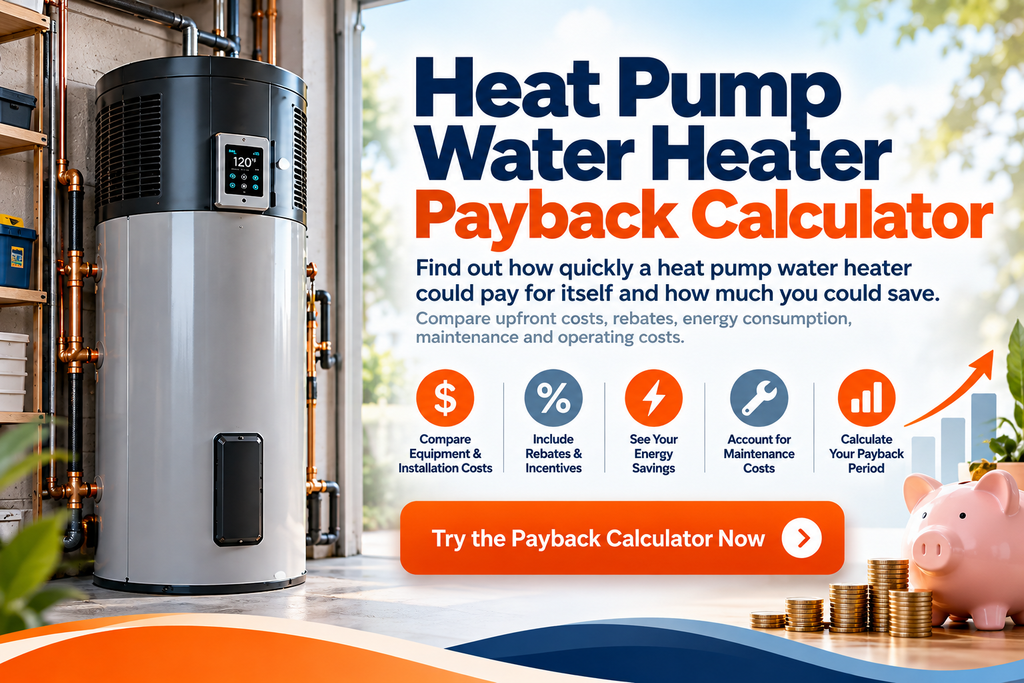
Using the calculator is simple. Follow these steps:
The calculator provides an estimated payback period, first-year energy savings, net investment, annual operating costs, and projected financial benefits over several years.
For example, if your additional investment is $2,000 and you save $400 annually, your simple payback period would be approximately 5 years.
A shorter payback period generally indicates a more attractive financial investment, but equipment lifespan, reliability, maintenance, and future energy prices should also influence your decision.
A heat pump water heater may cost more upfront than a conventional model, but lower electricity consumption and available incentives can make it economical over time. Use this calculator to compare realistic scenarios before requesting installation quotations.
Disclaimer: Results are estimates for educational purposes only. Actual savings and payback periods vary depending on equipment performance, energy prices, household usage, climate, installation conditions, and incentives. Consult a qualified professional before making a purchase decision.
Is a heat pump water heater worth the investment? Our free Heat Pump Water Heater Payback Calculator helps you estimate potential energy savings, compare operating costs, and understand how long it may take to recover your initial investment.
Unlike conventional water heaters, heat pump water heaters use electricity to transfer heat rather than generate it directly. This can significantly reduce energy consumption, although actual savings depend on electricity prices, installation costs, household hot-water usage, and available rebates.
Using the calculator is simple. Follow these steps:
The calculator provides an estimated payback period, first-year energy savings, net investment, annual operating costs, and projected financial benefits over several years. For example, if your additional investment is $2,000 and you save $400 annually, your simple payback period would be approximately 5 years.
A shorter payback period generally indicates a more attractive financial investment, but equipment lifespan, reliability, maintenance, and future energy prices should also influence your decision.
A heat pump water heater may cost more upfront than a conventional model, but lower electricity consumption and available incentives can make it economical over time. Use this calculator to compare realistic scenarios before requesting installation quotations.
Disclaimer: Results are estimates for educational purposes only. Actual savings and payback periods vary depending on equipment performance, energy prices, household usage, climate, installation conditions, and incentives. Consult a qualified professional before making a purchase decision.
Compare installation costs, rebates, energy consumption, and long-term operating expenses to estimate whether a heat pump water heater is a worthwhile investment.
Enter the expected costs of a heat pump water heater and a conventional alternative. The calculator compares their upfront investments and annual ownership costs, then estimates simple payback and cumulative savings over your selected analysis period.
Include electrical upgrades, drainage modifications, permits, or other additional installation expenses. Enter only incentives you expect to qualify for and actually receive.
For a replacement decision, compare the cost of installing a new conventional heater against installing a new heat pump water heater. For an existing functioning heater that you plan to keep, enter zero for its equipment and installation costs.
Use the variable energy rates from your utility bills. The escalation assumption applies to both electricity and conventional fuel costs. Fixed monthly utility charges are excluded unless you incorporate them separately.
These estimates can include routine maintenance and planned annual service. Major repairs, equipment replacement, financing, and resale value are not included.
First-year costs include energy, routine maintenance, and any additional HVAC interaction cost assigned to the HPWH.
The projection includes initial cost differences and annual utility price escalation. It does not discount future cash flows.
| Year | Annual Savings | Cumulative Net Savings |
|---|
Start with the purchase and installation costs for both water-heater options, then subtract any applicable rebates or incentives. Enter your electricity and conventional fuel rates, estimated annual energy consumption, and maintenance costs. The calculator uses these figures to estimate the additional upfront investment, annual operating savings, and time required to recover the difference.
Simple payback measures how many years of first-year annual savings would be needed to recover the additional initial investment. The calculator also estimates cumulative savings using an annual utility price escalation assumption. Actual savings depend on hot-water demand, installation conditions, utility prices, and equipment performance.