Newsletter Subscribe
Enter your email address below and subscribe to our newsletter

HVAC made simple
Buying a new central air conditioner involves more than comparing SEER2 ratings, refrigerants and equipment prices. The warranty deserves just as much attention, because two systems that look similar on a contractor’s estimate can provide very different financial protection after installation.
As a homeowner, I used to think a “10-year warranty” meant almost everything was covered for ten years. Unfortunately, HVAC warranties are rarely that simple. The compressor may have one warranty period, other parts another, and labor may not be included at all. Registration requirements, installation rules, maintenance obligations and ownership changes can also affect coverage.
That is why I would never compare central AC warranties using the headline number alone. I want to know what is covered, for how long, who pays for labor, what I must do to keep the warranty valid and what happens if I sell my home.
Here is how I would break it down.
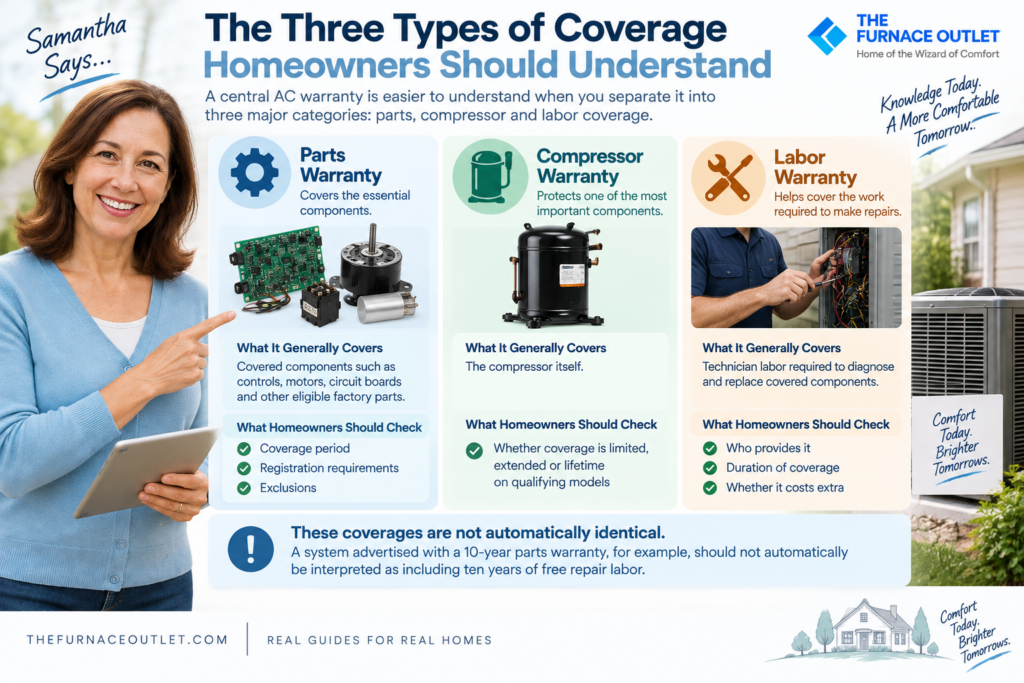
A central AC warranty is easier to understand when you separate it into three major categories: parts, compressor and labor coverage.
| Warranty Type | What It Generally Covers | What Homeowners Should Check |
|---|---|---|
| Parts Warranty | Covered components such as controls, motors, circuit boards and other eligible factory parts | Coverage period, registration requirements and exclusions |
| Compressor Warranty | The compressor itself | Whether coverage is limited, extended or lifetime on qualifying models |
| Labor Warranty | Technician labor required to diagnose and replace covered components | Who provides it, duration and whether it costs extra |
The important point is that these coverages are not automatically identical. A system advertised with a 10-year parts warranty, for example, should not automatically be interpreted as including ten years of free repair labor.
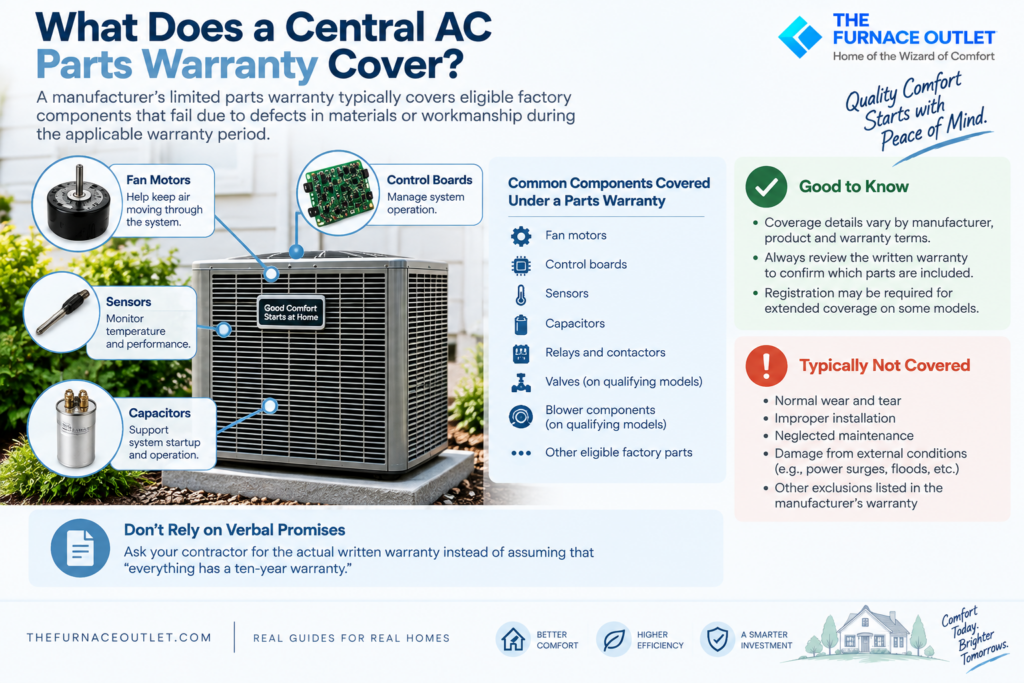
The manufacturer’s limited parts warranty is generally the warranty homeowners encounter most often. Depending on the manufacturer, product and warranty terms, it may cover eligible factory components that fail because of defects in materials or workmanship during the applicable warranty period.
Those components can include items such as fan motors, control boards, sensors, capacitors and other covered equipment parts. However, exactly what qualifies as a covered part depends on the manufacturer’s written warranty.
This distinction matters because a warranty is not the same thing as an insurance policy for your entire HVAC system. Normal wear, improper installation, neglected maintenance, damage caused by external conditions and other situations may be excluded.
I would therefore ask the contractor for the actual written warranty rather than relying on a statement such as “everything has a ten-year warranty.”
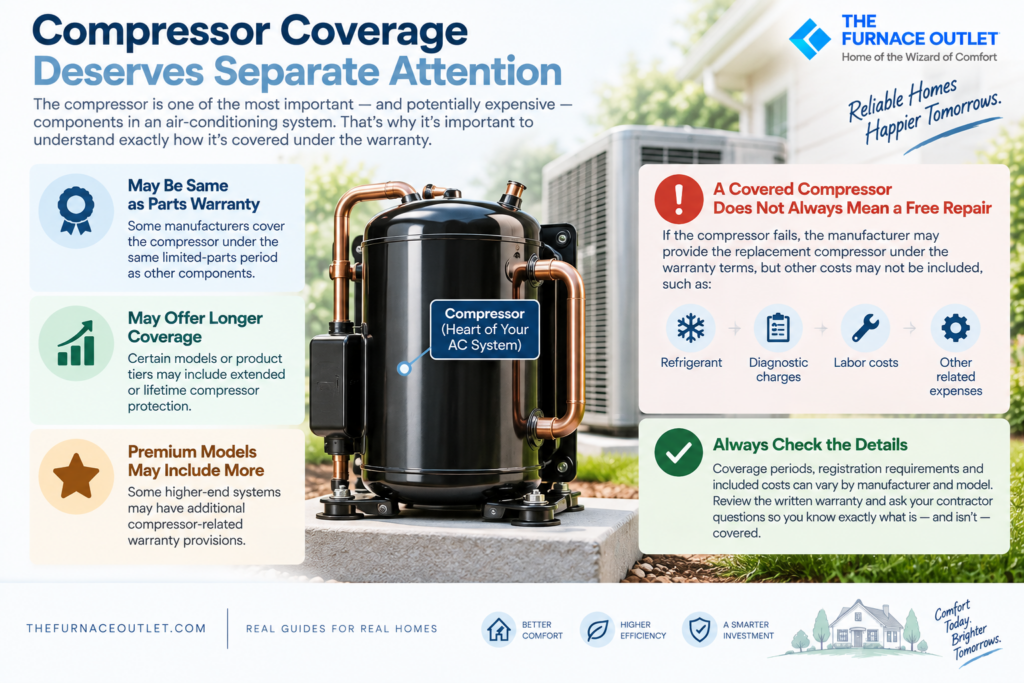
The compressor is one of the most important—and potentially expensive—components in an air-conditioning system. That is why I pay particular attention to how the compressor is treated under the warranty.
Some manufacturers cover the compressor under the same limited-parts period as other components. Certain models or product tiers may offer longer compressor protection, while some premium equipment may have additional compressor-related warranty provisions.
But a long compressor warranty still needs interpretation. Suppose a compressor is covered but fails after several years. The manufacturer may provide the qualifying replacement compressor under its warranty terms, but that does not necessarily mean refrigerant, diagnostic charges, labor and every other expense associated with replacing it are covered. That brings us to what I consider one of the most misunderstood parts of an HVAC warranty.
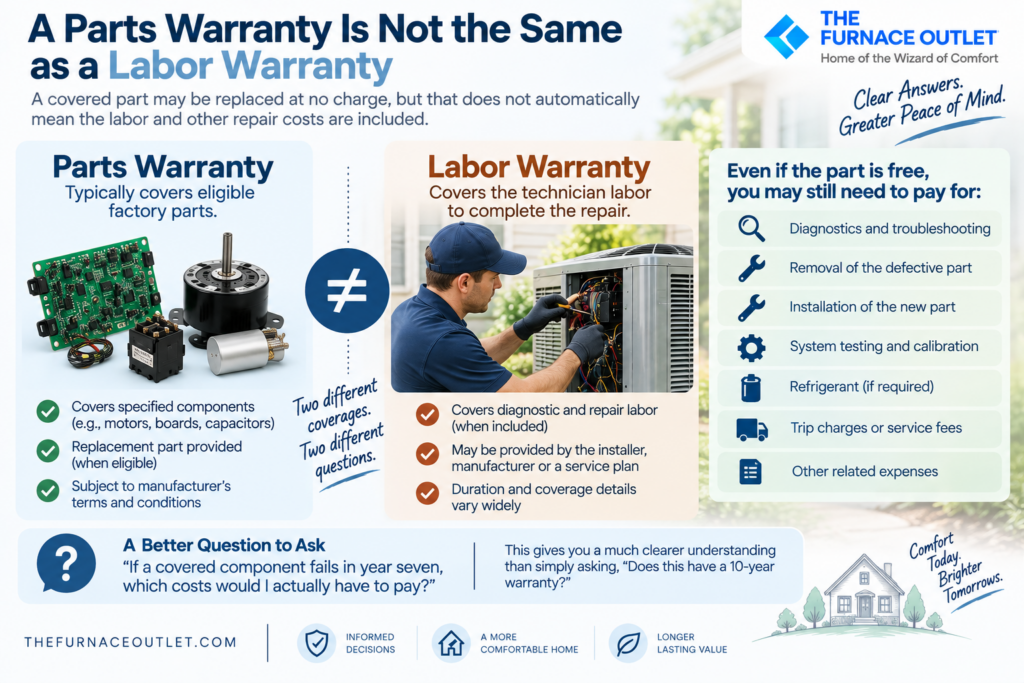
Imagine that your air conditioner develops a covered component failure several years after installation. The manufacturer approves the replacement part at no charge. That sounds like a free repair. It may not be.
Someone still has to diagnose the problem, obtain the replacement component, remove the defective part, install the new one, test the equipment and potentially perform other work associated with the repair. Depending on the warranty and service agreement, some or all of those expenses may be the homeowner’s responsibility.
Manufacturer parts coverage and labor coverage should therefore be treated as separate questions.
When evaluating an HVAC quote, I would ask:
“If a covered component fails in year seven, which costs would I actually have to pay?”
That question is far more useful than simply asking, “Does this have a 10-year warranty?”
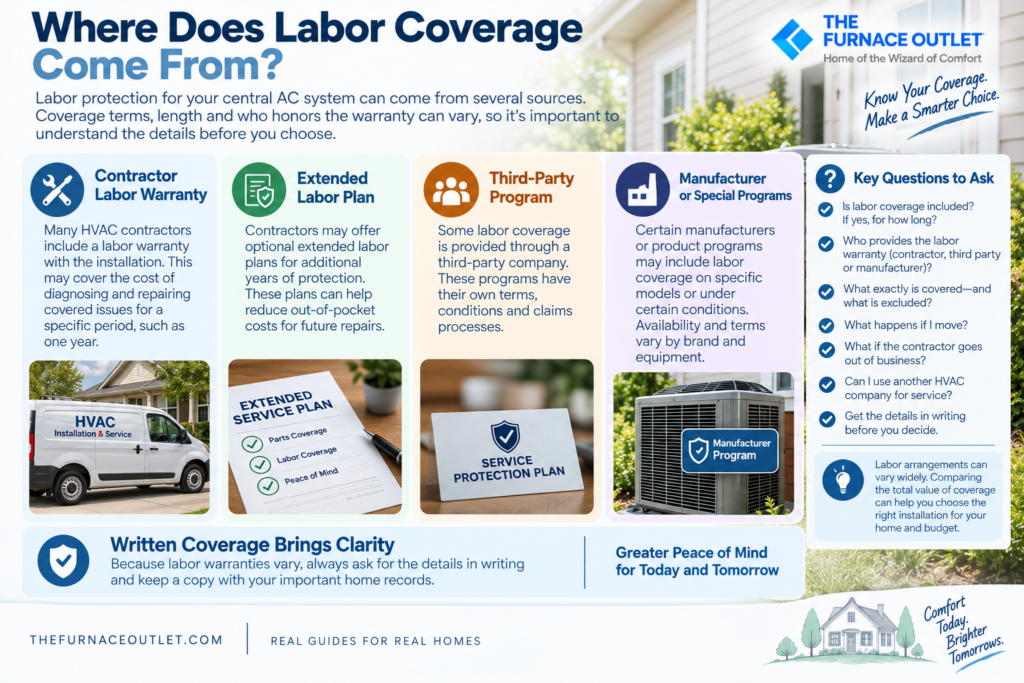
Labor protection can come from several places. A contractor may include a labor warranty with the installation, sell an extended labor plan, or offer coverage through a third-party program. Certain manufacturers or programs may also provide additional protection under specific terms.
Because labor arrangements vary considerably, I would want the contractor to put the coverage in writing. For example, if one proposal includes a one-year contractor labor warranty while another includes several years of labor protection, that difference deserves consideration when comparing the total value of the installations.
I would also find out who is responsible for honoring the labor warranty. If the coverage comes from the installing contractor rather than the manufacturer, I want to understand what happens if I move, the contractor closes, or I need service from another company.
One of the easiest warranty details to overlook happens shortly after installation. Some HVAC manufacturers offer different warranty terms depending on whether qualifying equipment is registered within a specified period after installation. Registration rules can vary by manufacturer, product, jurisdiction and customer circumstances, so homeowners should not assume that the installer has automatically completed it.
If registration affects my warranty, I would want confirmation that it has been completed correctly. I would save copies of the registration confirmation, installation invoice, model numbers, serial numbers, AHRI information where applicable and the written warranty. I would keep those documents somewhere accessible rather than relying on finding them years later when the system has already failed.
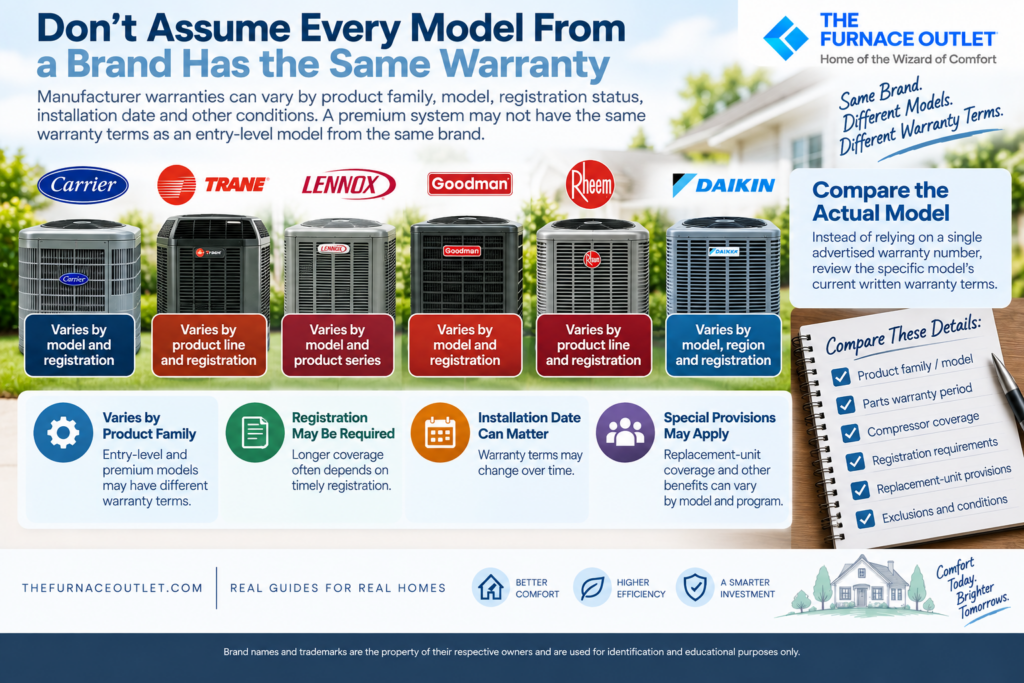
This is particularly important when comparing brands. It is tempting to say something like “Brand A has a 10-year warranty while Brand B has a 12-year warranty.” In practice, manufacturer warranties can vary by product family, model, registration status, installation date and other conditions.
A premium system may not carry exactly the same terms as an entry-level model from the same manufacturer. Replacement-unit provisions may also differ from standard parts replacement. For that reason, I wouldn’t rank Carrier, Trane, Lennox, Goodman, Rheem, Daikin or any other manufacturer solely using one advertised warranty number.
I would compare the specific model and its current written warranty terms.
Here is another distinction worth understanding. A standard limited-parts warranty generally means that if an eligible component fails under qualifying conditions, the covered component may be replaced according to the manufacturer’s warranty terms. That does not automatically mean the manufacturer will replace your entire outdoor condenser.
Certain manufacturers and qualifying products may offer unit-replacement provisions under particular circumstances, but these should be treated as a separate benefit rather than assumed to be part of ordinary parts coverage. If a contractor tells me that a system has a “replacement warranty,” I would ask exactly which failures trigger replacement, how long that protection lasts and whether registration is required.
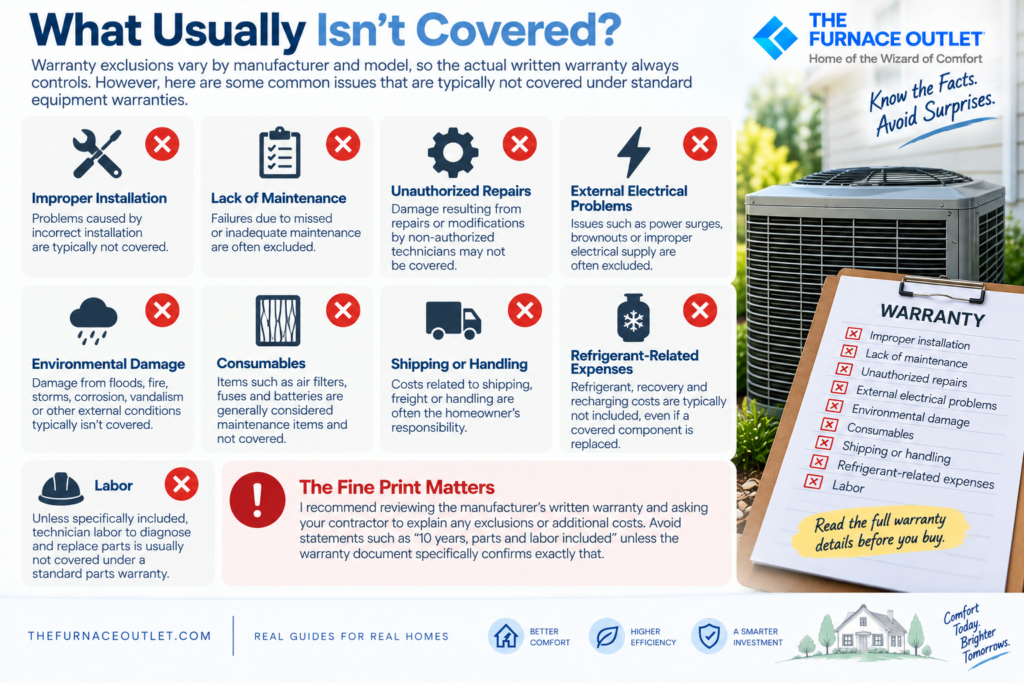
Warranty exclusions vary, so the manufacturer’s actual warranty document always controls. Nevertheless, homeowners should understand that equipment warranties typically aren’t designed to cover every problem that can happen to an HVAC system.
Depending on the warranty, exclusions or additional homeowner costs may involve issues related to improper installation, lack of maintenance, unauthorized repairs, external electrical problems, environmental damage, non-covered consumables, shipping or handling, refrigerant-related expenses and labor.
This is another reason I would avoid statements such as “10 years, parts and labor included” unless the written warranty specifically confirms exactly that. The fine print matters.
If I had to choose between a well-installed system with solid warranty coverage and a poorly installed system carrying a slightly longer headline warranty, I would choose the better installation. An HVAC warranty does not compensate for bad system design. Correct sizing, appropriate airflow, proper refrigerant charging, matched indoor and outdoor equipment, good ductwork and proper commissioning all influence how the system performs after the contractor leaves.
And some warranty claims may become complicated when equipment was installed incorrectly or outside manufacturer requirements. I would therefore consider the contractor and the warranty together, rather than treating them as separate purchasing decisions.
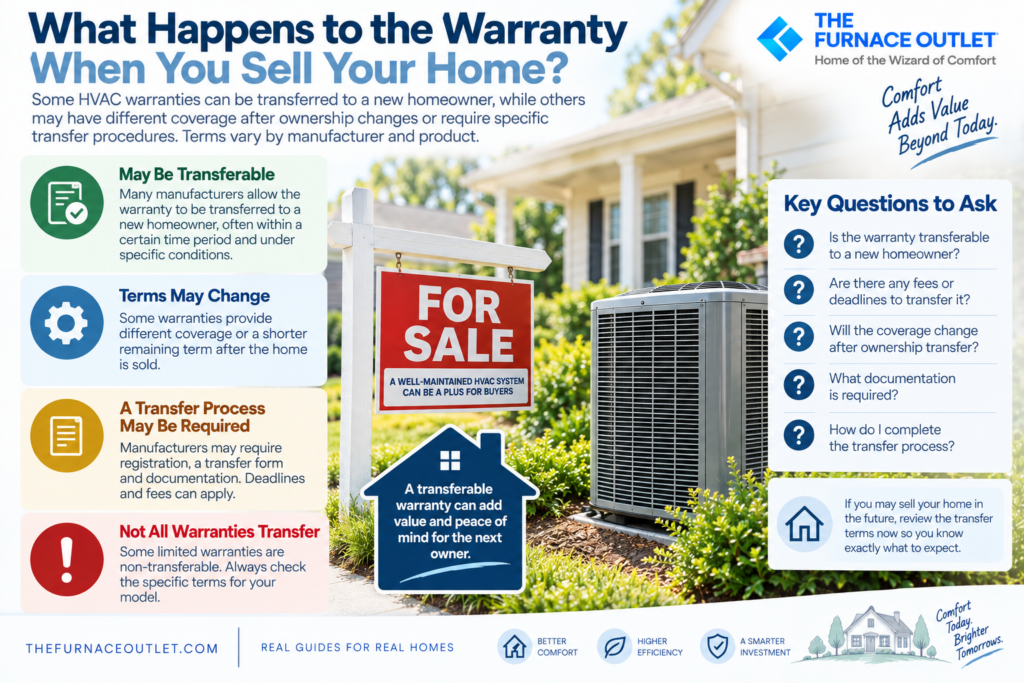
This is another question homeowners often don’t consider until years after purchasing the equipment. Some HVAC warranties may be transferable to a subsequent homeowner, while others may provide different coverage after ownership changes or require specific transfer procedures. Terms vary significantly among manufacturers and products.
If I thought I might sell the house during the expected life of the air conditioner, I would check this before purchasing. A transferable warranty can potentially be a useful benefit, but I wouldn’t advertise it to a future buyer until I had confirmed the exact transfer conditions.
Regular HVAC maintenance is sensible even without a warranty requirement. It helps technicians identify problems such as dirty coils, airflow restrictions, electrical issues and other conditions before they become more serious. But homeowners should also check whether their particular warranty includes maintenance-related requirements.
I would retain maintenance invoices and service records throughout the life of the equipment. If a warranty question arises years later, having documentation is much easier than trying to reconstruct the system’s history. I would also use appropriate replacement filters and follow the manufacturer’s maintenance instructions rather than assuming that every system has identical requirements.
Instead of asking which system has the “longest warranty,” I would put competing proposals side by side.
| Question | System A | System B |
|---|---|---|
| Standard parts coverage | ___ | ___ |
| Registered parts coverage | ___ | ___ |
| Compressor coverage | ___ | ___ |
| Labor included? | ___ | ___ |
| Labor coverage period | ___ | ___ |
| Unit-replacement provision? | ___ | ___ |
| Registration required? | ___ | ___ |
| Registration deadline | ___ | ___ |
| Transferable to next homeowner? | ___ | ___ |
| Maintenance requirements | ___ | ___ |
| Refrigerant-related costs covered? | ___ | ___ |
| Who handles warranty claims? | ___ | ___ |
This comparison exposes something the marketing headline doesn’t: two warranties with the same advertised duration can provide very different real-world protection.
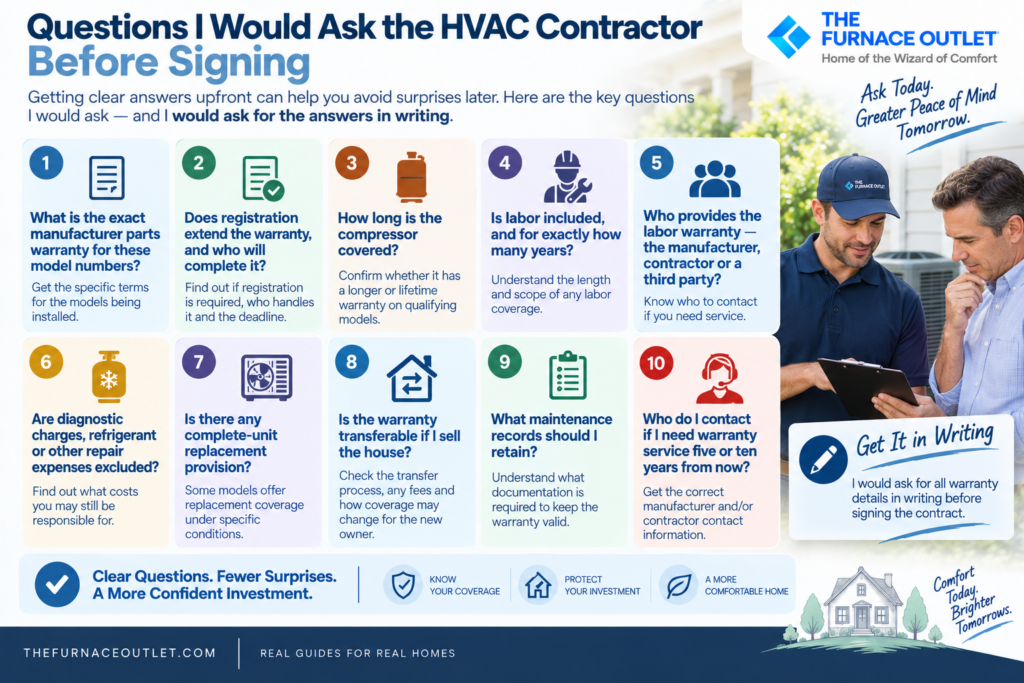
Before approving an installation, I would want clear answers to a few practical questions:
I would ask for the answers in writing.
A strong warranty is valuable, but I wouldn’t allow it to dominate the entire purchasing decision. I would still compare system sizing, SEER2 and EER2 where relevant, compressor technology, comfort features, refrigerant platform, noise levels, equipment matching, contractor experience, installation quality, service availability and total installed price.
A 12-year warranty does not automatically make one air conditioner better than another with a 10-year warranty. Conversely, an inexpensive system with excellent warranty terms may represent very good value when installed by a qualified contractor. The warranty should be one component of the complete ownership equation.
Central air-conditioning warranties look simple until you start examining what is actually covered. Parts coverage, compressor coverage and labor protection are different things, and the longest number printed in a brochure doesn’t necessarily represent your complete protection. When comparing systems, I would look beyond “10-year warranty” or “12-year warranty” and ask what happens in a real repair. Who pays for the component? Who pays the technician? Is refrigerant covered? Does registration matter? What happens after the house is sold?
Those questions turn a marketing claim into something much more useful: an understanding of your potential long-term cost of ownership. For me, that’s the smarter way to compare central AC warranties
Editorial Disclosure: The Furnace Outlet is not associated with, affiliated with, endorsed by, or sponsored by any HVAC manufacturer or brand mentioned in this article. We do not receive compensation from manufacturers for inclusion, comparisons or rankings. Brand names and trademarks belong to their respective owners. Warranty terms, registration requirements, exclusions and coverage can vary by model, installation date, location and manufacturer and may change over time. This content is provided for educational and informational purposes only. Homeowners should review the manufacturer’s current written warranty for their specific equipment and consult their installing contractor or manufacturer before making a purchasing or warranty decision.