
4-Ton AC Sizing Guide for Commercial & Large Residential Spaces
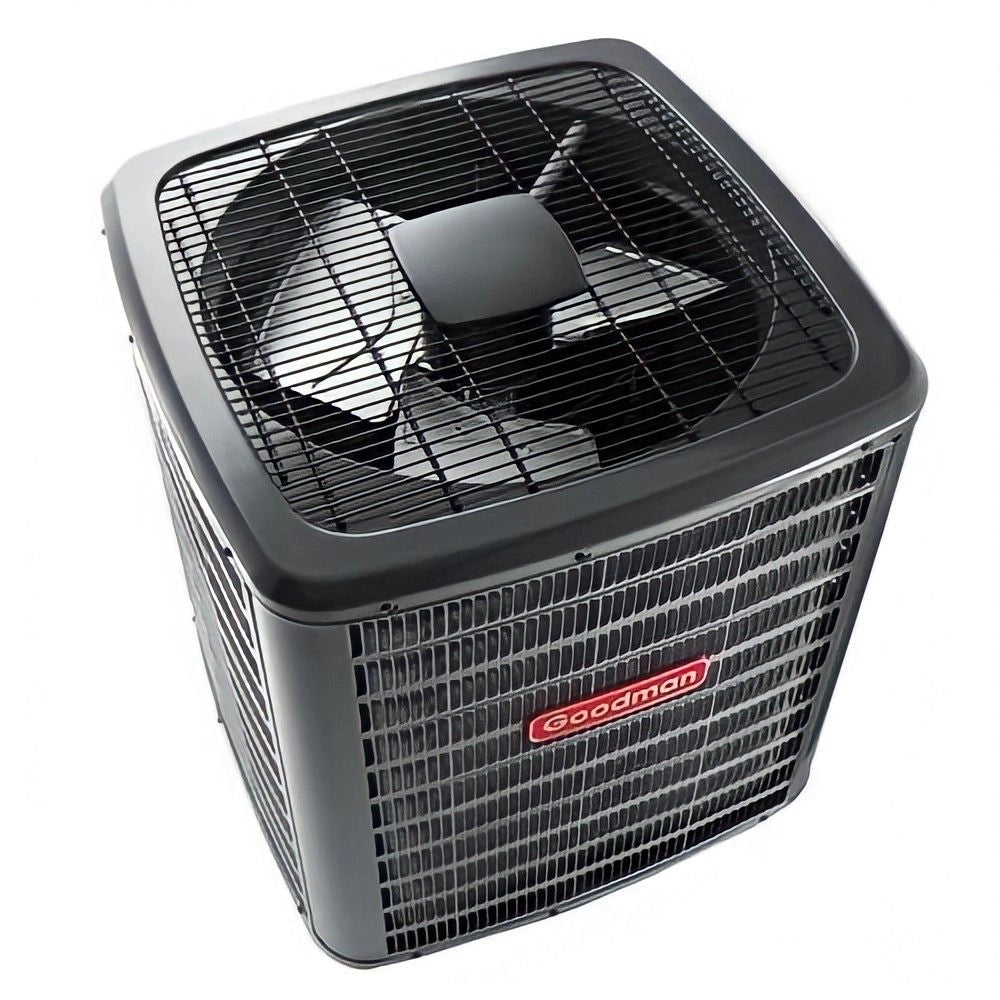
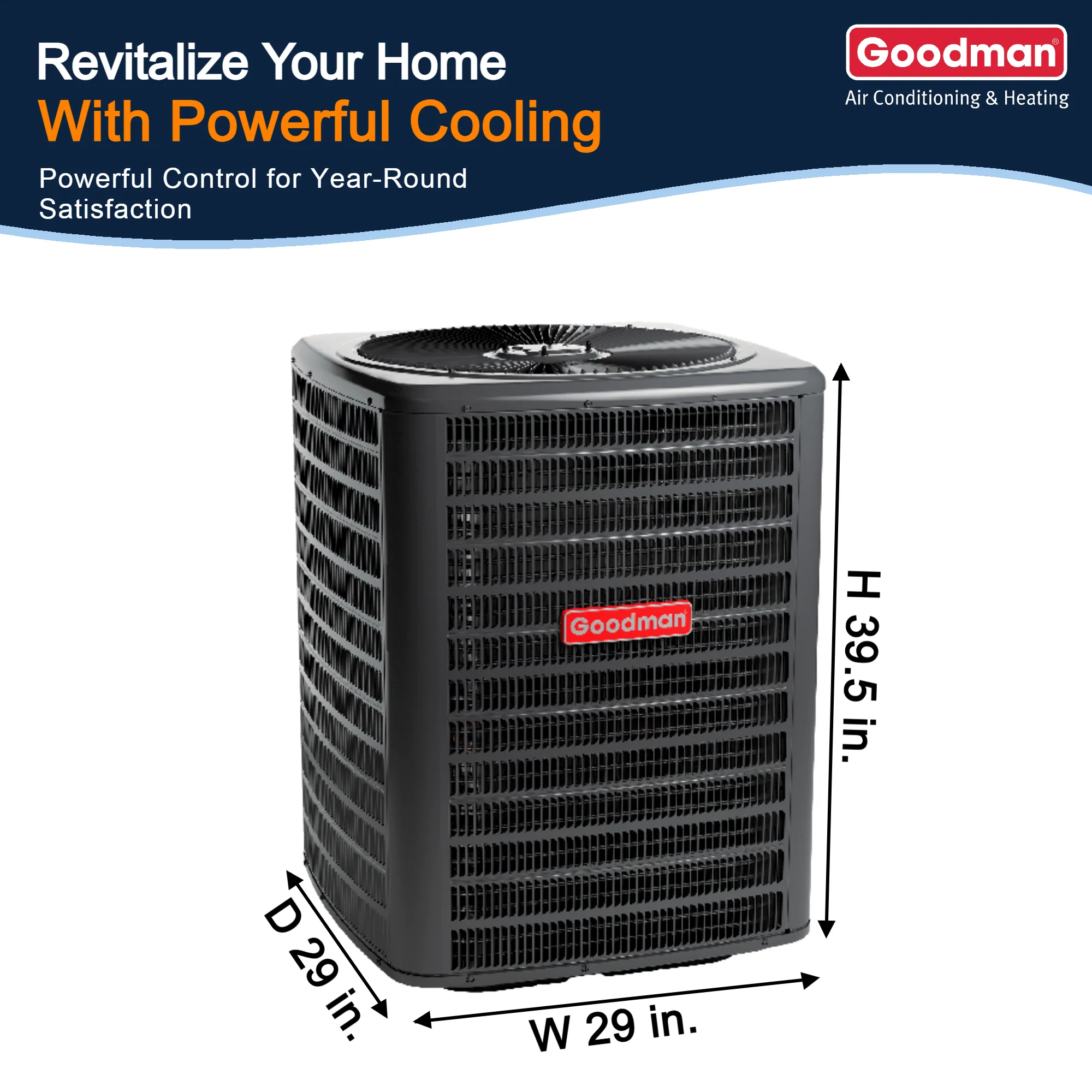
If you’re here because you keep hearing “4 tons should be enough,” but no one will explain why, when, or how to size it correctly, you’ve landed in the right place. I’m Mike, and I’ve sized, installed, and inspected more 4-ton AC jobs than I can count — in strip malls, churches, restaurants, open offices, and large residential homes that could cook an egg on the second floor by 4 pm.
This guide is your real-world, data-backed breakdown of when a 4-ton AC actually fits, when it doesn’t, and how to use square-footage charts, climate zone modifiers, and load multipliers to avoid expensive mistakes.
Throughout this guide, I’ll drop 6–7 legit external links — some HVAC-specific, some science-based — so you can verify numbers, grab technical docs, and go deeper if you want to nerd out.
Let’s dive in.
1. What a 4-Ton AC Really Means (Mike’s Straight Talk)
A “ton” of cooling equals:
12,000 BTU/h.
So a 4-ton AC = 48,000 BTU/h of cooling capacity.
But that’s just the marketing label.
In the real world, actual performance depends on:
-
Indoor airflow (CFM)
-
Indoor wet-bulb temperature
-
Outdoor ambient temperature
-
Refrigerant type
-
Coil match
-
Static pressure in the duct system
To understand manufacturer-rated performance, the AHRI directory shows expanded capacity tables for matched systems. You can explore similar listings here:
AHRI Directory – https://www.ahridirectory.org
That’s the “lab version” of capacity.
Let me translate that to the field language:
A properly installed 4-ton AC should deliver 46,000–52,000 BTU/h under typical real-world load conditions — if airflow is correct.
If the airflow is wrong?
It becomes a 3.3-ton system with a 4-ton price tag.
Now let’s look at what size spaces a 4-ton system really covers.
2. Square Footage Sizing Chart (Mike’s Field-Verified Numbers)
Most people repeat the dangerous rule of thumb:
“1 ton per 500–700 sq ft.”
That rule has created more oversized systems than bad contractors have created headaches. The truth is more nuanced because space type, internal load, and climate matter.
Below is the field-tested chart I actually use in walkthroughs.
2.1 4-Ton AC Square Footage Chart
| Building Type | BTU/ft² Load Range | Sq Ft a 4-Ton Can Handle | Real Examples |
|---|---|---|---|
| Standard Home (Good Insulation) | 15–25 | 1,900–3,200 ft² | Large residential, two floors |
| Older Home / Poor Insulation | 25–35 | 1,400–1,900 ft² | Older two-story |
| Office Space | 25–30 | 1,600–1,900 ft² | Open office, cubicles |
| Restaurant / Café | 30–40 | 1,200–1,600 ft² | Dining room + kitchen heat creep |
| Retail | 20–30 | 1,600–2,400 ft² | Small storefront |
| Church / Multipurpose | 15–20 | 2,400–3,200 ft² | Fellowship halls |
These values assume proper airflow (1,400–1,800 CFM for a 4-ton unit).
You can validate typical BTU-per-square-foot guidelines on Energy.gov’s HVAC planning resources here:
Energy.gov Cooling Load Guide – https://www.energy.gov/energysaver/central-air-conditioning
Now that you’ve seen baseline numbers, the next step is understanding how climate zone adjustments push these numbers up or down.
3. Climate Zone Adjustments (Because Florida ≠ , Minnesota)
In the U.S., climate severity varies massively. A 4-ton AC in Phoenix handles a far smaller footprint than a 4-ton AC in Seattle.
Climate zone maps from the U.S. Department of Energy are the standard reference:
DOE Climate Zone Map – https://www.energy.gov/eere/buildings/climate-zones
Below is Mike’s simplified adjustment chart.
3.1 Climate Zone Adjustment Chart
| DOE Climate Zone | Common Regions | Adjustment to Sq Ft | Impact on a 4-Ton |
|---|---|---|---|
| Zone 2 (Hot-Humid) | FL, Gulf Coast | -20% capacity coverage | 4 tons ≈ 1,200–1,500 ft² |
| Zone 3 (Warm) | Carolinas, GA, CA, inland | -10% | 4 tons ≈ 1,500–1,700 ft² |
| Zone 4 (Mixed) | Mid-Atlantic, Midwest | Baseline | 4 tons ≈ 1,700–2,000 ft² |
| Zone 5 (Cool) | Northern states | +10% | 4 tons ≈ 2,000–2,200 ft² |
| Zone 6–7 (Cold) | MN, ME, MT | +15% | 4 tons ≈ 2,200–2,400 ft² |
Here’s the rule I always follow:
The hotter the climate, the lower the square footage a 4-ton AC can cover.
Before locking in a tonnage, I always check ACCA Manual J guidelines. You can see ACCA resources directly here:
ACCA Manual J Overview – https://www.acca.org/hvac/technical/manual-j
Now let’s crank up the complexity — internal heat loads.
4. High-Load Environment Multipliers (Lights, People & Appliances Matter)
Your building might start with a typical BTU/ft² benchmark, but internal heat loads can blow that number up fast.
Below are the multipliers I use when assessing commercial and residential spaces.
4.1 High-Load Multipliers Table
| Condition | Multiplier | Example |
|---|---|---|
| Large south-facing windows | ×1.10–1.25 | Storefront retail, restaurants |
| High occupancy | ×1.05–1.20 | Gyms, classrooms, churches |
| Kitchen equipment nearby | ×1.15–1.40 | Café dining areas |
| Poor insulation | ×1.10–1.30 | Older homes |
| Server racks / IT loads | ×1.15–1.50 | Offices with equipment rooms |
| Tall ceilings (10–14 ft) | ×1.10 | Showrooms, chapels |
| Continuous lighting heat | ×1.05–1.15 | Retail track lighting |
Let me give you a real job example.
Mike’s Example – 1,500 ft² Restaurant
Base load: 35 BTU/ft² → 52,500 BTU/h
4-ton AC: 48,000 BTU/h
But with multipliers:
Kitchen adjacency ×1.15 → 60,000 BTU/h
Now the 4-ton is undersized.
This is why restaurants almost always require multiple smaller units or a 5–7.5-ton RTU.
5. Airflow Requirements: The Most Ignored Part of AC Sizing
A 4-ton AC needs:
1,400–1,800 CFM (350–450 CFM per ton).
When airflow falls below 325 CFM/ton:
-
Coils freeze
-
Efficiency tanks
-
Capacity drops 10–25%
-
Humidity skyrockets
When airflow exceeds 450 CFM/ton:
-
Air feels warm at the vents
-
Dehumidification suffers
-
Noise increases
Most duct systems for older homes and many small businesses are completely incapable of moving 1,600+ CFM without whining like a leaf blower.
For airflow fundamentals, ASHRAE’s free technical summaries are fantastic:
ASHRAE Fundamentals Overview – https://www.ashrae.org/technical-resources/free-resources
Now let’s look at rooms and buildings where a 4-ton AC is actually the right choice.
6. Where a 4-Ton AC Fits (Mike’s Real-World Examples)
No brochure nonsense — here’s where a 4-ton system truly shines.
6.1 Example: 1,700–2,000 ft² Two-Story Home (Good Insulation)
-
Climate zone 4 or 5 is ideal
-
4-ton supports standard loads
-
Works best with zoning or large return paths
-
Should pair with 1,600+ CFM blower
Perfect for modern construction or well-insulated renovations.
6.2 Example: 1,500–1,800 ft² Open Office Space
-
10–20 workers
-
Computers add internal heat
-
Moderate glass exposure
-
Typically requires 25–30 BTU/ft²
A 4-ton unit handles this footprint well with good duct design.
6.3 Example: 1,200–1,500 ft² Restaurant Dining Area
BUT ONLY if kitchen heat creep is blocked with a dedicated makeup air system.
6.4 Example: Small Church Sanctuary or Fellowship Hall (2,000–3,000 ft²)
Low internal load (mostly people + occasional events).
A 4-ton AC offers strong value and quick pull-down.
6.5 Example: Retail Space 1,600–2,400 ft²
Good fit if lighting is efficient and occupancy is moderate.
7. Spaces Where a 4-Ton AC Is the WRONG Choice
I’ve seen a lot of bad installs. The following spaces are almost guaranteed sizing disasters if you force a 4-ton unit into them.
7.1 Kitchens — any size
Even a 1,000 ft² kitchen can require 3–5 tons alone due to:
-
Burners
-
Dishwashers
-
Refrigeration
-
Moisture
-
Exhaust imbalances
Never size based on square footage alone.
7.2 Gyms & Fitness Centers
People = BTU machines.
A modest 1,200 ft² gym often needs 5–7 tons.
7.3 Modern Luxury Homes With Massive Glass Walls
Solar gain will punish an incorrectly sized 4-ton system.
Oversizing and undersizing both create problems in these cases.
7.4 Rooms With High Server Loads
Even one rack can add 2,000–5,000 BTU/h.
A 4-ton may cover the home or office, but the server room needs dedicated cooling.
8. Common 4-Ton AC Sizing Mistakes (Mike’s Hall of Shame)
Every year, I get emergency calls caused by these exact issues. Let’s save you the trouble.
8.1 Mistake #1: Using Square Footage Only
This is the biggest sin in HVAC sizing.
8.2 Mistake #2: Ignoring Duct Capacity
If your ducts can only carry 1,200 CFM, a 4-ton AC will choke.
8.3 Mistake #3: Oversizing for “Faster Cooling.”
Oversizing leads to:
-
Short cycling
-
Humidity problems
-
Big temperature swings
-
Higher utility bills
Oversizing is just as bad as undersizing.
8.4 Mistake #4: Blindly Copying Old Equipment Size
The old unit was sized for:
-
Poor insulation
-
Old windows
-
Different occupancy
-
Different climate expectations
Always re-evaluate.
8.5 Mistake #5: Ignoring Climate Zone Requirements
A 4-ton AC in Ohio ≠ , a 4-ton AC in Tampa.
Load conditions matter.
8.6 Mistake #6: Not Accounting for Future Additions or Renovations
Finishing a basement?
Turning a bedroom into an office?
Adding a sunroom?
Your load just changed.
Conclusion
After decades in the field, here’s my true summary:
A 4-ton AC is perfect for:
-
Large, well-insulated residential homes (1,700–3,000 ft²)
-
Small restaurants (if isolated from kitchen loads)
-
Retail spaces under 2,400 ft²
-
Fellowship halls, multipurpose rooms
-
Offices around 1,600–1,900 ft²
A 4-ton AC is NOT ideal for:
-
Gyms
-
Kitchens
-
High-glass homes
-
IT/server-heavy offices
-
Any space with extreme internal loads
If you size based on:
-
Square footage
-
Climate zone
-
Internal load multipliers
-
Airflow capability
…a 4-ton system becomes one of the most dependable, versatile cooling sizes available today.
But if you skip those steps?
You risk humidity problems, short cycling, high power bills, and uncomfortable customers or family members — all avoidable.
This has been Mike — keeping it real, keeping it technical, and keeping you out of trouble.
In the next blog, you will learn about Multi-Positional Air Handler Benefits: Why This Daikin Setup Is So Flexible