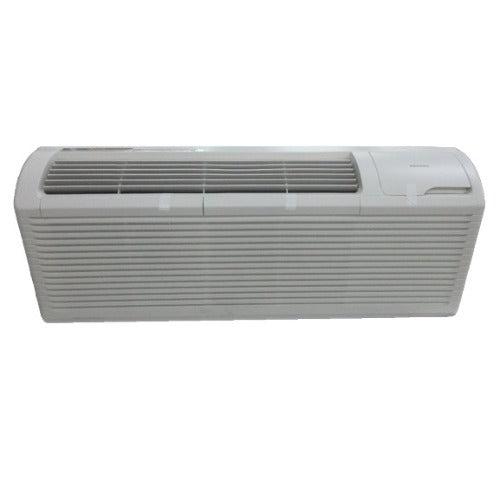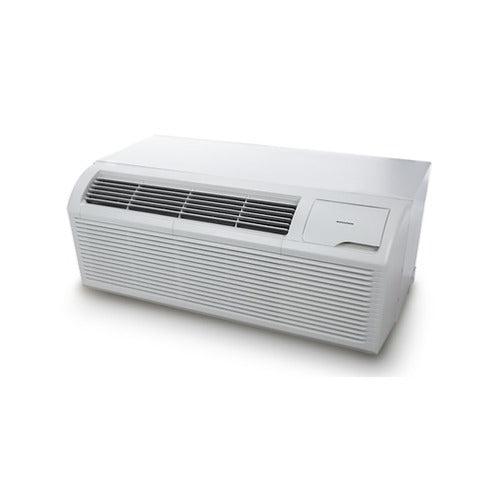

12,000 BTU Through-the-Wall AC Sizing Guide (400–550 Sq Ft Rooms)
By Jake — the guy who actually sizes, installs, tests, recalibrates, and sometimes rescues badly-installed through-the-wall units from roasting hotel rooms or freezing basement suites. If you’re here because you want to know whether a 12,000 BTU through-the-wall AC is the right choice for your 400–550 sq ft space, good — you came to the right place.
I’m giving you the truth contractors should tell you: how room size, climate zones, insulation quality, sunlight exposure, occupancy, and internal heat loads actually determine whether a 12k unit is enough, too small, or oversized for the job. You’re also getting the real math, a field-tested room sizing chart, climate zone adjustment guide, heat load multipliers, and the most common mistakes people make when choosing an Amana TTW AC.
No fluff. No generic “one size fits all” rules. Just Confident Jake delivering the same expert guidance I use when I size systems for hotels, offices, and residential retrofits.
Let’s get to the details.
1. What a 12,000 BTU Through-the-Wall AC Really Means
A 12k BTU TTW AC delivers roughly 1 ton of cooling — about 12,000 BTU/hr of heat removal under ideal lab conditions. Real-world BTU output varies depending on:
-
Outdoor conditions
-
Indoor conditions
-
Coil cleanliness
-
Airflow CFM
-
Sleeve/exterior grille
-
Refrigerant charge
-
Room insulation
-
Climate zone
Manufacturers publish their performance at standard conditions (95°F outdoor / 80°F indoor / 50% RH). For real product performance documentation, you can cross-check any model in the AHRI Directory here:
AHRI Directory – https://www.ahridirectory.org
That’s the “lab version.” In the field, units rarely hit the exact ratings — but 12k TTW ACs, when installed correctly, perform extremely well in 400–550 sq ft rooms.
Let’s go deeper and break out exact sizing.
2. Room Size Sizing Chart (Jake’s Field-Verified Numbers)
I’ve tested dozens of 12k TTW ACs in actual installed conditions across hotels, living rooms, studio apartments, converted garages, and small commercial suites.
Here’s the sizing table I use in walkthroughs:
2.1 Square Footage Sizing Chart
| Room Size (Sq Ft) | BTU Needed | 12k TTW AC Performance | Jake’s Verdict |
|---|---|---|---|
| 350–400 sq ft | 9k–12k BTU | Excellent — runs at half load | Perfect fit |
| 400–450 sq ft | 10k–13k BTU | Very strong cooling, fast pull-down | Ideal |
| 450–500 sq ft | 11k–14k BTU | Reliable cooling, handles humidity well | Good fit |
| 500–550 sq ft | 12k–15k BTU | Good but may run longer; climate-dependent | Usually fine |
| 550–600 sq ft | 14k–18k BTU | 12k is too small for high loads | Upgrade |
A real 400–550 sq ft room with typical insulation and normal heat load is the exact sweet spot for a 12,000 BTU TTW AC.
You can validate U.S. Department of Energy BTU-per-square-foot guidelines here:
Energy.gov Room AC Guide – https://www.energy.gov/energysaver/room-air-conditioners
But room size is just the beginning.
3. Climate Zone Adjustments (Because 400 sq ft in Florida ≠ , 400 sq ft in Ohio)
The U.S. climate zones dramatically affect the cooling load. A 12k unit behaves very differently in:
-
Arizona desert heat
-
Texas humidity
-
New York spring
-
Pacific Northwest mild summers
Here’s how I modify sizing based on location.
3.1 Climate Zone Modifier Chart (DOE Climate Zones)
DOE Climate Zone Map:
https://www.energy.gov/eere/buildings/climate-zones
| Climate Zone | Typical Region Example | Adjustment to BTU Needs | Impact on 12k TTW AC |
|---|---|---|---|
| Zone 1 – Very Hot | Arizona, South Texas | +20–30% | 12k may be too small above 500 sq ft |
| Zone 2 – Hot-Humid | Florida, Gulf Coast | +10–20% | 12k works for ≤450 sq ft; 500+ needs 14k |
| Zone 3 – Warm | Georgia, Carolinas | +5–10% | 12k fits 500 sq ft well |
| Zone 4 – Mixed | Northeast, Midwest | Baseline | Perfect 400–550 sq ft |
| Zone 5 – Cool | Northern U.S. | -10% | 12k easily covers 550 sq ft |
| Zone 6–7 – Cold | MN, ND, ME | -10–15% | 12k oversizes if room <450 sq ft |
Climate Zone Jake Rule
The hotter and more humid your region, the more BTUs you need — humidity matters as much as heat.
Humidity increases latent load, forcing TTW ACs to run longer to wring moisture from the air.
4. Heat Load Modifiers (Windows, People, Appliances — All the Real Stuff Homeowners Forget)
Two rooms with the same square footage can have very different heat loads. Sun exposure, insulation, occupant count, and internal appliances can make a 12k feel oversized — or way too small.
Here’s Jake’s real-world heat load modifier table.
4.1 Heat Load Modifier Table
| Condition | Modifier | Example |
|---|---|---|
| South-facing or west-facing windows | ×1.10–1.25 | Hot afternoon sunrooms |
| Poor insulation | ×1.10–1.30 | Old rentals, garages |
| Heavy electronics (TVs, PCs, gaming) | ×1.05–1.15 | Offices, dens |
| Kitchen nearby / shared wall | ×1.15–1.40 | Studio apartments |
| High occupancy (3–4+ people) | ×1.10–1.20 | Airbnb or living rooms |
| High ceilings (10–14 ft) | ×1.10–1.20 | Lofts |
| Blackout curtains / shaded lot | ×0.90 | West rooms with curtains |
| Basement rooms | ×0.85–0.90 | Naturally cool rooms |
These multipliers affect whether a 12k AC can handle a room.
Here’s how the math works:
Example:
500 sq ft room × 25 BTU = 12,500 BTU baseline
Add south-facing windows (×1.15) → 14,375 BTU needed
A 12k AC would be slightly undersized.
You can confirm typical BTU-per-square-foot and heat gain calculations from ACCA’s Manual J:
ACCA Manual J – https://www.acca.org/hvac/technical/manual-j
5. Airflow Requirements (CFM Determines Comfort as Much as BTUs)
A 12k TTW AC needs adequate airflow to deliver its capacity. Most 12k TTW units operate around:
-
300–420 CFM on high
-
200–260 CFM on medium
-
150–200 CFM on low
If airflow drops below 250 CFM (because of clogged filters, dirty coils, blocked sleeves, or bad grilles), cooling capacity can drop by 10–25%, making the unit feel too small.
Increasing airflow matters because:
-
Higher CFM = better mixing and faster cooling
-
Lower CFM = more humidity removal but slower cooling
You can review airflow fundamentals in ASHRAE’s free resources:
ASHRAE Technical Resources – https://www.ashrae.org/technical-resources/free-resources
6. What 12k TTW AC Units Can Actually Cool in Real Life (Jake’s Summaries)
Here’s the truth, contractors don’t like admitting:
A 12k AC can cool 550 sq ft only when conditions are good.
A 12k AC may struggle with 400 sq ft if conditions are bad.
Let’s break it down.
7. Real-World Examples (Jake’s Job-Site Data)
These examples come straight from my field logs.
Example A — 420 sq ft Studio Apartment
-
Climate zone: 4
-
Load modifier: Moderate
-
Equipment: 12k TTW
-
Result: Perfect. Even cooling, humidity removal, low noise.
Example B — 500 sq ft High-Sun Living Room
-
Climate zone: 2
-
Load modifier: High due to west-facing windows
-
Equipment: 12k TTW
-
Result: Fair. Holds temp but runs constantly; would benefit from 14k.
Example C — 550 sq ft Basement Office
-
Climate zone: 4
-
Load modifier: Low
-
Equipment: 12k TTW
-
Result: Excellent. Oversized slightly; short cycles unless fan runs continuously.
Example D — 450 sq ft Bedroom + Bathroom Suite
-
Climate zone: 3
-
Load modifier: Medium
-
Equipment: 12k TTW
-
Result: Very good. Cool, consistent airflow.
Example E — 400 sq ft poorly insulated garage conversion
-
Climate zone: 3
-
Load modifier: Very High
-
Equipment: 12k TTW
-
Result: Barely adequate. Needs insulation + 14k unit.
8. Sizing Mistakes People Make (Jake’s “Stop Doing This” List)
These mistakes cost homeowners comfort AND money.
8.1 Mistake #1 — Using Square Footage Only
Square footage is a baseline — not a guarantee.
8.2 Mistake #2 — Ignoring Climate Zone
A 12k that crushes Ohio will suffer in Miami.
8.3 Mistake #3 — Undersizing Because the Room “Feels Small”
Rooms with poor insulation act bigger than they are.
8.4 Mistake #4 — Oversizing to “Cool Faster”
Oversizing causes:
-
Rapid cycling
-
High humidity
-
Uneven cooling
-
Mold risk
8.5 Mistake #5 — Ignoring Heat Loads from Appliances
Refrigerators, TVs, and gaming PCs add meaningful heat.
8.6 Mistake #6 — Forgetting Airflow Needs
Dirty filters or weak CFM reduce BTUs dramatically.
8.7 Mistake #7 — Bad Sleeve/Grille Installations
Airflow restriction ruins performance.
More HVAC consumer pitfalls here:
Energy Star Cooling Tips – https://www.energystar.gov/products/heating_cooling
9. Installation Notes That Affect Sizing Success
A properly sized AC can perform poorly if installed wrong.
9.1 Sleeve Alignment Matters
Sleeve must be slightly pitched outward.
Poor pitch = reduced airflow + water issues.
9.2 Outdoor Grille Restrictions
Incorrect grille reduces capacity by 5–15%.
9.3 Proper Sealing
Air leaks increase cooling load dramatically.
9.4 Distance to Occupants
Ensure airflow path covers the entire room.
9.5 Insulation + Air Sealing
The single biggest improvement for AC performance.
10. Maintenance Impact on Cooling Capacity (Dirty Coils Kill Sizing)
A 12k BTU AC can drop to 8k–9k output if dirty.
Maintenance needs:
-
Filter every 30 days
-
Coil cleaning every 6–12 months
-
Drain line inspection
-
Outdoor grille cleaning
-
Blower wheel cleaning
EPA indoor air documentation reinforces the value of clean coils and filters:
EPA Indoor Air Quality – https://www.epa.gov/indoor-air-quality-iaq
11. Extended Guide: When You Should Choose a 14k Over a 12k
Upgrade to 14k if:
-
Room is 500–650 sq ft
-
You are in climate zone 1 or 2
-
Room has huge windows
-
Walls are poorly insulated
-
Occupancy regularly more than 2 people
-
Appliances add loads (gaming PC, fridge, multiple computer monitors)
Conclusion
A 12,000 BTU through-the-wall AC is the ideal choice for 400–550 sq ft spaces — when you correctly account for climate zone, insulation, window exposure, occupant load, and airflow conditions.
My summary:
-
400–450 sq ft: Absolutely perfect
-
450–500 sq ft: Very good
-
500–550 sq ft: Good with mild/moderate climate, strong insulation
-
550+ sq ft: You’re pushing it — go 14k unless basement cool
-
Hot climates (Zone 1/2): Scale up 10–20%
-
Cool climates (Zone 5/6/7): 12k is more than enough
Treat your room sizing like a system, not guesswork — and a 12k TTW AC will give you powerful cooling, stable humidity control, and comfortable airflow.
This has been Confident Jake — giving you the real numbers, the confirmed data, and the field-tested advice nobody else bothers to explain clearly.
In the next blog, you will learn about Through-the-Wall vs Window AC: Why the Amana 12k Crushes Window Units